
 Editorials
 2
2 9
9 3
3 2
2 7
7 1
1 1
1 5
5 1
1 1
1 1
1 2
2 1
1 1
1 1
1 3
3


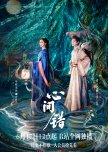
“你的心我用的很好” - Because from Start To End: You Have My Heart
As an ordinary human living in a place where humans and demons form symbiotic bonds while co-existing with each other, what would you want to know about the scholar and a story now disrupting the status quo, more than a ripple in the beliefs held by you and your ancestors for more than one thousand years?
Co-produced for Bilibili’s youth-oriented Stargazing Theatre and part of the “Beijing Grand Audiovisual” Initiative, superb production capabilities of Hua'Er Film and Television alongside Beijing Canyu Film and Television have created this period supernatural short drama containing down-to-earth investigative cases. Melding elements of old-school classics with ancient literary beauty for a “small yet exquisite” unique approach, “You Have My Heart” attracted significant attention in its early development stages. This is not a drama about grand intrigues and complicated conspiracies, heart-stopping adventures, imperial plotting, or saving the world.
This is not "Love Beyond The Grave" nor "The Strange Tales of Tang Dynasty". Despite gorgeous cinematic visuals and well-controlled usage of modern CGI with camerawork, it is filmed as an old-school classic with philosophical undertones and quietly-piercing emotions, containing details which mandarin-speakers such as myself can catch and immediately question in episode 1 whether "You Have My Heart" is a different take on the ideas of Ning Caichen and Nie Xiaoqian from Pu Song Ling's classic compilation of supernatural tales.
People with no magical powers are easily viewed as mundane yet valued by Liu Fufeng, a willow tree demon choosing to be a guardian who has protected Yin-Yang Crossing for a thousand years. Planting seals throughout the area, utilizing purification rituals, and other methods used to suppress what the people believe is an evil force deep beneath the earth in this location- Her routine is disrupted by the newly-appointed county magistrate Bai Shanjun. Staunchly logical and armed with skills of a coroner plus knowledge of the capital, this minor government official does not believe in gods or demons, and assumes he knows how to carry out his appointment in this backwater remote region.
Their unavoidable meeting triggers memories and buried issues of a loss unresolved from one hundred years ago, which caused fundamental damage to her spiritual essence. Can a heart mired in the past, and two conflicting souls living in the present, come to terms with each other? How will Liu Fufeng find the key to undo and resolve a tangled web of karma which connects three beings? Will they succeed in solving mysteries and safeguarding this place from an evil older than them?
Yin and Yang constitute a core worldview of ancient Chinese culture. “Yin” is the night, darkness, and chaos. “Yang” represents day, light, and order. Their mutual relationship and transformational continuity is recognised as the fundamental law governing the world. “渡” in “阴阳渡”(Yin-Yang Crossing) symbolizes a tangible boundary between spaces, a turning point in a journey, or the passage from one shore to another (as per 渡 which can also be understood as the action of ferrying across the water).In traditional Chinese narratives, the Yin-Yang Crossing is a unique nexus connecting the mundane human world to the supernatural realm of spirits and demons, and can also be viewed as a metaphor pertaining to intertwined destinies or the fluid shift of good and evil in an instant.
All this, Bai Shanjun comes to realise. Through the eyes, questions, thoughts, and feelings of Bai Shanjun as the emotional core of the story, the audience learns and shifts with his beliefs corrected by reality. He learns far more than he expected, and he involuntarily cares for demons and humans in ways he never imagined. Recognising the layers and strategic considerations of Liu Fufeng are instrumental to his burgeoning passions for justice and love in this unique place. Humans and demons in the cases he investigates recalls the Justice Bao series of the 90s, where every individual matters and the truth is not always comforting. Deeply wounded by betrayal and having lived for much longer than a human, Liu Fufeng’s considerations of how to move forward are a slow thawing of irreversible subtleties. Resolute and determined, the solution she needs is through her understanding of Bai Shanjun as a person awakening important feelings and ideas within her.
Love, hatred, obsession, redemption- Discarding formulaic tropes found in historical costume dramas, cases distinctive in personal values drive the overarching plot. These eerie tales dissect delusions, greed, and hopes. Each individual's story being explored strengthens the overall main plot and certain concepts in the understanding of our leads seeking specific answers, to protect Yin-Yang Crossing. The investigative storyline is logically sound without being unrealistic, be it manhunts or autopsies. Through a narrative which illustrates divides of humans and demons, the message of staying true to yourself and embracing goodness is skilfully cemented.
This drama is very smart and apt with its dialogue, painting the art of show not tell, and piercing the heart with diplomatic lines of humble elegance or emotional boldness. Whether it is a grandfather gourd demon or an individual whose nature cannot be changed, details about Yin-Yang Crossing and the traits of different individuals living in this realm are further revealed in careful sequencing and pacing. Through the case of a half-demon bullied by others, Bai Shanjun learns about a specific law in Yin-Yang Crossing pertaining to humans and demons, and what Liu Fu Feng thinks about humans and demons having offspring due to her style of explanation. The attention to dialogue and its importance can be seen in the likes of episode 14.
Be it netherworld illusions, green desolate forests, wind and snow or falling leaves as the seasons pass (including CGI such as a certain spell cast in episode 20 andIwantaGIFofthat), the sets are richly atmospheric and appropriately eerie. Every scene whispers a story of its own. Scenery involving Liu Fufeng or Bai Shanjun recalls artisan tapestries of warm colours, solid shadows, and ethereal light, especially in her abode. Liu Fufeng as the aloof strong demon lord is richly gowned in sharp commanding colours and structured robes. Bai Shanjun is a stubborn minor government official, whose robes are as simple and straightforward as his character.
I came in not knowing what to expect of performances, and I fervently wish the drama had at least another 10 episodes! Zhu Zheng Ting’s emotions had me feeling what he shared. His tears made my eyes blurry. His smiles had me rejoice. His dual roles have me replaying certain scenes.
I want to see more of the transformation of Hankiz. Her changes were very subtle in the beginning, and the final three episodes had me emphatising with Liu Fufeng. Different supporting cast members all left an indelible mark with their acting. Whether it is Li Mao the half-demon that I want to hug and befriend, Shu Lang who earns a name in a story that left me sad and glad, the Wish-Temptation fox demon- Constable Xiaohu and Liu Fengling as respective sidekicks to Bai Shanjun and Liu Fu Feng have me hugely-amused and squeeing inside, with their contrasting personalities. Li Jia Nuo and Zhang Zijian mesh very well. Can I please get another drama with them?
When it came to Bai Shanjun and Liu Fufeng, a meltdown occurred.
I have yet to recover from episodes 16 and 22.
I am glad that I might never fully recover.
Balancing high-tension emotional dynamics with classical Eastern aesthetics recalling atmospheric supernatural pathos akin to “Strange Tales of Liaozhai”, the narrative of co-existence between humans and demons while exploring bonds is underpinned with one lesson: Throughout the changing cases and passage of time, how you move forward with all of yourself can help create what you truly seek but could not imagine.
Character developments and emotional changes of Bai Shanjun, Liu Fufeng, Xiaohu and Liu Fengling are well-paced. By the final six episodes, their words and actions will awaken an emotional buffet inside you. Brilliant writing, terrific directing, and compelling performances come together for a memorable classic, which I am happy to rewatch as many times as I want.
Drama lovers of classical Chinese literature and the drama classics I have mentioned will greatly enjoy 22 episodes of cinematic visual poetry recalling heartfelt cultural simplicities that need no explanation, such as intentions fueling emotional intensity, heart-stopping intimacy, and audacity of grasping a women’s sleeve without letting go. In public.
The music is exquisite, a feast for the senses. Understanding the lyrics matching respective moments and episodes of the drama further elevates the entire experience, and only highlights the thorough careful immersion of the cast and production team in their efforts and understanding.
In episode 16, what is longing? Can it cross a divide?
一山 一梦 一回
晨雾又拂轻眉
又似远山近水
你的眼垂落在心扉
can be understood as:
"A mountain, a dream, a moment in time-
Morning mist gently caresses your brow
Recalling distant hills and nearby waters,
Your gaze gently rests upon the gateway of my heart."
In episode 22, it is not what is spoken that becomes the final line. The song which plays in the final minutes is an ancient poem transformed in its final one-third, and the words are incredibly beautiful.
In the Book of Songs heralded as a cornerstone of classical Chinese literature, “The Reed” is the fourth poem from the first section of the compilation known as ‘Airs of Qin”. One of China’s most famous ancient love poems from more than two thousand years ago conveys exquisite imagery and emotional depth: A determined lover paces the riverbanks as the seasons change, but their beloved remains tantalizingly out of reach.
The final one-third of this poem has been altered to become:
{ 茫茫世间 (这世间)
风月浪漫 (风月浪漫)
风景万千 (风景万千)
不如见你一面
青山无眠 (无眠)
等绯色映红你的脸
红尘万象, 怎及你一眼 }
And in those final moments, what comes through in those scenes is loud and clear. Episode 21 is where everything that came before ties together. Changes literal and metaphorical in all characters, big and small, are essential colours in a rainbow after the rain. All I could think of in final moments of 22, even after the credits...
From existence to end-
You Have My Heart.
~~~~~~~~~
~~~~~~~~
~~~~~~~
~~~~~~
~~~~~
~~~~
~~~
~~
~
~[ #More about the production: https://mydramalist.com/809090-xin-jian-cuo#comment-26534162
# Episode 1 reaction: https://mydramalist.com/809090-xin-jian-cuo/episode/1
# Episode 11 reaction: https://mydramalist.com/809090-xin-jian-cuo/episode/11
# Episode 22 reaction: https://mydramalist.com/809090-xin-jian-cuo/episode/22
# Songs of the drama (including links to listening): https://mydramalist.com/809090-xin-jian-cuo#comment-26496296
# Partial translation of the song in episode 16: https://mydramalist.com/809090-xin-jian-cuo#comment-26618742
# Lyrics of song in episode 22: https://mydramalist.com/809090-xin-jian-cuo#comment-26634982
# Our leads talking about each other: https://mydramalist.com/809090-xin-jian-cuo#comment-26510592
# How do I understand Liu Fufeng's powers, if I expect exorcisms (note spoilers until episode 22)? https://mydramalist.com/809090-xin-jian-cuo#comment-26656104
# Final thoughts after episode 22, complete with screencaps: https://mydramalist.com/profile/Xiang83/feeds/oQeL1OuW ]
Co-produced for Bilibili’s youth-oriented Stargazing Theatre and part of the “Beijing Grand Audiovisual” Initiative, superb production capabilities of Hua'Er Film and Television alongside Beijing Canyu Film and Television have created this period supernatural short drama containing down-to-earth investigative cases. Melding elements of old-school classics with ancient literary beauty for a “small yet exquisite” unique approach, “You Have My Heart” attracted significant attention in its early development stages. This is not a drama about grand intrigues and complicated conspiracies, heart-stopping adventures, imperial plotting, or saving the world.
This is not "Love Beyond The Grave" nor "The Strange Tales of Tang Dynasty". Despite gorgeous cinematic visuals and well-controlled usage of modern CGI with camerawork, it is filmed as an old-school classic with philosophical undertones and quietly-piercing emotions, containing details which mandarin-speakers such as myself can catch and immediately question in episode 1 whether "You Have My Heart" is a different take on the ideas of Ning Caichen and Nie Xiaoqian from Pu Song Ling's classic compilation of supernatural tales.
People with no magical powers are easily viewed as mundane yet valued by Liu Fufeng, a willow tree demon choosing to be a guardian who has protected Yin-Yang Crossing for a thousand years. Planting seals throughout the area, utilizing purification rituals, and other methods used to suppress what the people believe is an evil force deep beneath the earth in this location- Her routine is disrupted by the newly-appointed county magistrate Bai Shanjun. Staunchly logical and armed with skills of a coroner plus knowledge of the capital, this minor government official does not believe in gods or demons, and assumes he knows how to carry out his appointment in this backwater remote region.
Their unavoidable meeting triggers memories and buried issues of a loss unresolved from one hundred years ago, which caused fundamental damage to her spiritual essence. Can a heart mired in the past, and two conflicting souls living in the present, come to terms with each other? How will Liu Fufeng find the key to undo and resolve a tangled web of karma which connects three beings? Will they succeed in solving mysteries and safeguarding this place from an evil older than them?
Yin and Yang constitute a core worldview of ancient Chinese culture. “Yin” is the night, darkness, and chaos. “Yang” represents day, light, and order. Their mutual relationship and transformational continuity is recognised as the fundamental law governing the world. “渡” in “阴阳渡”(Yin-Yang Crossing) symbolizes a tangible boundary between spaces, a turning point in a journey, or the passage from one shore to another (as per 渡 which can also be understood as the action of ferrying across the water).In traditional Chinese narratives, the Yin-Yang Crossing is a unique nexus connecting the mundane human world to the supernatural realm of spirits and demons, and can also be viewed as a metaphor pertaining to intertwined destinies or the fluid shift of good and evil in an instant.
All this, Bai Shanjun comes to realise. Through the eyes, questions, thoughts, and feelings of Bai Shanjun as the emotional core of the story, the audience learns and shifts with his beliefs corrected by reality. He learns far more than he expected, and he involuntarily cares for demons and humans in ways he never imagined. Recognising the layers and strategic considerations of Liu Fufeng are instrumental to his burgeoning passions for justice and love in this unique place. Humans and demons in the cases he investigates recalls the Justice Bao series of the 90s, where every individual matters and the truth is not always comforting. Deeply wounded by betrayal and having lived for much longer than a human, Liu Fufeng’s considerations of how to move forward are a slow thawing of irreversible subtleties. Resolute and determined, the solution she needs is through her understanding of Bai Shanjun as a person awakening important feelings and ideas within her.
Love, hatred, obsession, redemption- Discarding formulaic tropes found in historical costume dramas, cases distinctive in personal values drive the overarching plot. These eerie tales dissect delusions, greed, and hopes. Each individual's story being explored strengthens the overall main plot and certain concepts in the understanding of our leads seeking specific answers, to protect Yin-Yang Crossing. The investigative storyline is logically sound without being unrealistic, be it manhunts or autopsies. Through a narrative which illustrates divides of humans and demons, the message of staying true to yourself and embracing goodness is skilfully cemented.
This drama is very smart and apt with its dialogue, painting the art of show not tell, and piercing the heart with diplomatic lines of humble elegance or emotional boldness. Whether it is a grandfather gourd demon or an individual whose nature cannot be changed, details about Yin-Yang Crossing and the traits of different individuals living in this realm are further revealed in careful sequencing and pacing. Through the case of a half-demon bullied by others, Bai Shanjun learns about a specific law in Yin-Yang Crossing pertaining to humans and demons, and what Liu Fu Feng thinks about humans and demons having offspring due to her style of explanation. The attention to dialogue and its importance can be seen in the likes of episode 14.
Be it netherworld illusions, green desolate forests, wind and snow or falling leaves as the seasons pass (including CGI such as a certain spell cast in episode 20 andIwantaGIFofthat), the sets are richly atmospheric and appropriately eerie. Every scene whispers a story of its own. Scenery involving Liu Fufeng or Bai Shanjun recalls artisan tapestries of warm colours, solid shadows, and ethereal light, especially in her abode. Liu Fufeng as the aloof strong demon lord is richly gowned in sharp commanding colours and structured robes. Bai Shanjun is a stubborn minor government official, whose robes are as simple and straightforward as his character.
I came in not knowing what to expect of performances, and I fervently wish the drama had at least another 10 episodes! Zhu Zheng Ting’s emotions had me feeling what he shared. His tears made my eyes blurry. His smiles had me rejoice. His dual roles have me replaying certain scenes.
I want to see more of the transformation of Hankiz. Her changes were very subtle in the beginning, and the final three episodes had me emphatising with Liu Fufeng. Different supporting cast members all left an indelible mark with their acting. Whether it is Li Mao the half-demon that I want to hug and befriend, Shu Lang who earns a name in a story that left me sad and glad, the Wish-Temptation fox demon- Constable Xiaohu and Liu Fengling as respective sidekicks to Bai Shanjun and Liu Fu Feng have me hugely-amused and squeeing inside, with their contrasting personalities. Li Jia Nuo and Zhang Zijian mesh very well. Can I please get another drama with them?
When it came to Bai Shanjun and Liu Fufeng, a meltdown occurred.
I have yet to recover from episodes 16 and 22.
I am glad that I might never fully recover.
Balancing high-tension emotional dynamics with classical Eastern aesthetics recalling atmospheric supernatural pathos akin to “Strange Tales of Liaozhai”, the narrative of co-existence between humans and demons while exploring bonds is underpinned with one lesson: Throughout the changing cases and passage of time, how you move forward with all of yourself can help create what you truly seek but could not imagine.
Character developments and emotional changes of Bai Shanjun, Liu Fufeng, Xiaohu and Liu Fengling are well-paced. By the final six episodes, their words and actions will awaken an emotional buffet inside you. Brilliant writing, terrific directing, and compelling performances come together for a memorable classic, which I am happy to rewatch as many times as I want.
Drama lovers of classical Chinese literature and the drama classics I have mentioned will greatly enjoy 22 episodes of cinematic visual poetry recalling heartfelt cultural simplicities that need no explanation, such as intentions fueling emotional intensity, heart-stopping intimacy, and audacity of grasping a women’s sleeve without letting go. In public.
The music is exquisite, a feast for the senses. Understanding the lyrics matching respective moments and episodes of the drama further elevates the entire experience, and only highlights the thorough careful immersion of the cast and production team in their efforts and understanding.
In episode 16, what is longing? Can it cross a divide?
一山 一梦 一回
晨雾又拂轻眉
又似远山近水
你的眼垂落在心扉
can be understood as:
"A mountain, a dream, a moment in time-
Morning mist gently caresses your brow
Recalling distant hills and nearby waters,
Your gaze gently rests upon the gateway of my heart."
In episode 22, it is not what is spoken that becomes the final line. The song which plays in the final minutes is an ancient poem transformed in its final one-third, and the words are incredibly beautiful.
In the Book of Songs heralded as a cornerstone of classical Chinese literature, “The Reed” is the fourth poem from the first section of the compilation known as ‘Airs of Qin”. One of China’s most famous ancient love poems from more than two thousand years ago conveys exquisite imagery and emotional depth: A determined lover paces the riverbanks as the seasons change, but their beloved remains tantalizingly out of reach.
The final one-third of this poem has been altered to become:
{ 茫茫世间 (这世间)
风月浪漫 (风月浪漫)
风景万千 (风景万千)
不如见你一面
青山无眠 (无眠)
等绯色映红你的脸
红尘万象, 怎及你一眼 }
And in those final moments, what comes through in those scenes is loud and clear. Episode 21 is where everything that came before ties together. Changes literal and metaphorical in all characters, big and small, are essential colours in a rainbow after the rain. All I could think of in final moments of 22, even after the credits...
From existence to end-
You Have My Heart.
~~~~~~~~~
~~~~~~~~
~~~~~~~
~~~~~~
~~~~~
~~~~
~~~
~~
~
~[ #More about the production: https://mydramalist.com/809090-xin-jian-cuo#comment-26534162
# Episode 1 reaction: https://mydramalist.com/809090-xin-jian-cuo/episode/1
# Episode 11 reaction: https://mydramalist.com/809090-xin-jian-cuo/episode/11
# Episode 22 reaction: https://mydramalist.com/809090-xin-jian-cuo/episode/22
# Songs of the drama (including links to listening): https://mydramalist.com/809090-xin-jian-cuo#comment-26496296
# Partial translation of the song in episode 16: https://mydramalist.com/809090-xin-jian-cuo#comment-26618742
# Lyrics of song in episode 22: https://mydramalist.com/809090-xin-jian-cuo#comment-26634982
# Our leads talking about each other: https://mydramalist.com/809090-xin-jian-cuo#comment-26510592
# How do I understand Liu Fufeng's powers, if I expect exorcisms (note spoilers until episode 22)? https://mydramalist.com/809090-xin-jian-cuo#comment-26656104
# Final thoughts after episode 22, complete with screencaps: https://mydramalist.com/profile/Xiang83/feeds/oQeL1OuW ]
Was this review helpful to you?


