

 3
3 1
1


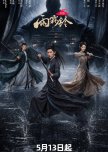
Bitter heroism built on righteousness and sincerity
Honestly, I started watching this drama because I missed seeing Yang Yang on screen again after his previous drama, The Immortal Ascension, left such a strong impression on me. But the moment I entered episode 1, I forgot about Yang Yang entirely. I became completely absorbed in a character named Zhan Zhao. Apparently, he is an important figure in the legend of Bao Zheng. I did not know much about this legend beforehand. Still, at heart, I have always been drawn to dramas that explore serious themes, such as truth and justice, investigation and law enforcement, which form the very core of this drama. This drama is truly a remarkable accomplishment compared to other dramas with similar themes, such as The Imperial Coroner (2021), Coroner's Diary (2025), and Detective Dee's series.
1# A multidimensional heroic character
I have always loved heroic characters—people who courageously fight for truth even at the cost of themselves, enduring hardship and suffering along the way. Zhan Zhao embodies this archetype powerfully. The most important strength of the story is that the very first episodes immediately touched my emotional core. The story opens at the lowest point in Zhan Zhao’s career as an imperial guard. He is wounded, cornered, and in need of help. Yet despite his condition, he is never weak and continues to think strategically while allowing himself to accept assistance. This is how the other main characters, Huo Linglong and Bai Yutang, successfully enter the story as supporters, comrades, and his close companions throughout his journey.
It is true that the story may feel uninteresting to some people. The wuxia aspect of the drama may feel unsatisfying at first because Zhan Zhao never truly kills his opponents. This is a fair criticism, and I myself felt the same at the beginning. However, after understanding the historical context—that the story takes place during the Song dynasty, an era deeply committed to law and civil order—everything began to make sense. “Upholding truth and justice without killing” becomes Zhan Zhao’s core principle and the source of his inner conflict, because it stands in opposition to the jianghu mentality, where “a life is repaid with a life,” rather than crimes being judged through the court of law.
For me, Zhan Zhao represents a transitional era that once sharply divided the jianghu and the imperial court—two worlds with entirely different rules and values—into a new order where the state seeks to enforce law across all its territories and regulate the use of weapons in order to suppress vigilantism, which had long been a source of chaos and suffering for the people. He is a swordsman born from the jianghu, yet he chooses to devote himself to the government. He possesses the skills of a supreme martial artist, but also a heart that desires justice and goodness for the people through constitutional and lawful means. He is an anomaly within the jianghu, a world that values power and the reputation of martial arts sects and clans above all else, and also within a government filled with corrupt officials obsessed with authority and political gain. Zhan Zhao is ultimately a lonely hero, struggling to uphold his ideals largely on his own.
So, even though Zhan Zhao is fundamentally a classic heroic figure, something prevents him from becoming one-dimensional. There is a deeper context that the audience must understand in order to fully interpret his seemingly “unusual” principles and actions as well as his conflicts. For me, this is the drama’s greatest strength: Zhan Zhao himself is an exceptionally strong character, written with remarkable depth and care.
2# Leaning toward realism
I love the way this drama is produced and how it presents things with a sense of realism. Wuxia stories often rely heavily on supernatural powers as plot devices, filled with endless martial techniques and mystical elements we've seen before. Enemies die too easily, blood flies everywhere, while the heroes survive again and again through transferred inner energy, miracle doctors, magical pills, and various forms of invincibility that make characters almost immune to death. This drama still contains some of those elements, but at some point, their effects are restrained and moderated by human weakness and limitations. To achieve extraordinary results, the characters must struggle intensely and push themselves beyond their own limits. For me, this is what makes the story compelling. There is no guarantee that the protagonists will win. We never truly know how things will end, because even when the variables are visible, the outcome of events remains unpredictable.
When it comes to martial arts combat, this drama is simply unmatched. The fights feel genuinely physical, with highly creative choreography. Many wuxia dramas rely heavily on visual effects to create flashy battle scenes, but this drama is truly old-school in spirit. Sword fights, weapon clashes, and hand-to-hand combat are carried out through real physical performance rather than spectacle-driven effects. Each fight sequence feels like a short drama of its own, complete with a beginning, rising tension, climax, resolution, and conclusion. The scenes are allowed to unfold fully rather than being abruptly cut. In many other dramas, fights are edited so heavily that the audience is suddenly shown only the outcome without the emotional or tactical progression. This drama really gives viewers the satisfaction of witnessing the battles in their entirety.
Another fascinating aspect of this drama is how thoroughly it portrays the workings of crime and corruption. We are brought directly into courtrooms and investigations, shown how evidence is gathered and how facts are connected in order to reach a conclusion. Of course, the cases themselves are dramatized to some extent, but they are presented with enough clarity and structure that attentive viewers can follow the logic step by step. The drama carefully explains where the flaws and gaps lie, and how the scattered pieces of the puzzle are gradually reassembled until the full picture emerges. The crimes and murders themselves are not complicated in execution, but what becomes truly interesting is the concealment of traces and evidence afterward. This is precisely the area where our trio of musketeers does most of their work.
3# Deep theme and social commentary
The third aspect that makes this drama so valuable is its thematic depth and social commentary. The story begins with struggles for power among the elite, but the consequences gradually trickle downward, affecting ordinary people and innocent lives. The logic is simple: someone desires power, and in order to obtain it, they must gather financial resources and political allies both inside and outside the state. From there, the web expands into illegal businesses and corrupt agreements. In reality, this is often how corruption works and how it creates suffering among the people. What makes it even more tragic is that the legal and judicial institutions that are supposed to stand at the forefront against corruption are themselves drawn into the same corrupt vortex.
People like Zhan Zhao, who choose the difficult path instead of the easy one, become a breath of fresh air—a source of hope amid darkness. Yet ironically, they are often the first to be sacrificed in the struggle against corruption. Their convictions are misunderstood, and their sacrifices go unappreciated. In this sense, the drama becomes not only a reminder of the cost of justice, but also a form of appreciation for those who dedicate their lives to upholding the law.
The quality and depth of this drama may not be understood by many people. Honestly, I sometimes wonder how easily some viewers become haters, giving low ratings without truly watching or reflecting on the message the drama is trying to convey. Their perspective often seems limited to whether they like the actors or actresses, whether there is romance or bromance, whether the ending is happy, and things like that. My hope for future viewers is simple: watch this drama carefully and sincerely receive the goodness it offers. If you do, I believe you will come away feeling satisfied and genuinely appreciative of what this story has achieved.
1# A multidimensional heroic character
I have always loved heroic characters—people who courageously fight for truth even at the cost of themselves, enduring hardship and suffering along the way. Zhan Zhao embodies this archetype powerfully. The most important strength of the story is that the very first episodes immediately touched my emotional core. The story opens at the lowest point in Zhan Zhao’s career as an imperial guard. He is wounded, cornered, and in need of help. Yet despite his condition, he is never weak and continues to think strategically while allowing himself to accept assistance. This is how the other main characters, Huo Linglong and Bai Yutang, successfully enter the story as supporters, comrades, and his close companions throughout his journey.
It is true that the story may feel uninteresting to some people. The wuxia aspect of the drama may feel unsatisfying at first because Zhan Zhao never truly kills his opponents. This is a fair criticism, and I myself felt the same at the beginning. However, after understanding the historical context—that the story takes place during the Song dynasty, an era deeply committed to law and civil order—everything began to make sense. “Upholding truth and justice without killing” becomes Zhan Zhao’s core principle and the source of his inner conflict, because it stands in opposition to the jianghu mentality, where “a life is repaid with a life,” rather than crimes being judged through the court of law.
For me, Zhan Zhao represents a transitional era that once sharply divided the jianghu and the imperial court—two worlds with entirely different rules and values—into a new order where the state seeks to enforce law across all its territories and regulate the use of weapons in order to suppress vigilantism, which had long been a source of chaos and suffering for the people. He is a swordsman born from the jianghu, yet he chooses to devote himself to the government. He possesses the skills of a supreme martial artist, but also a heart that desires justice and goodness for the people through constitutional and lawful means. He is an anomaly within the jianghu, a world that values power and the reputation of martial arts sects and clans above all else, and also within a government filled with corrupt officials obsessed with authority and political gain. Zhan Zhao is ultimately a lonely hero, struggling to uphold his ideals largely on his own.
So, even though Zhan Zhao is fundamentally a classic heroic figure, something prevents him from becoming one-dimensional. There is a deeper context that the audience must understand in order to fully interpret his seemingly “unusual” principles and actions as well as his conflicts. For me, this is the drama’s greatest strength: Zhan Zhao himself is an exceptionally strong character, written with remarkable depth and care.
2# Leaning toward realism
I love the way this drama is produced and how it presents things with a sense of realism. Wuxia stories often rely heavily on supernatural powers as plot devices, filled with endless martial techniques and mystical elements we've seen before. Enemies die too easily, blood flies everywhere, while the heroes survive again and again through transferred inner energy, miracle doctors, magical pills, and various forms of invincibility that make characters almost immune to death. This drama still contains some of those elements, but at some point, their effects are restrained and moderated by human weakness and limitations. To achieve extraordinary results, the characters must struggle intensely and push themselves beyond their own limits. For me, this is what makes the story compelling. There is no guarantee that the protagonists will win. We never truly know how things will end, because even when the variables are visible, the outcome of events remains unpredictable.
When it comes to martial arts combat, this drama is simply unmatched. The fights feel genuinely physical, with highly creative choreography. Many wuxia dramas rely heavily on visual effects to create flashy battle scenes, but this drama is truly old-school in spirit. Sword fights, weapon clashes, and hand-to-hand combat are carried out through real physical performance rather than spectacle-driven effects. Each fight sequence feels like a short drama of its own, complete with a beginning, rising tension, climax, resolution, and conclusion. The scenes are allowed to unfold fully rather than being abruptly cut. In many other dramas, fights are edited so heavily that the audience is suddenly shown only the outcome without the emotional or tactical progression. This drama really gives viewers the satisfaction of witnessing the battles in their entirety.
Another fascinating aspect of this drama is how thoroughly it portrays the workings of crime and corruption. We are brought directly into courtrooms and investigations, shown how evidence is gathered and how facts are connected in order to reach a conclusion. Of course, the cases themselves are dramatized to some extent, but they are presented with enough clarity and structure that attentive viewers can follow the logic step by step. The drama carefully explains where the flaws and gaps lie, and how the scattered pieces of the puzzle are gradually reassembled until the full picture emerges. The crimes and murders themselves are not complicated in execution, but what becomes truly interesting is the concealment of traces and evidence afterward. This is precisely the area where our trio of musketeers does most of their work.
3# Deep theme and social commentary
The third aspect that makes this drama so valuable is its thematic depth and social commentary. The story begins with struggles for power among the elite, but the consequences gradually trickle downward, affecting ordinary people and innocent lives. The logic is simple: someone desires power, and in order to obtain it, they must gather financial resources and political allies both inside and outside the state. From there, the web expands into illegal businesses and corrupt agreements. In reality, this is often how corruption works and how it creates suffering among the people. What makes it even more tragic is that the legal and judicial institutions that are supposed to stand at the forefront against corruption are themselves drawn into the same corrupt vortex.
People like Zhan Zhao, who choose the difficult path instead of the easy one, become a breath of fresh air—a source of hope amid darkness. Yet ironically, they are often the first to be sacrificed in the struggle against corruption. Their convictions are misunderstood, and their sacrifices go unappreciated. In this sense, the drama becomes not only a reminder of the cost of justice, but also a form of appreciation for those who dedicate their lives to upholding the law.
The quality and depth of this drama may not be understood by many people. Honestly, I sometimes wonder how easily some viewers become haters, giving low ratings without truly watching or reflecting on the message the drama is trying to convey. Their perspective often seems limited to whether they like the actors or actresses, whether there is romance or bromance, whether the ending is happy, and things like that. My hope for future viewers is simple: watch this drama carefully and sincerely receive the goodness it offers. If you do, I believe you will come away feeling satisfied and genuinely appreciative of what this story has achieved.
Was this review helpful to you?


