

 3
3 1
1



A beautiful shell, but empty inside.
I know it’s not easy to create a perfect drama. Some dramas have strong stories but weak production, while others have high production quality but only average storytelling. Pursuit of Jade (POJ) excels in production quality, but its story falls short. This is the first time I’ve felt this disappointed in a drama. I really liked it at the beginning (up to around episode 15), and I agree that those episodes (the Lin'An arc) deserve a perfect 10. But the arcs that follow all the way to the end just can’t deliver on that early promise. In the end, it becomes very generic and predictable, repeating familiar tropes. The gem simply loses its shine.If we set aside the Lin’An arc, POJ has several fundamental flaws that, to me, feel very painful: genre, themes, plot development, and character development. Let's do the surgery.
1# Genre. POJ is a messy mix of genres. It leans heavily into romance (giving every character a pairing), while the inciting incident and the core issue lie in the political arena. The story’s intended goal isn’t achieved as it should be. How would you resolve the country’s political problems with romance? It really should strike a better balance between romance and politics, as we’ve seen in dramas such as Fated Hearts (2025), where the broader stakes and personal relationships are handled more evenly.
In POJ, the political intrigues lack sufficient background and reasonable explanation, so we don't know where the story might head. Is it to avenge certain individuals or to serve justice and to restore peace to the society devastated by war? At first, the drama seems to have a grand, noble goal—standing up for the oppressed. But in the end, our characters deal only with what happened to their parents and resolve their personal suffering. The plot involving political intrigue is also highly confusing. Too many conflicting parties, yet no clear reason behind them. Why do Grand Tutor Li and Prime Minister Wei oppose each other? Why is Prince Changxin at odds with the ruling monarch and launches a rebellion? Why does Grand Tutor Li side with Qi Min? What does Qi Min promise him? And, as more characters are introduced, the show starts to resemble a parade of good-looking young men in positions of power, wreaking havoc and causing civilian casualties. Meanwhile, the root of the political conflict remains unaddressed—until so much later, when it’s already too late.
Indeed, POJ prioritizes romance. However, the romance is not its strongest point, either. I see a lack of emotional maturity between the ML (Yan Zheng/Xie Zheng) and the FL (Fan Chengyu), which prevents the love story from feeling truly meaningful. Their interactions are mostly overly restrained, almost timid, despite being already married. They behave like inexperienced teenagers and lack a sense of natural desire. The story insists on a “fake marriage” trope, even though the narrative already provides sufficient, grounded reasons for a genuine union. Unfortunately, their relationship is overshadowed by SML (Qi Min) and SFL (Yu Qianqian)’s toxic dynamic, which feels more compelling simply because it dares to show raw emotion and intimacy. These choices do not strengthen the romance; they weaken it.
2# Themes. POJ doesn't deliver consistent themes and values throughout the episodes. I don't mind if POJ tends to serve as a "woman's story" promoting modern ideas of female emancipation and empowerment. To have an FL with double stigma ( a butcher and an orphan) and have to rely on herself to support her family is truly refreshing. In the Lin’An arc, POJ introduces rich socio-cultural themes: the social position of orphans, neighborhood dynamics, matrilocal marriage, women in male-dominated professions (with a female butcher as the lead), and war as a man-made disaster. It is such a strong and unique story material to follow. These ideas could’ve been the foundation for the entire story—a lens for reflecting on society, even today. Sadly, all of those are abandoned after the Lin’An arc. In the subsequent arcs, the story just falls into generic tropes we’ve seen many times: a legend of a female general, a powerful and handsome young general, cheap power struggles and rebellion, and "love conquers all." This change creates a sense of discontinuity and detachment. After the Lin’An arc, POJ has nothing more to say. It becomes only about love, kissing, caressing, lovemaking, and boring declarations of “I love you.” Many people enjoy watching romantic scenes, but whether they realize it or not, this makes POJ feel cheapened.
3# Plot development. A good story has a clear inciting incident, a goal, rising conflict, a climax, and a resolution. What surprises me a lot: POJ doesn’t have a clear climax. There is no real “explosive” moment or a clearly powerful peak, either in the romance or in the political storyline. The cause is that the internal and external conflicts faced by the main characters are not built up to their full intensity. At the same time, the resolutions to the problems come too quickly and too easily. The emotional consequences of the choices made are too weak, and there is no moment of drastic change in the story's direction.
In my view, the storywriter should have been able to make better use of three key moments: the revelation of the ML’s true identity after he has already married and built a family with the FL, the revelation of the FL's family secret that is connected to the FL’s family massacre, and the exposure of political conspiracies in the capital. The problem is that the writer of POJ tends to turn high-stakes moments that should be tense and heart-wrenching into comedy. The writer seems unwilling to “break the relationship,” so the characters can rediscover and redefine their bond as their roles change. This issue is evident, for example, when the FL, through her recklessness, drugs the ML and causes him to miss a crucial battle. That should have been a defining turning point. Instead of turning it into comedic scenes, the story should have allowed ML to assert his authority as a military general. He needed to make his position unmistakably clear—confront her, show the weight of responsibility he carries, and force her to understand the gravity of her actions. A mistake of that scale demands consequences, yet he is too forgiving because of love. Another example, the final fight against the biggest enemies in the capital. This should’ve been high-stakes, with both leads working together. Instead, the stakes feel low because "they literally found the solution to their problems through dreams after having sex for the first time." How convenient, absurd, and ridiculous is that!
4# Character development. POJ is overly character-driven, with most of its focus placed on the FL. I don't mind that. But why does it have to turn her into yet another “female general”? Once the story moves in that direction—around episode 20—it begins to fall apart. It stops being a story about an inspiring, kind, loyal, and devoted wife, which was arguably the drama’s strongest foundation. Instead, the female lead embarks on an implausible military trajectory that raises more questions than it answers. Is it really that easy to become a general—with limited literacy, no formal education, minimum real battle experience, and only a small number of achievements? She rises to prominence almost overnight. The drama pushes too hard in its attempt to portray a “strong female character,” to the point where it becomes forced rather than convincing. It gives the impression that the story is trying to deliver a message of modern women’s empowerment, but in doing so, it imposes contemporary values too bluntly onto a historical setting, breaking the sense of authenticity.
Another sad thing: the heavy focus on the FL ends up wasting the ML. This is, frankly, the most frustrating part. He is introduced as the story's greatest military general, yet that aura fades after he meets, marries, and falls in love with the FL. His edge is dulled. The fierceness that once defined him fades, replaced by a character who feels passive, overly softened, and, at times, even ineffectual. He is repeatedly overshadowed by the FL. If this is meant to show that he becomes “a better man” through love, then the transformation is also poorly grounded. We are never shown a truly flawed version of him to begin with, so the supposed growth lacks meaning. Meanwhile, the imbalance in the action sequence and fighting is glaring. The FL is given continuous opportunities to prove herself on the battlefield, while the ML—despite his reputation—rarely takes center stage in combat. He seldom engages directly, and when he does, it lacks impact. This raises an uncomfortable question: is he still a central character, or merely reduced to a symbolic presence, there for handsome appearance rather than substance? His character loses credibility gradually for the sake of the FL's unearned promotion. There were so many opportunities for him to take stronger, more active roles: leading battles even while injured (which would’ve made him truly charismatic and heroic), or personally killing his greatest enemy (which would’ve served as emotional closure for his 17-year trauma). And then there’s the whipping—108 lashes—to prove his love. It makes no sense. He should be dead or at least crippled for weeks.
POJ is a very good example of the failure to maintain story quality, internal logic, and narrative realism. The imbalance of genres, the weak political conflict, the negative direction of character development, and the lack of a truly impactful climax all cause the narrative to lose direction and intensity. With its powerful and beautiful beginning, the weakness of the second half of the series makes viewers' disappointment even greater. It is a waste of the cast and the audience’s time. Even rewatching it feels unappealing, as it would only repeat the same feeling of disappointment. For viewers who avoid cheap romance and look for maturity, this drama is very, very unsatisfying. I give it a fairly good score only because I deeply appreciate the Lin’An arc.
Confusing genre dissappoint expectation.
The trailer of this drama last year created a hype among Dylan Wang's fans, me included. We saw palace setting, unusual starting point for a revenge story, some actions, and how a powerful eunuch confronted corrupt officials bravely. I personally expected that it would be a kind of a serious political historical drama. I was really suprised knowing this drama falls into comedy and romance category.I think, it is okay. Romantic and comedic drama is not bad, as the story is quite funny in the beginning. I expected it would be a kind of a warmhearted story, beautiful, and touching. A story that makes you fall in love with the power of love. Love can destroy any barriers as we found forbidden pairings here that somehow makes us understand why this drama initially titled Forbidden Love: Xiao Dou (a fake eunuch) and Bu Yinlou (a consort), Xiao Dou and Rong'an (an empress), Bu Yinlou (ex concubine of former emperor) and Murong Gaogong (the emperor), and Wanwan (emperor's sister) and that Yuwen guy (emperor's enemy brother).
However, the story turns out to be psychological with some degree of violence and madness. The theme of this drama, dissappointingly: Love drives you crazy, turns you into rebel and makes you break social norms and morality. Really, unchained love. It is not meaningful at all. Its romance and comedy is not sweet anymore in the front of such dark story. So, the story is the weakest of this drama, IMO.
I know some people watch this because of Dylan Wang is the star. Me is not exception. But, the essence of watching drama is not to see some actors and visuals, but mainly to enjoy stories and have fun. The acting of all actors is good, but I hope their talents can be used for a good story, too. The music is not so good. That comedic/ funny backsound is out of place frequently. When the course of event turns serious and emotion is depressing, why they put comedic music there (such as in episode 34). I cannot laugh at all.
The only positive thing in this drama is the acting. But, it is not enough for this drama worth our time to rewatch it.
Beautiful Pieces, Broken Story
Blossoms of Power feels like a puzzle made of pieces that simply don't fit, yet are forced together to create a picture. Every individual piece is indeed beautiful, but once you step back to see the bigger picture, you would never know what image it's supposed to form. You can praise its individual parts, but on a larger scale, the whole story amounts to very little. The story is simply broken.This drama doesn't have a good start. And, for several episodes later, this state doesn't improve. The beginning (episodes 1-2) moves too quickly to introduce us to the characters and the premise. The first half moves too slowly and offers little in the way of plot. If anything happens, it is too shallow, forced, fake, and cringey, and focused only on romance.
1# Illogical rebirth, failed character's psychology
The drama remains faithful to its original IP by using a rebirth premise, which in itself isn't a problem. What feels annoying, however, is the particular form of rebirth it adopts. A mysterious lunar phenomenon allows the soul of a deceased person (the FL) to enter the body of another deceased person in the same era. As a result, the revived FL possesses two sets of memories: those from her "previous" life (Gu) and those of the body's owner (Shen).
That immediately raises questions about the FL's present identity. Who is she now? Is FL the deceased whose soul returned and gained a second chance, the original owner of the body, or a new individual? If she is a mixture of both, does that mean she should possess a dual identity or even a split personality? Surprisingly, the drama explores none of these interesting possibilities. Instead, the writer chooses the most convenient path to create a "super" woman. The FL retains Shen's body and public identity—along with her extraordinary beauty and privileged status—while inheriting Gu's strong personality and exceptional abilities.
This amalgamation creates the most perplexing female character I've ever seen! This character enjoys the advantages without confronting the consequences that such an extraordinary premise would naturally entail. She adapts too easily. Does she not have a bit of self-awareness to recognize that she is no longer the same? Even to just understand the new body of a Shen, the new family she is in, the new problem she must face, there are no such efforts to make this believable. What makes it even stranger is that nobody around her seriously questions her transformation. Everything unfolds far too smoothly. A woman who was once gentle and timid suddenly becomes arrogant and capable of killing and offending people. This enormous behavior shift is too drastic to pass without raising suspicion. Yet the story barely acknowledges it.
If you compare this drama to Blossom (2024), I don't think it reaches the level of Blossom, even though both stories feature a form of "rebirth." In Blossom, the FL learns about her alternate life through dreams and a storybook. Although this premise is supernatural, it feels more logical to accept because the drama explores its psychological consequences. We witness her reflecting on what she has learned, struggling to make sense of it, and gradually transforming the knowledge into wisdom. It thus allows her to make better decisions, navigate the dangers, and ultimately protect the people she loves. This kind of explanation is COMPLETELY ABSENT in Blossoms of Power.
2# Negative FL and ML's characterizations and development
After watching more episodes, it is hard for me to believe that the FL and ML are the story's protagonists. In my eyes, they act more like villains. They shared similar Machiavellian traits: manipulative/calculative and ruthless in endorsing their own interests. ML and FL wear too thick personas themselves. The drama doesn't give us a chance to truly know them before the plot begins to move. They are simply thrown into the story, cross paths almost immediately, and before we have a solid understanding of who they are, one character is already becoming attracted to the other.
The FL repeatedly uses physical force to bend others' knees and become a bully. Yes, a bully. She has no trouble making enemies wherever she goes; no wonder people want to kill her. She drove her father's concubine out of the house and showed no concern when she died. She let her "enemies" fall into a pond, kneel on broken glass, and nearly get killed in a carriage accident. To make things even more frustrating, she's the one who gets defended! Sorry and empathy are not there in her eyes! Just self-righteousness. Maybe I could understand it if the drama explained why she became so cruel, but it never does. It makes me hate her. Many viewers love her and call her a strong character. What the heck! She is just cruelly beautiful. She lacks the necessary virtues to be considered the "heroine". But, as an anti-hero, she is not interesting, either.
The ML is no better; he somehow exists just for comic relief. He utterly lacks maturity as an adult. He doesn't seem to care about the government, even though he is a crown prince. Repeatedly, he is stated as sickly and idle. But what our screen shows is that he is mostly healthy and indulging in romance. Why he even falls in love with FL cannot be explained. She is a woman without warmth and incapable of caring for others. Warmth and care should be his foremost needs, considering his life history. The ML and the FL are incompatible. But the plot forces them to become a couple. Multiple times, the ML praised FL for what she is doing, but as a viewer, I feel apprehensive instead.
3# Poor romance
The FL effortlessly becomes the object of affection for nearly every prince in the kingdom. One falls for her because of her beauty and because she once saved him. Another is drawn to her beauty and strong personality. Someone else is attracted by her beauty and her family's military power. Yet another sees echoes of his late wife in her beauty and abilities. Taken together, these romantic interests feel highly artificial. It makes no sense why all the princes are competing for her as if there were no other princesses in the kingdom. To deserve admiration, does she ever do a real, genuine, righteous thing for the world? The past FL (as Shen) is a pampered young woman, while as Gu, she is cold and cruel. The current FL (Gu+Shen) is arrogant and selfish. Not many things about her deserve admiration.
The problem is not only that multiple princes fall in love with the same woman easily, but that the drama never explores love as a theme in itself. In this drama, love is a matter of saying "I love you", "I want you to be mine", "I'll marry you", "I will sacrifice everything for you," and "I will prioritize you above everything." Those are coming straight from imagination, not reality. This drama doesn't explore the deeper emotional connection that each relationship is meant to fulfill. In fact, love is only natural when two people whose psychological needs, values, and experiences genuinely resonate with one another. But these emotional layers are completely ignored in the narrative. There is no moment of shared experience and appreciation, or sharing each other's dreams, pasts, and wounds, as foundations of romantic connections.
4# Lazy writing
This drama seems to combine romance with politics. However, the story is drenched in shallow romance, yet gone dry in quality politics. This drama has no antagonist/ enemy at all. What is the past struggle or the future aspiration that affects the present? Where are the political factions and notable politicians in the court, the competing princes, the other parties with comparable ambition and agenda besides the FL and ML? Nowhere to be found.
This drama never establishes a main conflict. What exactly is happening at the macro level? Yes, we learn that the Crown Prince was poisoned as a child in an assassination attempt. But he is now an adult. What is the immediate political crisis? Is the government plagued by corruption? Is another prince secretly maneuvering to seize the throne while waiting for the Crown Prince to die? Which prince? What are his motives? And if everyone expects the Crown Prince to die anyway, what purpose does all the political scheming and corruption actually serve? There should be something big, but where is the foreshadowing? Nowhere to be found.
And, why should we care about the FL's marriage and with whom? We are never shown why the FL is so crazy about power. It is said that someone intends to covet his family's military power. But at the same time, it is also stated that the border is stable, her family is trusted by the emperor, and she comes to the capital to marry, not to become a hostage. Some people say FL wants power to protect her family from those who want to destroy them. Really? When she is so ruthless, guarded by several bodyguards all the time? With a group this powerful, the story keeps portraying them as the vulnerable ones.
What political stake does FL personally have? Why does she become involved in state affairs while the other noblewomen and princesses remain largely on the sidelines? The story never clearly defines what makes her uniquely positioned for a political role. Has she ever studied statecraft, politics, or governance? Was she raised in a well-educated family with nurturing grandparents and a noble family legacy? Did she learn from the people's suffering? So far, her family has served no purpose other than comic relief. And she comes to the capital only to cause trouble in the royal family. Princes who were once on good terms end up competing against each other.
5# Weak resolution
Repeatedly, my jaw dropped at how they solve problems. Every time is like a deus ex machina moment! The challenge/ conflict is too easy, and the resolution is just meh. The pattern is super noticeable, and they never show, only tell.
The writer apparently wants the FL to stand out, so the plot keeps manufacturing opportunities for her to shine. Suddenly, a corrupt official's ledger appears. Suddenly, a secret map is stolen. Suddenly, a jealous princess appears. Suddenly, there's an assassination attempt. And right on cue, the crown prince (the ML) arrives to save the day. To win the audience's sympathy, the FL/ML are made to be nearly killed or suffer a few injuries, only to recover a day or two later after a visit from a physician checking pulse and some miraculous herbal remedy.
No background information and no supporting environment for intelligent problem-solving. No explanation of why the problem happened (the context, the inciting incident, the chain of conflict from the previous events), and no explanation of how the problem is technically solved. These make the story BORING as hell. They are doing nothing but sitting, meeting and talking, eating and sleeping, strolling and enjoying the scenery, falling off cliffs and taking medicine, getting sick, and the next day, recovering, or discussing things trivially, and suddenly the information comes in handy. What are the goals and the stakes? Where are the struggles and the process? Nada.
Also, the worldbuilding is too weak to support any grand story. The story treats the world as though it can be reshaped whenever the plot demands it. The "miracle" arbitrarily applies only to the FL. A twin-moon phenomenon, soul transmigration, resurrection, and the sudden emergence of a near-superhuman FL are all extraordinary concepts, yet the drama offers little explanation for how or why they work. Is it related to some "unfinished business" from the deceased? Or is it just a random event? The "bodily miracle" of the Crown Prince is also super confusing. We don't know how he is trained and what he studies. There are no "teacher" and martial artist guru in the story at all.
6# The last thing to say
Personally, I think the story would have been much stronger and more meaningful if it had begun with the Crown Prince's ordeal. That opening would immediately establish a clear narrative objective: uncover the mastermind behind the assassination attempts and bring them to justice. The tension would become even more compelling if the attempts on his life continued over the years, not just once in the past, and how he is traumatized by it.
Facing an invisible enemy, the good emperor could gradually descend into paranoia, viewing his officials, consorts, and his princes with growing suspicion. In turn, those who feel threatened by the emperor would begin building their own networks. Officials support one prince over the other, fueling corruption and political maneuvering that drive the conflict. In this version, corruption would no longer exist merely as a backdrop but as a believable consequence of fear and mutual distrust within the court. Then the ledger's appearance would make sense and be more meaningful for the righteous emperor to uphold justice.
I wish the story were more realistic rather than fantastical. The soul transmigration subplot is unnecessary, as the story can run without it. The FL could simply remain the general's daughter from the very beginning. Growing up on the frontier and alongside the military would already give her a unique perspective, resilience, and practical skills that distinguish her from other noblewomen. There would be no need to justify her competence through supernatural means. Gu and Shen have been best friends from the beginning, and they really exchange knowledge and skills.
The FL and the ML meet during their own journey, one to the capital to marry and the other to seek a remedy. When her ship sinks in a storm, the Crown Prince saves her life by giving her a rare medicinal herb that was originally meant for his own treatment. His decision carries genuine emotional weight because he has already begun to lose hope of recovering from the poison that has slowly been killing him. He doesn't need to be portrayed as an extraordinary martial artist (just so so is enough)—his vulnerability thus reveals the depth of his character through an act of selfless compassion. No need for disguise. He raised his hopes again after meeting the capable FL (who helped him acquire the stolen ledger). He wants her to ally with him so that he can become a true Crown Prince, despite his short lifespan.
Of course, I don't expect every drama to be perfect. I understand that making a good drama is not easy. But we've grown tired of the same romance-and-politics stories that lack creativity and logic. Too many dramas today feel like recycled versions of one another, reusing familiar tropes, plot devices (oh! the falling off the cliff), and character archetypes with little effort to create something meaningful, with a bit of change here and there. And, drama producers keep making everything look more lavish, grand, and visually intricate, but beneath all that spectacle, the stories themselves are surprisingly hollow. Spectacle may capture our attention, but only a coherent, thoughtful, and meaningful story can truly earn our admiration—and endure long after the final episode.
Perhaps you come to this drama for the heart-fluttering romance—and there's nothing wrong with that. But if you're searching for a story that rewards careful attention and deeper reflection, this drama offers little. To those who enjoy it, happy watching. As for me, this is where I stop. Time is too precious to spend on stories that leave me no better than before.
A Wonderful Story, Yet Too Rushed to Fully Enjoy
Initially, I didn't expect Key to the Phoenix Heart to be this great! The story is excellent from beginning to end—not just for its plot, but also for the depth of its themes. Every character is interesting and multidimensional, and their development feels satisfying. The conflicts are meaningful, and the resolutions are consistently intelligent. The antagonists are a real challenge, which makes the protagonists shine even brighter. I absolutely loved Xiao Wuyi and Xie Jiayu, our main couple! My only complaint is this: why did they make it just 28 episodes?? They robbed us of what could have been an even more wonderful and impactful story.1# Great Characters and Great Developments
Honestly, I was almost misled by this drama's synopsis and by my own prejudice. The synopsis made Xiao Wuyi (ML) and Xie Jiayu (FL) look like caricatures of typical historical drama leads, while their relationship—a loveless, unwanted political marriage—seemed like yet another recycled trope. Usually, stories like this include family dramas, with the FL marrying into the ML's family only to face a new set of bullies. But not this one. Instead, she finds a real family and sisterhood there. She is there to help fix the broken and build stronger ties among them. Another thing is that many dramas tend to overdramatize romance by making the ML foolish or weak because of love, turning the FL into his weakness and the very thing his enemies use to threaten him. That never happens in this drama. So, I really appreciate that they don't make this drama like that.
The ML is introduced as a cold, ruthless general, yet another side of him makes him fascinating, especially when paired with the surprising FL. Their personalities are complete opposites, yet they complement each other perfectly. The ML is a man with a profound philosophy, clear purpose, and unwavering determination. He is highly capable, intelligent, hardworking, and willing to sacrifice—including his true identity as the rightful heir to the throne—for his ideals. He is truly heroic and admirable, especially because of his sincerity and selflessness. Meanwhile, the FL is an energetic, resourceful, open-minded young woman who values her freedom and independence. She is always willing to learn and has a conscience. And she has expertise in engineering (I really love this!), which allows her to develop useful tools and make REAL contributions on her own. She is by no means a damsel in distress, yet she never turns into an invincible "female general" either.
Watching these two characters is incredibly satisfying. Their chemistry never leaves you wondering why they fall in love. The story carefully builds every step of their relationship from zero. There are moments for them to share their beliefs as well as their worries and fears, to show their capabilities, to later build teamwork, to support and trust each other, and to communicate and make plans together. They reshape each other's beliefs and way of seeing the world. They are just so harmonious! As the story gradually changes them, we can see the direction their growth is taking: an unbreakable relationship, despite hardship, as husband and wife.
2# Good Storyline
The Key to the Phoenix Heart strikes an excellent balance between political intrigue, romance, and friendship. The political conflict is well-defined, with clear stakes rooted in both the past and the present. The romance never becomes overly dramatic or overly sentimental. And the friendships are genuinely developed. The story is built layer by layer, each one presented with clarity: the philosophical (what it takes to protect the people and the nation), the political and sociological (the clash between feudal lords, powerful families, and the imperial court, and how ordinary people always become the victims), the interpersonal (love, friendship, and family relationships put to the test), and the psychological (when hope and reality collide, how can one remain true to oneself while facing an uncertain future?).
From the very first episode, we are thrown right into the middle of an ongoing conflict. At first, it's difficult to understand what's actually happening. Why is there a rebellion? Who is behind it? And why does the main villain suddenly shift from Prince Changsha to the Empress Dowager? And then, the Grand Tutor becomes another villain, the Eagle King from the neighboring enemy country, and even the best friends of our ML and FL become adversaries. There are many questions that aren't answered right away. Yet the plot is engaging enough to keep you watching, gradually piecing the information together until everything finally clicks. New characters keep coming and going—some of them even die—but none of their stories are overlooked. Every secondary/ supporting character has their own struggles and resolutions. Their story arcs are all brought to a satisfying conclusion, with no loose ends.
3# Too Rushed in the Most Important Parts
This drama remains nearly perfect until the murder of the FL's mother. From that point onward, the storytelling starts to prioritize mystery over emotional progression. They give us the answer first after the question, and explain the process much later through fragmented flashbacks from various characters' POVs. Sure, it is fast-paced, but it also creates plot holes. We don't really know how things actually happened; characters just tell us what they see and think, and what they conclude. I wish they would show more and let us experience the shock, the fear, the sadness longer.
For example, the drama skips the most important emotional beats: how Li Lejun came up with the murder, how she obtained the drug, how she survived the fall, how the FL pieced the evidence together before suspecting the ML, how their relationship fell apart, and finally how they were able to think rationally again. A similar problem occurs when the Xiao family is falsely accused, and the ML is imprisoned and tortured into confessing to crimes he never committed. This should have been a precious opportunity to reveal the depth of his character as a sincere statesman. The moment he wrote down his "final thought" with his blood could have been the most heart-wrenching scene. Instead of letting us experience this ordeal with him, the drama skips to the recovery. It wastes what could have been one of its most powerful emotional arcs. But we have no chance to grieve alongside him.
4# Anti-climactic Ending
In the final third of the story, it's a bit hard to digest the final struggle between the State of Ye and Qin, between the ML vs the Eagle King. First, from the beginning, it never really feels like this neighboring kingdom is that much of a threat, other than being told that part of Ye was annexed and its people were enslaved. We never see Qin gradually build its strength to invade Ye after the previous defeat. Second, again, the director seems to want to create suspense and mystery. Why did they have to put on this whole betrayal act just to deceive Qin's spies? There was no foreshadowing beforehand that they knew there were spies among them. Suddenly, there's a new "spy" eunuch, with no explanation of how he was chosen. And the dancer turns out to be a spy, too. Are they so dangerous? No clue about that.
Suddenly, so many plot holes. An unknown miracle doctor appears (they should just use Ruisheng to be the doctor). The ML arrived at the Eagle King's camp and casually spoke with the Eagle King as if nothing "big" had happened. Instead, we wanted to see how he reunited with Li Lejun and worked with her to deceive the Eagle King, how he gradually recovered as he carried out his plan, and how he assessed the Eagle King's strengths and became the mastermind behind Qin's next invasion while secretly laying a trap.
And in the final battle, we do want to see with our own eyes how the Eagle King meets his demise, how the male lead survives the fire and ends up so badly injured, how Li Mao frantically searches for him and does everything he can to save him, and how Ruisheng finally does everything in his power to perform the surgery. Also, we wanted to see how the female lead finally realizes that the very weapons she created win the war on one hand, but bring destruction on the other. That would have been a fascinating answer to the drama's central philosophical question.
As a result, the final episode is disappointing despite the happy ending. Why did there have to be another three-year separation, another case of amnesia, and a reunion built on coincidence? The story will hit different if they simply let the ML live behind a mask because of his burn scars or disfigured face, while the female lead continues to love him. Fine, if they insisted on the amnesia (because his brain injury is real), then let the female lead stay by his side until he gradually regains his memories. I do wish they would finally let the people recognize and honor him as Crown Prince Wenxi, the one who brought peace to Ye. Wouldn't that have brought the story full circle, given the drama's title? This drama truly has the potential for a poetic happy ending, with the ML giving up his identity and existence for peace with his "death" and FL learning the true meaning of love as a commitment and maturity. They should have delved into deeper questions to make the message more heartfelt, allowing us to truly feel the intensity of the characters' struggles and sacrifices.
Again, this drama is so good, but it could have been perfect if it hadn't fallen into such a rushed storytelling style. They should have hit the brakes at the story's most emotional moments, rather than keeping their foot on the gas the whole time. The story doesn't lack ideas, characters, and themes; it simply doesn't give its important moments enough room to develop and be felt.
Despite my critical views, I absolutely love it. If you're looking for a historical drama with memorable characters, intelligent conflicts, and themes that stay with you long after the ending, this one is well worth your time. More importantly, this drama leaves you with something to carry long after the credits roll. It leaves you reflecting on the meaning of love, peace, and friendship. All of it only has meaning when experienced together, not merely by meeting only to part ways.
Fated Hearts is the true legend of female general this year.
I watch this title for two reasons. One, Li Qin. It is wonderful to see her playing a strong female character again. I was captivated by her acting, for example, in Princess Agents (2017), where she played a spoiled princess who fell into the abyss of revenge. Second, the female general genre, which is a disappointment after "that" legendary one this year. Imagine, with a similar episode 1 depicting "betrayal", "falling from a cliff", and "amnesia", Fated Hearts has stronger direction and storytelling, so that even the hated tropes can become very interesting and engaging. Thus, I know, picking this drama is a good choice for quality entertainment.The best things to note about this drama are:
First, rich and deep characterization. Each main and primary supporting character has a full explanation of who they are and how they turn into a "different" person throughout the story. The beginning, process, and ending of their growth, whether in a positive or negative direction, are smoothly described without gaps. From enemies to lovers, from lovers to enemies. All is a complete circle with a clear closure. We can understand them very well: their personalities, temperaments, thought processes, decisions, and actions.
We have the first prince of Susha, Feng Suige, who is righteous, brave, fierce, and full of rage; the best archer of Jinxiu, Fu Yixiao, who is calm, mature, free-spirited, and thoughtful. The two are a perfect pair in both fighting and love, with the strong aura of battle-hardened generals. And Princess Xiyang, who is young, strong-willed, but naive; Xia Jingshi, the handsome first prince of Jinxiu, who is treacherous, calculative, and cold-blooded; and Xia Jingyan, the emperor of Jinxiu, who is morally bankrupt, crazy, but kind. These three are tangled in a complex romance that ended in a perfect tragedy. Nobody gets what their hearts desire most.
Second, theme and premises. The story is set in a simple, fictional world, so not much prior knowledge is required to grasp the backstory. There are two kingdoms at war with each other. In the peak of their conflict, the tides turned in an unexpected direction due to a single arrow. Fu Yixiao's amnesia serves as a literary device for telling a story of "rebirth to a new person", which transforms the events. The subsequent story follows the paths of revenge for every character and the answers they receive. The killing and blood are scattered almost everywhere. The law is simple: power and loyalty, hierarchy and authority, dictate what is right and wrong.
This drama explores the brutal nature of human beings, particularly their vengeful tendencies. There is no preaching on kindness, peace, love, and the virtue of forgiveness, which is often found in historical dramas. The rules for morality are simple: If you hurt others, you will pay double for that. No room for pity and mercy for traitors. Everybody gets their share of punishment, whether in the form of regret, guilt, loss, hurt, or death. And, everybody gets their lessons, even though not all of them have the opportunity to atone for their sins.
Third, the realism in storytelling. I appreciate that Fated Hearts remains grounded in the reality of war. Civilians and soldiers are often sacrificed by the elites for power. War creates suffering and a generation of orphans who find solace in the bonds of brotherhood. Once they serve those with power, but they grow up learning the truth and fight to protect the civilians and comrades. They learn from betrayal and form a better alliance with the righteous one. Despite primarily telling a story of conflict, this drama also reveals the ingredients of peacemaking. Even though the peace period is only briefly mentioned in the epilogue, our imagination of what will happen beyond the happy ending is clear. It is a very satisfying, happy ending.
Fourth, quality in production. Fated Hearts is not a wuxia drama, but its fighting scenes are all well-choreographed and compact. Every movement demonstrates strength, swiftness, and detailed impacts. Every clash is bloody and creative. My favorite is the fight between Fu Yixiao and Xiao Weiran in the dark, narrow alley. The spark from their swords is so dramatic and beautiful. Other than the fight scene, the director also handles emotional scenes very well. The setting of cities and forests is are bit lame, but sufficient for telling the story. Amazingly, emotions and the heaviness of situations are conveyed through diverse ways, not only facial expressions: from teary red eyes, clenched fists, and tense jawlines, to tone and line deliveries, inner voices, flashbacks, the spatial arrangement, the camera angle, and even the creative use of light and shadow. The background music is sometimes repetitive, but it fits the nuances.
Fifth, we have many rewatchable, beautiful moments between Fu Yixiao and Feng Suige. Their chemistry, both during the period when they are enemies and after they become lovers, is strong. It is wonderful to see their interactions, banters, cooperation, and fights. They are not afraid to touch, hug, kiss, and show care and love. It is we who watch them (including Lu Ke and other battalion members) who are embarrassed. The best thing is: no love triangle, no third wheel, no misunderstandings, no miscommunications, no separation for your sake, no silence to conceal "I don't want to hurt you, so you'd better not know", no overly lovey-dovey or comical moment, and nobody tries to prevent their love. All people who know them support them. Their love is straightforward without detour.
I am so satisfied with this show. I urge you to try, as I am planning to rewatch myself.
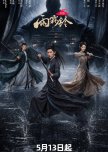
Bitter heroism built on righteousness and sincerity
Honestly, I started watching this drama because I missed seeing Yang Yang on screen again after his previous drama, The Immortal Ascension, left such a strong impression on me. But the moment I entered episode 1, I forgot about Yang Yang entirely. I became completely absorbed in a character named Zhan Zhao. Apparently, he is an important figure in the legend of Bao Zheng. I did not know much about this legend beforehand. Still, at heart, I have always been drawn to dramas that explore serious themes, such as truth and justice, investigation and law enforcement, which form the very core of this drama. This drama is truly a remarkable accomplishment compared to other dramas with similar themes, such as The Imperial Coroner (2021), Coroner's Diary (2025), and Detective Dee's series.1# A multidimensional heroic character
I have always loved heroic characters—people who courageously fight for truth even at the cost of themselves, enduring hardship and suffering along the way. Zhan Zhao embodies this archetype powerfully. The most important strength of the story is that the very first episodes immediately touched my emotional core. The story opens at the lowest point in Zhan Zhao’s career as an imperial guard. He is wounded, cornered, and in need of help. Yet despite his condition, he is never weak and continues to think strategically while allowing himself to accept assistance. This is how the other main characters, Huo Linglong and Bai Yutang, successfully enter the story as supporters, comrades, and his close companions throughout his journey.
It is true that the story may feel uninteresting to some people. The wuxia aspect of the drama may feel unsatisfying at first because Zhan Zhao never truly kills his opponents. This is a fair criticism, and I myself felt the same at the beginning. However, after understanding the historical context—that the story takes place during the Song dynasty, an era deeply committed to law and civil order—everything began to make sense. “Upholding truth and justice without killing” becomes Zhan Zhao’s core principle and the source of his inner conflict, because it stands in opposition to the jianghu mentality, where “a life is repaid with a life,” rather than crimes being judged through the court of law.
For me, Zhan Zhao represents a transitional era that once sharply divided the jianghu and the imperial court—two worlds with entirely different rules and values—into a new order where the state seeks to enforce law across all its territories and regulate the use of weapons in order to suppress vigilantism, which had long been a source of chaos and suffering for the people. He is a swordsman born from the jianghu, yet he chooses to devote himself to the government. He possesses the skills of a supreme martial artist, but also a heart that desires justice and goodness for the people through constitutional and lawful means. He is an anomaly within the jianghu, a world that values power and the reputation of martial arts sects and clans above all else, and also within a government filled with corrupt officials obsessed with authority and political gain. Zhan Zhao is ultimately a lonely hero, struggling to uphold his ideals largely on his own.
So, even though Zhan Zhao is fundamentally a classic heroic figure, something prevents him from becoming one-dimensional. There is a deeper context that the audience must understand in order to fully interpret his seemingly “unusual” principles and actions as well as his conflicts. For me, this is the drama’s greatest strength: Zhan Zhao himself is an exceptionally strong character, written with remarkable depth and care.
2# Leaning toward realism
I love the way this drama is produced and how it presents things with a sense of realism. Wuxia stories often rely heavily on supernatural powers as plot devices, filled with endless martial techniques and mystical elements we've seen before. Enemies die too easily, blood flies everywhere, while the heroes survive again and again through transferred inner energy, miracle doctors, magical pills, and various forms of invincibility that make characters almost immune to death. This drama still contains some of those elements, but at some point, their effects are restrained and moderated by human weakness and limitations. To achieve extraordinary results, the characters must struggle intensely and push themselves beyond their own limits. For me, this is what makes the story compelling. There is no guarantee that the protagonists will win. We never truly know how things will end, because even when the variables are visible, the outcome of events remains unpredictable.
When it comes to martial arts combat, this drama is simply unmatched. The fights feel genuinely physical, with highly creative choreography. Many wuxia dramas rely heavily on visual effects to create flashy battle scenes, but this drama is truly old-school in spirit. Sword fights, weapon clashes, and hand-to-hand combat are carried out through real physical performance rather than spectacle-driven effects. Each fight sequence feels like a short drama of its own, complete with a beginning, rising tension, climax, resolution, and conclusion. The scenes are allowed to unfold fully rather than being abruptly cut. In many other dramas, fights are edited so heavily that the audience is suddenly shown only the outcome without the emotional or tactical progression. This drama really gives viewers the satisfaction of witnessing the battles in their entirety.
Another fascinating aspect of this drama is how thoroughly it portrays the workings of crime and corruption. We are brought directly into courtrooms and investigations, shown how evidence is gathered and how facts are connected in order to reach a conclusion. Of course, the cases themselves are dramatized to some extent, but they are presented with enough clarity and structure that attentive viewers can follow the logic step by step. The drama carefully explains where the flaws and gaps lie, and how the scattered pieces of the puzzle are gradually reassembled until the full picture emerges. The crimes and murders themselves are not complicated in execution, but what becomes truly interesting is the concealment of traces and evidence afterward. This is precisely the area where our trio of musketeers does most of their work.
3# Deep theme and social commentary
The third aspect that makes this drama so valuable is its thematic depth and social commentary. The story begins with struggles for power among the elite, but the consequences gradually trickle downward, affecting ordinary people and innocent lives. The logic is simple: someone desires power, and in order to obtain it, they must gather financial resources and political allies both inside and outside the state. From there, the web expands into illegal businesses and corrupt agreements. In reality, this is often how corruption works and how it creates suffering among the people. What makes it even more tragic is that the legal and judicial institutions that are supposed to stand at the forefront against corruption are themselves drawn into the same corrupt vortex.
People like Zhan Zhao, who choose the difficult path instead of the easy one, become a breath of fresh air—a source of hope amid darkness. Yet ironically, they are often the first to be sacrificed in the struggle against corruption. Their convictions are misunderstood, and their sacrifices go unappreciated. In this sense, the drama becomes not only a reminder of the cost of justice, but also a form of appreciation for those who dedicate their lives to upholding the law.
The quality and depth of this drama may not be understood by many people. Honestly, I sometimes wonder how easily some viewers become haters, giving low ratings without truly watching or reflecting on the message the drama is trying to convey. Their perspective often seems limited to whether they like the actors or actresses, whether there is romance or bromance, whether the ending is happy, and things like that. My hope for future viewers is simple: watch this drama carefully and sincerely receive the goodness it offers. If you do, I believe you will come away feeling satisfied and genuinely appreciative of what this story has achieved.
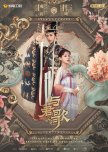
Realistic intelligent serious historical drama, with a great villain and great hero(in)es
With over a millennium long history of imperial age and profound philosophical tradition, China is blessed with literarily abundant source for inspiration for Game of Throne like historical drama. Among the best is this drama, Dream of Chang'an/ Stand by Me. "Stand by Me" draws inspiration from historical elements and the cultural backdrop of ancient China, particularly focusing on the Tang Dynasty. It tells the story of short-lived puppet emperor, Qi Yan (ML), and his struggle to end the tyranny of the corrupt eunuch party."Stand by Me" is a highly strategic, political, historical drama and takes realistic approach of storytelling. There isn't any use of superhuman ability to fight and combat as usually seen in Chinese wuxia. All conflicting parties use human ability i.e. their intelligence, before physical/ military forces. Their fights is symbolized as a chess game with real people as the pawns. On the board, eunuch party is on its height and led by a formidable psychopathic old eunuch Qiu. His defense is so solid as he control the army and build a strong fortress, The Chess Battalion. His aides are all powerful in intelligent and combat. His spies are everywhere. However, he has a weakness. His right hand and his confidante secretly have ulterior motive to revenge against him. In the brink of falling, imperial family of Qi is struggling to just live under the control of eunuch Qiu. After the rebellion to topple down the eunuch failed, the current emperor, Qi Yan, becomes a puppet. His life is controlled with poison and injury, his movement is limited and monitored, his brothers are all hostage, his friends are faraway, and he can be replace/ killed anytime. However, all of those are just an act. Unknown by many people, except two trusted allies, he plan everything to defeat his enemy. He must be perfect and patient in every step he takes. No room for mistake and weakness or the dynasty will meet the end and all sacrifice that had been made would be vain. Interestingly, besides Qi Yan, there are two other people who are plotting, the Qui foster daughter, and the Third Unknown Party.
The strongest aspect of "Stand by Me" is the story itself. The stakes are already so high since the beginning. All good people are in jeopardized situation. The position of the emperor is very unique. In the chess game, the King must be protected, but Qi Yan is exposed. From various angles, he is already check-mate. He is purposefully kept alive only for the eunuch to maintain supremacy and control over the land. He is humiliated and forced to wear "useless emperor" mask. Nobody believes in him, and all people in the country ridicule him as the dog of eunuch and accuse him as the throne usurper. The situation changes the day he got a female bodyguard (FL, Chen Ruoyu), who is initially sent by her master as a "honey trap" to kill him. Ruoyu saw him with sincere eyes and found the kind heart of emperor. She is the first outsider that trusts him fully and eases his emotional burden. They love and protect to each other dearly. Their relationship is so strong and there is no single day they misunderstood one another. Even though they were lacking in communication, they have faith to one another. This drama does not emphasis heavy romance between ML FL because love is never their issue.
Other things, the story is interestingly very plot-driven and not exploring the characters development. "Stand by Me" doesn't show typical character transformations e.g. villain turning into good people through redemption arc, or the good one becoming better after trials. The episode 1 to 49, the villain is villain, the good people are good ones. Instead, this drama presents a deep exploration about how far a villain can be, and how far good people can be.
The main villain, eunuch Qiu is not a typical villain. He climbed the ladder of power from bellow to the top, mastered high martial arts, gained supporter among eunuchs and corrupt ministers, and build military power. This vertical mobilization is made possible by imperial family itself which is knows as ruthless and killing each other to get the throne. So, he join the game and gain victory for himself. From the outside, he looks like a funny man, sometimes acts childishly, and intelligent. But, he is vicious, ambitious, and psychopathic. He punish and kill people like having fun. He rules with terror and fear, but people are gravitated and dependent to him. Every time he makes his moves, we instantly feel, "Oh, no. They will be doomed," toward the good ones, because he is above the cloud.
The main hero, the emperor, ML, is not like other emperor hero which is often depicted as powerful, handsome, and revered. He is powerless, sickly, and despised by his people. But, he has a big golden heart. For years, he keeps the truth, emotional torment, and suffering to himself, while tries his best to do his duty, to crack the cage slowly, patiently and selflessly. He play along the scheme of eunuch, but nothing fears him. He is ready to die anytime, but refuse to die easily. His moves are silent rebellion and he uses his Uncle Prince to use people to serve his cause unknowingly. In the end of the story, he has many people that stand by him. The second hero is the Uncle Prince who although has a dream to be a king, he still maintain his dignity and loyalty. He is a grateful person and never change his heart to become a greedy person. The third heroine is the FL. She changes from naively righteous and compassionate girl to more mature and powerful without losing her trademark. She has no trust issue and can see people clearly as trustworthy or not and love them unconditionally. The fourth heroin is the FL's sister. She is a good girl in disguise, a sheep in a wolf's clothing. She plays like a villain, but actually carefully plan everything to defeat her enemy without exposing her true self and mission. She is physically weak, but strong at heart.
Another thing worth to mention is, the characters in this drama are not emotionally explosive during emotional scenes. They are all calm, calculative, and careful. Their sad tears are flowing in repressed manner. In anger, the tension is never overboard and their voices are kept low. There are many moments of silence, when they are thinking and calming themselves. They are full control of themselves, and never do anything by the force of circumstances alone. Every move is based on calculation and hypothesis. Like playing chess, they are all future oriented.
"Stand by Me" has a beautiful ending that can be interpreted in two ways. One, the emperor is finally died peacefully in the shoulder of his beloved and trusted uncle. The state is stabilized and secure. His name is cleared and his wish fulfilled. His beloved woman is free of duty and now living a civilian life. Two, the emperor is finally died peacefully, as stated in historical record. But, he is not really died. Not explicitly showed, the last scenes of episode 49 tell a possibility that he comes back to FL. First, FL don't accept his death when the bell ringing in the city, announcing the emperor has gone. Second, the music is beautiful and the smile of FL is wide, teary, and beautiful after surprised on a man visiting her shop. That kind of smile is full of happiness, like a smile for a lover long not see. It is like the ending of The Untamed.
"Stand by Me" maybe is too heavy for audience who refuse to think and follow the talks, events, and moves. So indeed, it is not everyone cup of coffee. Many scenes of this drama cannot be skipped, or the tracks will be lost and you don't know what is happening. Gratefully, the story is so engaging intellectually and emotionally, and ML FL both have great visual and characterization. This drama is almost zero plot hole, every question is answered, and the ending is full-round. It is worth to re-watch.

Hope versus despair. But, the story is going astray.
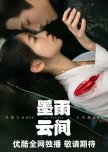
Story (6 out of 10)Love is Panacea perhaps is not everyone's cup of tea. It is a drama, but not dramatic. Its comedy is not comedic/ funny. It is not romantic enough, and not giving us emotional roller-coaster like in LYX's previous romantic comedy and romantic tragedy (e.g. Love is Sweet, Till the End of the Moon). You won't be able to binge watch it or be addicted to it because it is too flat and boring (sorry).
I have finished 20 episodes so far and I want to drop it. After the Lacaya arc, this drama lost its strenght i.e. the story theme. When they highlight Huntington Disease, I thought it would become Chinese "1 Liter of Tears". When they showed economic and social issues as well as the moral dilemma around the society and people with terminal illness or incurable disease (poor Sukun and his AIDS, the tragic general with brain tumor, etc), it is really hit my emotion and sympathy. This arc is like an introduction for the Huntington disease part. I prepared myseld to cry so badly, but... nothing is happened after that.
From Lacaya arc, I learnt that life is basically a tragedy. Many people are unlucky to have a full and free life. Unhappiness is bound to happen. In this context, doctors as part of privileged, powerful, and well-off group in society, plays a big role in bringing back happiness to people' heart. But, when they are back to China, to a luxurious city where nobody is struggling to live, those morale and inspiration are gone! It turned out to be a cheap romance, toxic, inhumane, and full of jealousy. Can't they just focus on the medical story, the support, and healthy romance so we (especially with medical conditions) can relate and feel heard? The story lost its promise.
It is a relief that in the beginning, this drama depicts Dr. Gu as a mature and experienced man as well as a professional and dutiful person. His idealism is the moral of the story. He is a person who have faith, "Instead of letting them die in despair, why don't we let them put up a fight? Sometimes love may create miracles. Everything is worth it when you're with your loved ones." His faith is the premise of this drama. How reliable is his faith to face the next challenge when his beloved is the one with incurable disease? This faith makes him the strongest character (emotionally, intellectually, and morally). Will he always be strong? Nope. Back in China, he turned out to be like an immature young boy, chasing after a woman who repeatedly push him away. The story forgot he is a very much adult. His charisma is destroyed. Why should romance make a person less intelligence? I am so disappointed with his character declined development.
And for the female main, Su Wei'an, her depressed personality is not interesting. We understand how an illness can rob many things from a person. But, the story didn't give us enough explanation for her depression or disappointment (the root cause why she wanted to end her life). Did she has a dream that she invested everything to achieve it? Did she has a family that she wants their happiness so much? Did she has a life that is so promising in other eyes? No exploration about those. And, she knows she had a psychological problem, but why she didn't meet any counselor to get help? Her decision is not logical, in fact she was formerly a medical student and definetely learnt about that kind of thing. She doesn't possess positive mindset and strong mentality, which make me wonder how spoiled is her upbringing?
Other weak parts:
Music. Not memorable. Boring. No banger.
Antagonists: Wen Ran, so egoistic. How could she be a doctor? Dr. Li, insane. How could she be a psychiatrist? I want to punch their faces!
Support characters: Jiang Muying, she is so good in Lacaya. But, in China, she lacks contribution to the story. She is just a side-kick and secret keeper for female lead. Fang Mingfan, he takes so long to solve his phobia, and at best, he is just a commentator of love between the main leads.
This drama has great villains and heroes but is weak in resolving conflicts.
The Double is like rain after a drought of good quality C-Dramas in 2024. Initially, I didn't expect it to be this great. But, after completing all the episodes, I would say this one might be in the same league as the phenomenal, Nirvana in Fire (NIF), as the best revenge drama of this year.Revenge historical dramas are usually not easy to watch because the plots are often quite complex, especially when connected to palace politics and intrigues. To enjoy them, we must pay attention to each milestone and understand the strategies and tactics to reach the targets. Because of these reasons, watching dramas in this genre can be tiring and boring if the story and plot are not captivating enough. Fortunately, 'The Double' is able to overcome this challenging aspect of a drama. For the majority of the episodes, I could not fast forward because it is really interesting, entertaining, and thrilling.
The story is the biggest strength of this drama. First, to help us understand and follow the storyline, and to manage the large number of characters, this drama smartly uses an episodic story structure every 4-5 episodes. We see this from the changing settings, such as moving from the mountain temple back to the capital city, then to Luyang City and several other cities, before returning to the capital again. In each place, we get a smaller story that contributes to the main story, and in each smaller story, we see targets achieved one by one. The storyline is mainly chronological. Backstories and flashbacks exist in certain parts, but they primarily help us understand the characters' motivations and personality development.
Secondly, I love how this drama heavily embraces realism and shows us two balanced perspectives from the elites and the commoners. This drama explores themes that are not commonly found in other C-dramas such as gender equality, women roles in society, social class and mobility, patriarchy, poverty, abuse of power, tyranny, greediness, etc. The tragedy that befell onto many characters are the results of society sickness. This context makes the struggle to seek justice and uphold righteousness in this drama very grounded, relevant, and realistic.
After the story, the most interesting aspects are the characters and their development, and the portrayal of trauma and the emotional scars left by trauma on several characters. I personally love the male lead (Duke Su) and the second male lead (Shen Yurong) because, as romantic partners of the female lead, they have such different personalities, like heaven and earth. Shen Yurong is the former husband of the female lead. He is an intelligent, kind, and gifted scholar who highly upholds his idealism. However, he lacks the agency and bravery to fight for what is right, and therefore cannot protect his beloved wife and is forced to do horrible things. Meanwhile, Duke Su is a military man, the later husband of FL. He is intelligent, powerful, and feared by many, but cold and ruthless in doing right things for the emperor and for the sake of the nation. This contrast is meaningful because it tells us that without power and bravery, you cannot uphold your idealism.
Besides the male characters, I love how this drama presents the villains. The biggest villain is Princess Wanning and her allies in the palace, along with her brother, a military general planning a coup. Princess Wanning is characterized as a psychopath (torturing, controlling, and lacking remorse). However, the story tells her complete background, showing why she turned out this way, and reveals her human side that deserves compassion. Similarly, the second biggest villain, the female lead’s stepmother, becomes a manipulative woman seeking power and domination, but also love and attention, due to her suffering. In the past, she was an innocent flower, but her family forced her to take the evil path. Besides them, there are several minor villains, each with eccentric, ruthless, and corrupt personalities, posing a great danger to the female lead in her pursuit of justice.
Overall, this drama is a story about society, not merely about revenge. The context and environment are realistically portrayed. This is a world of ancient China where family status, reputation, and position are the three most important things, and people can turn into beasts pursuing them. Meanwhile, women are loved, educated, and trained well, just to be used as tools to gain and maintain power by their men. In this aspect, I can say that this drama surpasses the masterpiece, 'Nirvana in Fire/ NIF' which is too high-politics and captures mainly the dynamic among elites and didn't provide us more insight about society. Furthermore, there is a balance between the use of hard power (military power, martial art skill) and soft power (manipulation, influence, deception, and intimidation).
However, from a problem-solving perspective or in terms of problem resolution, the story lacks sophistication because success is guaranteed from the beginning. There are no surprising twists in the middle that could make us worry about their potential defeat (In "Nirvana in Fire," we have the scene where Mei Changsu is poisoned, imprisoned, and nearly dies). We don't experience any gritty or desperate moments between the female lead and male lead because both of them are so capable and manage everything adeptly. Furthermore, upon closer examination, it's unclear what is truly at stake. Firstly, the emperor supports the protagonists, while the villains in the palace lack strong political influence. Secondly, the questionable identity of the female lead poses no significant threat to the Jiang family beyond a tarnished reputation. Thirdly, the romance between the male lead and female lead feels unearned and lacks any meaningful trade-offs. Fourth, the villains are ruthless to anybody, but the leads. Everybody dies, but the leads. Fifth, in the end, the wrong doing of Princess Wanning toward FL and her family is not exposed to the world. She just died by killing herself after mistaking the intention of her lover, who poisoned her for political purpose, and being heartbroken. The same goes for the second male lead (Shen Yurong). He killed himself because the female lead no longer loved him and that he couldn't return to the beautiful past days, not because he understood why he had failed his own idealism. So, the justice is not served well.
This drama is perfect until episode 30. The last 10 episodes are a downfall, making the story anticlimactic. It's a good idea for the female lead to try to make the second male lead admit his wrongdoing, but she does so as if they were strangers. In fact, they were husband and wife who loved each other. It's understandable and valid for his reasons like 'I had no choice' and 'I had to protect my mother and sister.' However, the emotion remaining in the female lead's heart is just hatred and anger, while the second male lead feels guilty and regretful. Psychologically, it doesn't make sense because it seems forced for the plot to make the female lead and male lead become lovers. It would be a redemption story if FL helps him remind his true heart before entering palace, and he turns out to be her another hand to revenge Princess Wanning, playing new role as a trojan horse.
It's a significant development that Princess Wanning finally succeeds in trapping the female lead inside her game. However, it feels wrong to leave her safely in jail without any torture. This action seems out of character and misses the potential for a desperate scene that could increase the stakes and conflict, pushing the emotions and motivation to succeed in the revenge mission and save the nation. Additionally, the episodes involving the coup d'état are shallow and lack complexity, with less strategic movement. This should have been the climactic moment to leave a deep impression on the audience, but instead, it feels like an everyday event. It could have been a great war within the country and against an evil neighboring country simultaneously. This final development would have made the deaths of Duke Su's two aides more acceptable. Alternatively, they could have provided Prince Chen with a more compelling reason to stage a coup, such as seeking revenge for Princess Wanning, who was taken hostage, or aspiring to become a braver emperor and defend against enemy countries. It's disappointing that Prince Chen, as the main culprit behind the country's suffering, is portrayed as merely greedy for power, without a higher purpose.
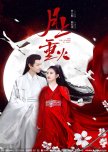
A tragedy wuxia. There are more tears than blood, more manipulation than actual combat.
I watched this drama to explore and appreciate Luo Yunxi's acting skill after watching him in Till The End of The Moon (2023) and Love is Sweet (2020). If you come to this drama for this reason, you won't be disappointed. Playing the ML, Shangguan Tuo, he is really skilled in managing emotional scenes as well as fight scenes, his facial expressions and gestures was on point. In addition, in this drama and his previous Runyu role in Ashes of Love (2018), Luo Yunxi has the best physical appearance (not too thin yet), IMO. He is definitely the king of costume drama. Wearing traditional clothes, his handsomeness and elegance is off the chart.***
Many viewers gave pretty low rating for this drama and I understand the reason. Without great patience, you won't survive this drama "boringness". Over the span of 48 episodes, under the tag of a wuxia, there are only few actions to enjoy. Instead of action, there are tons of talks about love and hate, jianghu politics, and mystery to solve. If you don't have the flexibility to change your expectation and set new watching goals midway, there are nothing left for you. You'd better drop this title and save your precious time. However, if you are able to realize the message the drama intends to convey, stay watching and you will reap the gem in episode after episode.
I like to focus more on the story. Actually, this drama is pretty good at lying the foundation for the main conflict. The conflict is not straightforward and is built up slowly. In early episodes, we think that the story is about FL's (Chong Wuezhi, played by Yukee Chen) quest to reconcile with other sects in jianghu who have grudge to her sect, Hall of Flame, and clear her father's name. However, the water is more deep than that with the introduction of Prince Lu (played by Patrick Quan) from the imperial palace.
Prince Lu is an impossible antagonist and villain. He is weak and sick, but has big ambition to control the jianghu. His power is immense because he is super intelligent to to collude with certain sects and achieve his goal. He is the master of manipulation. The Hall of Flame is just one of his victims. More interestingly, Prince Lu has a sound philosophy to commit his crime. He doesn't seek the throne like typical villains in wuxia-palace drama. He wants to maintain order in the land and increase palace control over chaotic jianghu. It makes an impression that he is the righteous one.
The story sets in the context where martial arts sects were flourishing but competing to one each others. The competition to be the strongest and greatest creates distress for society. Previously, the traditional relationship between palace/ government and jianghu is non intervening. Jianghu has the freedom to do whatever the sects want without government intervention, but people of jianghu is forbidden to participate in palace politics and imperial family business. The goal of people of jianghu is to achieve the greatness in martial arts, to be the strongest and the most influential among sects. Sometimes in the process, some people are killed and it creates grudge and prolonged blood feuds. From government point of view, this feud breaks peacefulness. The main goal of government is to maintain order by the rule of laws, but with traditional norm of non-intervention, government cannot punish people of jianghu to stop the disorder.
Prince Lu is the actor who wants to change this chaotic situation, in order to help his emperor father of Crown Prince brother in the future. Till this point, his reason is acceptable. Unfortunately, he solves this problem with suppression and unjustifiable killing too. For him, the sects are just the pawns, are disposable anytime. Later, after the death of his beloved wife, he experiences mental break down and turn to be a tyrant. He blames his life tragedy to Shangguan Tou and eagers to kill him and Chong Xuezhi who always try to stop him. His personal goal changes to be the controller of jianghu. He wants the power himself.
For me, the villain in this drama (Prince Lu) is the best in the wuxia so far. It is far better than Prince Red in popular Blood of Youth (2022), or even a drama with the similar vibe, The Flame's Daughter (2018), which the villains are just a brainless psycho. Prince Lu is a master of go and always several steps ahead. Several times, he causes desperation for the protagonists and set them into traps. Also, from the perspective of villain, it is very potential for a great plot twist. In the end, Prince Lu's crimes are exposed but he is just punished lightly, no beheading or exile or removal from princedom. It makes me suspect that actually the emperor knows the crime and quietly supports it by letting Prince Lu did what he did.
The story would be better if the author/ writer not easily let such a great villain to be crazy in the end. It is okay to suffer depression from the loss of beloved wife who doesn't understand his duty to his imperial father. This tragedy should be his moral reason to be more determined to control jianghu and strengthen the government power. He is the one who sacrifice for the future of the empire. From the palace perspective, he is the hero. From jianghu perspective, he is the villain.
However, this potential to improve the story is loss. Simply, because the story is using jianghu perspective. It doesn't try to balance the perspective. It is showed from the imbalance representatives. Too many people from jianghu are told, but less from the imperial family and government. It would be good to see how the emperor feel threatened as well as saddened by his trusted Imperial Advisor who has lenient view about the jianghu and let his son, Shangguan Tuo, to be part of jianghu, after his brothers leave him for the jianghu. It would be good to see Prince Lu the weak as the most filial, who is willing to live in faraway province to help his father and Crown Prince by doing the dirty works. If we have the balances view, it would bring more lesson for the ML and FL. After they win the struggle to free jianghu from Prince Lu's crimes, they should take more active role in strengthening the character of jianghu people, to prevent another chaotic period in history. But, in the end, FL leaves her sect and choose to live in seclusion with ML. With the power they have, they turn to be selfish and think only about their own happiness.
So, you know. I love this drama because of the complex villain. Even tough the potential is wasted, it enriches our imagination what future villain should be written. It is boring to see one-dimensional villain or crazy villain. The real villain is often normal people who have love, reason, and moral too, like the heroes. It is just their way to solve problem to be different from the heroes.
I hope in the future, there will be a drama that can portray a quality villain story. I hope there will be a writer that creates a grand story in which the right and wrong is not that easy to define, that concerns not only the love among man and women, but also the well-being of overall society, to take a certain social issue as the focus of the story.
A Rare Drama with Perfect Cunning Antagonists and Wise Conflict Resolution
There is no use to repeat what other reviewers have pointed out. The romance of this drama is glorious. The love theme is crystal clear and strong. So, lets take other perspectives which are rarely taken for discussion. It is one among only view C-dramas with deep exploration of righteousness and evil, and perfect story execution.Story wise, this drama is not boring at all. 59 episodes are truly intimidating, but there are things in the story that keep us in the edge of our seats. For some aspects, it is not so different from other xianxia (Chinese fantasy genre). There are four realms (mortal, demon, devil, and heaven), five "righteous" sects of mortal cultivator, a great war in the past, fallen god of war and demon, martial arts tournament, an adventure exploring the realm, facing villains, and heading to cosmic war to defeat the final strongest villain. However, few things make it really different. First, good team building and teamwork. This drama starts by telling the friendship of four teenagers: Yu Sifeng, Chu Xuanji, Chu Linglong, & Zhong Minyan. Later, the group grows bigger (add Little Yinhua the snake and Ruo Yu) and they (six people) go adventure together. Almost all problems they face are solved together, sometimes with the help senior supporting characters. All characters have their own unique contribution and nobody are suddenly missing mid game or just left without explanation.
Second, the story is so consistent to its theme: love and redemption. There are several sub love stories aside the main pairs and all are finished well. Love to the romantic partner, love to family and friends, love to community/ sect group, love to the realm and other being. None of them involves love triangles, jealousy, and competition to grab other person's lover. Love is depicted as something a person must be true, loyal, selfless, and devoted to, and experienced with consent and acceptance. Also, there are several redemption stories that make viewer super satisfied with the ending. The happy ending in this drama is not merely defined by each/ main character's love life, but also reward and punishment each character received as their karma. Everyone get what they deserve justly.
Third, the villain/ antagonists in this drama is so brainy, charismatic, powerful, and good looking (Yuan Lang and Hao Chen). They are so sly, cunning, manipulative, meticulous, and careful. They think before act and always prepare back-up plan. They are so successful so that they can survive until the last episode. They characterization is perfect. Yuan Lang is so mysterious behind his mask and his inner states are well depicted through the movement of his fan. He never lose his composure. He is ambitious, confident, independent, daring, cold, non-emotional, scary, and ruthless. His emotional expression, like when he kneeled before Sifeng fearfully, is just an act. He never shows his true heart. He manipulate people with his rational/ logical words His enemy is the deity. Mean while, Hao Chen is a moralist, ambitious, and self-righteous. His enemy is Sifeng. He has egoistic personality and believes that he is righteous and never wrong. He manipulates other, especially Xuanji, through victimization of himself and finding Sifeng wrongdoings. He is a great liar and full of prejudice. Also, we have fake antagonists: just tragic characters that have goodwill but without means to achieve it, or a person that is (seemingly) bad in the past and later he turns good after experiencing betrayal.
Four, the conflict is very well developed. We never know the real problems until later. It is surprising that the story turns from mortal vs demon to demon/ devil vs deity. The scale of the conflict is grand, built from bottom to up. At first, it is just a quest to find the shards of a magic mirror to help Xuanji becoming a normal person. At the same time, a mysterious sect is searching four keys to release a demon. Slowly, the real identity of Xuanji is revealed, and surprisingly, the real identity of Sifeng. Midway, the story turns into a star-crossed lover story, a forbidden love between a demon and a mortal. It is getting bigger when all things are related to the greatest threat of the realm. Near the end, actually the story is a tragic one. The god of war is an anti-hero. The overall story of Xuanji is her way to redemption. In the end, it becomes revenge vs forgiveness, to force a change vs to let it flow with nature/ fate. Truly, a daoist story. Interestingly, the story ends in Heavenly Palace. The Heavenly Emperor is a wise person and becomes part of the conflict resolution. From the beginning, he already tried to solve to problem with the help of his son to guide the god of war through her tribulations and to achieve redemption.
***
Honestly, I watched this drama after Till the End of The Moon's fan comparing Tantai Jin and Sifeng, who is the king of blood vomiting. It is hilarious because I am really curious after that. IMO, Sifeng's blood vomit is more realistic because it is caused by apparent severe injuries, like heart stabs and heavy physical torture. So, the blood is expected. And he didn't start to vomit blood in early episodes. His vomits in later episodes indicate the intensity of danger, his physical limit, and that he is almost died/ very sick. That bloods along with facial expression and face complexion, send a visual message that he is really in pain.
A love story that reminds, it is good to remember and take the lessons.
To make it watchable, you must remember that it is a story about a fairy turning into human. Since it is not impossible in real life, you should not expect realism and be more patient to swallow every logic in the story.Sometimes we love a drama because it meet our expectations (we see what we want to see in the screen). However, a story can serve also as a medium to experiment with ideas, what could be possibly happened to love and relationship when circumstances are not usual.
In this drama, we have a ginseng fairy turning human (Ye Xi) and multiple men in her life. It is difficult at first to follow the storyline because it mixed. It is progressing, but with so many flashbacks. Until episode 14, there is no chronological order, so it is confusing. To be patient that long is not easy for me, even though the romance is quite unique, fresh, and promising for further development.
The good of the story is that it is a contemplatation about human nature. The themes revolve around the deceit & betrayal vs the faithfulness & devotion; selfishness vs selflessness; superficial love that is only sweet in words and promises but backstabbing vs true unconditional love though it is sometimes bitter. Sometimes love is only used as tool for our interests, sometimes it is the real purpose of life.
I began to understand this idea when Ye Xi was dying the second time. She lamented about she finally became human, but in the end she was still eaten by human. She did thousand years of cultivation, longing for a new life which she would be able to live with someone. Actually, she was able to feel the agony, but the problem is she got amnesia and came back to her true nature as a kind, helpful, and trusting person every time she was revived. It is the tragedy that makes us audience feel angry and despair like Bai Yue, how stupid she is! How could she got trapped and betrayed again? Love is not that important when it goes ugly for you, how could your brain only seek for love and repeat the same mistakes?
Fortunately, later she got some conscience and aware of her mistakes. She could distinguish true love from fake one through Bai Yue's devotion and sacrifice to her. As audience, we learn, it is important to remember even the saddest part of our life. As we hate a girl like Ye Xi, we should remember that in real life some girls are like Ye Xi. In this aspect, the story itself empowers us to love our selves more, to be more careful in handling romantic relationship, etc. The moral of this story is the only good aspect of this drama.
After finishing all episodes, it is sad that the story delivery is less sophisticated. The second main lead (Cang Qi) is not interesting at all. The actor played the role is overly dramatic in facial expressions, and he looked too beautiful/ feminine for the role of person in power. It is not explained how Cang Qi rose to power, what is his job in goverment, etc. His obsession to Ye Xi is disgusting, because he was lustful and saw Ye Xi as sexual object. The supporting roles are not help. Their love story is shallow. They are quite comical, but not that funny.
The only make sense person is Bai Yue. He was praise worthy for his ability, ethics, loyalty, and patience. I think it better to let him just died in episode 21 and his love made Ye Xi understood more about true love. His curse is the important thing that push the story toward the end. It is no need to revive him with such a lame mechanism. I personally don't like a story that ends with a deus ex machina. How could a coffin suddenly had such magical power? His death should be the final missing piece that Ye Xi got during her journey to find love and to be a human being, not a fairy.
The worldbuilding is a mess. The action scenes are lame.
This drama is such a disappointment because the quality is below expectation. Usually, viewers are able to overlook imperfection regarding CGI, editing, dubbing, and other technical aspects if the story has quality. But, the story is this drama greatest weakness.Setting/ Worldbuilding
Xianxia typically revolves the story around three realms: the Heaven of immortals and deities, the Earth of the mortals/ human-being, and the Underworld of the demons, spirits, and devils. Each realm has its own creatures, rules, limitations, and boundaries.
The immortals and deities can live for thousands years, They are born asexually from the ascension of lower beings as the results of their good deeds in previous life. They have superhuman ability and not usually died so easy (the only method is through the destruction of their primordial spirit so they cannot reincarnate). They live in the vast and unlimited heaven so usually, they are flying and teleporting. Immortals cannot intervene with lower realm affairs or use their ability in mortal realm. They can go to mortal world for tribulation or penance, and during this trip, they will forget their past.
Human being, animal, and plant are earthly creatures, have short life-span. They are relatively weaker, but can learn cultivation and martial arts. They live with family, in a sect, or a city. They have political entity to govern their affairs. They are crawling in the Earth on foot, horse, or carriage. Their culture and ways of living are richer. Their lives are bound to reincarnation circle. If they are good, they can ascend to godhood. If they are evil, they descend to be lower being.
Meanwhile, the demons, spirits, and devils are usually bad and on the lowest hierarchy of beings. After cultivating for years, they can have human form. They usually live as a nuisance to human, sometimes they eat human to get stronger. That is why they are hunted and killed. However, some of them are kind and not disturb human. They live in clan, so we have bird demon clan, fox spirit clan, etc. in the forest, river, lake, or sea.
Basic rules above are among common characteristics of xianxia worldbuilding. But, this drama breaks some important "rule". For example: Immortals are still immortals even when they go to mortal worlds (2 ML, 2 FL). They are very intervening, and without consequences. Human-being can have superhuman ability that makes them immune to injury and death even after severely wounded (ML). The spirit is not different to immortals as they can go anywhere i.e. the heaven without limitation (FL, the little flower spirit). What is more, the immortals act like human. They bleed when injured, they walk and run to reach certain place, and they are weak in fighting. They love and are jealous to each other. They are full of revenge and ill intention. Their living places are just like human palaces. Nothing wonderful and otherworldly. And, they can live, die, and revive as their wishes, not following the cycle of samsara/ reincarnation (just use a certain artifact to live again). Therefore, the time sequence of the story is messy. Everything seems happen in the present time. The past, present, and future are blurry. No good working timeframe.
I think, this mess is the risk for a too grand story (involving three realms), but no attention to details of each realm. This drama is weaker in the worldbuilding in comparison to xianxia like Love and Redemption (2020) which focus most of its story on the mortal realm. When they abuse the rules of the realms, the conflicts is resolved in lame manner. This drama uses deus ex machina, like when ML suddenly kills himself with unknown swords to stop himself going berserk, or when FL's heart weirdly has so much magical power, or when ML suddenly have magical pool to cure him, or when ML revives the Heavenly Emperor. There is not internal mechanism to solve their problems, like the use brain, analytical thinking, strategic talks, hard works, logical sacrifices, and risk taking for benefit. All depends on external power, weapon and artifact.
Story/ Plot
Immortal Samsara doesn't follow its premise. From the title, viewers may keep asking, what is samsara here? I don't know its meaning until the last episodes when ML confronts his father and learns about his parents story. His father is the demon king who loves and marries a goddess (his enemy), but ends up killing her in the end. So, he turns the time back from the beginning again for a different story and ending. Alas, the ending is repeatedly still the same, because his ambition never change and he never regret doing sins. It is the "immortal samsara". This is the more suitable back story (and the birth of an exquisite god as the result of their love), IMO, rather than the story of twin lotuses which has no significance for the realm, making this like the story of the prince and pauper. The story should use the ML's point of view.
Storywise, this drama lacks good story structuring. It can be more interesting and suspenseful, if the story progresses back and forth to reveal the mystery of the past and hidden identity of ML, and the reason behind why love is forbidden in Heavenly Realm sooner. Alas, this drama put too much emphasize on the ill fated relationship and the romance between ML and FL which is not important to the overall story and conflict. It will be a better story if in the end he becomes the Heavenly Emperor and takes the FL (a mere spirit) as his queen to reward her love, loyalty, and sacrifice, as the result of him learning about his parents, his identity, his enemy, the long conflict between immortals and demon, and the mistakes of the strict rule. This drama wastes an interesting plot where the enemy successfully kills the former Heavenly Emperor and impersonate him. It is never seen in previous xianxia. This drama could have interesting revenge and justice story rather than a mere romance and stupid double suicide in the end.
Characterization
Cheng Yi and Yang Zi are very good actor and actress. But, their potential are wasted because of the problematic story. ML and FL are very two dimensional. Their personalities are predictable, their behaviors are predictable. The writer should dig more on the psychology of a lowly ang young little fairy in the front of the greatest deity. They fall in love too easily, which is illogical considering their statuses. FL should be more selfish (think more about her self) because she is still too young, weak, and needs protection, and wishing for a future and pride. She shouldn't prefer death than life so easily and work harder to maintain her position in the heaven. But, they write her to be a lazy woman and have no aspiration better than a play writer. They can create her to be more interesting with describing what kind of story she would like to write and it will show us her life values, idealism, and personal difficulties as a person, and how it connects to the ML's aspirations and values. The way they introduce ML to FL is so not romantic (as a turtle flipper), downgrade him to a level of child, while he should maintain his dignity as a responsible and wise thousand years old deity. How could he fall in love so easily to a "baby"?
Other supporting characters are generally useless, like a decoration in the background when they are just standing and watching. Supporting deities do more talking than doing something to help, going here and there in a crowd, screaming, and being angry/ sad. They act like ministers in the mortal court rather than deity with specific duty and certain ability. They solve problem through debating, rather than doing something magical. The demons in the valley are also just cute, but useless. The heavenly soldiers are so small in number, like 20s. They should use CGI to multiply them and create a majestic war battalion with good fighting skills to counter demons.
Music
Nothing memorable. No banger. No heart punching beats. Too flat. Too cheesy.
I hope future xianxia learns something from this failure.
I am grateful! It doesn't just follow the trope of xianxia drama.
After completing all episode...I am so happy and satisfied with the ending! My hopes are answered in the two last episodes! All bad thoughts about the ending of this drama are melt away.
1# Why the love between fairy and devil matters? Yes, it matters a lot for the peace of the realm in the end. It gives warmth to our heart too, that this story is not a stupid romance. Self-less love is triumph here!
2# What love can do for "mankind" (the moon tribe, fairy, immortal being, and mortal being) is underexplored. No, no, no! It is very well explored in the end! Even though the sequence of events in the last episodes are a bit too fast (like without warning, the Moon tribe suddenly join troops), it is very okay. We still can follow the story.
3# The peace, the love, the unity, and the magic force. These should be the main ingredients to fight evil, right? Yes!
4# It is okay to tell about love among immortals, but it is funny to see the main purpose of their love is just to find the lost one! Finally, it is not! This drama teaches a lot about what love can do. Actually, what self-less love can do!
Watch this drama, people! Don't stop half way!
***
My review after watching until episode 32:
My hope is high when people praise the art department of this fantasy drama. I observe it well; the design of places, clothes, and the world of fairy, immortal being, devil, and mortal human are spectacular. The acting and music are good too. So, I won't talk about those things or it would be redundant. I will focus on the story.
1# Lack of background context: Why did the conflict happen from the first place?
What I like about the story is a different starting point from other xianxia dramas. The male lead (ML) is portrayed as the defeated villain. The way he met the female lead (FL) is so unexpected. So, it brought some fresh introduction that really attract my curiosity. I like how they brought also another issue to enjoy, a kind of social clash between fairy and moon tribe. The fairy is always depicted as "the hypocrites" by the moon tribe. However, something is missing. Until episode 32, it is never be explained why the hatred is so deep. What is the hypocrisy they talked about several times? A view to the past is limited to the personal family story of the ML, about his father and their sacrifice, and the conflict is already there. What triggers it? It is really a big hole for the story with many good potentials. It makes the story lack meaning, why the love between fairy and devil matters?
2# The most powerful to the weakest: Backward character development of Moon Supreme
I fall in love to the characterization of Dongfang Qingcang, Moon Supreme, who is introduced as the biggest villain in the beginning. He is cold, cool, ruthless, and fearsome. To some extents, he is admirable too, the day we learn his background story and how he choose to be humane with emotion. I think, the return of emotion (especially love) should add more strength to him. But unfortunately, in contrary, it become his Achilles heels. He becomes useless. It is very disappointing. He lost his brain to solve forthcoming challenges. I mean, how come they do battle by only relying on brute magic force? Is there no room for peace talk and diplomacy? Or at least, smart strategies and tactics to win the war?
I really want to see the Moon Supreme that turn to be a better person. They can portray him to be more benevolent and considerate, to be more open minded and have broad perspective to face his enemy, and gravitate to peace and the well-being of his people. In reality, that is the use of emotion, right? What is the use of love in him? Love has so many kinds. Eros (romance, passionate love), philia (love of friends), storge (love of parents for children), agape (love of mankind). Is his love tree limited only to Orchid, when we know he is a great person to his tribe and feared by his enemy? The meaning of love here is so shallow. What love can do for "mankind" (the moon tribe, fairy, immortal being, and mortal being) is underexplored.
3# Peace are restored so easily like it doesn't important.
The series has passed its climax, I think. It is in episode 31 where the war finally broke again, and ended by the sacrifice of Orchid. She released a power that can revive those who died in the battle and the 100.000 army of demon. It is later stated that demon and immortal being achieved a ceasefire for 100 years. This episode is so touching, but the impact is weak. The moment of Orchid released her power should reveal the true identity of Orchid as a goddess (if not, why those people kneel to her?) It should be a big good news for everybody in the realm. What we don't know is how they perceive this event and its meaning for them. This realization should be the bridge that explains the achieved peace.
I think, Dongfang Qingcang shouldn't fainted so early and easily after Orchid died. Love should produce perseverance in a person, not mental break down (as depicted in episode 32, ML turns out to be crazy). With his more benevolent and stronger heart now, he might have come back to his tribe with the last power he has, endure his own suffering, and offer peace to his enemy, reminding them Orchid's sacrifice. After that, he finally "take some rest", continuing his desire for Orchid in the dream realm. This story would be very different indeed! The 100 years peace would be his achievement and we would love him more, and understand why he indulged himself in the dream about Orchid. He is a tragic loving person! When this conflict beautifully ends, it is logical for the last arc of the story, to fight the greatest final enemy, Tai Sui. Dongfang Qingcang and friends has full power now. The peace, the love, the unity, and the magic force. These should be the main ingredients to fight evil, right?
4# The trap of xianxia love story trope
As an international viewer, it is easy to be bewildered by the worldbuilding of Chinese fantasy story. It is okay with rebirth and karma things. It is relatable because more or less it also exists in other cultures. The philosophy behind it is understandable. It is always about the rivalry of good and evil, white and black, fairy/ god-goddess/ immortal being and demon. However, we know from many series, that the lord of immortal being can be vile. God and goddess can be cunning and awful. If that possibility is exist, the similar possibility can be happen to the demon tribe, too. The tribe that is always depicted by black trait (evil, ugly, hideous, etc), actually have heart too and can be compassionate. This grey area is fantastic to be explored. Love between Fairy and Evil is promising that exploration, through a devil as the main character.
However, I don't agree with the story's over indulgence in romance in later episodes and forget the main premise, love should flourish people. It has a great metaphor already: the Love Tree of Dongfang Qingcang. In the beginning, it is deserted in a winter like place. Later, Orchid came and bring it to life. The bare tree finally sprouts and the spring is coming. Dongfang Qingcang sat below the tree and enjoyed flowers in that tree. It is a very satisfying moment! Unfortunately, after that beautiful depiction, the story change 180 degree to "a journey to find lost love one", "a quest to revive a died person". It happens in so many xianxia drama (e.g. Three Miles of Peach Blossom, Eternal Love of Dream, The Blue Whisper, etc). Come on! If you know that a person can always be born again, what is the point of grief, madness, sadness, depression, and sorrow of losing the love one? If it is to give a second chance, in this fantasy world, a person can reborn thousand times and live thousand years. They are immortal! Life is just a play for immortals. Why do they need to take it seriously? It is okay to tell about love among immortals, but it is funny to see the main purpose of their love is just to find the lost one, watch the hard work to revive him/her again, and to live forever happily ever after. For a mortal human, the most frightening thing for a lover is the loss of a loved one. Because, they only live once. But, for immortals love should be imagined differently as the most frightening thing for them should be different too.
So far, I never know any xianxia drama that goes beyond this trope. I do hope Love between Fairy and Devil would be the one. We still have four last episodes to go. Lets see!
A story full of meaning, even in its sorrow.
I came across this drama by chance through its trailer and free episodes on WeTV’s YouTube channel. Previously, I had watched several dramas starring Yang Mi (Eternal Love and Legend of Fuyao), so I was curious to see what kind of drama she was starring in this time. In those two earlier dramas, my impression was not particularly positive because I did not really like endings where the main character dies and then somehow comes back to life—a trope common in Chinese dramas. To me, that kind of trope feels illogical.With Novoland: Pearl Eclipse, I was initially worried after reading various spoiler-filled audience comments and plot summaries online, many of which followed the novel’s storyline. I almost gave up early on because I read that Haishi, played by Yang Mi, would enter the palace, become a concubine, and eventually a queen, all while being trapped in a tragic love triangle.
As it turned out, many viewers’ predictions—and even the circulating synopses—were largely inaccurate and did not reflect the drama’s true direction. Although the series is adapted from a novel, its plot takes a dramatically different path, which I deeply appreciated. It was precisely because of this divergence that I fell in love with the drama. After finishing all the episodes, I rewatched it three times to better grasp its meaning and details. I also came to love its soundtrack and regularly listen to it while working.
Overall: 9.5/10
This drama tells the story of the loyalty, love, and life journeys of three couples—not a competitive love triangle. The first couple is Fang Jianming/Fang Zhu (William Chan) and Haishi (Yang Mi). The second is Emperor Dixu (Xu Kaicheng) and his consort Tilan (Chen Xiaoyun). The third is Haishi’s adoptive brother Fang Zhouying (Wang Sen) and Zhe Liu (Yuan Yuxuan).
Each of these couples has their own unique and emotionally resonant story, largely because of their character development. Among all six major characters, however, Fang Jianming stands out the most. His story is the most complete, clear, and complex. For me, this drama is not truly Haishi’s story (even though most viewers may see it that way), but Fang Jianming’s. His decisions are what shape the narrative and move it forward. Haishi is, in many ways, the person who enters his life midway and profoundly influences the latter half of it.
What if Fang Jianming had not been a patriot devoted to his country? He would never have sacrificed himself as Baixi for the emperor or saved the kingdom by suppressing rebellion. He would not have faked his death, donned a mask, and become Fang Zhu—the commander of a secret unit that eliminates the emperor’s enemies and protects peace. He would not have recognized young Haishi as someone destined to play an important role in Dazheng’s future, saved her life, and brought her to the capital as his disciple.
Fang Jianming is, in many ways, a blessing not only to Haishi, but also to Fang Zhouying, the emperor, Tilan, and Zhe Liu. He is self-sacrificing, resilient in suffering, farsighted, and deeply concerned with the well-being of those around him—even when his actions initially seem hurtful. Time and again, he becomes the victim of misunderstanding and pain without defending himself.
Haishi summarizes him perfectly in this line: “For all these years, you have done so much for the people, the Emperor, and Dazheng. Yet no one has truly done anything for you. This time, let me do something for you. Let me protect you.”
Haishi’s love for Fang Jianming becomes truly meaningful only when one understands his life journey. This is what makes the romance in this drama feel substantial rather than superficial. Her love is not arbitrary; it is born from deep understanding of his burdens, responsibilities, and character. Unlike many romance dramas where protagonists are simply “destined” to love each other without reason, this relationship is built on genuine emotional and moral foundation.
Although many viewers complained that their romance developed too slowly and that Fang Jianming and Haishi had relatively few romantic scenes, the director’s narrative choice is understandable. Love is not merely about passion between a man and a woman—it is also about understanding, commitment, companionship, and sacrifice.
In my opinion, Novoland: Pearl Eclipse could have been even stronger if it had consistently balanced Haishi’s and Fang Jianming’s perspectives from the very beginning, firmly establishing that this was their shared story: how they matured, moved from not understanding love to learning how to give and receive it, and ultimately chose to remain together even if physical togetherness was impossible.
From the start, the drama already feels almost like a literary romance in the classical sense—detailing characters’ lives from youth to adulthood, perhaps even to death. Unfortunately, it stops just short of fully completing that vision. As a result, many viewers are left relying on their own imagination to complete the story.
Perhaps that was intentional. Perhaps the drama chose this ending precisely to leave viewers with lasting afterthought and reflection.


