



Is it purely talent or mastery of execution?
This wasn’t even on my watch list. Honestly, I wasn’t sure this drama would pull me in.
And yet, here I am.
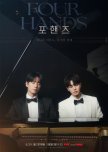
So far, Four Hands, Two Sonatas has been surprisingly compelling—emotionally heavy in a way I didn’t expect. Yes, it plays with some familiar tropes: the poor, troubled piano prodigy blessed with extraordinary natural talent, and the wealthy, pedigreed pianist carrying the enormous weight of a legendary grandfather’s legacy.
But what makes these two fascinating is that they represent almost opposite ideas of musical genius.
One plays from instinct. His talent is raw, almost untamed. Emotion seems to surge through him and spill directly into every piece, every note, every key beneath his fingers. He doesn't simply play the music—he *feels* it.
The other is precise, disciplined, almost clinical. His technique is impeccable. Every note is controlled, every movement calculated, every performance polished to perfection. And yet, beneath all that precision, something seems to be missing: the freedom to let go, to surrender to the music, to allow his own soul to speak.
Two pianists. Two very different kinds of talent. And neither is truly free.
Because behind the music are complicated families, toxic expectations, broken relationships, jealousy, poverty, competition, and the crushing pressure to succeed. What begins as a connection between two young musicians slowly becomes something far more complicated—a friendship intertwined with rivalry, admiration tangled with envy, and a longing to finally have someone who understands what their own families never could.
There is a particular kind of loneliness in pursuing greatness.
When the dream is to stand on the world's greatest stages, talent stops being something beautiful and becomes something that is measured, ranked, compared, and judged. Who is better? Who has more potential? Who will make it? Who will be left behind?
And suddenly, friendship becomes complicated when the person who understands you best may also be the person standing between you and your dream.
What happens when one person possesses the natural genius the other desperately wishes he had?
What happens when the person you most want beside you is also the person you have been taught to compete against?
And what is the price of friendship—of brotherhood—when the world keeps telling you that there can only be one winner?
The next Lang Lang. The next Yuja Wang. The next Yunchan Lim.
More than wanting either of them to win, I find myself rooting for something much more fragile: that these two talented young men don't lose the friendship that began before the competitions, before the expectations, before the jealousy—when they were simply two kids who discovered the innocent beauty of music and the piano together.
Sometimes, the greatest thing two people can give each other isn't victory. It's having someone who understands why you had to play in the first place.
And yet, here I am.
So far, Four Hands, Two Sonatas has been surprisingly compelling—emotionally heavy in a way I didn’t expect. Yes, it plays with some familiar tropes: the poor, troubled piano prodigy blessed with extraordinary natural talent, and the wealthy, pedigreed pianist carrying the enormous weight of a legendary grandfather’s legacy.
But what makes these two fascinating is that they represent almost opposite ideas of musical genius.
One plays from instinct. His talent is raw, almost untamed. Emotion seems to surge through him and spill directly into every piece, every note, every key beneath his fingers. He doesn't simply play the music—he *feels* it.
The other is precise, disciplined, almost clinical. His technique is impeccable. Every note is controlled, every movement calculated, every performance polished to perfection. And yet, beneath all that precision, something seems to be missing: the freedom to let go, to surrender to the music, to allow his own soul to speak.
Two pianists. Two very different kinds of talent. And neither is truly free.
Because behind the music are complicated families, toxic expectations, broken relationships, jealousy, poverty, competition, and the crushing pressure to succeed. What begins as a connection between two young musicians slowly becomes something far more complicated—a friendship intertwined with rivalry, admiration tangled with envy, and a longing to finally have someone who understands what their own families never could.
There is a particular kind of loneliness in pursuing greatness.
When the dream is to stand on the world's greatest stages, talent stops being something beautiful and becomes something that is measured, ranked, compared, and judged. Who is better? Who has more potential? Who will make it? Who will be left behind?
And suddenly, friendship becomes complicated when the person who understands you best may also be the person standing between you and your dream.
What happens when one person possesses the natural genius the other desperately wishes he had?
What happens when the person you most want beside you is also the person you have been taught to compete against?
And what is the price of friendship—of brotherhood—when the world keeps telling you that there can only be one winner?
The next Lang Lang. The next Yuja Wang. The next Yunchan Lim.
More than wanting either of them to win, I find myself rooting for something much more fragile: that these two talented young men don't lose the friendship that began before the competitions, before the expectations, before the jealousy—when they were simply two kids who discovered the innocent beauty of music and the piano together.
Sometimes, the greatest thing two people can give each other isn't victory. It's having someone who understands why you had to play in the first place.
Was this review helpful to you?


