Against the Current, a Chinese drama with a gazillion episodes. Here’s my opinion on the first nine episodes currently available.
Episodes 1 and 2 are explosive: intense, extremely well written, and capable of conveying sadness and anger without endless explanations. They go straight to the conflict and keep you glued to the screen. 5 out of 5 stars.
From episodes 3 to 5, the intensity drops. Lan Xiang is in survival mode, adapting to her new life and trying to build a better future for herself and her new parents. The intrigue still works, although this is where the long conversations and philosophical rambling begin. There are parts you can watch at 4x speed without missing anything.
From episodes 6 to 9, we basically enter Zhao’s story arc, the wife of the male lead, Lin Jin: stolen money, a lover, hidden accounts, and the brutal treatment of her maids. Eventually she gets caught, they divorce, and Zhao leaves the story after delivering a feminist speech to her father about how she was sold by him and how women are expected to be submissive.
This is where the drama lost me. There is an excessive amount of violence against women, often inflicted by other women, and the problem with the pacing isn’t that it is slow: it is repetitive. Punishments, accounts, intrigue, and more punishments without a payoff that interests me.
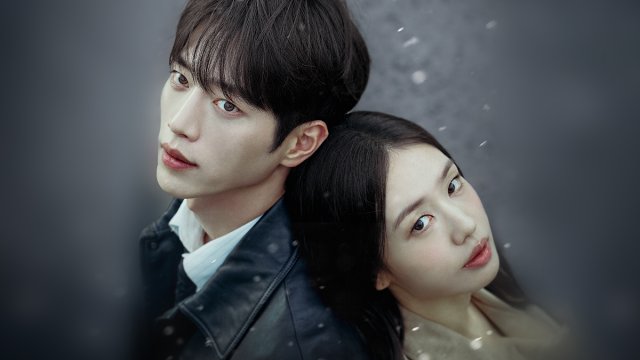
The posters and opening sequence make it clear that romance will eventually become important. After those extraordinary first episodes, I was expecting something more cathartic, perhaps a story that would eventually move toward revenge.
Are the writers obligated to tell the story I wanted? Of course not.
But their proposal doesn’t convince me enough to spend two days of my life watching 47 episodes either.
Hey buddy, have you ever broken up with someone? It’s not like the other person—and everything connected to…
Of course. And I never said people magically disappear after a breakup. My point is precisely that the series keeps them so involved in each other's daily lives that the breakup creates almost no real sense of loss. Those are two very different things.
I disagree :) My opinion is based on ep 1,2 so if it changes, I will let you know :) But so far: Our protagonist…
I think you're answering a different question from the one I raised.
I understand why he returns to work, and I explicitly acknowledged the social criticism of gapjil. My question is narrative: what does he have to lose now?
Saying that he already lost his health, hobbies, friends and life to work describes his situation before winning the lottery. It doesn't create a present risk after winning it.
That's precisely why I compared it with the French film. Not because France and Korea are culturally identical, but because both stories begin with a similar narrative device and use it differently. In one, the fortune creates vulnerability; in the other, so far, the fortune removes it.
One protagonist has a fortune to protect. The other has a fortune protecting him.
Calling that “Western-centered thinking” doesn't answer the argument.
that was her apartment not his. he came in earlier to fix her lock.
You're right, I got that detail backwards. It was her apartment, and he had gone in to fix the lock. My mistake. But it actually reinforces my main point: they have supposedly broken up, yet they still have access to each other's lives and continue behaving like a couple. There is still no real separation.
A Love Different from Yours starts with an idea that could have offered much more: a couple who have known each other since elementary school and, after ten years in a relationship, decide to break up. The problem is that the series confuses a breakup with an actual separation.
They say they have broken up, but they live across the hall from each other. She still knows the password to his apartment, walks in drunk, and ends up sleeping in his bed. Their friends organize a couples competition to try to get them back together, and they even use heart rate monitors to determine whether they still feel something when they get close to each other. Seriously? After ten years, the fact that your heart no longer races as if you were on your first date proves absolutely nothing.
Meanwhile, the script insists endlessly that she feels “pathetic.” The problem is that her own actions are beginning to prove her right. Not because she needs financial support, but because she seems to confuse unconditional support with unconditional approval.
That is the biggest problem after two episodes: there is no real sense of loss because they are never truly separated. They never get the chance to discover who they are without each other, or even to miss each other.
The series had the material to explore an adult breakup after ten years together. So far, what it is giving us is a teenage breakup starring adults.
I think Episode 1 makes it quite clear that the main conflict in the relationship comes from her, but not necessarily because she has fallen out of love with him.
She is frustrated with herself: her career is going nowhere, she abandons projects, she depends on him financially, and he is always there to support her. That is why the constant repetition of the word “pathetic” matters. The security he provides ends up reminding her of everything she feels incapable of achieving on her own.
When he finally says, “Again?”, she does not simply hear those words. She hears confirmation of what she already thinks about herself: “Yes, I am pathetic.”
That could give the breakup an interesting meaning. Not “I don’t love you anymore,” but rather “I can’t stand who I am when I’m with you.”
If the series allows her to learn how to live without that safety net and she eventually chooses to return to him, there could be a genuine character arc. If it simply introduces new love interests, jealousy, and the eventual realization that she always loved him, then it will have wasted the most interesting idea Episode 1 has introduced.
The premise isn’t new. The 2002 French film Ah! Si j’étais riche, starring Jean-Pierre Darroussin, used a very similar setup: an ordinary man wins the lottery but continues living his normal life.
The fundamental difference is that the French protagonist is trapped. He is separating from his wife and has to hide his lottery win because, if she finds out before the divorce is settled, she could claim part of the money. So he has to keep working and pretend nothing has changed. Every expense, lie, or unusual behaviour could expose him. He has millions, but he also has millions to lose.
The Ordinary Jackpot does the opposite. Its protagonist is practically in God mode. He doesn’t need his job and, so far, nothing forces him to stay. If he gets fired, his plan fails, or the entire company turns against him, he can simply go home and remain a millionaire.
One has a fortune he needs to protect; the other has a fortune protecting him.
That’s my problem with the direction this drama seems to be taking. It uses a genuine Korean social issue — workplace exploitation and gapjil — to build what looks increasingly like a corporate liberation fantasy. But where is the risk?
Instead of using the money to create tension or contradiction, the lottery makes the protagonist practically invulnerable. The story seems to be heading towards the much more commercial cliché of the handsome leading man who fears no one, puts abusive people in their place, and tries to change the system from within.
The French film used the lottery to trap its protagonist even further and create a cynical satire about greed, marriage, and bourgeois hypocrisy.
Here, the lottery seems to remove the one thing a protagonist needs most:
At first, I thought the drama might be seriously exploring a woman whose unresolved grief had distorted the way…
Update: I watched episodes 5 and 6 after reading your comments. I’ve now updated my review accordingly. I invite you to read it — some of my conclusions have changed, while others definitely haven’t. 😏
Episodes 1–4 The romance isn't moving slowly; it's moving steadily.
Fu and Ruan's relationship develops through small but meaningful changes in their interactions, and the last two episodes barely need outside romantic interference to keep their story interesting.
There are familiar tropes, but so far they're handled surprisingly well. Even a seemingly conventional stumble was visually set up several minutes beforehand, giving the moment actual narrative cause rather than making it feel completely manufactured.
Ruan is particularly refreshing: competent, independent and feminine without being written as overly cute, submissive, or childish. Fu also avoids many of the usual arrogant-CEO clichés.
The pacing is good, the supporting characters already have distinct personalities, and the romance feels natural rather than forced.
Blossom Through the Cloud isn't reinventing romance. So far, it's simply doing it very well.
At first, I thought the drama might be seriously exploring a woman whose unresolved grief had distorted the way she saw her marriage. Twice, she blames her husband for consequences he could hardly have anticipated because she failed to communicate crucial information to him. That could have been psychologically interesting if the story eventually confronted her with her own responsibility.
Instead, the drama increasingly seems determined to validate her perspective while turning the husband into the guilty party and, progressively, into a joke.
She talks about becoming “free,” yet immediately starts looking at her ex like an excited schoolgirl—the same man who previously betrayed her, got another woman pregnant, and left her. Meanwhile, her husband is treated as morally responsible for things he couldn't possibly have known.
Even the supporting characters reinforce the imbalance: her lawyer is portrayed as highly competent, while his lawyer is comic relief. Add an exhausting mother-in-law, forced comedy, endless tonal shifts, and a story that can go from calling a man “worse than a murderer” to playful rom-com music moments later.
I gave the drama three episodes because I thought there might be a serious psychological idea behind all this. I was wrong.
What I found instead was an uninteresting mess built around a false idea of empowerment: apparently, portraying a woman as permanently blameless while reducing the man to guilt and ridicule is supposed to be depth.
It's the classic, predictable office romance, packed with clichés we've already seen a thousand times. The pacing is also painfully slow, with plenty of scenes you'll want to skip without worrying about missing anything important.
But if office romance at a snail's pace is your thing, well... this might be for you.
I'm not against remakes, but I do think there should be a reason to tell the same story again. Kurosawa's Yojimbo became A Fistful of Dollars: samurai became gunslingers, swords became revolvers, and Japan became the Western frontier. There was a clear transformation that justified retelling the story.
So far, The Intern seems to preserve almost exactly the same dramatic engine as the 2015 film. Changing the actors, language, country, and workplace culture doesn't necessarily create a new movie.
And the closer you stay to the original, the more inevitable the acting comparisons become. You're stepping into roles previously played by Anne Hathaway and Robert De Niro.
Choi Min-sik and Han So-hee don't need to surpass them. They need to make us stop thinking about them.
So my question isn't whether this remake will be better or worse than the original.
I'm not against remakes, but I do think there should be a reason to tell the same story again.
Kurosawa's Yojimbo became A Fistful of Dollars: samurai became gunslingers, swords became revolvers, and Japan became the Western frontier. There was a clear transformation that justified retelling the story.
So far, The Intern seems to preserve almost exactly the same dramatic engine as the 2015 film. Changing the actors, language, country, and workplace culture doesn't necessarily create a new movie.
And the closer you stay to the original, the more inevitable the acting comparisons become. You're stepping into roles previously played by Anne Hathaway and Robert De Niro.
Choi Min-sik and Han So-hee don't need to surpass them. They need to make us stop thinking about them.
So my question isn't whether this remake will be better or worse than the original.
In Episode 5, I mentioned the structural similarities between this series and the way Agatha Christie constructed her mysteries. After Episode 6, I can be more specific: it particularly reminds me of her 1942 novel The Body in the Library.
I am not saying this is an adaptation, nor that the stories are the same. I am referring to their narrative architecture: a corpse becomes the center around which different characters possess different fragments of the same truth.
Here, Su Jeong knows why the private investigator became involved; Min Seo knows how he was hit by the car; the lawyer knows how he actually died; Jae Hong and G.Hui know where the body ended up; and his brother simply wants to know where he is.
Nobody possesses the complete story.
But Episode 6 reveals something else. George Lucas once described stories as poetry because “they rhyme.” And for six episodes, this series has been repeating the same prismatic format: someone discovers a new truth, and that truth changes our interpretation of what came before.
Yet the device never feels exhausted because the format repeats, but the result changes. One truth clarifies something, another creates confusion, and two perfectly true pieces of information can even produce a false conclusion.
Meanwhile, the story is slowly narrowing like a funnel. Every revelation connects the characters a little more and reduces the distance between them and the complete truth.
The story rhymes, but every rhyme narrows the path toward the truth.
*Okay, Let’s Get a Divorce* feels like two potentially good dramas forced into one.
It could have been an adult drama about a marriage fractured by pregnancy loss, grief, resentment, and poor communication. Or it could have been a fun mature rom-com about two adults trying to divorce while running a wedding business together.
Instead, it wants both.
A painful flashback about losing a baby can suddenly give way to playful music, petty arguments, a comedic mother-in-law visiting a shaman, ex-lovers, jealousy, and an increasing collection of micro-flashbacks. The problem isn't mixing comedy and drama; it's that the emotional continuity disappears whenever the tone changes.
I'm also curious about how the drama will handle blame. Twice already, the female lead has blamed her husband for consequences he could hardly have anticipated because she withheld important information from him. This could be intentional—a woman still projecting unresolved grief onto her husband. If the story eventually confronts her with that, there may be something interesting here. If it simply makes him apologize for not knowing what he couldn't know, that's a different problem.
So far, the drama wants the emotional weight of an adult marital drama and the commercial rewards of a conventional rom-com.
Episode 5 begins to reveal something deeper about the series’ structure: the truth is not hidden; it is fragmented.
Each character possesses a truth, but remains unaware of everyone else’s. When those truths collide, conflict emerges; when someone interprets another person’s truth through their own, misunderstandings begin. The structure therefore starts to partially resemble an Agatha Christie mystery: different people possess pieces of a reality that no single character can fully reconstruct.
But someone is missing: the detective.
The police merely navigate through the story; there is no Poirot gathering the clues. That job belongs to us. The camera allows us to know more truths than any individual character does. There is only one small problem: We know more than they do, but we still don’t know if we know enough.
The review says “Episodes 3–4” and “Dropped at episode 4.” Episode 6 is outside both the review and…
Yes, I saw it. I simply didn't mention it. Omitting an event from a review is not the same as claiming it never happened. What exactly did I state in my review that is factually incorrect?
The Affair Was Just the Beginning — Episodes 3 & 4 The series is building what could be described as a prismatic narrative: the same event happens only once in the chronology, yet every time we return to it, its meaning changes because the camera is narratively aligned with a different character. The result is a mosaic structure in which the viewer must assemble the interpretive puzzle, since no single perspective possesses all the information. It is not exactly Rashomon, because the different versions do not necessarily contradict one another; they complement each other. We can also find echoes of this kind of fragmented construction in literature, such as Gabriel García Márquez’s Chronicle of a Death Foretold. And the series handles this structure so well that every new perspective increases the tension while reshaping the dramatic irony. Through this format, what initially seemed like a familiar infidelity drama becomes a puzzle of intersecting secrets. The story is not limited to the perspective of the married couple; it incorporates their daughters and other people involved, showing how the same conflict is perceived differently by each character. Every shift in point of view also rewrites motivations. What appears from one perspective to be a betrayal, a decision, or a misunderstanding can acquire an entirely different meaning when seen from another. Even the genre seems to shift depending on whose perspective we inhabit. The same story can move from drama to suspense, from suspense to black comedy, and finally into irony, without ever abandoning the same narrative thread. And perhaps this is the most fascinating part: the series never deceives you. The viewer is the one who tends to get ahead of the story, filling in information that has not yet been revealed and assuming they already understand what happened before waiting for the next perspective. In short, we are not watching three versions of the same lie, but three fragments of a single reality that the characters cannot see in its entirety, yet the viewer gradually reconstructs. Ultimately, this structure is not used merely to explore the psychology of the characters, but as a mechanism for directly manipulating the audience. 10/10.

 Editorials


 5
5  1
1 


Against the Current, a Chinese drama with a gazillion episodes. Here’s my opinion on the first nine episodes currently available.
Episodes 1 and 2 are explosive: intense, extremely well written, and capable of conveying sadness and anger without endless explanations. They go straight to the conflict and keep you glued to the screen. 5 out of 5 stars.
From episodes 3 to 5, the intensity drops. Lan Xiang is in survival mode, adapting to her new life and trying to build a better future for herself and her new parents. The intrigue still works, although this is where the long conversations and philosophical rambling begin. There are parts you can watch at 4x speed without missing anything.
From episodes 6 to 9, we basically enter Zhao’s story arc, the wife of the male lead, Lin Jin: stolen money, a lover, hidden accounts, and the brutal treatment of her maids. Eventually she gets caught, they divorce, and Zhao leaves the story after delivering a feminist speech to her father about how she was sold by him and how women are expected to be submissive.
This is where the drama lost me. There is an excessive amount of violence against women, often inflicted by other women, and the problem with the pacing isn’t that it is slow: it is repetitive. Punishments, accounts, intrigue, and more punishments without a payoff that interests me.
The posters and opening sequence make it clear that romance will eventually become important. After those extraordinary first episodes, I was expecting something more cathartic, perhaps a story that would eventually move toward revenge.
Are the writers obligated to tell the story I wanted? Of course not.
But their proposal doesn’t convince me enough to spend two days of my life watching 47 episodes either.
2 out of 5 stars. I’m getting off here.
I understand why he returns to work, and I explicitly acknowledged the social criticism of gapjil. My question is narrative: what does he have to lose now?
Saying that he already lost his health, hobbies, friends and life to work describes his situation before winning the lottery. It doesn't create a present risk after winning it.
That's precisely why I compared it with the French film. Not because France and Korea are culturally identical, but because both stories begin with a similar narrative device and use it differently. In one, the fortune creates vulnerability; in the other, so far, the fortune removes it.
One protagonist has a fortune to protect. The other has a fortune protecting him.
Calling that “Western-centered thinking” doesn't answer the argument.
A Love Different from Yours starts with an idea that could have offered much more: a couple who have known each other since elementary school and, after ten years in a relationship, decide to break up. The problem is that the series confuses a breakup with an actual separation.
They say they have broken up, but they live across the hall from each other. She still knows the password to his apartment, walks in drunk, and ends up sleeping in his bed. Their friends organize a couples competition to try to get them back together, and they even use heart rate monitors to determine whether they still feel something when they get close to each other. Seriously? After ten years, the fact that your heart no longer races as if you were on your first date proves absolutely nothing.
Meanwhile, the script insists endlessly that she feels “pathetic.” The problem is that her own actions are beginning to prove her right. Not because she needs financial support, but because she seems to confuse unconditional support with unconditional approval.
That is the biggest problem after two episodes: there is no real sense of loss because they are never truly separated. They never get the chance to discover who they are without each other, or even to miss each other.
The series had the material to explore an adult breakup after ten years together. So far, what it is giving us is a teenage breakup starring adults.
She is frustrated with herself: her career is going nowhere, she abandons projects, she depends on him financially, and he is always there to support her. That is why the constant repetition of the word “pathetic” matters. The security he provides ends up reminding her of everything she feels incapable of achieving on her own.
When he finally says, “Again?”, she does not simply hear those words. She hears confirmation of what she already thinks about herself: “Yes, I am pathetic.”
That could give the breakup an interesting meaning. Not “I don’t love you anymore,” but rather “I can’t stand who I am when I’m with you.”
If the series allows her to learn how to live without that safety net and she eventually chooses to return to him, there could be a genuine character arc. If it simply introduces new love interests, jealousy, and the eventual realization that she always loved him, then it will have wasted the most interesting idea Episode 1 has introduced.
The fundamental difference is that the French protagonist is trapped. He is separating from his wife and has to hide his lottery win because, if she finds out before the divorce is settled, she could claim part of the money. So he has to keep working and pretend nothing has changed. Every expense, lie, or unusual behaviour could expose him. He has millions, but he also has millions to lose.
The Ordinary Jackpot does the opposite. Its protagonist is practically in God mode. He doesn’t need his job and, so far, nothing forces him to stay. If he gets fired, his plan fails, or the entire company turns against him, he can simply go home and remain a millionaire.
One has a fortune he needs to protect; the other has a fortune protecting him.
That’s my problem with the direction this drama seems to be taking. It uses a genuine Korean social issue — workplace exploitation and gapjil — to build what looks increasingly like a corporate liberation fantasy. But where is the risk?
Instead of using the money to create tension or contradiction, the lottery makes the protagonist practically invulnerable. The story seems to be heading towards the much more commercial cliché of the handsome leading man who fears no one, puts abusive people in their place, and tries to change the system from within.
The French film used the lottery to trap its protagonist even further and create a cynical satire about greed, marriage, and bourgeois hypocrisy.
Here, the lottery seems to remove the one thing a protagonist needs most:
something to lose.
The romance isn't moving slowly; it's moving steadily.
Fu and Ruan's relationship develops through small but meaningful changes in their interactions, and the last two episodes barely need outside romantic interference to keep their story interesting.
There are familiar tropes, but so far they're handled surprisingly well. Even a seemingly conventional stumble was visually set up several minutes beforehand, giving the moment actual narrative cause rather than making it feel completely manufactured.
Ruan is particularly refreshing: competent, independent and feminine without being written as overly cute, submissive, or childish. Fu also avoids many of the usual arrogant-CEO clichés.
The pacing is good, the supporting characters already have distinct personalities, and the romance feels natural rather than forced.
Blossom Through the Cloud isn't reinventing romance. So far, it's simply doing it very well.
Instead, the drama increasingly seems determined to validate her perspective while turning the husband into the guilty party and, progressively, into a joke.
She talks about becoming “free,” yet immediately starts looking at her ex like an excited schoolgirl—the same man who previously betrayed her, got another woman pregnant, and left her. Meanwhile, her husband is treated as morally responsible for things he couldn't possibly have known.
Even the supporting characters reinforce the imbalance: her lawyer is portrayed as highly competent, while his lawyer is comic relief. Add an exhausting mother-in-law, forced comedy, endless tonal shifts, and a story that can go from calling a man “worse than a murderer” to playful rom-com music moments later.
I gave the drama three episodes because I thought there might be a serious psychological idea behind all this. I was wrong.
What I found instead was an uninteresting mess built around a false idea of empowerment: apparently, portraying a woman as permanently blameless while reducing the man to guilt and ridicule is supposed to be depth.
It's the classic, predictable office romance, packed with clichés we've already seen a thousand times. The pacing is also painfully slow, with plenty of scenes you'll want to skip without worrying about missing anything important.
But if office romance at a snail's pace is your thing, well... this might be for you.
Is it more of the same?
Absolutely.
Kurosawa's Yojimbo became A Fistful of Dollars: samurai became gunslingers, swords became revolvers, and Japan became the Western frontier. There was a clear transformation that justified retelling the story.
So far, The Intern seems to preserve almost exactly the same dramatic engine as the 2015 film. Changing the actors, language, country, and workplace culture doesn't necessarily create a new movie.
And the closer you stay to the original, the more inevitable the acting comparisons become. You're stepping into roles previously played by Anne Hathaway and Robert De Niro.
Choi Min-sik and Han So-hee don't need to surpass them. They need to make us stop thinking about them.
So my question isn't whether this remake will be better or worse than the original.
Why did this story need to be told again?
Kurosawa's Yojimbo became A Fistful of Dollars: samurai became gunslingers, swords became revolvers, and Japan became the Western frontier. There was a clear transformation that justified retelling the story.
So far, The Intern seems to preserve almost exactly the same dramatic engine as the 2015 film. Changing the actors, language, country, and workplace culture doesn't necessarily create a new movie.
And the closer you stay to the original, the more inevitable the acting comparisons become. You're stepping into roles previously played by Anne Hathaway and Robert De Niro.
Choi Min-sik and Han So-hee don't need to surpass them. They need to make us stop thinking about them.
So my question isn't whether this remake will be better or worse than the original.
Why did this story need to be told again?
In Episode 5, I mentioned the structural similarities between this series and the way Agatha Christie constructed her mysteries. After Episode 6, I can be more specific: it particularly reminds me of her 1942 novel The Body in the Library.
I am not saying this is an adaptation, nor that the stories are the same. I am referring to their narrative architecture: a corpse becomes the center around which different characters possess different fragments of the same truth.
Here, Su Jeong knows why the private investigator became involved; Min Seo knows how he was hit by the car; the lawyer knows how he actually died; Jae Hong and G.Hui know where the body ended up; and his brother simply wants to know where he is.
Nobody possesses the complete story.
But Episode 6 reveals something else. George Lucas once described stories as poetry because “they rhyme.” And for six episodes, this series has been repeating the same prismatic format: someone discovers a new truth, and that truth changes our interpretation of what came before.
Yet the device never feels exhausted because the format repeats, but the result changes. One truth clarifies something, another creates confusion, and two perfectly true pieces of information can even produce a false conclusion.
Meanwhile, the story is slowly narrowing like a funnel. Every revelation connects the characters a little more and reduces the distance between them and the complete truth.
The story rhymes, but every rhyme narrows the path toward the truth.
It could have been an adult drama about a marriage fractured by pregnancy loss, grief, resentment, and poor communication. Or it could have been a fun mature rom-com about two adults trying to divorce while running a wedding business together.
Instead, it wants both.
A painful flashback about losing a baby can suddenly give way to playful music, petty arguments, a comedic mother-in-law visiting a shaman, ex-lovers, jealousy, and an increasing collection of micro-flashbacks. The problem isn't mixing comedy and drama; it's that the emotional continuity disappears whenever the tone changes.
I'm also curious about how the drama will handle blame. Twice already, the female lead has blamed her husband for consequences he could hardly have anticipated because she withheld important information from him. This could be intentional—a woman still projecting unresolved grief onto her husband. If the story eventually confronts her with that, there may be something interesting here. If it simply makes him apologize for not knowing what he couldn't know, that's a different problem.
So far, the drama wants the emotional weight of an adult marital drama and the commercial rewards of a conventional rom-com.
In trying to have both, it is sacrificing both.
Episode 5 begins to reveal something deeper about the series’ structure: the truth is not hidden; it is fragmented.
Each character possesses a truth, but remains unaware of everyone else’s. When those truths collide, conflict emerges; when someone interprets another person’s truth through their own, misunderstandings begin.
The structure therefore starts to partially resemble an Agatha Christie mystery: different people possess pieces of a reality that no single character can fully reconstruct.
But someone is missing: the detective.
The police merely navigate through the story; there is no Poirot gathering the clues. That job belongs to us. The camera allows us to know more truths than any individual character does.
There is only one small problem:
We know more than they do, but we still don’t know if we know enough.
The series is building what could be described as a prismatic narrative: the same event happens only once in the chronology, yet every time we return to it, its meaning changes because the camera is narratively aligned with a different character.
The result is a mosaic structure in which the viewer must assemble the interpretive puzzle, since no single perspective possesses all the information.
It is not exactly Rashomon, because the different versions do not necessarily contradict one another; they complement each other. We can also find echoes of this kind of fragmented construction in literature, such as Gabriel García Márquez’s Chronicle of a Death Foretold.
And the series handles this structure so well that every new perspective increases the tension while reshaping the dramatic irony.
Through this format, what initially seemed like a familiar infidelity drama becomes a puzzle of intersecting secrets. The story is not limited to the perspective of the married couple; it incorporates their daughters and other people involved, showing how the same conflict is perceived differently by each character.
Every shift in point of view also rewrites motivations. What appears from one perspective to be a betrayal, a decision, or a misunderstanding can acquire an entirely different meaning when seen from another.
Even the genre seems to shift depending on whose perspective we inhabit. The same story can move from drama to suspense, from suspense to black comedy, and finally into irony, without ever abandoning the same narrative thread.
And perhaps this is the most fascinating part: the series never deceives you. The viewer is the one who tends to get ahead of the story, filling in information that has not yet been revealed and assuming they already understand what happened before waiting for the next perspective.
In short, we are not watching three versions of the same lie, but three fragments of a single reality that the characters cannot see in its entirety, yet the viewer gradually reconstructs.
Ultimately, this structure is not used merely to explore the psychology of the characters, but as a mechanism for directly manipulating the audience. 10/10.