
 Editorials

 5
5 1
1


This review may contain spoilers
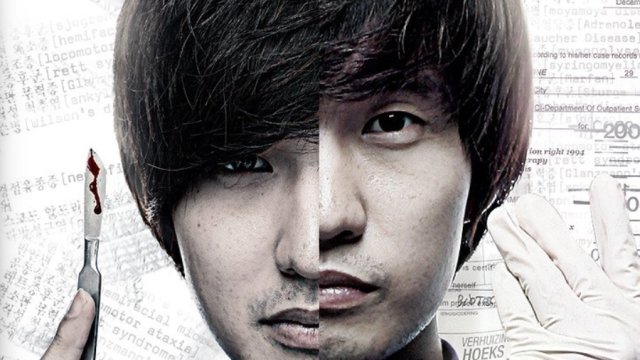
Too Much Conspiracy, Not Enough Human Vapor
Human Vapor starts with a strong first episode, an intriguing premise, and solid production values. Unfortunately, instead of keeping the Human Vapor as the true driving force of the story, the series gradually shifts into a conspiracy thriller filled with secret organizations, human experiments, cover-ups, and lengthy investigations.This change in focus slows the pacing considerably. Long conversations and extended exposition repeatedly interrupt the tension, making the mystery feel stretched rather than expanded. Ironically, the 1960 film explores the same premise in just 90 minutes while keeping the Human Vapor at the center of the narrative and allowing the investigation between the detective and the reporter to move much more dynamically.
The series is technically competent, with good visual effects and an impressive opening, but I found it far more interested in conspiracy tropes than in the fascinating concept that made the original story memorable. For me, it ended up sacrificing its strongest idea for a mystery we've seen many times before.
Was this review helpful to you?
This review may contain spoilers
A Hollow Attempt at Dark Comedy
Not Other Choice” is a film that never justifies its own length.From the very beginning, it becomes clear that Park Chan-wook does not have a grip on dark comedy. The film mistakes boredom for depth and builds a structure that is scattered, heavy, and unfocused. It tries to criticize everything—family, society, ethics, justice, media—but ends up saying nothing.
The so-called humor is completely absent. Every line feels clumsy, improvised, and painfully forced. After the first thirty minutes, the movie becomes almost unbearable. The characters are surprisingly unlikable—rare for Korean cinema—and the protagonist goes from being laid off to committing murder without any believable motivation.
The attempt to adapt Western satire to a Korean context simply doesn’t work. The values, tone, and moral foundations don’t translate, and the story collapses under its own confusion.
Lee Byung-hun tries, but never looks natural.
Son Ye-jin is the only redeeming element: every scene she’s in carries more emotional truth than the entire script.
In the end, the film feels like a mix of Breaking Bad and Ozark—but with none of the intelligence, tension, or moral clarity that made those works great.
Was this review helpful to you?
This review may contain spoilers
When Style Turns Into Narrative Mush
What started as a promising thriller quickly collapses under its own narrative fragmentation.The first episode hints at an intelligent, sophisticated protagonist reminiscent of the Thomas Crown archetype. But from episode two onward, the series drowns in repetitive testimonies and excessive flashbacks.
The mystery doesn’t build tension — it thickens into confusion.
Instead of strategic conflict, we get accumulation without direction.
Instead of depth, we get narrative clutter.
By the end, it delivers exactly what it built toward: density without substance.
Was this review helpful to you?
This review may contain spoilers
Romantics Anonymous – A Fantasy About Chocolate and Denial
Romantics Anonymous starts with chocolate, but don’t be fooled — this isn’t a sweet story, it’s a clumsy one.She suffers from scopophobia, the irrational fear of being watched.
He has misophobia, a fear of being touched.
Two people trapped in their own anxieties… that the script turns into romance.
Instead of showing what it means to live with social anxiety or touch disorders, the series uses them as excuses for “cute” moments.
He falls on top of her, both panicking — and the script goes, “Look how adorable!”
There’s no tenderness in a mutual nervous breakdown.
And of course, the message is the same as always: love cures everything.
She wins a contest, spots him in the crowd, runs, hugs him… and magically, she’s healed.
In real life, these phobias don’t vanish with hugs or chocolate.
They take years of therapy, relapses, and isolation.
But Romantics Anonymous uses them as decoration, as if trauma were just part of the packaging.
So no, this isn’t a romantic story.
It’s a fantasy about chocolate and denial.
Does it work?
Yes — if what you enjoy are surreal worlds and bedtime stories where you control the ending.
Was this review helpful to you?
This review may contain spoilers
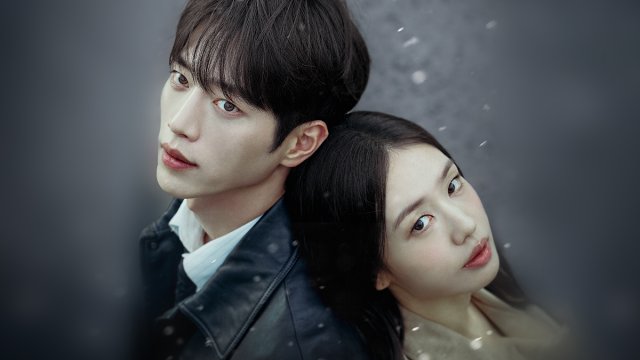
A Strong Cinematic Promise That Settles for a Safe Ending
The series opens with an unusual and refreshing approach for a Korean romance: an urban, European-influenced tone where distance, silence, and movement matter more than idealized love or fan service.The first four episodes stand out for their cinematic language and mature restraint, letting the city and the camera observe rather than dictate emotions.
Unfortunately, as the story progresses, the same conflict is stretched and repeated. Introspection turns into immobility, and narrative hesitation replaces real decision-making. What began as a romance that challenged the usual K-drama mold eventually retreats into a safe, conservative ending that prioritizes comfort over consequence.
Not a bad series, but one that fails to sustain the bold promise of its beginning.
Was this review helpful to you?
This review may contain spoilers
A Thriller Built on Clichés and Convenience
Manipulated” tries to sell itself as a dark, complex thriller, but ends up collapsing under the weight of every cliché it borrows. The series builds its entire premise on an innocent man wrongly accused, a flamboyant rich psychopath, a corrupt politician, an incompetent police force, and even a survival car race straight out of Death Race (2008). Instead of suspense, it delivers absurdity packaged as drama.The investigation never feels real. The prosecution presents circumstantial “evidence” that would be dismissed instantly in any believable legal system. Procedures vanish, logic disappears, and the script constantly removes the presence of the State just to make its villain work. By episode five, the show abandons any sense of grounded storytelling and leans fully into cartoonish spectacle.
Ji Chang-wook once again gives his all, but he’s trapped in a script that confuses intensity with incoherence. The series tries to evoke emotion through exaggerated performances, recycled tropes, and overdramatic set pieces, but never earns the tension it demands.
In the end, Manipulated doesn’t manipulate the story — it manipulates the audience, expecting them to overlook every narrative gap just because the packaging looks thrilling.
It’s not suspense. It’s noise.
Was this review helpful to you?
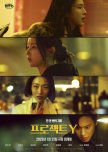
Uncertain Identity, No Tension
Project Y is labeled as a crime drama, but it never builds real tension or emotional weight. The narrative lacks escalation, the conflicts feel flat, and the stylistic choices don’t compensate for the structural weakness.It’s not disastrous in an explosive way — it’s simply inert. And in a crime film, inertia is fatal.
Was this review helpful to you?
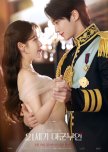
This review may contain spoilers
The only real plot twist was abolishing the monarchy
The Perfect Crown ended with almost no real surprises.Honestly… did anyone actually think the villains were going to win? Probably not.
The only twist I genuinely didn’t see coming was the abolition of the monarchy itself. And while most reviews will focus on the chemistry, the romance, and how “beautiful” everything was, I think that final decision is the most interesting part of the series.
The ending clearly tries to echo The Last Emperor: the former king returning to a palace that has now become a museum, reduced to a relic of a vanished institution. The problem is that it doesn’t carry the same emotional weight. Only three years have passed, and somehow the palace already feels like a polished tourist attraction.
The series also tries to portray the king becoming an ordinary person, but the transition happens way too fast. Everything is compressed into the final thirty minutes. There are not enough scenes, moments, or daily-life sketches to truly make us feel the loss of power and identity. The drama simply tells us: “he’s normal now,” and moves on.
And the imbalance becomes noticeable. While he loses the crown, IU’s character barely loses anything. She remains wealthy, powerful, successful, and busy running her company. The one left emotionally adrift is him. That could have been fascinating if the show had been willing to explore it more deeply.
Still, the series is entertaining, smooth, and very easy to watch.
But it’s not a masterpiece, and it’s nowhere near as profound as some fans claim.
A fun popcorn drama.
Was this review helpful to you?
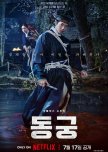
When Complexity Becomes Clutter
I really wanted to love The East Palace. The first episode sold me on a fascinating premise: imagine John Constantine transplanted into the Joseon era. A protagonist who can confront spirits, travel to the underworld, and investigate supernatural mysteries inside a royal palace sounded like the perfect combination of political intrigue and horror.Unfortunately, the series gradually mistakes complexity for accumulation.
Instead of developing the ideas it already introduced, the story keeps piling on more spirits, more shamans, more rituals, more hidden villains, and more supernatural revelations. But adding more elements doesn't automatically make a story deeper. It only makes it busier.
The biggest issue is that the supernatural world becomes vague, complicated, and cumulative.
The rules are never clearly established. Even by the end, I couldn't confidently explain what the female lead's actual gift was. Could she see spirits? Was she a shaman? A medium? Did she possess mystical knowledge? The series never clearly defines her abilities or their limitations, and when the protagonist's powers remain undefined, the world's internal logic suffers as well.
As more episodes passed, every new revelation felt less like meaningful world-building and more like another layer added on top of an already confusing mythology. By the time another family member turned out to have supernatural connections, my reaction wasn't surprise anymore—it was exhaustion.
This also hurts the mystery.
One of the greatest risks of combining palace intrigue with supernatural horror is that the audience must trust the narrative's internal logic. Here, that trust slowly disappears. Why spend time analyzing clues if the next episode can introduce another spirit, another ritual, or another hidden character to redirect the story? At that point, the mystery stops being an intellectual puzzle and becomes an act of faith.
The repetitive structure doesn't help either. Investigate a mystery, enter the underworld, fight with a sword, return, and repeat. Instead of expanding the supernatural possibilities, the series keeps relying on the same formula.
What disappointed me most wasn't the ending itself—it was the feeling that my investment of time wasn't rewarded. Eventually, I lost so much interest that I skipped ahead to the final episode simply to see how it ended. That's never a good sign.
The East Palace doesn't fail because it lacks imagination. It fails because it mistakes quantity for depth. A great story isn't measured by how many mysteries, villains, or supernatural entities it introduces, but by how well it develops and rewards the ones it already chose to tell.
Was this review helpful to you?

The Lamp of Three Yawns
This so-called “genie drama” is complete trash.It tries to be funny and fails, tries to be mystical and ends up pathetic.
Suzy acts like she’s sedated, and Kim Woo Bin looks more like a shampoo model than an ancient genie.
If this is what happens when you rub the lamp, better leave it buried.
Was this review helpful to you?
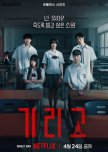
This review may contain spoilers
This is not your typical horror series.
It doesn’t rely on cheap jump scares or random twists. What makes it stand out is its consistency. The story builds a system with clear rules — and actually respects them. Every decision has consequences, and the tension comes from watching characters navigate a game designed for them to fail.There are echoes of franchises like A Nightmare on Elm Street or Saw, where the “evil” doesn’t disappear, it just moves on. But this series doesn’t copy — it builds its own identity by mixing folklore with modern elements in a way that feels both grounded and unsettling.
The pacing is excellent. I didn’t skip a single scene — and that says a lot. In fact, I found myself rewatching moments just to feel the tension again.
And the ending? It’s not the one you expect — it’s the one the story needed. It closes the main conflict while making it clear that the system is still active.
They survived… but the game didn’t end.
Was this review helpful to you?

This review may contain spoilers
A Critique That Becomes the Problem
Viral Hit is built around a premise that requires the audience to abandon common sense almost immediately. The idea that a teenager could become an internet celebrity and attract millions of followers simply by getting beaten up on camera over and over again stretches credibility far beyond its limits.In reality, a channel dedicated almost entirely to broadcasting a boy being humiliated and assaulted would likely be removed by platform moderation policies long before reaching massive popularity. And even if it somehow survived, the protagonist would probably end up in a hospital long before collecting any meaningful revenue.
At first, the series appears to be setting up a social satire about internet culture, clickbait, and the growing obsession with views at any cost. Unfortunately, that premise quickly fades into the background.
Rather than examining why audiences consume this content or exploring the mechanisms behind online fame, the story becomes trapped in the very spectacle it claims to criticize. Episode after episode, the narrative relies on increasingly exaggerated fights, humiliations, and shock-value moments designed to keep viewers watching.
This is where Viral Hit ultimately undermines itself. The series feels less like a thoughtful critique of internet culture and more like a product engineered to capitalize on the same impulses it condemns.
Ironically, Viral Hit serves as a perfect example of its own message. Its popularity is not driven by compelling storytelling, complex characters, or meaningful social commentary. It succeeds because controversy, violence, and spectacle attract attention—even when the narrative itself struggles to make sense.
Was this review helpful to you?
This review may contain spoilers
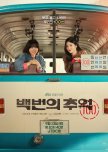
Friendship Over Rivalry: The True Triangle in A Hundred Memories
When we talk about love triangles, we usually picture rivalry, jealousy, or even betrayal between two friends. That’s the cliché. But A Hundred Memories dares to flip the formula. Ko Yeong Rye is in love with Jae Pil, but Jae Pil is drawn to Seo Jong Hee. The twist? Yeong Rye and Jong Hee aren’t rivals—they’re best friends. That choice changes everything.It’s a premise that echoes Truffaut’s Jules et Jim (1962), where friendship and love collide in a way that feels honest rather than melodramatic. Or think of My Best Friend’s Wedding (1997), where the story doesn’t end with the expected romantic “win,” but with a bittersweet acceptance of friendship over rivalry. That’s the same kind of vibe A Hundred Memories might be leaning toward.
What are the possible outcomes? One: Jong Hee could renounce Jae Pil, leaving nobody with anyone. Two: once Jae Pil shows clear interest in Jong Hee, Yeong Rye would realistically back away—because being the “second choice” is painful, maybe even unbearable. And three: there’s Jong Hee’s brother, the law student, who already seems intrigued by her. He could easily become the unexpected twist in this delicate balance.
And then there’s that closing scene of Episode 4. Jae Pil accidentally runs into Jong Hee, now wearing her work uniform. His silence and stare linger too long—it feels exaggerated, almost as if the uniform itself carries judgment. If it were me, I’d have gone with something natural like, “Oh, what a surprise, I didn’t know you worked here.” But the direction makes his hesitation about status clear. Is he truly shocked… or is the drama emphasizing how much appearances still matter in this world?
We’ll see in Episode 5 if he softens his reaction or doubles down. Either way, it’s a fascinating tension between natural storytelling and heightened drama.
Episode 10 Update
With just one weekend left before it ends, the series chooses stability over catharsis.
After Hee and Rye finally face each other and admit they love the same man, the show instantly cools everything down. Hee realizes—without anyone having to tell her—that she has no real chance against Rye. From that point on, she practically disappears from the episode when it comes to Pil: no contact, no exchange, just her own tension with her mother and the brief encounter with Rye’s brother. It’s a deliberate narrative choice: the script removes her from the love triangle and reframes her as a social mirror rather than a romantic rival. The result is an emotional void—the triangle doesn’t resolve, it simply fades away. A Hundred Memories shifts from the inner fire of feelings to the outer order of hierarchy. Visually stunning, yes, but clearly a choice for stability instead of catharsis.
The preview for episode 11 confirms it: love is no longer the battlefield—Miss Korea is. Where they once competed for affection, they now compete for validation. “Let’s play fair this time,” Hee tells Rye, barely touching her hand. It’s the echo of everything before: two women who once hurt each other trying to win the same man, now standing as equals in a symbolic arena. It’s not reconciliation; it’s acceptance.
Meanwhile, Hyun drifts into narrative limbo. His arc promised maturity and balance, but the script reduces him to a bystander. Unless the finale gives him purpose again, the ending risks feeling uneven. Because if this episode proved anything, it’s that A Hundred Memories knows how to close chapters with visual grace—but not always with emotional justice.
Was this review helpful to you?
This review may contain spoilers
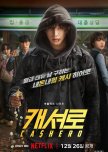
CasHero: A Proper Pulp Comedy About Absurd Superheroes
CasHero is not a ridiculous series — it is an absurd one, and that distinction matters.This is pulp comedy, a genre that deliberately blends violence, humor, and nonsense under strict internal rules. When done wrong, it collapses into parody. When done right, it becomes razor-sharp. CasHero clearly knows what it is doing.
The story follows an ordinary man who inherits a superpower with an absurd cost: his strength and regeneration only work if he carries his own money, and using those powers literally burns that money away. Not using them, however, slowly destroys his health. This isn’t heroism — it’s obligation.
Other “heroes” are just as inconvenient: powers fueled by bread or alcohol. The absurdity is not a flaw; it is the premise.
Performance-wise, Lee Jun-ho delivers a restrained, exhausted protagonist far removed from the usual charismatic hero. Kim Hye-jun is even more important, completely avoiding traditional K-drama archetypes and bringing agency and presence without melodrama. Lee Chae-min’s villain is genuinely detestable, which is a strength in this genre.
Director Lee Chang-min deserves credit for fully respecting pulp comedy rules, balancing violence, rhythm, and absurdity while avoiding the usual K-drama shortcuts.
CasHero never asks permission to exist.
It commits to its premise until the very end and walks away.
Not many series dare to do that.
Was this review helpful to you?

Dear X (Episodes 1–4): From Genius to Overacting
Dear X starts off brilliantly — a sharp, elegant dissection of ambition, trauma, and emotional manipulation.Baek Ah Jin, played with surgical precision in the first two episodes, feels like a modern antiheroine shaped by pain rather than redemption.
Her cold, calculated demeanor suggests a story about psychological power, not simple revenge.
But by episode 3, the series stumbles.
The script mistakes complexity for excess, turning what could’ve been a chilling, simple act into an over-engineered mess.
Ah Jin stops being formidable and becomes theatrical — a strategist buried under implausible coincidences.
Episode 4 tries to recover tension through a police investigation, but ends up draining it instead.
Ah Jin, once fascinating, now looks overacted and hollow, her silence replaced by melodrama.
Visually, Dear X remains stylish — the rain, cold tones, and restrained pacing still work — yet the emotional impact evaporates.
It had all the ingredients for a story about moral decay and ambition, but it collapses under its own artifice.
Not terrible, but uneven: it begins with fire and ends with smoke.
For now, Dear X feels more like a promise than a revelation.
Was this review helpful to you?


