
 Editorials

 5
5 1
1


This review may contain spoilers
From Sublime to the Toilet
Hope achieved something very few films manage to do with me: for a good portion of its two-hour-and-forty-minute runtime, it had me completely hooked. And perhaps that is precisely why its final stretch pissed me off so much.The film begins as an excellent science-fiction thriller. A small Korean town is confronted with an inexplicable event, and information is revealed intelligently: first we know something is happening, then we discover the creatures, then we realise there is more than one, and eventually we find a crashed spacecraft. Each revelation expands the mystery without destroying it.
And in the middle of all this comes Jung Ho-yeon, providing a perfect lesson in how to introduce a badass character. Nobody needs to tell us how extraordinary she is, show us her résumé, or explain what she can do. We simply watch her act and discover it for ourselves. A character is not badass because the script tells you so. They have to prove it.
The early action sequences are excellent, and it is important to distinguish visual effects from practical stunt work. Some of the VFX are far from convincing, but what the stunt drivers do with the cars is something else entirely. Some of those manoeuvres and crashes are genuinely spectacular.
The problem begins when the film enters its interminable final chase. What had previously been action that moved the story forward becomes repetition: run, shoot, scream, run again, shoot again. And then an even bigger problem appears: the physical rules governing the aliens change according to what the screenplay needs.
These creatures can move at astonishing speeds, yet later they cannot catch a car, people running on foot, or even a horse galloping down a road.
Apparently, the aliens' speed and strength are inversely proportional to the importance of the character they are chasing.
And just when we expect some kind of conclusion, the film decides to open another movie instead. A gigantic mothership falls from the sky, an extraterrestrial hierarchy is introduced, there is an emperor, new characters played by Alicia Vikander and Michael Fassbender appear, and suddenly an entire mythology emerges just as the film is ending.
Which only creates more questions. What brought down a ship that enormous? How does an object of that size enter the atmosphere over South Korea without triggering a military response? Where is the Korean military? And does a civilisation capable of interstellar travel really have no auxiliary vehicles or smaller craft, forcing its creatures to chase people and horses on foot?
We know Na Hong-jin considers this only the first half of the story and intends to continue it. Fine. That explains the ending. It does not justify it.
The audience paid to watch this film, not half of a film whose continuation may arrive who knows when. And the elements introduced at the end create frustration rather than mystery.
A film can leave questions unanswered. The problem begins when those questions no longer make you eager to discover the answers, but instead make you feel that part of the film you paid to watch is missing.
Hope had an extraordinary film in its hands.
And then it flushed it down the toilet.
Was this review helpful to you?
This review may contain spoilers
Mobius: A Waiting Line Disguised as a Thriller
Mobius has a huge problem: its time loops kill the tension. The show makes it clear that everything only gets solved on the 5th loop. So what about the other four? Just rehearsals. Pure filler.Even the main character admits there’s no fear of dying. And if the hero himself doesn’t care, why should the audience? When he dies in the 2nd loop, it doesn’t matter, because you know he’ll be back anyway.
On top of that, the plot is overcrowded with suspects, but that’s not real intrigue — it’s just confusion disguised as mystery. What could have been suspenseful ends up feeling like waiting in line.
Mobius turns what should be tension into simple waiting, and that kills its own suspense. Because if everything is decided on the 5th loop, it’s nothing more than an hourglass that only cares about the last grain. Not a thriller, but a waiting line disguised as mystery
Was this review helpful to you?

This review may contain spoilers
Beso Dinamita didn’t fail — it was consumed exactly the way it was written
Last Review:Beso Dinamita starts as a charming and refreshing rom-com, but gradually collapses into the most overused K-drama formula.
What begins with natural chemistry and promising characters turns into forced drama, amnesia, hospital scenes, instant forgiveness, and conflicts with no real consequences.
The script chooses safe fantasy over emotional coherence, flattening character arcs and recycling tropes until the story itself no longer matters.
A strong beginning, an increasingly mechanical middle, and a finale that confirms it all:
the fantasy matters more than the story.
⭐ 1/5 — and that single point exists only for the first episodes and for Moo Da-vi.
First Review:
“You think Dynamite Kiss is just another ordinary K-drama? Another predictable cliché?
It isn’t.
This drama is actually built like a classic Hollywood rom-com from the 1940s, 50s and early 60s.
The moment I realized it was in Episode 2, during the beach scene:
the wide shot, the illuminated ocean, their silhouettes against nature, the soft violins, the gentle lighting on their faces.
This is the visual language of old Hollywood, when cinematic distance meant emotional vulnerability.
Films like From Here to Eternity, An Affair to Remember, Roman Holiday, Letter From an Unknown Woman and The Long, Hot Summer used this exact grammar: romance told through space, light and silence.
And then there’s the female lead.
Ahn Eun-jin isn’t playing the typical K-drama heroine.
She embodies a classic Hollywood archetype.
She has Barbra Streisand’s energy —Funny Girl, What’s Up, Doc?—
and the spirit of Marilyn Monroe the actress, not the sex symbol,
the vulnerable and spontaneous woman from Bus Stop (1956) and Let’s Make Love (1960).
Simple, honest, emotional.
No poses.
No masks.
A natural light that melts the cold male lead without even trying.
Watch those films and you’ll see exactly what I mean.
Dynamite Kiss is pure vintage romance disguised as a modern K-drama.”
Was this review helpful to you?

This review may contain spoilers
More Fable Than Historical Drama
This Is I is a Japanese film set in the 1980s and based on real events. The premise is powerful, but the execution leans toward lyrical solemnity rather than historical weight. The medical and social conflict of the era is softened into philosophical lines and stylized moments. While the performances and atmosphere work at times, it feels more like a polished fable than a grounded period drama.Was this review helpful to you?

This review may contain spoilers
From Hitchcock-Level Tension to a Fearful, Safe Ending
“As You Stood By” could’ve reached Hitchcock territory.It begins with razor-sharp tension, a minimalist score that keeps you on edge, and a cathartic, brutal confrontation reminiscent of Memories of Murder, Bluebeard, and The Invisible Man.
But the real test of a thriller is what happens after the catharsis — and here is where the series collapses.
The impostor’s sudden transformation into a gangster feels artificial, created only to prolong the plot.
Worst of all, the most compelling character — the sister, a sharp and methodical detective — is minimized, sabotaged, and ultimately punished while everyone else gets a convenient, almost cheerful ending.
A story that began with genuine courage ends as a safe moral fable
Was this review helpful to you?
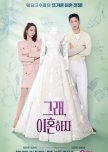
A Comedy of Remarriage That Mistakes Trauma for Depth
I returned to Okay, Let’s Get a Divorce because several comments claimed that episode 5 finally balances the responsibility within the marriage. Technically, it does. The problem is how it gets there.We suddenly learn that on the day she lost their baby, her husband did not abandon her. He was actually trying to get back to her when he had a car accident. Then the drama adds an even more extreme revelation: days later, during her suicide attempt, he tried to stop her and ended up with a knife in his abdomen.
Somehow, she apparently remained unaware of this for years until a conveniently introduced character finally tells her. She sees the scar, realizes that her husband never abandoned her, falls to her knees, cries, and apologizes.
The scene wants to be devastating, and the performances give it some emotional weight, but narratively it is cashing an emotional check the writing never earned. We are not discovering the hidden meaning of information carefully established over five episodes. The drama is retroactively introducing extraordinary events to completely change our perception of the marriage and facilitate the eventual reconciliation.
By episodes 5 and 6, I also finally understood what kind of drama this really wants to be: a comedy of remarriage, a genre Hollywood was already doing almost a century ago. The Awful Truth (1937) used separation, romantic rivals, jealousy, and marital competition to bring a couple back together.
This drama follows essentially the same structure. She asks for a divorce, he moves back into their house, they are forced to live together, and each gets a potential romantic alternative. At one point, when both need someone to take care of them, they even call their respective romantic rivals into the marital home.
The problem isn't that I've seen this story before. The problem is that I've seen it done much better.
The drama takes a perfectly functional remarriage-comedy structure and overloads it with pregnancy loss, grief, a suicide attempt, a stabbing, guilt, and emotional abandonment. Then, whenever it wants to become a rom-com again, it simply switches all that emotional weight off and returns to jealousy, caricatured characters, an exhausting mother-in-law, and playful music.
It doesn't integrate genres. It switches them on and off.
And I could forgive it for not being a particularly good drama if it were at least a good comedy. But after six episodes, I haven't laughed once.
I will correct one thing from my earlier impression: the drama eventually does hold the female lead accountable and acknowledges that her husband was not the monster she had constructed in her mind. That is no longer my main problem with the series.
My problem is worse: this is an old story told mediocrely, artificially inflated with tragedies that it mistakes for depth, while constant tonal shifts destroy any sense of emotional continuity.
The Awful Truth understood this formula in 1937 and needed less than 90 minutes.
This drama has had six episodes and is still trying to convince me why I should care.
Dropped for good.
Was this review helpful to you?

This review may contain spoilers
When Narrative Disorder Masquerades as Depth
The idea is great, but not new.We’ve already seen it to exhaustion.
Whenever a drama wants to explore “deep female friendship,”
they almost always throw in terminal illness
as the narrative glue.
The only truly remarkable part here
are the performances of Kim Bo Min and Park Seo Kyung
as the younger versions of the leads.
They deliver the real emotion, much more than the adults.
The real problem is the narrative structure.
That tendency in K-dramas to tell the story all over the place:
they start in one year,
jump back 40 years,
then 10 years forward…
and on top of that, insert another story inside a story.
If it had been told in a linear way —
childhood, youth, adulthood, and finally the blow of cancer —
the impact could have been brutal.
But they chose to fragment it.
There’s no accumulation of tension,
because they show you the consequences
before you even understand the causes.
The difference between narrative complexity and narrative disorder is clear:
this drama seems to believe that fragmenting the timeline is art,
when in reality it’s sacrificing emotion.
Was this review helpful to you?

This review may contain spoilers
Feminist Wish-Fulfillment Fantasy
Positively Yours sells a feminist wish-fulfillment fantasy: pregnancy changes nothing, the rich CEO becomes endlessly patient, and a second man keeps waiting despite knowing the child isn’t his. Two single men competing for a pregnant woman — not as conflict, but as convenience.By episode 5, the story refuses to acknowledge real consequences. Rejections repeat without evolution, the love triangle feels artificial, and characters stop behaving like adults. This isn’t heightened melodrama — it’s reality bent out of shape so the romance can keep going.
Was this review helpful to you?

Moon River (2025) – The Same Joseon Drama Again
With an “impressive” start —at least that’s what k-drama lovers will say for likes— Moon River tries to shine in 2025 but ends up recycling everything we’ve already seen a hundred times.Twenty minutes in, and the only word you hear is “choooona.”
This is a drama directed at people whose sense of humor is as shallow as a 4-year-old’s.
Kim Se-jeong deserves better than another romantic comedy template, but when good roles don’t come, you take what you can get. Brewing Love was already proof of that.
Kang Tae-oh, as usual, looks good and acts little —a pure K-drama model.
Even the supporting cast feels recycled: the same ministers, servants, and conspirators from every Joseon-era drama.
Moon River is 100 % popcorn, 0 % originality, and 0 % entertainment.
Pretty faces trapped in the same old palace.
Was this review helpful to you?
This review may contain spoilers
The Show That Sabotaged Itself
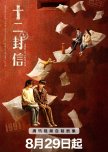
12 Letters can be split into two halves: episodes 1 to 5 are a brilliant romantic sci-fi; episodes 6 to 12 are a disaster.It starts with a mysterious mailbox connecting 1991 and 2026, a fresh premise that immediately recalls Frequency (2000). In Frequency, a father and son spoke across time with a clear, consistent dilemma. 12 Letters had the same potential, but it quickly lost its way.
From episode 6 onward, everything falls apart: the mailbox is forgotten, cartoonish gangsters show up, school melodrama takes over, and Shen Cheng—once a key character—is reduced to an idiot by bad writing. Episodes 8 and 9 are pure filler, endless flashbacks explaining what we already knew.
The ending is even worse: a last-minute warning letter that magically fixes everything, Shen erased from existence, Yu Nian waking up in a luxurious bed with a different life, and a sad soundtrack to force emotions. What began as a tense sci-fi puzzle ends with a rushed “happily ever after.”
12 Letters could have been the Chinese Frequency. Instead, it’s a collage of clichés and cheap melodrama—a show that sabotaged itself.
Was this review helpful to you?

This review may contain spoilers
The Revenge Lover – A TikTok-Speed Drama Without Emotion
The Revenge Lover runs barely twenty minutes per episode, yet it rushes through everything. By episode two, there are hugs, firings, and a boss already in love. Everything happens so fast it leaves no room to feel anything. It’s the perfect summary of many recent J-dramas: trying to squeeze three stories into ninety minutes and ending up with an express revenge, an instant romance, and cardboard characters. It’s unsatisfying, lacks rhythm, and worst of all — it feels edited at TikTok speed. The title is longer than the episodes themselves and tells you 90% of the story.Was this review helpful to you?
Not Light… Empty
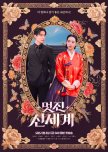
Ok… the girl traveled centuries into the future.She already knows how to use a bathroom?
How to cross the street?
And when she gets her period… what is she supposed to do?
It’s not that I want hyper realism. I already know this is a cheesy, repetitive romcom.
But if your story depends on a massive time jump… the change should actually feel meaningful.
Because a woman from Joseon would not adapt to modern life in two days. She would be terrified, overwhelmed, paranoid, struggling with noise, technology, modern society… everything.
And that’s the problem:
the series uses time travel as if it were the heart of the story… when in reality you could replace the protagonist with a girl from a rural village arriving in Seoul for the first time and almost nothing would change.
The comedy doesn’t help either. It’s painfully basic: exaggerated reactions, physical gags, cartoon sound effects and silly visual effects everywhere. No setup, no payoff… no real laughter.
And of course… classic K-drama formula:
connect the leads through destiny and the past, and boom — instant romance.
This is not sci-fi.
It’s not fantasy.
It’s not a meaningful temporal clash.
It’s just a very ordinary romcom disguised as high concept.
If you enjoy it, that’s fine.
I’m simply looking at how it’s constructed.
Was this review helpful to you?

This review may contain spoilers
From Chanbara Promise to Death-Game Recycling
Everyone online is calling this the ‘next great samurai series,’ but let’s be honest: it starts like real chanbara and ends as another recycled death game.The opening is excellent — clean framing, silence, iaijutsu-style movement, a duel over in seconds. Pure Kurosawa influence.
But as soon as the rules, numbers, VIP spectators and the ‘last-one-standing’ structure appear, the mysticism collapses.
It’s Squid Game in a kimono.
Not a bad show — just not new.
And for viewers who actually know classic samurai cinema (Inagaki, Mizoguchi, Kobayashi, Uchida, Kurosawa), this feels more like spectacle than substance.
Was this review helpful to you?
This review may contain spoilers
Omniscient Reader: The Apocalypse Turned Into a Videogame
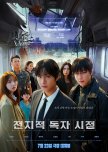
I didn’t read the webtoon, and I don’t plan to. Because cinema should be judged by coherence, not by faithfulness.The movie starts with a strong premise: a reader trapped in his favorite novel, forced to survive in a world ruled by the story’s own logic. Sounds great, until the script turns into a nonstop video game — coins, upgrades, items, levels, power rankings. What could’ve been a philosophical apocalypse becomes a Battle Royale with a PlayStation menu.
The first test —“kill a living organism”— sums it all up: a moral dilemma turned into a survival circus. Within seconds, people go from outrage to fighting over an ant, exposing the core message: the end of the world doesn’t destroy us; it reveals who we are. Too bad the film loses that sharpness under forced moral speeches, where even as the subway collapses, there’s still time for life lessons. The script confuses urgency with sermon.
Visually, the chaos of the first act works. The subway sequence has tension and direction. But as the “scenarios” progress, Omniscient Reader turns into a blend of Jumanji and Godzilla, with monsters, portals, and anime-like sword fights straight out of Sword Art Online. What began as social commentary ends up as a cosmic arcade.
Ahn Hyo-seop struggles to carry the film. His Dokja shifts from introspective reader to generic hero without emotional bridge. Surprisingly, Jisoo is not that bad. I used to say she wasn’t an actress at all… but I was wrong. Jisoo should play cynical, morally ambiguous, or emotionally distant roles —modern femme fatales— and forget about angelic or “good girl in the apocalypse” types. That’s her real strength. I actually liked her character this time.
Critics tore her apart, mostly out of prejudice, not real analysis. They attacked her since the casting, as if being an idol automatically disqualified her from acting, without even asking if the role suited her. Ironically, many less-prepared idol actresses get praised just because of their name or fandom. With Jisoo, the scrutiny was triple: if she smiled, “she overacted”; if she stayed still, “she lacked emotion.” But here, her restraint makes sense —this character doesn’t need sweetness, it needs presence. In fact, Genie, Make a Wish might have fit Jisoo better than Suzy. Jisoo’s emotional distance feels natural; Suzy’s looks forced.
And yes, Omniscient Reader: The Prophecy ends up exactly that: a Frankenstein of Ready Player One, Sword Art Online, and every trendy shonen, but with none of their coherence or charm. Visually striking, emotionally hollow —a digital wasteland mistaking spectacle for substance.
Was this review helpful to you?
This review may contain spoilers
Review based on Episodes 1–12 episodes
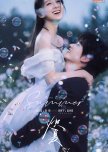
**Never Ending Summer** starts with a premise that promises far more than it is ultimately willing to explore.For a brief moment, a confrontation between mother and daughter makes it seem as if the series is about to leave behind its conventional coming-of-age romance and evolve into a revenge thriller built around abandonment, resentment, and emotional manipulation. Unfortunately, that never happens.
Instead, the drama retreats to the safest possible route. The family conflict becomes nothing more than fuel for the romance, while the story repeatedly falls back on misunderstandings, emotional blackmail, repetitive relationship drama, and conflicts that could be solved if the characters simply had an honest conversation.
The biggest disappointment isn't the romance itself. It's the wasted potential. Every time the series finds a genuinely compelling conflict, it immediately steps back and returns to the familiar cycle of "together, apart, together again." As a result, nothing ever feels truly irreversible, and the emotional stakes gradually disappear.
The mother-daughter storyline had the potential to become the heart of the drama, but it ends up functioning as little more than another obstacle for the main couple. That decision makes the entire narrative feel surprisingly predictable despite having all the ingredients for something much more psychologically engaging.
In the end, **Never Ending Summer** feels less like a character-driven drama and more like a classic melodrama dressed up as a modern youth romance. There is certainly an audience for this kind of storytelling, but if you're expecting the series to fully embrace the darker emotional implications of its own premise, you'll probably come away feeling that its greatest strength was also its greatest missed opportunity.
Background entertainment. Perfect to leave on while doing housework.
Was this review helpful to you?


