
 Editorials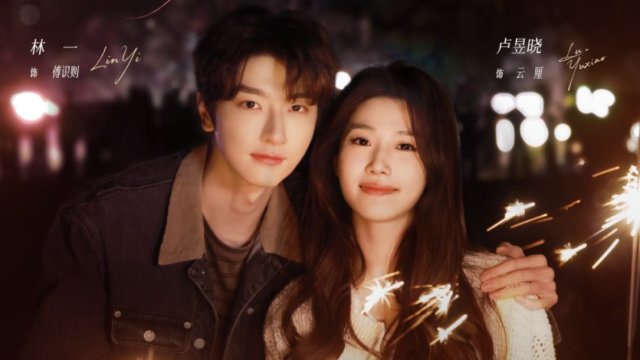


 5
5 1
1


This review may contain spoilers
Review based on Episodes 1–12 episodes
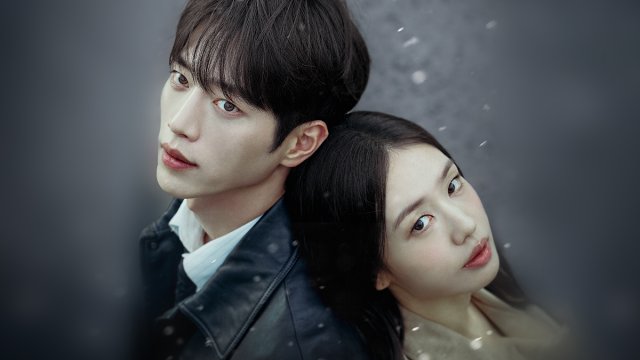
**Never Ending Summer** starts with a premise that promises far more than it is ultimately willing to explore.For a brief moment, a confrontation between mother and daughter makes it seem as if the series is about to leave behind its conventional coming-of-age romance and evolve into a revenge thriller built around abandonment, resentment, and emotional manipulation. Unfortunately, that never happens.
Instead, the drama retreats to the safest possible route. The family conflict becomes nothing more than fuel for the romance, while the story repeatedly falls back on misunderstandings, emotional blackmail, repetitive relationship drama, and conflicts that could be solved if the characters simply had an honest conversation.
The biggest disappointment isn't the romance itself. It's the wasted potential. Every time the series finds a genuinely compelling conflict, it immediately steps back and returns to the familiar cycle of "together, apart, together again." As a result, nothing ever feels truly irreversible, and the emotional stakes gradually disappear.
The mother-daughter storyline had the potential to become the heart of the drama, but it ends up functioning as little more than another obstacle for the main couple. That decision makes the entire narrative feel surprisingly predictable despite having all the ingredients for something much more psychologically engaging.
In the end, **Never Ending Summer** feels less like a character-driven drama and more like a classic melodrama dressed up as a modern youth romance. There is certainly an audience for this kind of storytelling, but if you're expecting the series to fully embrace the darker emotional implications of its own premise, you'll probably come away feeling that its greatest strength was also its greatest missed opportunity.
Background entertainment. Perfect to leave on while doing housework.
Was this review helpful to you?

A Fantasy of Instant Justice That Knows Exactly What It Is
Netflix's How You Learn uses dramatic amplification to turn real school-related problems into a fantasy of instant justice.The issues themselves feel real: bullying, abusive teachers, overbearing parents, drug abuse, identity theft, and juvenile gangs. The emotions feel real too. The frustration feels real.
What isn't real are the solutions.
In this universe, the OPDE is a special unit that infiltrates schools to solve these problems as if John Wick had been hired by the Ministry of Education.
And yes, it's ridiculous.
The agents are teachers, investigators, social workers, and military operatives all at once. If I wanted to dissect the logic of every episode, I could find plot holes everywhere.
But there's one problem:
The show is incredibly well made.
At some point I realized that How You Learn is not trying to be a realistic portrait of the Korean education system.
What it sells is something much simpler:
The fantasy that abusive people face consequences.
Once you understand that, the series starts to click.
Not because it's believable.
Because it's cathartic.
The show knows exactly what emotions it wants to provoke and pursues them without embarrassment.
It doesn't try to convince you that any of this could actually happen.
It tries to convince you that you wish it could.
And that difference is precisely why it works.
Was this review helpful to you?
This review may contain spoilers
The Price of Confession – From Masterful Suspense to Premium Trash
The Price of Confession starts as a razor-sharp thriller and ends as a chaotic mess.The first five episodes are genuinely outstanding, anchored by Kim Go-eun’s terrifying, magnetic performance as Mo Eun — a character who could have become a global icon of villainy.
In the hands of directors like Jonathan Demme (The Silence of the Lambs), Christopher Nolan, or even M. Night Shyamalan, Mo Eun could’ve been an international hit.
But the show never has the courage to let her be purely evil.
After episode 6, the plot collapses: random subplots, new characters dropped from the sky, sentimental detours, and the most ridiculous murder motive imaginable — someone was killed because they didn’t apologize.
That’s not thriller writing. That’s narrative panic.
Like many K-thrillers, the show becomes obsessed with redemption, morality, and “justice,” sacrificing tension for melodrama and cultural comfort.
What began as something bold dissolves into mediocrity.
Kim Go-eun is phenomenal.
The series around her is not.
Was this review helpful to you?

This review may contain spoilers
Marketing Over Substance
After 13 episodes, it becomes clear why Zhu Yu (also known as In Pursuit of Jade) works for its audience — and why it feels so empty outside of it.The drama relies almost entirely on two things: the beauty of its actors and the constant puppy-eyed gazes the male lead throws at the heroine. The series is packed with familiar tropes and clichés that fans of the genre are happy to see again and again.
What is most impressive about this supposedly popular drama is actually its marketing. A quick look at IMDb tells another story: that shiny 8.4 rating is based on barely 162 votes, suggesting the “global phenomenon” narrative might be a bit exaggerated.
Visually, the production is surprisingly weak for a 2026 drama. The entire show is covered in a milky filter that flattens every frame. The characters rarely feel like they exist in historical China; instead, they look like they are standing in front of a brightly lit green screen. The fake snow, artificial sets, and spotless costumes only reinforce that studio-bound feeling.
The acting doesn’t help much. The male lead performs like a mannequin: always handsome, but emotionally frozen. Whether he is injured, threatened, or in danger, his face barely changes. Tian Xiwei tries to portray a tough butcher’s daughter, but her natural sweetness undermines the role. Watching her wield a butcher knife feels less like strength and more like a kitten trying to roar.
The show also tries to present progressive gender dynamics but ends up contradicting itself. The heroine proudly defends her independence in front of neighbors, yet quickly hides her profession and seeks validation once the male lead appears.
In the end, Zhu Yu is a triumph of marketing over substance: a glossy but hollow drama that confuses filters with artistry and close-ups with acting.
Was this review helpful to you?
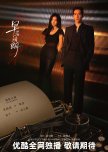
Same Old Romance, Just Slower
Early Spring doesn't reinvent the wheel.It's the classic, predictable office romance, packed with clichés we've already seen a thousand times. The pacing is also painfully slow, with plenty of scenes you'll want to skip without worrying about missing anything important.
But if office romance at a snail's pace is your thing, well... this might be for you.
Is it more of the same?
Absolutely.
Was this review helpful to you?

25 Episodes of Nothing
“Recipe for Love” is marketed as a romantic comedy, but it fails at both.There’s barely any romance, and the comedy is almost nonexistent. What you get instead is endless dialogue that leads nowhere. Episode after episode feels like filler, with no real conflict, no emotional progression, and no payoff.
It’s not slow — it’s empty.
This drama mistakes duration for depth, stretching a thin premise across 25 episodes without giving the audience a reason to care.
If you’re looking for something engaging, this isn’t it.
If you need help falling asleep, though… this might work.
Was this review helpful to you?
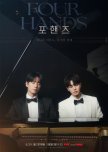
If It Walks Like a Duck
The series opens with a poorly executed in medias res: within minutes, we are shown an apparent death, only for the story to retreat into flashbacks layered inside other flashbacks. The result is not complexity, but confusion. Eventually, you find yourself looking at a character without knowing which timeline you are in, whether he is still alive, whether you are watching a memory, or when any of this is actually happening.The tonal incompatibility makes things worse. You cannot open with an apparent murder and, fifteen minutes later, expect everyday problems at a music school to carry the same dramatic weight. The tension the opening worked so hard to create simply evaporates.
What initially looks like a story about talent, competition, privilege, and the world of classical music quickly becomes the usual blender of family hierarchies, an authoritarian grandfather, parental debt, loan sharks, humiliation, romance, trauma, and melodrama. The piano, meanwhile, is almost incidental.
And that is particularly frustrating because there is a much better story hiding underneath all of this: two exceptionally talented young men, one with every resource available to develop his potential, and another who cannot afford the luxury of pursuing his talent because he actually has to make a living. That conflict alone could have carried the series.
Instead of exploring it, the drama keeps adding complications.
If I need a flowchart and a notebook just to figure out which timeline I'm watching, the writer has failed at one of the most fundamental rules of storytelling: clarity.
Was this review helpful to you?

This review may contain spoilers
Good Woman Bu Se Mi! Season Finale
UpdateThey call Madam de Mystery a masterpiece.
But if this is a gem, then Ed Wood directed a Korean thriller.
A plot full of contradictions, zero logic, and crimes magically recorded in 4K.
It’s not mystery or action —just a romantic postcard disguised as danger.
A series that wanted to shine… but ended up as emotional costume jewelry.
Episodes 1 & 2
I won’t judge this series as a thriller, because that’s where it would fail. I’ll judge it in its own territory: makjang. What’s the difference? A thriller lives on tension, internal logic, and carefully planned twists. A makjang, on the other hand, is pure catharsis: hateful villains, humiliated heroes who rise again, and above all, the satisfaction of watching the bad guys suffer. That’s its playground… and that’s where Mrs. Incognito works.
The opening is pure excess: a bodyguard turned into a wife by contract, stepchildren who don’t even bother to hide their schemes, and an inheritance plot twisted into a hunting game. The script is ridiculous, yes, but it’s not aiming for realism; it wants you to enjoy how the protagonist, humiliated and underestimated, becomes the key piece to ruin the villains. And that’s where its appeal lies: not in logic, but in watching evil fall apart.
By the end of episode 2, the series changes skin: leaving behind direct confrontation with the stepchildren and moving to a quiet town, where she lives under a false name. That’s where the male lead enters, and with him, the shift to romance. The pace slows down, the inheritance tension and murder attempts dissolve, but that’s not necessarily a mistake. In makjang terms, this transition feeds exactly what the audience wants—long stares, heavy secrets, and a romance that can never fully open up. Logic is sacrificed, but emotional catharsis grows.
In the end, Mrs. Incognito isn’t a bodyguard thriller—it’s a makjang disguised as action. And judged on that ground, it delivers: exaggerated, incoherent, even ridiculous… but cathartic. Not a good drama, but one that knows exactly how to give its audience what they want: watching villains crash and burn, and enjoying every second of it.
Was this review helpful to you?

The Massacre Remains, the Heroism Is Rewritten
Dead to Rights is an important act of historical denunciation. Its graphic depiction of the Nanjing Massacre confronts an atrocity that remains largely marginalized in Western-dominated historical narratives. In that sense, its brutality is not excess, but correction.The film’s real problem lies not in what it shows, but in whom it erases. To construct a purified national epic, it appropriates well-documented acts of heroism carried out by foreign missionaries and European civilians who risked their lives to protect Chinese civilians, transferring those actions to an ideologically immaculate protagonist. The crime is preserved; the moral credit is reassigned.
This does not deny the massacre—it nationalizes virtue. The result is a curated memory: horror is retained because it serves remembrance, while inconvenient witnesses are removed because they complicate the narrative. Dead to Rights does not falsify history; it re-edits authorship of heroism.
As denunciation, the film is legitimate.
As narrative, it reveals how even truth can be selectively framed.
Was this review helpful to you?
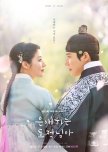
A Robin Hood Concept Lost in Palace Politics
My Secret romance presents itself as a Robin Hood–style story, inspired by the Korean folk hero Hong Gil-dong. The concept is interesting: a female protagonist excluded from society because of her birth, forced to exist outside the system.However, episode one quickly sidelines that idea. The “Robin Hood” angle works more as an excuse than a driving force, while the story falls back into familiar sageuk territory: palace intrigue, power struggles, political marriages, and corruption.
The heroine is portrayed as almost superhuman — jumping across rooftops and escaping danger with little effort — which removes tension and risk. On top of that, romantic interest is introduced too early, before the social conflict has time to breathe.
There is potential here, but the first episode makes it clear that the series chooses safety over bold storytelling.
If you’re looking for a classic palace drama, this might work.
If you expected a sharper Robin Hood–style adventure, this probably isn’t it.
Was this review helpful to you?

This review may contain spoilers
The Dream Life of Mr. Kim — The Mirror No One Wants to See
The Dream Life of Mr. Kim has one of the lowest ratings and zero hype across forums.Is it bad? No.
It just doesn’t have “shareable clips.”
No romance, no aspirational quotes, no catchy OST.
Only reflection, silence, and discomfort —things the algorithm doesn’t know how to sell.
Even the tags say it all: “Black Comedy, Workplace Setting, Married Life, Middle-Aged Male Lead.”
Everything that scares off the teenage audience dominating K-dramas.
No idols. No couple moments. No ships.
In short, it lacks everything that dulls the brain.
For viewers who watch dramas to “feel good,” Mr. Kim will seem slow, gray, maybe even pointless.
But that’s the beauty of it: it doesn’t seek fans, it seeks witnesses.
It’s a mirror, not an escape.
The Dream Life of Mr. Kim isn’t about career success —it’s about the invisible downfall of the modern man.
An employee who believed effort would bring respect, only to find that the system rewards youth and image instead.
In a sea of dramas offering easy catharsis and emotional shortcuts, this one dares to show routine without reward.
And that’s why many will hate it:
because there’s no relief here —only the reflection of a life that looks too much like our own.
Was this review helpful to you?
This review may contain spoilers
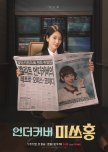
Dropped After 3 Episodes — A Missed Opportunity
Undercover Miss Hong starts with the promise of a financial crime investigation, but after three episodes it becomes clear that the series has little interest in developing that premise.The undercover plot lacks real danger, the internal logic is weak, and the investigation itself remains secondary. Most of the screen time is spent on office dynamics, assistant-level intrigue, and situational filler rather than on meaningful progress in the case. The period setting feels decorative and does not impose any narrative constraints or urgency.
The story relies heavily on the presence and familiarity of its lead actress, who largely performs within a well-known mold. While competent, the character rarely feels challenged, and the series struggles to generate tension or curiosity. Even potential conflicts are softened or delayed, making the overall experience flat.
After three episodes, the show fails to offer a compelling reason to continue.
Conclusion: a potentially interesting premise handled too comfortably. Low tension, weak engagement, and ultimately boring. I’m dropping this series.
Was this review helpful to you?

This review may contain spoilers
A Legal Thriller That Resets Itself Too Late
The Return of the Judge starts as a legal thriller about judicial corruption and corporate power. On paper, the premise is strong, but the execution is slow, overlong, and filled with familiar character clichés and exaggerated performances.By episode 2, the series reveals its true direction: the protagonist is framed, killed, sent to purgatory, and given a second chance in the past with full knowledge of future events. From that point on, the legal tension collapses. Conflicts are no longer solved through investigation or strategy, but through supernatural advantage.
The issue isn’t the fantasy element itself — it’s that it invalidates everything that came before. What was introduced as a grounded legal drama turns into a moral reset story with no real stakes. When the main character always knows the outcome, suspense disappears.
Rather than evolving, the series changes genres midstream, after already demanding patience from the viewer.
Was this review helpful to you?

“Two Episodes In… and I Was Done
Two episodes in and I was done. No jumpscares, no tension, nothing. Just mini stories that are supposed to be scary… but they end up provoking absolutely nothing. No context, no build-up, no impact. Just empty attempts at horror that never go anywhere or leave any impression at all. There’s no atmosphere, no structure, no reason to care about anything that happens, and without that, there’s simply no fearWas this review helpful to you?

This review may contain spoilers
50 Episodes, Yet It Skips the Story
I’m dropping Love on the Menu, and not because it has fifty episodes or because the leads lack chemistry. I’m dropping it because I simply cannot tolerate the stupidity of its narrative anymore.Episode 2 ends with the female lead finally considering giving love a chance despite carrying the financial and emotional burden of her entire family.
Episode 3 suddenly jumps one year forward.
They are now a couple, yet he is apparently still trying to win over the twins as if he barely knows them. More importantly, their lives remain virtually unchanged. She still wakes up at 4:30 a.m., works all day and gets home around 10 p.m., while he continues living comfortably and working as a chef.
So what exactly happened during that year?
When did they see each other? How did they build a relationship? How did two people with radically different lifestyles learn to coexist? Did he never try to help her improve her working conditions?
That was precisely the interesting part of the story — and the series skipped it.
Even more absurdly, he manages to hide for an entire year that he comes from an extremely wealthy family, despite several people around them knowing both his identity and their relationship.
Then his mother forces him to choose between his privileged life and his girlfriend. He chooses his girlfriend and, almost immediately, this educated man with professional experience as a chef is suddenly working construction.
Why? Because the plot needs him to have an accident.
Meanwhile, the female lead’s sister, who previously struggled just to afford medical school, reappears after the same time jump with a successful professional career.
Time apparently moves only when the screenplay needs it to.
There is, however, an interesting gender reversal underneath all this nonsense. The women work, survive, progress and control their own lives, while several of the men depend on them financially or choose submission to preserve their comfortable lifestyles.
Most revealing is the male lead himself. As long as he has family money behind him, he appears independent. The moment that privilege disappears, he cannot function without it.
The women learned how to survive. The privileged men never had to.
I originally thought the problem with a fifty-episode drama would be how long it would take to tell its story.
Instead, Love on the Menu has fifty episodes and somehow still skips the parts of the story actually worth telling.
Dropped after Episode 4.
Was this review helpful to you?


