
 Editorials

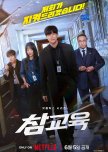
Teach You A Lesson (Get Schooled) – Review
Based on the Korean webtoon Get Schooled, Teach You A Lesson resonated with me because I experienced something similar when I taught at a Korean English academy in Alabang, Muntinlupa, in 2015. The academy had Korean students ranging from kindergarten children to college students who were there to learn English.
Like in the series, some of the younger students were noisy, disruptive, and wanted to do things their own way. As a new teacher, I initially struggled to maintain discipline. Eventually, the school administrator scolded me and told me that I had to take control of the classroom.
After that, I adopted a tougher but fair approach. I set clear rules, enforced discipline consistently, and the students gradually fell in line. Watching the protagonist handle unruly students reminded me of that experience. While the situations in the drama are obviously more exaggerated and action-oriented than real life, the underlying message - that a teacher needs authority, consistency, and the confidence to lead the classroom - felt familiar to me.
I looked into the original Get Schooled webtoon and read the controversial Chapter 125. The chapter features a half-Ethiopian, half-Korean student who bullies others, and a teacher uses the N-word toward the student during a confrontation. The chapter sparked widespread backlash, with many readers criticizing it as racist. Following the controversy, some pages were removed or altered on certain platforms, making the original version difficult to find today. The incident became one of the most discussed controversies surrounding the webtoon.
The series explores themes of school violence, bullying, and the challenges teachers face when dealing with students who ignore rules or exploit a system that sometimes leaves educators powerless. Although some methods portrayed in the story are dramatized for entertainment and wouldn't be appropriate in real educational settings, it raises interesting questions about discipline, accountability, and the balance between protecting students and empowering teachers to maintain order.
I also noticed a few scenes that seem to draw inspiration from The Dark Knight (2008). The main antagonist's ability to manipulate events even while imprisoned reminded me of the Joker during his interrogation scene, where he continues to stay several steps ahead despite being behind bars. Another similarity is the scene where Hwajin saves the female teacher from falling, which resembles Batman rescuing Rachel Dawes after she was let go by The Joker and falls from a building. I also noticed another scene that reminded me of The Dark Knight (2008). When Hwajin attempts to ram the student responsible for his fiancée's death with his vehicle, only to be stopped by the Education Minister's car blocking the way, it felt similar to the scene where an assailant tries to run down Coleman Reese, but Bruce Wayne intervenes by using his own vehicle to block the attack. Another parallel I noticed with The Dark Knight (2008) is the underlying theme of seeking justice - or, in some cases, vengeance - after the tragic loss or suffering of a loved one caused by abuse or wrongdoing (Hwajin and Bruce Wayne). Both stories feature characters whose actions are driven by traumatic events, though they ultimately take different paths in pursuing their goals.
Jin Ki Joo reminds me of Tuesday Vargas' looks. The irony is while Tuesday tolerates rebel students of the Philippine government in real life as they were radicalized by communists, Ki Joo as Han Rim is straightening students in this series to be good citizens of South Korea.
If you're looking for a school action drama with social commentary, Teach You A Lesson offers an engaging adaptation of Get Schooled while sparking discussion about the realities of classroom discipline and bullying.
Like in the series, some of the younger students were noisy, disruptive, and wanted to do things their own way. As a new teacher, I initially struggled to maintain discipline. Eventually, the school administrator scolded me and told me that I had to take control of the classroom.
After that, I adopted a tougher but fair approach. I set clear rules, enforced discipline consistently, and the students gradually fell in line. Watching the protagonist handle unruly students reminded me of that experience. While the situations in the drama are obviously more exaggerated and action-oriented than real life, the underlying message - that a teacher needs authority, consistency, and the confidence to lead the classroom - felt familiar to me.
I looked into the original Get Schooled webtoon and read the controversial Chapter 125. The chapter features a half-Ethiopian, half-Korean student who bullies others, and a teacher uses the N-word toward the student during a confrontation. The chapter sparked widespread backlash, with many readers criticizing it as racist. Following the controversy, some pages were removed or altered on certain platforms, making the original version difficult to find today. The incident became one of the most discussed controversies surrounding the webtoon.
The series explores themes of school violence, bullying, and the challenges teachers face when dealing with students who ignore rules or exploit a system that sometimes leaves educators powerless. Although some methods portrayed in the story are dramatized for entertainment and wouldn't be appropriate in real educational settings, it raises interesting questions about discipline, accountability, and the balance between protecting students and empowering teachers to maintain order.
I also noticed a few scenes that seem to draw inspiration from The Dark Knight (2008). The main antagonist's ability to manipulate events even while imprisoned reminded me of the Joker during his interrogation scene, where he continues to stay several steps ahead despite being behind bars. Another similarity is the scene where Hwajin saves the female teacher from falling, which resembles Batman rescuing Rachel Dawes after she was let go by The Joker and falls from a building. I also noticed another scene that reminded me of The Dark Knight (2008). When Hwajin attempts to ram the student responsible for his fiancée's death with his vehicle, only to be stopped by the Education Minister's car blocking the way, it felt similar to the scene where an assailant tries to run down Coleman Reese, but Bruce Wayne intervenes by using his own vehicle to block the attack. Another parallel I noticed with The Dark Knight (2008) is the underlying theme of seeking justice - or, in some cases, vengeance - after the tragic loss or suffering of a loved one caused by abuse or wrongdoing (Hwajin and Bruce Wayne). Both stories feature characters whose actions are driven by traumatic events, though they ultimately take different paths in pursuing their goals.
Jin Ki Joo reminds me of Tuesday Vargas' looks. The irony is while Tuesday tolerates rebel students of the Philippine government in real life as they were radicalized by communists, Ki Joo as Han Rim is straightening students in this series to be good citizens of South Korea.
If you're looking for a school action drama with social commentary, Teach You A Lesson offers an engaging adaptation of Get Schooled while sparking discussion about the realities of classroom discipline and bullying.
Was this review helpful to you?


