
 Editorials
Stylized Shinsengumi Drama That Sacrifices Historical Authenticity
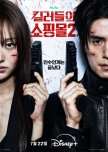
As a historical drama fan, I found this series visually decent but disappointing in terms of historical authenticity. The portrayal of the Shinsengumi, especially the relationship dynamics between the two leads, strongly implies homoerotic undertones connected to the historical practice of shudo among some samurai. While there is historical basis for that aspect, the series leans so heavily into it that it sometimes feels closer to “boys’ love” than a grounded historical drama.The story also skips important early history by starting after the Roshigumi had already formed instead of showing the Shieikan days. Many historical scenes were either omitted, heavily improvised, or only loosely inspired by real events rather than accurately portrayed. Even Serizawa Kamo’s henchmen were just treated as background extras.
Another issue was the aesthetic direction. The traditional chonmage hairstyles were mostly removed in favor of long-haired “anime-style samurai” looks, which made the setting feel less authentic. Although I'm not against an anime hairstyle, it would be great if there were few chonmage hairstyle in the series. The swordfight choreography was also sloppy in earlier scenes, looked fake and lacked the intention and intensity expected from a Shinsengumi drama. Although fight scenes greatly improved later as the lead character grew in combat.
I also think the series could have benefited from a broader cast dynamic (especially more women casts) instead of focusing almost entirely on emotionally intimate interactions between male characters. At times, the leads seemed written more like romantic gay partners than comrades-in-arms.
Overall, it’s more of a stylized reinterpretation of the Shinsengumi rather than a historically faithful adaptation.
Was this review helpful to you?
Was this review helpful to you?
Review of Hana Yori Dango (2005)
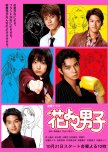
The 2005 live-action adaptation of Hana Yori Dango remains one of the most influential versions of Yoko Kamio's manga, but it is not without flaws.One of the most noticeable issues is the exaggerated acting style. Many scenes are highly theatrical and over-the-top, which can make the characters feel unrealistic. While this approach is common in manga adaptations, it does not accurately reflect how most Japanese people behave in real life.
The portrayal of wealth and elite school life is also heavily dramatized. The extravagant clothing, lavish displays of luxury, and unusual behavior inside the school often feel more like a fantasy setting than a believable environment. It is difficult to imagine even wealthy students dressing and acting in such an exaggerated manner on a normal school day unless they were attending a special event.
Another limitation is the short episode count. With only nine episodes in the first season, the series could not fully adapt all the storylines, character development, and emotional depth found in the original manga. As a result, certain plot points were condensed, altered, or omitted entirely.
Casting was another point of debate among manga readers. Tsukasa Domyoji is portrayed in the manga as an imposing and physically intimidating figure, but the live-action version cast a relatively shorter actor, changing the character's visual presence. While the performance itself was memorable, it differed from many readers' expectations.
The adaptation also delayed certain character elements. For example, Rui Hanazawa's violin playing, an important part of his characterization in the manga, was barely explored until the second season.
Season 2 introduced several original scenes and story changes that were not present in the manga. While some fans preferred a more faithful adaptation, these additions helped keep the story fresh and unpredictable, even for readers who already knew the source material.
Despite these criticisms, the 2005 Japanese version became highly influential. With the involvement of manga creator Yoko Kamio in the adaptation process, it helped establish many of the conventions later seen in subsequent versions, including the South Korean adaptation Boys Over Flowers, the Chinese adaptation Meteor Garden, and the Thai adaptation F4 Thailand: Boys Over Flowers. In many ways, the Japanese drama served as the template that influenced later generations of live-action adaptations.
Overall, while the series sacrifices realism and manga accuracy in several areas, its strong cast chemistry, memorable soundtrack, and lasting cultural impact make it one of the most important adaptations of Hana Yori Dango.
Was this review helpful to you?
A Journey Through the Life and Legend of Miyamoto Musashi
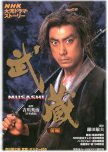
This is the drama that inspired me to choose Miyamoto Musashi’s Niten Ichi-ryu as my koryu kenjutsu tradition. One of the series’ greatest strengths is its depiction of many authentic techniques and concepts associated with Niten Ichi-ryu. Based on the famous novel by Eiji Yoshikawa, the story follows Musashi’s life from his youth on the battlefield of the Battle of Sekigahara to the events surrounding the Siege of Osaka Castle.The drama also deeply explores Musashi’s childhood and emotional foundations. It portrays his harsh upbringing under his father, Shinmen Munisai, whose strict and often violent nature shaped Musashi into a restless and aggressive youth. At the same time, Musashi’s family background is marked by separation and spiritual distance—his mother is shown living as a Buddhist monk, while his sister also lives a monastic life. This emotional fragmentation contributes to Musashi’s early sense of isolation and his eventual path as a wandering swordsman.
A central emotional thread of the story is Musashi’s relationship with his childhood friends, Matahachi and Otsu. Honiden Matahachi, his best friend who was originally engaged to Otsu, becomes a tragic and often comic figure in the narrative. When Musashi returns to his village and sets out on his warrior pilgrimage, the lives of the three become permanently intertwined and torn apart. Otsu, deeply devoted and emotionally persistent, sacrifices much of her life in her long and often painful search for Musashi, representing loyalty, love and endurance in contrast to the violent world of samurai ambition.
Meanwhile, Matahachi’s descent serves as a cautionary parallel story—his pursuit of pleasure and avoidance of responsibility gradually turns him into a figure of ridicule and misfortune, highlighting the consequences of abandoning discipline and honor. In contrast, Musashi’s relentless training and dueling bring him increasing fame and recognition as he defeats opponent after opponent on his path to mastery.
The story also features important supporting characters such as Oko and her daughter Akemi, whose complicated relationship with Matahachi and the Yoshiokas added further emotional and moral complexity to the narrative. Their involvement highlights themes of survival, desire, and manipulation within a chaotic post-war society.
On the antagonistic side, one of the most persistent and emotionally charged forces in Musashi’s journey is Matahachi’s mother, Osugi, whose obsession with family honor and vengeance drives much of the early conflict and tension. Her relentless pursuit of Musashi and refusal to accept reality make her a powerful and tragic antagonist within the story.
A major spiritual influence throughout Musashi’s development is the Buddhist monk Takuan Soho, who serves as a guiding figure in shaping Musashi’s inner discipline and philosophical outlook. His teachings push Musashi beyond mere physical mastery, toward a deeper understanding of mind, perception, and detachment—key elements that define his evolution as both swordsman and thinker.
Along the way, he faces many legendary opponents, including the Yoshioka brothers and their disciples, speared-wielding monk Hozoin Inshun, chain and sickle (kusarigama) wielding warrior Shishido Baiken, and his famous rival Sasaki Kojiro. The series also depicts his encounters with Yagyu Sekishusai, whose teachings help shape Musashi's philosophy of martial arts and self-improvement.
As Musashi’s journey progresses, his ultimate martial and philosophical challenges culminate in his confrontations with Yagyu Munenori, who represents the highest level of political and martial refinement. In the drama, Munenori is portrayed not merely as a master swordsman, but as a key political and philosophical figure of the Tokugawa era, serving the interests of the Tokugawa shogunate. His ideology emphasizes maintaining peace and order above individual morality in combat, often summarized as a pragmatic “the ends justify the means” approach—where decisive action, even ruthless when necessary, is justified if it secures stability for the state. These encounters push Musashi beyond mere physical combat into deeper questions of strategy, control, and spiritual balance.
Beyond the duels, the drama explores Musashi's personal growth as an artist, philosopher, and seeker of enlightenment, showing his development in sumi-e painting, farming and his gradual withdrawal from worldly life. His journey ultimately concludes in Reigando Cave, where he completes the Go Rin No Sho or The Book of Five Rings and passes on his teachings before his death.
Overall, the series stands as a powerful and emotionally layered interpretation of Musashi’s life—blending action, tragedy, philosophy, and human relationships into a deeply compelling historical drama.
Was this review helpful to you?
**Agent Kim Reactivated Review**
*Agent Kim Reactivated*, based on the Korean webtoon *Manager Kim*, has an engaging premise that immediately hooked me. The story follows a former elite North Korean double agent who has left his violent past behind to live a quiet life as a single father. When his only daughter is kidnapped, however, he is forced to reactivate his old skills and hunt down those responsible.The series feels like a Korean blend of the movies Taken starring Liam Neeson and Commando starring Arnold Schwarzenegger. Like Bryan Mills and John Matrix, Agent Kim is a retired elite operative whose peaceful life is shattered when his daughter is taken. What follows is a relentless rescue mission filled with brutal hand-to-hand combat, tactical action, and espionage.
What sets the series apart is that it doesn't rely solely on action. It also tackles themes such as high school bullying, human trafficking, and the political tensions between North and South Korea. These elements give the story more depth while keeping the pace exciting.
The action is intense and often over the top, but it fits the style of the original webtoon. The emotional bond between Agent Kim and his daughter gives the story its heart, making his mission feel personal rather than just another action spectacle.
Overall, if you enjoyed *Taken*, *Commando*, or action stories about retired elite operatives returning to save their families, *Agent Kim Reactivated* is well worth watching.
Was this review helpful to you?
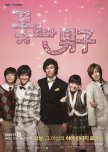
Boys Over Flowers (2009): The Best Live-Action Adaptation of Hana Yori Dango
Having watched the different live-action versions from Taiwan, Japan, South Korea, China, and Thailand, I still think the 2009 South Korean adaptation, Boys Over Flowers, is the best overall version. I first read the news on few websites on late 2008 that South Korea will have a live action of the manga and posted it on Friendster at that time.I first watched Boys Over Flowers when it aired in its Tagalog-dubbed version on ABS-CBN in 2010. I still remember when Boys Over Flowers was airing on ABS-CBN. I would catch some of the earlier episodes on television and occasionally watch recorded Tagalog-dubbed episodes that had been uploaded to YouTube. Looking back, many of those clips were likely unofficial recordings from the TV broadcasts. Through these uploads, I was able to follow much of the story—from the beginning of the series up to the episodes involving Jan Di's kidnapping and Ji Hoo's haircut—before eventually completing the entire drama years later. The drama also reminds me of that particular period in my life. It was the rainy season in 2010, and I had just transferred back from my school in Cubao, Quezon City to my original college in Dasmariñas, Cavite, where I continued and completed my Mechanical Engineering studies. I can even remember watching the show around the same time as I went grocery trips to the supermarket while watching another drama series at the same time - 1 Litre of Tears (Tagalog dubbed) and aired on a rival TV network - GMA-7.
However, I did not fully complete the series at that time. A decade later, in 2020 during the COVID-19 pandemic, I rewatched the drama on Netflix and finally finished all the episodes. Coincidentally, this was also during the period when I was serving as a volunteer helper at a barangay hall. Rewatching it gave me a greater appreciation of the characters, soundtrack, and production quality, which further cemented my view that it is the best live-action adaptation of Hana Yori Dango.
The F4 members had the right look, height, and fashion that made them feel like the elite group they were supposed to be. The soundtrack was also excellent. Some of the songs are still in my playlist today. While I also downloaded some of the background music from the Japanese drama Hana Yori Dango, I rarely listen to them anymore compared to the Korean OST.
One of the most interesting aspects of the series was how Lee Min Ho portrayed Goo Jun Pyo, the Korean counterpart of Doumyouji Tsukasa. Throughout the story, he went from being a dominant and confident alpha-type character to someone who is a complete simp to Geum Jan Di, despite her initially despising him. The series also incorporated some traits from Kazuya Aoike's more wimpy character, such as Jun Pyo's inability to swim.
Ku Hye Sun's portrayal of Geum Jan Di was cute, charming and endearing. She had a warm, dependable "older sister" aura about her, even though she is actually a year younger than me. While I liked her performance overall, there were moments when Jan Di became a little frustrating because she struggled to sort out her feelings despite everything that had happened around her. To be fair, this was faithful to the original manga and its character writing. However, I have always felt that this is one of the weaknesses of Hana Yori Dango as a story. The romantic dynamics can be so exaggerated and unrealistic that, when viewed from a real-world perspective, the relationship between the two leads sometimes feels unstable. While their chemistry works well as dramatic entertainment, it occasionally comes across as the kind of relationship that looks like a recipe for divorce if it existed in real life.
I especially enjoyed the overseas episodes. The Macau and Maldives scenes added a sense of scale and luxury that made the series feel grander than other adaptations.
The drama was based heavily on the Japanese live-action version, but I also noticed what seemed to be subtle anti-Japanese World War II sentiment and cultural jabs in a few parts of the series, such as the naming of Ji Hoo's horse as "Rui."
One of the darkest controversies connected to the series involved actress Jang Ja-yeon, who played Sunny, one of the members of the bully trio. She died by suicide in 2009. After her death, allegations emerged that she had been pressured and exploited by powerful figures in the entertainment industry and forced to provide sexual favors to influential executives and media personalities. The case sparked national outrage in South Korea and led to multiple investigations and reinvestigations over the years, becoming one of the most controversial scandals in the Korean entertainment industry.
Unlike the Taiwanese and Japanese live-action adaptations, which suffered from splitting into two seasons, Boys Over Flowers managed to tell the story in a single continuous run. This helped the pacing and made the experience feel more complete.
My favorite soundtrack from the series is "Wish Ur My Love" by T-Max. Whenever I hear its intro, it reminds me of those classic blushing moments when you're trying to ship two people together or teasing someone about a romantic interest with a playful "yihee" expression. It perfectly captures that youthful, romantic atmosphere that made the drama memorable.
My second favorite soundtrack from the series is the unreleased background track commonly known among fans as "Flowers Bloom", which can be found on YouTube. It is a beautiful piece that both have piano and violin versions and is oftenly used to introduce scenes and transition between important moments. Despite never being officially released as part of the soundtrack album, it remains one of the most memorable musical themes in the drama.
My third favorite is "Yearning Heart" by A'ST1, which was featured during the ice-skating scene. The catchy tune and energetic melody make it one of the most enjoyable songs in the series. Whenever I hear it, it immediately brings back memories of the drama's youthful romance and the excitement of the relationship between Jun Pyo and Jan Di. It is the kind of song that perfectly captures the optimism and emotional highs that made Boys Over Flowers so entertaining to watch.
Things I Like About This Drama:
1. The Geum family's dry-cleaning business. It gave the story a grounded, working-class perspective that contrasted well with the wealth and privilege of the F4.
2. The Namsan Tower date scene where Jun Pyo and Jan Di shared a simple, inexpensive cup of coffee. Despite all the luxury in the series, it showed that meaningful moments don't have to be expensive. In that date scene, Jun Pyo makes a remark about what many businessmen understand - the small cent increments added to the price of cheap coffee - which reflects how wealthy individuals often stay wealthy through attention to even the smallest details of spending. There is also a lighthearted moment where Jan Di talks about the stars, and Jun Pyo mistakenly refers to them as satellites instead. These scenes stand out as some of the funniest and most memorable moments in the entire series, balancing humor with their romantic development.
3. The cable car scene where the two leads became stranded during their date. I also liked how the final episode came full circle by ending there.
4. The restaurant scene where the Geum family took home leftovers. It was a realistic and relatable moment that reflected their frugal lifestyle.
5. The street-vending scenes involving the Geum family. These scenes highlighted their hard work and determination to make a living.
6. The chaotic sale-rush scene at the clothing store before Jun Pyo and Jan Di's date. It was both entertaining and a glimpse into Jan Di's everyday struggles.
7. The piggyback contest (eopgi) where Jun Pyo and Jan Di emerged as the winners. It was one of the most memorable and fun moments that showcased their growing chemistry as a couple.
Even years later, Boys Over Flowers (2009) remains my favorite live-action adaptation of Hana Yori Dango.
Was this review helpful to you?
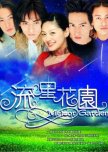
Meteor Garden (2001) – The Series That Sparked the Asian Drama Wave in Asia
Meteor Garden (2001) was one of the earliest Asian dramas to truly explode in popularity in Asia, effectively opening the door for the “Asian wave” of television romance series that followed. I first watched it in 2003 during my 1st year in my 2nd college school in my Information Technology course that I transferred to. The timing made it even more memorable, as it aired locally on ABS-CBN during the rainy season in the Philippines—a period that unintentionally amplified its romantic and emotional atmosphere while viewers were staying indoors. That combination of weather and storytelling made the series feel even more immersive and nostalgic.The series carries a very specific ambiance and tone that feels nostalgic now. It captured youthful romance, class tension, and emotional intensity in a way that felt fresh at the time. Part of its uniqueness also came from its production context: the original manga was still ongoing when the adaptation was made, so the series eventually had to create its own ending interpretation. Interestingly, the manga later ended up following a similar direction, which makes the adaptation’s choices more notable in hindsight.
The first season stands out as the strongest. It had a clear emotional arc, strong character dynamics, and a compelling balance between romance and conflict. The rainy season viewing experience at the time also heightened the emotional pull of the story, making the romance feel more intimate and the dramatic scenes more memorable. However, the short sequel bridge leading into the second season- 'Meteor Rain' felt weak and unnecessary, almost like filler that disrupted the momentum.
The second season, on the other hand, feels noticeably unfocused. Instead of building on the strengths of the original arc, it comes across as uncertain of its direction, with pacing and storytelling that feel inconsistent. What made the first season engaging—its emotional clarity and narrative drive—feels diluted in the continuation.
Another noticeable flaw is the styling of the F4 themselves. Despite being portrayed as ultra-wealthy elites, their wardrobe often looks surprisingly plain or even low-budget, which weakens the credibility of their “rich boys” image. Instead of reinforcing their status through refined fashion, the styling sometimes feels inconsistent with their supposed social class.
Another interesting aspect of Meteor Garden is the controversy surrounding its depiction of school bullying. The series was actually banned in mainland China in 2002 after authorities and some parents complained that it negatively influenced young people. Critics particularly objected to the show's portrayal of wealthy students abusing their power, bullying classmates, and promoting unrealistic social values. Dao Ming Si's treatment of Shan Cai and Qing He and the F4's "red card" system, which encouraged the harassment of targeted students, were among the elements that drew criticism.
Ironically, despite the original Taiwanese series being banned in China, the 2018 Chinese remake still retained the bullying theme as a major part of the story because it is central to the original Boys Over Flowers narrative. While the 2018 version toned down some of the harsher elements and modernized the characters, the conflict still begins with the F4's dominance over the school and the mistreatment of the heroine by Dao Ming Si and his group.
At the same time, the series unintentionally influenced pop culture trends, particularly the long hairstyle popularized by the F4. During that era, many fans, young viewers and even celebrities like Richard Gomez and Jackie Chan adopted similar hairstyles especially Jerry Yan's long hair hairstyle, turning it into a recognizable fashion trend across Asia, including the Philippines.
With the passing news of Barbie Hsu last year, it felt like a quiet but deep heartbreak - almost like I'm being stabbed in the chest. Her portrayal of Shan Cai gave Meteor Garden its emotional core, and her presence is a big part of why the series remains so memorable and impactful for many viewers.
Overall, Meteor Garden remains culturally significant, especially in the Philippines, but its quality is clearly uneven across seasons, with its strongest impact rooted in its early episodes and the nostalgic rainy-season viewing experience that intensified its romantic appeal.
Was this review helpful to you?
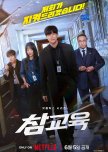
Teach You A Lesson (Get Schooled) – Review
Based on the Korean webtoon Get Schooled, Teach You A Lesson resonated with me because I experienced something similar when I taught at a Korean English academy in Alabang, Muntinlupa, in 2015. The academy had Korean students ranging from kindergarten children to college students who were there to learn English.Like in the series, some of the younger students were noisy, disruptive, and wanted to do things their own way. As a new teacher, I initially struggled to maintain discipline. Eventually, the school administrator scolded me and told me that I had to take control of the classroom.
After that, I adopted a tougher but fair approach. I set clear rules, enforced discipline consistently, and the students gradually fell in line. Watching the protagonist handle unruly students reminded me of that experience. While the situations in the drama are obviously more exaggerated and action-oriented than real life, the underlying message - that a teacher needs authority, consistency, and the confidence to lead the classroom - felt familiar to me.
I looked into the original Get Schooled webtoon and read the controversial Chapter 125. The chapter features a half-Ethiopian, half-Korean student who bullies others, and a teacher uses the N-word toward the student during a confrontation. The chapter sparked widespread backlash, with many readers criticizing it as racist. Following the controversy, some pages were removed or altered on certain platforms, making the original version difficult to find today. The incident became one of the most discussed controversies surrounding the webtoon.
The series explores themes of school violence, bullying, and the challenges teachers face when dealing with students who ignore rules or exploit a system that sometimes leaves educators powerless. Although some methods portrayed in the story are dramatized for entertainment and wouldn't be appropriate in real educational settings, it raises interesting questions about discipline, accountability, and the balance between protecting students and empowering teachers to maintain order.
I also noticed a few scenes that seem to draw inspiration from The Dark Knight (2008). The main antagonist's ability to manipulate events even while imprisoned reminded me of the Joker during his interrogation scene, where he continues to stay several steps ahead despite being behind bars. Another similarity is the scene where Hwajin saves the female teacher from falling, which resembles Batman rescuing Rachel Dawes after she was let go by The Joker and falls from a building. I also noticed another scene that reminded me of The Dark Knight (2008). When Hwajin attempts to ram the student responsible for his fiancée's death with his vehicle, only to be stopped by the Education Minister's car blocking the way, it felt similar to the scene where an assailant tries to run down Coleman Reese, but Bruce Wayne intervenes by using his own vehicle to block the attack. Another parallel I noticed with The Dark Knight (2008) is the underlying theme of seeking justice - or, in some cases, vengeance - after the tragic loss or suffering of a loved one caused by abuse or wrongdoing (Hwajin and Bruce Wayne). Both stories feature characters whose actions are driven by traumatic events, though they ultimately take different paths in pursuing their goals.
Jin Ki Joo reminds me of Tuesday Vargas' looks. The irony is while Tuesday tolerates rebel students of the Philippine government in real life as they were radicalized by communists, Ki Joo as Han Rim is straightening students in this series to be good citizens of South Korea.
If you're looking for a school action drama with social commentary, Teach You A Lesson offers an engaging adaptation of Get Schooled while sparking discussion about the realities of classroom discipline and bullying.
Was this review helpful to you?


