

 134
134 258
258 24
24 2
2 5
5 6
6 10
10 5
5 7
7 6
6 4
4 10
10 5
5 2
2 8
8 41
41 3
3 5
5 4
4 2
2 1
1 4
4 5
5 5
5 2
2 7
7 30
30 39
39 13
13 25
25


This review may contain spoilers
THE BULLY-BUSTER DRAMA NOBODY ASKED FOR BUT EVERY KOREAN SCHOOL DESPERATELY NEEDED
OVERVIEW:
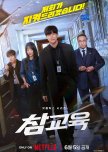
Imagine a Korean school system where students rule through fear, teachers are afraid to intervene, principals answer to angry wealthy parents, and even police investigations vanish under political pressure. Enter Na Hwa Jin, an inspector for the Educational Rights Protection Bureau, a government agency created to tackle the chaos. Backed by Minister Choi Gang Seok and aided by deputy director Bong Geun Dae, who frequently goes undercover as a student, Hwa Jin takes on the worst cases of school corruption and abuse. Later joined by former soldier Im Han Rim, the team brings a mix of investigation, intimidation, and brutal justice to every mission. Each episode sees the ERPB storm a different school, expose systemic wrongdoing, punish the guilty, and restore order. It’s *Taxi Driver* set in Korean schools, and it’s ridiculously satisfying.
⸻
COMMENTARY:
I was not prepared to enjoy this as much as I did. The premise on paper sounds like it could easily become repetitive or preachy or both simultaneously, which is the worst possible combination in a drama. Bully shows up, ERPB shows up, bully gets punished, roll credits, repeat for ten episodes. That description makes it sound exhausting. But the reason Teach You A Lesson actually works, and works consistently across all ten episodes, is that it understands that the problem is never just the bully.
Each case in this drama peels back a different layer of the same systemic rot. Ep 1 is about a rich politician's son who bullies with total impunity because every adult in the building is financially terrified of his father. Ep 2 is about a school that has essentially become a gang recruitment pipeline because nobody in authority cared enough to intervene. Ep 3 is about a teacher being destroyed by her own student through social media manipulation while the principal negotiates his own peace deal with the perpetrator instead of protecting the victim. Ep 4 is about a corrupt teacher who has been quietly steering wealthy students toward exam advantages for years. Ep 5 is about a parent who weaponised the very complaint system designed to protect children in order to torment a teacher. Ep 6 is about teenagers who know exactly how untouchable being a minor makes them and exploit that protection like it is a VIP membership card. Ep 7 is about a gambling addiction pipeline deliberately marketed to high schoolers. Ep 8 is about academic pressure so extreme that a mother was feeding her son illegal stimulants just to stay competitive at a prep school. Ep 9 is about passive exploitation masquerading as friendship. And Ep 10 brings the whole season full circle to the murder that started everything.
That is 10 episodes and not a single one of them recycles the same problem. I genuinely want to stand up and applaud whoever was in that writers' room because that is some disciplined, intelligent storytelling. The show never lets you settle. Just when you think you know what kind of villain you are watching, it introduces a new category of how adults fail children and how children fail each other and how systems designed to protect people get bent into weapons used against them.
Let me talk about Hwa-jin for a second because he is genuinely a very entertaining character. The man shows up to a school on his first day, immediately hears a student make a joke about a classmate who just died, and beats him. Not a lecture, not a disappointed look. He beats the student and then puts the entire class in a plank position. On his first day as a new teacher. The audacity. The commitment. The complete disregard for HR concerns. I genuinely watched that scene with my mouth open because you are simultaneously horrified and cheering and neither feeling is wrong. The show is self-aware enough to know that what Hwa-jin does is not strictly legal, and it leans into that tension deliberately rather than ignoring it. The ERPB has government authority but the way they use that authority is creative enough that even their allies sometimes need a moment to process it.
Kim Mu Yeol is doing exactly what this role needs. Hwa-jin is not warm, he is not particularly funny on purpose. He does not give inspirational speeches that end with someone crying and learning a lesson over background piano music. What he is, is terrifyingly certain of himself and absolutely relentless in a way that makes him magnetic to watch. There is a scene in ep 2 where he drives two students around a parking lot in a car with a missing door at genuinely unreasonable speeds while they scream and beg for their lives and he just looks completely unbothered, like he is running a routine errand. That is the energy this show runs on and Kim Mu-yeol delivers it with full commitment every single episode.
Jin Ki Joo as Han-rim is the most delightful surprise this drama has to offer. She shows up in ep 3 and immediately makes herself at home by grabbing a knife blade with her bare hand and staring a teenager off a balcony. She is a former soldier, she has the scars to prove it, and she operates with a kind of cheerful efficiency when it comes to violence that is somehow both alarming and deeply satisfying to watch. But what makes Han-rim genuinely great rather than just cool is that she has a full emotional life outside of the action sequences. Her dynamic with Geun-de, her protectiveness over him, the backstory of her own bullying that Hwa-jin helped her through, the way she genuinely struggles when she thinks she has put Geun-de in danger in ep 7, all of these things make her three-dimensional in a drama that could easily have settled for one-dimensional badassery and called it a day.
And then there is Geun-de. My sweet, hapless, perpetually stressed Geun-de. P.O plays him with such a specific kind of earnestness that you feel genuinely protective of the man despite the fact that he is a government official with a full salary and a tactical team behind him. He has a government title. He is the Deputy Director of the ERPB. And yet every single episode he ends up going undercover in a school, getting beaten up, kidnapped by loan sharks, developing a gambling addiction for the purposes of an investigation, or getting his cover blown in a cybercafe while Han-rim is distracted by a bag of snacks. This man is perpetually in danger and perpetually dignified about it and I love him unreservedly. The moment in ep 7 where he sends a distress message in Morse code through a criminal gang's server from inside their hideout is both the most ridiculous and most satisfying thing the show does.
Lee Sung Min as Gang-seok is doing the quietly excellent work that veteran actors make look effortless. Gang-seok is the political brain of the operation, the person who turns what Hwa-jin does in schools into policy announcements and press conferences and actual legal change. He is the reason the ERPB has teeth beyond the personal damage Hwa-jin inflicts. The scene in ep 10 where he completely loses his composure and tries to go after Gyu-cheol himself after seeing Hwa-jin's injuries is the most emotionally direct the character gets all season, and Lee Sung Min makes it land exactly right. He has been calling Hwa-jin his son quietly in the background the whole time. That moment is when you finally feel the full weight of it.
The Ga-yun thread running through the whole season is doing a lot of structural work. The entire ERPB exists because Ga-yun was murdered by a student she was trying to help, and the justice system gave that student two to four years and called it a day. Hwa-jin lost his partner. Gang-seok lost his daughter. The show does not let you forget either of those things but it also does not hammer you over the head with grief every episode. Instead it works as an undercurrent, explaining why these two men are as relentless as they are, why they take cases that others would find exhausting or hopeless, why Hwa-jin in particular has zero interest in meeting bullies halfway or giving them comfortable exits. When ep 10 finally reveals the full truth of why Gyu-cheol killed Ga-yun, the answer is so banal and so ugly that it hits harder than any dramatic revelation would have. He killed her because she threw his drugs away. He murdered a teacher who was trying to save him because she got in the way of his business. That is it. That is the whole reason, and it is devastating.
Ep 3 is the one that I think about the most because the Ye-ri case is doing something uncomfortably nuanced. Ye-ri is not a traditional villain in the sense that she has a coherent evil plan. She is a teenager who discovered that social media gives her power and that power is addictive, and she used it in increasingly destructive ways because every adult in her immediate environment either enabled her or refused to confront her until the damage was irreversible. Two teachers are destroyed. One takes his own life. And Ye-ri by the end is not triumphant, she is cornered and desperate and wielding a knife she does not actually know how to use. The show does not ask you to feel sorry for her but it does ask you to understand how she got there, and that is such a morally complicated thing.
Being a teacher myself, ep 5 almost made me leave my body. The sound design choice of making U-jin's mother's constant phone messages audible to us is either genius or deliberate cruelty and honestly it might be both. By the fifteenth notification sound I was stress-eating and reconsidering my life choices. Ji-seon's story is devastating because it is so recognisable: a person doing a genuinely good job who is slowly dismantled by one parent's campaign of harassment while every system around her fails to intervene. The principal asking her to ignore the messages because upsetting parents causes problems for the school is such a specific and believable failure of institutional responsibility that it made me angry.
Ep 8 is the one that will make parents deeply uncomfortable and good. Hyeon-min's mother is not a cartoon villain. She is not motivated by hatred or cruelty. She is motivated by the very real and very crushing pressure of the South Korean academic system and by the belief, not entirely unfounded given the context, that her son's entire future depends on his CSAT results. The show does not let that be an excuse. Hwa-jin making her follow the same sleep-deprived, controlled-meal, no-rest schedule she imposed on her son is the most elegant punishment in the entire season. Not a fine. Not an arrest. The experience of being inside the life she built for her child. The scene where Hyeon-min finally tells her he does not want to go to medical school and she goes completely blank before processing it is one of the best pieces of acting in the whole drama.
I also need to discuss Gi-tae, whose function in the drama is to be a structural antagonist for Gang-seok while representing every politician who would rather protect institutional inertia than fix an actual problem. He is not complex. He does not have a redemption arc. He is just a man who is threatened by what the ERPB represents because it makes visible the things his party has been comfortable ignoring. The moment in Ep 10 where Gang-seok punches him to shut him up while he is making yet another speech about what he will do once he gets out is one of the most satisfying endings a secondary villain has gotten in recent memory. Sometimes the ending is just a politician getting punched by a grieving father and that is exactly enough.
The show is not subtle about what it is. This is not a nuanced exploration of whether vigilante justice is ethical. It is a show about people getting punished for ruining other people's lives, and it wants you to enjoy that punishment, and you will enjoy it, and you should not feel bad about enjoying it. The genre is wish fulfilment drama. It understand the deep public appetite for seeing systems that fail ordinary people get forcibly corrected by someone who simply refuses to accept that the system gets the final word.
The Han-rim and Geun-de romance thread is handled with exactly the right lightness. The show never makes it a main event, never sacrifices plot for shippy moments, but it does earn the warmth between them through consistent small details across all ten episodes. Han-rim worrying about his safety during undercover operations. Geun-de being the one person who manages to bring her out of a drug-induced fugue state in the finale. Hwa-jin clocking the whole situation from ep 4 and doing the kdrama equivalent of a knowing older brother smirk about it for the rest of the season. Gang-seok at Ga-yun's grave watching both of them pointedly try to ignore each other and clearly finding it hilarious. These are good people becoming attached to each other in believable ways and the show respects the viewer enough to let that develop organically rather than forcing it.
One thing I appreciated quietly throughout the whole season is that the show makes space for cases where students are the victims of adults rather than the other way around. Ji-seon in ep 5 is being tormented by a parent. Hyeon-min in ep 8 is being harmed by his own mother. The gambling students in ep 7 are being deliberately targeted and addicted by loan sharks who know exactly what they are doing to vulnerable teenagers. Seong-gu in ep 9 is being exploited by someone he thinks is his friend. The ERPB protects teachers and students and parents depending on who is being victimised in a given situation, and that flexibility keeps the show from becoming a simple students-are-the-problem narrative. The show is smarter than that and it wants you to know it.
⸻
FINAL THOUGHTS:
“Teach You a Lesson” is exactly the kind of drama that reminds you what Korean television does better than almost anyone else when it's firing on all cylinders. It's bold and provocative and stylish and it is packed with performances that make you genuinely care about everything happening on screen. It takes real social problems seriously and it approaches them with passion and urgency. It delivers satisfaction and catharsis in ways that feel genuinely earned. And it surprised me emotionally in the best possible way with a backstory that added real depth and humanity to what could've been a fairly surface level action show.
Is it morally complicated? Absolutely yes. Will it make you think? Also yes. Will it also have you cheering and gasping and completely unable to stop watching until you've finished all ten episodes? YES. All of those things can coexist and in this drama they do.
The cast is phenomenal across the board. Jin Ki-joo and Kim Mu-yul, Lee Sung-min, and P.O are all doing career best work here in my opinion and they deserve every bit of recognition they get for it. The production is slick and confident. The pacing is excellent. And the emotional core underneath all the action is genuinely moving once it reveals itself.
Don't sleep on this one seriously!! The people who get it will GET IT and I really think more people need to be watching and talking about this drama because it deserves the attention.
Also if you watched this and slept on Jin Ki-joo I am going to need you to go back and rewatch every single one of her scenes with fresh eyes because she is THAT girl and I will not be taking any questions at this time thank you!
With all that said, I give this a solid 8.5/10. I would absolutely recommend this to anyone who loves action dramas, school justice narratives, morally complicated protagonists or just stories about grief and power and what people build in the aftermath of devastating loss.
Thank you for reading!
♡
Imagine a Korean school system where students rule through fear, teachers are afraid to intervene, principals answer to angry wealthy parents, and even police investigations vanish under political pressure. Enter Na Hwa Jin, an inspector for the Educational Rights Protection Bureau, a government agency created to tackle the chaos. Backed by Minister Choi Gang Seok and aided by deputy director Bong Geun Dae, who frequently goes undercover as a student, Hwa Jin takes on the worst cases of school corruption and abuse. Later joined by former soldier Im Han Rim, the team brings a mix of investigation, intimidation, and brutal justice to every mission. Each episode sees the ERPB storm a different school, expose systemic wrongdoing, punish the guilty, and restore order. It’s *Taxi Driver* set in Korean schools, and it’s ridiculously satisfying.
⸻
COMMENTARY:
I was not prepared to enjoy this as much as I did. The premise on paper sounds like it could easily become repetitive or preachy or both simultaneously, which is the worst possible combination in a drama. Bully shows up, ERPB shows up, bully gets punished, roll credits, repeat for ten episodes. That description makes it sound exhausting. But the reason Teach You A Lesson actually works, and works consistently across all ten episodes, is that it understands that the problem is never just the bully.
Each case in this drama peels back a different layer of the same systemic rot. Ep 1 is about a rich politician's son who bullies with total impunity because every adult in the building is financially terrified of his father. Ep 2 is about a school that has essentially become a gang recruitment pipeline because nobody in authority cared enough to intervene. Ep 3 is about a teacher being destroyed by her own student through social media manipulation while the principal negotiates his own peace deal with the perpetrator instead of protecting the victim. Ep 4 is about a corrupt teacher who has been quietly steering wealthy students toward exam advantages for years. Ep 5 is about a parent who weaponised the very complaint system designed to protect children in order to torment a teacher. Ep 6 is about teenagers who know exactly how untouchable being a minor makes them and exploit that protection like it is a VIP membership card. Ep 7 is about a gambling addiction pipeline deliberately marketed to high schoolers. Ep 8 is about academic pressure so extreme that a mother was feeding her son illegal stimulants just to stay competitive at a prep school. Ep 9 is about passive exploitation masquerading as friendship. And Ep 10 brings the whole season full circle to the murder that started everything.
That is 10 episodes and not a single one of them recycles the same problem. I genuinely want to stand up and applaud whoever was in that writers' room because that is some disciplined, intelligent storytelling. The show never lets you settle. Just when you think you know what kind of villain you are watching, it introduces a new category of how adults fail children and how children fail each other and how systems designed to protect people get bent into weapons used against them.
Let me talk about Hwa-jin for a second because he is genuinely a very entertaining character. The man shows up to a school on his first day, immediately hears a student make a joke about a classmate who just died, and beats him. Not a lecture, not a disappointed look. He beats the student and then puts the entire class in a plank position. On his first day as a new teacher. The audacity. The commitment. The complete disregard for HR concerns. I genuinely watched that scene with my mouth open because you are simultaneously horrified and cheering and neither feeling is wrong. The show is self-aware enough to know that what Hwa-jin does is not strictly legal, and it leans into that tension deliberately rather than ignoring it. The ERPB has government authority but the way they use that authority is creative enough that even their allies sometimes need a moment to process it.
Kim Mu Yeol is doing exactly what this role needs. Hwa-jin is not warm, he is not particularly funny on purpose. He does not give inspirational speeches that end with someone crying and learning a lesson over background piano music. What he is, is terrifyingly certain of himself and absolutely relentless in a way that makes him magnetic to watch. There is a scene in ep 2 where he drives two students around a parking lot in a car with a missing door at genuinely unreasonable speeds while they scream and beg for their lives and he just looks completely unbothered, like he is running a routine errand. That is the energy this show runs on and Kim Mu-yeol delivers it with full commitment every single episode.
Jin Ki Joo as Han-rim is the most delightful surprise this drama has to offer. She shows up in ep 3 and immediately makes herself at home by grabbing a knife blade with her bare hand and staring a teenager off a balcony. She is a former soldier, she has the scars to prove it, and she operates with a kind of cheerful efficiency when it comes to violence that is somehow both alarming and deeply satisfying to watch. But what makes Han-rim genuinely great rather than just cool is that she has a full emotional life outside of the action sequences. Her dynamic with Geun-de, her protectiveness over him, the backstory of her own bullying that Hwa-jin helped her through, the way she genuinely struggles when she thinks she has put Geun-de in danger in ep 7, all of these things make her three-dimensional in a drama that could easily have settled for one-dimensional badassery and called it a day.
And then there is Geun-de. My sweet, hapless, perpetually stressed Geun-de. P.O plays him with such a specific kind of earnestness that you feel genuinely protective of the man despite the fact that he is a government official with a full salary and a tactical team behind him. He has a government title. He is the Deputy Director of the ERPB. And yet every single episode he ends up going undercover in a school, getting beaten up, kidnapped by loan sharks, developing a gambling addiction for the purposes of an investigation, or getting his cover blown in a cybercafe while Han-rim is distracted by a bag of snacks. This man is perpetually in danger and perpetually dignified about it and I love him unreservedly. The moment in ep 7 where he sends a distress message in Morse code through a criminal gang's server from inside their hideout is both the most ridiculous and most satisfying thing the show does.
Lee Sung Min as Gang-seok is doing the quietly excellent work that veteran actors make look effortless. Gang-seok is the political brain of the operation, the person who turns what Hwa-jin does in schools into policy announcements and press conferences and actual legal change. He is the reason the ERPB has teeth beyond the personal damage Hwa-jin inflicts. The scene in ep 10 where he completely loses his composure and tries to go after Gyu-cheol himself after seeing Hwa-jin's injuries is the most emotionally direct the character gets all season, and Lee Sung Min makes it land exactly right. He has been calling Hwa-jin his son quietly in the background the whole time. That moment is when you finally feel the full weight of it.
The Ga-yun thread running through the whole season is doing a lot of structural work. The entire ERPB exists because Ga-yun was murdered by a student she was trying to help, and the justice system gave that student two to four years and called it a day. Hwa-jin lost his partner. Gang-seok lost his daughter. The show does not let you forget either of those things but it also does not hammer you over the head with grief every episode. Instead it works as an undercurrent, explaining why these two men are as relentless as they are, why they take cases that others would find exhausting or hopeless, why Hwa-jin in particular has zero interest in meeting bullies halfway or giving them comfortable exits. When ep 10 finally reveals the full truth of why Gyu-cheol killed Ga-yun, the answer is so banal and so ugly that it hits harder than any dramatic revelation would have. He killed her because she threw his drugs away. He murdered a teacher who was trying to save him because she got in the way of his business. That is it. That is the whole reason, and it is devastating.
Ep 3 is the one that I think about the most because the Ye-ri case is doing something uncomfortably nuanced. Ye-ri is not a traditional villain in the sense that she has a coherent evil plan. She is a teenager who discovered that social media gives her power and that power is addictive, and she used it in increasingly destructive ways because every adult in her immediate environment either enabled her or refused to confront her until the damage was irreversible. Two teachers are destroyed. One takes his own life. And Ye-ri by the end is not triumphant, she is cornered and desperate and wielding a knife she does not actually know how to use. The show does not ask you to feel sorry for her but it does ask you to understand how she got there, and that is such a morally complicated thing.
Being a teacher myself, ep 5 almost made me leave my body. The sound design choice of making U-jin's mother's constant phone messages audible to us is either genius or deliberate cruelty and honestly it might be both. By the fifteenth notification sound I was stress-eating and reconsidering my life choices. Ji-seon's story is devastating because it is so recognisable: a person doing a genuinely good job who is slowly dismantled by one parent's campaign of harassment while every system around her fails to intervene. The principal asking her to ignore the messages because upsetting parents causes problems for the school is such a specific and believable failure of institutional responsibility that it made me angry.
Ep 8 is the one that will make parents deeply uncomfortable and good. Hyeon-min's mother is not a cartoon villain. She is not motivated by hatred or cruelty. She is motivated by the very real and very crushing pressure of the South Korean academic system and by the belief, not entirely unfounded given the context, that her son's entire future depends on his CSAT results. The show does not let that be an excuse. Hwa-jin making her follow the same sleep-deprived, controlled-meal, no-rest schedule she imposed on her son is the most elegant punishment in the entire season. Not a fine. Not an arrest. The experience of being inside the life she built for her child. The scene where Hyeon-min finally tells her he does not want to go to medical school and she goes completely blank before processing it is one of the best pieces of acting in the whole drama.
I also need to discuss Gi-tae, whose function in the drama is to be a structural antagonist for Gang-seok while representing every politician who would rather protect institutional inertia than fix an actual problem. He is not complex. He does not have a redemption arc. He is just a man who is threatened by what the ERPB represents because it makes visible the things his party has been comfortable ignoring. The moment in Ep 10 where Gang-seok punches him to shut him up while he is making yet another speech about what he will do once he gets out is one of the most satisfying endings a secondary villain has gotten in recent memory. Sometimes the ending is just a politician getting punched by a grieving father and that is exactly enough.
The show is not subtle about what it is. This is not a nuanced exploration of whether vigilante justice is ethical. It is a show about people getting punished for ruining other people's lives, and it wants you to enjoy that punishment, and you will enjoy it, and you should not feel bad about enjoying it. The genre is wish fulfilment drama. It understand the deep public appetite for seeing systems that fail ordinary people get forcibly corrected by someone who simply refuses to accept that the system gets the final word.
The Han-rim and Geun-de romance thread is handled with exactly the right lightness. The show never makes it a main event, never sacrifices plot for shippy moments, but it does earn the warmth between them through consistent small details across all ten episodes. Han-rim worrying about his safety during undercover operations. Geun-de being the one person who manages to bring her out of a drug-induced fugue state in the finale. Hwa-jin clocking the whole situation from ep 4 and doing the kdrama equivalent of a knowing older brother smirk about it for the rest of the season. Gang-seok at Ga-yun's grave watching both of them pointedly try to ignore each other and clearly finding it hilarious. These are good people becoming attached to each other in believable ways and the show respects the viewer enough to let that develop organically rather than forcing it.
One thing I appreciated quietly throughout the whole season is that the show makes space for cases where students are the victims of adults rather than the other way around. Ji-seon in ep 5 is being tormented by a parent. Hyeon-min in ep 8 is being harmed by his own mother. The gambling students in ep 7 are being deliberately targeted and addicted by loan sharks who know exactly what they are doing to vulnerable teenagers. Seong-gu in ep 9 is being exploited by someone he thinks is his friend. The ERPB protects teachers and students and parents depending on who is being victimised in a given situation, and that flexibility keeps the show from becoming a simple students-are-the-problem narrative. The show is smarter than that and it wants you to know it.
⸻
FINAL THOUGHTS:
“Teach You a Lesson” is exactly the kind of drama that reminds you what Korean television does better than almost anyone else when it's firing on all cylinders. It's bold and provocative and stylish and it is packed with performances that make you genuinely care about everything happening on screen. It takes real social problems seriously and it approaches them with passion and urgency. It delivers satisfaction and catharsis in ways that feel genuinely earned. And it surprised me emotionally in the best possible way with a backstory that added real depth and humanity to what could've been a fairly surface level action show.
Is it morally complicated? Absolutely yes. Will it make you think? Also yes. Will it also have you cheering and gasping and completely unable to stop watching until you've finished all ten episodes? YES. All of those things can coexist and in this drama they do.
The cast is phenomenal across the board. Jin Ki-joo and Kim Mu-yul, Lee Sung-min, and P.O are all doing career best work here in my opinion and they deserve every bit of recognition they get for it. The production is slick and confident. The pacing is excellent. And the emotional core underneath all the action is genuinely moving once it reveals itself.
Don't sleep on this one seriously!! The people who get it will GET IT and I really think more people need to be watching and talking about this drama because it deserves the attention.
Also if you watched this and slept on Jin Ki-joo I am going to need you to go back and rewatch every single one of her scenes with fresh eyes because she is THAT girl and I will not be taking any questions at this time thank you!
With all that said, I give this a solid 8.5/10. I would absolutely recommend this to anyone who loves action dramas, school justice narratives, morally complicated protagonists or just stories about grief and power and what people build in the aftermath of devastating loss.
Thank you for reading!
♡
Was this review helpful to you?


