

 144
144 285
285 27
27 3
3 5
5 6
6 12
12 5
5 7
7 8
8 4
4 12
12 5
5 2
2 8
8 47
47 4
4 5
5 4
4 2
2 1
1 4
4 5
5 5
5 2
2 8
8 30
30 44
44 13
13 28
28


This review may contain spoilers
A Thrilling Descent into Chaos
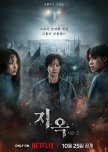
Hellbound 2 wastes no time plunging us back into its dark, morally complex universe, where divine judgment and human corruption remain tightly intertwined. The stakes feel immediately higher this time, with the narrative digging deeper into the mystery of resurrection while widening its focus to include more volatile, layered character dynamics that are as shocking as they are compelling.
The return of Jinsu is one of the season’s most striking developments. His visions and eventual transformation into one of the very creatures that once inspired fear reinforce the show’s core idea: no one stands above judgment, not even those elevated to near-messianic status. It’s a chilling arc that blurs the line between prophet and victim, power and punishment.
At the same time, Kim Jeongchil’s political maneuvering becomes a central driving force. His alliance with the government and his calculated use of Park Jungja as a pawn add a sharp edge of manipulation and desperation to the story. Through him, the series leans harder into the idea that institutions built on belief can quickly become tools of control when fear is weaponized.
Thematically, the season continues to interrogate blind faith and the corruption that follows unchecked power. The New Truth’s “Resurrected One” plan begins as an ambitious attempt to solidify authority, but gradually reveals itself as a symbol of their unraveling grip. Meanwhile, the demonic entities remain an unpredictable, looming presence, constantly reminding both characters and viewers that whatever force governs this world cannot be controlled, only feared.
Hyejin once again anchors the chaos as the show’s moral compass. Her determination to protect Park Jungja and reunite her with her son provides one of the season’s most emotionally grounded arcs. In a world spiraling into fanaticism and violence, her resolve feels almost defiant. That reunion scene, quiet yet powerful, offers a rare moment of humanity amid the relentless tension.
Director Yeon Sang-ho maintains a careful balance between horror, action, and character-driven storytelling, allowing the narrative to build a sense of unease that never quite lets go. The introduction of figures like Senior Secretary Lee adds another layer of political intrigue, reinforcing the idea that power struggles operate just as dangerously behind closed doors as they do in the open.
While Season 2 does offer some answers, particularly around the mechanics of resurrection, it deliberately avoids full clarity. Instead, it leaves lingering questions about the true nature of divine judgment and who, or what, is really in control. The ending reflects that ambiguity, keeping the door wide open for future developments.
Overall, Hellbound Season 2 sharpens its exploration of morality, faith, and authority, delivering a season that is both intellectually engaging and emotionally intense. It leans fully into its unsettling premise, crafting a narrative that feels as thought-provoking as it is haunting, and solidifies its place as one of the more daring entries in psychological and religious horror.
___________________________________________________________
MY THEORIES:
While Jin-su taunts Se-hyeong for wasting his last chance by trusting Jin-su, it is ultimately proven to be Jin-su who wastes his resurrection. He spends his second chance the same way he did most of his first life: selfishly, seeking a salve for his emotional pain without care for the pain he knowingly inflicts on others. Jung-ja’s declaration is its own kind of decree, as Jin-su realizes they are not the same.
Jae-hyeon may have a latent power, just as Jung-ja does.
What we do in this life, and how we care for each other, does matter. Even when Jin-su came back from hell, he feared he might still be in it. We create our own hell, individually and collectively, and even when there is a supernatural power also getting in on the game.
Stories have power, and Hye-jin is giving Jae-hyeon a good and true one. It is the kind of story that Jin-su was never told when he was little and alone. The kind of story Secretary Lee, the New Truth Society, or the Arrowhead would never bother telling because it doesn’t feed the kind of fast, uncaring power they are looking to grow. The kind of story Detective Jin Kyung-hun (Yang Ik-june) tells his daughter, Hee-jung (Lee Re), as she dies from cancer in his arms. Hee-jung lived most of her life under the thrall of Jung Jin-su and his empty promises, but it’s a family picture, a story of love, that gives her comfort in her final moments.
The return of Jinsu is one of the season’s most striking developments. His visions and eventual transformation into one of the very creatures that once inspired fear reinforce the show’s core idea: no one stands above judgment, not even those elevated to near-messianic status. It’s a chilling arc that blurs the line between prophet and victim, power and punishment.
At the same time, Kim Jeongchil’s political maneuvering becomes a central driving force. His alliance with the government and his calculated use of Park Jungja as a pawn add a sharp edge of manipulation and desperation to the story. Through him, the series leans harder into the idea that institutions built on belief can quickly become tools of control when fear is weaponized.
Thematically, the season continues to interrogate blind faith and the corruption that follows unchecked power. The New Truth’s “Resurrected One” plan begins as an ambitious attempt to solidify authority, but gradually reveals itself as a symbol of their unraveling grip. Meanwhile, the demonic entities remain an unpredictable, looming presence, constantly reminding both characters and viewers that whatever force governs this world cannot be controlled, only feared.
Hyejin once again anchors the chaos as the show’s moral compass. Her determination to protect Park Jungja and reunite her with her son provides one of the season’s most emotionally grounded arcs. In a world spiraling into fanaticism and violence, her resolve feels almost defiant. That reunion scene, quiet yet powerful, offers a rare moment of humanity amid the relentless tension.
Director Yeon Sang-ho maintains a careful balance between horror, action, and character-driven storytelling, allowing the narrative to build a sense of unease that never quite lets go. The introduction of figures like Senior Secretary Lee adds another layer of political intrigue, reinforcing the idea that power struggles operate just as dangerously behind closed doors as they do in the open.
While Season 2 does offer some answers, particularly around the mechanics of resurrection, it deliberately avoids full clarity. Instead, it leaves lingering questions about the true nature of divine judgment and who, or what, is really in control. The ending reflects that ambiguity, keeping the door wide open for future developments.
Overall, Hellbound Season 2 sharpens its exploration of morality, faith, and authority, delivering a season that is both intellectually engaging and emotionally intense. It leans fully into its unsettling premise, crafting a narrative that feels as thought-provoking as it is haunting, and solidifies its place as one of the more daring entries in psychological and religious horror.
___________________________________________________________
MY THEORIES:
While Jin-su taunts Se-hyeong for wasting his last chance by trusting Jin-su, it is ultimately proven to be Jin-su who wastes his resurrection. He spends his second chance the same way he did most of his first life: selfishly, seeking a salve for his emotional pain without care for the pain he knowingly inflicts on others. Jung-ja’s declaration is its own kind of decree, as Jin-su realizes they are not the same.
Jae-hyeon may have a latent power, just as Jung-ja does.
What we do in this life, and how we care for each other, does matter. Even when Jin-su came back from hell, he feared he might still be in it. We create our own hell, individually and collectively, and even when there is a supernatural power also getting in on the game.
Stories have power, and Hye-jin is giving Jae-hyeon a good and true one. It is the kind of story that Jin-su was never told when he was little and alone. The kind of story Secretary Lee, the New Truth Society, or the Arrowhead would never bother telling because it doesn’t feed the kind of fast, uncaring power they are looking to grow. The kind of story Detective Jin Kyung-hun (Yang Ik-june) tells his daughter, Hee-jung (Lee Re), as she dies from cancer in his arms. Hee-jung lived most of her life under the thrall of Jung Jin-su and his empty promises, but it’s a family picture, a story of love, that gives her comfort in her final moments.
Was this review helpful to you?


