

 137
137 273
273 25
25 3
3 5
5 6
6 12
12 5
5 7
7 8
8 4
4 11
11 5
5 2
2 8
8 47
47 4
4 5
5 4
4 2
2 1
1 4
4 5
5 5
5 2
2 8
8 30
30 42
42 13
13 27
27


This review may contain spoilers
A LIFE, FULLY LIVED AND FULLY FELT
OVERVIEW:
I started watching “When Life Gives You Tangerines” having managed my expectations. But by episode one I was sobbing at my desk at eleven o'clock at night and by the time the finale ended I was sitting completely still in the dark just… thinking. About my life. About my parents. About the women who came before me and what they quietly sacrificed so that I could exist the way I do.
I am not exaggerating when I say there was a version of me that sat down to watch this drama and a completely different version of me that stood up after it ended. It changed something in me and I genuinely do not have the words to fully explain what or how but I am going to try my best because this drama deserves every single word.
COMMENTARY:
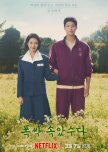
Ae Sun is one of the most fully realized, beautifully written female characters I have ever encountered in a Kdrama. And I want to be specific about that because I think it matters. She is not strong in the way that dramas usually write strong women, where strength means being cold or unfeeling or relentlessly competent or never making mistakes. She is strong in the way that real women are strong. She is stubborn and passionate and sometimes infuriating and deeply, achingly vulnerable and fiercely loving and completely human. She has dreams she had to abandon. She has grief she carries quietly for years. She has anger that is entirely justified and entirely earned. She is funny. She is sharp. She is the kind of woman who will throw herself onto a road in protest and also cry in secret over the things life has taken from her.
IU plays her across multiple decades and I need to stop and say something about this performance because it is genuinely one of the finest I have ever witnessed in this genre. The way she inhabits young Ae Sun, that fire, that determination, that particular kind of ferocious hopefulness that belongs specifically to young people who have had to fight for everything, and then the way that same fire slowly transforms as Ae Sun ages, becoming something quieter and deeper and more layered without ever disappearing entirely… I don't have the vocabulary to properly honor what she did in this role. She didn't play a character. She lived a life. You could feel the weight of every year in her body, in her eyes, in the way she held herself.
And what I loved most about Ae Sun is that the drama never punishes her for her ambitions. It never tells her she was wrong to want more. Even when life doesn't give her what she dreamed of, the drama treats those unlived dreams with tenderness rather than dismissal. It says: you deserved those things. You were right to want them. And the life you built instead was not a consolation prize. It was its own form of poetry.
The scene where she lies down on the road to protest for the fish market sellers while the entire town watches? I screamed. The moment she tells her mother-in-law exactly what she is and is not willing to accept for her daughter Geum Myeong? This woman is everything.
Now I need everybody to sit down because I have things to say about Gwan Sik and I need you to receive them properly.
THIS MAN... I have watched a lot of K dramas. And I have encountered a lot of MLs who are described as devoted and loving and wonderful but who, when you actually examine their behavior, are controlling or possessive or only loving on their own terms. Gwan Sik is not that. From the very first episode when he is a young boy quietly bringing food to Ae Sun and watching out for her without asking for anything in return, to the very last moments of his life when his final request is just to see her smiling face... he is consistently, unfailingly, genuinely one of the most beautiful depictions of a man in love that I have ever seen on a screen.
But here is the thing that makes him truly special and the thing I want people to really understand. Gwan Sik is not a perfect man. He carries guilt he cannot voice. He makes sacrifices that hurt him quietly for years. He cries in private so Ae Sun doesn't have to carry his grief on top of her own. He is not without flaws and the drama doesn't pretend otherwise. But his love is real and it is consistent and it is shown not through grand declarations, though yes the moment where he JUMPED INTO THE SEA TO SWIM BACK TO SHORE FOR HER absolutely destroyed me but I have not recovered and I will not be recovering... but through the small everyday acts that actually define what it means to love someone. He buys the more expensive tricycle so his daughter can keep it. He eats at the family table instead of the men's table because he wants to be with his children. He gives his daughter his beans. Such a small thing. Such an enormous thing.
Park Bo Gum inhabits this man so completely and so sincerely that there were multiple moments where I genuinely forgot I was watching an actor perform. He just WAS Gwan Sik. The quiet way he communicates love through presence rather than words. The way his eyes carry things his mouth never says. The way his body language tells you everything about how much he feels even when the dialogue gives him almost nothing to work with. Some of the most devastating and beautiful moments in this entire drama are just Park Bo Gum being still on screen and feeling things and somehow making you feel all of it too.
I genuinely do not know how he did what he did in this role. I just know that Gwan Sik is now the standard by which I measure everything.
I also want to talk about Ae Sun and Gwan Sik as a couple because their relationship is one of the most beautifully portrayed romances I have ever seen in any piece of media in any language and I will stand behind that statement.
What makes them so extraordinary is that their love is not perfect and the drama knows it and celebrates it anyway. They miscommunicate. They carry guilt they cannot share with each other. They sacrifice things for each other that sometimes hurt. Their life together is hard in ways that neither of them expected or deserved. They lose a child. They face poverty. They face the cruelty of people who look down on them. They navigate in-laws who make Ae Sun's life miserable for years.
And YET, through all of it there is this thread between them, this quiet, unbreakable, completely non-performative love, that you can feel in every single scene they share. It doesn't announce itself. It's there in the way Gwan Sik looks at her. In the way Ae Sun leans into him. In the way they navigate their shared grief with the knowledge that the other person is the only one who truly understands. In the way they grow old together and the love does not diminish; it deepens.
The scene where they stand at Dong Myeong's grave together for the first time after years of each of them carrying that grief alone and Ae Sun finally understands that Gwan Sik has been blaming himself all this time… I had to pause the episode. It was too real and too devastating and too human and too beautiful all at once and I just needed a moment to breathe.
Ae Sun's mother... The way she works herself to the bone as a Haenyeo so that Ae Sun can have opportunities she never had. The way she storms into the uncle's house after reading Ae Sun's poem, that poem about giving her a hundred won a day so she won't have to work so hard, and causes an absolute scene because her daughter deserved better and she was done pretending otherwise. The way she prepares abalone for Ae Sun in what she knows are her final days and tells her to never become a housekeeper for her stepfather's family. The way she tells Ae Sun's grandmother to watch out for her daughter even after she is gone. The photograph. The letter. The way the dream of her appears throughout the drama at the moments when Ae-soon needs her most.
She was a woman who was exhausted and grieving and overworked and who loved her daughter so ferociously that it vibrates through the screen even decades after her death. I think about what she gave up and what she managed to pass on anyway.
And then watching Ae Sun become her own version of that mother, watching her fight for Geum-myeong's right to ride the tricycle, to not become a haenyeo, to get an education, to choose who she marries, to have the freedom Ae-soon herself was never fully given, is one of the most emotionally coherent and moving things I have ever experienced in a drama. The way each generation of women in this story carries the dreams of the one before her and tries to push them a little further forward… I cannot explain to you how much that got to me.
Geum Myeong's story in the second half of this drama is a quiet masterpiece of its own. She is Ae Sun's daughter in every possible way. The stubbornness, the ambition, the refusal to make herself small for anyone else's comfort, but she is also her own person navigating her own version of the same battles her mother fought. The class discrimination. The in-laws who look down on her background. The expectation that she should sacrifice her career and her independence to fit neatly into someone else's family structure.
And the way the drama handles her love story, first with Yeong Beom and then eventually with Cheong Seop, is so honest and so real that it genuinely made me rethink some things about what I want from my own life. The line where she says she loves Yeong Beom but she also loves herself and she is not willing to give herself up to be with him… I replayed that moment three times. Because it is such a simple thing to say and such an extraordinarily difficult thing to actually do. And Geum Myeong does it. She chooses herself. The same way Ae Sun, in different circumstances and with different costs, always ultimately chose herself too.
And then Cheong Seop. A man who likes her quietly and consistently and without drama. A man who is just there, showing up, caring, making room for her to be exactly who she is. The "right temperature" line got me so completely because that is such a perfect and unexpected way to describe what the right love actually feels like. Safe and warm and exactly what you need.
The death of Ae Sun and Gwan Sik's youngest son. I will say that the way the drama handled this storyline was handled with more care and honesty and delicacy than I have ever seen grief handled in a K drama. It did not rush the healing. It did not pretend the healing ever really completed. It showed two people learning to live alongside an absence for the rest of their lives. That is the truth of that kind of loss and this drama told it truthfully and I respect it enormously even as it destroyed me.
Gwan Sik's diagnosis and final days... The way he asks Geum Myeong to never leave Ae Sun alone after he is gone. The way Eun Myeong breaks down talking about the boat and the car he wanted to buy his father. The way Gwan Sik spends his final days at home before the hospital and the way he goes while looking at Ae Sun's smiling face because that was his final request of her...I cannot. I need everyone involved in writing and filming that sequence to know what they did to me. I need them to be held accountable.
And then Ae Sun afterwards. Ae Sun in the long grief. Ae Sun turning to poetry because it is the only language big enough to hold everything she is feeling. Ae Sun eventually finding a way to carry the loss without being crushed by it. Ae Sun's book being published and the editor looking like her mother and the way the whole story comes full circle from that little girl who wanted to give her mother a hundred won a day to this woman who turned her whole life into something worth writing about.
WLGYT is not just a love story. It is a story about women and what the world takes from them and what they find ways to hold onto anyway. It is a story about generational sacrifice, about the dreams that get passed down because they could not be lived, about the ways mothers shape daughters across decades of quiet determination. It is a story about class and how deeply it shapes the options available to people who are just as capable and just as deserving as those born into better circumstances. It is a story about grief and how you carry it. About community and the invisible kindnesses that sustain people through the hardest seasons of their lives. About the small ordinary acts of love that do not look like love from the outside but are in fact everything.
The drama is also one of the most honest portrayals of gender inequality that I have seen in this genre. From Ae Sun being denied the class president position she earned to the comment about how it is brave when a boy runs away and shameful when a girl does the same thing to Geum Myeong being expected to quit her job after marriage to Yeong Beom's mother looking at everything Geum Myeong has accomplished and still finding her lacking because of her family background... it does not flinch from showing how exhausting and relentless and specific that kind of inequality is. And it never lets it be the whole story either. It shows women pushing back. Women choosing themselves. Women creating things and changing things and refusing to disappear. It holds both truths at the same time and that is incredibly hard to do and this drama does it beautifully.
The fact that the woman who helped Geum Myeong was the same woman they had saved in Busan all those years ago and Geum Myeong never even knew. The way kindness travels through time in this drama, touching people in moments they cannot trace back to their origin.
The cabbage field, the boat and its name painted by Ae Sun's hand, the tricycle, the beans, the photograph of Ae Sun's mother and her grandmother, the sea, the way Gwan Sik swam back to shore, the way he looked at her in the hospital at the very end, the way she smiled... I will be thinking about all of these things for a very long time.
FINAL THOUGHTS:
If I could sum up this drama in a few words, it would be a life, fully lived and fully felt. This is not a drama you watch. It is a drama you experience. It is a drama that gets inside you and rearranges something quietly and leaves you different from how it found you.
I will think about Ae Sun and Gwan Sik for the rest of my life the way I think about the very best stories I have ever encountered. They showed me something true about what it means to be alive and to love and to keep going even when life does not give you what you deserved.
IU is a revelation. Park Bo-gum is everything. The writing is extraordinary. The cinematography is poetry. The music will live in my chest forever. Every single actor in this drama, the parents, the grandparents, the siblings, the rivals, the friends, the strangers who turn out to have been watching over our characters all along, gave everything they had and it shows in every frame.
DO watch it if you are ready to be changed. If you want to call your mother afterwards. If you want to think about your grandmothers and their grandmothers and all the women who carried dreams forward so you could live yours. If you want to see what love actually looks like, not the declaration of it but the practice of it, day after day, decade after decade, through every season life throws at you.
Watch it if you want to understand what it means to say: I was here. I loved someone. I lived.
It is an actual, genuine, timeless masterpiece that I believe people will still be talking about and returning to for decades.
Overall I am giving this a 10/10.
"𝘛𝘰 𝘮𝘺 𝘭𝘰𝘷𝘦, 𝘧𝘳𝘰𝘮 𝘵𝘩𝘦 𝘢𝘨𝘦 𝘰𝘧 𝘯𝘪𝘯𝘦 𝘶𝘯𝘵𝘪𝘭 𝘯𝘰𝘸, 𝘵𝘩𝘢𝘯𝘬𝘴 𝘵𝘰 𝘺𝘰𝘶, 𝘮𝘺 𝘭𝘪𝘧𝘦 𝘩𝘢𝘴 𝘣𝘦𝘦𝘯 𝘴𝘱𝘳𝘪𝘯𝘨 𝘦𝘷𝘦𝘳𝘺 𝘥𝘢𝘺. 𝘜𝘯𝘵𝘪𝘭 𝘵𝘩𝘦 𝘴𝘱𝘳𝘪𝘯𝘨 𝘸𝘦 𝘮𝘦𝘦𝘵 𝘢𝘨𝘢𝘪𝘯, 𝘐'𝘭𝘭 𝘭𝘪𝘷𝘦 𝘢𝘴 𝘵𝘩𝘰𝘶𝘨𝘩 𝘦𝘷𝘦𝘳𝘺 𝘥𝘢𝘺 𝘪𝘴 𝘴𝘱𝘳𝘪𝘯𝘨."
Thank you for reading! ❤️
I started watching “When Life Gives You Tangerines” having managed my expectations. But by episode one I was sobbing at my desk at eleven o'clock at night and by the time the finale ended I was sitting completely still in the dark just… thinking. About my life. About my parents. About the women who came before me and what they quietly sacrificed so that I could exist the way I do.
I am not exaggerating when I say there was a version of me that sat down to watch this drama and a completely different version of me that stood up after it ended. It changed something in me and I genuinely do not have the words to fully explain what or how but I am going to try my best because this drama deserves every single word.
COMMENTARY:
Ae Sun is one of the most fully realized, beautifully written female characters I have ever encountered in a Kdrama. And I want to be specific about that because I think it matters. She is not strong in the way that dramas usually write strong women, where strength means being cold or unfeeling or relentlessly competent or never making mistakes. She is strong in the way that real women are strong. She is stubborn and passionate and sometimes infuriating and deeply, achingly vulnerable and fiercely loving and completely human. She has dreams she had to abandon. She has grief she carries quietly for years. She has anger that is entirely justified and entirely earned. She is funny. She is sharp. She is the kind of woman who will throw herself onto a road in protest and also cry in secret over the things life has taken from her.
IU plays her across multiple decades and I need to stop and say something about this performance because it is genuinely one of the finest I have ever witnessed in this genre. The way she inhabits young Ae Sun, that fire, that determination, that particular kind of ferocious hopefulness that belongs specifically to young people who have had to fight for everything, and then the way that same fire slowly transforms as Ae Sun ages, becoming something quieter and deeper and more layered without ever disappearing entirely… I don't have the vocabulary to properly honor what she did in this role. She didn't play a character. She lived a life. You could feel the weight of every year in her body, in her eyes, in the way she held herself.
And what I loved most about Ae Sun is that the drama never punishes her for her ambitions. It never tells her she was wrong to want more. Even when life doesn't give her what she dreamed of, the drama treats those unlived dreams with tenderness rather than dismissal. It says: you deserved those things. You were right to want them. And the life you built instead was not a consolation prize. It was its own form of poetry.
The scene where she lies down on the road to protest for the fish market sellers while the entire town watches? I screamed. The moment she tells her mother-in-law exactly what she is and is not willing to accept for her daughter Geum Myeong? This woman is everything.
Now I need everybody to sit down because I have things to say about Gwan Sik and I need you to receive them properly.
THIS MAN... I have watched a lot of K dramas. And I have encountered a lot of MLs who are described as devoted and loving and wonderful but who, when you actually examine their behavior, are controlling or possessive or only loving on their own terms. Gwan Sik is not that. From the very first episode when he is a young boy quietly bringing food to Ae Sun and watching out for her without asking for anything in return, to the very last moments of his life when his final request is just to see her smiling face... he is consistently, unfailingly, genuinely one of the most beautiful depictions of a man in love that I have ever seen on a screen.
But here is the thing that makes him truly special and the thing I want people to really understand. Gwan Sik is not a perfect man. He carries guilt he cannot voice. He makes sacrifices that hurt him quietly for years. He cries in private so Ae Sun doesn't have to carry his grief on top of her own. He is not without flaws and the drama doesn't pretend otherwise. But his love is real and it is consistent and it is shown not through grand declarations, though yes the moment where he JUMPED INTO THE SEA TO SWIM BACK TO SHORE FOR HER absolutely destroyed me but I have not recovered and I will not be recovering... but through the small everyday acts that actually define what it means to love someone. He buys the more expensive tricycle so his daughter can keep it. He eats at the family table instead of the men's table because he wants to be with his children. He gives his daughter his beans. Such a small thing. Such an enormous thing.
Park Bo Gum inhabits this man so completely and so sincerely that there were multiple moments where I genuinely forgot I was watching an actor perform. He just WAS Gwan Sik. The quiet way he communicates love through presence rather than words. The way his eyes carry things his mouth never says. The way his body language tells you everything about how much he feels even when the dialogue gives him almost nothing to work with. Some of the most devastating and beautiful moments in this entire drama are just Park Bo Gum being still on screen and feeling things and somehow making you feel all of it too.
I genuinely do not know how he did what he did in this role. I just know that Gwan Sik is now the standard by which I measure everything.
I also want to talk about Ae Sun and Gwan Sik as a couple because their relationship is one of the most beautifully portrayed romances I have ever seen in any piece of media in any language and I will stand behind that statement.
What makes them so extraordinary is that their love is not perfect and the drama knows it and celebrates it anyway. They miscommunicate. They carry guilt they cannot share with each other. They sacrifice things for each other that sometimes hurt. Their life together is hard in ways that neither of them expected or deserved. They lose a child. They face poverty. They face the cruelty of people who look down on them. They navigate in-laws who make Ae Sun's life miserable for years.
And YET, through all of it there is this thread between them, this quiet, unbreakable, completely non-performative love, that you can feel in every single scene they share. It doesn't announce itself. It's there in the way Gwan Sik looks at her. In the way Ae Sun leans into him. In the way they navigate their shared grief with the knowledge that the other person is the only one who truly understands. In the way they grow old together and the love does not diminish; it deepens.
The scene where they stand at Dong Myeong's grave together for the first time after years of each of them carrying that grief alone and Ae Sun finally understands that Gwan Sik has been blaming himself all this time… I had to pause the episode. It was too real and too devastating and too human and too beautiful all at once and I just needed a moment to breathe.
Ae Sun's mother... The way she works herself to the bone as a Haenyeo so that Ae Sun can have opportunities she never had. The way she storms into the uncle's house after reading Ae Sun's poem, that poem about giving her a hundred won a day so she won't have to work so hard, and causes an absolute scene because her daughter deserved better and she was done pretending otherwise. The way she prepares abalone for Ae Sun in what she knows are her final days and tells her to never become a housekeeper for her stepfather's family. The way she tells Ae Sun's grandmother to watch out for her daughter even after she is gone. The photograph. The letter. The way the dream of her appears throughout the drama at the moments when Ae-soon needs her most.
She was a woman who was exhausted and grieving and overworked and who loved her daughter so ferociously that it vibrates through the screen even decades after her death. I think about what she gave up and what she managed to pass on anyway.
And then watching Ae Sun become her own version of that mother, watching her fight for Geum-myeong's right to ride the tricycle, to not become a haenyeo, to get an education, to choose who she marries, to have the freedom Ae-soon herself was never fully given, is one of the most emotionally coherent and moving things I have ever experienced in a drama. The way each generation of women in this story carries the dreams of the one before her and tries to push them a little further forward… I cannot explain to you how much that got to me.
Geum Myeong's story in the second half of this drama is a quiet masterpiece of its own. She is Ae Sun's daughter in every possible way. The stubbornness, the ambition, the refusal to make herself small for anyone else's comfort, but she is also her own person navigating her own version of the same battles her mother fought. The class discrimination. The in-laws who look down on her background. The expectation that she should sacrifice her career and her independence to fit neatly into someone else's family structure.
And the way the drama handles her love story, first with Yeong Beom and then eventually with Cheong Seop, is so honest and so real that it genuinely made me rethink some things about what I want from my own life. The line where she says she loves Yeong Beom but she also loves herself and she is not willing to give herself up to be with him… I replayed that moment three times. Because it is such a simple thing to say and such an extraordinarily difficult thing to actually do. And Geum Myeong does it. She chooses herself. The same way Ae Sun, in different circumstances and with different costs, always ultimately chose herself too.
And then Cheong Seop. A man who likes her quietly and consistently and without drama. A man who is just there, showing up, caring, making room for her to be exactly who she is. The "right temperature" line got me so completely because that is such a perfect and unexpected way to describe what the right love actually feels like. Safe and warm and exactly what you need.
The death of Ae Sun and Gwan Sik's youngest son. I will say that the way the drama handled this storyline was handled with more care and honesty and delicacy than I have ever seen grief handled in a K drama. It did not rush the healing. It did not pretend the healing ever really completed. It showed two people learning to live alongside an absence for the rest of their lives. That is the truth of that kind of loss and this drama told it truthfully and I respect it enormously even as it destroyed me.
Gwan Sik's diagnosis and final days... The way he asks Geum Myeong to never leave Ae Sun alone after he is gone. The way Eun Myeong breaks down talking about the boat and the car he wanted to buy his father. The way Gwan Sik spends his final days at home before the hospital and the way he goes while looking at Ae Sun's smiling face because that was his final request of her...I cannot. I need everyone involved in writing and filming that sequence to know what they did to me. I need them to be held accountable.
And then Ae Sun afterwards. Ae Sun in the long grief. Ae Sun turning to poetry because it is the only language big enough to hold everything she is feeling. Ae Sun eventually finding a way to carry the loss without being crushed by it. Ae Sun's book being published and the editor looking like her mother and the way the whole story comes full circle from that little girl who wanted to give her mother a hundred won a day to this woman who turned her whole life into something worth writing about.
WLGYT is not just a love story. It is a story about women and what the world takes from them and what they find ways to hold onto anyway. It is a story about generational sacrifice, about the dreams that get passed down because they could not be lived, about the ways mothers shape daughters across decades of quiet determination. It is a story about class and how deeply it shapes the options available to people who are just as capable and just as deserving as those born into better circumstances. It is a story about grief and how you carry it. About community and the invisible kindnesses that sustain people through the hardest seasons of their lives. About the small ordinary acts of love that do not look like love from the outside but are in fact everything.
The drama is also one of the most honest portrayals of gender inequality that I have seen in this genre. From Ae Sun being denied the class president position she earned to the comment about how it is brave when a boy runs away and shameful when a girl does the same thing to Geum Myeong being expected to quit her job after marriage to Yeong Beom's mother looking at everything Geum Myeong has accomplished and still finding her lacking because of her family background... it does not flinch from showing how exhausting and relentless and specific that kind of inequality is. And it never lets it be the whole story either. It shows women pushing back. Women choosing themselves. Women creating things and changing things and refusing to disappear. It holds both truths at the same time and that is incredibly hard to do and this drama does it beautifully.
The fact that the woman who helped Geum Myeong was the same woman they had saved in Busan all those years ago and Geum Myeong never even knew. The way kindness travels through time in this drama, touching people in moments they cannot trace back to their origin.
The cabbage field, the boat and its name painted by Ae Sun's hand, the tricycle, the beans, the photograph of Ae Sun's mother and her grandmother, the sea, the way Gwan Sik swam back to shore, the way he looked at her in the hospital at the very end, the way she smiled... I will be thinking about all of these things for a very long time.
FINAL THOUGHTS:
If I could sum up this drama in a few words, it would be a life, fully lived and fully felt. This is not a drama you watch. It is a drama you experience. It is a drama that gets inside you and rearranges something quietly and leaves you different from how it found you.
I will think about Ae Sun and Gwan Sik for the rest of my life the way I think about the very best stories I have ever encountered. They showed me something true about what it means to be alive and to love and to keep going even when life does not give you what you deserved.
IU is a revelation. Park Bo-gum is everything. The writing is extraordinary. The cinematography is poetry. The music will live in my chest forever. Every single actor in this drama, the parents, the grandparents, the siblings, the rivals, the friends, the strangers who turn out to have been watching over our characters all along, gave everything they had and it shows in every frame.
DO watch it if you are ready to be changed. If you want to call your mother afterwards. If you want to think about your grandmothers and their grandmothers and all the women who carried dreams forward so you could live yours. If you want to see what love actually looks like, not the declaration of it but the practice of it, day after day, decade after decade, through every season life throws at you.
Watch it if you want to understand what it means to say: I was here. I loved someone. I lived.
It is an actual, genuine, timeless masterpiece that I believe people will still be talking about and returning to for decades.
Overall I am giving this a 10/10.
"𝘛𝘰 𝘮𝘺 𝘭𝘰𝘷𝘦, 𝘧𝘳𝘰𝘮 𝘵𝘩𝘦 𝘢𝘨𝘦 𝘰𝘧 𝘯𝘪𝘯𝘦 𝘶𝘯𝘵𝘪𝘭 𝘯𝘰𝘸, 𝘵𝘩𝘢𝘯𝘬𝘴 𝘵𝘰 𝘺𝘰𝘶, 𝘮𝘺 𝘭𝘪𝘧𝘦 𝘩𝘢𝘴 𝘣𝘦𝘦𝘯 𝘴𝘱𝘳𝘪𝘯𝘨 𝘦𝘷𝘦𝘳𝘺 𝘥𝘢𝘺. 𝘜𝘯𝘵𝘪𝘭 𝘵𝘩𝘦 𝘴𝘱𝘳𝘪𝘯𝘨 𝘸𝘦 𝘮𝘦𝘦𝘵 𝘢𝘨𝘢𝘪𝘯, 𝘐'𝘭𝘭 𝘭𝘪𝘷𝘦 𝘢𝘴 𝘵𝘩𝘰𝘶𝘨𝘩 𝘦𝘷𝘦𝘳𝘺 𝘥𝘢𝘺 𝘪𝘴 𝘴𝘱𝘳𝘪𝘯𝘨."
Thank you for reading! ❤️
Was this review helpful to you?


