

 142
142 281
281 26
26 3
3 5
5 6
6 12
12 5
5 7
7 8
8 4
4 11
11 5
5 2
2 8
8 47
47 4
4 5
5 4
4 2
2 1
1 4
4 5
5 5
5 2
2 8
8 30
30 43
43 13
13 27
27


This review may contain spoilers
A rat becomes human after eating someone’s fingernail clippings
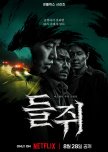
Mousetrap begins with Je Mun Jae, a wildly successful novelist who has basically turned his apartment into a maximum-security prison except he is both the prisoner and the warden. He rarely goes outside, follows an extremely rigid routine, and has built his entire existence around predictability because his childhood trauma and anxiety have convinced him that if he can control enough little things, maybe nothing terrible will happen again. Which is obviously adorable, because the universe sees a man who has finally achieved a manageable level of stability and immediately decides to delete his entire life.
One morning, Mun Jae discovers that his phone doesn't recognise him, his bank accounts don't recognise him, his house doesn't recognise him, and eventually even his identity seems to have been reassigned to somebody else. Imagine spending years being terrified of leaving your apartment because the outside world feels dangerous, only to discover that apparently your own fingerprint has also decided it doesn't know you. At least a burglar steals your television. This guy's entire existence gets repossessed.
And because apparently losing your identity wasn't enough, Mun Jae also ends up being hunted by Noja, a gangster who believes the novelist is connected to a series of financial crimes that have caused him a considerable amount of trouble. At the same time, Detective Park is investigating a series of mysterious deaths and gradually discovers that Mun Jae's bizarre situation is connected to something much larger. So now you have an agoraphobic novelist being chased by a gangster while a detective investigates dead bodies, and somehow the biggest question remains, "Who the hell is Mun Jae?"
Ryu Jun-yeol is easily one of the strongest reasons the series works because he doesn't play Mun Jae as simply a scared man running away from danger. He makes anxiety feel physical. You can see Mun Jae calculating every movement, every person, every unfamiliar environment, because the moment he leaves the carefully controlled world he has constructed, everything becomes unpredictable. What makes his situation so effective is that the danger isn't frightening only because someone might kill him. It's frightening because his entire method of surviving the world has suddenly become useless.
That makes even relatively ordinary situations horrifying from Mun Jae's perspective. His fingerprint doesn't work on his own banking application. He goes somewhere expecting to be recognised and discovers that nobody knows who he is. Systems that are supposed to confirm his identity insist that he is somebody else. The more this happens, the more terrifying the premise becomes, because Mun Jae isn't simply losing access to his money or his possessions. He is losing the ability to prove that he exists.
And then the show gives him a double, because apparently psychological stability was getting a little too comfortable. Suddenly Mun Jae isn't just asking, "Who stole my identity?" He's forced to wonder how much he actually knows about himself, his past, and the person whose existence is now interfering with his own. The mystery becomes much more interesting when it stops being about someone impersonating him and starts making him question whether his understanding of his own life can be trusted.
This is also where Noja becomes particularly important, because their partnership is one of the best things about the series precisely because it is not a friendship. These two men do not meet and immediately discover that they have complementary personalities and adorable found-family potential. Noja has every reason to hate Mun Jae, Mun Jae has every reason to be terrified of Noja, and neither one has any reason whatsoever to trust the other. Unfortunately for both of them, they need each other, which is usually how the best partnerships begin.
Mun Jae needs Noja because the man can walk into dangerous situations without looking like he is about to faint, while Noja needs Mun Jae because the mystery surrounding the novelist's identity may be connected to the problems that have already ruined his life. Their cooperation is therefore completely transactional at first, and I actually loved that the series allows it to stay uncomfortable. There is no magical moment where they suddenly become brothers because they survived one fight together. Suspicion remains, tension remains, and there is always this feeling that either one of them could decide the other has become more trouble than he is worth.
Sul Kyung-gu makes Noja particularly effective because he doesn't need to spend every scene beating somebody to establish that he's dangerous. He has the kind of presence where the atmosphere changes simply because he walked into the room. Standing next to Mun Jae, he becomes even more intimidating because the contrast between them is ridiculous: one man looks like he hasn't voluntarily spoken to another human being in six years, while the other looks like he could make an entire room reconsider its life choices. Their completely different strengths are what make the partnership work.
At the centre of everything, though, is the identity mystery, and this is where Mousetrap is both extremely clever and occasionally its own worst enemy. The premise is genuinely disturbing because it takes something we normally consider completely stable, our identity, and makes it frighteningly dependent on technology and systems. Your phone knows your face. Your bank knows your fingerprint. Your house knows your access code. Government records know your name. We spend our lives surrounded by machines constantly confirming that we are who we say we are, so imagine waking up one day and having every single one of those machines basically respond, "Sorry, who are you?"
The series also brings in the Korean folktale about a rat becoming human after consuming someone's fingernail clippings, which is a wonderfully creepy foundation for the story. Instead of simply copying the old folklore, Mousetrap turns the idea of imitation and stolen identity into a modern thriller involving technology, digital information, and systems that can be manipulated. It gives the premise a cultural and thematic layer that makes it more interesting than a standard "someone stole my identity" storyline.
Unfortunately, this is also where the show starts developing a little too much confidence in its own ability to surprise you. There are twists, and then there are twists explaining the twists, followed by another twist standing behind the previous twist holding a clipboard. Individually, many of them work. The problem is that eventually you start wondering whether the story is revealing information because the mystery genuinely needs another layer or because somebody in the writers' room said, "But what if there's ANOTHER secret?"
The constant withholding occasionally makes the series feel more complicated than deep. Instead of allowing certain ideas or relationships to breathe, the narrative sometimes rushes toward another revelation, and that can make the emotional side of the story feel secondary to the mechanics of the mystery. You know the writers have a giant box of secrets and they are very excited to show you every single one.
The supporting characters suffer from this problem too. Mun Jae and Noja understandably dominate the story, but several of the characters surrounding them feel like they exist primarily to move the mystery from one location to another. Mun Jae's trauma is particularly interesting because it explains why control and routine are so important to him, yet there are moments when his childhood experiences seem to function more as a convenient way of making a situation scarier rather than something the series fully explores as part of his emotional development.
Detective Park has a similar problem. His investigation into the mysterious deaths is genuinely intriguing, and his personal difficulties give him the potential to become much more than the detective assigned to connect the dots, but the series doesn't always give him enough room to become that person. Sometimes he feels less like a character with his own emotional journey and more like the guy who shows up whenever the audience needs somebody to explain that the murder from three episodes ago is connected to the thing happening now. With ten episodes, the series absolutely had enough space to make its supporting cast feel more complete.
Visually, however, Mousetrap knows exactly what kind of atmosphere it wants. Kim Hong-seon's direction creates a cold, unsettling world where even familiar spaces can suddenly feel threatening. Strange camera angles, distorted imagery, and moments of visual disorientation make Mun Jae's increasingly unstable reality feel almost tangible. There is a constant sense that something is slightly wrong, even when nothing particularly frightening is happening on screen, which is exactly what a psychological thriller should be doing.
The downside is that the same deliberate style can occasionally make the series feel slower than it needs to be. There are sequences that linger long enough for the atmosphere to become effective and then linger a little longer until you're sitting there thinking, "Okay, I understand that this hallway is ominous. Can we please go to the next hallway?" The slow pacing isn't inherently a problem, but when the story is already withholding information, too much lingering can make the mystery feel frustrating rather than suspenseful.
Still, the performances carry a lot of this. Ryu Jun-yeol gives Mun Jae a vulnerability that never turns him into a helpless victim, while Sul Kyung-gu makes Noja unpredictable enough that you are never completely sure what he might do next. Their uneasy partnership gives the series its strongest emotional engine because watching these two people slowly become dependent on each other is far more interesting than watching them simply solve the mystery.
My biggest problem with Mousetrap is ultimately that it sometimes confuses complexity with depth. The show clearly has a lot to say about identity, trauma, technology, control, and what happens when the systems we rely on suddenly stop confirming who we are, but it occasionally buries those ideas under so many revelations that the emotional impact gets diluted.
But even with those flaws, Mousetrap remains a compelling psychological thriller because its central idea is genuinely unsettling, its atmosphere is consistently creepy, and its two leads have enough tension between them to keep the story moving. At its best, the series taps into a very modern fear: not simply that someone might steal your money or pretend to be you, but that every system you depend on could suddenly decide that you are nobody.
And honestly, that is a horrifying thought. Most of us are already one forgotten password away from losing our minds. Mun Jae wakes up and discovers that his entire life has basically been logged out.
One morning, Mun Jae discovers that his phone doesn't recognise him, his bank accounts don't recognise him, his house doesn't recognise him, and eventually even his identity seems to have been reassigned to somebody else. Imagine spending years being terrified of leaving your apartment because the outside world feels dangerous, only to discover that apparently your own fingerprint has also decided it doesn't know you. At least a burglar steals your television. This guy's entire existence gets repossessed.
And because apparently losing your identity wasn't enough, Mun Jae also ends up being hunted by Noja, a gangster who believes the novelist is connected to a series of financial crimes that have caused him a considerable amount of trouble. At the same time, Detective Park is investigating a series of mysterious deaths and gradually discovers that Mun Jae's bizarre situation is connected to something much larger. So now you have an agoraphobic novelist being chased by a gangster while a detective investigates dead bodies, and somehow the biggest question remains, "Who the hell is Mun Jae?"
Ryu Jun-yeol is easily one of the strongest reasons the series works because he doesn't play Mun Jae as simply a scared man running away from danger. He makes anxiety feel physical. You can see Mun Jae calculating every movement, every person, every unfamiliar environment, because the moment he leaves the carefully controlled world he has constructed, everything becomes unpredictable. What makes his situation so effective is that the danger isn't frightening only because someone might kill him. It's frightening because his entire method of surviving the world has suddenly become useless.
That makes even relatively ordinary situations horrifying from Mun Jae's perspective. His fingerprint doesn't work on his own banking application. He goes somewhere expecting to be recognised and discovers that nobody knows who he is. Systems that are supposed to confirm his identity insist that he is somebody else. The more this happens, the more terrifying the premise becomes, because Mun Jae isn't simply losing access to his money or his possessions. He is losing the ability to prove that he exists.
And then the show gives him a double, because apparently psychological stability was getting a little too comfortable. Suddenly Mun Jae isn't just asking, "Who stole my identity?" He's forced to wonder how much he actually knows about himself, his past, and the person whose existence is now interfering with his own. The mystery becomes much more interesting when it stops being about someone impersonating him and starts making him question whether his understanding of his own life can be trusted.
This is also where Noja becomes particularly important, because their partnership is one of the best things about the series precisely because it is not a friendship. These two men do not meet and immediately discover that they have complementary personalities and adorable found-family potential. Noja has every reason to hate Mun Jae, Mun Jae has every reason to be terrified of Noja, and neither one has any reason whatsoever to trust the other. Unfortunately for both of them, they need each other, which is usually how the best partnerships begin.
Mun Jae needs Noja because the man can walk into dangerous situations without looking like he is about to faint, while Noja needs Mun Jae because the mystery surrounding the novelist's identity may be connected to the problems that have already ruined his life. Their cooperation is therefore completely transactional at first, and I actually loved that the series allows it to stay uncomfortable. There is no magical moment where they suddenly become brothers because they survived one fight together. Suspicion remains, tension remains, and there is always this feeling that either one of them could decide the other has become more trouble than he is worth.
Sul Kyung-gu makes Noja particularly effective because he doesn't need to spend every scene beating somebody to establish that he's dangerous. He has the kind of presence where the atmosphere changes simply because he walked into the room. Standing next to Mun Jae, he becomes even more intimidating because the contrast between them is ridiculous: one man looks like he hasn't voluntarily spoken to another human being in six years, while the other looks like he could make an entire room reconsider its life choices. Their completely different strengths are what make the partnership work.
At the centre of everything, though, is the identity mystery, and this is where Mousetrap is both extremely clever and occasionally its own worst enemy. The premise is genuinely disturbing because it takes something we normally consider completely stable, our identity, and makes it frighteningly dependent on technology and systems. Your phone knows your face. Your bank knows your fingerprint. Your house knows your access code. Government records know your name. We spend our lives surrounded by machines constantly confirming that we are who we say we are, so imagine waking up one day and having every single one of those machines basically respond, "Sorry, who are you?"
The series also brings in the Korean folktale about a rat becoming human after consuming someone's fingernail clippings, which is a wonderfully creepy foundation for the story. Instead of simply copying the old folklore, Mousetrap turns the idea of imitation and stolen identity into a modern thriller involving technology, digital information, and systems that can be manipulated. It gives the premise a cultural and thematic layer that makes it more interesting than a standard "someone stole my identity" storyline.
Unfortunately, this is also where the show starts developing a little too much confidence in its own ability to surprise you. There are twists, and then there are twists explaining the twists, followed by another twist standing behind the previous twist holding a clipboard. Individually, many of them work. The problem is that eventually you start wondering whether the story is revealing information because the mystery genuinely needs another layer or because somebody in the writers' room said, "But what if there's ANOTHER secret?"
The constant withholding occasionally makes the series feel more complicated than deep. Instead of allowing certain ideas or relationships to breathe, the narrative sometimes rushes toward another revelation, and that can make the emotional side of the story feel secondary to the mechanics of the mystery. You know the writers have a giant box of secrets and they are very excited to show you every single one.
The supporting characters suffer from this problem too. Mun Jae and Noja understandably dominate the story, but several of the characters surrounding them feel like they exist primarily to move the mystery from one location to another. Mun Jae's trauma is particularly interesting because it explains why control and routine are so important to him, yet there are moments when his childhood experiences seem to function more as a convenient way of making a situation scarier rather than something the series fully explores as part of his emotional development.
Detective Park has a similar problem. His investigation into the mysterious deaths is genuinely intriguing, and his personal difficulties give him the potential to become much more than the detective assigned to connect the dots, but the series doesn't always give him enough room to become that person. Sometimes he feels less like a character with his own emotional journey and more like the guy who shows up whenever the audience needs somebody to explain that the murder from three episodes ago is connected to the thing happening now. With ten episodes, the series absolutely had enough space to make its supporting cast feel more complete.
Visually, however, Mousetrap knows exactly what kind of atmosphere it wants. Kim Hong-seon's direction creates a cold, unsettling world where even familiar spaces can suddenly feel threatening. Strange camera angles, distorted imagery, and moments of visual disorientation make Mun Jae's increasingly unstable reality feel almost tangible. There is a constant sense that something is slightly wrong, even when nothing particularly frightening is happening on screen, which is exactly what a psychological thriller should be doing.
The downside is that the same deliberate style can occasionally make the series feel slower than it needs to be. There are sequences that linger long enough for the atmosphere to become effective and then linger a little longer until you're sitting there thinking, "Okay, I understand that this hallway is ominous. Can we please go to the next hallway?" The slow pacing isn't inherently a problem, but when the story is already withholding information, too much lingering can make the mystery feel frustrating rather than suspenseful.
Still, the performances carry a lot of this. Ryu Jun-yeol gives Mun Jae a vulnerability that never turns him into a helpless victim, while Sul Kyung-gu makes Noja unpredictable enough that you are never completely sure what he might do next. Their uneasy partnership gives the series its strongest emotional engine because watching these two people slowly become dependent on each other is far more interesting than watching them simply solve the mystery.
My biggest problem with Mousetrap is ultimately that it sometimes confuses complexity with depth. The show clearly has a lot to say about identity, trauma, technology, control, and what happens when the systems we rely on suddenly stop confirming who we are, but it occasionally buries those ideas under so many revelations that the emotional impact gets diluted.
But even with those flaws, Mousetrap remains a compelling psychological thriller because its central idea is genuinely unsettling, its atmosphere is consistently creepy, and its two leads have enough tension between them to keep the story moving. At its best, the series taps into a very modern fear: not simply that someone might steal your money or pretend to be you, but that every system you depend on could suddenly decide that you are nobody.
And honestly, that is a horrifying thought. Most of us are already one forgotten password away from losing our minds. Mun Jae wakes up and discovers that his entire life has basically been logged out.
Was this review helpful to you?


