

 136
136 270
270 25
25 3
3 5
5 6
6 12
12 5
5 7
7 8
8 4
4 11
11 5
5 2
2 8
8 47
47 4
4 5
5 4
4 2
2 1
1 4
4 5
5 5
5 2
2 8
8 30
30 41
41 13
13 27
27


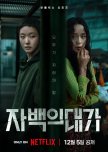
This review may contain spoilers
WHEN TWO WOMEN AND A DEADLY DEAL REDEFINE WHAT JUSTICE ACTUALLY COSTS
OVERVIEW:The Price of Confession is a thriller that stars Jeon Do-yeon as Ahn Yun-su, a mild-mannered high school art teacher whose world collapses when her artist husband, Lee Ki-dae, is found stabbed to death in his studio. With her fingerprints on the knife and no credible alibi, she is convicted of his murder and sentenced to life in prison, separated from her young daughter Sop.
In prison, she crosses paths with Mo Eun (Kim Go-eun), a woman who has just been arrested for poisoning a dentist couple in cold blood and who is widely known as 'the Witch.' Through a crack in the wall between their solitary cells, Mo Eun proposes an impossible deal: she will confess to killing Ki-dae in court, freeing Yun-su, if Yun-su agrees to do one thing in return - kill Ko Se-hun, the dentists' son, whom Mo Eun claims she failed to eliminate herself.
What follows is a tightly wound psychological thriller about desperation, grief, revenge, and the very blurry line between justice and crime. Also starring Park Hae-soo as the relentless prosecutor Baek Dong-hun and Jin Seon-kyu as Yun-su's scrappy defense attorney Jang Jeong-gu, this drama asks a question it never lets you forget: how far would you go to get back to your child?
⸻
IN DETAIL:
• The Setup & First Half
The drama opens beautifully with a flash to a wedding in 2017, then straight to 2022 and Yun-su kneeling over her husband's bleeding body. From the very first scene, you are never quite sure if she did it. Jeon Do-yeon plays her with this off-kilter, slightly too-cheerful energy that keeps you questioning her even when you want to root for her. When Mo Eun then announces in open court that she wants to confess to Ki-dae's murder, and the entire room erupts, I was immediately hooked.
The early stretch lays out the mechanics of the deal while Yun-su, released on bail with an ankle monitor, juggles being a mother again, hunting Ki-dae's real killer, and contemplating whether she is actually capable of committing murder to save herself. These episodes are deliberately slow, and that is the drama's biggest weakness. The pacing tests your patience. That said, the atmosphere more than compensates. This is one of the moodiest, most visually deliberate dramas I have seen in a while. Every scene feels heavy. You never fully relax.
• The Twist That Changed Everything
The dramatic midpoint is where The Price of Confession truly earns its thriller badge. The entire sequence is built around Yun-su covering up what we believe is Se-hun's murder. She burns her clothes, scrambles home, lies to her probation officer with her heart in her throat. The tension is unbearable. And then the rug is pulled: Yun-su didn't actually kill him. She warned him instead, staged a fake crime scene photo, and told him to disappear. But Se-hun turns up dead anyway, stuffed in a freezer in his family home. Someone else got there. The editing keeps us in the dark just long enough that the reveal lands like a gut punch.
• Mo Eun's Real Identity
Midway through, the full truth about Mo Eun reframes everything. She is not Mo Eun at all; her real name is Kang So-hae, a former doctor who was volunteering in Thailand when COVID hit. While stuck abroad, her teenage sister So-mang was assaulted by Se-hun, who filmed it, circulated the video, and used his family's wealth to escape accountability. The case was flipped to victim-blame. So-mang killed herself. Their father followed. So-hae, unable to return home due to lockdown restrictions, watched it all happen from thousands of miles away.
Kim Go-eun is absolutely devastating in the flashback sequences. The scene of So-hae waking up to a flood of unread notifications is one of the most quietly harrowing things in the entire drama. This backstory transforms Mo Eun from a cold-blooded psychopath into something far more complicated: a grieving sister who crossed every line because the system gave her no other options. That shift in understanding is one of the most impressive things the writing does.
• The Second Half & Finale
The back half is where the drama becomes the show it always promised to be. The pacing transforms completely, suddenly everything is urgent and layered. Yun-su goes on the run, evading police while leaving deliberate clues. She posts a confessional video online and starts piecing together that Mo Eun's own lawyer may have had a connection to Ki-dae all along. Watching her finally be proactive rather than reactive is immensely satisfying.
The revelation of Ki-dae's real killer - Choi Su-yeon, Yeong-in's wife and a celebrated cellist, who snapped during a studio confrontation over a plagiarised painting, is emotionally satisfying even if the motive strains believability. The climax, where Mo Eun takes matters into her own hands by stabbing herself to disarm Yeong-in, is pure Mo Eun. Yun-su's ending is bittersweet but right. She serves her time, then travels to Thailand with Sop to leave behind the pink watch that belonged to the real Mo Eun. A quiet, poignant goodbye.
⸻
THEMES & DEPTH:
At its core, this drama is about how broken systems force people into impossible choices. Se-hun walked free because his family had money and connections. The court didn't just fail So-mang, it actively blamed her. So-hae's transformation into Mo Eun is not madness, but the logical conclusion of a person who watched justice be bought and decided to become something the system couldn't ignore. Yun-su's arc mirrors this exactly - a woman who trusted her innocence would protect her, only to discover it wouldn't.
What gives the drama its real emotional weight is the slow evolution of Mo Eun and Yun-su's relationship from cold transaction to something approaching genuine sisterhood. When Mo Eun finally explains why she helped, saying it is because Yun-su has a life to return to, it hits entirely differently knowing everything we know by then.
⸻
PERFORMANCE HIGHLIGHTS:
• Kim Go-eun as Mo Eun / Kang So-hae
She is the undeniable standout and I cannot overstate how good this performance is. Kim Go-eun gives Mo Eun this eerie stillness, the flat affect, the measured speech, the way a casual observation can sound like a death threat, without ever tipping into caricature. When the backstory unravels, she layers in grief and desperation that feels completely real. The Thai flashback scenes are some of the finest acting she has ever done. She gets the small moments right, too, the flickers of childlike curiosity, the way she subtly softens around Yun-su. A masterclass in understated complexity.
• Jeon Do-yeon as Ahn Yun-su
Playing the more emotionally readable lead opposite Kim Go-eun is harder than it looks, and Jeon Do-yeon more than holds her own. Her best trick is making Yun-su feel just slightly off, enough to keep you questioning her for longer than you should. When the mask finally cracks, it is genuinely moving. Her strongest scenes come in the back half when Yun-su stops being reactive and starts being dangerous.
• Park Hae-soo as Baek Dong-hun
Not a flashy role, but Park Hae-soo does excellent work with it. Dong-hun is a man whose professional certainty becomes his blind spot, and watching that certainty erode over the course of the drama is one of its satisfying arcs. His dynamic with Jin Seon-kyu's Jeong-gu, the prosecutor too proud to admit he is wrong versus the attorney who believed his client from day one, is one of the best things about the show.
• Jin Seon-kyu as Jang Jeong-gu
He is the warm heart of the drama. Jeong-gu's loyalty toward Yun-su never wavers, not when it looks impossible, not when it costs him. Jin Seon-kyu plays him with such genuine earnestness that every scene he is in feels grounded, which is exactly what the show needs to balance everything else that is morally murky.
⸻
MIXED EMOTIONS:
The slow pacing of the first half is a genuine problem, not just a stylistic choice. There are stretches that feel like procedural box-ticking rather than narrative momentum, and the deal between Mo Eun and Yun-su takes too long to be interrogated meaningfully rather than just presented.
Yun-su's logic also stretches believability more than once. She wears an ankle monitor that tracks her every movement, yet repeatedly sneaks out to visit Se-hun. The show eventually acknowledges this, but she takes far too long to grasp the basics of electronic surveillance for someone whose life is on the line.
Ki-dae's murder motive is a painting dispute that bruised Yeong-in's academic reputation. It also feels disproportionately petty for the weight the drama needs it to carry. Su-yeon and Yeong-in arrive too late and too thinly written for the reveal to land as hard as it should. And Su-yeon escaping clearly defined consequences is a narrative shortcut that undercuts the drama's own message about justice.
⸻
LIKES:
The atmosphere is immaculate. The prison aesthetic, the cool blues and greys of Yun-su's world, the way light is used to make Mo Eun feel like she exists in a different moral dimension. The cinematography does heavy lifting and pulls it off completely. The short runtime per episode is also a smart structural choice. You are never sitting through a dragging hour, even when the content moves slowly.
Mo Eun navigating prison life is endlessly watchable - faking arachnophobia to get moved into the right solitary cell, neutralising her bunkmates, making a fool of Dong-hun while strapped to a polygraph. She is playing everyone at every moment and stays three steps ahead throughout.
The epilogue detail that So-hae and So-mang were present at Yun-su and Ki-dae's wedding years earlier, that So-hae saw her face, called her pretty, and walked away... it is a small, devastating touch. Their fates were connected long before either of them knew it.
⸻
DISLIKES:
The first half drags. The early stretch especially needed more fuel to keep the mystery urgent rather than procedural.
Yun-su's repeated oversights with the ankle monitor are frustrating and hard to excuse for someone supposedly fighting for her life.
Ki-dae's murder motive (a petty academic reputation dispute) does not hold the weight the finale needs it to. The real killers arrive too late and too thinly drawn.
⸻
LOVES:
Kim Go-eun. Kim Go-eun. Kim Go-eun. I have already said it in the performances section and I am saying it again because she deserves every word. The precision. The restraint. The moments where something human flickers through and then disappears. She is giving one of the best performances in recent Korean drama history and I will not be taking questions about that.
The central dynamic between Mo Eun and Yun-su is everything. Two women who should not work together, do not fully trust each other, and yet build something real anyway. Watching it shift from cold calculation to genuine mutual respect, and then to grief, is the emotional core of the whole show, and it is handled beautifully.
The mid-drama twist, where we watch Yun-su 'cover up' a murder she never committed while we fill in the gaps ourselves, is the cleverest piece of screenwriting in the drama. It works because the anxiety has been so carefully built that the misdirection feels completely earned.
⸻
SUGGESTED AUDIENCE:
If you prefer fast-paced thrillers, the first half will test your patience, but the payoff is worth the trust. Just go in knowing that, and you will be fine. Also note, this drama does not soften its depictions of sexual violence, institutional failure, or suicide. Go in prepared.
⸻
FINAL THOUGHTS:
The Price of Confession is not a perfect drama. The first half paces itself too cautiously, the central murder motive arrives underdeveloped, and a key villain escapes consequences the show has not fully earned. These are real flaws, and I am not pretending otherwise.
But what it gets right, it gets spectacularly right. Two of the finest actresses in Korean drama right now, at the absolute top of their game, playing two women who are mirrors of each other in ways you don't fully understand until the very end. A thriller confident enough to let atmosphere do its heavy lifting. A story about grief and the failure of systems that earns its emotional weight rather than just gesturing at it.
Kim Go-eun should be winning every award going for what she does here. Jeon Do-yeon is far more technically demanding than she first appears. Together, they create something that lingers, not because the plot is airtight (it isn't), but because the portrait of two women doing the unthinkable to survive an unjust world feels devastatingly real. The journey is the point. And what a journey it is.
With all of that said, I give this drama 8.5/10.
Thanks for reading!💖
Was this review helpful to you?
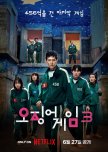
This review may contain spoilers
THIS SHOULD'VE ENDED AT SEASON 1
GENERAL OVERVIEW:I genuinely don't even know where to START because I binged this entire season in one sitting and I feel like I've been emotionally hit by a truck except not in a good way? Like my brain is just firing off random complaints in twelve different directions because WHAT was that finale?? Gi-hun literally dies. For a baby. THAT ISN'T EVEN HIS. I'M SORRY?? I know what the show is trying to say, hope and humanity and sacrificing yourself for the next generation, blah blah blah, but I just could not stop thinking about the fact that this entire season is basically built around a promise he made to Jun-hee, a woman he barely even knew, while Myung-gi, the baby's ACTUAL biological father, is standing right there being... whatever the hell THAT man was supposed to be.
And honestly, Jun-hee not trusting him? Queen behavior because she clocked him correctly from a mile away. This man spends the ENTIRE season proving he deserves zero trust from anyone with functioning brain cells. He murders Hyun-ju in cold blood literally right after she saves multiple lives, happily teams up with Nam-gyu and the rest of the murder squad to butcher the Blue Team because oooh bigger jackpot money yay greed, basically leaves Jun-hee to die on the jump rope bridge without a single useful idea, and then in the finale he has the audacity to dangle HIS OWN DAUGHTER over the edge of a tower like a bargaining chip and the show still wants me to entertain the idea that he's this tragic father just trying to protect his child?? Protect her FROM WHO? YOU??? Every bad thing that happened to that baby somehow circles back to you.
I don't care how many close-up shots we get of him looking conflicted, how dramatic the music gets, or if he sheds a little tear. He spent 6 episodes proving he is an irredeemable selfish loser! Zero remorse. Zero depth. Just greed wearing a sad face. Honestly the writers themselves seemed to know they'd written him into a corner, because during the Blue Team pact to kill Gi-hun and the baby he basically blends in with Player 100 and Player 203 as just another money-hungry psychopath willing to murder an actual infant. Not a single ounce of individuality there.
And speaking of characters that completely lost me... DAE-HO?? Did I miss like four episodes between S2 and S3? Because HOW did we get here? One minute he's crying, panicking, making pathetic promises, wanting to switch sides, acting completely broken after the rebellion failed... and literally the next minute this man is cackling while chasing Gi-hun around with a knife acting like he's become the Joker overnight. WHERE was the build-up? Where was the PTSD? Where was literally ANYTHING that explains this personality transplant?
There isn't one. He just wakes up one morning and decides "actually I'm evil now." It felt so unbelievably lazy because the writers clearly just needed Gi-hun to snap and kill somebody, so they picked the easiest disposable target and threw away every interesting thing Season 2 set up about him. ALL of it gets tossed straight into the trash so Gi-hun can choke him to death and then... nothing. It means nothing. His death doesn't ripple through the story. Nobody cares. The plot immediately moves on. Incredible. Amazing. Spectacular waste of potential.
Honestly this season has a real talent for introducing interesting ideas and then immediately abandoning them the second they become complicated.
And don't even get me STARTED on the women because I am STILL MAD. Hyun-ju, Geum-ja and Jun-hee are practically the only consistently decent human beings in this entire cast. Loyal, compassionate, brave, selfless. And apparently in Squid Game that means you're contractually obligated to die in the most miserable way possible.
Hyun-ju gets stabbed in the back by the same disgusting excuse for a man she spent precious time trying to save. Geum-ja survives abuse, survives betrayal, survives watching her own son disappoint her over and over, only to hang herself overnight and we don't even get a proper goodbye scene, just a coffin rolling by in the morning like she's become set dressing. ARE YOU SERIOUS?? And Jun-hee gives birth MID-GAME while hiding from murderers, survives THAT, only to get told there's "no time" to save her, so she jumps to her death asking Gi-hun to raise her baby.
Why does every decent woman in this franchise exist only to emotionally motivate a man. Sae-byeok died so Gi-hun could feel guilty. Jun-hee dies so Gi-hun has a purpose. Hyun-ju dies so Myung-gi can become even more hateable. Geum-ja dies to make everyone sad for five minutes. It's less a shocking storytelling choice at this point and more a franchise tradition, and I'm tired. Every time a woman started getting development I just assumed she was dead within the next episode.
And while we're talking about predictability, can we discuss how painfully obvious the final three became? By Episode 4 I was sitting there going "okay it's obviously Gi-hun, Myung-gi and the baby." There was literally no suspense left. Every death after that felt like checking names off a grocery list, which made the supposed tension in Episodes 5 and 6 feel kind of empty because the destination had become obvious long before we got there.
And can somebody PLEASE remove Nam-gyu from my television forever because if I had to hear that man whine about his pills one more time I was going to lose it. I understand addiction, I understand it's tragic, I GET IT, but there is only so much "WHERE ARE MY PILLS???" I can tolerate before I stop seeing a tragic addict and start seeing the human equivalent of a migraine.
Same goes for the Shaman, because once the whole "the spirits told me" thing gets exposed as nonsense during Hide and Seek she just... exists? Surviving way longer than she needed to. Then Min-su, hallucinating half the season because he's completely fried, kills her in what's supposed to be a huge emotional moment and I'm just thinking "...okay?" because it felt more like the writers cleaning house before the finale than an actual payoff.
Poor Min-su honestly got done dirty too, because there IS a genuinely interesting addiction spiral buried somewhere in there. Watching guilt, grief and drugs completely destroy someone could've been heartbreaking. Instead we get three hallucination scenes and then he's dead. Another potentially interesting storyline thrown into the "maybe next draft" pile.
Player 100 betrayed literally every person who ever trusted him across two episodes, and by the time he finally died I didn't feel satisfaction or sadness. Just relief that I no longer had to watch him switch allegiances every twenty minutes.
Now, trying VERY hard to be fair here, the Hide and Seek episode? THAT was so good. For one glorious episode I remembered why I loved Squid Game in the first place. The three-key mechanic was genuinely fun, not knowing who was Red Team or Blue Team added actual tension, and Player 96 sabotaging people right before the finish line on the jump rope bridge made me physically angry in exactly the way the show wanted. It reminded me of Season One's marbles and glass bridge, where every choice felt stressful and unpredictable. For one shining hour I thought, "oh, maybe they're actually pulling this off."
And then they immediately undercut it with the dumbest twist imaginable: making a literal newborn an official player. I KNOW THE SYMBOLISM. Capitalism exploits people from birth, innocence gets consumed by broken systems, blah blah blah. WE GOT IT. It was so heavy-handed I actually rolled my eyes, like the writers were poking me in the ribs going "LOOK HOW EVIL THE SYSTEM IS. DO YOU GET IT YET???" Yes, three seasons ago.
And yes, the VIPs betting on a newborn's survival is horrifying, but it crossed a weird line where instead of feeling disturbed by THEM I started feeling manipulated by the WRITERS. Speaking of the VIPs, why are they simultaneously the funniest and most pointless part of this show. Evil rich foreigners making terrible jokes while betting on human suffering, both unintentionally hilarious and completely unnecessary. Every time they appeared I either laughed at the goofy dialogue or sighed because we were wasting screentime that could've gone anywhere else.
Can we PLEASE talk about No-eul because OH MY GOD she carried half this season on her BACK. Every time the show cut to her I instantly became interested again. Sneaking Player 246 out, trying to save his daughter, uncovering the trafficking operation, confronting the officer in the elevator, finding out her own daughter died in North Korea, burning the archive, nearly taking her own life until the baby's crying stops her. THAT was compelling. THAT had actual emotional weight that wasn't just "what if someone sacrifices themselves again."
Park Gyu-young absolutely understood the assignment and deserved twice the screentime she got, because every second with her felt infinitely more engaging than another Nam-gyu tantrum. I would've happily traded half the VIP scenes and three quarters of Myung-gi's sad close-ups for more No-eul.
And then there's Jun-ho. Sweet merciful GOD what did this man do to deserve this writing. TWO ENTIRE SEASONS chasing his brother, risking his life, hiring mercenaries, surviving explosions, dealing with Captain Park secretly being a previous winner infiltrating the operation, which honestly was a decent twist, I'll give them that. Woo-seok gets attacked by a DOG trying to expose the guy. The mercenaries get slaughtered. People die left and right getting Jun-ho to that island.
He FINALLY gets there. He FINALLY points a gun at In-ho. I am SAT thinking "THIS IS IT, THIS IS THE PAYOFF." And then absolutely NOTHING. In-ho calmly leaves with the baby while Jun-ho stands there looking mildly inconvenienced. THAT'S the confrontation? Two seasons of buildup for the television equivalent of someone saying "oh okay then" and walking away? Genuinely one of the most anticlimactic confrontations I've seen in years. I felt like I got pranked.
And then Gi-hun dies. I have complicated feelings here, because Lee Jung-jae absolutely sells the physical exhaustion in those final moments, the score is beautiful, the cinematography gorgeous. On paper it SHOULD work. But emotionally I kept circling back to "this is still the exact place you swore you would destroy." S1 ends with Gi-hun refusing to board the plane because he's going to bring this organization down. S3 ends with him dying inside it while it continues functioning exactly as before. What changed? The games continue. Nobody responsible pays. That's narrative stagnation.
And THEN In-ho decides the appropriate thing to do is show up in LA carrying a bloodstained tracksuit and a bank card, like "here's your dead dad's hoodie, have fun." That poor girl didn't need a souvenir, she needed her FATHER. Imagine a random stranger handing you your dead dad's bloody clothes and a debit card like it's closure.
And then the Cate Blanchett cameo. I literally laughed, not because she isn't fantastic, but because it was SO obviously "hey guys don't forget about the American spinoff." We just watched three seasons of characters insisting they were going to destroy this machine, and the grand finale is "actually the machine has expanded overseas." It's almost funny, except I don't think it was supposed to be.
Even the little epilogues felt rushed. Woo-seok gets out of prison and decides to renovate the Pink Motel with Kim, cute, lasts about ninety seconds. Sae-byeok's family gets reunited, cool, here's one scene, next. Everything feels like someone speedrunning unresolved plotlines because the credits are approaching, none of it landing as hard as it should because the show is already halfway out the door teasing future content instead.
That's probably my biggest issue with S2 and 3 as a whole. S1 worked because it KNEW exactly what it was: desperate people trapped in a nightmare trying to survive. These last two seasons keep trying to convince me this is some gigantic global conspiracy thriller with billionaires and secret organizations and undercover missions and trafficking rings and revolutions, and it becomes TOO MUCH. The scale keeps getting bigger while the emotional core keeps getting smaller.
Jun-ho never once felt like a threat to this organization because it's one exhausted cop versus a billionaire empire. Gi-hun spends an entire season talking about bringing the system down only to die inside it. If the writers never intended to let anybody make a dent in the machine, what exactly was the point of stretching this into a trilogy.
_________________________________________________________
FINAL THOUGHTS:
I genuinely think this should've ended after Season 1. Not a hot take anymore, but after all three seasons it's painfully obvious how complete that original story was. These last two seasons introduce bigger stakes but end up feeling smaller emotionally because so many deaths exist purely for shock value instead of genuine payoff. Every twist felt like it was trying to outdo Season One instead of understanding WHY Season One worked.
I don't hate everything, because I really don't. No-eul's storyline was fantastic, Hide and Seek absolutely slapped, the jump rope bridge sequence had me STRESSED, Park Gyu-young gave one of the best performances in the franchise, and the final confrontation between Gi-hun and Myung-gi, despite me despising Myung-gi with every fiber of my being, was genuinely tense. Lee Jung-jae still delivers when it counts. The production design is incredible, the music fantastic, and visually the show is still operating at an absurd level.
But none of that can save writing that keeps throwing away interesting characters, rushing emotional payoffs, mistaking shock value for depth, and refusing to commit to the themes it spends three seasons building.
I'll never rewatch this. Every character I genuinely cared about got discarded or sacrificed, almost every villain escaped meaningful consequences, the Jun-ho and In-ho storyline fizzled into nothing after years of buildup, Gi-hun's entire mission collapsed into the exact outcome he spent two seasons trying to avoid, and instead of an ending that feels like a conclusion, we get a teaser trailer for another franchise expansion nobody asked for.
I miss when Squid Game was just desperate people making impossible choices instead of a giant cinematic universe.
Anyway I'm going to go stare at a wall for a while because I can't believe I waited this long just to end up missing S1 even more than I already did.
____________
Update: I am glad the Squid Game USA got cancelled!
Was this review helpful to you?

This review may contain spoilers
BEST FRIENDS, WORST ENEMIES
GENERAL OVERVIEW:Friendship, in its truest form, can be a shelter against life’s tempests. But in “You and Everything Else,” it IS the tempest: violent, consuming, and relentless. This decades-spanning drama charts the entanglement of Ryu Eun-jung and Cheon Sang-yeon, two women bound together by intimacy and enmity in equal measure. Their friendship, fraught with rivalry, betrayal, and longing, ultimately bends toward reconciliation, painting a portrait of love and destruction intertwined.
From their first encounter as fourth-grade students in 1992, when Eun-jung was poor and sharp-edged and Sang-yeon seemed perfect as the new transfer student, their dynamic is shaped by mutual resentment and envy. What begins as hostility morphs into a fragile bond through middle and high school, only to become more complicated in college when both fall orbit to Kim Sang-hak, complicating their already fragile dynamic. When they collide again in their thirties, their professional lives spiral into betrayal, jealousy, and stolen ideas within the film industry. In the present day, a terminally ill Sang-yeon re-enters Eun-jung’s life, requesting accompaniment to Switzerland for euthanasia.
____________________________________________________
COMMENTARY:
What makes this drama remarkable is how believably it captures the way friendships shift with age. Childhood friendships break over small things and reconciliation is just as easy then, but as you get older fights become harder to undo and reconciliations rarer. You could just stop seeing each other and move on. The way the show makes the troubles deepen with time is believable, and it quietly shows the subtle shifts between liking and resenting someone. I especially liked that Sang-yeon and Eun-jung weren’t tied up and made to fight over love alone.
At first Sang-yeon had experienced the death of Cheon Sang-hak, and then mid-series her mother dies, but only after being given a terminal diagnosis does she seem to finally face the lifelong triggers she’d carried. She was full of fear: would she follow her brother into suicide, or suffer like her mother until she died? She said she found comfort in knowing that Switzerland exists. I liked that she had the chance to choose while she was still coherent, and with Eun-jung by her side she was no longer lonely. “Nobody will die happier than me.”
The script, direction, acting, and music were all so calm and composed, with muted colors and long takes that mirror the characters’ emotional restraint, almost documentary-like, and that’s why it made me cry.
It showed so well that Sang-yeon exists as she is now because of Eun-jung, and Eun-jung exists as she is now because of Sang-yeon. Even though their friendship wasn’t all happiness and fond memories, in fact, it was filled more with resentment and jealousy, even those memories became the driving force that shaped them. And so, the show convincingly insists that the two could only ever be each other’s one and only.
Eun-jung felt inferior to Sang-yeon, and Sang-yeon felt inferior to Eun-jung, but I think they were really just trying to fill their own lacks. They drifted apart out of mutual blame and envy.
Eun-jung has always been the one to reach out, so Sang-yeon probably asked her to stay with her at the end knowing Eun-jeong wouldn’t be able to refuse. All the awkwardness, annoyance, and hatred faded, and only then did they find peace, but the saddest thing is that there was no time left to be together. Eun-jung’s face, telling Sang-yeon without hesitation “you did well, you held on,” stuck in my chest.
The final episode in particular was so well made. It was undeniably sad, yet also beautiful. I’ve never seen a drama like this before. It just left me with such a strange, indescribable feeling.
Looking back, I don’t think this story actually hands out a protagonist and an antagonist, even though it’s framed mostly through Eun-jung’s eyes. Sang-yeon gets the bulk of the unflattering screen time, but the show is careful not to let her wallow in self pity without consequence. Every time she slides into the “why can’t it be me” mindset, whether about attention, love, or recognition, someone in her orbit pushes back with some version of “take responsibility for your own choices,” and I appreciated that. A lot of melodramas let a deluded character stay deluded for way too long just to manufacture conflict, but this one keeps calling Sang-yeon out at every stage of her life, even as it still makes room to understand why she ended up that way.
If I have a real complaint, it’s pacing. Sang-yeon’s shift from thinking money and status could buy people’s tolerance of her worse impulses, to actually sitting in remorse, takes a long time to land, and a tighter cut would have made the reconciliation ahead of her death feel earned rather than rushed at the end. The project-theft arc suffers from this too. We’re told it devastated Eun-jung, but we never really feel how much time and identity she’d poured into that specific work before it was taken, so the betrayal lands more as a plot beat than a gut punch. The adulthood stretch revisiting Sang-hak also overstays its welcome a little, though credit where it’s due, once the show actually let that thread go, it didn’t drag it back up again in the finale just for the sake of closure.
What did land for me was watching Sang-yeon try to understand her brother after his death, going through what he left behind and slowly piecing together who he actually was. That thread gave her grief somewhere to go besides spiraling, and it’s some of the quietest, most affecting material in the back half.
It also helped that the drama doesn’t pretend either woman is purely good or purely cruel. I went in expecting to pick a side and never managed it, and honestly didn’t want to. Despite how destructive Sang-yeon could be, I couldn’t fully hate her either, and that’s a hard balance for a show to strike for twenty-plus hours. There’s a version of this premise that plays as a straightforward female-friendship-turned-rivalry story, almost like someone watched the film Soulmate and decided the same female-friendship terrain deserved a slower, decades-long treatment with more room to sit in the uglier feelings, and that’s basically what this is.
I also want to give credit to the fact that this isn’t wall-to-wall misery. There are real lighter moments, healthy relationships that aren’t there just to suffer, an actual resolution instead of an ambiguous shrug, and even a passing mention of therapy, which dramaland still treats as rare. That balance is part of why the ending hit as hard as it did instead of just feeling bleak. By the time the finale arrived I was fully gone, somewhere between sobbing and just sitting there stunned, because for once the two of them were finally honest with each other instead of trying to wound one another, and both lead actresses absolutely sold every second of it.
____________________________________________________
INSIGHTS:
◉ Ryu Eun-jung:
Ryu Eun-jung is the central protagonist, portrayed as a resilient, empathetic, and multifaceted woman shaped by hardship, complicated relationships, and a lifelong struggle between bitterness and compassion. Born into poverty, she grows up in a semi-basement with her single mother, a milk delivery worker. Early exposure to inequality, such as school surveys exposing her fatherless home, bullying, and constant financial strain, leaves her both envious of privilege and fiercely resilient. Helping her mother and hiding her shame about home life forge a toughness that coexists with deep vulnerability.
At her core, Eun-jung is considerate and sincere, qualities that draw others in. Even as a child, she refuses revenge when wronged, showing empathy that becomes her quiet strength. This warmth attracts Sang-yeon’s mother (a mentor), Sang-yeon’s brother Cheon Sang-hak (her first love), and later Kim Sang-hak (her college boyfriend). Yet this same natural charm sparks Sang-yeon’s envy, as Eun-jung effortlessly wins affection Sang-yeon struggles to gain. She can be pessimistic, shaped by traumas which leaves her with guilt, anxiety, and a fear of loss.
Her growth is defined by moving from envy to self-preservation. Academically strong but always second to Sang-yeon, she sacrifices personal wants for her mother’s sake. Inspired by Cheon Sang-hak, she pursues photography, but her college romance with Kim Sang-hak collapses in a love triangle with Sang-yeon. Though jealous and insecure, snooping through mailboxes and drawers, Eun-jung ultimately breaks things off to protect herself, showing her shift toward independence.
As a working adult, she remains principled and uncompromising. She clashes with Sang-yeon over ethics, refuses to let victims apologize to abusers, and calls Sang-yeon a thief after being robbed of her work, rejecting compensation to keep her dignity.
Eun-jung’s photography becomes a metaphor for her perspective. She captures moments of truth but struggles to see her own worth until Sang-yeon’s memoir reveals how deeply she shaped Sang-yeon’s life.
Her guilt over Cheon Sang-hak’s suicide stems from believing she could have saved him, a burden that parallels her later decision to support Sang-yeon’s euthanasia, showing her growth in accepting what she cannot control, even while bitter about the timing.
Alone afterward, she embodies the survivor’s paradox: resentful of betrayals, yet unable to hate fully.
◉ Cheon Sang-yeon:
Cheon Sang-yeon is a complex antagonist-protagonist: brilliant, ambitious, and deeply flawed, her life arcs from privilege to isolation, driven by envy, loss, and unfulfilled desires. Introduced as a transfer student in 1992, she comes from wealth and stability: an apartment home, intact family, and prestige through her minister grandfather. As class president, she appears the perfect model student: authoritative, disciplined, excelling in academics. Yet this façade conceals insecurity. Rumors about Eun-jung’s milk deliveries (whether started by her or not) spark conflict, and her strict punishments betray a defensive need for control. To Eun-jung, Sang-yeon embodies utopia, everything she lacks, yet Sang-yeon herself suffers from favoritism, neglect, and longing for love.
Her personality blends confidence with fragility. Exceptionally capable, she is also envious and insecure. Her mother favors Eun-jung, her brother confides in her, and Kim Sang-hak loves her, all of which stoke Sang-yeon’s jealousy. Her provocations stem from this longing for validation. Most often she is secretive, manipulative, and destructive which shows when she sabotages friendships through betrayal and rivalry, steals Eun-jung’s work, among other incidents.
Tragedies accelerate her decline. Her brother Sang-hak’s suicide leads to divorce, poverty, and her mother’s eventual cancer. Overshadowed by her brother’s memory and by Eun-jung’s growing importance in her life, Sang-yeon spirals further. In college, she joins the photography club too late to win Kim Sang-hak, fueling regret and obsession. As a working adult, she is ruthless: sleeping with a director, stealing projects to launch her company, and forcing unethical compromises on staff before quitting under pressure.
Her manipulative streak peaks when she steals Eun-jung’s film project, but later revealed that this act stemmed from desperation to prove herself, not just malice, adding nuance to her character.
Her pancreatic cancer diagnosis mirrors her mother’s illness, deepening her fear of losing control and driving her to seek euthanasia as a way to reclaim agency.
Flawed, selfish, and destructive, yet painfully human, Sang-yeon embodies the tragedy of unhealed wounds and unrequited longing.
____________________________________________________
FINAL THOUGHTS:
I have to say this drama left me in a reflective haze after finishing. It’s one of those stories that doesn’t just entertain; it burrows into your soul and makes you question the messy threads of your own relationships.
Philosophically, the show burrows deep. It made me think about how envy and loss can warp us into unrecognizable versions of ourselves, how the people we resent most often reflect the parts of us we lack. It’s Nietzsche’s abyss refracted through friendship: stare too long at your insecurities, and they consume you. Yet the drama insists redemption doesn’t come from erasing the past, but from choosing compassion in the face of it.
What I learned here is that forgiveness isn’t for the offender, but it’s freedom for yourself. Grudges are stones in the chest; only by letting go can you breathe. And lastly, pride is an illusion; chase it too long and you end up alone, begging for connection at the end.
The last episode was undeniably sad, yet achingly beautiful. I’ve never seen anything quite like it. It’s melodramatic yet deeply human, heavy yet strangely liberating.
I don’t regret a single scene. If anything, it made me want to text an old friend I’d drifted from, just to say, “Hey.” Because if this drama shows us anything, it’s that love and hate aren’t opposites. They’re entangled threads, woven across decades, impossible to fully untangle. And that’s what makes them endure.
May all the Eunjungs and Sangyeons of this world, even if they never truly understand each other, still find a way to live side by side.
Thank you for reading!
Was this review helpful to you?
This review may contain spoilers
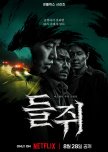
A rat becomes human after eating someone’s fingernail clippings
Mousetrap begins with Je Mun Jae, a wildly successful novelist who has basically turned his apartment into a maximum-security prison except he is both the prisoner and the warden. He rarely goes outside, follows an extremely rigid routine, and has built his entire existence around predictability because his childhood trauma and anxiety have convinced him that if he can control enough little things, maybe nothing terrible will happen again. Which is obviously adorable, because the universe sees a man who has finally achieved a manageable level of stability and immediately decides to delete his entire life.One morning, Mun Jae discovers that his phone doesn't recognise him, his bank accounts don't recognise him, his house doesn't recognise him, and eventually even his identity seems to have been reassigned to somebody else. Imagine spending years being terrified of leaving your apartment because the outside world feels dangerous, only to discover that apparently your own fingerprint has also decided it doesn't know you. At least a burglar steals your television. This guy's entire existence gets repossessed.
And because apparently losing your identity wasn't enough, Mun Jae also ends up being hunted by Noja, a gangster who believes the novelist is connected to a series of financial crimes that have caused him a considerable amount of trouble. At the same time, Detective Park is investigating a series of mysterious deaths and gradually discovers that Mun Jae's bizarre situation is connected to something much larger. So now you have an agoraphobic novelist being chased by a gangster while a detective investigates dead bodies, and somehow the biggest question remains, "Who the hell is Mun Jae?"
Ryu Jun-yeol is easily one of the strongest reasons the series works because he doesn't play Mun Jae as simply a scared man running away from danger. He makes anxiety feel physical. You can see Mun Jae calculating every movement, every person, every unfamiliar environment, because the moment he leaves the carefully controlled world he has constructed, everything becomes unpredictable. What makes his situation so effective is that the danger isn't frightening only because someone might kill him. It's frightening because his entire method of surviving the world has suddenly become useless.
That makes even relatively ordinary situations horrifying from Mun Jae's perspective. His fingerprint doesn't work on his own banking application. He goes somewhere expecting to be recognised and discovers that nobody knows who he is. Systems that are supposed to confirm his identity insist that he is somebody else. The more this happens, the more terrifying the premise becomes, because Mun Jae isn't simply losing access to his money or his possessions. He is losing the ability to prove that he exists.
And then the show gives him a double, because apparently psychological stability was getting a little too comfortable. Suddenly Mun Jae isn't just asking, "Who stole my identity?" He's forced to wonder how much he actually knows about himself, his past, and the person whose existence is now interfering with his own. The mystery becomes much more interesting when it stops being about someone impersonating him and starts making him question whether his understanding of his own life can be trusted.
This is also where Noja becomes particularly important, because their partnership is one of the best things about the series precisely because it is not a friendship. These two men do not meet and immediately discover that they have complementary personalities and adorable found-family potential. Noja has every reason to hate Mun Jae, Mun Jae has every reason to be terrified of Noja, and neither one has any reason whatsoever to trust the other. Unfortunately for both of them, they need each other, which is usually how the best partnerships begin.
Mun Jae needs Noja because the man can walk into dangerous situations without looking like he is about to faint, while Noja needs Mun Jae because the mystery surrounding the novelist's identity may be connected to the problems that have already ruined his life. Their cooperation is therefore completely transactional at first, and I actually loved that the series allows it to stay uncomfortable. There is no magical moment where they suddenly become brothers because they survived one fight together. Suspicion remains, tension remains, and there is always this feeling that either one of them could decide the other has become more trouble than he is worth.
Sul Kyung-gu makes Noja particularly effective because he doesn't need to spend every scene beating somebody to establish that he's dangerous. He has the kind of presence where the atmosphere changes simply because he walked into the room. Standing next to Mun Jae, he becomes even more intimidating because the contrast between them is ridiculous: one man looks like he hasn't voluntarily spoken to another human being in six years, while the other looks like he could make an entire room reconsider its life choices. Their completely different strengths are what make the partnership work.
At the centre of everything, though, is the identity mystery, and this is where Mousetrap is both extremely clever and occasionally its own worst enemy. The premise is genuinely disturbing because it takes something we normally consider completely stable, our identity, and makes it frighteningly dependent on technology and systems. Your phone knows your face. Your bank knows your fingerprint. Your house knows your access code. Government records know your name. We spend our lives surrounded by machines constantly confirming that we are who we say we are, so imagine waking up one day and having every single one of those machines basically respond, "Sorry, who are you?"
The series also brings in the Korean folktale about a rat becoming human after consuming someone's fingernail clippings, which is a wonderfully creepy foundation for the story. Instead of simply copying the old folklore, Mousetrap turns the idea of imitation and stolen identity into a modern thriller involving technology, digital information, and systems that can be manipulated. It gives the premise a cultural and thematic layer that makes it more interesting than a standard "someone stole my identity" storyline.
Unfortunately, this is also where the show starts developing a little too much confidence in its own ability to surprise you. There are twists, and then there are twists explaining the twists, followed by another twist standing behind the previous twist holding a clipboard. Individually, many of them work. The problem is that eventually you start wondering whether the story is revealing information because the mystery genuinely needs another layer or because somebody in the writers' room said, "But what if there's ANOTHER secret?"
The constant withholding occasionally makes the series feel more complicated than deep. Instead of allowing certain ideas or relationships to breathe, the narrative sometimes rushes toward another revelation, and that can make the emotional side of the story feel secondary to the mechanics of the mystery. You know the writers have a giant box of secrets and they are very excited to show you every single one.
The supporting characters suffer from this problem too. Mun Jae and Noja understandably dominate the story, but several of the characters surrounding them feel like they exist primarily to move the mystery from one location to another. Mun Jae's trauma is particularly interesting because it explains why control and routine are so important to him, yet there are moments when his childhood experiences seem to function more as a convenient way of making a situation scarier rather than something the series fully explores as part of his emotional development.
Detective Park has a similar problem. His investigation into the mysterious deaths is genuinely intriguing, and his personal difficulties give him the potential to become much more than the detective assigned to connect the dots, but the series doesn't always give him enough room to become that person. Sometimes he feels less like a character with his own emotional journey and more like the guy who shows up whenever the audience needs somebody to explain that the murder from three episodes ago is connected to the thing happening now. With ten episodes, the series absolutely had enough space to make its supporting cast feel more complete.
Visually, however, Mousetrap knows exactly what kind of atmosphere it wants. Kim Hong-seon's direction creates a cold, unsettling world where even familiar spaces can suddenly feel threatening. Strange camera angles, distorted imagery, and moments of visual disorientation make Mun Jae's increasingly unstable reality feel almost tangible. There is a constant sense that something is slightly wrong, even when nothing particularly frightening is happening on screen, which is exactly what a psychological thriller should be doing.
The downside is that the same deliberate style can occasionally make the series feel slower than it needs to be. There are sequences that linger long enough for the atmosphere to become effective and then linger a little longer until you're sitting there thinking, "Okay, I understand that this hallway is ominous. Can we please go to the next hallway?" The slow pacing isn't inherently a problem, but when the story is already withholding information, too much lingering can make the mystery feel frustrating rather than suspenseful.
Still, the performances carry a lot of this. Ryu Jun-yeol gives Mun Jae a vulnerability that never turns him into a helpless victim, while Sul Kyung-gu makes Noja unpredictable enough that you are never completely sure what he might do next. Their uneasy partnership gives the series its strongest emotional engine because watching these two people slowly become dependent on each other is far more interesting than watching them simply solve the mystery.
My biggest problem with Mousetrap is ultimately that it sometimes confuses complexity with depth. The show clearly has a lot to say about identity, trauma, technology, control, and what happens when the systems we rely on suddenly stop confirming who we are, but it occasionally buries those ideas under so many revelations that the emotional impact gets diluted.
But even with those flaws, Mousetrap remains a compelling psychological thriller because its central idea is genuinely unsettling, its atmosphere is consistently creepy, and its two leads have enough tension between them to keep the story moving. At its best, the series taps into a very modern fear: not simply that someone might steal your money or pretend to be you, but that every system you depend on could suddenly decide that you are nobody.
And honestly, that is a horrifying thought. Most of us are already one forgotten password away from losing our minds. Mun Jae wakes up and discovers that his entire life has basically been logged out.
Was this review helpful to you?
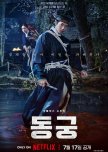
A KINGDOM BUILT ON BURIED SINS
You know a fantasy K-drama is serious when the crown princes start dropping dead one after another before you've even learned anybody's name. The East Palace opens with the royal family being terrorized by what everyone believes is the vengeful spirit of a pond, and honestly, if I were the king, I'd stop pretending this was a coincidence after prince number two. But no. Like every politician in fiction, he spends way too long convincing himself everything is fine until the very last heir falls ill. Suddenly ghosts become everybody's problem, and that's when Gu-cheon, a man capable of crossing into the spirit world, is summoned to uncover what's really happening. Working alongside him is court lady Saeng-gang, whose ability to communicate with spirits makes her just as essential to the investigation.I'll admit my expectations were ridiculously high going into this. Nam Joo-hyuk was finally back after military service, Netflix was throwing money at a historical fantasy, and the trailers promised ghosts running around a Joseon palace. I was fully prepared for elegant people getting possessed every twenty minutes. Instead, the series did something much better. Yes, there are terrifying spirits and creepy folklore creatures, but they're really just the gateway drug. The real addiction is the mystery.
Every time Gu-cheon and Saeng-gang think they've figured something out, the show basically laughs in their faces and says, "Cute theory. Here's another century-old secret." The investigation keeps peeling back layers of palace history until you realize the ghosts aren't even the biggest problem anymore. The supernatural gets your attention, but it's the people who keep you awake afterward. The series understands one of horror's oldest truths: monsters are scary, but humans with power and something to hide are absolutely terrifying.
For much of its runtime, the mystery unfolds with remarkable confidence, but as the series progresses, it becomes increasingly determined to explain every supernatural rule governing its world. New layers of mythology, spiritual mechanics, and centuries-old lore are introduced so frequently that the investigation occasionally loses the elegant simplicity that made its opening episodes so compelling. Rather than deepening the mystery, some of these explanations feel like unnecessary detours that slow the pacing and briefly interrupt the tension.
Gu-cheon ended up being one of my favorite fantasy protagonists in years because the show never tries to make him effortlessly cool. He's sarcastic, emotionally unavailable, and gives off the energy of someone who desperately wants everybody to leave him alone. At first he almost seems indifferent to the supernatural despite having the ability to enter the spirit realm, but every trip comes with a physical and emotional cost, and the more you learn about his past, the more his detached personality starts to feel less like a character quirk and more like survival. Nam Joo-hyuk plays him with remarkable restraint, communicating exhaustion, guilt, and grief without needing lengthy speeches every five minutes.
Then there's Saeng-gang, who thankfully avoids becoming the obligatory female sidekick whose only purpose is looking impressed while the hero saves the day. If anything, she's the one holding the investigation together. While Gu-cheon wrestles with ghosts and vengeful spirits, Saeng-gang untangles palace politics, hidden motives, and decades of buried secrets. I loved that the series never treats intelligence as less valuable than supernatural abilities.
They solve different pieces of the same puzzle, and because of that, they actually feel like partners instead of two characters taking turns carrying the plot. Their chemistry isn't built on endless misunderstandings or forced romantic tension either. It grows through trust, mutual respect, and the realization that they're probably the only two people who truly understand what the other is carrying.
The palace itself deserves credit because it never feels like a pretty historical backdrop. It feels alive, and not in the comforting Disney-castle way. Every hallway, courtyard, and abandoned chamber seems to be hiding another crime someone desperately wants forgotten. The series relies far more on atmosphere than cheap jump scares, creating a constant sense that someone, or something, is watching from just outside the frame. Whenever Gu-cheon crosses into the spirit world, the visual shift immediately reminds you why he dreads using his abilities. Those sequences are eerie without becoming overindulgent, making the supernatural feel genuinely dangerous instead of simply cool to look at.
Cho Seung-woo and Jang Young-nam elevate the political side of the story far beyond the usual palace scheming. Neither the King nor the Queen Dowager sees themselves as villains, and that's exactly what makes them compelling. They're consumed by protecting the royal bloodline and preserving secrets that should probably never have existed in the first place, and somewhere along the way they sacrifice every shred of humanity they had left. Watching them eliminate anyone who gets too close to the truth becomes just as suspenseful as Gu-cheon's encounters with the spirits. Eventually, the show makes it painfully clear that the greatest evil haunting the palace was never the ghosts lurking in the pond. It was the people sitting on the throne.
One of the series' biggest strengths is how confidently it keeps reinventing its own mystery. Nearly every episode ends with what feels like a major breakthrough, only for the next revelation to completely reshape everything you thought you understood. Those twists rarely feel like cheap cliffhangers because each one uncovers another piece of the palace's forgotten history, making the investigation feel richer instead of more convoluted.
That said, the writers occasionally become so eager to outdo the previous reveal that later twists rely on increasingly elaborate mythology rather than emotional payoff. The surprises remain entertaining, but not every revelation carries the same weight as the earlier ones.
Visually, The East Palace is gorgeous. The palace sets are stunning, the costumes are rich without feeling theatrical, the creature designs draw heavily from Korean folklore, and the sword fights are choreographed with impressive precision. The CGI occasionally gets a little too ambitious, particularly during some of the larger supernatural set pieces, where spectacle sometimes takes priority over clarity. There were moments when I understood that something impressive was happening without being entirely sure what had actually happened.
What impressed me most is that The East Palace never forgets what kind of story it wants to tell. Beneath the ghosts, folklore, political conspiracies, and elaborate mythology lies a mystery about grief, ambition, guilt, and the terrible things people justify in the name of family and legacy. I just wish the series had trusted that emotional core as much as it trusted its ever-expanding lore. Whenever it focuses on its characters and the palace conspiracy, it's genuinely gripping. Whenever it disappears into lengthy supernatural explanations, some of that momentum slips away.
Even so, The East Palace remains an atmospheric, beautifully produced supernatural thriller elevated by strong performances, memorable horror imagery, and an engaging central mystery. It doesn't always balance its mythology with the same confidence it brings to its characters, but when everything clicks, it's exactly the kind of haunting historical fantasy I was hoping for.
Was this review helpful to you?
This review may contain spoilers
GLAMOUR ON THE OUTSIDE, ROT ON THE INSIDE
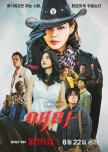
OVERVIEW:Aema is set in early 1980s South Korea and follows veteran superstar Hee-ran (Honey Lee), an elegant, ice-cold actress trapped in a bad contract with her ex-fiance and producer, Ku Jung-ho. When Jung-ho tries to push her into starring in an erotica called Madame Aema, she refuses and is demoted to the bitter supporting role of Erika, while the lead goes to Ju-ae (Bang Hyo-rin), a poor, scrappy dance club performer desperate to escape poverty by any means necessary. What starts as a bitter rivalry between a fading veteran and a hungry rookie slowly unravels into something much bigger: an exposé of just how rotten the entertainment industry (and the government propping it up) really is. Inspired by the real 1982 film of the same name, the show wears its 80s setting proudly, disco music, retro color grading, oversized sunglasses and all, while never losing sight of the grim realities lurking underneath the glamour.
COMMENTARY:
I have to give this show credit for how unflinching it is. From episode 1, Hee-ran is established as someone who plays a sweet, demure persona for the press while being a ruthless schemer behind closed doors, and Ju-ae is introduced stripping at her own audition just to prove she'll do whatever it takes to get the part. Honestly, that contrast set the tone for the entire watch. Nobody in this show gets to stay clean.
The "rivals to reluctant allies" arc between Hee-ran and Ju-ae is easily the backbone of the series, and it's done well. Hee-ran starts out actively sabotaging Ju-ae, accusing her of sleeping her way into the role and throwing her belongings at her over a dress, but the cracks show early. We learn Hee-ran has only ever done projects for the money, never for the art, and that desperation to work with the prestigious Director Kwon on his passion project Predation Night is what humanizes her. Meanwhile, Ju-ae keeps a poster of Hee-ran in her shanty home and admits to her friend Geun-ha that she's conflicted about idolizing a woman who treats her so badly. That tension pays off beautifully by episode 4, with the horseback riding scene in the flower field where their characters, Erika and Aema, get a tender, almost romantic moment that's clearly meant to mirror what's brewing between the actresses themselves.
And I do appreciate that the queer subtext isn't subtext at all, it's right there. The show is self-aware about the irony of censoring Kwak's actual queer storyline within the in-universe film while building real romantic tension between Hee-ran and Ju-ae outside of it. It's a clever bit of meta commentary that elevates the show past just being "industry expose with a side of cat fight."
But make no mistake, this isn't a fun, frothy watch once the plot kicks into gear. The government officials' parties are where the show really shows its teeth. Ju-ae being sent to entertain officials stressed about the Olympics, only to be nearly forced into sleeping with the President himself, is genuinely hard to watch, and Hee-ran stepping in to offer herself instead just so Ju-ae doesn't have to go through it is one of the more quietly devastating scenes in the show. It's an ugly demonstration of how little power either woman actually has, no matter how famous they become.
Then there's Mi-na, Jung-ho's girlfriend and an aspiring actress in her own right, whose storyline ends in tragedy when she's drugged and assaulted at a wilder, younger VIP party and dies of an overdose. Her death is the turning point that pushes Hee-ran from quietly scheming to actively planning to take Jung-ho and the corrupt officials down, and the funeral scene where Hee-ran and Ju-ae realize they were the only people who showed up, because Mi-na, like them, had once idolized Hee-ran too, hit harder than I expected from a show I went into thinking would be mostly camp.
The finale goes for broke. Hee-ran teams up with Director Kwon and an activist reporter to publicly expose Jung-ho's history of pimping out his actresses, using the live broadcast of the award show as the moment to drop the bomb. The chaos that follows, Hee-ran getting chased, Ju-ae literally riding in on horseback to rescue her, the Minister of Culture being blackmailed with the torn ledger page, is unapologetically over the top, but I was here for it. It's the kind of righteous, dramatic comeuppance the first five episodes earned.
MIXED EMOTIONS:
Where the show stumbles for me is in just how much it tries to cram into only six episodes. We've got industry satire, government corruption, a slow-burn queer romance, a tragic death, censorship commentary, and a revenge plot, and there just isn't enough room to give all of it a satisfying conclusion.
The finale especially feels rushed once the big exposé happens. Gi's entire arc resolves with him essentially drinking away his guilt, Jae-geon, the reporter who spread vicious rumors that Ju-ae was a "hooker" and nearly tried to assault her, gets let off without any real consequence, and it's never actually clarified whether Hee-ran can return to acting after everything. For a show that spent so much time building up her arc, that felt like an odd thing to leave hanging.
The tonal shifts are also a lot. The first couple of episodes have a darkly comedic, almost satirical energy, the flower-and-leaf-fight energy of "industry mean girls," but by episode 5 it's an emotional gut-punch with very little humor left, and that whiplash, while intentional, can be jarring if you came in expecting something lighter.
DISLIKES:
I wish Mi-na's death had been given more room to breathe. It's clearly meant to be the catalyst for Hee-ran's full transformation into someone willing to risk everything, but because the show only has six episodes to work with, her arc feels more like a plot device than a fully realized character we got to know. The same goes for Geun-ha, whose disillusionment with the industry and eventual decision to leave deserved more space than it got.
I also think the show oversells its own social commentary at times. It wants to say something about exploitation, censorship, and the powerlessness of women in the industry, and it does land plenty of those points, but the sheer number of themes it's juggling (queer subtext, government corruption, censorship politics, class commentary, all of it) means some threads get a surface-level treatment rather than the depth they deserve.
LIKES:
Honey Lee and Bang Hyo-rin are the reason this show works as well as it does. Honey Lee gets to play at least three different versions of Hee-ran, the demure public persona, the venomous industry veteran, and eventually the vulnerable woman underneath all of it, and she sells every layer. Bang Hyo-rin matches her energy as Ju-ae, giving her this stubborn, hopeful core even as the industry chews her up. Their chemistry, both as rivals and as something more tender by the end, carries the whole show.
I also have to commend the aesthetic work here. The contrast between the glittering, disco-soaked world of Korean cinema in the 80s and the grey, cramped factory-worker reality that Ju-ae and Geun-ha come from is established so clearly and consistently that it does half the show's social commentary work without a word of dialogue. And the award show finale, as messy and over-the-top as it is, is genuinely thrilling to watch unfold.
FINAL THOUGHTS:
Aema is an ambitious, hard-hitting little show that bites off more than six episodes can really chew, but it's never boring, and the central relationship between Hee-ran and Ju-ae is compelling enough to carry you through the parts that feel rushed or underexplored.
It's not a fun, easy watch, there's real darkness here around exploitation, sexual coercion, and corruption, so go in knowing that.
But if you want a sharp, satirical look at the Korean film industry's history dressed up in great 80s style, with two strong central performances and just enough romantic tension to keep things interesting, this delivers more than it doesn't.
Would I rewatch it? Probably not in full, it's heavy, but I'd happily revisit the award show finale and the horseback scene in episode 4 on their own.
With all that said, I give Aema a 7.5/10.
SIDENOTE: This one deals with sexual coercion, assault, and overdose pretty directly, so please go in with that context if those are difficult subjects for you.
Thanks for reading ! ♡
Was this review helpful to you?
THE STORY EATS THE READER
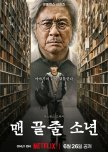
"Notes from the Last Row" is a mystery thriller built around the idea of what if a literature professor became the exact kind of person literature professors warn you about? What if a man spent his entire career teaching critical thinking only to completely lose his mind the moment he found a story he couldn't put down?The series follows Heo Mun-oh, a literature professor at a prestigious university who has never emotionally recovered from the failure of the one novel he published decades ago. Some people get dumped and move on. This man got a bad review and built an entire personality around it. Years later, he's still carrying that disappointment around like a beloved family heirloom, taking his frustrations out on students, his career, and his incredibly patient wife, Jo Hyeon-suk, who deserves hazard pay for putting up with him.
Everything changes when he meets Lee Kang, an engineering student who has the audacity to challenge him in class and then submits an essay so good it practically activates every dormant neuron in Mun-oh's brain. Suddenly, this bitter, washed-up professor sees what he believes is genuine literary talent and immediately latches onto it with the intensity of a man trying to relive his youth through somebody else's homework.
Kang's writing revolves around his growing involvement with a wealthy family after befriending one of his classmates. Naturally, because rich people in dramas are apparently incapable of having a normal Tuesday, the family turns out to be overflowing with secrets, tensions, betrayals, and emotional landmines. As Kang becomes more deeply embedded in their lives, he starts transforming their private conflicts into material for his story, and Mun-oh encourages him every step of the way because apparently nobody in this universe has heard of boundaries.
What begins as mentorship quickly mutates into obsession. Mun-oh becomes less interested in teaching Kang how to write and more interested in finding out what happens next. The funniest part is that the show understands exactly how pathetic this is. Here is a man with decades of literary education, and the second he gets hooked on a good story, all that intellectual distance evaporates. He stops behaving like a scholar and starts behaving like somebody refreshing AO3 at three in the morning waiting for the next chapter update.
That's where the drama is at its strongest. Beneath the mystery, it's really a show about storytelling itself and the weird power stories have over otherwise rational people. Kang presents his narrative as truth, but the deeper Mun-oh falls into it, the less he questions anything. The series keeps asking whether he's discovering reality or simply consuming a version of reality crafted by a talented writer who knows exactly how to keep an audience hooked. It's a clever exploration of authorship, unreliable narration, and the uncomfortable possibility that a compelling story matters more to us than the truth.
Mun-oh's insecurities are also woven into his rivalry with bestselling author Kim Su-hun, the literary equivalent of the guy who got everything you wanted. Years ago, Su-hun publicly criticized Mun-oh's novel, then went on to become successful, respected, and, just to make things extra painful, married Ahn Eun-joo, the woman Mun-oh never got over. At a certain point, you almost stop seeing Mun-oh as a professor and start seeing him as a collection of unresolved grudges wearing a tweed jacket.
Unfortunately, the series doesn't entirely trust its own ideas. Just when it's digging into fascinating questions about fiction, perception, and obsession, it starts throwing melodrama around like confetti. Revelations pile up. Twists multiply. Secrets emerge from other secrets. Every time the show gets close to saying something genuinely profound about storytelling, another soap-opera development bursts through the wall like the Kool-Aid Man.
The biggest casualty is Mun-oh himself. His obsession is supposed to be tragic, but some of his decisions become so spectacularly questionable that they feel less like character flaws and more like the writers dragging him from plot point to plot point. Instead of watching a brilliant man unravel, you're occasionally stuck wondering whether common sense simply left his body.
Still, Choi Min-sik does an enormous amount of heavy lifting. He turns Mun-oh into someone simultaneously fascinating, irritating, intelligent, pathetic, and oddly sympathetic. The deeper the character spirals, the more desperation leaks through the cracks, and even when the writing loses its footing, the performance keeps the emotional core intact.
In the end, "Notes from the Last Row" is most compelling when it's examining the dangerous relationship between fiction and reality. It's a show about how stories can seduce us, manipulate us, and convince us to ignore everything we should know better than to ignore. Ironically, it ends up falling for some of the same tricks itself. The series becomes so addicted to shocking twists and emotional chaos that it occasionally loses sight of the smarter, more nuanced story hiding underneath. But even with those flaws, there's something undeniably engaging about watching a man spend an entire career studying narrative only to be completely destroyed by one.
Full review coming soon. Stay tuned!
Was this review helpful to you?

This review may contain spoilers
THE GENIE, THE PSYCHOPATH, AND A THOUSAND YEARS OF UNFINISHED BUSINESS
STORYLINE:Genie, Make a Wish is a supernatural romcom about a genie named Iblis who was cast from heaven for refusing to bow before humans, and Ka-young, a young Korean woman diagnosed as a psychopath who was raised by her devoted grandmother Pan-geum to function in the world through rules and learned behaviour. Iblis needs Ka-young to make three corrupt wishes so he can corrupt her soul and win his eternal bet against righteous humanity. Ka-young, who remembers none of their shared past, has no interest in playing along. What unfolds is a chaotic, layered, emotionally surprising story of two people from completely different worlds who have apparently been orbiting each other across lifetimes without either of them fully knowing why.
_____________________________________________________________________
COMMENTARY:
I will be honest, the premise sounds absolutely unhinged on paper. A genie released in the Arabian desert by a Korean mechanic with no emotions who then follows her back to her small village and starts getting arrested and losing money at arcade machines. It should not work. But it does, and it does almost immediately.
The show earns its chaos by grounding it in something real. Ka-young is not your typical FL. She was abandoned by her mother specifically because of her diagnosis, was raised entirely by Pan-geum, and has spent her entire adult life following a structured set of rules her grandmother built for her just so she can function. She is not broken. She is not sad about it. She has simply accepted the shape of herself and built a life inside it. That is a genuinely fresh character choice, and the show does not spend its time asking you to feel sorry for her or waiting for her to become softer. Her growth is not about becoming more emotional in a conventional sense. It is about expanding.
Meanwhile Iblis, who has spent nearly a millennium plotting revenge against the one righteous human who got him imprisoned, is completely unprepared for the version of her he actually meets. She threatens him with a hairpin on day one. She runs him over with her car. She beats him senseless when he sets her shop on fire. He is a supernatural being of immense power and she is genuinely unfazed by him, and that dynamic is endlessly entertaining.
I want to spend real time on Ka-young because I think she is one of the more brilliant FL characterisations in recent times. The show never once tries to cure her or frame her psychopathy as something to be overcome. What it does instead is show how a person can be deeply moral without being emotionally accessible in the traditional sense. Ka-young keeps choosing good not because she understands it on a feeling level but because Pan-geum built it into her architecture. The rules her grandmother gave her are not a cage. They are a love language.
Her first wish to test whether humans are corrupt by having Iblis grant five strangers their wishes is so perfectly Ka-young. She is not naive about human nature. She just has her own framework for evaluating it and she wants proof before she concedes. Every wish she makes after that, including her final one, is for someone else. A psychopath who keeps choosing self-sacrifice. There is something deeply moving about that contradiction once the show fully develops it.
Suzy absolutely killed this role. Ka-young's exterior is so controlled and flat and Suzy never made that feel like emptiness. There was always something underneath. The deadpan comedy, the small moments of competitive satisfaction, the jealousy she cannot name but clearly feels when Iblis mentions Jinniya, all of it was there without ever being announced. And when the finale finally gives her the emotional breakdown in the desert, it hits like a freight train because you have been watching her hold everything at arm's length for thirteen episodes. That scene was devastating in the best way.
Woo-bin has range we do not always get to see and this drama lets him use it. Iblis is funny. He is petty and jealous and embarrassingly bad at adjusting to modern life. The scene of him discovering carbonated drinks, the moment he gets motion sick after being released from the lamp, the absolute disaster of him attending a village festival. All of it lands because Woo-bin plays the absurdity with complete sincerity.
But the drama earns the right to break your heart with him because it spends time building the tragedy underneath the comedy. Iblis did not start his existence as a villain. He was a being who refused to bow out of pride and has spent a millennium convinced that his hatred for Ka-young is what drives him. What the past life reveals is that somewhere in a 20-year gap he cannot remember, he fell completely and irreversibly in love with her. He wrote her name on the walls of his lamp in a dead language over and over. He used his last divine wish to beg for a chance to see her again in another life. He wiped out an entire city in his grief after she died.
The episode that reconstructs that past is genuinely one of the most emotionally affecting things I have watched in a while. Woo-bin channelled Iblis's devastation so completely that it physically hurt. The arrogant immortal, brought completely undone by one human woman, weeping blood in the desert over a body turning to ash. The show earns every moment of it because it builds to it with patience.
I could talk about the supernatural mythology all day but the truth is the emotional engine of this drama is Pan-geum and Ka-young's relationship. Ahn Eun-jin played young Pan-geum with such warmth and specificity that every scene she was in felt lived-in. Her love for Ka-young is not performative or sentimental. It is practical and total. She built her granddaughter a whole functioning life out of rules and routines and never once treated her diagnosis as a tragedy to be mourned. That is an extraordinary kind of love and the drama understands it.
The second wish, Ka-young asking Iblis to restore Pan-geum's youth, is impulsive and not fully thought through in a very Ka-young way. But the reason behind it, overhearing Pan-geum worry about being a burden, is so telling. Ka-young cannot process grief. She cannot express love the way most people do. But she will upend the laws of reality for her grandmother without blinking. That is the show at its best.
Pan-geum's death hit hard even though it was telegraphed. The fact that Ka-young could not cry at the funeral and her mom would not let her join the procession is one of the most brutal moments in the drama. And then the desert breakdown comes later and you understand that all of that grief was just waiting for somewhere to go.
Min-ji is a gem of a supporting character. Fiercely loyal, quietly perceptive, the kind of friend who figures out the truth and responds by helping Ka-young hide it rather than making it about herself. Her final wishes, all three of them selfless, are a perfect reflection of who she is. The moment she can no longer recognise Ka-young after her third wish is the kind of small tragedy the show handles better than its big ones.
Every human master who gets wishes in this story reflects something specific about human nature and I think the drama handles this with more intelligence than it gets credit for. Im-seon wastes her wishes chasing workplace status she is not equipped for, ends up estranged from her daughter, and never even sees what she actually needed. Sang-tae is genuinely unsettling. A serial killer who uses his second wish to revisit the memory of a murder with visible satisfaction is a darker character than this genre usually attempts and Cho-joon plays him with a menace that works.
Yeong-hyeon is the most embarrassing kind of selfish, the kind that cannot recognise itself as selfishness until it has already caused damage. Bu-gyeong is driven purely by resentment. Kim Gae the dog asking to become human and then spending his human existence searching for the family that threw him away is the saddest arc in the whole drama and it lasts maybe four scenes total. The fact that he uses his last wish to return to dog form so he can say goodbye is genuinely heartbreaking.
The bet Ka-young sets up early on, asking Iblis to grant strangers' wishes to prove whether humans are corrupt, is one of my favourite structural choices in the drama. It makes the supporting characters' storylines feel purposeful rather than filler. Each one feeds back into the central theme. Greed hollows people out. Selflessness costs something real. Ka-young keeps proving her own point even when she does not intend to.
I want to be honest about the middle stretch because it is genuinely a problem. The Khalid arc, which takes up a significant portion of the drama's runtime, drags. Jung-hoon as an immortal being obsessed with obtaining more supernatural power is interesting in concept but repetitive in execution. His schemes loop back on themselves. His men show up. Ka-young gets cornered. Iblis shows up to save her. The mythology stacks up with Shadi, Zahara, soul flowers, and immortality threads, but the emotional stakes do not rise proportionally.
The show is at its best when it is intimate. Ka-young and Iblis bickering over carbonated drinks, stargazing from the highest point in the village, redecorating the inside of his lamp together. Every time the supernatural politics pull focus away from that intimacy, the drama loses something. There were stretches in the middle where I could feel myself losing investment and having to trust that the payoff was coming.
Ejllael is also a frustrating character. He is framed as antagonistic for most of the run but his motivations are inconsistent. An angel of death who tells Pan-geum the exact date she will die seemingly just to torment her, withholds crucial information from Iblis out of petty war-era grievances, and actively schemes to get Ka-young to make a corrupt wish so he can kill his brother. For an angel the moral logic is completely absent. Ka-young hitting him with a spade every other scene is extremely funny but it also underlines how thin his characterisation is. The show knows it cannot defend him so it just makes him a comedic punching bag instead.
The wish logic also had real inconsistencies. What counts as righteous versus corrupt shifted depending on what the narrative needed. Who can enter the lamp, what Iblis can and cannot alter in the past, how the bet actually works. The rules bent when the plot needed them to, which made it harder to fully invest in the stakes.
Despite the middle stretch issues, the past life reconstruction is so good that it almost makes up for everything. Learning that Iblis spent twenty years in Dubai unknowingly falling in love with Ka-young a second time, this time a version of her who sold dates in the street and saved her money to buy a camel so she could go home, is devastating. She was discriminated against, cheated, beaten, and she still gave her last dates to homeless people. She was still exactly herself.
The cruelty of how she dies is almost unbearable. Iblis's master at the time makes a wish for a woman who refuses to submit to him and Iblis fulfils it without knowing the woman is Ka-young. By the time he realises it is too late. He fights, he begs, he tries to get anyone to take his lamp and use their first wish to save her. Nobody does. One man takes the lamp and wishes for gold. Ka-young dies with Iblis's hands on her face, and he destroys the entire city in his grief.
And then you find out that his last divine wish, the one the Supreme Being granted him, was simply to see her again in another life. He did not wish for revenge. He did not wish for her to remember him. He just wanted to see her. That recontextualises everything. His so-called hatred for her was grief wearing a costume. He has been mourning her for a thousand years and he could not even remember why.
The last few episodes are where the drama finally delivers on everything it has been building. Ka-young's final wish being framed as selfish on the surface but functioning as a last act of protection for Iblis is perfectly in character. She asks for one day of feeling everything. Every emotion she has been numb to her whole life. And then she spends that day weeping in the desert, finally understanding her grandmother, finally understanding what people have felt for her. It is raw and gutting and Suzy carries it entirely.
The reincarnation ending is exactly right. Ka-young returning as a genie, Iblis returning on the day the cherry blossoms fall, the two of them working together as a bickering duo for eternity. It fits them. Pan-geum raising chaos in the afterlife until Ejllael petitions for Iblis's return is the most Pan-geum thing imaginable and I loved it completely. Min-ji's wishes being entirely for other people, including her last one for Ka-young, is a beautiful sendoff for a character who spent the whole drama quietly being the best person in every room.
This one is for fans of supernatural romance, enemies-to-lovers, and slow burn payoffs that actually deliver. If you love dramas that blend genuine comedy with emotional gut punches, this is worth your time. Patience is required for the midsection but the back half rewards it.
This drama is not for everyone and I will not pretend otherwise. The lore can feel exhausting, the pacing has real issues, and if you need your romance to be front and centre at all times you will likely get frustrated. But if you trust the build, the landing is worth it.
_____________________________________________________________________
FINAL THOUGHTS:
Overall, I give Genie, Make a Wish an 8/10. It is an uneven drama that peaks incredibly high and dips frustratingly low and somehow ends up being one of the more emotionally memorable watches of the year regardless.
The core relationship between Ka-young and Iblis, two people who have been circling each other across lifetimes without knowing it, is exactly the kind of soulmatism story I live for when it is done with this much specificity.
Ka-young is not fixed by love. She is not cured or completed. She is expanded by it, and that is a much more honest and interesting story. Iblis does not become a good person. He becomes a person who chooses one human over his thousand-year-old resentment, which for him is the same thing. That distinction matters and the drama understands it.
The middle stretch will test you. The mythology will occasionally exhaust you. But Ka-young breaking down in the desert, finally feeling everything all at once, and Iblis returning on the day the cherry blossoms fall to find her already waiting. That is the drama at its best, and at its best this show is genuinely something.
Thank you for reading! ♡
Was this review helpful to you?
This review may contain spoilers
I didn’t know if I had the capacity to sit through this. Not because I didn’t want to, but because I was afraid of what it would do to me. Afraid of the weight of it, of carrying it with me after the credits rolled.But here’s the thing: once it began, I couldn’t look away. And I'm still shaking.
The word “survivor” has never felt so complicated. They didn’t just “make it out.” They clawed their way out. They stitched themselves together in rooms built to destroy them. And surviving didn’t mean it ended. It meant beginning a second life, one that society rarely has space for, one that the rest of us would rather not look at because it makes us uncomfortable.
The stories ripple through decades of Korean history:
Brothers Welfare Center first. I swear, this one made my blood boil. They grabbed people off the streets for being poor. Kids. Adults. Anybody. Locked them up in a “welfare center” that was just torture in disguise. People starved, abused, disappeared. Survivors are elderly now, their lives permanently bent around this one horror, and they still haven’t even gotten a real apology. Like… are you kidding me? Watching them speak, I felt ashamed to live in a country that let this happen and then buried it under silence. It wasn’t long ago. It was here, on this same soil I stand on.
Then JMS. And okay, hearing Maple again? I wanted to throw my laptop across the room. She is tired. You can see it. She gave her entire youth to a cult that stole her body, stole her time, stole her voice. And she’s still fighting. Still carrying this. Meanwhile, JMS is still operating. People are still defending him. And I’m like: how many women have to stand up bleeding before we finally say, enough?
But Jijonpa… I wasn’t okay after that. I don’t think anyone could be. A literal “murder factory.” The only survivor describing nine days in that hell; nine days of obeying, cooking, clinging to whatever shred of hope they dangled in front of her. She begged not to be cut into pieces. That was her prayer. Do you understand how broken you have to be to beg for that? How do you listen to a sentence like that and not feel your soul rearrange itself?
And then Sampoong. A department store, like… people were just shopping, working, living. And in seconds, gone. 502 dead. Thousands crushed or buried alive because some men wanted to save money on concrete. Survivors crawl out, but they never leave. They’re still down there. Their bodies walked out, but their souls are buried under the rubble. You can hear it in their voices. They’re still trapped.
I think what shook me most wasn’t just the horror of what happened; it was how familiar the silence around it felt. The forgetting. The way people moved on. The way entire systems turned their backs. Survivors didn’t just have to survive then; they’re still surviving now.
Critique:
Sorry, but the producers? They get a fat zero from me. Because why do you think it’s okay to shove them back into the exact cages they barely crawled out of? Dressing survivors in jumpsuits, tying ropes around their wrists, reconstructing cells, like trauma cosplay? That’s exploitation dressed up as “immersion.”
Their voices alone are enough. Their memories are enough. The tremble in their hands, the cracks in their voices, the weight in their eyes, that tells me everything I need to know. You don’t need to retraumatize them. You don’t need to manufacture “shock value” when the truth is already unbearable. And honestly, it makes me sick that the same system that silenced them for decades is now packaging their pain for viewership points. Survivors aren’t props. Their suffering isn’t a set design.
Final thoughts:
I don’t know how you’re supposed to “wrap up” after something like this. There isn’t a neat bow you can tie on four different hells. It’s ugly. It’s exhausting. It’s waking up every day with scars people can’t see and realizing the world would rather you stay quiet about them.
And yet… they spoke. They sat in front of cameras and dragged these memories out of their bones so we wouldn’t forget. That’s not just bravery, that’s sacrifice. Because every time they tell it, they have to relive it.
Which is why the production choices bothered me so much. Survivors don’t need ropes or cells or costumes to “set the scene.” They are the scene. Their words, their tremors, their pauses... that’s enough. Honestly, more than enough. And I can’t shake the feeling that forcing them through those re-creations was like retraumatizing them for the sake of aesthetics.
If it weren’t for that, this would’ve been a perfect 10 for me. No hesitation. But because of those choices, I have to knock it down to an 8. And that sucks, because the survivors gave us everything. They deserve nothing less than perfection in how their stories are told.
So maybe the only real final thought is this: don’t look away. Sit with it. Let it haunt you. Because the survivors don’t get to walk away when the credits roll, and neither should we.
Was this review helpful to you?


