
 News
News 

This review may contain spoilers
King of the meth game
To say that Made in Korea rekindled my fire for Asian dramas after nearly a decade of being out of it is understating it. I'm always going to be a sucker for spies and espionage, and I'm *especially* a sucker for the Cold War timeframe. And compared to a lot of works in the west, especially in the 70's time frame MiK sets itself in, that works within the confines of Detente between the US and the Soviet Union, setting it in South Korea and Japan allows for a lot more flexibility, and gives a look into a South Korea that is still dealing with the aftershocks of both the Korean War, and being a dictatorial bulwark for the US against the spread of communism in East Asia. After watching the first half and giddy at the prospect of a second half that could be as good as the first, I dove into the second half wondering what the writers, and specifically Woo Min-ho could do.
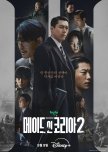
The story picks up in the late 70's, with Baek Ki-tae (Hyun Bin) having ascended to the deputy director role of the Korean CIA, and looking for further control. The meth trade between Japan and Korea is still humming along, and even beginning to sell within borders. But the winds of regime change are blowing, and Ki-tae specifically has new apex predators looking to knock him off the perch - specifically, in Hwang Dae-sik (Heo Jung-do) who sees his operations as an obstacle to his own power and ambitions. To that end, Dae-sik decides to bring Jang Geon-young (Jung Woo-sung) out from the purgatory Ki-tae forced himself in, and bring him down. Cue chess matches and a lot of killings.
To be honest, the second half meets the lofty expectations set by the first. But then we eventually get into the last 10 minutes, and the ending specifically. For what it's worth, I'm not as down on the ending as others are - I think thematically, it is fitting. As much as people are essentially caping for a meth dealer to win because of the absolute powerhouse performance Hyun Bin provides, it was clear to me that Ki-tae ultimately did not have that next gear of evil to be able to gain the further control that he lusted after. The ultimate irony of Dae-sik being the winner tracks for those who know their Korean history, considering he is ultimately a value brand interpretation of Chun Doo-hwan, the dictator that would take control in 1979 as well, and last until 1988, but that still doesn't explain away that when it comes to the story, Ki-tae is seriously nerfed. Maybe it is me looking too much through the lens of hindsight and knowing how the US ultimately inflamed the dictatorships that were under its umbrella, but it would have been easy to cook up a cockamamie plot that the North had infiltrated the Army staff, and that there needed to be a change of power. But if you are the one to enjoy your stories being wrapped up in a nice bow, then the open-ended nature of the ending is definitely going to be a massive rain cloud on your ultimate enjoyment of the ending, even if you have knowledge of the events that MiK bases itself in, or how Korean dramas operate where the villain almost never wins.
Unfortunately, for as much as Woo Do-Hwan manages to step up to the plate in terms of acting as Baek Ki-hyun, there is no denying that he is the weakest link character wise in the main cast. Whereas Ki-tae's ultimate folly is his belief in his brother, Ki-hyun is straight up a coward. He has no problem effectively working and undermining the investigation that he is apart of, but even after seeing his sister become a meth head more or less due to Ki-tae's ambitions, the motivations for stabbing Ki-tae in the back are shaky at best. The open ended ending does save him somewhat from being truly a useless character, but he is without question the weak link.
Geon-young's character change from the first half is one aspect I do enjoy greatly. It's clear that his drive to bring Ki-tae down has him ultimately abandoning his values and shacking up with military men who are bloodthirsty and willing to lash out and eliminate those they see as a threat (Geon-young more or less spells this out at the end) but it is exciting to see whether he will cross the event horizon and truly become a wild animal off the leash in order to get what he wants, or if he will restrain himself just that little bit. Said push, pull and strain also drives his relationship with his partner Oh Ye-jin (Seo Eun-su) but she unfortunately feels increasingly superfluous as the second half goes on, with very little charm that made her enjoyable in the first half.
And then there is the Japanese end of the story, and specifically Choi Yuji (Won Ji-an) and her own power ambitions. I will admit, it was a surprise to see that there was indeed feelings between her and Ki-tae, but it's done in a way that feels right, and while it does make up part of the reason for Ki-tae's ultimate escape plan, it is not overbearing otherwise. Considering that the story becomes much more insular, especially in the last two episodes, it's no surprise to see Yuji become a smaller player outside of the first episode, but even with what Won Ji-an has to work with, she delivers for sure.
Continued from the first half, is the top notch set work and aesthetics of it all. There was no expense spared in presenting Korea and Japan in the 70's, with cigarette and cigar smoke and dark rooms a plenty. It is truly a textured, rich world, and it's clear that the Disney money allowed for a lot more flexibility in that regard to present the world in a way that felt true. For as much stick as I and others have given the ending, I will admit the lighting in the scene in general was fantastic, flipping between bright lights, darkness, and bright red.
I think even taking the ending into account (again, I am not as down on it as others because I can understand, and ultimately get, why it was done, but it definitely can turn some people off) there is no denying that I enjoyed Made in Korea. A lot. It gave me everything I love, done up in a time frame and period that is unique for me, seeing things in a Western-centric lens. That it truly feels like the 70's is also a really fantastic showing from Woo Min-ho, using the big money given to him for this project well. I doubt that there will be a third season (especially considering the director has stomped up and down that 12.12 The Day essentially did that for him, and considering it also has Jung Woo-sung, people might as well go there for the next part) so if this is truly the end, I loved a lot of it. And even it's worst aspect kneecapping it a couple yards from the end, this is by far the best Korean drama I've watched taking everything into account.
The story picks up in the late 70's, with Baek Ki-tae (Hyun Bin) having ascended to the deputy director role of the Korean CIA, and looking for further control. The meth trade between Japan and Korea is still humming along, and even beginning to sell within borders. But the winds of regime change are blowing, and Ki-tae specifically has new apex predators looking to knock him off the perch - specifically, in Hwang Dae-sik (Heo Jung-do) who sees his operations as an obstacle to his own power and ambitions. To that end, Dae-sik decides to bring Jang Geon-young (Jung Woo-sung) out from the purgatory Ki-tae forced himself in, and bring him down. Cue chess matches and a lot of killings.
To be honest, the second half meets the lofty expectations set by the first. But then we eventually get into the last 10 minutes, and the ending specifically. For what it's worth, I'm not as down on the ending as others are - I think thematically, it is fitting. As much as people are essentially caping for a meth dealer to win because of the absolute powerhouse performance Hyun Bin provides, it was clear to me that Ki-tae ultimately did not have that next gear of evil to be able to gain the further control that he lusted after. The ultimate irony of Dae-sik being the winner tracks for those who know their Korean history, considering he is ultimately a value brand interpretation of Chun Doo-hwan, the dictator that would take control in 1979 as well, and last until 1988, but that still doesn't explain away that when it comes to the story, Ki-tae is seriously nerfed. Maybe it is me looking too much through the lens of hindsight and knowing how the US ultimately inflamed the dictatorships that were under its umbrella, but it would have been easy to cook up a cockamamie plot that the North had infiltrated the Army staff, and that there needed to be a change of power. But if you are the one to enjoy your stories being wrapped up in a nice bow, then the open-ended nature of the ending is definitely going to be a massive rain cloud on your ultimate enjoyment of the ending, even if you have knowledge of the events that MiK bases itself in, or how Korean dramas operate where the villain almost never wins.
Unfortunately, for as much as Woo Do-Hwan manages to step up to the plate in terms of acting as Baek Ki-hyun, there is no denying that he is the weakest link character wise in the main cast. Whereas Ki-tae's ultimate folly is his belief in his brother, Ki-hyun is straight up a coward. He has no problem effectively working and undermining the investigation that he is apart of, but even after seeing his sister become a meth head more or less due to Ki-tae's ambitions, the motivations for stabbing Ki-tae in the back are shaky at best. The open ended ending does save him somewhat from being truly a useless character, but he is without question the weak link.
Geon-young's character change from the first half is one aspect I do enjoy greatly. It's clear that his drive to bring Ki-tae down has him ultimately abandoning his values and shacking up with military men who are bloodthirsty and willing to lash out and eliminate those they see as a threat (Geon-young more or less spells this out at the end) but it is exciting to see whether he will cross the event horizon and truly become a wild animal off the leash in order to get what he wants, or if he will restrain himself just that little bit. Said push, pull and strain also drives his relationship with his partner Oh Ye-jin (Seo Eun-su) but she unfortunately feels increasingly superfluous as the second half goes on, with very little charm that made her enjoyable in the first half.
And then there is the Japanese end of the story, and specifically Choi Yuji (Won Ji-an) and her own power ambitions. I will admit, it was a surprise to see that there was indeed feelings between her and Ki-tae, but it's done in a way that feels right, and while it does make up part of the reason for Ki-tae's ultimate escape plan, it is not overbearing otherwise. Considering that the story becomes much more insular, especially in the last two episodes, it's no surprise to see Yuji become a smaller player outside of the first episode, but even with what Won Ji-an has to work with, she delivers for sure.
Continued from the first half, is the top notch set work and aesthetics of it all. There was no expense spared in presenting Korea and Japan in the 70's, with cigarette and cigar smoke and dark rooms a plenty. It is truly a textured, rich world, and it's clear that the Disney money allowed for a lot more flexibility in that regard to present the world in a way that felt true. For as much stick as I and others have given the ending, I will admit the lighting in the scene in general was fantastic, flipping between bright lights, darkness, and bright red.
I think even taking the ending into account (again, I am not as down on it as others because I can understand, and ultimately get, why it was done, but it definitely can turn some people off) there is no denying that I enjoyed Made in Korea. A lot. It gave me everything I love, done up in a time frame and period that is unique for me, seeing things in a Western-centric lens. That it truly feels like the 70's is also a really fantastic showing from Woo Min-ho, using the big money given to him for this project well. I doubt that there will be a third season (especially considering the director has stomped up and down that 12.12 The Day essentially did that for him, and considering it also has Jung Woo-sung, people might as well go there for the next part) so if this is truly the end, I loved a lot of it. And even it's worst aspect kneecapping it a couple yards from the end, this is by far the best Korean drama I've watched taking everything into account.
Was this review helpful to you?


