


 23
23 41
41 8
8 1
1 1
1 1
1 1
1 1
1 1
1 6
6 2
2 3
3 1
1 1
1 1
1 1
1 3
3 1
1 3
3


This review may contain spoilers
A Novel Way to Ruin a Life
I went into Notes from the Last Row completely blind. All I knew was that it revolved around a mentor and his protégé in the world of literature. That premise alone did not exactly grab me, and I even considered skipping it altogether. Thankfully, curiosity got the better of me. Before long, I found myself pulled into a story that thrives less on shocking twists and more on the unsettling feeling of knowing something is wrong without fully understanding why. Every episode left me eager to uncover the next page, even when I could already see where the story was heading.
At its heart, Notes from the Last Row is less about writing and more about the price of genius. It follows Heo Mun Oh, a washed up novelist turned Korean literature professor, whose stagnant life is upended when he notices Lee Kang, the quiet student tucked away in the last row with a gift for storytelling that borders on the sublime. Seeing a spark he believes he can nurture, Mun Oh takes Lee Kang under his wing. But what begins as mentorship soon becomes a Faustian bargain, as admiration curdles into obsession and the pursuit of literary greatness blurs the line between creator and creation. In this psychological tug of war, ambition becomes both muse and monster, proving that some stories are powerful enough to rewrite the people who tell them.
The drama wastes little time setting this dynamic in motion. Mun Oh spends his days trapped in creative paralysis, unable to write his long awaited second novel and taking out his frustrations by harshly criticizing his students' work. Then comes Lee Kang, who quietly stands out by correcting Mun Oh during class and submitting a story assignment that immediately catches his attention. From that point onward, the mentor and protégé relationship begins. Yet it is obvious almost from the start that Lee Kang has motives beyond simply learning from Mun Oh. The more he subtly manipulates Mun Oh into helping him, the more the narrative shifts from asking what is happening to asking why.
That "why" is what kept me watching. The mystery itself is fairly predictable. It does not take long to distinguish reality from fiction or to understand the direction of the major twists. Instead, the real hook lies in how the story chooses to reveal those truths. It constantly teases the possibility that another twist might be hiding around the corner, making you second guess whether what seems obvious is actually the full picture. It is less about solving the puzzle and more about watching the dominoes fall.
As Lee Kang continues writing and Mun Oh eagerly reads, the story inside the story starts bleeding into reality. Characters like Mun Oh's longtime rival Kim Su Hun and his first love Ahn Eun Ju begin appearing in Lee Kang's narrative, each one carefully crafted to poke at Mun Oh's deepest regrets and insecurities. What starts as Lee Kang's fictional story gradually becomes Mun Oh's own imagination taking over. Mun Oh unknowingly begins directing where the story should go, while Lee Kang happily follows along, quietly steering him further into obsession. Watching Mun Oh slowly lose his grip on reality while Lee Kang calmly pulls the strings is where the drama is at its strongest. It almost feels like watching someone willingly walk into quicksand because they are too fascinated to notice themselves sinking.
By the end, the inevitable finally arrives. Reality and fiction completely blur for Mun Oh, while Lee Kang succeeds in dismantling his career, marriage, and sense of self through the very thing Mun Oh once loved most: stories. Even though I could predict most of the major developments, I still found myself constantly wondering if the drama had one more trick hidden up its sleeve.
My biggest issue, however, lies with Lee Kang's motivation. We eventually learn that twelve years earlier, when Lee Kang was an orphaned child, Mun Oh visited his orphanage. The two briefly bonded over storytelling, leaving young Lee Kang inspired and eager for more. Unfortunately, for Mun Oh, it was nothing more than a fleeting encounter he had no intention of continuing. That rejection left a lasting scar on Lee Kang, motivating him to spend the next twelve years orchestrating an elaborate plan to feed Mun Oh stories until they ultimately destroyed him.
I understand what the writers were aiming for. A single encounter can absolutely shape someone's future, especially a lonely child searching for connection. It is also clear that Lee Kang has psychological issues that amplify his obsession. Still, for a plan that took twelve years to execute, the emotional foundation felt surprisingly brief and underdeveloped. I wanted a stronger buildup that truly sold the weight of his resentment. As it stands, his backstory explains his actions, but it never fully convinces me that it justifies such an extreme level of planning. It is one of those moments where the ingredients are there, but the dish could have used a little more time in the oven.
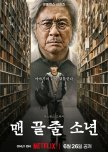
Thankfully, the performances carry much of that emotional weight. Choi Min Sik is phenomenal as Heo Mun Oh. He perfectly captures a man who has long lost his creative spark, from his lifeless eyes to his sluggish posture. Then, as obsession slowly takes hold, every subtle shift in his expression and body language makes the transformation believable. It is the kind of performance that reminds you why he is considered one of Korea's finest actors.
Choi Hyun Wook is equally impressive as Lee Kang. What makes Lee Kang fascinating is not that he is outwardly dangerous, but that he is terrifyingly good at manipulating people while maintaining the image of an ordinary, talented student. Depending on whose perspective we are seeing, Lee Kang almost feels like two completely different people. Choi Hyun Wook navigates both sides effortlessly, making the psychological battle between mentor and protégé consistently engaging. Their chemistry is easily the drama's biggest strength.
The supporting cast also deserves plenty of praise. With so many seasoned actors and actresses involved, nearly every character feels convincing and grounded. My only complaint would be the younger versions of some characters. The child actors neither resembled their adult counterparts particularly well nor delivered performances that matched the rest of the cast. It is understandable, but noticeable enough to mention.
Visually, the drama does not rely on flashy cinematography. Nothing particularly stood out besides Mun Oh's distinctive bluish gray hair. Surprisingly, what stayed with me more was the soundtrack. The playful, Pink Panther-esque background music often lightened the atmosphere just enough to make the psychological tension feel oddly entertaining. It created an amusing contrast that somehow worked better than I expected.
Overall, Notes from the Last Row is a story that succeeds not because it constantly surprises you, but because it keeps making you question whether your predictions are complete. While I was disappointed by the underwhelming payoff behind Lee Kang's motivations, I was thoroughly entertained by the psychological tug of war between him and Mun Oh. It is an engaging, suspenseful, and easy binge that explores obsession, creativity, and the dangerous power stories can hold over both their readers and their writers. Sometimes, knowing the ending is not what matters. The fun comes from watching how the author chooses to write the final chapter.
At its heart, Notes from the Last Row is less about writing and more about the price of genius. It follows Heo Mun Oh, a washed up novelist turned Korean literature professor, whose stagnant life is upended when he notices Lee Kang, the quiet student tucked away in the last row with a gift for storytelling that borders on the sublime. Seeing a spark he believes he can nurture, Mun Oh takes Lee Kang under his wing. But what begins as mentorship soon becomes a Faustian bargain, as admiration curdles into obsession and the pursuit of literary greatness blurs the line between creator and creation. In this psychological tug of war, ambition becomes both muse and monster, proving that some stories are powerful enough to rewrite the people who tell them.
The drama wastes little time setting this dynamic in motion. Mun Oh spends his days trapped in creative paralysis, unable to write his long awaited second novel and taking out his frustrations by harshly criticizing his students' work. Then comes Lee Kang, who quietly stands out by correcting Mun Oh during class and submitting a story assignment that immediately catches his attention. From that point onward, the mentor and protégé relationship begins. Yet it is obvious almost from the start that Lee Kang has motives beyond simply learning from Mun Oh. The more he subtly manipulates Mun Oh into helping him, the more the narrative shifts from asking what is happening to asking why.
That "why" is what kept me watching. The mystery itself is fairly predictable. It does not take long to distinguish reality from fiction or to understand the direction of the major twists. Instead, the real hook lies in how the story chooses to reveal those truths. It constantly teases the possibility that another twist might be hiding around the corner, making you second guess whether what seems obvious is actually the full picture. It is less about solving the puzzle and more about watching the dominoes fall.
As Lee Kang continues writing and Mun Oh eagerly reads, the story inside the story starts bleeding into reality. Characters like Mun Oh's longtime rival Kim Su Hun and his first love Ahn Eun Ju begin appearing in Lee Kang's narrative, each one carefully crafted to poke at Mun Oh's deepest regrets and insecurities. What starts as Lee Kang's fictional story gradually becomes Mun Oh's own imagination taking over. Mun Oh unknowingly begins directing where the story should go, while Lee Kang happily follows along, quietly steering him further into obsession. Watching Mun Oh slowly lose his grip on reality while Lee Kang calmly pulls the strings is where the drama is at its strongest. It almost feels like watching someone willingly walk into quicksand because they are too fascinated to notice themselves sinking.
By the end, the inevitable finally arrives. Reality and fiction completely blur for Mun Oh, while Lee Kang succeeds in dismantling his career, marriage, and sense of self through the very thing Mun Oh once loved most: stories. Even though I could predict most of the major developments, I still found myself constantly wondering if the drama had one more trick hidden up its sleeve.
My biggest issue, however, lies with Lee Kang's motivation. We eventually learn that twelve years earlier, when Lee Kang was an orphaned child, Mun Oh visited his orphanage. The two briefly bonded over storytelling, leaving young Lee Kang inspired and eager for more. Unfortunately, for Mun Oh, it was nothing more than a fleeting encounter he had no intention of continuing. That rejection left a lasting scar on Lee Kang, motivating him to spend the next twelve years orchestrating an elaborate plan to feed Mun Oh stories until they ultimately destroyed him.
I understand what the writers were aiming for. A single encounter can absolutely shape someone's future, especially a lonely child searching for connection. It is also clear that Lee Kang has psychological issues that amplify his obsession. Still, for a plan that took twelve years to execute, the emotional foundation felt surprisingly brief and underdeveloped. I wanted a stronger buildup that truly sold the weight of his resentment. As it stands, his backstory explains his actions, but it never fully convinces me that it justifies such an extreme level of planning. It is one of those moments where the ingredients are there, but the dish could have used a little more time in the oven.
Thankfully, the performances carry much of that emotional weight. Choi Min Sik is phenomenal as Heo Mun Oh. He perfectly captures a man who has long lost his creative spark, from his lifeless eyes to his sluggish posture. Then, as obsession slowly takes hold, every subtle shift in his expression and body language makes the transformation believable. It is the kind of performance that reminds you why he is considered one of Korea's finest actors.
Choi Hyun Wook is equally impressive as Lee Kang. What makes Lee Kang fascinating is not that he is outwardly dangerous, but that he is terrifyingly good at manipulating people while maintaining the image of an ordinary, talented student. Depending on whose perspective we are seeing, Lee Kang almost feels like two completely different people. Choi Hyun Wook navigates both sides effortlessly, making the psychological battle between mentor and protégé consistently engaging. Their chemistry is easily the drama's biggest strength.
The supporting cast also deserves plenty of praise. With so many seasoned actors and actresses involved, nearly every character feels convincing and grounded. My only complaint would be the younger versions of some characters. The child actors neither resembled their adult counterparts particularly well nor delivered performances that matched the rest of the cast. It is understandable, but noticeable enough to mention.
Visually, the drama does not rely on flashy cinematography. Nothing particularly stood out besides Mun Oh's distinctive bluish gray hair. Surprisingly, what stayed with me more was the soundtrack. The playful, Pink Panther-esque background music often lightened the atmosphere just enough to make the psychological tension feel oddly entertaining. It created an amusing contrast that somehow worked better than I expected.
Overall, Notes from the Last Row is a story that succeeds not because it constantly surprises you, but because it keeps making you question whether your predictions are complete. While I was disappointed by the underwhelming payoff behind Lee Kang's motivations, I was thoroughly entertained by the psychological tug of war between him and Mun Oh. It is an engaging, suspenseful, and easy binge that explores obsession, creativity, and the dangerous power stories can hold over both their readers and their writers. Sometimes, knowing the ending is not what matters. The fun comes from watching how the author chooses to write the final chapter.
Was this review helpful to you?


