

 25
25 46
46 8
8 1
1 1
1 1
1 1
1 1
1 1
1 6
6 2
2 3
3 1
1 1
1 1
1 1
1 3
3 1
1 3
3


This review may contain spoilers
How Dare You!? Fool Me Like That!
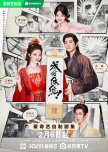
I kept putting off How Dare You!? because I simply was not in the mood for another comedy. Then because of Cheng Lei, I finally gave in, fully expecting a lighthearted palate cleanser. Instead, the drama pulled off one of the biggest bait and switches I have seen in a while. It dresses itself in comedy, only to slowly reveal that beneath all the jokes, fourth wall breaks, and ridiculous situations lies a surprisingly tragic story.
The story follows workplace rookie Wang Cui Hua, who suddenly wakes up inside the pages of a novel as the infamous demonic consort Yu Wan Yin. There, she discovers she is not the only transmigrator. Emperor Xia Hou Dan is actually Zhang San, someone from the modern world who has been trapped inside the novel for nearly a decade. Like two chess players who unexpectedly realize they are on the same board, they rely on their knowledge of the story to outwit dangerous enemies, survive ruthless palace politics, and challenge a prophecy that insists only one of them can live to see the peaceful future they are trying to build.
The first episode was pure fun. Watching Cui Hua and Zhang San awkwardly test whether the other was also from the modern world while trying to navigate an unfamiliar fictional setting was endlessly entertaining. I find it brilliant to use “how are you? I’n fine thank you, and you?” to find out who’s a transmigrator. Their modern references, chaotic teamwork, and shameless glances at the camera gave the drama a playful charm. Then came the second and third episodes, and suddenly tragedy barged in without knocking. Characters started dying. Violence became more frequent. The stakes grew heavier. Yet somehow the comedy never disappeared. Instead, it became a coping mechanism. The laughs never erased the pain, but they made the journey easier to carry. Of course, the tragedy itself was obviously intentional. It felt comical and somehow highlights that they are in a novel. As the political conflicts became more serious, the drama balanced its darker themes with enough humor to keep everything surprisingly digestible. I did find some palace politics scenes dragging a little, but they ultimately gave the story much more depth.
Wang Cui Hua was an absolute delight. She was bright, loud, vibrant, and completely unapologetic about bringing her modern personality into a historical world. What I appreciated most was that she never tried to become the person who knew better simply because she came from the future. She embraced living as Yu Wan Yin, sympathized with the people around her, and genuinely wanted to help clean up corruption and endless power struggles. She carried herself with so much personality that even the way she walked became memorable. Her first entrance into the Emperor's chambers with that confident, flirty swagger instantly became iconic. Whether casually sitting with her legs wide open or gracefully walking through the palace in breathtaking costumes, Wang Chu Ran completely owned both Cui Hua and Wan Yin. She balanced flirtiness, humor, determination, vulnerability, and heartbreak effortlessly. It certainly helps that she looked absolutely stunning throughout the entire drama. I lost count of how many screenshots I took of her costumes despite knowing I will never wear them.
Then there is Zhang San, easily one of the most tragic characters in the series. Imagine entering a novel as a teenager, growing up entirely inside its world, and slowly forgetting your real life. After nearly ten years, Zhang San had become Xia Hou Dan in every sense of the word. He mastered court politics, learned to survive endless schemes, and even perfected the act of pretending to be an incompetent puppet emperor just to fool the Empress Dowager and Xia Hou Bo. When Cui Hua finally appeared, he was no longer just relieved to find another transmigrator. He had finally found someone who understood the loneliness of existing between two worlds.
Cheng Lei once again reminded me why I keep watching his dramas. His greatest strength has always been his facial expressions. He can deliver the smallest, softest emotions just as convincingly as explosive anger, grief, or comedy. His performance made Zhang San's internal conflict feel believable. There were moments when he admitted he had deliberately drawn information from Cui Hua to help himself survive, and instead of making him feel manipulative, it made him feel painfully human. Survival had become second nature. Yet despite his own motives, his feelings for Cui Hua never felt dishonest. When he told her, "In you I found home," it became one of the sweetest lines in the entire drama. There was one small detail that felt inconsistent, though. Since he had spent nearly a decade living entirely as Xia Hou Dan, hearing him casually mention needing a CT scan, even when Cui Hua was not around, felt oddly out of character. By that point, modern vocabulary should have come much less naturally.
The chemistry between Cui Hua and Zhang San was one of my favorite parts of the drama. They were lovers, partners, best friends, and fellow survivors all at once. They respected each other, trusted each other, and always found their way back to each other no matter how dangerous things became. Their relationship never relied on possessiveness or misunderstandings for drama. Instead, it was built on quiet support and mutual understanding. Some of my favorite scenes were simply the two of them eating hotpot together. There was something wonderfully hilarious about watching modern souls happily enjoying hotpot while dressed in elaborate historical costumes. Their planning sessions, complete with occasional looks straight into the camera, were equally entertaining. Beneath all the laughter, though, was the bittersweet reality that they were the only two people who truly understood each other's circumstances. They were wandering souls who finally found home in one another.
One of this drama's greatest strengths is how memorable its supporting characters become. Xie Yong Er completely surprised me. At first, I was convinced she was another transmigrator from the modern world. Later, I became convinced she had come from the future. I was wrong twice. The reveal that she was actually a fictional character who had transmigrated into another fictional story genuinely made my brain short circuit. It was such a clever twist. I loved her friendship with Cui Hua, their girls' moments together, and seeing her happily sharing hotpot and dumplings with everyone. That only made her tragic fate hurt even more. I was rooting so hard for her happiness, especially with Xiao Tian Cai.
The tragedy did not stop there. Xu Yao's death came shockingly early and signaled that nobody was safe. Then came the scholars, whose unwavering loyalty to justice turned them into one heartbreaking sacrifice after another. After the first scholar died, I should have realized what the drama was preparing me for, yet every subsequent death still landed. The series did an excellent job developing even its supporting characters enough that losing them genuinely hurt.
The death that broke me the most was Bei Shu's. He was far more than Xia Hou Dan's loyal protector. He became the father figure Zhang San never had during all his years trapped inside the novel. Watching Zhang San lose the one constant source of unconditional support was devastating. Even knowing the narrative reasons behind his sacrifice, I still cannot shake the feeling that it was unnecessary. Seeing him lying inside the casket genuinely broke my heart alongside Zhang San's. Cui Yi and Fan Siu Wong portrayed Bei Shu with so much warmth that his absence left a lasting void.
As for the villains, Xia Hou Bo and the Empress Dowager were thoroughly detestable. Xia Hou Bo had the classic tragic backstory of an abused child growing into a resentful adult, but his suffering never excused his actions. Manipulating Yong Er, using her love, and forcing her into such cruel circumstances made him absolutely disgusting. Tang Xiao Tian played him remarkably well because I spent most of the drama wanting someone to punch him. The Empress Dowager was equally infuriating. Power mattered more to her than anything else. She manipulated Xia Hou Dan, isolated him from everyone he cared about, and remained determined to control him even after he saved her life.
Visually, this drama was absolutely gorgeous. Normally I find overly polished historical dramas a little too artificial, but here the dreamy aesthetic actually worked. The costumes were easily one of the production's biggest strengths. Yu Wan Yin's wardrobe was simply breathtaking, while Xia Hou Dan's elegant robes and hairstyles perfectly complemented both his character and Wang Chu Ran's glamorous appearance. Together they looked like they had stepped straight out of an illustrated fairytale. The soundtrack also grew on me. At first, it barely registered. By the end, the songs had quietly settled into my head and refused to leave.
The ending may not satisfy everyone, but I appreciated what it tried to do. The fictional world wrapped up much like a classic novel with hope after overwhelming hardship, even if a few threads remained unresolved. The sudden return to the modern world happened so quickly that I barely had time to process it, but given the limitations, it was probably the closest thing to a satisfying closure. What I appreciated most was that the drama addressed the exact question I had been asking myself. Were Cui Hua and Zhang San only in love because they happened to be the only two modern people trapped inside the same novel? Would they still choose each other back in the real world? Zhang San's quiet reassurance that they would was enough for me. I may still have my doubts, but sometimes closure does not need certainty. Sometimes hope is enough.
Overall, How Dare You!? turned out to be so much more than I expected. It tells a solid story filled with lovable characters, heartbreaking sacrifices, palace intrigue, beautiful visuals, dreamy costumes, and a soundtrack that slowly sneaks into your playlist. Most importantly, it understands that laughter and grief are not opposites. They often sit at the same table, sharing hotpot while pretending everything will be okay.
The story follows workplace rookie Wang Cui Hua, who suddenly wakes up inside the pages of a novel as the infamous demonic consort Yu Wan Yin. There, she discovers she is not the only transmigrator. Emperor Xia Hou Dan is actually Zhang San, someone from the modern world who has been trapped inside the novel for nearly a decade. Like two chess players who unexpectedly realize they are on the same board, they rely on their knowledge of the story to outwit dangerous enemies, survive ruthless palace politics, and challenge a prophecy that insists only one of them can live to see the peaceful future they are trying to build.
The first episode was pure fun. Watching Cui Hua and Zhang San awkwardly test whether the other was also from the modern world while trying to navigate an unfamiliar fictional setting was endlessly entertaining. I find it brilliant to use “how are you? I’n fine thank you, and you?” to find out who’s a transmigrator. Their modern references, chaotic teamwork, and shameless glances at the camera gave the drama a playful charm. Then came the second and third episodes, and suddenly tragedy barged in without knocking. Characters started dying. Violence became more frequent. The stakes grew heavier. Yet somehow the comedy never disappeared. Instead, it became a coping mechanism. The laughs never erased the pain, but they made the journey easier to carry. Of course, the tragedy itself was obviously intentional. It felt comical and somehow highlights that they are in a novel. As the political conflicts became more serious, the drama balanced its darker themes with enough humor to keep everything surprisingly digestible. I did find some palace politics scenes dragging a little, but they ultimately gave the story much more depth.
Wang Cui Hua was an absolute delight. She was bright, loud, vibrant, and completely unapologetic about bringing her modern personality into a historical world. What I appreciated most was that she never tried to become the person who knew better simply because she came from the future. She embraced living as Yu Wan Yin, sympathized with the people around her, and genuinely wanted to help clean up corruption and endless power struggles. She carried herself with so much personality that even the way she walked became memorable. Her first entrance into the Emperor's chambers with that confident, flirty swagger instantly became iconic. Whether casually sitting with her legs wide open or gracefully walking through the palace in breathtaking costumes, Wang Chu Ran completely owned both Cui Hua and Wan Yin. She balanced flirtiness, humor, determination, vulnerability, and heartbreak effortlessly. It certainly helps that she looked absolutely stunning throughout the entire drama. I lost count of how many screenshots I took of her costumes despite knowing I will never wear them.
Then there is Zhang San, easily one of the most tragic characters in the series. Imagine entering a novel as a teenager, growing up entirely inside its world, and slowly forgetting your real life. After nearly ten years, Zhang San had become Xia Hou Dan in every sense of the word. He mastered court politics, learned to survive endless schemes, and even perfected the act of pretending to be an incompetent puppet emperor just to fool the Empress Dowager and Xia Hou Bo. When Cui Hua finally appeared, he was no longer just relieved to find another transmigrator. He had finally found someone who understood the loneliness of existing between two worlds.
Cheng Lei once again reminded me why I keep watching his dramas. His greatest strength has always been his facial expressions. He can deliver the smallest, softest emotions just as convincingly as explosive anger, grief, or comedy. His performance made Zhang San's internal conflict feel believable. There were moments when he admitted he had deliberately drawn information from Cui Hua to help himself survive, and instead of making him feel manipulative, it made him feel painfully human. Survival had become second nature. Yet despite his own motives, his feelings for Cui Hua never felt dishonest. When he told her, "In you I found home," it became one of the sweetest lines in the entire drama. There was one small detail that felt inconsistent, though. Since he had spent nearly a decade living entirely as Xia Hou Dan, hearing him casually mention needing a CT scan, even when Cui Hua was not around, felt oddly out of character. By that point, modern vocabulary should have come much less naturally.
The chemistry between Cui Hua and Zhang San was one of my favorite parts of the drama. They were lovers, partners, best friends, and fellow survivors all at once. They respected each other, trusted each other, and always found their way back to each other no matter how dangerous things became. Their relationship never relied on possessiveness or misunderstandings for drama. Instead, it was built on quiet support and mutual understanding. Some of my favorite scenes were simply the two of them eating hotpot together. There was something wonderfully hilarious about watching modern souls happily enjoying hotpot while dressed in elaborate historical costumes. Their planning sessions, complete with occasional looks straight into the camera, were equally entertaining. Beneath all the laughter, though, was the bittersweet reality that they were the only two people who truly understood each other's circumstances. They were wandering souls who finally found home in one another.
One of this drama's greatest strengths is how memorable its supporting characters become. Xie Yong Er completely surprised me. At first, I was convinced she was another transmigrator from the modern world. Later, I became convinced she had come from the future. I was wrong twice. The reveal that she was actually a fictional character who had transmigrated into another fictional story genuinely made my brain short circuit. It was such a clever twist. I loved her friendship with Cui Hua, their girls' moments together, and seeing her happily sharing hotpot and dumplings with everyone. That only made her tragic fate hurt even more. I was rooting so hard for her happiness, especially with Xiao Tian Cai.
The tragedy did not stop there. Xu Yao's death came shockingly early and signaled that nobody was safe. Then came the scholars, whose unwavering loyalty to justice turned them into one heartbreaking sacrifice after another. After the first scholar died, I should have realized what the drama was preparing me for, yet every subsequent death still landed. The series did an excellent job developing even its supporting characters enough that losing them genuinely hurt.
The death that broke me the most was Bei Shu's. He was far more than Xia Hou Dan's loyal protector. He became the father figure Zhang San never had during all his years trapped inside the novel. Watching Zhang San lose the one constant source of unconditional support was devastating. Even knowing the narrative reasons behind his sacrifice, I still cannot shake the feeling that it was unnecessary. Seeing him lying inside the casket genuinely broke my heart alongside Zhang San's. Cui Yi and Fan Siu Wong portrayed Bei Shu with so much warmth that his absence left a lasting void.
As for the villains, Xia Hou Bo and the Empress Dowager were thoroughly detestable. Xia Hou Bo had the classic tragic backstory of an abused child growing into a resentful adult, but his suffering never excused his actions. Manipulating Yong Er, using her love, and forcing her into such cruel circumstances made him absolutely disgusting. Tang Xiao Tian played him remarkably well because I spent most of the drama wanting someone to punch him. The Empress Dowager was equally infuriating. Power mattered more to her than anything else. She manipulated Xia Hou Dan, isolated him from everyone he cared about, and remained determined to control him even after he saved her life.
Visually, this drama was absolutely gorgeous. Normally I find overly polished historical dramas a little too artificial, but here the dreamy aesthetic actually worked. The costumes were easily one of the production's biggest strengths. Yu Wan Yin's wardrobe was simply breathtaking, while Xia Hou Dan's elegant robes and hairstyles perfectly complemented both his character and Wang Chu Ran's glamorous appearance. Together they looked like they had stepped straight out of an illustrated fairytale. The soundtrack also grew on me. At first, it barely registered. By the end, the songs had quietly settled into my head and refused to leave.
The ending may not satisfy everyone, but I appreciated what it tried to do. The fictional world wrapped up much like a classic novel with hope after overwhelming hardship, even if a few threads remained unresolved. The sudden return to the modern world happened so quickly that I barely had time to process it, but given the limitations, it was probably the closest thing to a satisfying closure. What I appreciated most was that the drama addressed the exact question I had been asking myself. Were Cui Hua and Zhang San only in love because they happened to be the only two modern people trapped inside the same novel? Would they still choose each other back in the real world? Zhang San's quiet reassurance that they would was enough for me. I may still have my doubts, but sometimes closure does not need certainty. Sometimes hope is enough.
Overall, How Dare You!? turned out to be so much more than I expected. It tells a solid story filled with lovable characters, heartbreaking sacrifices, palace intrigue, beautiful visuals, dreamy costumes, and a soundtrack that slowly sneaks into your playlist. Most importantly, it understands that laughter and grief are not opposites. They often sit at the same table, sharing hotpot while pretending everything will be okay.
Was this review helpful to you?


