

 2
2 9
9 1
1 1
1


Engaging Storyline, Strong Performances, Subtle Bromance, Cliffhanger Finale
"Towards the Truth" is a captivating thriller drama filled with mysteries and twists that keep viewers on the edge of their seats. Unfortunately, this hidden gem seems to have flown under the radar, with fewer than 500 viewers on MyDramaList at the time of this review and even fewer ratings. It's no surprise that the overall score remains low, but that does not reflect the drama's true quality. With its solid acting, compelling storyline, and well-crafted scripts, it certainly deserves more recognition.One possible reason for its low viewership and score could be the poor subtitle quality, as noted by some viewers. Given the complexity of the plot, accurate and coherent translations are crucial to understanding and enjoying the drama.
Storyline
Set during the Song Dynasty, the drama explores themes of injustice and corruption, focusing on the crimes of the wealthy and powerful who evade punishment through influence and nepotism. At its heart is Shen Song (played by Wang You Shuo), an exceptionally intelligent scholar who passes the imperial examination but clashes with the emperor, leading to his dismissal from court.
Struggling and downcast, Shen Song finds refuge with a kind constable who introduces him to his uncle, a restaurant owner. Shen Song then transitions into a skilled cook. However, his unique ability—a double iris in his left eye that allows him to peer into the past and uncover the truth—brings him back into the world of crime-solving. Though initially reluctant, he is forced to use his "gift" to investigate a gruesome crime involving over 60 corpses.
During this investigation, Shen Song meets Gong Sun Li (Zhang Chen Xiao), the son of a high-ranking treasury official. Gong Sun Li, despite his privileged background, is earnest, compassionate, and driven by a desire to fight injustice. Together, the two form a formidable team, joined by others, to crack cold cases and challenge the corrupt officials who enable societal inequality.
What I Liked
֎ Shen Song and Gong Sun Li: These two characters are the soul of the drama. Shen Song’s intelligence and moral compass, paired with Gong Sun Li’s unpretentious charm and unwavering integrity, make them incredibly relatable and inspiring. Their dynamic and camaraderie are highlights of the show, portraying mutual respect, care, and occasional humor.
֎ Character Depth: The drama does an excellent job of delving into the multi-faceted personalities of Shen Song and Gong Sun Li. Shen Song’s unique eye ability is used creatively to reveal his past, while Gong Sun Li’s relationship with his father showcases his complexity and personal growth.
֎ Themes of Justice: The exploration of systemic corruption and the struggle of upstanding individuals against societal rot is both thought-provoking and relevant.
֎ Humor and Pacing: Despite its serious themes, the drama incorporates moments of humor, particularly through its portrayal of government officials reluctant to challenge the status quo. Its fast-paced narrative ensures there’s never a dull moment.
֎ Brevity: At just 16 episodes, the drama packs a lot into its runtime without feeling rushed.
Areas for Improvement
While the central characters are well-developed, many of the supporting characters, including Qin Er (a supposed main character), feel one-dimensional. By the end of the story, her backstory and motivations remain largely unexplored, which is a missed opportunity to enrich the narrative.
Additionally, the sheer number of plots, subplots, and twists may overwhelm some viewers, particularly with subpar subtitles making it harder to follow.
Final Thoughts
"Towards the Truth" is a well-crafted drama with compelling characters, a gripping plot, and a strong message about justice and integrity. Its nuanced storytelling and fast pacing make it a thoroughly enjoyable watch. Despite its shortcomings, particularly in subtitle quality and character development for the supporting cast, it remains a highly underrated gem.
The enigmatic character who compels Shen Song to use his unique eye to uncover the past and solve cases remains shrouded in mystery throughout the drama. His/her true identity is only unveiled at the very end, leaving viewers with a tantalizing cliffhanger that sets the stage for further intrigue.
For fans of historical mysteries and thrillers, this drama is definitely worth your time. It’s a pity that it hasn’t reached a wider audience, but those who give it a chance will likely find themselves engrossed in its story and rooting for its upstanding protagonists.
Was this review helpful to you?
Poor Editing, Poor Script Writing, Sub-standard Acting
As of the writing of this review, this drama scores a dismal 3.9 on Douban, a platform that reflects the sentiment of the viewers from China, which may not be 100% reliable as we well know how this score can be manipulated by fans and haters. I must admit I have not read the novel which this drama has adapted from, so cannot compare how it has deviated from the original story. According to many readers, the characters have almost gone through a total metamorphosis and thus has rendered a totally different experience for the readers.This story is rather similar to the biblical Moses story whereby the Lord of the Sea (Li Yifeng) tries to bring his people (the fish people) back to the sea from the land where they are being persecuted. Another character, a crown prince (Zheng Yecheng), who vows to take back his kingdom so that his people can live openly in the warmth of the sun again. Between them, comes a woman with whom they both fall in love. So, in a gist, this is a love triangle and the actual plot from the original story where the characters try to save their people and bring them home, has become a background story. Both men are desirable and the female lead is torn (initially at least): to follow her heart or to fulfill her duty.
Many reviewers have provided in-depth description of the story, so I’m not going to repeat what they have written. Here, I’m pointing out what I like and dislike about this drama, so that viewers have better understanding and if they’d want to pursue this drama or not.
Most of the online criticisms I’ve read are about the poor editing. Rightly so. I find the joining of scenes poorly done with noticeably long pauses, making the overall pace excruciatingly slow. The long pauses between conversations also make it feel like the characters are hesitant or even calculative; there's too much waiting around with no one doing anything, just prolong staring at each other. As much as I want to like this story, I dozed off multiple times within one episode, like some old folks do.
The screen writing is terribly poor as it feels like haphazard and not being well thought out as it has changed so much of the personalities of the characters from their original version. This has also reflected badly on the acting which I don’t totally blame the actors; how can the actors perform if they are not provided proper direction how the characters are supposed to be? Had Su Mo been a cold and ruthless person as described in the novel, then maybe Li Yifeng’s acting fits the bill (not perfectly, but not as bad too). But here in the drama, Su Mo seems to be a compassionate and upstanding person who would go all the way out to help anyone in need, with or without the power himself. In this respect, Li Yifeng’s acting seems to be lacking as he is stiff and doesn’t carry any emotions on his face, and his shifting eyes make him even less believable. I do love the Su Mo character and Li Yifeng's physical portrayal of the character. With clear directing, Li Yifeng should have done better.
Chen Yuqi’s acting as Bai Ying is passable, but again, she has very limited facial expressions here. For both Chen Yuqi and Li Yifeng, they have not brought out the emotions that their characters are suffering from, especially in times of loss and regrets. Both actors have totally failed in this respect. Viewers also complain that the selection of the main couple pairing is poor as the two main leads’ chemistry is at rock bottom. They seem to be stiff and awkward; there’s no longing, no affection, no emotion that doesn’t seem forced. Despite these criticisms, I do at times sense some chemistry between the lovers, which unfortunately not frequent and consistent enough.
The sequence of some scenes seem to be repeatedly used, and this has made the whole thing rather dull at times. One such scene which is being repeated multiple times that I can predict what is to follow when that event happens: when Bai Ying is injured and unconscious, Su Mo would try to heal her, and in turn, he goes into a coma. This sequence is overdone and gets really boring to say the least.
Zheng Yecheng’s acting here is acceptable. Like in all his other dramas, he doesn’t get his girl in the end. For me, the most annoying character is probably Na Sheng (Yang Zhiwen) with her bubbly demeanor which doesn’t stop despite whatever predicament everyone is in. Her clinginess is even more irritating and hard to watch.
My Verdict
This is supposed to be a story about hatred between the conquered and the conqueror, and between the various races. Love is blind and love blossoms between the enemies; we have multiple cross racial romantic couples here, and the story is supposed to show their torn emotions and pains – choose love or loyalty/duty for one’s country/race. This emotion is totally lacking here. In its place, tropey romances reign. It would have been acceptable had the script writing not been this bad, making the whole story laden with plot holes, bad logic, and poor character development. The ending is probably inspired by the resurrection of Jesus Christ with Su Mo floating/walking on water shrouded in an halo, three years later (versus three days later for Jesus). It is so bizarre.
I am totally untouched by the supposedly heart wrenching story of forbidden love - love for an enemy or a different race in this case. This is rather unfortunate as the original novel is said to be very interesting and touching. It is also said that the animation that has come before this drama is more faithful to the original story and I’m off for it next.
Don’t be deceived by the big names. Unless you don’t have anything better to watch, you may be better off reading the original novel or watching the anime.
Was this review helpful to you?
Unlike the romance in My True Friend which has come from love-at-first-sight, the romance in this drama is built on trust and understanding. The two main leads Sun Li and Luo Jin are both veteran and excellent actors. Luo Jin plays the Xu Wen Chang character who is a calm, unrestrictive office manager of a large multi-store realtor company. His leadership style is laissez-faire whereby he allows his people a free hand to achieve results in an ethical manner. His subordinates adore him and give him a nickname Gugu, meaning paternal aunty. Xu Wen Chang is kind, sincere and diplomatic. His magnanimity eventually melts away the ice of Fang Si Jin (Sun Li/Betty Sun) who is a co-manager of the same office. When Fang Si Jin is transferred to work there, her goal is to replace him eventually. But after months working with Xu Wen Chang, she finds out all his qualities and gradually falls in love with him. Fang Si Jin is an ambitious real estate agent who would go all the way out to do anything to close the deal. She’s up-tight, suspicious and calculative. But after spending some time under the warm office culture that Xu Wen Chang has inculcated, she starts to change. She sees humans in people and begins to love her subordinates who also come to adore her for her determination and compassion.
Every character has his/her own flaws, story and challenges, and this drama has carefully developed the characters and help them grow to meet and overcome their hurdles. The office culture here is very heart-warming; everyone is watching out for each other’s well-being and they are united like a big family.
This drama is an eye opening for international viewers on how brutal and stressful it is to live in a city like Shanghai. As a realtor, the work is hard and the competition is fierce. But most of all, all denizens in the city work extra-ordinarily hard and they are determined to achieve their goals, overcoming any obstacles that come their way. It also depicts all walks of life in the city – the good, the bad and the ugly. The good ones are beautiful and heart-warming, and the bad ones are ugly, greedy and unethical.
This drama is definitely a wonderful watch, especially if viewers want to better understand life in Shanghai. The depiction is authentic and realistic. It has provided me self-searching calls to look deeper into myself and to want to become a better person for others.
Was this review helpful to you?
This review may contain spoilers
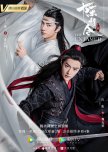
Love, Compassion, Inspiring Characters | Best Costume Drama of All Time
To enjoy watching this drama, one has to watch it without any preconception. Discard your logic. Just watch it as it is. Accept the events as they are playing out. Watch out for the beautiful relationships between the leads and beyond. Close your eyes and listen to the beautiful music. Take in the visual of the 2 main leads.I normally shy away from dramas that are tagged "Bromance", but somehow, I clicked on this one. Since I didn't have a high expectation, my initial impression was like, "Urgh! Another bad Chinese zombies drama" which was in the beginning scene. But to my surprise, it didn't take me very long to get into the hang of the story; I find the story super interesting and the actors super hot. In fact, the good look of the actors makes this drama feel like a manga/manhua; it's surreal, it's beautiful.
I was so hooked to the story that I binge watched all the aired episodes in one sitting. It is really good. Immediately I was acquainted with the main leads, in particular, Wei Wu Xian, who is the untamed one. He is playful, care-free, upstanding and has a heart of gold. Despite all the pain and false accusations he has to endure, Wei Wu Xian remains cheerful, humorous and kind. It is this magnanimous quality that brings tears to our eyes for his misfortune and makes us love him.
Wang YiBo, a very talented dancer, plays the Lan Wang Ji character. Whether on-screen or off-screen, Wang YiBo has that same cold look and therefore making him a perfect fit for the role. His coldness and outrageous good look provide a dream-like visual in the world of cultivation.
The bantering between Wei Wu Xian and the other men/boys is hilarious and cute, which we normally see in romances between a girl and a boy. But in this drama, the bantering doesn't feel distasteful or bad; it gives the impression of true friendship and brotherhood.
Many of the actors, especially the male actors, are so good looking that I find myself attracted to them. All of them are young and talented, and executed their roles very well. The visual of Wei Wu Xian and Lan Zhan is so beautiful - one in white holding the sword and the other in black blowing the flute. I love to watch the flow of their long hair and clothing in the air when they fight. It's simply out of this world.
Though I have not read the novel nor watched the related anime, I find the portrayal of the 2 main characters so amazing - everything about them is opposite to each other. Wei Wu Xian is always warm, talkative and playful, whereas Lan Wang Ji is always cold, solemn and rigid. It is interesting to note that the actual personalities of the actors are reversed off screen. Lan Wang Ji and Wei Wu Xian make a perfect pair.
For me, it's the 'soulmate' relationship that is truly awesome. Wei Wu Xian and Lan Wang Ji know exactly what each other is thinking and feeling by just looking into each other's eyes. They can read each other's mind. It's better than many boy-girl romances where there are tons of misunderstanding, frustrating the viewers. Despite being always expressionless, Wang YiBo brilliantly expresses his emotions without words in Lan Wang Ji. And for Xiao Zhan, he is so brilliant playing the Wei Wu Xian character as if it is written for him.
Their admiration for each other is never explicit, but the look on each face tells a million words. Wei Wu Xian has never imposed on Lan Wang Ji; he lets him make his own choices. For Lan Wang Ji, he is tormented. What is in his heart is totally against what he's been taught in his whole life. He has lived a very strict life with no friends nor any form of entertainment, until Wei Wu Xian appears in his life. Only Wei Wu Xian understands how he feels.
As far as I'm concerned, there is nothing 'gay' about this drama. It's just pure BFF (best-friend-forever) like we have with our own BFF. It is the great companionship one finds in another. The few comedic scenes added to lighten up the whole story are adorable and funny, helping the viewers to take a breather from the zombies and evil spirits.
All the sound tracks are so beautiful either sung or instrumental, each telling a story of a character or a scene. I love visualization the scene when Wu Xian picks up his flute and blows, and Lan Wang Ji playing the guqin. I can just close my eyes and listen to the beautiful tune. The visual is simply so beautiful that no words can describe.
The ending tears my eyes. The sacrifices Wei Wu Xian makes to save others, and in return Lan Wang Ji does the same for him. It's moving and touching. Sweetness comes and I ask for the story to continue.
Many viewers who have read the novel may be disappointed watching this drama that has not portrayed the gayness as it is written in the novel. On the other hand, many viewers shy away from this drama because they do not want to watch "gay" scenes. For me, this drama is beautifully and tastefully done, especially the visual aspect. If you refrain from watching for any of these reasons, you may be missing a lot of the fun. This is a drama that is well worth it.
I strongly recommend this drama to anyone who is still hesitating.
Two thumbs up!
An Update:
After watching this drama during its airing, I re-watched it multiple times, each time picking up certain details I've missed during the first watching. I realized there are many subtleties in this drama that can be missed or not understood in the first viewing. Then I also started watching the anime, and reading the novel. The drama does pretty well in sticking closed to the original story but then, there are also differences and hence provides totally different experiences to the viewers.
Like I said before, I'm normally not a "bromance" fan. But after watching this drama, something touches me. I don't know what, but I love this drama so much that I can't put it down. Even though initially when watching this drama, I felt the relationship was more of a soulmate friendship, but after reading some parts of the novel and watching the anime, I realize it is more than just a soulmate relationship. But this drama has cleverly and carefully tweaked the story to avoid that censorship threshold and yet not losing its heart-warming love relationship appeal. That's what makes this drama so loved and unforgettable. The two main male leads are so good together as if they are made for each other. Since this drama, I realize the misconception I have always on such relationship (bromance) due to our social norms and religious intolerance. I also realize only with an open mind, I can see further and feel more of the things around me.
Despite all the holes and flaws here and there, poor acting by some peripheral actors, hard-to-understand certain parts of the story and logic, substandard editing etc, this drama is phenomenal in terms of its visual appeal and music composition. One really has to sit in, watch it and listen to it, to appreciate it.
This drama has the best OSTs I have ever heard, be they vocal or instrumental, they are so beautiful. The character songs describe each character appropriately. From these songs, I even managed to understand some characters better whom I initially disliked, such as Xue Yang. The lyrics and music in the Yi Nan Ping (Jiang Yanli's character song) is the one that makes me very emotional whenever I listen to it because it is Wei Ying's memory of his shijie (Jiang Yanli); it's so heart-wrenching. The Qing Xin Yin (Clear Heart Tune or Cleansing) with the Luan Po Chao (Muddle Soul) interlude is so perfectly done, that by itself, it is already a master piece. I later also found out that this song is an adaptation from the original song called "You don't understand my heart". Lan Zhan plays this tune consistently for Wei Ying for healing when he is in coma or when he's wounded. The lyrics in that song are so fitting for Lan Zhan expressing his love for Wei Ying silently. The WuJI song, purportedly composed by Lan Zhan for Wei Ying, describes perfectly what happens between them - it is their song, their story. Another song that strikes me most, among others, is the Lotus Cove song. Whenever I hear it, I can feel Wei Ying's fond memories of his growing up life living in the Lotus Cove, so carefree and happy, loved and adored by all, especially his shijie. I can't help but cry for him when he loses all that means most to him.
I have never thought I'd enjoy a drama that shows two male leads in a loving relationship as much as I love this one. At this point, I don't think the label we want to use on this drama important anymore. The most important thing is, most viewers like me have enjoyed it tremendously.
This is a MUST WATCH drama!
Was this review helpful to you?
Slow Burning Adorable Romance
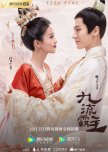
This is a slow burning, tug and pull romance. More than half way through the drama, the main couple still have not officially started their romance though they have strong feelings and admirations for each other. There are multiple love triangles with the third parties becoming the antagonists (sort of). The two male leads are amazingly good looking and lovable, and the female lead is beautiful and badass.The Story
This is the story of 2 people of different worlds meeting each other by chance and falling in love. She is from lowest of the low and he is an elite; they are like extreme ends of the world, opulence versus abject poverty. He’s attracted by her spontaneity and unpretentiousness; she is attracted by his good look and straight face that has a warm heart within. In the lower Jiu Liu, being poor, the people would eat anything and do anything to survive. And in the upper Jiu Liu, the rich lives in gluttony and opulence.
As the events unfold, their romance goes all the way to the palace. They encounter assassinations, imprisonment, tortures at the same time they resolve various conspiracies and mysteries, and eventually save the kingdom. Our OTP join hands together and cover each other’s back, and in the end, realizing their dreams and living a life they have always wanted.
There are some intense palace politics and conspiracies as official corruption is rampant. The supervillain is not revealed until the very last few episodes. However, the emphasis of this drama is on the dynamics of the main couple, which is really fun to watch.
The Characters and The Acting
Long Ao Yi (Bai Lu) is the kingpin of the Dragon Gang which has members and support from the lower class of Jiu Liu denizens of Silver City. She is magnanimous and takes care of everyone, making sure they live a decent life despite all odds against them. She is protective, tough, unfinessed and dresses in rags. Being poorly educated, she continually makes mistakes in the use of words and pronunciations, causing laughter and fun for the viewers. However, at the click of the fingers, she can transform into the most beautiful girl around, even overtaking the wealthiest best dressed women in town. With her beauty and unconventional demeanor, she immediately attracts the two most eligible men around. Bai Lu's character here reminds me of the Bai Lu in The Legends, a badass and stunningly beautiful, despite she doesn’t know how to fight in this story.
In contrast, Li Qing Liu (Lai Yi aka Leon Lai) is a very refined and sophisticated man. He is classy and prudish with a cold somber face. A silk tycoon and a fashion designer for the social elites, he runs one of the largest businesses in town. He is creative, intelligent and has a great business mind. However he’s prejudiced and looks down on Long Ao Yi and her ‘type’ initially until he comes to know her; he has thought money could buy anything and solve all problems until she proves him wrong. Lai Yi is naturally classy and he fits exactly into the image of Li Qing Liu.
Li Zhao (Fang Yilun aka Alen Fang) is a prince sent to investigate the salt trade black market. In his investigations, he also finds black markets for silk and peppercorn, and he discovers the corruption of many of the government officials. At the same time, he falls in love with Long Ao Yi who treats him no different from her other Dragon gang members. Time and time again, Li Zhao helps and saves Long Ao Yi. Fang Yilun’s portrayal is wonderful, making Li Zhao a very well-loved character.
The OST
I fall in love with one of the OSTs here: Heart City, though the other OST Seeing Dream is pretty good too. However, I have to point out that there is an instrumental tune that they have recycled from Luan Zang Gang of The Untamed, and for me, the repeated playing of this background music doesn’t go very well with the scenes and moments at all.
My verdict
Bai Lu's styling is beautiful especially when she's in elegant gowns. I love her badass demeanor, untamed and can be explosive at times. Lai Yi exudes that classy charisma right from the beginning, either as a rich merchant or as a prince. The overall CGI is not too bad. All the costumes are beautiful and props are proper. There are no obvious plot holes despite some minor lack of attention to details. The last few episodes are intense with the supervillain’s identity being revealed. The ending is what most viewers love with the characters we’ve come to love living the life they have always wanted, free and away from the palace despite the sacrifice of another lovable character.
Overall, this is a very enjoyable drama. Don’t miss it.
Was this review helpful to you?
Heart-Pounding, Beautiful Romance, Sad Story
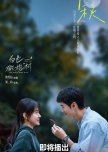
When I first started watching this drama, I, like many viewers who only made it through the first couple of episodes before dropping it, found it awkward. Liang Jie’s acting felt unnatural, the dialogue was stilted, and even Chen Zhe Yuan had his moments of awkwardness. However, I kept watching—partly because Chen Zhe Yuan looks incredible in tactical gear and partly because he won me over when he rescued the female lead and held her tightly to protect her. That moment was undeniably heart-throbbing.Initially, my impression was quite critical. The script felt weak, the conversations lacked depth, and the romance scenes moved at a frustratingly slow pace. Even moments of physical contact felt cringeworthy. However, by episode 11, my perspective changed. I found myself moved, unexpectedly shedding tears as I began to feel the characters' pain, suffering, and emotional turmoil.
The first 11 episodes take place in war zones, immersing viewers in a world of chaos and danger. After that, the characters return to China, only for the male lead to head back to the war zone in episode 25, with the female lead following shortly after. By the time they both return to China in episode 37, they are broken.
Story & Themes
White Olive Tree is based on the experiences of Song Ran, who witnessed firsthand the horrors of a war-torn country, met Li Zan, and lost friends along the way. At its core, this is a story about PTSD—one that highlights how only those who have endured combat can truly understand each other’s pain.
It delves into the grim realities of war: terrorists planting landmines in fields, car bombs in crowded plazas, suicide attacks, and the ever-present fear of death. Beyond that, it’s a story of camaraderie, love, loss, and survival—a deeply disturbing yet hauntingly beautiful tale of romance set against a backdrop of war, courage, and heroism.
While the pacing is fast and tense during action sequences, it slows down significantly during romantic scenes. Dialogue is minimal, often relying on long pauses rather than words. However, despite the sparse conversation, the longing between the leads is palpable through their gazes.
Another theme this drama explores is the role of journalism in war reporting. While many reporters cover conflicts from the safety of hotel rooms, Song Ran immerses herself in the battlefield, capturing raw footage and firsthand accounts. Unlike journalists who chase fame and prestige—seeking recognition and lucrative rewards for their coverage—Song Ran is driven by a desire to reveal the unfiltered truth to the world.
This theme subtly critiques the bias of mainstream media, highlighting the contrast between sanitized, agenda-driven reporting and the unvarnished realities on the ground. It also underscores why platforms like TikTok have become a political battleground. While traditional media often relies on controlled narratives from a distance, grassroots reporting on social media has empowered ordinary people to document and share real-time footage, frequently challenging and exposing inaccuracies in mainstream coverage.
Characters & Acting
Li Zan (Chen Zhe Yuan)
Li Zan is a bomb expert, a professional building demolition engineer, and a volunteer diffuser in a foreign war-torn country that strongly resembles Syria. He is compassionate, selfless, and undeniably lovable, a role that Chen Zhe Yuan brings to life convincingly.
While he looks young and has an almost boyish charm, his performance in emotional scenes is commendable. His crying scenes are particularly raw and moving, capable of bringing viewers to tears. Despite his somewhat stiff and robotic voice at times, his portrayal of PTSD is gripping and heart-wrenching. His action scenes, particularly in tactical gear, are well-crafted and believable, making him captivating to watch.
Song Ran (Liang Jie)
Liang Jie naturally exudes an air of awkwardness, which works well for her portrayal of Song Ran, a war reporter. Initially, her character can be frustrating—she jumps to conclusions too quickly, is clueless about war zones, and is often oblivious to danger. However, as the story progresses and her backstory unfolds, her independent yet vulnerable nature becomes more understandable.
Having grown up without a mother and feeling like an outsider in her father’s new family, Song Ran developed a strong sense of independence. However, once she meets Li Zan, she finds herself relying on him, as he consistently has her back. Liang Jie’s acting improves significantly after episode 11, making her character much more likable.
Both Chen Zhe Yuan and Liang Jie have a youthful appearance, almost reminiscent of high school students, which at times makes their pairing feel slightly off in such a heavy setting.
Supporting Characters
The banter between Sa Xin and Benjamin is a highlight, with their playful insults adding humor to an otherwise intense story. However, the long pauses between their dialogues sometimes make their exchanges feel overly calculated, losing the natural spontaneity of real banter. That said, Benjamin, played brilliantly by Wang Tian Chen, stands out as one of the most compelling characters aside from Li Zan.
OST & Cinematic Elements
The soundtrack is a major strength of the drama, featuring beautiful slow ballads in both English and Chinese, often accompanied by acoustic instruments. The music enhances the emotional depth of the scenes, making moments of love, loss, and suffering even more poignant. At times, the combination of the soundtrack and the visuals is enough to move viewers to tears.
The cinematography successfully captures the realism of war zones, military barracks, and battle sequences. Explosions, gunfights, and chaotic war-torn landscapes are executed convincingly.
Final Thoughts
The setting of the war zone bears a striking resemblance to Syria, and the political undertones of the story evoke real-world conflicts. The thought of a foreign superpower toppling a government that Li Zan is volunteering for, leaving the region in ruins and handing control over to terrorists who kill innocent civilians that Li Zan and his friends are trying to save, is deeply unsettling. The drama subtly mirrors these harsh realities, making its themes all the more impactful.
While I was initially critical of the acting and dialogue, the emotional depth of the later episodes won me over. Those who have experienced war or PTSD may find this drama particularly resonant. Beyond its romance, it paints a harrowing picture of the tragedies faced by people in war zones—parallels that may evoke sympathy for the struggles of Palestinians, Syrians, and others suffering in conflict-ridden regions.
Despite its awkward moments and slow pacing in certain areas, the intensity of the bomb disposal scenes and combat sequences compensates for these shortcomings. The war-torn landscapes feel authentic, and the emotional weight of the story lingers long after the credits roll. However, the length of the series begins to drag, particularly around episode 30, making it a challenge to endure all the angst and suffering alongside the characters.
The drama currently holds a low rating of 5.4 on Douban, likely due to, among others, its ambiguous ending, where the leads seemingly vanish and reappear in spiritual form, leaving viewers questioning their fate. Though the wounds on Li Zan's body have healed, the scars in his heart and mind last forever. The final message—that sometimes death is preferable to living in endless pain—is hauntingly tragic. The ending forces one to reflect on sacrifice, war, and the depths of human suffering, leaving an emotional imprint long after the last scene fades.
Side note
According to a viewer who has read the novel, dropped the drama and gave it a 4.5 rating, the original story has been drastically altered, diluting the emotional depth of the romance and making it far less heart-wrenching. While Chen Zhe Yuan delivers a brilliant performance as Li Zan, the screenplay does a disservice to Song Ran, reducing her character to an unlikable and poorly developed version of her novel counterpart.
Despite these flaws in the adaptation, I still love the story. I can only imagine how much more inspiring and emotionally impactful the original work must have been.
Great watch! Prepare to cry!
Was this review helpful to you?
Touching, Humorous, Thought Provoking, Calming. Philosophical, Scenic, Idyllic
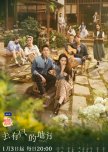
The Chinese title for “Meet Yourself” is “Going to a Place Where there is Wind”. Wind is a very important concept in the Chinese culture. It is the source of life, a flow of air and energy; without wind, a place is like a pool of dead water. This story is set in a fictional Shangri-la called Yun Miao Village, a sleepy hamlet. The drama is shot at Feng Yang Yi, an actual village near Dali in Yunan Province where many of the Bai people, one of the many minority ethnic groups, live.To my delight, the drama is directed, and screen written by the same director and screen writers for “Go Ahead” and “Find Yourself”. The first episode makes me cry, empathizing with the characters of their misfortune and loss, but this is not a heart-wrenching story. Indeed, it is a story about normal life of normal people with normal experiences, embellished with humor.
In today’s world, most working people are just like Xu Hongdou (Liu Yifei aka Crystal Liu), mindlessly working like a robot, in pursuit of materialistic rewards. Xu Hongdou wants to buy a car and an apartment in Beijing which is ever so unreachable with her paycheck. Just like most people would, a shattering life event can change the outlook of life for a person, and it does for Xu Hongdou in the untimely death her best friend, Chen Nanxing (Wu Qian aka Janice Wu); she’s abruptly awoken, finding herself lost. She begins to question the meaning of life and what she wants in life herself. She has no answers.
Xu Hongdou quits her job and leaves Beijing. She flies all the way to a tranquil and idyllic village in Yunan and rents a room for several months in a cozy cottage. There, she meets a struggling web novel writer, a failed entrepreneur, a fallen livestream singer and a down-and-out musician. All these people have come here to lick their wounds, to reflect and to recharge; each has a story. They become good friends, help, learn from each other and grow. But most of all, Xu Hongdou meets the man of her life, a successful investor who has returned to his village with a vision and a noble mission.
Almost all 40 episodes of the story have taken place in the little Yun Miao village and its surroundings such as the ancient old city and Erhai (a giant lake that is called a sea). Some impatient viewers may find it slow and boring, but the overall plot is about life, and how to look at life philosophically, and how our characters grow against all odds. It is more like a travel journal, documenting all the people Xu Hongdou meets, all the things she eats, does and sees, including the birth of a colt from start to finish. It focuses on the village, the inhabitants’ traditions, culture, and family relationships. Most of the elderly women don in traditional costumes, some sell their handicrafts and food products in the marketplace.
The romance is mature and slow burning, not unlike how real people would have experienced. Xie Zhiyao (Li Xian) doesn’t confess his love for Xu Hongdou until Episode 26 and tells her to go have a life she is searching for by letting her return to Beijing. That confession is moving. Their official romance starts only in Episode 31 when they kiss, and for the rest of the drama, they are like bee and honey, sweet and lovely. The director and screenwriters have given the romance buffs some very heartwarming loving scenes of the lovebirds till the end - almost 9 episodes of solid sweet romance.
Liu Yifei is amazing as Xu Hongdou. She is beautiful, elegant and natural with no visible makeup. She speaks softly, gently and poetically. Li Xian’s performance is just as good as the handsome, affable and warmhearted Xie Zhiyao. The whole cast is wonderful with very convincing performances by the older actors as grannies, and the juvenile actors as village kids. Like Wu Qian, Zeng Shunxi’s appearance as a lowkey bookstore investor/strategist is very brief. There are no nasty characters, no ex-boyfriends nor ex-girlfriends, and no love triangles. The settings are idyllic and comforting, rich with heritage and culture of a minority group. The efforts to bring prosperity to the village and at the same time, balancing conservation and preservation of the traditional way of life of the inhabitants, are challenging and inspiring.
The official soundtracks are lovely, consisting of several English songs, most accompanied by acoustic instruments. A few of the songs used are from the previous drama Go Ahead. I particularly love the lullaby which is repeatedly played and sung throughout the drama; it is endearing and gives a sense of nostalgia and homeliness.
My Verdict
If you love China and its beautiful people, you'll love this drama. If you love travel and to live an idyllic lifestyle, you will love this drama. If you have fallen and are hurting, you would love this rejuvenating story and its background setting. If you're an urbanite and would like to get away from your dreary life as an armchair traveler, this is your drama. If you're a dreamer and love a layback lifestyle that allows you to dream your dreams away, you’ll find inspirations here. If you're none of the above, simply just want an authentic beautiful drama to watch, you'd love this drama.
Some critics find this drama a promotional tourism project. Indeed, after the airing of the drama, tourism picks up by almost 2,000% in the once sleepy Shangri-la. Visitors jam the few cafes and restaurants, and walk the historical Tea Horse Ancient Path (茶马古道). Many take pictures with the cottage Xu Hongdou once stayed. That said, I have enjoyed the great breath-taking views and the message of the drama.
As it goes, “Time never stops, happiness is never limited. Sometimes there are dark clouds, but there is always wind.”
Realistic! Beautiful. Great watch! Highly recommended!
Was this review helpful to you?
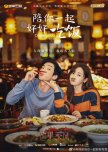
Witty, Humorous, Philosophical, Fluffy Romance
For me, dining together with loved ones at home is my most enjoyable time of the day. This drama, Dine with Love, conveys the message that I most value. Home cooked meals need not be elaborate; a simple dish such as a tomato omelet, is suffice to whet appetite and satiate hungry stomachs. This drama emphasizes on the importance of sharing time as a family. What is better than sharing a meal?Chinese people like to ask each other casually when they meet, “Have you eaten?” That’s because meals are so important, particularly in the Chinese culture. Sharing a meal, one can discover the background of new friends, and have better understanding of the people around us. Like music and visual arts, culinary art is a means of communication of love and happiness.
With only 16 episodes, this drama is easy to watch. The plot is straight forward: girl meets nasty boss and falls in love with him. Nasty boss gets attracted to girl because of her talents and wisdom. Both characters have flaws and they grow together to become better persons.
Yu Hao (Gao Hanyu) is an entrepreneur and a slave driver. He is a workaholic and to him, every minute is precious, and he would not waste time doing unproductive things including cooking a meal, so he thinks. He is aloof, unfriendly and fires anyone outright who doesn’t meet up to his standard. Everyone is frightened of him and calls him a demon head. Comes Su Kelan (Jade Cheng) who is one of the workers in public relation. She uses her wit and plays along with Yu Hao’s logic and feeds him his own poison. After spending some time with him, Su Kelan realizes Yu Hao is actually a very sweet and kind person; just that he doesn’t know how to communicate without hurting people. She falls in love with him. And with Su Kelan, Yu Hao is amazed by her wisdom and talents and soon falls for her too.
This is a great story writing. The author explains how one can convey a different concept to someone who normally doesn’t see or accept the view because no one has ever convinced him/her. Time and time again, the author uses the analogy of a bitter gourd, which can be so bitter that not many people appreciate its value. However, with imagination, a good cook can turn the bitter gourds into various delicious and nutritious dishes. I love how Su Kelan gently nudges Yu Hao along and uses his logic in a different scenario to help him see the picture. The interaction is hilarious and adorable, and Yu Hao is sold every time; the bitter gourd in him slowly becomes less bitter and more tasty.
The first time I watched Gao Hanyu was in Love is Sweet. I found him more charismatic than the main lead, Luo Yunxi (sorry fans), in that drama. Gao Hanyu has a face that makes him look cold, serious and mean, fitting the Yu Hao character perfectly. Therefore, having such a face, it is difficult for viewers to associate him with blunders, and when it (blunder) happens, it makes him so adorable as he stumbles time and time again. Gao Hanyu’s acting is amazing and very believable. I cannot have enough of him on screen. Jade Cheng is soft and beautiful, and her acting is convincing as the gentle Su Kelan. She has incredible CP chemistry with Gao Hanyu.
There are two gorgeous side couples. One pair tries to get Su Kelan and Yu Hao together, and the other pair tries to split them up as they each has love interest with our main couple. The outcome is hilarious.
My Verdict
Watching this drama is like seeping a cup of hot afternoon tea, soothing and enjoyable. The story hits a note with me because it shares a very simple principle - life philosophy through food. What seemingly a very simple dish such as the tomato omelet, is also a dish that can help the dinners bring back memories of home and warmth. There is no one right way in making the omelet, but each recipe brings back the memories of belonging as taste is the unforgettable memory. Mealtime can help reconcile relationships, putting down the past and bringing forth the future. It is the most important time of the day when family members and friends get together after a whole day of work and school, and enjoy their food.
Apart from the food philosophy, this drama also tries to convey the message of different point of views. When a value seems insignificant to one person, it can be of utmost important to another, and vice versa. Yu Hao feels it is important for him to be successful in his business so that he can take care of his family. He finds it hard to understand why Su Kelan thinks differently. He finally realizes why his father had worked so hard and neglected him and his mother when he was little, and the tragedy. He doesn’t want to make the same mistake as his father did. Su Kelan thinks she has to be perfect and to shoulder all the burdens. She learns that shouldering all the burdens herself is not what people want of her; people want to share her burden and it’s fine if she’s not perfect.
Rewatch? Absolutely! There's a lot of simple recipes for ordinary home cooked meals. This time round (rewatching), I would note down all the recipes and their simple steps, together with the philosophy behind each dish. I want to be able to use the author’s words to explain to my family so that they would appreciate the food on the table.
A reword of Hippocrates’s words: "Let food be thy happy memories and happy memories be thy food"
A great watch! Don’t miss it!
Spoiler: For romance buff, the main couple does separate for about 2 years before they come back together again.
Was this review helpful to you?
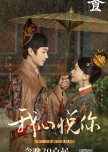
Exquisite Costumes, Mouth-Watering Culinary, Cat Fights from Royal Harem to Royal Kitchen
Royal Feast is a story of Zhu Zhanji (Xu Kai), the Ming Dynasty Emperor Xuande (reigned 1425 to 1435) and his fictionalized romance with the woman he loves, who later becomes his empress, Empress Xiaogongzhang (Wu Jinyan) of the Sun clan, and (not shown in this drama) bares him his successor, Zhu Qizhen (Emperor Yingzong). Apart from the very authentic looking exquisite costumes of Ming Dynasty and mouth-watering culinary, the whole script is poor with very little substance and it is frustrating to watch. In fact while watching the emperors and their harem enjoy laboriously prepared culinary to fill their stomachs, I'm filled with a stomach full of “qi” (anger).More than 50% of the time is spent on food - cuisine preparation and presentation, food tasting, picky mouths, food wasting etc. Granted. The title of the drama is also named Royal Feast, so food is to be expected. But I've never expected to watch a drama that focuses so much on deliciously looking cuisines with tons of boring cat fights from the royal harem to the kitchen. Each episode, especially for the first 30 episodes, gives me a full stomach of fire. (I know I keep referring to my own stomach, well, you get what I mean.)
Here we have a prince who is groomed to be an emperor (Xu Kai) since he was born because his grandfather, the Emperor, favors him. He is powerful, and yet what he says doesn’t match with what he wants, especially when dealing with his relationship, be it with the woman he loves or with his friend and subordinates, and this has created a lot of misunderstandings that make him brood. Then we have a palace chef that turns empress who plays hard-to-catch with the broody prince all the time.
The plot is a mix of real and fictional events with real and fictional historical figures. Many of the fictional events are illogical with overdone plot twists. None of the characters are impressive and likable except only, perhaps for me, the eunuch, Chen Wu (Zhu Zhi Ling) who is a very small side character (you can see how poor the overall character development is for everyone).
By episode 29, the plot thickens slightly when Zhu Zhanji becomes the Emperor, and the romance improves after episode 33 when the main couple comes closer together, and there are fewer kitchen and food preparation scenes though many bad logics still remain. The whole drama doesn't show much what Zhu Zhanji has done politically and in running the country or defending his throne from his uncles, though briefly shown he does visit the farmers in plain clothes and puts down a revolt by one of his uncles.
Xu Kai’s acting is decent here. We know he broods because he shows it on his face and in his body language. But the female lead character is quite another thing. I really don’t like Wu Jinyan’s acting here. She looks pretentious and her acting is confusing. Maybe that's how her character is being written. There are so many ironies and inconsistencies with this character. She is initially the chosen one for Zhu Zhanji as his Empress. After years of grooming, she is being replaced by another girl who is said to be very auspicious. She is bitter, so she changes her name to Yao Zijin (Wu Jinyan) and enters the palace as a royal cook (what the heck for?). As a kitchen chef, Yao Zijin is kind and cheery, and yet at the same time, secretly schemy. How can a person be still cheery when a friend she trusts attempts to kill her? Seemingly innocent, she also schemes to plot against her main competitor in the kitchen. She says she doesn’t want to be married to Zhu Zhanji and wants to stay in the kitchen to do what she loves. Then, immediately, to attract the prince’s attention, she purposely falls in front of him (roll eyes). Time and time again, those who try to murder her escape with impunity and continue to live normal lives. And in the kitchen, when the emperors hate everyone’s cooking, she’s the one who always saves the day. There are always incidence happening at the elaborate royal feasts -- assassinations, poisoning, allergies, deaths etc. Yes, you get the gist, an utterly ridiculous script and terrible plotline. Oh, have I mentioned Wang Yizhe’s acting as You Yifan, head of the Imperial Guard? His portrayal is really poor – stiff and awkward, and constantly showing a sulky face doesn’t pass as a cold and bitter man as the character is supposed to possess.
My Verdict
At the beginning, many viewers claim Royal Feast is similar to the Korean drama, Jewel In the Palace (Dae Janggeum, 2003). Far from it. A bad script and shitty plot can hardly save a drama despite its exquisite costumes, culinary arts and big-name actors. In fact I continue watching because of Xu Kai and I like the concept of “Let food be thy medicine and medicine be thy food” which is quite elaborately displayed here, explaining how each cuisine is being made and its medicinal benefits for the body. Apart from these, there is very little meat, and I’m sorry for spoiling the soup.
The drama stops short before the Empress bares Zhu Zhanji his first son, and the Emperor’s untimely death at 38, so this may have saved a lot of broken hearts. Historically, Emperor Xuande (Zhu Zhanji) had many consorts and at least 10 died with him under the Ming’s royal house tradition when he died. He also didn’t dispose of his first Empress the way it is shown in the drama, and the revolt from his uncle is a joke here.
Overall, I am neutral on this drama. My score here is all awarded to the costumes, food and official sound tracks only, and zero to the story and the script.
Was this review helpful to you?
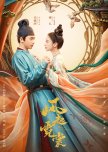
Part Fictional Part Historical Story
Despite the really vile and annoying antagonists, this drama has done quite an incredible job by incorporating a romance fiction into the actual historical characters and events during the period of Emperor Taizong (626 – 649) and later Emperor Gaozong (649 - 683) of Tang Dynasty. This is the love story of Kudi Liu Li (Gulnazar aka Guli Nazha/Gülnezer Bextiyar) and Pei Xingjian (Xu Wei Zhou aka Timmy Xu) who was an actual historical figure.The story is adapted from the well-loved novel “The Bright Moon of Great Tang”. According to readers, like many other adaptations, the original characters and plots have been relentlessly butchered, rendering the final production with incoherent logic and badly modified characters that could cause viewers to spew blood. They claim the screen writers have made the Liu Li character stupid, impulsive and annoying. The screen writers have also given unlimited power to the seemingly unimportant head of the palace seamstress shop, making the Zhuo Jin Niang (Li Xin Yi) character vile and despicable, which to many, is bizarre and a total hogwash. They have also made the Cao Wang (Prince of Cao) character extremely dislikable, turning him into a nincompoop who does not receive equal retribution for his heinous acts, like trying to murder the Crown Prince, umpteen times. Many viewers also criticize the acting of the main leads for being mediocre and unbelievable.
The Characters and Acting
Kudi Liu Li (Gulnazar) is the daughter of the world number one best embroiderer and seamstress who is framed and executed in the palace. Little Liu Li escapes execution and has been disguised as a boy living in the palace. Inherited her talents from her mother, Liu Li becomes a gifted embroiderer/seamstress for the Emperor. I really love the beautiful little girl who portrays the juvenile Liu Li. Her acting is wonderful and believable. Many viewers dislike the grown-up Liu Li character and complain about Gulnazar’s acting. I can see why viewers are frustrated because Liu Li has the tendency in running into trouble because she is too impulsive and naïve. However, in times of trouble Liu Li can analyze her situations quickly and come out with good solutions, hence saving herself and those she cares. According to actual historical record, Pei Xingjian’s second wife was of Turkic ethnicity. Gulnazar’s Uyghur background appropriately fits her role as Liu Li. For me, Gulnazar’s acting is not totally a flop; I quite like her as Liu Li, even as the disguised Xiao Douzi, she is rather cute and believable.
Pei Xingjian (Timmy Xu) is a super intelligent person, well verse academically as well as an incredible fighter. He later becomes a good friend and the bodyguard of the Crown Prince Li Zhi, saving him from all kinds of danger and near-death situations. Timmy Xu is very good looking with a wonderful physique. However, I wish he were more relax in his acting with more natural movements and facial expressions. As Pei Xingjian, he does make the character very lovable and enjoyable.
My verdict
Apart from Pei Xingjian, this drama makes references to many real historical figures including Wu Zetian (the famous/infamous female Emperor), Li Shimin (Emperor Taizong of Tang), Li Zhi (Emperor Gaozong of Tang), among others. As expected, many of the events in the drama are fictional, including the exaggerated wickedness of the antagonists and their blatantly heinous schemes and crimes. Many viewers feel such acts are overdone and illogical. Some viewers even claim, rightly or not, the plotline and characters are copied from the Korean drama "Jewel in the Palace" (2003). Whatever it may be, don’t let the low ratings mislead you. From the perspective as an entertainment, the story is indeed entertaining with clear line between love and hate, black and white, right and wrong; there's simply nothing in between.
For me, I find the fiction ties in very well with the actual history, romanticizing historical figures and events, giving the viewers a part fictional and part historical story. I love the beautiful Tang era dresses worn by the ladies, the street scenes, the palaces and the overall settings – all carefully done and shot. The embroidery, especially the double-sided embroidery, one of China's pride, talents and legacies, is exquisite and breathtaking.
Until the final few episodes, the writers still continue to add on more outrageous antagonists and twists at whims. I believe they really enjoy watching viewers being disgusted.
Enjoy the ride!
Was this review helpful to you?
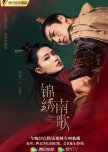
Amazing Acting | Brilliant Ending
This is the story of Liu Yikang, a real historical figure in the Liu Song Dynasty (420-479 AD). It was one of the most tumultuous eras of Chinese history. The aristocrats were wealthy and powerful, and the commoners were poor and suppressed. Parricides, filicides and fratricides were rampant. Historically Liu Yikang’s life ended tragically, killed by his own beloved and trusted brother The Emperor. The drama stops short of his tragic end (fortunately or unfortunately?).In this drama, a lot of the events and villains are fictionalized. Though Liu Yikang (played by Qin Hao) is a real figure historically, his beloved wife Shen Li Ge (played by Li Qin) and her family are fictional. Despite their more than 10 years age difference, Qin Hao and Li Qin have very courteous chemistry together as a couple as there are no passionate kisses nor hugs (just a peck on the lips or a lean on the shoulder). Nonetheless, such chemistry doesn’t reduce our enjoyment of the plot and story. There are quite a few nail-biting close calls and frustrating near misses scenes throughout the drama, keeping the viewers sitting at the edge of the couch and captivating our full attention.
The drama starts with a bang, introducing Shen Li Ge as a beautiful and talented assassin. Li Qin is so beautiful that she looks amazing in every costume and hairstyle that she wears. As a fearless badass, Li Qin is convincing without losing her elegance. Her acting is on the notch.
Qin Hao is a veteran actor. He has the charisma as a powerful ruler. At the beginning of the drama, many viewers complain that Qin Hao is too mature to play the role. But Liu Yikang was exactly as this age during the time of the story. As the story develops, Qin Hao melts together as the Liu Yikang character; he gives a very convincing performance.
Both Shen Li Ge and Liu Yikang are facing a faceless mastermind. Despite taking down various powerful aristocrats who conspire to hurt them and their family, the plot continues to the very end, eventually revealing the identity of the mastermind behind all the destruction and killings, and his motivation for doing so. Though going through a lot of hardship and heartaches, Shen Li Ge and Liu Yikang combat the villains hand in hand and continue to outwit them with their determination and conviction.
This drama is filled with tropes, such as evil sister, falling off cliff (but not dead), loss of memory, accidentally kisses etc. There are also multiple unnecessary deaths just to make the characters martyrs. Many of the logic is illogical with flaws and plot holes. By the end of the story, there are still multiple unexplained loose strings.
I believe the visual director has had a field day with the palace décor. This is the first time I have ever seen such European inspired décor of the palaces with giant statues and water fountains. The mother consort’s clothing even matches her walls and furniture which may be a bit on the wild side of the imagination.
The ending is very typical of Chinese dramas – open to interpretations. Overall, if you like slimy infallible villains who always seem to outsmart the good guys, you may find this an exciting watch. If you’re an emotional person and have a tendency to invest deeply into likable characters, you may be in for some heartaches. For me, this is quite a good watch mainly because of the two main characters, Shen Li Ge and Liu Yikang and the fine acting of the actors.
With my epiphany which came one day later after the final episode, I find the ending brilliant. This is a drama strongly recommended (despite the tropes).
Was this review helpful to you?
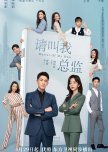
Funny, Emotional, Wholesome, Hearty, Mature Romance
Life is like driving a car - sometimes you step on the gas pedal, sometimes you brake; you stop and go. Master of My Own is such a story that most viewers can relate to: a working life that is filled with challenges, a boss we hate and office politics with back stabbing, denial and betrayal. One can even lose everything and has to start over again. This is a story that resonates with dreamers and entrepreneurs alike. It also imbues the message that if one were to persevere with one’s goal, one would eventually see it turn into reality.Lu Jiming (Lin Gengxin) is a venture capitalist and a mean boss. He is corky, arrogant and has a foul temper. Most of all, he has a poisonous tongue that strews insults at, basically everyone he meets, including his staff, his enemies and his father. In turn, he gets insulted back repeatedly but he has a bulletproof skin that such insults don’t get to him; he is so confident in himself that he shrugs these insults off. Despite he yells and insults his staff, they fear and love him, for he is a decent and caring person deep down. I love how this character is being written. The writer shows Lu Jiming’s egregious behavior with him re-giving a gift that he received from the same friend 5 years ago; none of his closest friends want to take his calls because he’s too mean, to list a couple of examples. And yet, this character grows over time, becomes more empathetic and less self-centered, and kinder with his words.
Lin Gengxin has a face that fits that tongue. He doesn’t look young nor pretty but he exudes that mature manly charisma that convinces anyone that he’s a very capable and successful man. I find Lin Gengxin very convincing here, either as a successful investor or as a down and out loser.
Ning Meng, or Lemon, (Tan Songyun) is a college graduate majoring in finance/investment. But she is recruited by Lu Jiming’s company as a stand-in secretary as all his previous secretaries have quitted for not being able to stand his nasty temper. In the hope of being transferred to the investment department at a later date, Ning Meng takes the job. Little does she know that she’s been treated like a worthless maid, taking care not only her office work, but also Lu Jiming's personal life at wee hours. Ning Meng endures and puts up her best front when facing Lu Jiming, only finds herself being stepped on, trashed, again and again. Up to here, many viewers cannot stand Lu Jiming anymore; many even drop the drama. If you’re one of these viewers, I urge you to press on.
Though very intelligent especially in observing the flow of things and managing human relationship, Ning Meng is inexperienced. As a viewer, I could see what Lu Jiming is trying to do for her: to toughen her up. Indeed in many eastern cultures, unlike in western cultures, people do not expect praises for job well done, but constantly receive criticisms, with the notion that this would make the recipients more humble and stronger.
Though as nasty a mouth as Lu Jiming’s and his mistreatment of Ning Meng, viewers can see he has something for her: his reliance on her and he feels very comfortable with her like a pair of old shoes, that's why he takes her for granted, thinking she would be there for him all the time; he is too proud to admit it, and he doesn't even realize it himself. Having said that, Lu Jiming does always come to her protection in the crux of the moment. Based on that, as much as I want to kick his ass, I understand where he comes from and forgive him.
Tan Songyun is a veteran actor. She portrays her character growth, as an inexperienced fresh graduate to later becoming the investment director, very well, real and convincing, and in the process, the lessons she learns and her character develops accordingly.
The whole cast is pretty good, in particular my favorite side character Yang Xiaoyang (Wang Lina). I find her cute and real. I particularly love her dynamics with Lu Jimin. I love her expression of resignation when she is assigned to replace Ning Meng as his secretary. She is so adorable. I also like the side couple who are Lu Jimin childhood friends.
My Verdict
I like this gorgeous drama. The relationship is mature, not the love-at-first-sight type. There are no blurry eyes but rather realistic love relationship based on trust and shared values. Every character has its flaws. The characters develop and become better and stronger. The plot is realistic without any outrageous twists and turns.
Though fictional, the drama shows the pains of entrepreneurships, investment risks, office life, failed family/couple relationships, sickness and death, and most of all, a capitulation whereby our main character loses everything: his love, his business, all his savings, all his investments, his father, and being deep in debt. This is something many viewers can empathize with as in real life, it can happen to anyone.
Many viewers find the romance too slow burning. I find it subtle and wholesome. In fact I find humor in every conversation. Sometimes it's so funny, ironic and oxymoronic. It is very comforting to watch a relationship that reads each other's mind and sticks together high and low. Though the main leads are not a couple from the beginning until the very last second of the drama, I find their romance and chemistry beautiful and sweet. For me, that’s a perfect long lasting relationship.
Have you ever worked very hard and in the end you still lose everything and face defeat? You lose confidence and become deflated. After losing everything, Lu Jiming learns that in life, success and failure are not the most important things; success can be just superficial, but whether one is contented, that is more important and it comes from within. And we need to learn how to get back up after fallen, that’s the message of the story.
Enjoyable watch. Recommended!
Was this review helpful to you?
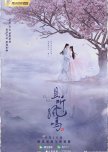
Confusing and Disappointing
I was initially attracted to this drama because of its director who had also directed The Untamed. It has quite similar cinematography for some scenes, and the styling of some actors is also similar. I was very excited and thought it’s going to be another great drama just like The Untamed. I was pretty disappointed with how it turns out to be.This is a rather confusing drama with lots of plot holes and flaws. There are many tropes. The editing is choppy and disjointed. I cannot even tell if the acting of the female lead is fine or bad because I’m not even sure if her acting is intended or simply just bad acting. Frequently the situations and the emotions of the actors are totally out of synchronization. The logic is inconsistent and befuddling at times, so are the inconsistency of the characters. The dialogues are simple and shallow. There’s hardly a plot, or rather the plot is so simplistic that the writing has made it confusing to try to give it some layers. It fails miserably. It begins to drag a lot half-way through the drama. I’ve almost given it up had I not wanted to know who Feng Wu (Yang Chao Yue) actually is.
I have to admit there are some really good scenes here with beautiful actors, in particular, Wang Hao Xuan. I love his styling and portrayal of the mischievous Yu Ming Ye, and his relationship with Jun Lin Yuan (Xu Kai Cheng). In fact, I find him to have more chemistry with Feng Wu than Jun Lin Yuan has with her. I also enjoy watching the second couple. And I really love the visual of Mu Jiu Chuan (Li Chuan) who is Feng Wu’s shifu, but unfortunately he doesn’t have many scenes. I also love the dynamics of the 3 childhood friends, and the funs they have together overthinking trivial matters, giving simplistic reasoning that leads to jumping into wrong conclusions. These are rather fun watch. The ending is not sad nor happy. It’s just it, and I've never found out who Feng Wu is and where she has come from.
Overall, I’m not at all impressed by this drama.
Was this review helpful to you?
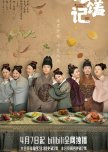
Humorous, Lovable Characters, Coherent Storyline
Delicacies Destiny is my third drama on culinary arts in a row. This drama is rather similar to Royal Feast which finished airing recently. Both dramas are set in the period of Ming Dynasty, hence similar costumes and decorum. But most of all, one of the supporting actors in the earlier drama is now the main lead (He Ruixian) in this drama. Though both dramas involve romance and cuisines, there is a marked difference in the characters and mood.Based on fictional characters, the storyline is rather straight forward. A talented chef (He Ruixian) gets herself recruited to the palace to cook for the picky Crown Prince (Wang Xingyue). Then the prince falls in love with her and wants her to be his crown prince consort. But she is given an ultimatum by the Emperor: if she wants to be the Crown Prince Consort, she has to give up her passion as a chef; or she can continue to be a chef but she has to stay away from the Crown Prince. Either decision tears her apart.
He Ruixian’s acting, demeanor and styling in this drama is almost exactly the same as she was in Royal Feast. But I like her character Ling Xiaoxiao here a lot better than the previous one. I have no complain with He Ruixian’s acting and find her quite convincing. Wang Xingyue’s great acting here as the Crown Prince Zhu Shoukui is commendable. At only 20, this young actor continues to surprise me with his fine acting. He has captured his character very well: the character’s happiness when he is in love, his disappointment when he doesn’t get his way, and his despair when he’s being rejected – every minute emotion is well acted without overacting.
My Verdict
This is a delightful drama with only 16 episodes. It starts out as a slapstick comedy. There are no villains, no complicated plot, no outrageous twists, no love triangles, no tiring romance. In fact, the romance is rather cute. Compared with Royal Feast, Delicacies Destiny’s costumes are not as exquisite and its cuisine arts not as elaborate, but its characters are a lot more lovable and the logic of the story is better. A lot of the jokes seem unintentional, making the story flow very naturally. It is unusual to see an Empress that allows her son to marry his cook as she (the Empress) places his (the son's) happiness above everything; she even allows him to abdicate himself as the Crown Prince so that he can pursue his love (rather unthinkable, but anyway …). There’s only one kissing scene towards the end which is quite well done with actual kissing.
Despite the easy and light watching, the last 2 episodes did draw some tears from me seeing the struggle of the characters. After the final episode 16, there is an epilogue which is an alternative ending. Make sure you don’t miss it.
There are times we need to make very hard choices in life. From the story, our FL character needs to choose between love or passion, likewise for our ML character who has to choose between love or duty. Either choice, the consequence is very different. This drama shows us the possibility of each choice, and ends with a note that, if we compromise slightly, maybe we can get the best out of all choices. How would you choose? Love, passion or duty?
Fun watch! Great for in-between releases of new episodes for other dramas.
Was this review helpful to you?
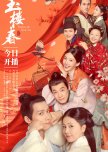
A Satire of the Ming Dynasty Society
Watching this drama from a satirical perspective of the society during the Ming Dynasty, when Confucianism was practiced at its utmost height, decorum and protocols were strict, harsh and repressive especially for the women, makes it a very enjoyable watch for me. Seemingly unlikely, we get a couple of very strong female characters in particular a know-it-all Mary Sue who always saves the day. All the characters and their relationships have realistically captured life in that orthodox and conservative society, and that can even be relevant in today’s world.This story takes a bold look into the Ming dynasty society, its orthodoxy and conservatism, its inequality, protocol, manners, expectations, and consequences, with the hidden criticisms that all these had led to the slow decline of the society and the ending of the dynasty.
Accordingly, the drama draws its inspirations from the great classical “Dream of the Red Chamber” with several of the characters deriving their names in a combination of words from the classic novel. The whole story revolves around the high status, wealthy and powerful Sun (pronounced Soon) family, narrated from the perspective of the youngest son, Sun Yulou (Wang Yizhe) who has a high powered father, a doting mother, three brothers and four sisters, each has a story to tell.
Like in the classical “Dream of the Red Chamber”, this story also hints at “truth becomes fiction when the fiction’s true; real becomes not-real where the unreal’s real” by the use of a puppet show in telling the story. Cleverly constructed, there are hints and cross-references to hidden (and obvious) meanings throughout. Truth and falsity, reality and illusion are constant displays.
Undoubtedly marriages by the order of the parents tend to be the most painful experiences for almost every couple even in a society where filial piety is held as the highest order of all. In the high society, statuses and face are always the forefront consideration of any marriages which are used to advance the careers of family members, usually at the expense of daughters, though some sons don’t fare too well either. The consequences are expected: extra marital affair, adultery, love triangle, elope, rebellion - all brilliantly captured in the story.
Sun Yulou rebels against his stern father and the social barriers of the time. He and Lin Shaochun (Bai Lu) pursue individual freedom, gender equality and to marry the partner of one’s choice. This couple has an initial sense of democracy, a rebellious spirit and courageous pursuit of love. Though well-read with traditional books of morals and ethics, Lin Shaochun toes the line from time to time. She convinces Sun Yulou to pass the Imperial exam so that he could become a government official and ask for her hand in marriage.
This is the first drama for Wang Yizhe as the main male lead. Many viewers don't feel he deserves such a role. For me, I would like to give him a chance without looking at him through tinted lenses. I feel his acting has brilliantly brought out the youthfulness of the character. He can look serious when he needs to, but in front of the family, especially his wife, he's just a big sunny boy that can be silly and Wang Yizhe delivers. Despite this being a main lead, it feels more like a supporting role because of how the character is being written, shot and edited.
Many viewers feel the main couple don't have the chemistry. Though they are both of the same age at 18, Lin Shaochun is more mature compared with Sun Yulou, and he always lets her have the final say. With that, it does feel that Sun Yulou a little brother who depends heavily on Lin Shaochun the big sister. For me, the lacking perhaps lies more on Bai Lu as she seems to be less enthusiastic and doesn’t share the same adoration and affection towards her supposedly husband as he has on her.
My Verdict
Despite some flaws here and there, this is a very enjoyable story with a series of side stories which are very well developed and in fact more interesting than the lead couple’s story. It consists a blend of realism and romance, psychological motivation and fate, and daily life with a grand plot hidden and span across multi side storyline. It can be hilarious at times, yet, bitter and resigned when it comes to the fate of some characters. The first episode is comedic and funny. I thought it's going to be light and laughable, but by episode 8, it becomes heavy and bitter.
This is a satire about misogyny, hypocrisy, class system, conservatism, inequality, all told in a very humorous way. Some parts are so funny that I laugh so hard.
The final narrative about how people make choices that determine their eventual endings: take kindness one ends well, take hatred one loses everything, seems to be a just decoy for the deeper meaning of the overall story – a silent criticism of the paternalistic system of the country.
Great story telling. Don’t miss it!
BRAVO!
Was this review helpful to you?


