

 2
2 9
9 1
1 1
1


Lying or Not Revealing the Truth
Is there a difference between lying and not revealing the truth? To me, there is. Do articulation and lying mean the same thing? To me, they don’t. However, in this drama, it takes a broad stroke to cover the meaning of lying: not revealing the truth is lying, and articulation is lying. I do not agree with the writer and find this as flaw which permeates throughout the story. Having said that, I have still enjoyed this drama because of the male lead character’s frankness, and the female lead character’s diplomatic approaches.One of the many flaws we have in us is we love flattery languages. We often feel hurt when we hear the truth about ourselves. Fang Zhi You (Xin Yun Lai) is a very frank and direct person. He doesn’t like to beat around the bush or use flowery language to flatter; he just says things as they are. To many, he’s crude. Though he doesn’t have a face that melts hearts immediately, Xin Yun Lai’s acting is to the point as a dull, unflattering Fang Zhi You. He maintains a serious looking face with few facial expressions. His ‘no cheating’ quality persuades everyone around him, including Xu Yi Ren (Liang Jie), to trust and love him. Deep inside, he is a sweet and kind man.
Xu Yi Ren on the other hand is very diplomatic. She can defuse a tensed situation with her quick wit and a few kind and diplomatic words. She helps others to save face and step down without escalating matters further. I feel she has been wrongly labelled as a girl who likes to lie. To me, such qualities should not be considered as dishonesty but a very precious diplomatic skill. As a new actor, Liang Jie has played this role very well.
Both Fang Zhi You and Xu Yi Ren have qualities that complement and supplement each other, and enable them to start their love relationship from the very beginning through the end of the drama. Their relationship has never flinched. She is his pillar supporting him all the time without conditions, and he’s always there protecting her. They trust and are devoted to each other.
This is a very easy drama to watch, not too many conflicts to resolve, and a very cute and intelligent little sister to love. There are multiple love triangles, a second couple and an evil sister. The storyline is a bit cliche and some scenes are tropey as expected in Chinese dramas. Not outstanding but sweet and enough chemistry to make viewers feel the love and loved.
Was this review helpful to you?
Honor & Dignity
Ip Man 4 is the fourth and latest sequel (most likely also the last) of the Ip Man movies by Donnie Yen.All Donnie Yen’s Ip Man movies take the same format – Ip Man would be challenged to prove his Yong Chun Quan (or Wing Chun Kuen in Cantonese) is just as good as the other Chinese wushu (martial arts). After he has proven himself, comes a foreign power or non-Chinese martial art challenger, challenging the Chinese wushu. All various sects would then unite and try to ward off the challenger. However, during the unjust process, all Chinese wushu falters; Ip Man is the only one left standing and he stands up for all.
In the first Ip Man movie we see Ip Man fighting a Japanese Colonist Karate expert; in Ip Man 2, Ip Man fights against a British boxer; in Ip Man 3, again he fights a boxer, this time the American Mike Tyson; and in the latest Ip Man 4, after proving himself in the San Francisco China Town with the Tai Chi Grandmaster, he stands up to the American bullies and fights a US military Karate expert. And of course Ip Man wins in all the challenges.
Coincidentally, Ip Man 4 was released during the pandemic crisis. Many countries, especially the western nations, have started to blame China for the crisis and demanded hefty reparation costs. As the whole pandemic begins to unfold, the accusation becomes obvious - it seems that most western nations feel threatened by China and the pandemic crisis serves as a perfect excuse to banish China in order to stymie its amazing growth, albeit temporarily. Unwittingly, the story in Ip Man 4 becomes a heroic story standing up against the bullies, and is enjoyed by many.
I fell in love with Donnie Yen’s first Ip Man movie. Donnie Yen has a stoic and calm charisma and portraying Ip Man as a Yong Chun (Wing Chun) Grandmaster, he brings Chinese wushu to its ultimate pinnacle. Donnie Yen is believable, giving everyone around him a sense of trust and security. One can really depend on Donnie Yen’s Ip Man to protect one’s life. All Donnie Yen's fighting actions and moves are just breath-taking, authentic and amazing. With the calm and somber look on his face when under threats, Donnie Yen's portrayal of Ip Man is confident and composed with honor and dignity - an unmistakably proud Chinese spirit. One doesn’t grow tired of watching him. In his traditional Chinese Cheongsam (long robe), Donnie Yen has the best authentic look of a Chinaman whom I have come to love watching.
As Ip Man 4 has become the epitome of East versus West, Chinese versus Whites, The Bullied versus The Bullies, it silently depicts the current standoff positions of China and America. In the movie, it has a short reprise of Bruce Lee when he was still Ip Man's student living in California (Bruce Lee was an American).
Overall, Donnie Yen is indisputably one of the best Chinese wushu master actors. His fighting scenes are authentic and believable. He commands an air of honor, trust and compassion. Watching him fight is perhaps the most exhilarating experience a viewer can enjoy from the screen. For myself, I still consider the first Donnie Yen's Ip Man movie to be the best of all the Ip Man stories.
Was this review helpful to you?
Wonderful Acting by Sun Qian
This is a wonderful little drama out of my expectations. I didn't quite like it when I first started watching with episode 1 because I found it kind of cartoonish. But very quickly, the story moves away from the comical acts and becomes more serious without losing the humors. I was glued to the screen and completed the whole drama as it's aired.The storyline is simple and straightforward with not many twists. Even the twists are easy to follow and the results are satisfactory. Although there are some kind of triangular love affairs, these do not impede the main relationship and doesn't leave a bad taste in the viewers' mouth.
Though the setting is outside of an imperial royal palace, it is very similar but at a very small scale; I would liken it to be an aristocratic manor house with soldiers and guards. To become an imperial doctor, Tian Qi (played by Sun Qian) has to disguise as a man. In most Chinese historical dramas when a woman disguises as a man, I'd roll my eyes for how gullible the public is for not recognizing such obvious womanly features in the disguise. Not in Tian Qi's case. I think Sun Qian has the best disguise ever done in this genre. Her chest is flattened, her demeanor is rougher than a girl during the period. With her chubby face and virtually no make-up (at least not obvious), Tian Qi can easily pass as a young boy with no suspicion. Indeed I want to commend how well Sun Qian has played this role. She's hilarious and authentic. I love watching her whenever she comes on screen. I can't say the same when it comes to Ji Heng (played by Huang Jun Jie). The character Ji Heng is supposed to be a ruthless, cold, authoritative figure feared by all; he's the ultimate superior of his region. Unfortunately Huang Jun Jie has not brought out that personality, or he tries too hard to do so by giving the character a stiff, constipated look all the time. What's worse is when Ji Heng meets the love of his life, all of a sudden, he becomes lovey dovey which is totally out of character. Though very good looking, I feel Huang Jun Jie has not performed as well as the other actors in this series. It is such a pity because this could have had a much higher rating had the character being done correctly.
Overall, I still feel this drama worth being watched for its entertainment value, especially performances by Sun Qian.
Was this review helpful to you?
Real Wuxia Story Like the Old Days
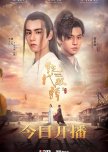
I’m a wuxia novel fan, and Gu Long was one of my earlier favorite authors during my growing up years. However, I’ve not read this particular novel, Juedai Shuangjiao (Legendary Twins) which is supposed to be a great novel that has been adapted in this drama. When I stumbled across this drama, I was ecstatic because I recognized Hu Yitian and has wanted to watch his new dramas.For the first few episodes, I was disappointed with the quality of the drama. I was not only disappointed with the acting and the overall plot, I found it hard to understand the logic of the characters. Everyone seemed stupid and gullible. The heroes could easily give up their own lives for some very trivial and unreal reasons. They could also fall into the tricks of the same villains over and over again. Everything was noisy with obnoxious and over exaggerated characters. I was stuck at episode 8 and found myself unable to move on.
I couldn’t understand the high rating on MDL; I thought I must be missing something. So I returned to the series and continued. As I began watching it with a mindset of simple logic, and seeing the impossibilities as possibilities, I began to follow the mood and flow of the story, and in fact rather enjoyed it till the end.
The story is a typical story from Gu Long’s novel - a whole maze of characters that can be confusing and hard to remember, the heroes always get the shorter ends whereas the villains triumph (initially), all the pretty girls tend to fall in love at first sight with the protagonist. Admittedly, the drama is tropey and the consequences are as expected. Nonetheless, embracing its shortcomings, I found the drama rather entertaining after I got passed the first 10 episodes.
This is a story of two twin brothers separated at birth, their parents murdered. One twin is adopted by the killers and the other is raised by a group of villains. 18 years later, the brothers meet and are told to kill each other for no reasons provided. The story revolves around the two brothers who go through all the adventures together and separately, and eventually learn about their own story and meet the loves of their lives.
The twins have totally opposite characteristics: one is dull and righteous (played by Hu Yitian), whereas the other street smart, jovial, bombastic and mischievous (played by Chen Zhi Yuan). It is hard to assess Hu Yitian’s acting because the character he plays is quiet with little emotion (he’s been brought up with not much affection). On the other hand, I really enjoy Chen Zhi Yuan’s acting, which is cute, funny and natural. Chen Zhi Yuan has a young boyish face which really helps in his portrayal of Xiao Yu’er (little fish) that brings out his playfulness.
To my surprise, the official sound tracks are very nice. They are composed with an air of authentic Chinese wuxia tunes; the music is soothing and the lyrics are moving.
Overall, I can’t say I love this drama. But to be fair, it is an interesting drama that deals deep into the relationship of a pair of separated brothers, and in the end the righteous wins over the evil.
If you’re a wuxia or Gu Long fan, you may thoroughly enjoy this drama. If you’re not so familiar with the author and his work, you may find it overwhelming and unrealistic. All in all, this is not as bad as I have originally thought. In fact, I have enjoyed the sword fighting and qinggong (wire fu) scenes pretty well.
Was this review helpful to you?
Great Characters, Fine Acting, Wonderful Story
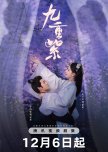
When I started watching Blossom, I had no prior attachment to any of the actors. I picked it as a filler between other dramas I was following, but to my surprise, it captivated me right from the beginning. By the fourth episode, I was completely engrossed, and I rated it a solid 10/10. The compelling storyline and standout characters, particularly Song Mo, made me seriously consider naming it my costume drama of 2024.What I Loved
The plot revolves around the concept of a second chance at life, taking different actions to alter past events, and ultimately changing the fates of key characters. While the characters’ previous lives ended in tragedy, Dou Zhao (played by Meng Zi Yi) uses hindsight to navigate her new life. Her strategic decisions reshape not only her fate but also the lives of those she cares about, even though she cannot reverse her mother’s tragic circumstances.
The two main characters, Dou Zhao and Song Mo, were exceptionally engaging, but the supporting cast also stood out. Characters like the grandmother, Ji Yong, Song Mo’s loyal sidekicks, and even the Crown Prince’s wife (who makes a brief yet memorable appearance at the end) added richness to the story.
Li Yun Rui’s portrayal of Song Mo deserves special mention. While this was my first time watching him in a leading role, his acting had already impressed me in Love Like the Galaxy, particularly the unforgettable scene where he reacts with shock as Niao Niao punches herself. His nuanced performance in Blossom further solidified his fine acting skills.
The drama is filled with details and subtle humor that make it even more enjoyable. One of my favorite scenes is when Song Mo and Ji Yong end up together in a bridal carriage. Another standout moment is when the Crown Prince’s wife scolds her husband with sharp wit. These instances reflect the charm and depth of the storytelling.
What Could Be Improved
As much as I adore Blossom, I found the second half of the drama overly smooth for the main couple, Dou Zhao and Song Mo. Once they marry, the narrative becomes more of a romance, with fewer twists and challenges. The pace slows considerably, and the lack of angst makes it feel predictable at times. While it’s heartwarming to watch Dou Zhao thrive in business and Song Mo succeed politically despite his enemies’ schemes, the absence of significant tension left the latter half feeling less dynamic.
A Word of Caution
If you’re planning to watch Blossom, I’d recommend not pairing it with Story of Kunning Palace. That was a mistake I made, as the two dramas share several similarities. For instance, both male leads are estranged from their fathers, while the female leads have troubled relationships with their mothers. Both female leads are also business-savvy, and their respective male leads share close bonds with maternal uncles who serve as top generals. Switching between these dramas occasionally caused confusion for me, so it’s best to watch them separately.
Final Thoughts
Blossom is an easy-to-follow drama with a satisfying storyline and minimal angst. The main couple gets together midway through the series, and their journey afterward is relatively smooth. Dou Zhao achieves financial success, and Song Mo triumphs politically, making this an ideal pick for romance enthusiasts.
The title "Blossom" feels somewhat uninspired compared to the Chinese title, which references a hardy wildflower capable of thriving in any environment—much like Dou Zhao herself, who grows resiliently despite her lack of a sheltered upbringing.
Overall, Blossom is a delightful watch, particularly for fans of romance and character-driven storytelling. While it may not be perfect, its charm and heart more than make up for its flaws.
Was this review helpful to you?
Talk and More Talk
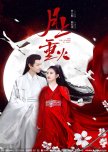
When this drama was released, I had such high hope because I had wanted to watch Luo Yunxi as the first male lead in a drama. The initial scenes were beautiful with Luo Yunxi portraying Shangguan Tuo in white robes with a fan. However, 10 episodes in, I was greatly disappointed. The pace of the drama was snail-pace slow with a lot of to and forth dialogues that had been repeated umpteen times. The plot was shallow if at all developed, and there were hardly any worthwhile actions despite its wuxia tag. For me, it’s a great let down.Accordingly, this drama was adapted from a novel, but readers have claimed that the adaptation has almost totally changed the story and definitely changed many of its characters. Half way through the drama, I realized there wasn’t much material to make up the 48 episodes, so the production team used plenty of slow dialogues of ‘repeat and reflect’ to fill up the episodes. The whole story felt like a broken record, going round and round and round, with talks and more talks, no ends coming. The director tried to tell the viewers that Shangguan Tuo (Luo Yunxi) and Chong Xue Zhi (Chen Yu Qi) were the One True Pair and how much they loved each other. Unfortunately, he overdid it by running it through almost 40 episodes just for this confirmation. He (the director) also tried to play with our emotions by capturing our tears (there's a ton of crying). For some reasons, I just couldn’t empathize with the characters, probably because how badly they were developed. I'm sure the gist of the story was beautiful, and I loved the 2 main leads. It's just the composition of the story, among other things, that was not right for me.
Painfully, I stuck up with this drama till the end because I had felt the two main characters, being powerful with their respective cultivation, had great potential in bringing out some real fireworks in combating their adversary hand-in-hand. To my disappointment, my coveted epic scene had never realized and the whole story eventually fizzled into oblivion.
My final verdict – If you’re a fan of Luo Yunxi or Chen Yuqi (Yukee Chen) or Zhou Ting Wei, you may want to check this out. Luo Yunxi, despite his extremely thin body and white face, is an amazing watch from afar, with a fan in hand, hair flying and robes floating. However, if you’re into wuxia and want some action, you’d probably be greatly disappointed because the fighting is pathetic to say the least, as one viewer commented, “No one knows how to fight.” It's a pity that there were so many details in the dialogues (talks and more talks) but they skimmed through the plot. Though it (the plot) thickened slightly for the final 10 episodes, the execution of it was rudimentary and childish.
Was this review helpful to you?
Good Story, High Quality Production
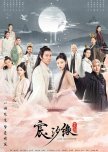
When I first came across this drama, I was ecstatic - another xianxia (historical fantasy) story which is one of my favorite genres. But when I checked out the cast, my heart sank. I was disappointed with the choice of the main male and female leads. Over the months, I’ve accustomed to young, beautiful male and female actors. I couldn’t fathom why the directors had selected these two, Chang Chen is in his 40s and NiNi 30s. A kind viewer explained the rationale of the selection to me. It finally dawned on me that such choices are intentional and this drama is going to be great. She is right.Jiu Chen, the God of War, is supposedly 190,000 years old. Had a younger actor been chosen, it may not have played out so well. Chang Chen perfectly fits into the role of Jiu Chen as an ancient god with his stern and serious look; he is emotionless. Compared with the God of War, Ling Xi is a very young girl at 50,000 years old. Initially, I was not very convinced to see NiNi playing that role, despite that she is an amazing actress. However, I came to realize that she is the perfect choice as she goes so well with Chang Chen visually. Had a younger actress been chosen for this role, I think it would have been a mis-match.
As the God of War, Jiu Chen is supposedly not to have any emotions nor to fall in love with anyone. And yet he does. His clumsiness in handling a relationship is most hilarious to say the least. Ling Xi, warm and kind, melts away his harden cold heart. The relationship between the pair is open and loving. As both characters grow over time, the actors fit perfectly into their roles with their maturity and seriousness. I’m totally convinced with the directors’ brilliant choices.
There are a few very lovable side couples. My favorite pair is Si Ming with 13 (her real name). Their relationship is cute, funny and spontaneous. I also love the Yun Feng character, Jiu Chen’s little brother, who is care-free and does not hide his passion for the girl he loves. For her, he would do anything, landing himself in trouble and embarrassed.
I don’t usually fall in love with an antagonist as I do in this drama. The Jing Xiu character is very complex. He is feared but also loved by many, even Ling Xi also falls for him for his apparent kindness. Despite being evil, he is at the same time open about his mis-deeds and ruthlessness. The make-up and costume for this character are one of the most impressive, and Li Yuan is just amazing with his very unique good look.
Overall, this drama has a vibe similar to that of Eternal Love – Ten Miles of Peach Blossoms. Many viewers are confused by this. Some think this is a prequel while others think it is a sequel. In fact, both dramas have nothing to do with each other, except for the similarities of the theme, the background settings among a few other things. Both dramas talk about the heavenly realm with gods and grand palaces, the animal/bird realm, the peach blossoms Shangri-la, the mortal realm, to name a few. Needless to say, both dramas were also directed by the same people.
The OSTs are beautiful and memorable as in most Chinese historical dramas. The editing, sound and visual effects, costumes, CGI are all high quality production, with a perfect pacing and good story telling. Although it has not given me the same deep emotional impression as the Ten Miles of Peach Blossoms has, this is still a very fine production.
I strongly recommend it.
Was this review helpful to you?
Lovely Couple but Poor Editing
This is supposedly a very interesting and light-hearted drama. The plot is intriguing and the cast is fabulous, especially the two female leads Bai Lu and Xiao Yan. The romance between the major characters, Lu Zhao Yao and Li Chen Lan is simply adorable and sweet. I love the main theme song so much – the verses are meaningful and the tune is beautiful. But that’s all the positives I can say about this drama.Inconsistencies and holes are everywhere. There were “dead” and “undead” people. The cutting and editing are particularly bad; it’s simply confusing. There are various so-called versions of the drama, but in essence, the contents of each episode are the same, except, perhaps one version has a prologue and the other has a preview at the ending. Having said that, episodes 19 and 21, followed by the last 4 episodes, are utterly confusing unless one finds the better cut version.
The initial pace and flow were not great but acceptable. It can be draggy at times. People talk super slowly, walk super slowly. All their motion is super slow. I feel I age 10 years after watching this drama. But the final few episodes were a torture, with a lot of time wasted on people looking at each other blankly. I found myself holding my breath, trying to endure till the end without screaming and pulling out my hair.
I initially enjoyed watching this drama so much because it was a panacea for me after watching the heart-wrenching “Goodbye My Princess” – a drama airing at the same time. This drama (The Legends) provided the little relief I needed as it was funny with a straight face and the characters are adorable.
I particularly enjoyed watching Xiao Yan playing 2 roles - one as a timid Qin Zhi Yan and the other as the badass Lu Zhao Yao; she portrayed the characters so well, switching in and out. I also love the romance between Lu Zhao Yao and Li Chen Lan. I love the feeling of having a man, standing right next to or behind me, quietly protecting me and doting on me all the time. He is powerful and yet not overwhelming. He is a lion facing his enemy, but only a small sweet kitty when he’s with me. With one thrust of his hand, he is able to send one into oblivion; or he can arrive at his destination in a whiff. I particularly love the line he told Lu Zhao Yao, “You fight, I’m your sword. You retreat, I’m your shield.” This line truly melts my heart.
I also love the character of a badass female, controlling the world, feared by all and yet admired and loved by all her followers. Bai Lu has played this character convincingly. She is beautiful and delightful.
Xu Kai has a very good-looking baby face. Having a timid and quiet persona, he portrays the Li Chen Lan’s character effortlessly and effectively. And yet, he is powerful and lethal at a click of the fingers. One always feels safe with him around.
The underlying theme for this drama is, good can be bad and bad can be good. What looks good on the surface can be rotten inside, and what’s bad about a person, can be a kind and upstanding one. Hence in this drama, you will see the supposedly good people touting they are doing the righteous things, are in fact the despicable characters, whereas the labelled son of demon, is in fact the most upstanding kind-hearted person of all.
Was this review helpful to you?
Ultra Slow Burn, Amazing Chemistry
This is going to be my shortest review ever! Love Like the Galaxy is one of the better Chinese dramas released so far this year. It is serious and yet so comedic. The acting is spot on though Wu Lei may look a bit stiff when he walks as he tries to look grandiose, but I can overlook this flaw because I love his character so much and Wu Lei looks great. His subtle emotions are convincingly done as he's supposed to be a stoic person. Zhao Lusi is simply amazing here and her character is so lovable and relatable. Overall, a drama well-done and deserves a TWO THUMBS UP!BRAVO!
Was this review helpful to you?
The Most Romantic Romance
Love for You is a beautiful story about two broken souls healing each other amidst harsh living conditions. This show offers a genuine, grounded portrayal of struggling youth, centering on mutual survival and a "forbidden" love between two teenagers from deeply dysfunctional homes. The story kicks off in 1997 and spans over a decade to the timeline's "present day" of 2011. We follow Chen Yi and Miao Jing, two teens from impoverished, unstable families. Through a twist of fate, their parents end up together. They become step-siblings (though they share no blood relation and their parents were never officially married), forcing them to live under the same roof and navigate a complicated new dynamic. Because their parents are largely absent, neglectful, or just incapable of providing a stable environment, Chen Yi and Miao Jing are essentially forced to raise themselves.The Characters
The Chinese title of the drama perfectly captures the two leads. Chen Yi is the "Wild Dog" (the first two characters of the title). To survive in their rough environment, he becomes a rebellious, street-smart teenager. He skips school, gets into fights, and uses a tough, intimidating exterior to shield Miao Jing from the ugliness of the world. Initially, he seems hostile and defensive due to his traumatic upbringing. However, the writing masterfully peels back his layers to reveal a deeply kind, vulnerable boy using his toughness merely as a shield. I haven’t finished reading the original novel, but I love the drama’s Chen Yi so much more! In the book, he can come off as vulgar and toxic, but the scriptwriters did a phenomenal job rewriting him for the screen. This version of Chen Yi just makes you want to love him and root for him.
Miao Jing is the "Stubborn Bone" (the last two characters of the title). She is the quiet, resilient anchor of the duo. While Chen Yi fights their physical battles, she fights the internal ones. She focuses on her studies, keeps them grounded, and refuses to let their bleak circumstances destroy her hope. Though gentle on the surface, she is incredibly unyielding on the inside. After facing abandonment by her mother, she actively seeks inner stability and fiercely protects her bond with Chen Yi, making her an active agent in their mutual redemption rather than a passive victim. Together, they become each other's only true family.
The Acting and Chemistry
Song Weilong’s portrayal of Chen Yi is brilliant. He perfectly captures the character's "brokenness" and emotional restraint. His micro-expressions beautifully highlight the contrast between his outward toughness and his deep, quiet tenderness toward Miao Jing. In the novel, his eyes are described as "fierce and bright," but Song Weilong truly has eyes that speak a thousand words and a face that instantly makes you feel for him. Plus, because he has a naturally slender build, his flashback scenes as a teenager are incredibly believable.
Zhang Jingyi is equally fantastic as Miao Jing. She conveys quiet strength and resilience in the most difficult circumstances, but she also perfectly nails the moments where she turns into a demanding, cute little girl who makes Chen Yi instantly melt. Zhang Jingyi has a naturally quiet, girly look, making her casting as Miao Jing absolutely spot-on, especially in her teenage years.
Naturally, their on-screen chemistry is amazing. It has high emotional intensity but is balanced with unlimited tenderness. I never get bored of their scenes together—whether they are snuggling for warmth or just giving each other strength. Their ability to communicate deep, unspoken devotion through mere glances makes this a deeply fulfilling watch for romance fans. I have to give massive credit to the production team for casting these two; they fit the roles so perfectly it feels like the author had them in mind while writing!
Production, Setting, and Dialogues
The dialogues are incredibly cute, especially the banter between Miao Jing and Chen Yi, and between Chen Yi and his buddies. The occasional background sound effects added to their hilarious put-downs had me laughing out loud.
The production team also deserves praise for capturing the head-spinning speed of China's economic development across the 1997–2011 timeline. To capture the era's authenticity, they used flip phones and bulky CRT desktop TVs. Even in the 2011 scenes, the actors are still using period-accurate mobile phones. The setting feels incredibly authentic to where a large percentage of the population lives: dilapidated buildings and close-knit neighborhoods where everyone knows everyone's business. It also nicely touches upon the era when the government began cracking down on corruption and handing out stiff punishments for crimes.
However, I did spot one factual hiccup! The climax of the story revolves around the illegal export of germanium (a banned rare earth). Banning the export of germanium is actually a very recent real-world event and didn't happen in 2011. It’s a minor lapse in factual information, but it didn't ruin the thrill of the climax for me.
Soundtracks
This drama produces some of the most unforgettable songs. My absolute favorite is "Roaming" (Man You) by Huang Zihongfan; it plays during Chen Yi and Miao Jing's private moments and perfectly captures their wandering through hardships while highlighting that their mutual reliance is their ultimate proof of connection.
Final Thoughts
I absolutely loved their journey. It’s so rewarding to watch Chen Yi’s character arc: from initially hating Miao Jing for moving into his home and sharing (occupying) his room, to growing fiercely protective of her, doting on her, and listening to all her demands. His love for her is limitless. The domestic moments are the best—he nudges her to study hard, cooks for her to ensure she gets the right nutrients, and even gently dries her hair. He nurtures her like a prized plant, becoming the perfect "big brother" (and eventually, partner) that every little sister could want.
Are there a few plot holes here and there? Sure. For example, the villain suddenly deciding to personally murder Chen Yi at the end didn't make total logical sense. But honestly? These plot holes are not important anymore. The focus is on the journey of Chen Yi and Miao Jing, their unlimited love for each other; it's about family; it's about home. When they are together, they have a family and home.
Overall, this is a highly enjoyable, deeply moving, and very "romantic" romance. If you want a show with great acting, amazing chemistry, and a lot of heart, Love for You is definitely worth your time!
Was this review helpful to you?
Most Frustrating and Infuriating Love Triangle
The storyline of massacring concubines when an emperor dies, the absolute power of the eunuchs, the heinous schemes of the various factions in the palace power struggle for the throne, and most of all, a forbidden love that the lovers go underground and the yearning look for each other from afar – all these, while cruel, are intriguing and make a great tragic and somber drama. The trailer looked so good and this was what I had expected. Instead, I was caught off-guard by what I saw -- a slapstick comedy, especially at the beginning.The opening scene is a disaster. I was utterly confused and flabbergasted - is it supposed to be a serious and heart-wrenching drama with pains and deaths, or is it a comedy where deaths are being treated as jokes? Some viewers said this is meant to be a dark comedy. I was not alone; many other viewers were aghast.
Many viewers have come to watch Unchained Love for Wang Hedi after his bombshell acting in Love Between Angel and Devil, and this is exactly what its marketing team is counting on – an exploitation of his fame after his last aired drama. As much as I love Wang Hedi's acting in the previous drama, it doesn't mean I need to blindly extol him regardless of the story telling, actor selection and many other aspects of this drama. My review here is going to be blunt and unforgiving which may not augur well with many fans.
Story: Is there a future for a eunuch and an emperor's woman to share an illicit love, and to elope to live a happily-ever-after life? Xiao Duo (Wang Hedi) and Bu Yinlou (Chen Yuqi) think there is. However, there are many treacherous obstacles they must cross, and heartaches to bear before they can finally find safety. If caught, both are doomed, and will die of horrid deaths. The sense of danger spurs the story on.
The first half of the drama is chaotic, in its writing, editing, and acting, with a supposedly horrendous hanging scene made into a slapstick comedy. As the drama progresses, the whole story becomes a rom-com with the couple going about their romantic activities, while all the other plots become insignificant side stories. Editing is terrible, making an already incoherent script even more confusing and the relationship unconvincing. The actual plot picks up at around episode 23 when the actions thicken and danger looms, and the whole story becomes more captivating.
Acting: Many viewers have given high rating here because of Wang Hedi, regardless of whether the drama deserves it. Others find Chen Yuqi's acting lackluster; most complain about her lack of facial expressions and her unnatural wide-eyed stares. For me, I only have issues with her acting in the beginning. As she gets more into her role, she seems to have improved. However, her expressions and actions don’t seem to synchronize with the situations of the scenes from time to time. The Bu Yinlou character has two personalities: she is very smart, but she acts silly in front of people to fool them. For this, Chen Yuqi appears to capture the essence of the character albeit inconsistently, but she lacks the charisma that makes this character lovable. As for Wang Hedi, his acting is convincing, and his styling is cool. However, how the camera captures his face at times has given him a rather unflattering impression.
Romance: The romance is not a love at first sight, but its lack of emotional development in the initial episodes, probably due to scene deletion, makes the rocket-speed romantic relationship feel weird and uncalled for. Despite their later treacherous encounters, their romance doesn’t capture my heart.
My Verdict
Disappointing, unnatural acting, poor writing, flabbergasted storytelling, dog blood.
Was this review helpful to you?
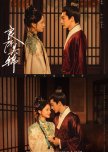
Great ML Character & Acting by Ci Sha
If you’ve been scrolling through Douban, Weibo, or drama forums lately, you’ve probably noticed this show is wildly polarizing. It’s not a hard watch, but it’s definitely not a passive one either. In this review, I'm not going to critque the story nor the screen writing. Though there could be flaws here and there, for me, this is a very enjoyable drama and a great production. I'm however going to talk about what viewers are saying, especially about the leads.First, the vibe. This isn’t your typical historical drama that drops you into palace coups or whirlwind love triangles. It’s a slow-burn household drama. The first 8 to 10 episodes are heavy on etiquette, family ledgers, and long courtyard meetings. A lot of people bounced off it early, calling it “too dense” or “watching paint dry.” But the folks who stuck around usually come back saying that pacing was necessary. Once the family dynamics click into place, the tension actually simmers really well. The production design is genuinely lovely—muted tones, historically grounded costumes, no excessive digital gloss. It feels grounded, not glossy.
Now, Ren Min as Gu Jinchao. Her performance is a mixed bag depending on who you ask. On the positive side, a lot of viewers genuinely appreciate the emotional restraint she brings to Jinchao. You can see her working to dial back the heavier, more melodramatic tendencies from her past roles, and she really shines in those quiet confrontations with family antagonists. The arc from a somewhat naive bride to a sharp, strategic household manager feels earned, and her chemistry with the older male lead has a lot of fans swooning over the “quiet understanding” vibe.
But here’s the catch: the casting mismatch is the elephant in the room. The novel paints Jinchao as this breathtaking, almost ethereal beauty, and Ren Min’s screen presence just doesn’t align with that for a huge chunk of the audience. It’s not about her looks—it’s about the fit. Add to that the fact that the drama actually trims down her strategic brilliance to lean heavier into romance, and some novel readers feel she gets flattened into a standard idol-drama heroine. There’s also a fair amount of feedback that her facial expressions can occasionally read a bit too large for a show that otherwise thrives on subtlety.
Then we have Ci Sha as Chen Yanyun (Third Master Chen). His acting is the show’s anchor. He’s got this incredible physical stillness—the way he holds himself, his gaze, even how he handles a cup of tea or draws a bow. He really sells the “stoic official with a hidden soft core” trope without overdoing it. The horseback archery sequence alone got a ton of love for how grounded it felt. Viewers who like mature, restrained male leads are eating it up (yeah, me).
But again, the internet has notes. The biggest complaint is the makeup and heavy filtering. A lot of people say it smooths out his face to the point where his expressions look stiff or artificially aged, which muddles the romantic dynamic with Ren Min. Early on, his performance can feel a bit emotionally flat, though most agree it warms up as the story progresses. And yeah, the visual age gap between him and Ren Min is genuinely divisive. Some find it tender and refreshingly different from the usual youthful pairings. Others? They’re just sitting there thinking it reads more like a guardian-ward dynamic, and it throws off the romantic tension for them.
The romance & adaptation choices. If you’re here for slow-burn, marriage-of-convenience-to-mutual-respect storytelling, this delivers. It’s about duty, quiet observation, and growing into love rather than grand declarations. But if you want constant romantic friction or fast-paced plot twists, you’ll probably feel shortchanged. A lot of viewers also pointed out that the drama cut several of the novel’s richer subplots—merchant networks, female education initiatives, later generational shifts—to fit the episode count. It’s standard streaming-era trimming, but it does shift the weight toward romance and personal drama over the original’s socio-economic commentary.
So, who’s it for? Honestly, it rewards patience. If you like historically grounded family dynamics, female leads who navigate power through intelligence and emotional restraint, and performances that prioritize subtlety over spectacle, you’ll probably end up loving it (like me). Ci Sha’s grounded presence and Ren Min’s improved emotional range are worth sticking around for, even if the styling and casting don’t perfectly match your mental image from the book. But if you’re looking for fast pacing, idealized historical beauty standards, or a romance that crackles from episode one, you might want to skip it.
The Douban score hovering around a 5.7 really says it all: it’s flawed, it’s polarizing, but it’s got a quiet depth that keeps a lot of people coming back. It’s not trying to be everyone’s favorite, and honestly, it works better when you let it be exactly what it is—a slow, meticulous look at how women navigate power in a rigid world.
If you’re thinking about starting it, my advice: push through the first few episodes, mute the filter complaints in your head, and just let the household rhythm pull you in. Drop me a line once you’ve watched a few—I’d love to hear where you land on it.
Was this review helpful to you?
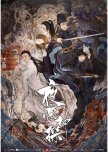
Hair Pulling Script
Though not overly exciting, I have sort of enjoyed the first half of the story (season 1) because there is nothing out there to watch. I thought the second half would more or less be the same, continue from the first half. To my disappointment, the writing gets really bad and childish, though the storyline continues. Throughout, I have been suppressing myself from hurling pillows at my computer. And I’m glad it’s over.From season 1, we have established that Jun Wujiu (Li Xizi) is a genius investigator, and he works seamlessly with Cheng Yang (Chen Ziyou), who wears many hats (he is a police officer cum prosecutor cum magistrate - what a conflict of interest here), in solving criminal cases after cases. What seemingly unrelated, in fact all these cases are associated with each other and ultimately, pointing to a couple of villains who are behind all the killings in broad daylight. When the dots are connected, it is not difficult for the team to find evidence to put the villains away, and that’s the boring and frustrating part because of the bad writing. Though the villains are blatant and out in the open, the protagonists become very stupid and do all the dumb things that even a 3-year old wouldn’t do (well, maybe I exaggerated, but you get what I mean). The dialogues become kiddie with a bunch of noise and no substance. The timeline is all messed up (when it’s broad daylight, the dialogues refer to midnight etc.) causing eye-rolls constantly. Glaring flaws and plot holes run every minute. From episode 8 onwards, every episode is a torture – I feel like vomiting blood.
My Verdict
This is a very disappointing drama. There’s no character development, no plot build-up, no epiphany, and no planning because the protagonists are always reactionary. If you are looking for romance, there’s none either (I don’t care so much about romance here). Not one character stands out that makes viewers love and remember. The male lead character, Cheng Yang, is not very impressive though the actor looks very nice in his uniform. Perhaps that’s the only thing I like the most – beautiful constable uniform (call me skin deep).
Was this review helpful to you?
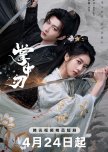
Twists & Turns--Confusion in a Good Way
Some dramas grab you with spectacle. Within the Grip grabs you with confusion, well, in a good way. From the very first episode, you're asking: who are the good guys? Who are the bad guys? And why does the crown prince look exactly like a missing son of the Gu family? Then the story throws in the art of "face changing," which leads viewers to all sorts of conclusions, adding even more intrigue to the mystery of why two people can have the same face. Or so I thought.Crown Prince Yin Zhou wants to find out who tried to kill him. His suspicion falls on a secretive intelligence organization that is loyal to the palace—but also under the control of the patriarch, Master Gu. Meanwhile, Gu Yu Luo, a cold and capable operative within that same organization, is searching for her missing betrothed, Gu Chao Xi, who is the third young master of the Gu family. To learn the truth about her own background, she needs to become the head of the organization. And marrying Gu Chao Xi is the condition. So if she can't find him, she needs someone to play him. The crown prince, who happens to look exactly like Gu Chao Xi, becomes her perfect candidate.
Their marriage of convenience (they're not officially married yet) quickly becomes something more. There are plenty of intimate scenes, and the couple is together most of the time. The fake Gu Chao Xi—hiding his great martial arts skills behind the mask of a sickly young master—saves Gu Yu Luo multiple times from danger without revealing himself. Meanwhile, multiple factions are fighting for control of the organization. But in reality, Gu Yu Luo doesn't care about power. All she wants is freedom. And to her, freedom means a blade in her hand. That's the heart of the drama, and it's reflected in the meaning of the native title: The Blade Within the Palm.
The story isn't complicated, but the excessive and constant twists make it feel forced at times. You won't know the real villain until the final moments—whether that's satisfying or frustrating is up to you. The acting is reasonably decent, with the exception of a few side characters. Li Ge Yang, whom many viewers mistake for Wang Rui Chang, is believable as both the crown prince and the missing son, and his fight choreography is sharp. Eleanor Lee, whom I enjoyed in Fake Princess, plays Gu Yu Luo with a perfect coldness—someone who trusts no one, not even her loved ones. Her fighting scenes are well executed. Both she and Li Ge Yang have great chemistry together.
For a low-budget series with only 15-minute episodes, the official soundtracks exceeded my expectations. Touching melodies. Beautiful lyrics. They linger long after the screen goes dark.
Plot holes and weird logic. Despite that, it's a rather decent drama to pass the time in between fresh drama episode releases.
Was this review helpful to you?
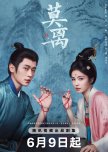
Great Acting by Ryan Cheng. Great Character Development.
If I had my way, the English title for this drama would simply be its native name, Mo Li, rather than The First Jasmine. The original title is a brilliant double entendre: it combines "Mo" from Mo Xiuyao and "Li" from Ye Li. But phonetically, Mo Li (莫离) translates to "don't leave." This hidden meaning perfectly captures Ye Li’s deep devotion to her loved ones, echoing the tragic backstory of her life long before she ever married Mo Xiuyao.At its core, The First Jasmine is a deeply touching story with beautifully written characters. Even though it’s a costume drama set in what appears to be the Tang Dynasty era, its moral dilemmas and emotional beats feel incredibly relevant to our modern world.
Both Bai Lu and Ryan Cheng (Cheng Lei) are veteran actors, and they both deliver incredibly convincing performances. However, I have to give a special shoutout to Ryan Cheng. His character, Mo Xiuyao, is wonderfully complex and layered. On the surface, he appears bitter, angry, and resigned to his fate. But beneath that exterior is a hot-blooded man fiercely determined to bring his enemies to justice. Confined to a wheelchair for years, he is deeply frustrated by his physical limitations. Imagine having to sit face-to-face with the person responsible for the massacre of your brother and your army, yet being unable to strike back because doing so would plunge the country and his own family into ruin. He has no choice but to endure the pain in silence.
Yet, when he’s with Ye Li, we see a completely different side of him. He starts off bemused and puzzled by her, which gradually melts into profound gentleness and care. Ryan Cheng captures this emotional duality flawlessly, bringing out the exact nuances the character requires. Bravo to him for such a stellar performance!
What I also loved is that every character is deeply human. There are no cartoonish, one-dimensional villains here. Everyone’s actions are rooted in their lived experiences and circumstances. Every major character has a compelling, understandable motivation: Ye Li and Mo Xiuyao are driven by a desire for truth and justice for their fallen loved ones; the Empress Dowager seeks power out of a desperate need to protect herself and her son; Mo Jingli just wants to reclaim what he believes is rightfully his. This nuanced portrayal feels much closer to the messy reality of real life, which is a refreshing change from the black-and-white morality we often see in Hollywood.
Ultimately, The First Jasmine grapples with a profound question: How should you act when facing an enemy who has slandered your family and murdered thousands of your people? Mo Xiuyao has to bow to the Empress Dowager regularly, knowing she orchestrated his brother's death. Ye Li faces a similar struggle—how do you treat the woman who was your mother’s best friend, even when you know she’s responsible for ruining the prestigious academy your grandfather built? Should they just accept the status quo to maintain national stability? Or should they risk everything to seek justice for the dead?
The author brilliantly resolves this agonizing dilemma with a beautiful philosophical anchor: a passage from Confucius’s The Great Learning (Daxue). It reminds the audience that true change and justice must begin from within:
"Ancient leaders who wanted to spread virtue throughout the world began by governing their own states well.
To govern their states well, they first harmonized their families.
To harmonize their families, they cultivated their own character.
To cultivate their character, they aligned their minds.
To align their minds, they made their intentions completely sincere.
And to make their intentions sincere, they extended their knowledge to the absolute limit.
This expansion of knowledge began with investigating the nature of things."
The First Jasmine is a gorgeous, thought-provoking journey. It asks the hard questions about duty, revenge, and forgiveness, and answers them with grace. Highly recommended!
Was this review helpful to you?


