

 1
1 2
2


This review may contain spoilers
A marriage in which every promise may also be a trap
Key to the Phoenix Heart begins with a familiar shape: a feared commander, a gifted young woman and a marriage arranged far from love.
Beneath the wedding silks lies a story of hidden identities, military reform and affection sharpened into strategy. Xiao Wuyi forces the mechanically gifted Xie Jiayu into marriage, but neither is what the other—or the audience—first assumes. Their household mirrors the court: every kindness may contain a calculation, every silence may hide a confession, and even protection can resemble captivity.
Actors and Characters
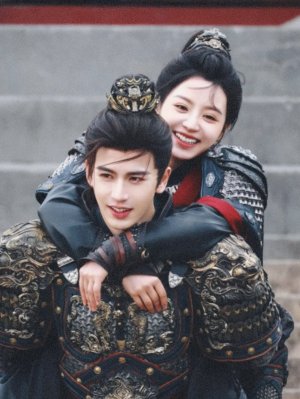
Hou Minghao as Xiao Wuyi
Hou Minghao’s greatest strength is restraint. Xiao Wuyi has been fashioned into a monster—cruel, indulgent and dangerous—but Hou builds him through pauses, glances and the discipline of a man who never reveals more than necessary.
To the court, he is a general who may turn against the throne. To Beifu, he carries the weight of every life lost under his command. To Jiayu, he begins as captor and gradually becomes a protector capable of respecting her freedom even when it may lead her away. His love appears through controlled surrender—trusting Jiayu, placing his life in her mechanisms and allowing her to choose. For Xiao Wuyi, love is not possession. It is trust without certainty of return.
Ai Mi as Xie Jiayu
Ai Mi gives the drama brightness and motion. Jiayu is clever without being invulnerable: she misjudges people, acts impulsively and enters the marriage with unresolved feelings for Li Mao. Her engineering alters negotiations, investigations and escapes. Her identity as Miaoshou Gongzi mirrors Xiao Wuyi: both survive by controlling what others know, and both initially mistake the other’s mask for the person beneath it. Suspicion becomes curiosity, curiosity becomes respect, and respect becomes partnership. A glance shared in danger often says more than an embrace.
Wang Yilun as Li Mao
Li Mao begins as Xiao Wuyi’s opposite: gentle where the general is feared and vulnerable where he is powerful. As Jiayu’s first love, he represents the life she might have chosen. But power does not simply corrupt him—it exposes him. He wants not only Jiayu’s affection, but the earlier version of her, before she learned to choose a future without him. Wang Yilun grounds this decline in humiliation, separation, fear for his sister and manipulation by older players. His tragedy is not that he stops loving Jiayu, but that he confuses love with the right to keep her.
Xiao Wuyi and the Beifu Army
Beifu is more than Xiao Wuyi’s army. It is his chosen family, political vulnerability and truest legacy. Every decree may endanger soldiers, and every accusation against him may punish those beneath his command. The court can tolerate a general dependent on imperial favour; it fears a commander trusted more deeply than the throne. Xiao Wuyi therefore wants to reform Beifu into an institution based on discipline, merit and responsibility rather than one man’s charisma. He is fighting to build something that survives him—to make himself unnecessary. The soldiers’ loyalty feels earned because he never forgets the lives hidden inside strategy. Still, he lies and manipulates events, leaving the drama to ask whether those deceptions protect Beifu or make him resemble the court he opposes.
Cinematography and Production Design
The drama’s visual language is red against darkness. Red wedding fabric, banners and blood-toned interiors connect love with legitimacy, sacrifice and violence. A wedding can resemble a coronation, an execution or the beginning of war. Xiao Wuyi is framed in dark clothing and rigid architecture, suggesting that even the most powerful man remains trapped inside structures older than himself. Court scenes use symmetry and distance, turning protocol into a cage. Close shots of gears and hidden compartments make Jiayu’s mechanisms a metaphor for the plot: we see the piece that moves, but not always the hand behind it.
Martial Arts and Action
The action is strongest when it reveals character. Xiao Wuyi fights economically, focused on purpose rather than display; even in combat, he remains a commander. Jiayu instead changes the environment through traps, armour and mechanisms. The mounted archery challenge is the strongest set piece: Xiao Wuyi’s vision is impaired, Jiayu’s device must work, the court is watching, and diplomacy hangs in the balance. Victory depends on trust without time for explanation. Some editing is overly fast, but the best sequences preserve danger and consequence.
Themes
Reputation Versus Identity
Nearly every major character has a public and hidden self. Xiao Wuyi’s violent reputation conceals his political purpose and identity as Crown Prince Wenxi, hidden so he can sacrifice himself for the northern expedition. Jiayu’s noble identity conceals Miaoshou Gongzi. Xie Huaigui’s image as father and scholar hides ambition, while powerless-looking Li Mao contains a hunger for authority. The drama asks whether people are defined by reputation, intention or consequence.
Love as Recognition
Li Mao loves the Jiayu he remembers and tries to preserve her. Xiao Wuyi recognises the woman she is becoming: inventive, politically aware and capable of choices that may hurt him. This is why “知我”—“The One Who Knows Me”—matters. The highest form of love is recognition without ownership.
Reform and the Cost of Peace
Xiao Wuyi accepts public hatred and bargains with compromised figures to protect a larger goal. His methods raise the drama’s hardest question: can someone use deception and coercive power for humane ends without being shaped by those methods?
The Political Web
Xiao Wuyi and Beifu possess military credibility but remain vulnerable at court. Empress Dowager He controls procedure and legitimacy. Xie Huaigui presents himself as her counterweight while building his own path to power; his greatest weapon is placing the right person inside the right emotional crisis.
Li Mao becomes an heir whom every faction believes it can shape, yet once he gains authority he repeats the behaviour of those who manipulated him. Jiayu appears to be the marriage pawn, but her knowledge and relationships make her unpredictable. The men around her plan through her, only to discover that she can alter the mechanism herself. The Eagle King and northern peace talks turn affection into diplomatic currency when marriage becomes the price of stability.
Strategies That Deceive the Audience
Xiao Wuyi performs the villain, allowing rumours of cruelty to circulate because fear gives him room to act. His enemies prepare for a reckless brute and overlook the patient strategist; the audience is deceived by the same performance as the court.The Changsha prince is both enemy and decoy. Defeating him resolves a battle, not the system producing it. Xie Huaigui hides behind the protective father’s image. His affection may be sincere, but he still weaponises it. Li Mao is introduced as the safer romantic alternative, yet the dangerous Xiao Wuyi gives Jiayu freedom while the gentle first love becomes possessive. The triangle becomes a contrast between devotion and control. Xiao Wuyi and Jiayu also deceive each other. Neither possesses the whole truth, so trust matters precisely because romance does not guarantee it.
Breath-Holding Moments
The opening return from battle establishes the drama’s method: apparent death, manufactured reputation and a commander who understands spectacle. The lakeside confrontation surrounding Jiayu’s identity is tense because several plans collide; she escapes, but leaves behind a clue. Xiao Wuyi’s public marriage request creates suspense without a sword. He rejects the expected reward and makes a request that rearranges every faction’s plan. The court falls silent, and that silence lands like a blade. The wedding day combines assassination, political elevation and abandonment. The mounted challenge turns trust into spectacle, while Jiayu’s rescue and the crossbow attack on Xiao Wuyi shift the conflict from calculation to consequence.
OST analysis
The songs function almost like an emotional map of the drama, each one attached to a different form of longing, loyalty or consequence.
“一诺成川” — Hou Minghao
Opening theme / “A Promise Becomes a River” This is Xiao Wuyi’s political and heroic statement.Its grand orchestral style suits images of marching soldiers, vows and national responsibility. Hou Minghao’s voice carries more determination than polish, which works in the song’s favour.It sounds like a promise being carried through resistance.The central idea is accumulation.
One promise becomes a river.One calculated action becomes reform.One political marriage becomes a partnership capable of changing the state.
“炙光” — Zhang Bichen and Hou Minghao
“Blazing Light” marks suspicion giving way to understanding. Zhang’s bright voice contrasts with Hou’s restraint, framing love as choosing the same direction even when sacrifice awaits.
“怜心” — Huang Xiaoyun
“Compassionate Heart” captures Li Mao’s love becoming fixation and justification for control.
“知我” — Liu Yuxin
“The One Who Knows Me” values understanding over destiny and asks who truly knows the leads beneath their public identities.
“因果” — Duan Aojuan
“Cause and Effect” reflects how political choices return in altered form. Fate shapes the road, but the characters still choose where to step.
“成全” — Jing Long
“Fulfilment” or “Letting Go” suggests completing love or stepping aside so another may be free. Affection is proven through loss rather than possession.
For me, this is already one of the best dramas of 2026, and one of the few that has captured my heart this deeply since Pursuit of Jade. Hou Minghao once again proves that he can completely disappear into every role he takes. He never fails to impress me, and moments like this always remind me how lucky I feel to be his fan.
Ai Mi surprised me just as much. Knowing that she is only one year older than me makes her performance even more inspiring, especially as this is her first leading role. She carries Xie Jiayu with confidence, intelligence and emotional warmth, making it difficult to believe that this is her first time leading an entire drama. The romance may frustrate viewers looking for obvious physical intimacy, but its appeal lies elsewhere: loyalty, restraint, collaboration and emotional recognition. For me, that is exactly what makes it so special. The fact that Xiao Wuyi and Xie Jiayu became one of my favourite couples without relying on a single kissing scene proves how powerful their chemistry truly is. Their love is built through trust, sacrifice and understanding—and that is exactly my perfect cup of tea.
Beneath the wedding silks lies a story of hidden identities, military reform and affection sharpened into strategy. Xiao Wuyi forces the mechanically gifted Xie Jiayu into marriage, but neither is what the other—or the audience—first assumes. Their household mirrors the court: every kindness may contain a calculation, every silence may hide a confession, and even protection can resemble captivity.
Actors and Characters
Hou Minghao as Xiao Wuyi
Hou Minghao’s greatest strength is restraint. Xiao Wuyi has been fashioned into a monster—cruel, indulgent and dangerous—but Hou builds him through pauses, glances and the discipline of a man who never reveals more than necessary.
To the court, he is a general who may turn against the throne. To Beifu, he carries the weight of every life lost under his command. To Jiayu, he begins as captor and gradually becomes a protector capable of respecting her freedom even when it may lead her away. His love appears through controlled surrender—trusting Jiayu, placing his life in her mechanisms and allowing her to choose. For Xiao Wuyi, love is not possession. It is trust without certainty of return.
Ai Mi as Xie Jiayu
Ai Mi gives the drama brightness and motion. Jiayu is clever without being invulnerable: she misjudges people, acts impulsively and enters the marriage with unresolved feelings for Li Mao. Her engineering alters negotiations, investigations and escapes. Her identity as Miaoshou Gongzi mirrors Xiao Wuyi: both survive by controlling what others know, and both initially mistake the other’s mask for the person beneath it. Suspicion becomes curiosity, curiosity becomes respect, and respect becomes partnership. A glance shared in danger often says more than an embrace.
Wang Yilun as Li Mao
Li Mao begins as Xiao Wuyi’s opposite: gentle where the general is feared and vulnerable where he is powerful. As Jiayu’s first love, he represents the life she might have chosen. But power does not simply corrupt him—it exposes him. He wants not only Jiayu’s affection, but the earlier version of her, before she learned to choose a future without him. Wang Yilun grounds this decline in humiliation, separation, fear for his sister and manipulation by older players. His tragedy is not that he stops loving Jiayu, but that he confuses love with the right to keep her.
Xiao Wuyi and the Beifu Army
Beifu is more than Xiao Wuyi’s army. It is his chosen family, political vulnerability and truest legacy. Every decree may endanger soldiers, and every accusation against him may punish those beneath his command. The court can tolerate a general dependent on imperial favour; it fears a commander trusted more deeply than the throne. Xiao Wuyi therefore wants to reform Beifu into an institution based on discipline, merit and responsibility rather than one man’s charisma. He is fighting to build something that survives him—to make himself unnecessary. The soldiers’ loyalty feels earned because he never forgets the lives hidden inside strategy. Still, he lies and manipulates events, leaving the drama to ask whether those deceptions protect Beifu or make him resemble the court he opposes.
Cinematography and Production Design
The drama’s visual language is red against darkness. Red wedding fabric, banners and blood-toned interiors connect love with legitimacy, sacrifice and violence. A wedding can resemble a coronation, an execution or the beginning of war. Xiao Wuyi is framed in dark clothing and rigid architecture, suggesting that even the most powerful man remains trapped inside structures older than himself. Court scenes use symmetry and distance, turning protocol into a cage. Close shots of gears and hidden compartments make Jiayu’s mechanisms a metaphor for the plot: we see the piece that moves, but not always the hand behind it.
Martial Arts and Action
The action is strongest when it reveals character. Xiao Wuyi fights economically, focused on purpose rather than display; even in combat, he remains a commander. Jiayu instead changes the environment through traps, armour and mechanisms. The mounted archery challenge is the strongest set piece: Xiao Wuyi’s vision is impaired, Jiayu’s device must work, the court is watching, and diplomacy hangs in the balance. Victory depends on trust without time for explanation. Some editing is overly fast, but the best sequences preserve danger and consequence.
Themes
Reputation Versus Identity
Nearly every major character has a public and hidden self. Xiao Wuyi’s violent reputation conceals his political purpose and identity as Crown Prince Wenxi, hidden so he can sacrifice himself for the northern expedition. Jiayu’s noble identity conceals Miaoshou Gongzi. Xie Huaigui’s image as father and scholar hides ambition, while powerless-looking Li Mao contains a hunger for authority. The drama asks whether people are defined by reputation, intention or consequence.
Love as Recognition
Li Mao loves the Jiayu he remembers and tries to preserve her. Xiao Wuyi recognises the woman she is becoming: inventive, politically aware and capable of choices that may hurt him. This is why “知我”—“The One Who Knows Me”—matters. The highest form of love is recognition without ownership.
Reform and the Cost of Peace
Xiao Wuyi accepts public hatred and bargains with compromised figures to protect a larger goal. His methods raise the drama’s hardest question: can someone use deception and coercive power for humane ends without being shaped by those methods?
The Political Web
Xiao Wuyi and Beifu possess military credibility but remain vulnerable at court. Empress Dowager He controls procedure and legitimacy. Xie Huaigui presents himself as her counterweight while building his own path to power; his greatest weapon is placing the right person inside the right emotional crisis.
Li Mao becomes an heir whom every faction believes it can shape, yet once he gains authority he repeats the behaviour of those who manipulated him. Jiayu appears to be the marriage pawn, but her knowledge and relationships make her unpredictable. The men around her plan through her, only to discover that she can alter the mechanism herself. The Eagle King and northern peace talks turn affection into diplomatic currency when marriage becomes the price of stability.
Strategies That Deceive the Audience
Xiao Wuyi performs the villain, allowing rumours of cruelty to circulate because fear gives him room to act. His enemies prepare for a reckless brute and overlook the patient strategist; the audience is deceived by the same performance as the court.The Changsha prince is both enemy and decoy. Defeating him resolves a battle, not the system producing it. Xie Huaigui hides behind the protective father’s image. His affection may be sincere, but he still weaponises it. Li Mao is introduced as the safer romantic alternative, yet the dangerous Xiao Wuyi gives Jiayu freedom while the gentle first love becomes possessive. The triangle becomes a contrast between devotion and control. Xiao Wuyi and Jiayu also deceive each other. Neither possesses the whole truth, so trust matters precisely because romance does not guarantee it.
Breath-Holding Moments
The opening return from battle establishes the drama’s method: apparent death, manufactured reputation and a commander who understands spectacle. The lakeside confrontation surrounding Jiayu’s identity is tense because several plans collide; she escapes, but leaves behind a clue. Xiao Wuyi’s public marriage request creates suspense without a sword. He rejects the expected reward and makes a request that rearranges every faction’s plan. The court falls silent, and that silence lands like a blade. The wedding day combines assassination, political elevation and abandonment. The mounted challenge turns trust into spectacle, while Jiayu’s rescue and the crossbow attack on Xiao Wuyi shift the conflict from calculation to consequence.
OST analysis
The songs function almost like an emotional map of the drama, each one attached to a different form of longing, loyalty or consequence.
“一诺成川” — Hou Minghao
Opening theme / “A Promise Becomes a River” This is Xiao Wuyi’s political and heroic statement.Its grand orchestral style suits images of marching soldiers, vows and national responsibility. Hou Minghao’s voice carries more determination than polish, which works in the song’s favour.It sounds like a promise being carried through resistance.The central idea is accumulation.
One promise becomes a river.One calculated action becomes reform.One political marriage becomes a partnership capable of changing the state.
“炙光” — Zhang Bichen and Hou Minghao
“Blazing Light” marks suspicion giving way to understanding. Zhang’s bright voice contrasts with Hou’s restraint, framing love as choosing the same direction even when sacrifice awaits.
“怜心” — Huang Xiaoyun
“Compassionate Heart” captures Li Mao’s love becoming fixation and justification for control.
“知我” — Liu Yuxin
“The One Who Knows Me” values understanding over destiny and asks who truly knows the leads beneath their public identities.
“因果” — Duan Aojuan
“Cause and Effect” reflects how political choices return in altered form. Fate shapes the road, but the characters still choose where to step.
“成全” — Jing Long
“Fulfilment” or “Letting Go” suggests completing love or stepping aside so another may be free. Affection is proven through loss rather than possession.
For me, this is already one of the best dramas of 2026, and one of the few that has captured my heart this deeply since Pursuit of Jade. Hou Minghao once again proves that he can completely disappear into every role he takes. He never fails to impress me, and moments like this always remind me how lucky I feel to be his fan.
Ai Mi surprised me just as much. Knowing that she is only one year older than me makes her performance even more inspiring, especially as this is her first leading role. She carries Xie Jiayu with confidence, intelligence and emotional warmth, making it difficult to believe that this is her first time leading an entire drama. The romance may frustrate viewers looking for obvious physical intimacy, but its appeal lies elsewhere: loyalty, restraint, collaboration and emotional recognition. For me, that is exactly what makes it so special. The fact that Xiao Wuyi and Xie Jiayu became one of my favourite couples without relying on a single kissing scene proves how powerful their chemistry truly is. Their love is built through trust, sacrifice and understanding—and that is exactly my perfect cup of tea.
Was this review helpful to you?


