
 Editorials
 1
1 1
1 1
1


This review may contain spoilers
Still clocking in!
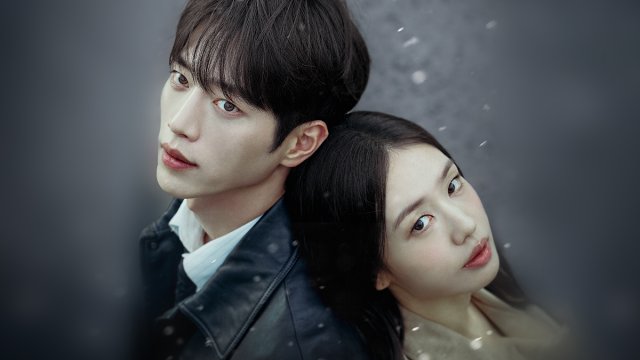
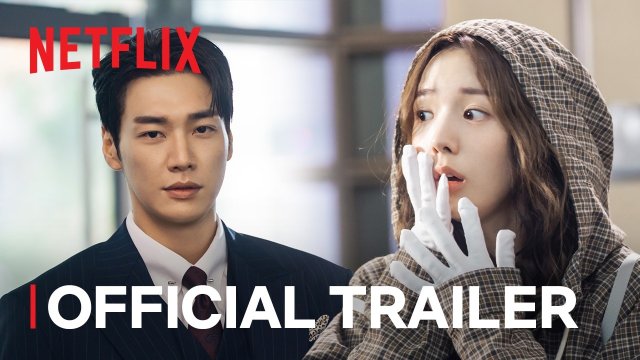
I just finished the drama" See You at Work Tomorrow" and, I have to admit, it was the first K-drama of 2026 that I managed to finish "properly" (without skipping episodes or watching at 2x speed).I really liked it because it's different from typical office romances: no linked pasts, no weird subplots like kidnappings, etc. The only unique "hook," which I found really charming, is that Ji Woo offered to repair items at her father's shop, even before getting to know her!
It’s simply the story of two people who meet at work and realize they are the most important person to each other—their soulmate. From the very moment Ji Yoon discovers on Ji Woo's glass board that she makes him smile, my heart fluttered so much! I loved how, through efficient and mature communication, they overcame their difficulties—between scandals and ex-relationships—and got their happily ever after. I adored how Ji Yoon achieved success at work , making all her"clocking in" count despite everything!
I also really liked the second lead couple. They were a bit more "traditional" compared to most secondary couples, which usually involve cheating or a toxic ex, such as fake-dating I absolutely loved them, especially in the final episode when No-ah is calling Jae In: she doesn't answer at first, but on the second call she picks up, only to find him sitting right next to her on the plane!
Was this review helpful to you?
This review may contain spoilers
The Power of Love in the Face of Illness
I've just finished this drama, and I can't stop thinking about how beautifully written it is. It shows just how strong a person fighting an illness can be when they are surrounded by people who love them. I adored everyone—there were no villains, just deeply 'human' people staying close to someone they truly care about.I completely understand why Lin Tuo wanted to keep his parents, his friends, and especially An Zhique in the dark about his illness. The mere thought of feeling 'useless' and 'sick'—and above all, the fear that others would 'sacrifice' their normal daily lives to care for him as he gradually lost his independence —triggered a defense mechanism. It made him believe that by avoiding them and phasing himself out of their lives, both they and he would be 'relieved.' But love doesn't work that way; it doesn't fade so easily.
As the drama highlights, staying by the side of a loved one who is ill—no matter how much you love them—is a heavy burden, especially psychologically, and even more so when dealing with a degenerative disease.
I loved how the show paid so much attention to Lin Tuo's perspective. He found the courage to let go of the thought of ending his life (feeling like 'there's no point in living like this') and chose instead to truly live (even if it just meant enjoying a single meal) for the sake of everyone who loves him, even knowing the disease would eventually take over.
Obviously, the paralysis is the most 'visible' turning point, but the tracheotomy was no less significant—it was an even more courageous choice. In the final episode, when Lin Tuo gives his speech for the anniversary of the university where he and Zhique studied, you can see how much he struggles to speak. Yet, it's that exact courage and will to live that keep him from feeling ashamed and "showing" himself; instead, he uses the moment to raise awareness about these terrible diseases and the desperate need for targeted research to find therapies that can slow down their effects.
I also adored Uncle Guo's character, who 'delegated' to Lin Tuo the task of managing the support chat for patients and their families—a space to motivate each other, share experiences, and find strength.
In short, this drama isn't your everyday show because it touches on a very delicate subject: health and coping with illness. Angels Fall Sometimes is a masterpiece from the very first episode to the last.
Was this review helpful to you?
This review may contain spoilers
A Refreshing Take on Dating Shows: Comforting, Real, and Unforgettable
I started My Sibling's Romance and I just finished it!I watched the first two episodes and immediately fell in love with it. It has such a warm, comfortable, and cozy vibe; because all the participants are there with their sibling, it genuinely feels like family. Everyone seems so interesting and funny. It took me a solid week to finish it since the episodes are over two hours long, but I enjoyed it from start to finish without skipping anything or watching at 2x speed.
The concept is highly original: a dating show where you are under the watchful eye of your own sibling while having to pretend you are strangers! I absolutely loved it! Even the first episode, which focused solely on the first-day introductions, was incredibly comforting thanks to that cozy, familiar atmosphere. It was touching to see how the sibling connections were kept secret at first, leaving everyone guessing who belonged to whom. As viewers, we weren't kept in suspense for too long, as their identities were revealed at the end of the first episode through a series of deeply moving childhood and teenage photos and videos. I also loved the career introductions done via photo albums and letters written by each participant's sibling.
When it comes to the cast, the best part of dating shows is that you grow attached to real people, each with their own unique facets. In my opinion, most of the participants showed incredible sensitivity, making it impossible for me to rank them! I will say that towards the final episodes, Yong-woo started wavering, making his feelings quite ambiguous. The same goes for Jae-hyung, who suddenly wanted to "get to know new people." But that’s fair and completely understandable!
In the beginning, during the first few episodes, Jeong-sub and Se-seung felt like a sure thing, but going ahead with the episodes they had some fights and misunderstandings, so much so that I actually thought they wouldn't end up together in the final choice. It surprised me, but that's how it went. However, I felt their foundation wasn't very stable, and as I read online, they broke up shortly after the show ended. It makes sense; it takes time to truly know someone, and if things don't click, they don't click. Still, let's not forget how they made our hearts flutter!
On the other hand, I had much higher expectations for Yoon-ha and Yoon-jae. According to what I read online, they had even gotten engaged ! They stayed in a relationship for over a year but eventually broke up due to "reality obstacles" regarding major life decisions (like wedding planning) and a lack of quality time spent together as a normal couple before taking such a big step. Despite their efforts to make it work and their deep affection for each other, they realized it was healthier to part ways, taking different paths to focus on their respective careers and personal growth while continuing to support one another.
Ultimately, what I loved most wasn't the breakups themselves, but the fact that the entire cast remained on excellent terms. As shown in the final minutes of the last episode, they still meet up and hang out as great friends!
Lastly, one of my absolute favorite moments was the sibling choreography contest. They were incredible! My favorites were Jeong-sub and Yoon Ha performing Nagging by IU and Lim Seul-ong, but honestly, everyone was phenomenal!
Was this review helpful to you?
This review may contain spoilers
Extraordinary photography, a deep story.
I started watching The Forbidden Flower because of the mixed opinions I'd read about it. Some people said it wasn't a particularly deep drama, that the characters were flat, but that the cinematography was stunning. And I have to say, the cinematography, the use of colors, the framing, and the way light and shadows are used... it's a work of art.As for the story itself, I actually think it's very solid. There isn't a clear-cut "good" or "bad" character; instead, everyone is morally nuanced and flawed in their own way. What I appreciated most about the majority of the characters is that, when faced with hardship or someone who is suffering, they put aside their disagreements and stand by that person. In this case, that person is He Ran.
At first, I couldn't stand He Ran's mother. I thought she was overly controlling and overprotective of her daughter. But as the story progressed, I realized there were much deeper reasons behind her behavior. She had already lost her husband to the very same illness that now threatens her daughter. It's only natural that she wants to protect the precious child she brought into the world—the living reminder of the love she shared with her late husband. And it is totally legit that she let herself go, with eating and drinking, that's a big weight on her heart! And it is fair to open to new relationships, as well.
I also loved Han Yu and her uncle. As much as Han Yu loved and cared about He Ran, she let her go to Xiao Han because she knew it was what He Ran truly wanted: to experience her first—and perhaps last—great love. The line that stayed with me the most was something He Ran's uncle said, along the lines of, "I never said what you were doing was wrong."
I can also understand He Ran's decision not to tell Xiao Han about her illness. She wanted to experience a carefree kind of love, free from pity or the weight of her condition. But, as we know, life had other plans for her.
The only character who left me a little conflicted was Xiao Han. He does his job as a "lover," but he often seemed lost, as if he had no real purpose in life—until he found one in He Ran. We don't learn much about his past, but I think that was probably a deliberate choice by the writers. The drama's message is to live in the present instead of dwelling on the past, something we also see reflected in He Ran's bright, curious, bubbly personality.
Also loved the music!
Was this review helpful to you?


