



This review may contain spoilers
Weak Romance and Repetitive Pacing
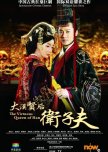
Duan Hong’s longing for Wei Zi Fu was one of my favorite things about this drama, and honestly, his feelings for her felt more sincere and memorable than the main romance. Every scene with him carried this quiet heartbreak that made it easy to sympathize with his character. He constantly put the greater good of the country, the Emperor, and everyone else before himself, which made his sacrifices even sadder to watch. Even when he suffered, he rarely acted selfishly, and that made him far more compelling than a lot of the other characters in the palace. His storyline had emotional weight because you could feel how much he loved Wei Zi Fu while knowing it will never be him.I’m a big fan of Raymond Lam and he was the main reason why I watched, so I ended up disappointed with how little depth his character was ultimately given. Despite Duan Hong being one of the most interesting people in the drama, the writing often reduced him to silently suffering for Wei Zi Fu over and over again without allowing him much growth outside of that. Emperor Wu also felt very one dimensional at times, which made the central romance weaker. I understood that the drama wanted to portray him as a complicated ruler, but he mostly came across as selfish, emotionally immature, and easily manipulated. It became frustrating watching him constantly distrust or mistreat the people around him while Wei Zi Fu endlessly forgave him and has shown loyalty time and time again.
I also felt the two leads lacked chemistry, which made it harder to stay emotionally invested in their relationship. For a drama built around this epic love story, I rarely felt genuine passion or emotional tension between them. Honestly, Xu Zheng Xi and Wang Luo Dan had way more chemistry together, and their scenes naturally felt more emotional and engaging. In comparison, many of the romantic moments between Wei Zi Fu and Emperor Wu felt flat despite all the screentime dedicated to them.
I really enjoyed Wei Qing and Princess Ping Yang together, though. Their relationship had chemistry, warmth, and a level of maturity that stood out compared to all the constant palace scheming. Their interactions felt natural and sincere, and they brought some much needed balance to the story whenever they appeared onscreen. I honestly found myself more invested in their relationship than the main couple.
That said, the drama dragged on way longer than it needed to. There was absolutely no reason for this story to be stretched into 47 episodes. So many scenes felt repetitive, especially with the endless misunderstandings, palace politics, and recycled conflicts that kept circling back to the same problems. It often felt like characters learned the same lessons repeatedly, only for the drama to create another misunderstanding a few episodes later.
Was this review helpful to you?

This review may contain spoilers
Strong Racing Scenes, Simple Story
I went into not really caring about race cars, but it actually turned out more interesting than I expected. The racing scenes were easily the highlight, with a lot of energy and intensity that made the sport way more engaging to watch than I thought it would be.What stood out most was that the story is more about brotherhood than anything else. If someone is going in expecting romance, it’s better to skip it because that’s not really the focus. Trailer made me think there was romance, boy was I wrong. The film centers on two brothers with a strained relationship, shaped heavily by the death of Hiyama Atsuhiro’s girlfriend, who was also Hiyama Naozumi’s first love. That shared history creates a lot of tension between them, especially since it affects how they view each other and themselves. Even though it uses a familiar setup, I wasn’t tired of the trope where the younger brother is in love with his older brother’s girlfriend, she passes away, and it leads to resentment and emotional distance. It’s something that’s been done a lot, but it still worked well enough here because of the racing backdrop and the way their rivalry plays out.
That said, I do wish the girlfriend had more presence in the story, and it would’ve been more impactful to actually see her relationship with Hiyama Naozumi. It would have added more weight to his behavior in the present and made the emotional conflict hit harder.
Overall, Over Drive was surprisingly engaging. The story is simple and familiar, but the racing scenes and the brother dynamic made it more enjoyable than expected.
Was this review helpful to you?

This review may contain spoilers
Typical High School Drama with One Bright Spot
The story itself is a pretty straightforward high school romance drama, and while it’s easy to follow, it doesn’t really stand out or leave a strong impression beyond the usual love triangle setup. I never really dove into the manga or anime and so I didn't know what to expect.Mackenyu’s portrayal of Toji Kazuya was easily the highlight for me. He had this calm, natural presence that made his character feel more believable. Even in simpler scenes, he kept things grounded and consistent, and honestly he was the main reason the movie stayed watchable from start to finish. His character also had that common trope where Toji avoids Adachi Momo to “protect” her, and while it is meant to feel dignified and selfless, it’s honestly a writing choice that gets old. It creates unnecessary distance and misunderstandings that just drag the story instead of adding meaningful tension.
On the other hand, I really didn’t enjoy Kei Inoo as Okayasu Kairi. His performance felt very over the top in a way that didn’t fit the tone of the story for me. Instead of coming across as charming or fun, it often felt more irritating and distracting. Because of that, a lot of the love triangle drama didn’t really land. Rather than feeling torn between the characters, I ended up disengaged during his scenes, which made parts of the story feel weaker than they should have been. It felt like the performance pulled me out of the movie instead of drawing me into it.
Was this review helpful to you?

Action First, Story Second
Rurouni Kenshin: The Final was a solid watch even without seeing the anime, earlier films, or reading the manga. The story was fine and easy enough to follow, but what stood out most was definitely the action.The fight scenes were intense from beginning to end. Every sword fight felt fast, brutal, and extremely well choreographed without becoming messy or hard to follow. The movie did a great job making every movement look sharp and impactful, especially during the larger group fights and Kenshin’s one on one battles. The camera work and pacing during the action scenes made everything feel even more intense.
Mackenyu’s portrayal of Yukishiro Enishi was the standout for me. He brought a strong presence to every scene he was in, and his fights felt especially personal and aggressive in a way that made him more interesting to watch than just a standard antagonist. Every time he showed up, the tension immediately went up.
Overall, I'm not a follower of the Rurouni Kenshin world, but the fight scenes were easily the highlight and what made the movie worth watching.
Was this review helpful to you?

Great Action, Weak Story
The best part of the movie was easily the action scenes. The choreography looked smooth, the powers were visually impressive. Every time the characters started fighting, the movie instantly became more exciting. The pacing was one of the biggest problems. Important characters and storylines were introduced so quickly that nothing really had time to develop naturally. Still, the visuals and action carried the movie enough for me to enjoy parts of it. Even though the story itself wasn’t very memorable, the fights, powers, and overall style kept the movie entertaining whenever the pacing started to drag. Overall, Knights of the Zodiac isn’t something I’d watch for the story, but the action scenes and visual effects made it worth watching at least once.Was this review helpful to you?
This review may contain spoilers
I'd skip it if I had known it was going to be this bad
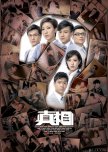
The Other Truth follows barristers handling criminal cases, but what makes it interesting is how each case explores different versions of truth. Instead of clearly right or wrong characters, most people in the show sit somewhere in between, where winning a case can mean bending ethics, hiding facts, or dealing with personal compromises.Both Keith and Mavis are two very different barristers. Keith is morally grey when it comes down to finding the truth for his clients, while Mavis is very by the book. But through their friendship they learn how to become better barristers by challenging each other’s perspectives and approaches to the law.
The romantic storyline was another part that didn’t really land for me. Keith’s feelings for Mavis felt a bit sudden considering they’d been colleagues for quite some time and their dynamic had mostly been professional and ideological. Their personalities are quite different, so the shift into romance didn’t feel fully earned. On the other hand, Wallace’s interest in Mavis made more sense since he was portrayed as a playboy type and already had that flirtatious energy built into his character.
Also, Mavis’s ex-husband is another part that felt off. It was hard to imagine her being with someone like him, and it didn’t really match what we see of her character. It would’ve made more sense they shown more of why she chose him in the first place or written in a different type of partner that better fit her personality if they really wanted to add the fact that she was a divorcee.
The characters work best when the show focuses on their moral choices and how pressure and ambition shape what they do. You can see how their decisions change as they deal with different cases, and that makes them feel more human. That said, a few character arcs feel a bit uneven, especially when the show shifts into romance or personal drama.
The Duplicitous Mother case (Episodes 11 to 16) was another point where the pacing didn’t quite work. The storyline involving Ivy felt like it dragged on longer than it needed to, and it slowed down the momentum of the legal cases. It also felt like the show leaned too heavily into melodrama there instead of tightening the courtroom focus.
Was this review helpful to you?

This review may contain spoilers
Better as a drama than movie
Saving General Yang is a film based on the Yang family legend, where the sons set out on a dangerous mission to rescue their father, General Yang, after he is ambushed and captured. It highlights loyalty, sacrifice, and brotherhood, and the action scenes are beautifully executed with a strong sense of scale and intensity.The father figure is presented as a symbol of honor and duty, but because he is absent for much of the story, it’s hard to fully feel the emotional urgency behind the rescue. I did wish we had more time early on to see the relationship between him and his sons, since that would’ve made their mission hit harder emotionally. Still, I understand the film likely had to move quickly due to runtime constraints. I also watched this mainly because of Raymond Lam, and while he was good, I did wish he had more screen time to really shine.
What stood out most was the brothers and their dynamic throughout the mission. Even though they aren’t deeply developed as individuals, their bond comes through strongly in how they fight and support each other. Each brother has a distinct fighting style, and the way they coordinate in battle gives the film its strongest emotional and narrative momentum. It’s less about individual character arcs and more about unity under pressure, which surprisingly works well in an action driven story like this.
The action is undeniably the highlight. The sequences are intense, fast paced, and at times surprisingly brutal, which keeps the film consistently engaging even when the emotional depth feels limited. The choreography is clean and creative, especially in the larger set pieces where teamwork becomes crucial. The final stretches of the mission carry a solid sense of tension and sacrifice, even though the outcome feels inevitable.
Overall, Saving General Yang works best as a visually striking, action focused historical drama rather than a deeply emotional family epic. While the story didn’t fully land for me, the brotherhood, choreography, and relentless action made it a compelling watch. I do think it would’ve worked better as a drama series to properly build up the characters and emotional stakes.
Was this review helpful to you?

This review may contain spoilers
Main Lead Didn’t Work for Me
A drama that mixes romance, mystery, and time loop elements with a dark twist. I didn’t really care for Dojima Otaro. I found it difficult to care about his journey or decisions because it all driven by selfishness. A lot of his choices feel repetitive rather than evolving, I found myself more frustrated with how little he changes despite having a "redemption arc" which really didn't change my opinion of his character.What really stood out instead was Mackenyu as Namiki Takauji. Every scene he’s in has this strong presence that immediately pulls your attention. He brings intensity, charm, and a kind of effortless coolness that makes him far more interesting than the actual lead. It was especially fascinating to see how much Namiki Takauji’s outcome changes because of Dojima Otaro’s repeated time loop, and watching Namiki Takauji gradually turn into a villain was executed beautifully. His character arc actually feels like it has real emotional weight, because you can see how the repeated time loop decisions directly shape and damage him over time.
Compared to the main character, Namiki Takauji feels like the one who experiences real consequences. While Dojima Otaro resets and avoids lasting impact, Namiki Takauji is the one who seems to carry the emotional fallout of those changes, which makes his descent into villainy feel more tragic and believable. That contrast is what makes Mackenyu’s performance stand out even more, because he gives depth and nuance to a character who could’ve easily been one-dimensional.
Was this review helpful to you?

This review may contain spoilers
A Warm Coming of Age Story About Sisters and Destiny
Sunshine Heartbeat starts off with our three sisters who meet a fortune teller who tells them that when the oldest sister, Mia, turns eighteen, she’ll find her true love, while also giving her a bag which I believe was a clue about her true love. The sisters bury the bag and promise to come back for it when Mia turns eighteen.Mia studies abroad and comes back to Hong Kong when she turns eighteen, and the sisters dig up the bag. Inside the bag consists of a clue that her true love has a four leaf clover birthmark. Both male leads have the four leaf clover, and Mia has to figure out who her true love is, considering she has to pick the right one as her family's happiness is in her hands (this was stated by the fortune teller).
Throughout the drama, it also focuses on Mia’s emotional struggle as she tries to trust her own feelings instead of just relying on fate. I liked how the story slowly builds tension around the mystery of which guy is the real match, while still keeping things light and easy to follow.
The drama also does a really nice job focusing on the sisters’ bond as they learn and grow together, while also playing volleyball which I really liked. It gives the story a light and fun energy without getting too heavy. The friendship moments between the sisters often feel just as important as the romance, which makes the story more grounded.
In terms of the overall vibe, Sunshine Heartbeat is a lighthearted coming of age drama, nothing too crazy. It stays warm and easy to watch, and I liked how it balanced romance with family and friendship.
The cast brings a natural, comfortable energy to their roles, especially in the sister scenes where the chemistry feels believable and lived in. The romance works best when it leans into the emotional uncertainty rather than just the “fated love” idea, which keeps it more engaging than a simple love triangle setup.
In the end, all the sisters end up with someone, and it’s revealed that even the youngest sister’s boyfriend also has a four leaf clover birthmark which I found cute. Overall, it’s a feel good TVB drama that keeps things simple, sweet, and enjoyable from start to finish.
Was this review helpful to you?
This review may contain spoilers
A Timeless TVB Classic That Never Gets Old
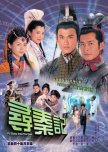
This is a classic TVB drama that I can watch again and again and never get tired of. A Step into the Past remains one of the best time travel dramas TVB has ever produced, with a perfect mix of comedy, romance, action, and political intrigue.Hong Siu Lung and Chun Ching had been dating for a long time. Chun Ching wanted to get married while Hong Siu Lung didn’t seem ready to commit. She waited and waited, but he never showed any real desire to settle down. Eventually, Chun Ching broke up with him and revealed that she was going to marry someone else. This part really ticked me off because it made it seem like she already had someone on the side the whole time. I couldn’t fully side with her because, in the end, it felt like she emotionally cheated on him. Still, I understand why the writers used this storyline since it became the driving force behind why Hong Siu Lung agreed to the mission. His desire to go back to before Chun Ching got married and change their fate gave his character emotional motivation.
Hong Siu Lung travels back to the Qin Dynasty years before Ying Ching ascends the throne. Knowing that history must remain intact for Hong Kong and even his own existence to survive, he makes it his mission to find Ying Ching and ensure he becomes emperor. One of the things I really liked about Hong Siu Lung was how modern his mindset was compared to everyone around him. Because he came from the future, he treated women with honor and respect, which naturally led to many women falling in love with him throughout the series. It was interesting seeing how well he understood and cared for the women he encountered, yet he still struggled to properly understand Chun Ching and what she truly wanted from him emotionally.
One of my favorite relationships in the drama was the dynamic between Hong Siu Lung and Chiu Poon. Beneath Chiu Poon’s arrogance and ambition, all he really wanted was love, acceptance, and affection from his parents, something he never truly received growing up. Hong Siu Lung became one of the few people who genuinely cared about him, and their friendship added a lot of heart to the series. Their bond made many of Chiu Poon’s later actions and emotional moments even more impactful.
The cast delivered amazing performances, especially Louis Koo as Hong Siu Lung. He carried the drama effortlessly with his charisma, humor, and emotional acting. Even with all the political schemes and serious moments, the drama never lost its fun atmosphere. The pacing stayed engaging, and the balance between romance, friendship, comedy, and tragedy was done extremely well.
Overall, A Step into the Past is one of TVB’s most memorable dramas for a reason. It’s entertaining from beginning to end, filled with lovable characters, emotional moments, and a unique storyline that still holds up today.
Was this review helpful to you?
This review may contain spoilers
Narcotics Crime, Strong Chemistry, and Frustrating Characters
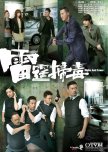
Highs and Lows offers a refreshing take on TVB crime dramas by shifting its focus to the narcotics division rather than the usual murder centered investigations. This change in perspective makes the series feel different from typical police procedurals, as it explores the complexities and dangers of drug enforcement work.The story highlights the challenges faced by officers dealing with drug trafficking networks, undercover operations, and the moral pressures that come with this line of duty. Instead of relying solely on whodunit murder mysteries, the drama builds tension through drug related cases and the psychological strain placed on both law enforcement and those entangled in the drug world.
One of the strongest aspects of the series is the chemistry between Happy and Gordon. Their trust, partnership, and emotional connection make their dynamic especially compelling. As viewers, you can genuinely feel the weight of their decisions and the tension in their relationship as they navigate difficult and often dangerous situations together.
However, Helen’s character can be quite divisive. She often comes across as hypocritical and overly critical of Gordon, which can make some of her storylines frustrating to watch. For some viewers, this dynamic may have been more enjoyable with a different portrayal or a different direction for the character.
Overall, Highs and Lows stands out not only for its unique focus within the crime genre but also for its strong character relationships that add emotional depth to the intense storyline.
Was this review helpful to you?
This review may contain spoilers
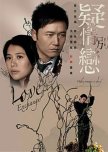
Mystery and Emotional Bond
Love Exchange is a compelling as it blends mystery, emotional depth, and romance in a really engaging way. The story brings together Yiu Lap Tin and Sit Chi Yiu, whose lives become intertwined after the passing of their respective partners. Bound by loss and unanswered questions, the two are drawn into the same search for truth.Yiu Lap Tin struggles to accept the circumstances surrounding his wife’s death and is convinced there is more to uncover. He brings Sit Chi Yiu into his pursuit, and together they begin to investigate what really happened. As they dig deeper, what starts as a quest for answers gradually becomes something more personal and emotionally complex.
The mystery at the center of the story is genuinely intriguing and keeps the viewer invested as new clues and twists are revealed. At the same time, the growing bond between Yiu Lap Tin and Sit Chi Yiu adds an emotional layer that makes their journey even more compelling. Their relationship develops naturally through shared grief, trust, and the long process of uncovering the truth.
Overall, the drama is both engaging and heartfelt, with a strong balance between its investigative storyline and emotional romance. The mystery is what pulls you in, but the evolving connection between the two leads is what makes it memorable.
Was this review helpful to you?
Beautiful martial arts choreography
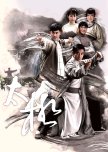
The Master of Tai Chi stands out more for its action than its storytelling. The plot itself may feel less engaging or not as compelling, depending on personal taste, and it does not always carry the strongest emotional or narrative drive throughout the series.However, where the drama truly shines is in its martial arts choreography. The fighting scenes are beautifully executed, well filmed, and highly polished for a TVB production. The Tai Chi techniques are showcased in a visually impressive way, with smooth, flowing movements that highlight both skill and discipline. These action sequences are clearly the highlight of the series and often carry the viewing experience on their own.
Overall, while the story may not resonate strongly, The Master of Tai Chi is still worth watching for its outstanding fight choreography and its focus on traditional martial arts aesthetics.
Was this review helpful to you?

This review may contain spoilers
Mixed Feelings on Sequel
D.I.E. Again continues the quirky and comedic style of the original series, blending crime investigation with absurd humor and a new set of unusual cases. The drama once again follows Yue Chi Long and his team, with his special ability still playing an important role in solving mysteries. When he touches objects linked to a recently deceased victim, he receives visions that help uncover key clues in the investigation.However, the sequel feels less impactful compared to the original. It gives the impression that the story did not necessarily need to continue, especially with some cast members not returning, such as Yue Chi Long’s sister and father. This also leads to certain character arcs, including Yue Chi Ching and Cheung Ching Yee, coming to a close which I found it hard to believe considering how strong their relationship was. With how they wrote the end of their relationship, you can tell Margie Tsang just didn't return.
Despite that, the series still keeps its light and playful tone. Instead of focusing on serious or gritty police work, it leans heavily into comedy and exaggerated situations, making the cases more entertaining than realistic. The team’s contrasting personalities continue to create humorous misunderstandings and chaotic moments during investigations, which remains one of the show’s strengths.
The cases are still creative and unpredictable, even if they prioritize entertainment over depth. The mix of mystery and humor continues to define the series, making it easy to watch and follow without the weight of a serious crime procedural. Overall, while enjoyable in parts, D.I.E. Again does not quite reach the charm or freshness of the original.
Was this review helpful to you?
Light Hearted Crime Comedy
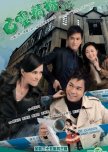
D.I.E. is a light hearted and comedic TVB drama that mixes crime investigation with absurd humor in a really entertaining way. The story follows a team of unconventional detectives who handle unusual and often bizarre cases, making each episode feel fresh and unpredictable. Yue Chi Long has a special gift after being struck by lightning, where if he touches something belonging to a recently deceased victim, he receives visions of clues that help lead them to the killer.What makes the drama stand out is its comedic tone. Even though the team is solving crimes, the atmosphere is never too heavy or dark. Instead, the characters often find themselves in awkward, funny, or completely ridiculous situations that balance out the mystery elements. This makes it easy to watch and very relaxing compared to more serious police dramas.
The cases themselves are also quite creative and interesting. While they may not always be deeply complex, they are engaging enough to keep the audience curious about how everything will be solved. The mix of mystery and comedy gives the show its unique identity and works well for viewers who enjoy something light but still story driven.
Overall, the drama is enjoyable for its humor, character interactions, and fun take on police work. It does not aim for intense realism, but it succeeds in being entertaining and easy to follow from start to finish.
Was this review helpful to you?


