



This review may contain spoilers
A Journey from Ambition to Compassion
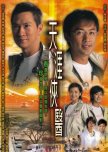
The Last Breakthrough is one of those TVB dramas that leaves a lasting impression because of how heartfelt and grounded it is. The series follows Wong Fu Fun, a successful cardiologist who is deeply focused on advancing his career by performing highly complex surgeries and building his professional reputation. His girlfriend, Ha Hiu Tung, volunteers with Life Force and often encourages him to travel and help those in need, but he repeatedly refuses because he prioritizes achievement, recognition, and status over humanitarian work.Everything changes after a tragic accident takes Ha Hiu Tung’s life. Her death becomes the turning point that reshapes Wong Fu Fun’s entire outlook on life. He begins questioning what it truly means to be successful and slowly shifts away from treating only wealthy patients toward using his medical skills to help the less fortunate. He also starts volunteering with Life Force, partly as a way to better understand Ha Hiu Tung and see the world through her perspective. One of the most memorable scenes that captures this transformation is when he helps deliver a baby on the roadside, a moment that reflects his growing compassion, humility, and renewed sense of purpose.
As the drama progresses, Wong Fu Fun gradually rebuilds his life while continuing his volunteer work with Life Force and establishing a clinic that serves his local community. He eventually transitions into obstetrics, showing how far he has moved away from the prestige driven mindset he once had as a cardiologist. He also develops a new romantic relationship, showing that even after deep loss, it’s still possible to heal and move forward.
Wong Fu Fun is sometimes viewed as a controversial doctor by others because many of his decisions challenge professional expectations and strict legal boundaries. For example, when he helps deliver a baby and later discovers the mother was carrying drugs, he refuses to let police officers enter the room until the situation is medically stable. He also makes difficult decisions during high risk pregnancies, prioritizing the safety and dignity of both the mother and child even when others disagree with his methods. A lot of what he does exists in a moral grey area, but the series repeatedly emphasizes his intentions and his belief that every life is precious. His goal in his career is to be the best doctor he can be and do everything he can to save a life. In many ways, the series shows how Wong Fu Fun’s outlook on life positively influences nearly everyone around him.
Ken, who is also a cardiologist, is born into privilege and initially has a far more rigid and by the book understanding of medicine. Through his interactions with Wong Fu Fun, he slowly begins to see medicine in a more compassionate and human way rather than purely through rules and professional standards. His perspective changes noticeably through both their friendship and his own volunteering experiences.
One of the drama’s strengths is how it introduces a wide range of medical and health related issues in a way that is accessible and easy to understand. Although some topics are only explored on a surface level, they still add emotional weight to the story and make the series feel more grounded in reality. The medical themes also make the drama especially engaging and can even inspire a stronger interest in the healthcare field.
Overall, the series is touching, emotional, and meaningful, highlighting how a single life changing event can completely transform a person’s values and understanding of what truly matters. The cast delivers strong performances throughout, but the most compelling aspect of the drama is Wong Fu Fun’s character development. Watching his worldview shift from ambition driven success to compassionate service is the heart of the story and ultimately what makes the drama so memorable.
Was this review helpful to you?

Growing Up Overnight
This is a very lighthearted movie. Baby and I is about a delinquent, Han Jun Su, who literally becomes a father overnight. Throughout the movie, he learns to become more responsible and slowly softens up as a person while trying to raise his child. Kim Byeol is an extremely smart student, but because she wasn't being challenged in school, she stopped attending until she met Han Jun Su, which motivated her to go back.The movie balances its comedy and emotional moments really well. A lot of the humor comes from Han Jun Su suddenly having to take care of a baby despite barely being able to take care of himself. Watching him slowly adjust to the responsibility was both funny and surprisingly heartwarming. Even though the story is pretty simple, the characters made it enjoyable to watch. It made me laugh a lot, but it also had some genuinely sweet moments about growing up, responsibility, and finding purpose through other people.
Was this review helpful to you?
This review may contain spoilers
The Romance Wasn't the Point
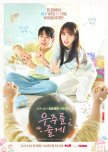
I only started this drama because my feeds were filled with clips of our favorite little baby, and I got curious. Going into it, I expected something light and cute, but I ended up appreciating how much of the story revolves around grief, family, and learning how to care for others.From the beginning, the drama contrasts Seon Tae Hyeong and Woo Hyeon Jin really well. Seon Tae Hyeong is someone who desperately wanted a relationship with his older brother, only to realize that his feelings weren't fully returned. Meanwhile, Woo Hyeon Jin has a loving sister but chooses to live more independently and somewhat selfishly. They feel like complete opposites in the way they approach relationships and emotional attachment.
What really connected me to the drama wasn't the romance, but the way these two people were suddenly forced into becoming guardians for Seon U Ju after the death of their siblings. Neither of them knows how to raise a child, and watching them slowly adapt to that responsibility became the heart of the story for me. Their journey didn't feel perfect or overly dramatic. It felt more like watching two emotionally unprepared people gradually learning patience, sacrifice, and affection through caring for someone else.
I especially liked seeing Seon Tae Hyeong's growth throughout the drama. At the start, he came across as distant and emotionally awkward, but raising U Ju slowly brought out a softer and more caring side of him. His development felt more meaningful to me than the romantic storyline, which honestly didn't leave much of an impact on me. I also didn't care much for the second male lead storyline, since I found myself far more invested in the family dynamic than the love triangle elements.
The biggest reason I kept watching was Seon U Ju himself. Park Yu Ho completely stole every scene he was in. Knowing they mostly let him act naturally without heavily scripting him makes his performance even more impressive. A lot of the emotional warmth in the drama came from his presence, and some of the funniest moments were when he'd unintentionally create opportunities for his uncle and aunt to grow closer.
I really loved Seon Tae Hyeong and Seon U Ju's dynamic. No matter what happened, Seon Tae Hyeong always made Seon U Ju his priority, and I think that's what made their relationship the emotional core of the drama for me. Some of the most touching moments came from watching him slowly learn how to become both a guardian and a source of comfort for U Ju.
Woo Hyeon Jin... I didn't like her character as we got further into the drama. I disliked how she didn't want to let people at her workplace know she was raising her nephew along with her brother in law. Maybe outsiders would see being in a relationship with her as "baggage" because she had a nephew to raise, but the fact of the matter is that she is raising her nephew. That's her reality, and I think it's unfair to hide this from someone she's romantically interested in because she's taking away their ability to decide whether they want to continue the relationship. I also didn't like how wishy washy she could be at times, and it sometimes felt like she was taking advantage of both male leads emotionally.
What stayed with me most wasn't the romance, but the growth and the idea that family doesn't always come together in traditional ways. The drama would've worked better if its focus had stayed on watching two people slowly learn how to become a family. I honestly think writers need to understand that not every meaningful relationship needs to turn romantic. In some ways, I feel like the drama would've hit even harder if they had kept their relationship platonic, because the emotional core was always strongest when it focused on healing, family, and learning to care for one another rather than romance. I don't have the desire to rewatch the entire drama, but I would definitely rewatch my favorite scenes.
Was this review helpful to you?
This review may contain spoilers
A Nostalgic Reunion That Doesn’t Quite Recapture the Magic
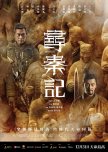
The movie opens with a brief recap of where A Step into the Past ends, which is helpful for anyone who hasn’t watched it in a while or never saw it at all. You won’t feel lost. It quickly sets up the direction of the story, showing that Ken wants to return to the past to rewrite history so he can become king. We learn that Ken was actually the inventor of the time travel device, but he was blamed for Hong Siu-lung’s failed mission. As a result, he was sent to prison and missed out on twenty years of his daughter’s life. Ying Ching enters the story after being ambushed by Ken and his team, even though he was already heading toward the area where Hong Siu-lung has been living. Once Hong Siu-lung receives news that Ying Ching is coming to take over the area, he decides he wants to leave.Ying Ching goes to Hong Siu-lung for help, but you can clearly see the resentment and animosity he still carries. He likely viewed Hong Siu-lung’s departure in the original series as abandonment. At the end of the series, Hong Siu-lung chose to retire with his wives instead of standing by Ying Ching. On top of that, Hong Siu-lung knew he wasn’t the real Ying Ching, which only adds another layer of tension on Ying Ching’s end.
Jessica Hsuan and Michael Miu have always had great chemistry. There’s a moment in the forest where Ken shoots Tang Yik and grabs Wu Ting-fong, pulling her close at gunpoint. The way he looks at her honestly made me feel there was a sense of yearning on Ken’s end. I think it would’ve added even more emotional depth if they’d written that his deceased wife looked like Wu Ting-fong and had died while he was in prison. Since he already lost so much time with his family, seeing someone who resembles his wife could’ve given him even more motivation to seek power or change his past. It also could’ve given his daughter another reason to stand by her father.
The highlight for me has always been the dynamic between Hong Siu-lung and Chiu Poon, and I’m glad the movie was able to bring that back. In the original series, Hong Siu-lung never had to say, “I see you as my son.” You could feel it through the screen. In the movie, it was nice to see another heartfelt conversation toward the end, which I felt they both really needed. When Hong Siu-lung says, “These twenty years, I’ve thought of you as my son,” it truly felt like those were the words Chiu Poon, or Ying Ching, needed to hear. I think hearing that would help shape Ying Ching into a kinder ruler.
At the end, there’s a what if alternate ending. Personally, I thought it was unnecessary. I assume it was included to write in Michelle Saram’s return, but instead of adding this alternative ending, they could’ve introduced her as a new character on Ken’s team or given her a more integrated role in the main storyline. She literally just made a cameo.
I do have some questions. For those who remember, Kam Ching was pregnant at the end of the original series, yet there’s no mention of her child here. I really wish the audience had been given some kind of update. There’s also no mention of the third brother whom Hong Siu-lung swore brotherhood with, alongside Tang Yik, the second brother. I understand they probably didn’t want to bring too many characters back because of time constraints, but even a simple line explaining that someone was guarding another region would’ve been enough. I didn’t need to see everyone return, but a mention would’ve been nice, especially since the brotherhood was such an important part of the original story. Still, it was good to see Tang Yik again.
Some of the biggest issues I had with the movie were technical. The dubbing was off at times. There were Cantonese speaking actors whose dialogue went out of sync for a few seconds randomly, which was distracting. As for the special effects, I don’t know why I expected them to be good, but they were honestly terrible. Maybe I’ve just been spoiled by Marvel movies, but the effects here were really disappointing and often distracting.
That said, if you want to see the beloved cast from A Step into the Past reunite, I’d still say give it a watch. Just don’t go in with high expectations, because the original series definitely set the bar high. Usually when they do a sequel to a movie especially from a drama to a movie, due to the time constraint, plot holes are bound to happen. Hearing the new version of the theme song was a delight and brought back a strong sense of nostalgia. But if you’re expecting it to have the same charm as its predecessor, you could probably be disappointed. I still enjoyed the movie because of the returned cast.
Was this review helpful to you?

This review may contain spoilers
The Danger of Hope in Nevertheless
Nevertheless presents a raw and emotionally layered exploration of modern relationships, desire, and ambiguity. Han So Hee and Song Kang have undeniable chemistry. Their performances feel intimate and natural, making the audience almost complicit in the push and pull of their complicated relationship.The first half of the drama is especially compelling because of how realistic it feels. It captures the intoxicating early stage of attraction so well, the butterflies, the longing glances, the unanswered questions, and the constant curiosity about who the other person really is. As viewers, we experience that same intrigue toward Park Jae Eon. He’s charming yet emotionally elusive, and that mystery keeps both Nabi and the audience hooked. The drama doesn’t rush this phase. Instead, it lingers in the tension, allowing us to feel the excitement and uncertainty that often define relationships that don’t have clear labels.
What makes this portrayal strong is how relatable it is. When you’re in this kind of undefined something relationship, it can feel thrilling at first. There’s passion, spontaneity, and the illusion of depth. But as time passes, the cracks begin to show. Emotional inconsistency becomes more visible. Mixed signals start to hurt more than they intrigue. The drama subtly shifts from romantic tension to emotional frustration, showing how charm without commitment can slowly turn toxic.
However, the ending feels less aligned with the realism the drama carefully built. Although I didn’t read the original webtoon, I learned that in the original story they don’t end up together. That conclusion arguably would’ve strengthened the drama’s message. Throughout the series, we see how emotionally draining their dynamic becomes. It portrays the kind of relationship that starts with excitement but gradually reveals incompatibility and emotional harm. A separation would’ve emphasized the importance of self respect and growth, showing that sometimes love isn’t enough, and walking away is the healthier choice.
By choosing a happy ending, Nevertheless softens its critique of toxic dynamics. It suggests that change and reconciliation are possible, but often that isn’t the reality. In many situations like this, patterns don’t magically disappear just because feelings are strong. There’s a risk that younger viewers, especially those experiencing this kind of relationship for the first time, might internalize the idea that if they just wait long enough or love hard enough, they’ll eventually get their happy ending. That message can be misleading. Not every emotionally inconsistent partner transforms, and not every intense connection is meant to last. Sometimes growth comes from walking away, not holding on.
Even so, Nevertheless remains impactful because it reflects a type of relationship many people have experienced but rarely see portrayed so honestly on screen. It captures the confusion of wanting someone who can’t fully give themselves to you, and the exhausting internal conflict between heart and logic. That push and pull feels painfully real, which is why the drama resonates despite its idealized conclusion.
Ultimately, Nevertheless succeeds in starting important conversations about boundaries, emotional availability, and self worth. Even if the ending feels romanticized, the journey itself remains authentic and emotionally resonant, forcing viewers to reflect on what love should look like and, more importantly, what it shouldn’t.
Was this review helpful to you?

This review may contain spoilers
Quiet healing
My ID Is Gangnam Beauty is a drama I really appreciated for how openly it explores society’s beauty standards and the impact they can have on a person’s mental health. It doesn’t just focus on appearance, but on the internal damage caused by constant judgment and comparison. I especially liked how Kang Mi Rae eventually realizes that she was never truly ugly to begin with and that plastic surgery wasn’t the solution to her pain. What she really needed to fix was her mindset and the way she viewed herself. Through Do Gyeong Seok, she slowly learns that caring too much about other people’s opinions only holds you back, and that what truly matters is how you see yourself.Do Gyeong Seok is extremely handsome, and he’s very aware of the pretty privilege he has. Instead of using his looks to his advantage, he actively tries not to benefit from them. This made his character feel more thoughtful and self aware. When they were in high school, Do Gyeong Seok had noticed Kang Mi Rae, but there was a misunderstanding that stuck with her. When he asked if she was wearing perfume, Mi Rae immediately took it as an insult and responded with, why? Because I’m ugly I can’t wear perfume? That moment perfectly showed how deeply her insecurities ran, and how easily kindness or curiosity could be twisted into judgment in her mind. Do Gyeong Seok walking away only reinforced that misunderstanding, which lingered between them for years.
Im Soo Hyang as Kang Mi Rae was perfectly cast. She portrayed Mi Rae’s insecurities so naturally that it felt painfully real at times. In moments where her character was shy, awkward, or scared, she brought in a sense of humor that made those scenes endearing rather than frustrating. You could really feel Mi Rae’s internal conflict and her constant fear of being judged. Im Soo Hyang did an excellent job making Mi Rae’s growth feel gradual and earned instead of rushed or forced.
Cha Eun Woo as Do Gyeong Seok was also a great fit, at least in my opinion. His character is reserved, quiet, and highly observant, and Cha Eun Woo embodied that calm presence well. Because of his family history, it’s easy to understand why he keeps a small circle and comes off as standoffish to others. He isn’t cold without reason, and I liked how the drama slowly revealed the layers behind his behavior instead of spelling everything out right away.
Together, Im Soo Hyang and Cha Eun Woo had really great chemistry. Their interactions felt gentle and sincere, and their relationship developed in a way that supported the drama’s overall message about self acceptance and emotional healing. Their chemistry wasn’t loud or dramatic, but subtle and comforting, which suited the story perfectly.
Was this review helpful to you?

This review may contain spoilers
A Strong Pairing Let Down by Weak Writing
I am a huge fan of Raymond Lam and Tavia Yeung, especially when these two are paired together. They were easily my ultimate favorite TVB couple. That said, even they could not make me want to rewatch The Mysteries of Love. And it is not their fault at all. If anything, this drama just made me question what the writers were thinking.The most frustrating part of the drama was the storyline between Nicole and Gordon. There was way too much push and pull, and they had far too much screen time. It completely dragged the pacing down. I read somewhere that Bernice Liu was originally supposed to be a special guest, but she wanted a bigger role, and honestly, it shows. Her character felt awkwardly placed, like she was never meant to be fully integrated into the story. Her presence just did not feel right, and by that I mean the character itself did not belong.
I get that she was a photographer who traveled a lot, which explains her constant absences, but if you watched the drama, you would be wondering why a so called special guest was given so much screen time. Then Adrian was added into the mix, turning it into a full blown love triangle. At that point, they might as well have let those three carry the drama, because there was barely any focus on the actual lead couple.
Raymond Lam is a solid actor, but this role did him no justice. His character came off as cringy and awkward, and while that might have been intentional, it did not make the character any easier to watch.
Kingsley’s character was another letdown. He was incredibly boring and very much a mama’s boy. There is nothing wrong with that, but his inability to stand up for his girlfriend was frustrating. His mother constantly made hurtful comments about Siu Lai, and instead of protecting her, he eventually chose to break up with her. This drama really shows that someone can be book smart, but that does not mean they are emotionally smart.
Tsui Siu Lai’s character was written as extremely selfless, giving, strong, naive, and considerate to a fault. After the breakup, she becomes emotionally unstable, which makes sense given everything she went through. What did not make sense was how easily she forgave Kingsley. It honestly felt like a slap in the face. Kingsley’s family looked down on her simply because she did not come from an educated background, and his mother was the main reason their relationship fell apart.
Then suddenly, Kingsley gives a dramatic speech during an award acceptance, saying that if anyone could invent a time machine to help him, he would go back and not hurt the girl he loves. And just like that, everything is forgiven. Siu Lai forgives him. Her family forgives him, despite being there for her and watching her grieve through the breakup. Kingsley’s mother suddenly acts innocent, asking for forgiveness on her son’s behalf. It all felt rushed, unrealistic, and deeply unsatisfying. Honestly, I really suspect that if they had not dragged out the love triangle between Adrian, Nicole, and Gordon, we could have seen far more meaningful development between Kingsley and Siu Lai.
For a drama with such a strong cast and a beloved pairing, The Mysteries of Love missed the mark. It had all the ingredients to be great, but poor writing, uneven focus, and an unbelievable resolution dragged it down. It is one of those dramas that reminds you that even the best actors cannot save a story when the writing fails them.
Was this review helpful to you?
This review may contain spoilers
Chemistry Over Gimmicks
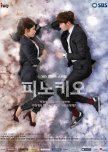
I really enjoyed Pinocchio because of the strong chemistry between Lee Jong Suk and Park Shin Hye, which made their relationship engaging and believable. The storyline was well written and emotionally compelling, keeping me invested throughout the drama. The longing, the tension they built up, and that moment when they finally kissed...OMG! It was such a satisfying payoff.However, one element I could not fully get past was the concept of the hiccup caused by lying, referred to as Pinocchio syndrome. While the idea was interesting, the execution felt distracting at times. It didn't need to be something extreme, but a subtler reaction such as Choi In Ha stuttering or hesitating whenever she lied might have conveyed her inability to lie in a more natural and believable way. This small adjustment could have made the concept feel more grounded without taking away from the emotional impact of the story. I do understanding her hiccupping was the overall concept of the story.
I especially enjoyed Choi In Ha’s relationships with the men in her life, namely her father, grandfather, and Choi Dal Po. Their interactions were genuinely hilarious and added much needed warmth and humor to the drama. The dynamic among them provided some of the most entertaining and lighthearted moments in the series, and I found myself wishing there were more scenes that focused on them together.
Was this review helpful to you?
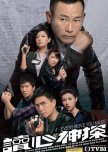
Not Lie to Me, But Still Worth Watching
If you liked Lie to Me, the American crime drama, you'll probably enjoy Every Move You Make. It's TVB’s take on psychological crime storytelling, which is a bit different from what they usually do, I found it refreshing.The cases themselves were interesting, though I felt the American version executed them more effectively. I appreciated that the character of Yiu Hok Sum was not simply a copy of Cal Lightman; he had his own personality and methods, making the series feel more original. Yiu Hok Sum was also not as wacky as Cal Lightman, which gave him a more grounded presence.
Bowie Lam was amazing as Yiu Hok Sum. It's so nice to see him back in a TVB drama. He handled all the emotions and subtle moments perfectly. Seriously, he just owned the role and carried the show.
On the other hand, Kristal Tin as Yip Chin Ting was forgettable. Her performance did not leave a strong impression, and I felt that almost any actress could have delivered a similar portrayal. I personally wondered if Flora Chan returning might have elevated the chemistry with Bowie Lam, given their previous dynamic, which was lacking in Kristal and Bowie’s pairing.
Even Bosco Wong didn't really impress me here, which surprised me because he's usually solid actor. In this drama, Bowie just completely outshined everyone.
Overall, Every Move You Make is a solid psychological crime drama for TVB. It's got its flaws, but Bowie Lam’s performance alone makes it worth watching.
Was this review helpful to you?
This review may contain spoilers
Romance Takes Flight
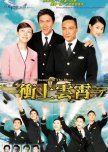
Triumph in the Skies explores the professional and personal lives of airline pilots and crew members, skillfully blending romance, ambition, and interpersonal conflict. The series stands out for its depiction of the aviation industry, combining melodrama with a relatively realistic portrayal of the challenges faced by those in the high-pressure world of commercial aviation.The production employs realistic aviation sequences, including aerial shots and airport settings, creating a believable backdrop for the story. Despite technology limitations, the series effectively conveys both the glamour and the inherent dangers of the airline industry. Close-up shots during emotional moments are particularly effective in emphasizing character psychology.
However, the portrayal of Isabelle, played by Flora Chan, fell short in conveying the character’s internal struggles. Her attempts to depict Isabelle’s mental and emotional conflicts felt forced and lacked the depth needed to make her arc fully convincing.
Despite this, Triumph in the Skies resonated strongly with audiences because it combined aspirational careers, romance, and personal drama. Additionally, the series subtly challenged traditional gender roles by featuring women in professional aviation positions, a representation that was less common in early 2000s Hong Kong television. This is a classic and I highly recommend to watch it, I tried to watch the sequel, but I couldn't.
Was this review helpful to you?
This review may contain spoilers
When Good Writing Is Held Back by Romance
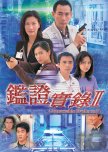
One of the things I miss most about TVB in the 90s is the consistency in script quality and Untraceable Evidence continues to reflect that strength even in its second installment. The detective cases remain carefully constructed and intellectually engaging. Each investigation follows a clear structure that allows viewers to actively think alongside the characters rather than simply wait for reveals. The pacing is controlled and deliberate and the twists feel grounded in logic which maintains the credibility of the storytelling.The chemistry among the cast remains one of the strongest elements of the series. Flora Chan and Bowie Lam continue to share a natural and restrained chemistry that brings emotional depth without overwhelming the crime focused narrative. Their interactions feel mature and realistic shaped by trust shared history and mutual respect. This emotional foundation is what makes their relationship so compelling and why viewers are deeply invested in their outcome.
However the second installment becomes frustrating due to the prolonged love triangle which extends far longer than necessary. The continued delay in reuniting Tsang Ka Yuen and Pauline Lip Bo Yin feels forced and emotionally exhausting. Tsang Ka Yuen repeatedly proves through his actions that his love is steady and unwavering yet Pauline Lip Bo Yin remains stubborn and emotionally closed off. This creates a sense of imbalance where his emotional clarity is not met with the same openness from her. The irony is especially difficult to ignore. Pauline Lip Bo Yin allows her ex boyfriend who repeatedly lied to her to re enter her life with little resistance yet she struggles to give another chance to a man who has consistently supported and respected her. This contradiction weakens her character development and makes her emotional decisions difficult to empathize with despite her intelligence and professionalism.
Choi Siu Tong arc in the second installment also becomes draining. Her pattern of entering relationship after relationship feels less like genuine healing and more like emotional numbing. Her repeated attempts to present the image that she has moved on while encouraging Tsang Ka Yuen and Pauline Lip Bo Yin to be together comes across as emotionally performative and exhausting to watch. I honestly feel bad for the men she was dating, I felt that was extremely selfish of her because the men she was dating had feelings for her. While it is satisfying that she eventually finds love her storyline is prolonged far beyond what was necessary which further delays the emotional resolution viewers were waiting for.
Despite these issues Untraceable Evidence 2 still retains many of the qualities that made the first installment memorable. The cases remain engaging and the performances are strong but the over extended romantic conflicts prevent the sequel from reaching the same emotional effectiveness. The frustration viewers feel is not due to a lack of interest but because the characters and relationships are strong enough that unnecessary delays feel like a disservice rather than dramatic tension. I can ignore the romance aspect since the drama focuses more the case solving.
Was this review helpful to you?
Detective Investigation Files Season 4
0 people found this review helpful
New Cast, Classic Cases
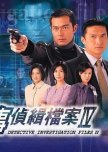
This series starts with a completely different cast compared to the previous three installments. I was really sad that the original cast didn't return, but this was due to Michael Tao and Joey Leung leaving TVB, which led to the creation of a new cast. Honestly, I wish they had simply renamed the series to reflect that it was essentially a new story. While this series retains the police procedural framework and case driven storytelling that defined its predecessors, the continuity largely ends there. The characters, relationships, and overarching narrative bear little connection to the earlier entries.In this series, it feels as though TVB was attempting to recreate the chemistry that made Michael Tao and Joey Leung such a compelling duo in the earlier installments. However, their dynamic was unique and impossible to replicate. That said, Louis Koo and Sunny Chan establish a strong partnership in their own right. Although their chemistry never reaches the iconic status of Michael Tao and Joey Leung's, it remains highly effective and believable. Their friendship develops naturally throughout the series, giving emotional weight to the narrative and providing a compelling foundation for the drama.
One of the series' greatest strengths lies in its cases. The investigations are consistently well constructed, balancing mystery, suspense, and character development in a way that keeps the audience invested. This strength alone is enough to secure the series' status as a classic.
The romantic subplot between Louis Koo and Jessica Hester Hsuan is another highlight. Their chemistry is undeniable, and the progression of their relationship from friendship to romance feels organic and believable.
The series does, however, stumble in its handling of romance, particularly through the love triangles involving Tsui Fei and Kong Tze San. These storylines often rely on repetitive misunderstandings and prolonged emotional indecision, which can become frustrating over time. While these issues don't undermine the series as a whole, they represent some of its most noticeable weaknesses.
Overall, Detective Investigation Files IV proves that even with a new cast and a fresh approach, TVB could still deliver a strong police procedural with memorable characters. It may not replace the nostalgia associated with the original trio, but it stands on its own as a solid and entertaining installment that highlights the enduring appeal of 90s and early 2000s TVB dramas.
Was this review helpful to you?

Corny Comedy Done Right in Ko One
This is the kind of drama where you can completely turn off your brain and just enjoy. It is not meant to be taken seriously at all, and that is honestly part of its charm. The story is very funny and lighthearted, leaning heavily into exaggerated characters, over the top humor, and fantasy elements. It is definitely corny, but in a good way, the kind of corny that feels intentional. The drama embraces how ridiculous it is, which makes it easy to watch without overthinking the plot or logic.The character dynamics are another reason the show works so well. Instead of focusing on emotional depth or realism, Ko One prioritizes entertainment and fun. The fight scenes, special effects, and dramatic rivalries feel more like a comic book come to life than a grounded story. This approach may not appeal to everyone, but for viewers looking for pure escapism, it does exactly what it sets out to do.
The person who really made this show for me was definitely Zhang Hao Ming as Jin Bao San. He is clearly there for comedic relief, but he elevates the humor in a way that feels natural rather than forced. His timing, expressions, and exaggerated reactions make many scenes memorable, and he often steals the spotlight even when he is not the main focus. I definitely wished we had more screen time of him, as his presence consistently made the episodes more enjoyable and helped balance out the more dramatic moments.
Overall, Ko One is not a drama you watch for a deep or meaningful message, but that is perfectly okay. It succeeds as a fun, silly, and nostalgic series that does not take itself seriously and invites the audience to do the same.
Was this review helpful to you?
This review may contain spoilers
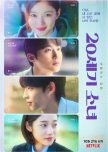
When First Love Lingers
I didn't expect the ending to turn out the way it did, but I think that’s what makes it resonate so strongly with viewers. Rather than offering a neatly wrapped conclusion, the film leaves a lingering sense of bittersweet realism that stays with you long after it ends. It’s the kind of ending that makes you reflect on the choices, regrets, and missed opportunities in life, tugging at your heartstrings in a way that feels authentic and deeply affecting. The mixture of nostalgia, unresolved longing, and quiet acceptance creates a profoundly human experience, reminding us how fragile life can be and how the people we hold dear can leave a lasting impact on our hearts.One thing I always struggle to understand in dramas and movies is when a character continues holding onto a past love for such a long time. From a viewer’s perspective, we learn of Poong Woon Ho’s fate at the same time as the female lead. As the story unfolds, it feels as though Poong Woon Ho simply ghosted Na Bo Ra. In a situation like that, wouldn’t someone eventually decide to move on? Yes, Poong Woon Ho was a great guy, but if someone suddenly disappeared from your life with no explanation, would you really continue holding onto them? After the initial stages of grief in a relationship, most people would eventually reach a point of acceptance and realize that someone who vanished without explanation may not be worth such a deep emotional investment. Na Bo Ra does attempt to go on a date, yet her lingering feelings constantly pull her back to memories of Poong Woon Ho.
Maybe I’m being nitpicky, or perhaps Na Bo Ra is simply the type of person who loves only once. Like figures such as Betty White or Terri Raines, once they found their prince, they never felt the desire to look for another. Perhaps Na Bo Ra was the same way, but considering the fact that their relationship never truly began, it makes her unwavering devotion harder to fully understand.
What I didn't like, however, was Na Bo Ra’s lack of honesty upfront, caused pain for multiple characters. While I understand that Kim Yeon Du was sick and dealing with her own struggles, it felt as though Na Bo Ra was surrendering and handing Poong Woon Ho to Kim Yeon Du when she wasn't really in a position to be making that decision for anyone. Much of the conflict could've been avoided if Na Bo Ra had simply said something like, “Sorry, I thought you were referring to Baek Hyun Jin.” Even if she didn't want to reveal everything, admitting that she was following the wrong person would've prevented some misunderstanding. This lack of communication created avoidable emotional damage and weakened the narrative at times.
Despite these frustrations, Kim You Jung and Byeon Woo Seok had great chemistry. Their performances made the emotional buildup feel natural and believable. You could clearly see the progression of their feelings, from small moments filled with butterflies to the gradual realization that they were genuinely in love. This strong chemistry is one of the film’s greatest strengths, as it makes the eventual tragedy of their relationship more impactful. I also appreciated how the audience goes on the same journey as Na Bo Ra, slowly uncovering what happened to Poong Woon Ho, which adds an emotional layer to the film’s ending and helps explain why she remained so deeply affected by her past.
Was this review helpful to you?
This review may contain spoilers
A Violent Story of Connection
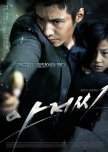
The Man from Nowhere does not shy away from violence. The film is extremely graphic and bloody, using gore not just for shock value but to emphasize the brutality of the criminal world it portrays. If you can tolerate or appreciate this level of violence, the movie offers a gripping and emotionally grounded experience.Cha Tae Sik becomes isolated and a shut in after the death of his pregnant wife. He lives a lonely life running a small pawnshop, and the only real human connection he has is with Jung So Mi, a young girl in his neighborhood whom he quietly helps and looks after. Their bond grows out of mutual loneliness rather than explicit familial ties, and So Mi gives his life a sense of quiet meaning.
Due to Jung So Mi’s mother becoming involved with criminals, both she and Jung So Mi are kidnapped by a group involved in drug and organ trafficking. Cha Tae Sik makes it his mission to save Jung So Mi at any cost, a desperate effort fueled by his guilt and inability to save his own family.
Won Bin as Cha Tae Sik is perfectly cast. He brings physical stillness and emotional depth to the role, and his limited dialogue is compensated for through expressive body language and intense screen presence. His performance makes the character’s fatherly, protective instincts feel completely convincing, even without overt emotional speeches.
Kim Sae Ron as Jung So Mi delivers a strong performance, especially considering how young she was at the time of filming. She brings vulnerability and resilience to the role, making Jung So Mi more than just a plot device.
Beneath the bloodshed lies a story about loss, guilt, and the quiet power of human connection. The chemistry between the two leads works exceptionally well, and the emotional bond that develops between them feels genuine even though it is never explicitly framed as familial. Their relationship becomes the emotional heart of the film. While this is not a movie I would likely rewatch due to its extreme violence, it is absolutely worth watching at least once. The action scenes are also beautifully executed.
Was this review helpful to you?


