



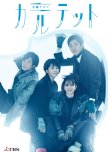
"Quartet" -- The Pain and Joy of Performing as a String Quartet
Quartet sneaks up on you. On paper, it is a gentle story of four strangers who share a villa in the mountains as they fumble toward a life as an amateur string quartet. Beneath that, however, runs a mystery that the series takes its time revealing. These two modes do not always feel as though they belong together, and yet the show slowly wins you over.
Yuji Sakamoto's writing is key to the show's appeal. It is grounded, melancholy, and funny in a gentle way that feels earned rather than manufactured. The series is at its best when it simply lets its four leads exist in the same room, talking, bickering, eating, and being awkward around each other. The filmmakers find many dynamic ways to keep these scenes fresh, deploying creative staging ideas throughout the dialogue sequences that prevent them from ever feeling static. The show has a rare gift for finding profundity in the smallest of moments, as when the quiet scandal of squeezing lemon on a communal plate of chicken karaage without obtaining anyone's consent becomes, improbably, an occasion for genuine feeling.
The mountain locale lends the series a pleasing remove from ordinary life. There is a sense that these musicians are glad to be performing, regardless of whether any audience receives them warmly. That contentment is hard won: the characters navigate real difficulty in booking gigs and reckoning with the complicated histories they each carry. Their passion for performing together persists anyway, indifferent to external validation, and it gives the show an emotional core that rewards patience.
The heavy reliance on dialogue is both the show's greatest strength and, on occasion, its limitation. The dense, witty exchanges are a pleasure, but the approach can feel one-note in stretches. A little more variety in texture would have helped.
The cast is excellent across the board, with Takako Matsu a particular standout. She brings an understated gravity to her role that anchors the whole ensemble. The mystery element threads through the series with enough patience that it initially seems at odds with the looser, contemplative slice-of-life half. But the show earns the synthesis. By the end, the two strands feel less like competing tones than like two voices that were always, quietly, playing the same piece.
Yuji Sakamoto's writing is key to the show's appeal. It is grounded, melancholy, and funny in a gentle way that feels earned rather than manufactured. The series is at its best when it simply lets its four leads exist in the same room, talking, bickering, eating, and being awkward around each other. The filmmakers find many dynamic ways to keep these scenes fresh, deploying creative staging ideas throughout the dialogue sequences that prevent them from ever feeling static. The show has a rare gift for finding profundity in the smallest of moments, as when the quiet scandal of squeezing lemon on a communal plate of chicken karaage without obtaining anyone's consent becomes, improbably, an occasion for genuine feeling.
The mountain locale lends the series a pleasing remove from ordinary life. There is a sense that these musicians are glad to be performing, regardless of whether any audience receives them warmly. That contentment is hard won: the characters navigate real difficulty in booking gigs and reckoning with the complicated histories they each carry. Their passion for performing together persists anyway, indifferent to external validation, and it gives the show an emotional core that rewards patience.
The heavy reliance on dialogue is both the show's greatest strength and, on occasion, its limitation. The dense, witty exchanges are a pleasure, but the approach can feel one-note in stretches. A little more variety in texture would have helped.
The cast is excellent across the board, with Takako Matsu a particular standout. She brings an understated gravity to her role that anchors the whole ensemble. The mystery element threads through the series with enough patience that it initially seems at odds with the looser, contemplative slice-of-life half. But the show earns the synthesis. By the end, the two strands feel less like competing tones than like two voices that were always, quietly, playing the same piece.
Was this review helpful to you?


