

 10
10 42
42 15
15


Not nice to watch but definitely worth seeing. Superbly done in many ways. Powerful. Resonating.
Prolog:The conclusion for the protagonist in his late 30s is rather tragic: he´s getting the urge to go back. He wants the life of his late youth back. He cannot continue with who he is today. For him, there is only one option remaining – a shortcut to the exit.
However, for the audience, the end is actually the beginning. The journey goes backwards in seven chapters. And when we finally reach the start, it actually makes sense to look at the ending again... (in movie-terms: its beginning...)
-------------------------------------------------- ----
“Peppermint Candy” was one of the top ten movies in 2000. The international awards it collected are respectable. And even in 2022, “The Guardian” has it listed in 12th place among South Korean film classics. Meaning: It was topical back then and still hasn’t lost its impact. It´s cult. It can be considered particularly valuable. However, it´s not particularly nice, though. Rather particularly powerful and ferociously intense.
"Peppermint Candy" dates from 1999. It tells the story of the previous two decades of South Korean history using the example of an arbitrary, inconspicuous individual. For audience who isn´t firm in recent South Korean history, the KMovie may be reduced to the protagonist as an individual - to his very personal story and his tragic ending. For all those who know something about the historical, social background (see the side note below if you like), the KMovie becomes a memorial on screen that commemorates all those in society who were probably thus affected in one way or another, too, and may have had a similar experience. And there were quite a few.
In 1999, South Korea looked back on two extremely eventful decades. Two decades that were endured, sustained, borne by the people... Two decades that, in addition to democracy, turbo-capitalism and material prosperity, also produced a whole series of psychological cripples.
I actually don't like the word 'cripple', but somehow it seems appropriate in this case, here in the sense of: people who were maltreated by others or 'by life´s circumstances' to the point of psychic unconsciousness (even if perhaps they themselves were involved as perpetrators, too). People who were broken by their fate and trauma, not being allowed to and/or able to talk about it. People who fell, lost themselves, could no longer get back on their feet, feeling helpless. Completely bent. People who could not find peace with their shame and guilt. In their inability to communicate about it and get help, they became a total human failure for those around them.
In reverse "Peppermint Candy" portrays the career of such a psychological (and physical) 'cripple' in intense scenes. We may acknowledge the individual fate. Even without historical background and regardless of socialization, we acknowledge a broken soul, of which all that is left to the outside world is actually an 'asshole'. Once a poetic, delicate, sensitive spirit... it´s hard to believe. Actor Sol Kyung-gu expands the entire range of his skills, convincingly and uncompromisingly drawing the audience into each of his divers crucial, rather unpleasant emotional life situations.
“Peppermint Candy” is superbly done in many ways. Not too much, not too little. Ruthless. And in pointed, symbolic imagery, the scenes gain in emotional power and meaningfulness as they progress - even after we have travelled a few sequences further (back) - to the extent that the puzzle of drastic life events accumulated are coherently put together into a pile of shards.
The protagonist in "Peppermint Candy" is experiencing the significant historic events of his generation at the forefront. His psychical downward spiral cannot be stopped. But this protagonist is no exception. Countless people in their late thirties in South Korea in 1999 could have told such or similar stories. During those traumatizing two decades the public was carelessly left alone to individually deal with what had happened. What a person experienced emotionally, what a person had to process and couldn't, the decisions made, the guilt, the shame, the pain – the answer to that was mainly psychological repression and silence about it. The consequences in everyday life: Outbursts of acting up and/or apathy. Sometimes the old wound hurts again. The old wound makes man fall to the ground, by its pain that he cannot escape. But it is also a phantom pain - the desperate suffering over an essential piece of 'who I am' that was taken away once and for all...
The protagonist in "Peppermint Candy" suffers on behalf of an entire generation of anonymous young people who were quietly worn down, deeply psychologically shattered and finally by the two decades of the 80s and 90s, the time of transition from military dictatorship to modern capitalism existentially bankrupt. The KMovie reaches out to all those who may have had a similar experience and/or were able to sympathize. Where communication had been lacking for decades, the KMovie, with its sometimes disturbing insights, tries to build a bridge: with understanding that may even extend to empathy. "Peppermint Candy" manages to connect the South Korean people through the fate of this one fictional man and his personal environment. (Additionally, it may even touch the rest of the world). Yongho, who could be 'anyone', and with him the women in his life, his friends (?), his colleagues and his victims who had crossed his path, who could also be 'anyone'…
Not nice to watch. But definitely worth seeing.
Powerful. Resonating. A convincingly empathetic work.
A work of passion.
--------------------------------------------------------------------------------
SIDE NOTE: --- Brief overview of the historical background of South Korea - regarding May 1980 in Gwangju, the 1980s under repressive police violence, and the years of economic miracle up to the Asian crisis of 1997-1999. ---
May 1980 in Gwangju, South Korea, featured a bloody massacre that the police and military were ordered to carry out on their own people. Yet, that massacre of Gwangju remained an official taboo for almost two decades. What happened in Gwangju back then was kept secret from the rest of the country. Then, the city was deliberately cordoned off. The enemy was officially called 'communism' (especially in student circles, supposedly under the infiltrated influence of North Korea.)
Those who survived May 1980 in Gwangju and perhaps could or would have wanted to talk about it were pressured, persecuted, tortured and put in camps. The others who preferred to remain silent had to figure out by themselves how to emotionally digest what had happend.
President Chun Do-hwan, who succeeded his predecessor Park Chung-hee in the aftermath of the bloody spring of 1980, did not create any less autocratic structures for the common people than before with his dictatorship. On the contrary. With him, brutal torture was carried out in the spirit of a systematic cleansing. The years of Chun Do-hwan's rule were some of the worst for South Korea in terms of political repression. His mission: The country should use all its might to present itself to the rest of the world as dazzling and up-and-coming until the Olympic Games. Whatever/whoever was bothersome was put away. However, the autocratic rule of the dictator and his brutal power apparatus with police and secret service ended in 1987 as a result of unbridled, enormous public pressure. The people's longing for democracy was finally able to prevail.
Parallel to the repression under Chun Do-hwan, the 1980s and following years were characterized by the years of economic miracle. The market became increasingly liberalized and it was all about exports. Yet, on a large scale growth and prosperity were built on credit: direct investments from abroad, credit cards for the people in the country, loan sharks for all those smaller companies that couldn't get the money from the banks. But the bubble of the expansive credit economy of the 1990s burst in 1997 with the Asian crisis. The credit boom was followed by a crash, an enormous fall in the value of the won, a series of bankruptcies, unemployment all over the place and poverty for the many.
Even though South Korea got back on its feet astonishingly quickly in the course of the subsequent years of the so called IMF Economic Crisis, the path was marked by countless fates of bankruptcies and many families suffering from for a long time since.
It´s Girl Power time! Outrageous, luminous angelic + consistently deadly, too. Pitch-black humour.
"Sympathy for Lady Vengeance" or in the original "Lovely Geum-ja" is grossly funny, bitterly satirical, with a huge portion of pitch-black, bone-dry, unpredictable humor. The KMovie playfully juggles with details that seem to have sprung from a film noir and, above all, deliberately wants to irritate with the aestheticizing stylization of bloodthirsty revenge.Geum-ja is an Angel of revenge in the most literal sense. Luminous, angelic in her kindness, yet consistently deadly when it comes to her revenge mission. This makes the KMovie a paradoxical, incomparable experience: bizarre, absurd, dark and yet pointedly funny.
It´s is Girl power time! Patriarchy is in the pillory, regarding various offenses and arrogance of most of the male characters. Geum-ja (convincing to the point: Lee Young-ae) offers the entire program of associations with the feminine in its blatant contradictions: saint, whore, witch, as well as mother, lover, friend. Guilty in naive innocence. Outrageous. Diabolical. Sovereign. Powerful. Decided. Efficient. Exhilarated. Significantly, a remix of Vivaldi's "Ah ch'infelice semper" swings the baton in the background.
Storytelling is always close to Geum-ja. Not too much, just as much as is needed, is given to the audience. A serious, deeply meaningful off-screen narrator closes the gaps. As I said, the humor is pitch-black.
By the way, the KMovie (which has also received many international awards) is the third part of a revenge trilogy by director Park Chan-wook, which includes "Oldboy", that is considered one of the most influential films of contemporary South Korean cinema.
The abundance of (epic) tragedy is KDrama at its finest - meanwhile the Joseon empire is born
"My Country - The New Age" is set in the historical transition period between the Goryeo era and the Joseon era. The context is General Yi Song-gye, who for the next approximately 5 centuries tied the throne to his bloodline with a coup d'etat. However, this KDrama isn´t a history lesson as such, though historical figures get involved. Also romance is not the predominant matter. ... First and foremost it's about loyalty, unconditional male friendship and love as its basis. Secondly, it is about relationships between fathers and sons. Thirdly it is about romantic love, too. Besides and as a backbone for the storyline´s dramatic dynamics it its about political attitudes, visionary leaders and the throne. Overall, "My Country - The New Age" is definitely worth seeing, yet you should be prepared for makjang-like emotional roller coasters.The actors significantly contribute to the intensity of the story. Above all, the charisma of Jang Hyuk as Lee Bang-won (the 5th son of General Yi and later 1st Joseon King), as well as Ahn Nae-sang as the fictional Nam Jeon, whose political stances are reminiscent of the historical Jong Do-jeon (the historical Jong Do-jeon and chief chancellor, who set the political, administrative and legal course for the newly blossoming Joseon Empire.)
----------------- SIDE NOTE: --- Lee Bang-won (later King Taejong) and Jong Do-jeon (first chief chancellor of the Joseon aera) ---
These two crucial historical personalities (Lee Bang-won and Jong Do-jeon) were both driving forces in those early years of the new empire with quite lasting impact, and at their time fundamental adversaries.
Jong Do-jeon as the first Joseon King´s chief chancellor decided all matters relating to military affairs, diplomatic procedures, questions of education, new legislation and constitution (the once feudal state was now organized in a bureaucratic manner), new tax laws as well as new state religion (Buddhism became Confucianism). He ultimately moved the capital to Hanyang (now Seoul). He also named the districts of Hanyang and the 8 provinces in the country and caused many slaves to be freed. He was a man with strong visions for an innovative political system in the new kingdom - and consequently implemented those (quite unscrupulously).
His opponent was Yi Bang-won, who did not want an empire with ministers being more important than the king. Rather, he prefered a powerful monarch, a solidly grounded monarchy. He was also one of those who had contributed most to his father's successful coup d´etat. However, the latter had finally disappointed him by not choosing him as his successor. After the Queen's death, Bang-won took advantage of his father's period of mourning and invaded the palace. In doing so, he killed the state chancellor, all ministers loyal to him and the children of the deceased queen as well as the crown prince, too. So he (also) took the throne by force - his father could only abdicate and reluctantly hand over the crown. However, as King Taejong, Bang-won effectively contributed to a stable system of government in his own way. Among other things, he enacted a law allowing all citizens to register and established new Ministries: of Human Resources, Finance, Protocol, Defence, Justice and Public Affairs.
----------------------------------------------------------
With Jang Hyuk as Lee Bang-won and Ahn Nae-sang as the fictional Nam Jeon, who to a certain extent represents the ideas of Jong Do-jeon, the KDrama paints a strong picture of the crucial conflict between those political visions from the very beginning. The actors live their roles with high intensity. We get to know more about their character in their respective relationships with the two protagonists Seo Hwi, son of a once-legendary soldier of the Goryeo Empire, and Nam Sun-ho, the illegitimate son by Minister Nam Joen. Since childhood they are best friends. Then there is a twist of fate. (Here, again: two actors with splendid performance - Yang Se-jong and Woo Do-hwan.) Minister Nam Jeon alone is responsible for the twist of fate in this friendship, but Prince Bang-won becomes a free rider in this.
In short: "My Country: The New Age" offers an epic, visually stunning story with a lot of action and emotion, worth seeing sword fights (actor Jang Hyuk does the stunts all by himself), plenty of blood and even more emotion. Yes, of course there are also women and love involved ... The abundance of (epic) tragedy is KDrama at its finest.
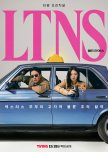
A bit weird and edgy, yet refreshingly and unashamedly honest about what love life also is like
"LTNS" (Long Time No Sex) starts off where other series usually end. TVING doesn't care about age ratings. “LTNS” is unusually explicit for a KDrama. At the same time, “LTNS” presents itself as a pitch-black comedy with venomously satirical overtones. Be prepared for an edgy series that is refreshingly and unashamedly honest about what love life also is like...If desire in a relationship has been turned off over time by habit and everyday worries while instead alienation and disinterest are creeping in... what should you do? The protagonists unexpectedly find an almost absurd option to bring some excitement and “we”-time back into their relationship. With detective zeal, they set out to blackmail those in whom the fire of (actually forbidden) desire still burns happily... and in doing so, they thus try to create a (almost criminal) virtue out of their own need, so to speak.
"LTNS" has fun with scenes that convey uninhibited sexuality one moment, but are completely unerotically thwarted the next. It is somehow down to earth in a most peculiar way. Bedroom stories are being told here that we haven´t been waiting for. All of a sudden such a certain mood for certain hours is eventually collapsing like a house of cards due to a mishap or unexpected incident... A "Bravo!" in this context to the actors, too!
“LTNS” promises a special kind of bizarre, weird series delight with plenty of potshots at the mendacity concerning certain facades of a solid and sincere love life and family life that are usually and preferably presented to the outside world.
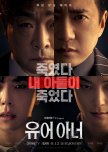
A masterfully done crime thriller, mercilessly progressing offside the beaten track
Fabulous! "Your Honor" is a masterfully done crime thriller, mercilessly progressing offside the beaten track – with an upright protagonist maneuvering himself deeper and deeper into a hopeless fiasco.Right and wrong, black and white – they turn out to be impractical templates. Almost everything and everyone will be turned upside down at some point, and the entanglements will become more and more devastating.
In "Your Honor" suspense isn´t exactly associated with an arc. It is rather smoothly taking one loop after the other. When it comes to the protagonists: it is emotionally intense, yet at the same time controlled to the extreme, calm on the surface, though concentrated to the max. And yes, it is cruel and merciless at (most) times, too. In a dark vesture and at the same time with disarming grace this KDrama is fathoming personal boundaries of what is bearable and often enough even exceeding them.
PS:
“Your Honor” is based on the original series Kvodo by Shlomo Mashiach, for which several international remakes have since been produced.
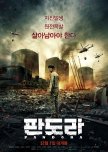
A disaster movie, yet using emotional + vivid suggestive power in the tradition of anti-war-movies
"Pandora" is a disaster movie.I don't really consider myself a fan of this genre, which focuses on mass panic and adrenaline.
However, I consider this KMovie particularly valuable.
In this case I think the makers have succeeded in doing something similar to what anti-war movies try to achieve: deterrence by vividly conveying the threatening horror. In respect to the scenario of a nuclear catastrophe the movie applies emotional and vivid suggestive power, at the same time making people think and possibly question the sense and usefulness of highly dangerous nuclear power plants.
In view of the consecutive radical change of South Korea's nuclear policy six months after "Pandora" was released, one could say: the project was worth it. (It would probably be too daring to talk about causality, but it could be considered a noticeable correlation...)
The 2016 KMovie picks up on the 2011 Fukushima nuclear disaster and, against this background, develops a story that is comparable by South Korean standards. South Korea is the country with the highest population density in the immediate vicinity of its nuclear power plants. However, due to its insular position, a realistic evacuation plan in the event of a disaster is a major problem. With the movie "Pandora" the lid of the legendary box is shaken. In this case, a nuclear power plant on the East Coast suffers earthquake damage and radiation leaks, similar to Fukushima 5 years earlier. The film fictionally exercises the processes in the event of such a catastrophe (or a comparable one) and comes full circle with a deliberately touching scene in which Kim Nam-gil makes an emphatic plea against nuclear power in his usual impressively passionate way.
Regarding such critically oriented material, the production obviously had difficulties with its financing - in South Korea the lobby of the nuclear industry is as powerful as anywhere else. Nevertheless, the ambitious project could be realized through crowdfunding.
------------------------ SIDE NOTE: --- Sobering facts/outlook on nuclear power plants in South Korea ---
"Pandora" was released in December 2016.
In early summer 2017, as one of the existing South Korean nuclear reactors was actually scheduled to be shut down, President Moon Jae-in announced that the country's nuclear-focused energy policy would be stopped and that the country would instead steer towards a nuclear-free era. Accordingly, plans to build new reactors or extend the life of existing ones have been abandoned. A sign of hope?
However, by the autumn of the same year already, the government's political commitment was no longer valid. The nuclear lobby has actually been able to exert such pressure (the President's faction not having a majority in Parliament....) and prevail that new power plants were going to be built again.
South Korea's nuclear companies make a lot of money by exporting their self-developed reactors. The companies want reference projects in their own country... it is as simple as that...
As far as the people are concerned: According to a survey by the polling institute Realmeter in 2018, 61 percent of adult South Koreans still firmly support their president’s original nuclear phase-out course. Another 10 percent tend to do so. Yet, the lobby as so often has more to say...
... To date, South Korea covers a third of its electricity needs with 24 nuclear reactors.
... There are always earthquakes on the peninsula...
------------------------
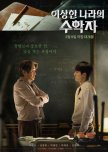
Two outsiders. One equation: trust + time = transformation.
Some films shout. Others whisper — yet linger in your mind long after the credits roll. In Our Prime belongs to the latter.An older man hides his brilliance behind a janitor's uniform. A young student, adrift among numbers and expectations. Two people, like distant islands — until they start to truly hear each other. What follows isn’t a grand gesture or dramatic spectacle. It’s something far rarer: a genuine connection.
Mathematics here is more than curriculum. It’s a space for thought, a shared language, even a kind of comfort. The film doesn’t promise glittering careers or textbook triumphs. Instead, it shows what can unfold when someone believes in you — not to solve the problem for you, but to walk the path with you.
There’s no melodrama, no inflated conflict. Just quiet gazes, thoughtful words, and a camera that respects its characters enough to let them breathe. In Our Prime finds dignity in the act of thinking and tenderness - in the simple gesture of someone offering a pencil, not to provide answers, but to begin the search.
With quiet sensitivity, "In Our Prime" tells a story of marginalization and a sense of belonging, of the silent power of recognition — how subtle forms of acceptance can reshape a life.
Gentle and empathetic. Uplifting and sincere.
Father + daughter challenged in the face of presenile Alzheimer
Cassiopeia has already won the Korean Association of Film Critics Awards 2022.I would recommend it, too.
The KMovie Cassiopeia tackles an unpleasent subject: presenile Alzheimer's dementia. In an increasingly aging society, dementia will become more and more present and more common within the personal environment of all of us. Most cases occur at ages 65+. However, a small percentage is also affected at a younger age. This can even occur very early due to hereditary factors - as documented sensitively and unforgettable in the KMovie "A Moment to Remember". But this can also have many other causes. Dementia is a shocking diagnosis at any age, because with your eyes wide open, your own life inevitably slips away... faster than you imagine, you will no longer be able to recognize your own children, partners, friends or parents, while also the bodily functions will do their own thing.
"Cassiopeia" is about a woman in her 40s who is overwhelmed by presenile Alzheimer's dementia. However, the narration is slightly different than in "A Moment to Remember". "A Moment to Remember" captures the strong emotionality of the mental degeneration process practically from within - in touching scenes and sensitive relationship dynamics and tells the story of how memories in her head are erased as a painful loss for everyone involved. In "Cassiopeia", on the other hand, the audience follows the accumulating social moments in a comparatively objective manner, in which the exponentially progressing decay of the nerve cells is expressed - simply stating, so to speak. (Just as the protagonist initially presents herself as an objective, sober and rather sever person.) Emotionality is not dramaturgically staged in this KMovie, but results from the sum of soberly observed situations of individual loss of control and Su-jin's familiar world broken in two - one in which clarity still reigns and one in which everyone, even she herself is a stranger. From the emotionality thus involved - fear of failure, helplessness, shame, being at the mercy of others and much more - one cannot withdraw oneself. Rather, this emotionality develops an increasingly peculiar driving force (just as the protagonist's psychological/physical development process picks up speed). Eventually, the KMovie goes straight to the heart and makes people think.
In "A Moment to Remember" the focus was on the relationship dynamics with the beloved husband, here it is the portrait between daughter and father. In this case, the father tries to do better in old age what he could not do when he was younger, as he was not around.
In "A Moment to Remember" the protagonist is still at the very beginning of her young, promising life. In "Cassiopeia" Su-jin has achieved quite a lot: she is a mother, a successful lawyer, and also divorced. The daughter is about to move to her father in the USA. Significantly, the life of the protagonist, as it was up to now, ends in several respects with the departure of her daughter. It becomes difficult even for the star constellation Cassiopeia to give life perspective and orientation...
(By the way: the KMovie builds on a nice analogy between Cassiopeia and family. Both the star constellation pointing to the North Star and one's own family cannot help you, finding your path and your own way with life. Yet, we can rely on them if we got lost along the way: as some place to look out for/reach out for, regarding perspective/support).
Emotive. Especially by those often deliberatly soberly, calmly captured situations in which both the orderly and deformed worlds meet and finally merge. The helplessness and coldness of the social environment enfolds in all its unvarnished harshness - by its objective narrative style and camera perspective it is subtly thrown back at us. We are emotionally drawn into what is happening in two respects: regarding our empathy with Su-jin, which we cannot escape in the progress of the story, as well as regarding our identification with people/strangers Su-jin meets along the way - because that is what we are, too. How do WE actually deal with people who have obviously lost control of their lives or are about to lose it? Can WE stand this? Can WE lend a helping hand with this? Be of support? Even (or especially) if it's just a casual encounter on the street, an acquaintance in the neighborhood, or a colleague at work?
The focus on the absolutist self-image of the Jaeboel changes towards their very human weaknesses
"The Taste of Money" from 2012 bombards the audience with aestheticized images, a strangely bizarre stirring mixture of cynical decadence, insatiable greed and human weaknesses that even the richest of the rich don't stop at. Let's start with the moral of the story: money doesn't buy happiness. On the contrary. The more there is, the unhappier their owners get. They may be wealthy bank-wise, but humanly they are bankrupt. Maybe they can buy anything, but in fact they are (and remain) alone. Their relationships tend to be abusive, mostly cold, and rather an empty, highly polished shell.The KMovie focuses on a Jaebeol clan with a CEO, his wife, daughter and son, as well as the CEO's assistant and a filipino housekeeper.
----------- SIDE NOTE: --- Jaebeol, the secretive modern royalty of South Korea ---
The rich and powerful of South Korea emerged as a distinct variety in the post-war years. As a motor of progress and prosperity, they still influence social life as a matter of course - hidden, unofficially, from the background. In their hands gigantic possessions are concentrated. These are consistently maintained within the founding families. The Jaebeol clans were created as part of the autocratic governance of the early decades of the Republic and were further strengthened during the military dictatorship. The founders set the course for the economic upswing. In the meantime however they behave like the country's new nobility. They shamelessly and ruthlessly buy and bribe people at will. The remaining 99 percent of society are practically 'learned helpless' at their mercy. You have nothing to oppose to this power, which simply interferes with the legislature, judiciary and executive if necessary.
---------------------------------------------------------------------------------------------------
The protagonist's family is one of the first percent of the social class, which behaves as a matter of course as royal families. Here pomp, decadence, coolness, distance, and even obscenity dominate. The highly polished, stylized aesthetic stands in deliberate contrast to a rather gloomy lighting mood. The opulent wealth almost builds an aesthetic wall that cannot be penetrated. The family members are trapped inside. Nothing can or event likes to really approach that, let alone penetrate it. It is (and remains) a strangely strange world.
The idiosyncratic cinematic narrative style contributes to this. It doesn't even try to collect all the threads at the end and close them neatly. It's as if the camera jumped in on the family story at one random point and got off at another. At the beginning, the focus is on the corrupt machinations and the almost absolutist self-image, but that changes on the track after the very human weaknesses of the individual clan members open up. Although they pretend to be untouchable, they are still vulnerable and actually want to be touched. From there it becomes a more or less satisfactory settlement with their own heart balance. 'Love' is a concept in this world that doesn't really want to fit in.
One of the key scenes: Youn Yuh-jung is shown a 64-year-old woman in an unusual candid sex scene. A disturbing effect is deliberately wanted. In a way, this encounter between young and old, between boss and employee, points out the dilemma of the story, so to speak. In this short, impressive scene, the venal world of dependencies and emotional states is turned upside down. The rich have everything and yet they don't - there is something they don't have: the feeling of being wanted, desired or even loved for their own sake.
"The Taste of Money" is a somber social study about the 1 percent that sits at the top of South Korea's social pyramid. Once again. There is an astonishing number of such startling studies in the world of film and series. But it seems even more astonishing to me that there are obviously still far from enough of them. Because nonetheless, this 1 percent still sits dazzlingly on its throne and it is still considered highly desirable within South Korean society to get as far up the pyramid as possible...
Dysfunctional family to touch. True to life. Rough. Surprisingly on a positive note though
"Boomerang Family" refers to the term 'boomerang kids': adults who for pragmatic reasons move back in with their parents - mostly for financial reasons, because of unemployment or because of divorce. The protagonists of this KMovie are the mother, her three adult children and her granddaughter. Together they form the boomerang family.In South Korea, family is the greatest good. Family is omnipresent and gets involved everywhere. This does not mean, however, that family is therefore only associated with happiness, love and warmth. On the contrary. There's a lot of pain associated with it. Much is and remains unsaid. Punches are often included as well.
That's what "Boomerang Family" is about - the dysfunctional aspects of a simple family. Strife and rivalry and fights. Envy and inferiority. Pride. Yet also moments of happiness. Eventually not being seen. Yet, being seen, too. Unspoken truths that will sooner or later be told anyway. Very private, often rough, unsightly, even downright repulsive manners in everyday interactions in the smallest of spaces, which we actually (if at all) only share in the closest, most intimate circle. E.g. in family, that takes you as you are. (Inevitably.) (Out of habit.) (Because one is just so familiar due to the proximity in time and space that one has shared.) (Out of love?)
The bottom line in "Boomerang Family" is love, which, in its most screwed up way, slumbers and lurks somewhere behind the curtain of mostly ugly, all too familiar patterns of everyday, long-established, well-established manners. Strangely enough, it is simply there.
In the world of the protagonists that curtain is rather shabby. Life is simple. The language rough. Proximity is created through shouting, scrambles and fights. Community can be experienced through shared meals, though. Those meals structure family life and become a connecting, binding medium. The common meal is the place of communication and encounter under largely regulated, peaceful conditions. Everything before and after, however, can quickly (almost certainly) get out of hand.
A special aspect for South Korean conditions, where the direct bloodline is still enormously important: Over time, it becomes clear that the protagonist family is actually a rather progressive variant of a patchwork family. Because of that fact, at first glance all seems to be in question. Nevertheless, this realization cannot erase the lived experience as a "family". The simple, unnamed, tangible, rustic, crude 'love' between siblings that is celebrated with this movie, is not in the genes, but has grown out of shared experiences. In this message lies the magic of this otherwise rather brittle, sometimes dark story. Eventually the heaviness is balanced here and there with a breeze of quite idiosyncratic humor.
Everyone in the family has their own stories and small, medium or big tragedies that bring them back together under one roof. A dysfunctional family to touch, true to life, authentic, in all obscenity. As a spectator, you are brought up close, sometimes closer than you might like. Heaviness and pessimism may want to impose themselves in the course of events, but they ultimately fail to determine the emotional space. You wouldn´t believe it, but the story ends on a consistently positive note.
The KMovie is a film adaptation of a novel. It could also be a theatrical performance. It touches, repels, shamelessly places the ugly next to moments of happiness. Who actually is to judge life? What is good? What is beautiful? What is valuable? What is happiness? Ultimately, all protagonists feel (not only, but ALSO) valuable and happy in their affiliation. So what are the criteria for evaluating the quality of life? "Boomerang Familie" chooses a very idiosyncratic, but ultimately soothing perspective - beyond lifestyle, image, aesthetics or monetary wealth.
Weekend family drama, progressively challenging the concept of becoming/living as an ´adult´
“My Golden Life” is one of those KDramas that have been writing drama-history in South Korea. It is considered a 'national' series – popularity increased rapidly, the number of viewers doubled during the broadcast and towards the end, almost half of all nationwide TV audience during the weekends, while “My Golden Life” was broadcast, watched this series."My Golden Life" is a family drama, that doesn't just get lost in family clichés, Makjang and RomCom, but instead explicitly addresses some critical contemporary issues. Additionally, given attitudes and convictions are boldly deconstructed along the way. Thus, "My Golden Life" is a rather progressive family drama, involving also the 'quite new' concept of making personal life decisions despite (and in opposition to) family interests. In addition, more than one protagonist is questioning his/her life decisions or is forced to dealing with 'failure' (up to 'depression' as a result of learned helplessness), which is also quite progressive. Whether rich or poor, such issues likewise hit any income classes - in “My Golden Life”, too. In addition, there are current long-running topics such as the (lack of) work-life balance, discrimination because of social status, and the shame of divorce, as well as the increasingly sensitive issue of 'age'.
Ultimately “My Golden Life” is progressively challenging the concept of maturing in the sense of making my own, accountable decisions and thus becoming/living as an ´adult´. What does it mean, what does it need to be an 'adult'? ´Adult´ in the sense of having grown out of the familiar nest and being able to fly with my own wings? In the sense of being challenged to apply what I have learned in my own, individual manner? Is it allowed? Actually desired? Even wanted?
Notably gratifying and astonishing: Throughout the series, practically all of the divers family members go through their personal maturing processes against the background of various contemporary social issues. Many dramaturgical motifs may be familiar, but you can be sure that sooner or later everyone will be challenged with their attitudes and decisions being on trial. “My Golden Life” is not about stumbling through life with a social reptilian brain in obvious stimulus-response pattern. And it is not about by all means controlling the environment with the arrogant mindset of absolutist power fantasies. "My Golden Life" is intelligently and systematically deconstructing the usual set screws for critical life decisions (and dramaturgical plot developments.) In the end, almost every protagonist gets challenged and in the long run actually they all come to their individual, sometimes astonishingly mature, honest and even wise reassessments and re-decisions. This is (at least in this KDrama) possible, permitted, actually prerequisite.
Strikingly symbolic to deconstruction processes of social and individual assumptions throughout the story, ´gold´ is a metaphor for the estimation and valuation of an individual life. Its meaning and value is changing throughout the KDrama, parallel to the transformation processes of the protagonists... Most of the characters initially have the conviction that money (and associated with it: status) is the prerequisite or guarantee for happiness and a worthwhile, precious life... (as on the other hand the lack or loss of money is the reason or the cause of unhappiness and equivalent to a nugatory life.) However, most of them realize over the course of story that a ´golden´ life is not necessarily one that is successful, prosperous and meaningful because of a lot of money. In fact, an elitist, privileged life - being born with a ´golden spoon´ in the mouth - eventually comes with a ´golden cage´, too... Rather, a ´golden´ life is cordial, substantial and radiant with accountability and authenticity.
Within turbulent relationship dynamics (including a bit of Makjang-style topping when it comes to plot development) the 'impoverished middle class' and the 'dirty rich Jaebeol clan' are cleverly juxtaposed against each other, thus almost offensively confronting with the exaggeration of social class-affiliation and questioning traditional mindsets; additionally, full of wit contrasting submissive obedience and self-confident rebellion. Meanwhile, a dubious, arrogantly patronizing 'Noblesse oblige' virtue is craftily criticized, too.
“My Golden Life” is sometimes funny, sometimes intelligent, sometimes outrageously provocative, sometimes infuriating, sometimes emotionally serious, sometimes touching and sometimes downright grotesque. Being set as a family weekend drama, it is supposed to be easy to digest… yet, at the same time, the KDrama is consistently keeping its unabashed finger (gently, yet persistently) on the social scrapes, quirks and deep wounds, too. An astonishingly felicitous, ambitious balancing act. Overall, “My Golden Life” isn´t long-winded, even with 52 episodes. You may as well give it a try.
P.S.:
'Reassessment' seems to be the greater moral of the story.
Meaning: Traditional structures, rules, proven patterns and given orders may be all well and good. They may give orientation and set a direction in life. They provide a certain range of tools and know-how on how you can meet the challenges of life. But ultimately, in each individual case, it is still indispensable to carefully consider the appropriate application and decide for yourself what actually should be and could be accomplished. What is it, that I want? What is it, that I can do? What is it that I think is right? And what is it, that I am willing to supply?
At the end of education and apprenticeship usually there is a form of diploma or master's degree – not for mere copying, but for suitable, at best innovative application and enhancements. And in "My Golden Life" there are quite a few characters truly having earned their award... each in their own way. Eventually, it won´t do to simply adopt what others suggest, would have done or did before. It is all about individual solutions. Traditional lifestyles and attitudes are put to the test and are systematically deconstructed - voluntarily or involuntarily. In the end, the individually appropriate reassessment and authentically fitting solution does not necessarily have to lead to an easy or obvious decision...
"My Golden Life" is thus also giving a lesson in emancipation, too - in the original Latin and also in the more modern sense. Initially, Latin “emancipatio” was the “release of the son from paternal power”. In a broader sense: the child has grown or the student has been educated, so they can hold themselves accountable for their own life tasks and work obligations and thus take responsibility and reflect on their achievements accordingly. Additionally, in a modern, more general sense, emancipation is freedom from discrimination based on group, sex or class membership…
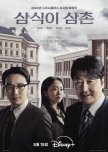
Great performance & complex narrative re. challenges in politics during dreary SK post-war decades
"Uncle Samsik" offers a quite interesting narrative of the complex connections between party politics and the even more crucial backroom politics during South Korea's first republic (1948-1960). The KDrama is primarily set in the run-up to the turbulent events and nationwide demonstrations that led to the resignation of the first President Rhee and the founding of the second republic. However, the nation that had hoped for real democracy and prosperity stumbled into a third one just three years later through a military coup. Although this brought the hoped for prosperity via totalitarian capitalism, it was still far from real democracy...The story of the KDrama is based on historical events, themes and people of that time, but is ultimately fictional - even if historical film sequences are occasionally interspersed as part of the April Revolution. The focus is on Uncle Samsik. For all those, who don't know much about South Korean history, Uncle Samsik is the emotional reference figure and dramaturgical bridge that holds all the politically complex threads together. Even without prior knowledge, "Uncle Samsik" offers an exciting, haunting political drama that takes place in the post-war years. It is in particular thanks to the passion of the great actors who manage to captivate the audience with comparatively 'dry' fare. It is advisable to watch the episodes consecutively so as not to lose the thread.
With a fictional plot the well-known historic events and what actually drove the political actors of that time are portrayed from different perspectives. Thus they are shown as multifaceted people with complex motives and stories. Political calculation becomes tangible through relationship dynamics and formative personal experiences. What created the conditions for that dictatorial regime and its totalitarian capitalism to torpedo South Korea into dazzling prosperity - the needs, hopes, ideals and concerns underlying the political actors - are being filled with life. And at the same time also what the young democracy still has to gnaw at today - authoritarian directive, opaquely networked and strictly hierarchically structured backroom politics.
The time in which the KDrama is set is marking the initial struggle to set the course for 'right' politics and a democratic political culture to start with. You have to keep in mind that Korea has not yet been able to gain much experience with modern, international politics and economic policy on the world market. Until the end of the 19th century, the Joseon Kingdom had isolated itself from the rest of the world and concentrated on itself. Western modernity and international influences increased during the early 20th century, especially while the Korean peninsula was a colony of Japan. The guidelines for political autonomy and independent parliamentary politics were only set in the course of the founding of the Republic of Korea as South Korea in 1948. And even then, the USA kept a close eye on the young republic. The people in South Korea had not yet been able to seriously experience themselves as political mature people of a democratic country... The south, by now isolated from its rich in raw material and industrially well developed north, was at that time one of the poorest agricultural countries in the world.
Uncle Samsik vividly depicts the conflicting feelings in the country. He represents the prevailing longing for wealth... or simply for three meals a day. Uncle Samsik's nickname already reflects what he stands for: sam (eum)sik = three meals. He (as a good uncle) grants this to his people. So actually this very basic human need was the top priority in those politically turbulent years. Hunger and poverty shaped everyday life for the many. Democracy as a political ideal may sound good, but it doesn't fill your stomach. Samsik cares about people. His political goal is to use all possible means to support those politicians who have a solid concept and can bring the country to a point where the people will soon have enough to eat. The way to get there: to consistently boost the economic power of the economically weak country (compared to the north) and thus create appropriately paid work whose salary is enough to provide for the families... even if that might imply that the people´s hope for true democracy still has to wait a bit longer...
So would I recommend "Uncle Samsik"?
Yes, but...
It's one of those things with historical dramas that deal with Korea´s recent post-war history (and with the KMovies about the first post-war decades, too... you have to want to see it. Colours, light, selection of protagonists - this is often enough inevitably not a treat. Colorful robes that were still common in Joseon times are rarely seen anymore. After the Japanese colonial period and at least since the influence of the USA in the wake of the Korean War, fashion has been completely westernized. This makes the production design comparatively rather dreary - dark suits, ties and plenty of scenes inside or in the dark. It is about scenes inside offices, hotel bars, conference rooms and bunkers instead of lushly planted palace gardens, picturesque bridges, colorful pavilions and pagodas, or the shaded, meditative palace walkways - it's all history. Politics by now happens behind closed doors. If suitable, it might sooner or later end up on the streets, too. Female characters with impact are also rare - gone are the lively days of palace ladies, servants and princesses, scheming dowagers and queens or spying gisaeng... Instead, there are lots of serious men in their (as I mentioned before) dark suits, preferably smoking and debating or giving orders in back rooms. Politics is a man's business - a power struggle that is eventually resolved with the help of thugs and cloak-and-dagger operations... (After all, women's power is at least trying to carve out some space in "Uncle Samsik"...)
In short, the setting is rather dark, complex, even complicated - and ties-heavy. Be aware.
Apart from that, "Uncle Samsik" is really well done. Vividly played and thematically differentiated, the KDrama brings those dreary, sobering post-war decades in South Korea to the international DisneyPlus audience, presenting it as a time that, despite all the prevailing corruption, arbitrariness and obedience to authority, was also characterized by a lot of idealistic passion and political hope. Once again, high-end historical drama à la KDrama...
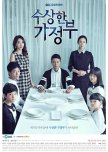
Profound, idiosyncratic mixture of different genres, coherently combined to form a new whole
The story is surprisingly exciting and complex, with an inscrutable main character and her mysterious past. Basically it's a thriller. At the same time, however, the story also offers plenty of food for thought and/or empathy about modern educational concepts. In any case, the story falls outside the scope of the usual KDrama stuff. On the side, one also gains some impressions of life in the middle class, of the difficulties of single parents (although men have it a bit better than women), of bullying at schools or of abusive parents-in-law.A central storyline revolves around the now: the employment of Park Bok-nyeo in a family with a single father and 4 children who are dealing with their traumatic recent past - the suicide of the mother/wife. The second central plot line works in the background and deals with Bok-Nyeo's own traumatizing past, which shapes her behavior to this day. It is inevitable that both strands eventually become entangled.
Choi Ji-woo marvelously represents the housekeeper Park Bok-neyo. She fulfills her tasks calmly, patiently and disciplined. Always clearly demarcated without ever pulling a face (in 20 episodes)! (Ok, maybe once...) However she can hide well behind her role as a housekeeper and like that escape her own inner emptiness, as she herself is emotionally broken and limited in her ability to relate. Her own traumatic past is now catching up with her and threatens to turn her current life upside down again. But she is older by now, more mature and thus she tries to face her fate emotionally strengthened and resolutely and prepared to get over it to some extent. In the process eventually she offers a variety of psychologically and pedagogically valuable interventions in the everyday life of all family members. It's not all cliché, but offers touching, funny and very serious moments.
So this is not a love story. "Suspicious Housekeeper" offers an idiosyncratic mixture of different genres that are coherently combined to form a new whole with a surprisingly profound entertainment value. All actors, up to the 4 kids, contribute to the living impression of the overall work of art.
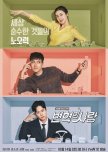
Not your usual RomCom, yet a love triangle on top of a socially critical labour dispute mission
The protagonist's name "Byeon Hyeok" means "revolution". The wordy title "Revolutionary Love" already hints that this is about a Romance. But this title also contains the second plot line: the love that leads him to revolution - to resistance and struggle for the rights of irregular workers in the company of a powerful Jaebeol. One way or another, Byeon Hyeok is at the center of events - as the eldest son of Jaebeol of the Gangsu Group, who is in love and choses the barricades (and new ways) within the corporate culture of his father's business group.Basically, the topic of such a labor dispute is rather socially critical and highly explosive, because there is practically no legal representation for the irregular part-time workers in South Korea. The number of non-regular employees is four times higher than among the other OECD member states. Employment relationship is not well protected. There is no union representation. Irregular employees usually only receive about half the wages of a permanent employee. The time limit is barely a year. Since the Asian crisis, this form of employment has proven to be cost-saving and convenient for small and large companies, so that it has been retained on a large scale to this day. "Revolutionary Love" cleverly focuses on this aspect of the South Korean working world as this critical topic is sort of camouflaged with a lot of slapstick and speed on the humorous note ... and of course there is the romance...
The role of Byeon Hyeok is a showpiece for Choi Si-won, who, with his wide array of physical, wordless visual grimaces and gestures, softens the actually frustrating labour dimension by Korean standards to a level that makes it accessible to the masses on public cable TV (and 'permissible' for the powerful). At the same time, Choi Si-won has the necessary sincerity to also show his sensitive side and create space for the closeness of a romantic relationship. In contrast to the comedic character of Byeon Hyeok is his 'friend' Kwon Jae-hoon, whose leitmotif ´seriousness´ can hardly be surpassed. In between, the head of the "revolution" whirls: the street smart Baek Joon.
"Revolutionary Love" is a KDrama that is often underestimated by Western viewers in its ambitious socio-critical and labour policy claims. It knows how to touch with the protagonists' love triangle despite the labour dispute mission. Yet, be aware, it is not your usual RomCom.
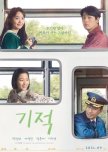
A lovingly told, soulful story based on true events. 117 uplifting minutes that´ll bring you joy
"Miracle: Letters to the President" comes across as a wonderful fairy tale. And yet it isn´t. The story arose from harsh reality. "Miracle" is a soulful KMovie about dreams come true, bathed in the bright colours of the four seasons in a remote, idyllic mountain valley. This landscape is a crucial player in its own, thus impressively contributing to the whole plot. Actually, a handkerchief or two might be helpful, even though the KMovie isn´t particularly playing on our heart strings. It's just a touching story, lovingly told.The setting of this true story: a remote mountain village in the east of the country, that can only be reached via the trass of the railway line. However, it does not have its own train station. For the residents, this means that they have to put up with an arduous walk along the trass in order to get to the next village as quickly as possible. For example, the protagonist spends five hours each day commuting to and from school. And quite a few people have already lost their lives on this dangerous walk over this busy trass through the mountains – including the mother of the protagonist. The boy's dream: a train station for his village. The chances are low, but he does not give up.
It may help that he actually seems to have a special talent for science. Also it may help that in Rah-hee, a bright daughter from an influential family, he finds a school friend and at the same time his muse, always encouraging and inspiring him in her idiosyncratic way. Thus, "Miracle" is also a tender, unusual love story with the charm of the 1980s.
So there are wounds and wonders, as well as wonderfully staged images, yet with a challenging core. All in all, a lovingly told, soulful story based on true events. Nostalgia of the 1980s, picturesque nature and rustic mountain idyll, the slower pace of provincial life and spectacular railway lines through tunnels and over bridges in the steep foothills of the Taebaek Mountains convey "Miracle" its distinctive character. The KMovie is bathed in an all-round positive aura. 117 uplifting minutes that´ll bring you joy.
-------------------------------------------------
SIDE NOTE: --- Yangwon Train Station ---
Socheon-myeon is a mountainous area in North Gyeongsan, in the east of the country.
The Korail Yeongdong Line crosses this area on its way from Yeongju in North Gyeongsang Province via Taebaek Mountain to Gangneung in Gangwon Province. Since 1988, the Yangwon railway station has been the smallest and also the first private railway station in South Korea. Until then, the village was isolated from the rest of the world in the middle of a rugged valley. Even though a railway line had passed the village since 1955, the train had never stopped. There was also no road leading to the village. 3.7 km of railway line separated the villagers from the nearest Seungbu railway station and thus connections to other towns and cities. With ax, shovel, mortar and sweat, the villagers finally built their tiny train station themselves.


