

 10
10 42
42 15
15


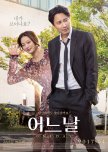
A pleasantly beneficial KMovie infusion. Quiet. Tender. Full of consolation & healing impulse
"One Day" is a beautiful KMovie. Quiet. Tender. Full of consolation and healing impulse. In addition, the story expands the usual dimensions of perception - human being sees ghost; man builds relationship with ghost. The extraordinary situation facilitates extraordinary closeness, opens up new perspectives and allows the male protagonist to look behind the obvious.The female lead character is visually impaired in life, yet specialized in sensing touch instead. The male protagonist, on the other hand, finds himself in a stage of his life, where he prefers to avoid his feelings, because they might overwhelm him. His inability to face the grief over his deceased wife, his feelings of guilt and being lost completely block him. By the way, the female protagonist is also blocked: she is in a coma.
The process of rapprochement between the two triggers a healing process, which is captured tenderly and lovingly, reaching out to the side plots, too. The KMovie knows how to touch. It might come along in an unexcited manner, yet with the perseverance of water, dealing with the stone...
After seeing the movie for the first time, I had no idea what had happened to me. It had pulled me into gentle inebriety. I had actually been sucked in and completely lost the distance.
So I couldn't write anything about it at first. I knew, l would rather want to see it again sometime in the near future. And again, it might not have been my last encounter with “One Day”. Why? Because of the overall gentle tone, the particular radiance, and the unique look&feel of this story. Because it's good.
“One Day” is not a blockbuster, no. However, in my eyes and according to my feeling, it offers a pleasantly beneficial KMovie infusion. (With wonderful acting, too.)

A grand historical, passionate and emotionally complex high quality drama
I´d say, “The Queen who Crowns” is an excellent, impressive historical drama that gets under your skin. An emotionally stirring KDrama of the finest quality against a historically real backdrop. The KDrama year 2025 could continue like this..."The Queen who Crowns" brings the first decades of Joseon onto the screens. It is not the first series to take on the historically dazzling personalities of that time. Those early hours of the dynasty are simply captivating. And so, with this KDrama, too, it is not boring at all. On the contrary. And with an increased age rating, "The Queen who Crowns" additionally gains necessary freedom for an not only aesthetically impressive and emotionally impactful, but at times even unrestrained narrative.
However, it doesn't hurt to be somewhat familiar with the historical background. This makes it easier to understand the connections and relationship dynamics. Yet, enjoyment of the series is also possible without prior knowledge. Explanations in the subtitles fortunately provide the corresponding context here and there.
"The Queen who Crowns" offers a grand historical and emotionally complex drama. A special nuance is peeled out of the actual historical context, closely inspected, and dramatically excellently embellished: The complex and dramatic relationship dynamics of King Taejong with his father, the abdicated King Taejo, and his wife, the later Queen Wongyeong.
------ More thoughts about the relationships between former King Taejo, Prince Bang-won and his wife -------
"The Queen who Crowns" offers, among other things, a fantastic interpretation and performance of Taejo, the founder of the Joseon Dynasty. Lee Sung-min ensures we are learning to understand that the self-proclaimed first king of the new dynasty was not only a rather dominant father but a man who truly had great things in mind for his people. The path to achieve his new dynasty was indeed bloody, the power struggle at the turn of the 14th century not yet over, and life at the royal court dangerous. The now abdicated King Taejo, however, is convincingly shown to be torn between his archetypal ideals of a strong Joseon king and the very human feelings as an emotionally entangled father. Through his son Yi Bang-won as King Taejong of this newly founded Joseon nation, he painfully reflects how low human emotions can sink. Noble ambitious monarch and defiant despot, that can be so close together.
Actor Lee Hyun-wook acting historical Yi Bang-won gives the defiant king's son his very personal touch. As a son who desperately hungers for his father's recognition. As a man who would like to wear the pants in the relationship and cannot really handle to see that his straightforward, dominant wife is superior to him in terms of political calculation, overview, and foresight. As a spoiled prince whose frustration tolerance was never really trained, who ultimately confuses defiance with power, he is trying to enforce with ferocity what thus only slips away from him even further: the respect of the two most important people in his life – his father and his actually beloved wife. Bang-won as King Taejong proves to be no counterpart to whom they can trustworthy surrender. One can feel sorry for the king. And that says it all...
Before I get to the queen, who is actually given the stage here, I would like to address one thing that is also in the focus of this KDrama along the way: The crux of the archetypal relationship between king and queen in contrast to the relationship between king and concubines. For the king, he may have both, “saint” and “whore”. The queen however, is doomed to just being the “saint”. Hardly any other historical drama I´ve seen so far had processed the dilemma and explosive dynamics of such an archetypal, almost dehumanized relationship between king and queen so emphatically. While the king gets/takes his space for being a man with needs, too, the queen, as the mother of the nation, is per definition pure and saintly. It´s bad news, if king and queen should actually love each other. There is no room for intimacy and passion in the life of a king and queen. They live an ideal of relationship that stands solely in the service of the nation. Dehumanized, so to speak. Pure archetypes. Pairing between king and queen serves only the reproduction of royal genes. Furthermore the queen´s job is about raising this offspring properly. It is a public relationship and for the nation only. It has (should have!) nothing to do with personal lust and passion. In theory at least...
Nevertheless, the king and his concubines may share their private intimacy in their bedchamber – as long as it pleases the king. And in the case of our defiant, discontented, and somewhat emotionally lost King Taejong, he rather escapes to his concubines, who are willingly serving at his whim, with a warming embrace, a tender word. There he supposedly finds the most submissive subservience, the encouragement, and all that his father and wife deny him for different reasons. In the best case, it may truly nourish him and bring him into his power. In the worst case, he may be manipulated, and thus losing even more ground.
Now to Queen Wongyeong. Chapeau to Cha Joo-young! She gives that imposing historical personality such a strong, beautiful, clever, and quick-witted aura, portraying her as a dominant yet simultaneously sensitive woman, too. It's about time that this queen, who was only historically appreciated late, now also gets the deserved attention in the KDrama orbit!
King Taejong truly had a competent, intelligent, valuable partner at his side. At eye level. In the truest sense also above what concerns convention and customs. Thus, at the same time, courageous enough to take new paths, to think innovatively, and to act fearlessly.
But woe if the king thinks he has the power by virtue of his throne only. No, he must also be able to fill this position with respected personal authority. Most of the time, Taejong is trying to enforce power and respect with force. He truly lacks the necessary personal maturity for the nation´s highest office in many places... and for this great wive. What a shame.
Queen Wongyeong, in turn, pays a high price for her ambitious demeanor and constructive political influence at the royal court: her passionate love for the king, for which there is no more place at the court. But, at least, the queen does not let this stop her from making wise decisions and prudent politics. No matter how adverse the circumstances. Without her, Taejong's reign would ultimately not have been at all, let alone being so valuable for the coming Joseon. Without her, the country would not have experienced one of its greatest kings of the Joseon Dynasty – the following King Sejong, who created, among many other things, an alphabet for his people.
Those two, they paid with their personal relationship over the years of their reign. The KDrama does a great job in recognizing and dignifying their sacrifices, efforts and accomplishments.
Ps:
Episodes 13 and 14 "The Queen who Crowns - Before Sunrise" are a kind of prequel. They begin with the end of Goryeo. It is about our two protagonists meeting and falling in love, starting to dreaming their common dream of a 'better world'... and ultimately materializing it.
This may be well-intentioned, but the dramatic quality unfortunately drops somewhat compared to episodes 1-12. It almost seems as if this was a spontaneous decision in the course of events. Somehow it was done half-heartedly only (possibly under time pressure?). Nevertheless, some striking key scenes, referred to in 1-12, are delivered here, which is nice, though.
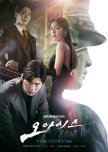
ambivalence
"Oasis". Hm. I've thought whether I should continue watching or drop the series... I've also considered more than once whether I want to write something about it... My feelings about this KDrama are ambivalent. However, the ´why is this?´ , is why I actually consider it worth mentioning.Sure, there were bumpy details, like the boys' artificial skin tanning when they were young, but I don't want to dwell on those.
>> The decisive factor for me, not rooting so much for this show, was and is that I really do NOT care so much for ANYBODY in this story. I understand, yes. There is empathy, yes. But sympathy? I couldn't care less. I've never had that before. I actually didn’t care. Neither the love story, nor the incorrigible rival, nor the girl wanting to bring back her father's cinema – this all and more only had limited impact on me. That's why I was tempted to turn my back on the story. Yet, I don't want to deny the actors' ability. I would do them injustice. They did their job fairly well. There are a number of strong moments. But still, maybe they were not the perfect cast? In any case, I would argue that in “OASIS” the character portraits were simply NOT drawn that well. ...In my view, that's obviously NOT the strength of the script...
Then there is the historical context of the series – the rollercoaster ride of the 80's and 90's. In South Korea, they are the neuralgic interface between dictatorship and democracy. But I don't want to dwell on this either.
>> What was decisive for me was that the STORY of the KDrama really mattered to me – whatever triggered the dynamics, the twists and turns. Intertwined with it were indeed countless moments that touched me deeply. Starting with the seed that underlies the whole drama: the fatal loyalty of the former slave not only to his deceased master, who had fought for independence, but also to his son, whom he now still serves as a free man. And then also the fruits that came out of this seed. Plus a lot more. The circumstances, the constraints, the social context that shines through in how it shapes (or had shaped) people, all of this really had me .
The way these forces of time and history run along in the background as a matter of course and keep stirring up the lives of the protagonists at crucial points, I think the script did THAT quite well. (However, I don't know whether it would have worked that way if I hadn't already known something about the political and social context back then.)
Maybe I could summarize: The portrait of how the historical dynamics are intertwined with personal destinies is well done in "Oasis". The character portrait of the comparatively stale protagonists, on the other hand, is less so. This discrepancy, resulting in my rather indifferent experience of the main characters on the one hand, and the emotional force with which the story keeps lashing out on the other hand, is a phenomenon that I have never experienced in a KDrama before. (But I don't necessarily assume that this has to be the same for others as it is for me.)
Eventually, despite the ambivalence, I watched to the end and was always curious to see what would be next. I can't say I regret watching either. But then I wasn´t all that happy in the end - even though I was partially impressed by the showdown, (yet, again, only partially.)
----------------------- Tiny side note: -------------------------------------
Re: 80's and 90's:
In connection with e.g. the KDramas "Sandglass" and "Giant" I have already given some of the political coulors of the 1980s and 1990s. Much of this applies to the historical context of "Oasis" as well. (you might want to check there.) Here, though, the dubious role of the secret service comes more into focus.
Re. Movie theatre:
The dictatorship was characterized by censorship. In addition, there was no freedom to travel. Accordingly, the cinema was like a window to the rest of the world, and generally offered a canvas to dream away from one's own misery, at least for a while. That may be more or less true wherever you look on this planet. But in South Korea at that time certainly more than i.e. in Europe. The role of the ´cinema´ in "Oasis" not only coincidentally represents liberation (struggle - especially of the female protagonist).
---------------------------------------------------------------------------------
Ps.:
Because of this KDrama I stumbled over another one - same title, 20 years older: "Oasis (2003) " or "Desert Spring".
I am grateful for this discovery thanks to the name-connection. Actually I liked that older one (despite the specific doing of that time) even more...
Nevertheless I consider "Oasis" (2023) having its moments, too...
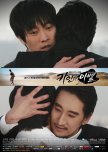
This is the first time I would actually describe a KDrama rich in makjang in terms of ´cool´.
"Cain and Abel" from 2009 presents itself in the best KDrama tradition of early 3rd Millenium makjang productions. In the background, the OST is repeatedly setting the rhythm proclaiming doom with implacable beats. The dramaturgical motifs are basically familiar: there are 2 more or less competing brothers, a wicked stepmother, a comatose father, amnesia in the meantime, two queens of the heart ... and what the hospital environment (specifically the neurosurgical department) has to offer is not just a brain tumor... It´s makjang at its finest. Eventually the scene is temporarily shifting to China, there also focusing on the unfortunate issue of North Korean refugees. It becomes action-packed and exciting. All in all, the plot doesn't seem too surprising at first glance, but as it progresses you might all of a sudden realize, how the story has long since grabbed and pulled you in.This is the first time I would actually describe a KDrama rich with makjang in terms of ´cool´.
Admittedly, here the bad guys are actually truely bad guys. Forgiveness is not a foreign word, but sometimes one may want to question this concept in principle, regarding the unscrupulousness and maliciousness of the perpetrators.
Title and story explicitly refer to the biblical motif: the first murderer case in human history told in Christian terms, where the older brother chose his younger brother as a victim. Out of envy. In the competition for recognition. Here it is the recognition as a brilliant neurosurgeon ... by the father, by the professional world, by the supervisory board (as head of a new center for neurosurgery) and as a man (by his queen of hearts). The mother wickedly helps and sows the bad seed, which grows effortlessly.
This fraternal quarrel (in which obviously not everything is and always has been quarrel) comes to live with high intensity by the performance of So Ji-sub (who appears in a quite bold manner for long stretches) and Shin Hyun-joon (who has already perfected his characteristic ´sad look´ in "Stairway to Heaven"). The two really get into their roles and take the viewers with them. The story gains as 'little Abel' covers a good distance in a parka and among refugees in China. So the story not only takes place in the elitist world of doctors, between surgical gowns and suits, but also gets more down-to-earthness in the struggle for survival of simple and non-privileged people at the opposite pole of social life. The two female leads Han Ji-min and Chae Jung-an also embody the contrast of these worlds in their own way.
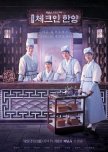
Suspenseful, colorful, cheerful and even sweet – entertaining in several ways
"Check in Hanyang" nonchalantly takes elements of the modern lifestyle and the high-end five-star hotel industry of the 2020s back to Joseon, puts up-and-coming stars of today into robes and uniforms of another time and provides them with various challenges and group dynamics as part of their apprenticeship (while making the world a better place).The competition among the aspirants is fierce. Fair play is rare. However, one or the other is eventually less concerned with employment than with their very own, secret mission. The KDrama is brought to life by the charm of these youngsters. A piquant detail, though: one of those young men is actually a woman dressed in men's robes. You may guess, there´s room for plenty of funny situations.
The female protagonist actually has a murder case to solve on her own behalf – but suddenly she finds herself (and everyone else up to the audience) in a suspenseful polit-thriller with romantic icing.
The KDrama also benefits from the sharp chemistry between the owner of the Yongcheonru and his top of the range innkeeper. Here, Kim Eui-sung and Kim Min-jung can directly tie in with their controlled, explosive cat-and-mouse relationship as father and daughter in "Mr. Sunshine" as a successful pairing. With their charismatic presence, the veterans of South Korean cinema and TV significantly contribute to intensifying the dramatic overall pattern. Thus the handful of pretty rising stars may with good-humoured esprit fully indulge into playing their way even further into the hearts of the audience.
Actually, the story is about the hunt for a golden key, of which there are two parts – a key that some are highly interested in, all the way to the king. This hunt even goes over corpses. Thus, the double life of those hunters – old and young alike – is eventually getting quite dangerous.
Suspenseful, colorful, cheerful and even sweet – “Check in Hanyang” is entertaining in several ways. Actually, the first part in particular offers quite a load of fun and games with tricky group dynamics and demanding challenges for the competing candidates. In the course of the second half, however, tension, depth and drama are gradually increasing.
The fictional story draws courageously from the rich tradition of Joseon with a wide variety of selected details. The historical setting is thus mainly inspiring as a colorful, exotic backdrop of a rather timeless political thriller. All of this quite beautifully staged.
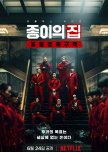
Korea´s socio-political North-South dynamics suspensefully catapulted into mass consciousness
"Money Heist: Korea - Joint Economic Area" is a remake of the Spanish Netflix production "La casa de papel". As with "Designated Survivor: 60 Days", "Suits" or "The Good Wife", this South Korean remake also sticks closely to the original. Many viewers may work through what is better, whether it is necessary, etc. - Not me, though. Rather, what fascinates me is how specifically Korean socio-political dynamics have been woven into the present story and suspensefully catapulted into a global consciousness.Against this background, the series is truly brilliant. Most viewers might probably miss this or could care less, and thus don't even pay attention to it. Nevertheless, this or that might eventually fall in places, unconsciously. Be as it may be...
"Money Heist: Korea - Joint Economic Area" takes place in a fictional economically united Korea. This premise as a setting alone is ingeniously visionary, because it conveys into the mass consciousness such a not sooo unrealistic agreement scenario for the stuck situation between the two countries: An economic union that could be profitable and attractive for all sides... Yet, immediately the potential stumbling blocks are swimming in the wake... Exploitation, fraud, abuse! The promise of freedom and unlimited opportunity turns out to be just more profit and opportunities for those who are already living in the fast lane. The promising scenario for peace and prosperity for everybody might be one side of the coin, a raised index finger is pointing to the other side already: Attention! Wiheom! Danger!
"Money Heist: Korea - Joint Economic Area" is provoking with a dramaturgical "Hello-Wake-Up!" - On the one hand these potential capitalist dynamics could make a promising peace scenario possible, but on the other hand, in the same breath, would also torpedo it. This is where the big plan of the 'professor' comes in. He wants to counteract the machinations of the powerful, who are busy filling their already full pockets, regardless of those, who pay the price. Thus he comes up with a spectacle that will shake up the public (and their decision-makers). In the end this might ultimately force the system to be more mindful and aware in approaching a true joint venture in order to make it work for the people (not only the CEOs and the powerful).
In this context, the characteristic difficulties between Koreans from North and South are successfully demonstrated again and again: the deep distrust that has been actively cultivated for so long. The fear that the war, which has officially not ended yet, will openly continue. The constant spying. The contempt for the other system. All of this was politically tirelessly staged for more than half a century. Families were being torn apart almost at random back then (1950s) - like in Germany after the Second World War. At a time X, some were on one side of the boundary line and others were on the other. Coincidence. Fate. What followed after that was propaganda, both here and there. Building up an enemy image. And what was done back then, even if the framework conditions for rapprochement might been created, has to heal over time first. (This can be learned by the experience in Germany: having reunited for more than three decades, still in society the 'wall' between ´Ossis´ and ´Wessis´ has not yet been truly overcome...)
"Money Heist: Korea - Joint Economic Area" succeeds in weaving a realistic future scenario for a united Korea into an exciting story. With all difficulties and opportunities. In this respect I consider this KDrama a strong production. In doing so, the KDrama brings this possibility of a Korean peace closer into the mass consciousness - first of all for the South Korean society, which is extremely sensitive to this topic, but ultimately also for the rest of the world.
I also have criticism.
This is neither concerning the story nor the actors, on the contrary. And it is not about the fact that connoisseurs of "La casa de papel" will be strongly reminded of the original (including the names of the characters). No. I rather have a more general complaint regarding many Korean Netflix productions (vs. the national KDrama TV productions).
-First, there is the spice up of the narrative style for an international (rather male) eye that is generally used to a good portion of sex & crime and a higher pacing. Well, I don´t need it.
-Second: Why not really telling the story to the end? Yes, it could be "worth" one or more seasons, but nevertheless. They even split the first season into part 1 and 2. I don´t like it.
-Third: The sensitive emotional momentum, that is so crucial for KDramas, is reduced to the max. Yet, the strength of a KDrama, in my experience, is that we are emotionally drawn inside, that we identify ourselves, feel empathetic, and get very close to the protagonists, get involved into their world. International Style on the other hand is rather characterized by keeping a critical distance. Here the audience is watching from the outside. The story and acting may grab you, but you stay outside and watch. You don't necessarily get emotionally involved. What is happening will be and will remain the story of others. In this particular case as well. So unfortunately once again a central KDrama unique selling point was abandoned for the standards of international Netflix world. This is not necessarily bad, yet different. I would say the experience of watching is less intense compared to other KDramas.
Luckily, the KDrama in general has more than one crucial strength and can instead show off some of those others. So does "Money Heist: Korea - Joint Economic Area"...
I was immediately enthusiastic. It is exciting. Intelligent. Complex. Stylish. Cinematic. Touching.
In "Secret Boutique", the boutique itself is actually not the main focus, but rather its boss. With what her boutique secretly offer she has made herself irreplaceable for the established upper circles of society .- An eye-catcher: Kim Sun-a as Jenny Jang in always exquisite, stylish fashion and with sunglasses that are extravagant in every lighting condition. She acts mostly calm, controlled, superior, with a poker face and in every situation a suitable solution to the problem.
- A joy: Go Min-si as an intelligent Baduk (Go) player and equal strategist who suddenly stumbles into Jenny Jang's team.
- A ray of hope: The fact that this KDrama lives on the many powerful female leads. Three Jaebeol ladies (!) included. The 'men' here tend to be tame shepherd dogs in the service of 'their' ladies...
I was immediately enthusiastic about "Secret Boutique". The KDrama is exciting. Intelligent. Complex. Stylish in the high-end segment. Often almost cinematic in light, colors, camera and set design. And despite all the sublime arrogance, sophistication and need for (self)control, it is also touching. Human traits are presented not only abysmal. A warming grounding in cordiality comes along with the characters around the Go player Lee Hyeon-ji.
Calling the story of "Secret Boutique" a romance wouldn't be appropriate. Feelings still play an important role - here and there and over there, too. Deep feelings no less. Nothing is shallow here. But primarily I would describe the KDrama as the exciting story of a revenge campaign. A story about the (emotional) price of such a vendetta. In addition, an intriguing story about the unfair, corrupt and criminal machinations of the greedy rich, who unscrupulously go over dead bodies, too. A compassionate story that offers insight into the very particular structure of the Jaebeol empires, which channel their power within the family (at the expense of trust, warmth and closeness). A touching story about love and loyalty. Also about how roles, norms and social structures as well as an ambitious ego hurt your own heart. In addition, the KDrama came up with a profound punchline that takes the Jaebeol worldview to the point of absurdity: the Jaebeol daughters, who are so convinced of their elitist, inherited noblesse and who consider themselves so much more valuable due to their lineage, actually do not have any Jaebeol-blood at all ... "Secret Boutique" portrays all of its drama characters in a complex, multi-faceted and tangibly human way.

When is a woman beautiful? When is she not (anymore)? What does it mean for love? For work?
"She was Pretty" is a true story, so they say. It's about love - of course. The first love, too. And about being a woman in South Korea. When is a woman beautiful? And when is she not (anymore)? And what does that mean for her then? For love? For work? For social life? For your self-esteem?That's what this KDrama is about.
Wanting to be beautiful as a woman is widespread. Needing to be beautiful as a woman is deeply Korean. In hardly any other country do women spend so much time on skin care and make-up. Impeccability of the personality is reflected (in the South Korean self-image) in the form of pure skin and so facial care is part of a comprehensive ideal of beauty. The KBeauty industry supplies innovative products for this. In Germany, there are an average of three to five care steps that women use for their facial care. South Korea has become known for its "10-step Korean Skincare Routine", which (should) lead to a flawless porcelain complexion in lengthy and loving detail work.
In my experience, series that deal supposedly critically with ideals of beauty, bullying based on appearance, discrimination based on aesthetic value judgments and norms tend to have a hard time. They can't really be critical since their sponsors often come from the KBeauty industry... And they can rarely present an "ugly", "repulsive" character as a protagonist if they want the viewer to identify with it and actually watch the series. The subject calls for compromises before the story can even be thought through, let alone be told. Most of the time, this results in a transformation process for the protagonist: she transforms into a beauty that men and women can no longer overlook, and as a result she at last gains (now well deserved) self-esteem.
That's why I'm not a fan of this type of series. Even if the actresses are usually very committed, perhaps because the topic is so important to them. But the story can't help it... In the end, the solution is the transformation - the ugly duckling blossoms into a pretty woman and thus causes plenty of "Aha!". That doesn't convince me personally, because the core of the problem is rarely shaken, at most it is touched on the shell.
Accordingly, "She was Pretty" is not among my favorite series. Still I like it. Why? After all, there is the male character of Shin-hyuk. He's a great guy, he's good-looking, he's got what it takes - but he doesn't act like the norm. He takes a close look behind the facades and encounters the human in the woman, not the image of the woman. And falls in love with the woman as she is (before some kind of transformation). I think we need more role models like this. In "She was Pretty" at least there is one. It's encouraging and also fun to watch Shin-huyk (refreshingly played by Choi Si-won) in his encounters with the 'Ugly Duckling'.
Of course, ugly is relative in this KDrama as always. The protagonist, Kim Hye-jin, was once one of the prettiest girls in her class and totally hip. However, she has inherited her father's skin, which is characterized by a noticeable redness in the cheek area. Also, her hair is naturally frizzy. Although this might disturb the eye of the South Korean viewers, it is actually nothing that cannot be remedied with a few interventions, if a woman wanted to. Hye-jin just doesn't want to. To her it's not worth it (also in monetary terms). Yet that's how she offends people and makes social life and professional life difficult.
She compensates for her flaws (and thus her lack of value as a woman) through hard work. At the same time, she and her goodwill constantly invite others to have her be exploited. There's a memorable scene in which she takes on the new job with a competitor. Her co-worker is what you might call pretty (at least she's done a lot to be). As a reward, she is given permission to manicure her nails during working hours and to work rather slowly (if at all). Hye-jin, on the other hand, is passed around, pushed and insulted. The ideal of beauty for women - beyond performance - thus influences hierarchies in the working world. Unfortunately for South Korea this is a widespread status quo.
With Hwang Jung-eum and Choi Si-won being in a cheerful mood and providing plenty of fun in the midst of the actually less funny social conditions, the KDrama becomes worth seeing. The exalted editor-in-chief of the lifestyle magazine, who changes her hair color and her outfit with the hour and constantly recites from Italian operas, also ensures a good mood.
Ah, yes, this Kdrama is first of all a rom(ance) with some com(edy) in search of a happy ending. Some things may be predictable, but some are not.
As far as the beauty-topic ist concerned: It´s never too far from the norm, but some socially critical echoes could still be sprinkled nonchalantly throughout the course of the story. ...Humor paves the way for serious messages...
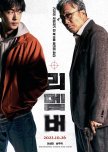
He forgets the past — but carries its weight, one name at a time, until memory becomes justice
"Remember" ist a Film about Revenge, Memory, and the Echo of HistoryAn old man. A revolver. Five names tattooed on his fingers — and a memory slowly fading. "Remember" is no ordinary revenge thriller. It’s a film about guilt, about forgetting — and about what remains when history isn’t confronted, but buried.
At its center is Han Pil-joo, portrayed masterfully by Lee Sung-min. Before his memory slips away for good, he has one last mission. At his side: the young In-gyu (Nam Joo-hyuk), who only meant to drive the old man — and suddenly finds himself an accomplice in a revenge mission that is as absurd as it is moving.
What makes the film so remarkable is its tone: poised between tragedy and dark humor, between road movie and history lesson. This is no hero’s journey, but a moral dilemma — laced with dry wit, laconic dialogue, and a kind of tender melancholy. The camera remains still, the violence understated, almost quiet. And yet it cuts deep.
"Remember" is more than a thriller — it’s a commentary on Korea’s unresolved colonial past. From 1910 to 1945, Korea was under Japanese rule — a traumatic era that still reverberates. Many Koreans were forced into labor, women abused as so-called “comfort women.” And yet, some Koreans collaborated — out of fear, opportunism, or conviction.
The film poses an uncomfortable question: What if those collaborators survived — and simply continued their careers after 1945? What if they now sit in high offices, as businessmen, politicians, patriarchs? "Remember" hints at this — and leaves the audience with the haunting question of whether justice expires. Or whether, sometimes, it needs an old man with a gun.
In Korea, the topic remains sensitive. Official reckoning was long delayed, many archives stayed sealed, many names unspoken. And while Japan still struggles with a clear apology, Korea wrestles with its own culture of remembrance: How do you remember betrayal without losing yourself?
"Remember" doesn’t answer that. But it asks the right questions. And it does so through a protagonist who forgets — and in doing so, reminds us.
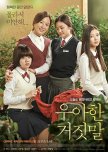
Fantastic, the (red) thread - in every respect.
I have been reading only positive critiques about “Thread of Lies” all over the place. It just took a while before I could see the KMovie for myself. Basically, all the praise has already been said. Nonetheless! The story, which is sad in itself, is told, staged and acted in just such a wonderfully clever way! Despite the seriousness of its topic, the basic attitude is positive and light. The complex and complicated underlying social and emotional mechanisms are so sensitively identified and processed, I can't help but find words of praise for "Thread of Lies" myself, too! Absolutely worth seeing! The characters, their motives and backgrounds, their conflicting feelings, the gray in the shadow, the light in the darkness, everything comes across as multidimensional authenticity.The older sister sets out to find out the actual reasons for the suicide of her younger, 14-year-old sister. We with her. There are traces – Suspicion. Culprit. Fault. Shame. As far as the eye can see... ...including the look in the mirror. Yet, it is not the index finger being raised. Rather, there is a hand, valiantly reaching out. Powerful!
It is not about accusation and blame or justification and defense. It is like it is. It was what it was. Recognizing THAT for what it is. Not sugarcoating it. No excuses. Recognizing each individual’s own contribution to some tragedy. It's all about this. To learn something out of it? In the best case!
In this KDrama, bullying (or mobbing) comes without bloody beatings and physical violence. Rather, it is the psychological, manipulative, nastily hidden, difficult-to-understand social-emotional mechanisms that are elaborated in an extremely sensitive, comprehensible way. A girl is forced into inner isolation at an age when the peer group actually becomes more important than family. Friendship, dependence, abuse - the boundaries are not yet so clear. When it comes to that, the young are still 'children' – perhaps with high ideals already, but still without lived friendship-experience. Friendship is a word with deep meaning, a powerful concept. It is related to high hopes and yearnings. It is needed, in order to survive in this world.
In contrast, there are parents who know better and still duck away. There are bullying victims who somehow survived. Also parents, who are absorbed in their own world. And in the middle of it all, a young girl says goodbye to this world. Decided and definite. Yet at the same time hesitant, too. Desperate after all. Helpless. A 14-year-old says goodbye to a world in which the only one, who knew about how she truly felt, was a stranger...
The complex story is processed in a non-linear manner. Compact and yet differentiated. The tragedy of the unspectacular is intensified by a rather subtly developed arc suspension. Touching, but not told in an overly emotional way. And what can I say... the story unfolds in such a true to life manner that you can't even be angry with the venomous perpetrator. At least not as much as you would like...
Fantastic, the (red) thread - in every respect.
PS:
The story is based on the novel “Elegant Lies” by Kim Ryeo-ryeong in 2009. Actually, the film production had a rather low budget and its initial difficulties to get started, as the topic is considered highly sensitive, especially in South Korea. The KMovie, however, gave the lie to the doubters. The response was enormous and consistently positive.
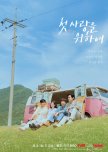
Healing happens quietly, almost imperceptibly, in daily life and in togetherness
Love, Take Two is different. No grand gestures, no dramatic twists. Instead: women holding one another because no one else will. Mothers, daughters, friends—bound by necessity and by choice.What makes the series remarkable is its healing quality—not only for the characters, but also for the viewers. The relationships in Love, Take Two grow slowly, leaving space for vulnerability and allowing old wounds to be touched gently, without being torn open. Healing happens quietly, almost imperceptibly, in daily life and in togetherness.
Ji‑an, the mother, is no heroine. She is tired, wounded, and yet present. Hyo‑ri, the daughter, runs—not away, but toward herself. And in between: a village that heals and helps without prescribing therapy. Among surfboards, tomatoes, and empty houses.
The men in this story also deserve attention. They do not compete with the women, but meet them as equals. Their roles are finely attuned to the women’s lives, complementing and supporting without pushing themselves to the forefront. Often it is small gestures, understanding, and mutual respect that shape the dynamics between characters. A coexistence emerges in which differences do not divide, but enrich.
The series does not tell us how to live. It shows how to survive—and how, in the process, one slowly learns to breathe again. Grounded. Beyond clichés. It conveys that healing need not be spectacular or final—sometimes it is simply the quiet act of moving forward, of enduring together, of sharing moments that bring comfort.
This KDrama stands out for its calm narrative rhythm. It has its own pace. It forgoes excessive drama and instead leaves room for genuine emotion—for grief, tenderness, and the subtle tones that often lie between the lines of dialogue.
In the end, it is not a conventional love story. It is a story about loving—despite everything. Carried by women who, against all odds, chart the path forward, and by men who, in their own unique way, become part of that journey. It is precisely this quiet harmony and the careful, almost invisible healing that make the series so special.
Worthwhile and valuable.
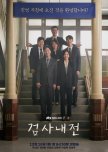
Authentic! The people, the stories, the setting. Affectionate, humorous & true to life characters
"Diary of a Prosecutor" is an extremely delightful, unconventional and, despite all the sometimes snappy, sometimes cheerful, sometimes pitch black, sometimes heartful humor, it also offers a quite serious, profound examination of jurisdiction and practically handling the law. This embedded in the simple everyday work-life of ordinary people, told from the perspective of a provincial prosecutor. The script is based on the essay "Civil War Prosecutor", written by a real prosecutor and inspired by his personal experiences.So it is primarily about the everyday life on the office floors and behind the office doors of the public prosecutor's office. First and foremost, this is about profane workdays that often last until late, including dinner and drinks with colleagues. However, this is also about a noble task, the juggling with legal regulations, the ideals of a just society and the diplomatic basics in dealing with superiors in the strict hierarchy from the bottom to the top. And last but not least, this is a potpourri of different individual stories of quite ordinary people who face the challenges of their inconspicuous lives every day anew, and eventually grow from them - as it is in life...
In other words, you get: a variety of people you grow fond of as you get to know them better; a job-portrait that is subject to the highest expectations, but whose credibility in the country is still not easy. And a (fictional) outskirts - a town at the seaside, famous for its oyster harvest. The filming took place in Tonyeong-si in the very south of the country, where practically the entire crew (around 150 people, including cast) stayed during the five-month shooting period... Provincial life is thus breathing from every pore of the KDrama - everything is a bit more relaxed, closer to nature. Seoul is far away…
Conclusion: Authentic! The people, the stories, the setting. The dramaturgical 'trick': the greater narrative of the omniscient narrator. The humor that comes along with it. Sometimes ironic, sometimes satirical, sometimes bone dry. Bottom line: funny and complex at the same time. Affectionate, humorous and true to life personality portraits. In script and play. The cases and the ethical questions involved go deep at times. And yet it is people who deal with it. Colleagues. Eventually in competition at times. Imperfect people, with weaknesses, even if they wear robes. Yet, people who can excel themselves at times, too. Other than that, the days, weeks, months and years go by, case after case, team dinner after team dinner...
As far as Korean life and culture is concerned, with this KDrama you can get pretty close to the people and their everyday world in many ways. Because of this and a wonderful overall concept, whose good spirit works on all scales, I consider “Diary of a Prosecutor” highly valuable.
Maybe it's a bit unusual at first. Don't let it irritate you. Keep going. I´d say it is worth it...
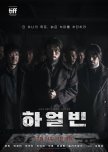
Light, pacing & space set in the perfect ratio, honoring not only 1 but all K independence activists
PROLOGUE:One might criticize that historical facts about the historical figure Ahn and his person are too brief. That too much poetic license was taken with regard to the fictional comrades and opponents in this case. Even, that these guys also remain too pale as individual characters. That too little pace and tension are built up, and that there is overall too much debate in the dark.
But then, it would have been a completely different film. With a different message.
From my perception, “Harbin” does not want to tell us about historic events as it was, but to stage the dilemma, the hurdles, the challenges, the performance, the passion, the agony of the Korean resistance struggle as an epic monument. We do not get heroes in shining armor, but desperate fighters for a fairer world - for their freedom, for their country, which is their homeland, for their families or the families they cannot have themselves. "Harbin" wants to honor their price, which they paid for all those who now can actually live in freedom and relative independence today. In addition, "Harbin" is choosing a critical approach - with its focus on the struggle for perspective, hope, morality, and justification in regard of the many painful sacrifices.
TERRA NULLIUS BETWEEN LIGHT AND DARKNESS, BETWEEN RIGHT AND WRONG
Anyone who has seen "Harbin" will not forget "Harbin". This is ensured by the haunting staging, with artistic ambition consistently composed in terms of film technology, to set light, pacing, and space in the perfect ratio.
Here, preferably filmic means like camera, light, powerful scenes that burn themselves unforgettable into the memory were used! Whereas dialogues provide less contextual information but convey the personal and collective struggle for the right attitude. It's about morality and the opposite of it.
We do not learn much about the historic independence fighter Ahn, about whom one could have made a completely different film. His personality would certainly have allowed for that. And yet, in drastic scenes and moments, we learn what he deeply stands for: For an upright, just attitude that does not want to repay like with like, but wants to do better. Ahn fails in this, but he does not give up. Until the end, he stands for what he considers right. We do not learn in "Harbin" that he wrote a treatise during his imprisonment - a concept for a better world. But we have come to know him during those 108 minutes as a man to whom we can certainly trust that.
The others who work with him and against him are practically nameless and stand for the many nameless who struggled and suffered in their own way back then - under the cold, the cruelty, the hopelessness of this underground fight in the far north of Mongolia. And yet they made their contribution.
POETIC AESTHETICS OF DARKNESS
For a Western audience, "Harbin" may present a challenge in two respects. The KMovie is (like many other KMovies) not action-heavy but relies on the intensity of slowness. Even in this one, action is used sparingly. The subtle driving force is rather the aesthetic concept: This does not rely on light, but on shadow, on the poetic aesthetics of darkness and its subtle nuances, where diffuse light highlights textures and shapes. Adding sparse, precisely selected color impulses and contrasts, too.
With refined, powerful visual impression the icy bitter cold in the snow-covered forest, on the frozen river, and in the vastness of the desert landscape of Mongolia comes almost tangibly close to the viewers. Nature, in its powerfully aesthetic staging, becomes a symbol for the arduous path to freedom.
At the beginning, we are confronted with the inhospitable nature of underground life, where light is sparse and food consists of cigarettes. The cigarette smoke makes the dim light even more diffuse while the coats make the cold of the barren rooms appear even colder. And then the story catapults us abruptly and mercilessly into the unvarnished repulsive ugliness of this resistance struggle – in the scene in the icy, blood-smeared mud the bestial brutality becomes almost unbearable to watch.
All this represents and reinforces the sheer despair of the brave warriors who want to fight for their freedom from the oppressors despite all odds. Under almost hopeless circumstances. In an almost superhuman struggle with themselves and with what is right...
A TRIBUTE TO THE KOREAN UNDERGROUND STRUGGLE FOR INDEPENDENCE
This joint fight for justice, independence, and freedom deeply defines the Korean identity as a nation, just as the suffering that the people share due to injustice, dependence, and oppression - the 'Han' as a collectively shared, yet individually felt pain, mobilizing a sudden strength and unexpected collective resistance (in this case against Japan).
The willingness to make sacrifices as well as the necessity to make sacrifices are deeply rooted in tradition. This may also be deeply problematic in itself, but like everything: it has two sides. Right? Wrong? Everyone has to decide that for themselves.
However, "Harbin" is not about judgement. It is about honoring those people who had actually dedicated themselves to this conjoint resistance struggle: not wanting to be oppressed and treated as subhuman beings (by Japan). "Harbin" represents an aesthetically intensified tribute to those against all odds fearless fighters. Woo Min-ho did not want to create a historical film here. With the context of this legendary assassination the KMovie rather sets a cinematic monument not only to this legendary independence activist, but by doing so, to all of the others, too. Therefore, at the same time, with the example of this legendary assassination in Harbin it sets a monument to the entire Korean resistance struggle, too - then, before, and after.
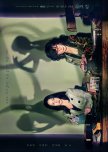
Psychological thriller re. gaslighting & family, wonderfully wrapped in the cloak of a black comedy
Psychological thriller meets black comedy. “Bittersweet Hell” is wonderfully staged in many ways. The script may have its weaknesses here and there, but the performance as a whole quickly makes you forget about that. Lee Hye-young clearly steals the show from Kim Hee-sun here. However, it's hard to top her fantastic performance as the eccentric mother-in-law (which alone might make a rewatch worthwhile...). Together they form a resolved mother-mission-duo, both determined to fight the 'WE' of their family, in which they feel deeply at home… even if this 'WE' might have plenty of flaws... Eventually, the cast is also hand-picked in other ways, e.g. with KPop Idols Yeonwoo, Jaechan and Chansung. Overall, I´d say “Bittersweet Hell” offers unique KDrama enjoyment.The plot is centered around the psychological phenomenon of so-called 'invalidating communication', which is also known as 'gaslighting' – after the play "Gas Light", which became particularly famous in the 1944 film adaptation "The House of Lady Alquist" with Ingrid Bergman. Gaslighting is about deliberately and consistently misleading a partner, family member or close friend. Gaslighting only works among close ones, i.e. trustworthy people. Thus manipulated with psychological tricks and lies, the victims feel increasingly insecure when it comes to their own perception, ultimately preferring to entirely rely on the supposedly valid judgment of their trusted person… who is now able, to fully control his/her victim. In "Bittersweet Hell" various examples of this phenomenon add to the plot dynamics. In passing, the KDrama also explores other socially explosive topics – above all the high value and ideal of ´family´ versus the sobering reality of ´actual family lives´, but also the weal and woe of the mother's role, different parenting styles and sexual orientation.
In my opinion, "Bittersweet Hell" could have used the 16 episodes (there are only 12) in order to better develop some character profiles. The effective production and performance, however, is actually very well making up for some lack of substance here and there. Therefore I´d consider this criticism a suffering on a rather high level… because nevertheless, “Bittersweet Hell” comes along as a great psychological thriller about gaslighting and family, wonderfully wrapped in the cloak of a black comedy.
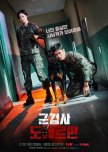
An extraordinary mixture - a fresh, fast-paced breeze, yet profound and multidimensional
"Military Prosecutor Doberman" brings a fresh, fast-paced breeze into the swamp of army power tussle and its entanglements with politics and business. The power tussle in this context is not new per se. But here it is convincing in proven, sophisticated, high-quality KDrama style. The story is critically focusing on the ruthless games of the mighty with honest ordinary people. By the way it is also shaking the noble, idealized concept of family -just a bit in passing by. Yet above all "Military Prosecutor Doberman" is impressively processing, disenchanting and denouncing the often (even without actual front war!) psychologically cruel everyday army life.As I mentioned before, the pace is quite high. There is cool talk and hip people. You´ll get action scenes as well. The soundtrack underlines the story pace with unusual hard beats and metallic sounds. But: nevertheless the KDrama wants to be emotionally profound and multidimensional. In case you consider that an imcompatible mixture, you're wrong. Here it works. And it's excitingly thrilling too.
"Military Prosecutor Doberman" creates an extraordinary blending. There is also a hint of romantic vibes. Just enough to round out the hard edges.


