

 10
10 42
42 15
15


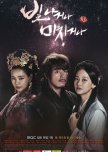
About prince Wang So of Goryeo. A love story with wit, charm & affection. Makjang alert. Toxic, too
First of all: "Shine or Go Crazy" is a love story from head to toe with all the trimmings. Nevertheless, it is also about the dazzling historical figure of Wang So - King Gwangjong from the early hours of the Goryeo era. Thus it is a beautiful character study about the young prince, who at last became king, but who had by far not been the preferred prince of choice as far as the future throne was concerned. How did HE happen to become not only king but such an outstanding one as well - one who is NOT automatically (as so often) a jumping jack for his ministers, eunuchs and palace ladies? Who or what motivated and inspired his rather grounded, almost visionary, innovative, citizen-oriented policies?This KDrama offers a (possible) answer to history, as well as an epic love story, playfully sprinkling disguise of origin and confusion of gender.
----------------- SIDE NOTE: --- Wang So, 4th son of Goryeo King Wang Geon, and later King Gwangjong
During his 26-year reign at the end of the first millennium, King Gwangjong laid solid foundations for the next four centuries. To this end, he introduced some popular reforms for the common people (yet unpopular among the nobility). Above all, these concerned slavery. Additionally he instituted the national civil service exam, which allowed people to serve the country according to their ability. Introduced during his reign, too, were so-called "Daebi-won" - medical centers for the free care of the poor. Finally, he secured the borders of the empire with military measures. Throughout, he consistently had to deal with opponing noblemen ... and eliminated them uncompromisingly. "Shine or Go Crazy" is a dignified multimedia monument to his rulership, that in general rather focused on the needs of his ordinary citizens than aristocracy.
The KDrama "Shine or Go Crazy" (as well as "Moon Lovers" who deals with King Gwangjong, too), offers a conclusive explanation for this King´s particular career. Whether this is historically justified by sources, I could not find out yet. In any case, Prince Wang So becomes tangible and understandable with the help of this fictional setting: The KDramas tell his story as at a young age being banished from the palace and sent to the mountains - thus hopefully avoiding a bloody prophesy from coming true. There he lived a life beyond the palace intrigues, yet close to nature and its existential everyday struggles for survival. Like that, his everyday life inevitably came quite a bit closer to that of the ordinary people of his time. This socialization in 'freedom' and largely grounded normality shaped him in a completely different way than his (numerous) direct and indirect siblings within the palace walls and thus makes him a resolute and popular monarchical free spirit. At the same time, this lays the right foundation for placing a completely unorthodox, unexpected and inspiring commoner´s love at his emotional side. Like that the fictional K-Drama helps to on the one hand understand the sharp edges of his disappointment because of parental rejection as well as his self-doubt due to his curse. On the other hand, however, this is balanced by down-to-earth experience of authentic affection and love. Historically true or not, the extrordinary historic personality of prince Wang So is painted in an impressively tangible, comprehensible way.
------------------- SIDE NOTE --- Trading at the time ---
An aspect of historical detail that's (in general rarely) brought into focus in "Shine or Go Crazy", too, is the importance of thriving international trade at the end of the first millennium. Throughout Korean history, life on the peninsula (not only, but also in KDrama) is rather isolated and self-centered. In this story, at least, business relationships with the immediate neighbors and with the rest of the world are given some space, at least to some extent.
-------------------- SIDE NOTE --- Balhae / Late Balhae
Also rarely a topic in the focus of KDrama is the Korean history BEFORE Goryeo - the time of the three kingdoms Silla, Goguryeo and Baekje. In "Shine or Go Crazy," the female protagonist is a princess from the Late Balhae Kingdom in what is now Manchuria. This dates back to one of five kingdoms that in 37 BC united to form the kingdom of Goguryeo. The first Goryeo King Wang Geon (posthumously Taejo) at his time attempted to reconquer the former territories of the original Goguryeo Empire and thus set his kingdom on proven, solid ground. Balhae being one of them, had previously fallen victim to the Para-Mongolian Kitan. Some (many) Koreans from ancient Goguryeo, who formed the ruling Balhaen elite, escaped to Goryeo - with the crown prince, the nobles and parts of the population. The female lead is set in this context (and also personally associated with an alarming (fictitious) prophecy regarding the future of her people.)
------------------------------------------------------------------------------------------------------------------
Back to the (love) story between the 4th son of Goryeo King Wang Geon and the Balhaean princess, who is an independent prosperous business woman.
In proven KDrama style, there are subplots with their own stories and characters with their own motives, who courageously get involved in the (love) life of Prince Wang So. The political stage is intransigently characterized by malevolent power intrigues. There aren´t any scruples anywhere. Upright people hardly exist, loyalty and dependence being mixed up and confused. There's a lot of bad stuff going on everywhere. It gets pretty ´toxic´, too.
Set in this context is the affectionately and also humourously told relationship of young prince Wang So with a smart, proficient, quite self-confident lady in a double role in disguise as young man. These encounters inspire and enhance Wang So´s pragmatic world view. The dynamic between them is fun to watch - with wit and charm, since his queen of hearts is sometimes hidden behind a veil and sometimes in men's clothes. At times, Wang So has to seriously doubt his gender orientation (... not that this would have deterred him...).
Ah. Yes. The ending... Reviews I had read often blamed the ending. I was ready for the worst. Probably that was a good thing. Like that I was pleasantly surprised as I had expected even worse. In fact, whether I liked it or not, the ending made quite a lot of sense to me. (After all, this is about a historical character - the prince becomes king and has an archetypal task that is greater than himself - during his reign, Gwangjong sets the course for future generations.) Nevertheless, KDrama land even got us a little candy at the very end, too.
My criticism, however, refers to the soundtrack! Unfortunately, this is the first time I definitely have to complain! Shallow songs can have their time, I don´t mind. But in this case (at least in my acustic sound system) as soon as romantic vibes gently started to develop, an inappropriately dull, meaningless song (in my perception) acustically dominated the scene and thus insensitively destroyed each and every moment (again and again). A real shame! (I would like to hope, that this was just due to my technical device...)
In the first half, the KMovie is actually a one-man show. And that, I think, is the strongest part
"#Alive" is a variety on hip zombie stories. First things first: it doesn't have much new to offer in this respect - zombies as a plague that spreads fear and terror, a horde that you want to shake off or destroy, like disgusting, annoying vermin. Well, that's not why I would recommend this KMovie.I also don't think that you have to overstrain the reference to the Covid pandemic and the sometimes grueling current lockdown experiences that come with it.
Even fans of the horror genre won't be really happy with "#Alive", because "horrifying" can surely be done even better.
So why am I mentioning the KMovie here? The script revolves around surviving in an almost hopeless situation. However, the focus is not mainly on the action, but rather on the quiet moments in which the protagonist is ruthlessly thrown back on himself. There he is alone with himself and his inability, facing his insufficient survival skills, his loneliness and hopelessness ... and finally the desire to leave this world.
Oh Joon-woo isn't a born hero - perhaps he was trying to be in the day-long, night-long computer games, with his joystick in hand. But then the Internet connection is gone, no water supply, no food, no one can be reached. The self-chosen isolation in his room with his virtual game world, which has shaped him to this day, is one thing. Real isolation with real threats and no virtual team is something completely different. It's about that juxtaposition and the painful process of waking up to a NOW that's so different from the gaming world. Ultimately, the impulse comes from outside, which helps him to venture out of his safe cocoon into the real and thus truely threatening world.
However, the movie isn´t anti-technology. On the contrary, in playful creativity technical gimmicks, old and new, give the story new impetus again and again.
In the first half, the KMovie is actually a one-man show. And that, I think, is the strongest part. It's never boring. Actor Yoo Ah-in once again uses the chance to show what he's made of. In this way, the viewers accompany him through his very personal Hall of Pain, and there he hardly omits any physical form of expression. For this he has meanwhile been awarded the Cine 21 Award for best actor. After almost half the distance he gets support from Park Shin-hye, who embodies a character who pursues a completely different survival strategy - namely, she has one, even if she also reaches her limits with it. As is well known, more than one person form a group and a group develops its own dynamics, which can do more than each individual on their own. Here too. Both of them grow together. Heroes are rarely born as such...
Truly touching. It makes you angry and concerned, too. You will ride in a rollercoaster of emotions.
"Sorry, I Love You" is an early masterpiece of proven KDrama art, which once again juggles the injustices of ordinary people with sensitive finesse in an emotionally draining manner - against the background of a South Korean sensitively reinterpreted Romeo & Juliet love story.Humiliation, exploitation, devaluation are the everyday life of the socially weak, while the celebrated, influential contemporaries seem to know no shame in their arrogance and haughtiness.
So Ji-sub hauntingly embodies subtly controlled, concentrated, suppressed anger. In the character of the protagonist, hate and compassion, love and indifference are combined in a fatal mixture. He becomes an incalculable time bomb that could be activated at any time.
Of all the early Makjang-infused KDramas, "Sorry, I Love You" is one of my favourites. Even if 'love' is bold in the title, the story doesnt´t romanticize it in a striking and cliché-like manner, yet the KDrama tells the story understated elegantly, but no less touchingly and also sincerely (...and of course dramatically tangled in a complex way.)
There is brother rivalry, revenge, swapped babies, secrets, complicated feelings, accidents, illnesses - the whole program prepared in a new mixture. The KDrama expresses in a concentrated, mostly subtly restrained (and thus even more vehemently impactful) emotional force how arbitrary, mendacious and unfounded it is that some people believe, they are 'justifiably' above others and thus have the given right to make decisions about them.
The KDrama uses a rarely found dramaturgical move to give the emotional force of the collision of two worlds even more power: the protagonist was put up for adoption abroad as a child. So he not only grew up with the feeling of not being wanted, but also with other western socialized (Australian) values. Subservience and humility are not among his strengths. He tends not to respect people in authority, or at least the authority has to prove itself as such first. He often acts disconcertingly strange. In South Korea, however, manners and respect for the elderly and higher ups are everything. Since he's Korean, people hardly pardon his naughtiness (as they would an obvious foreigner).
A touching story that makes you angry and also concerned. You will ride in the rollercoaster of emotions - while one emotional looping has not yet been completed, you are already on the way to the next.
-------------SIDE NOTE: ---overseas adoption of South Korean children---
...is a sad story that began after the end of the Korean War. Since then, around 200.000 children have been adopted, primarily from families in the USA, but also from Canada, Australia and Europe. First they were war orphans, then children from poor families, but then also children from illegitimate or divorced backgrounds. In the 1970s and 80s it became a profitable business. On the one hand, the government imposed veritable quotas on the adoption agencies. On the other hand, demand from western countries was high. Corruption flourished in places - the children were given away to the highest bidder. A halt to adoption in the face of international criticism was followed by renewed liberalization of legislation - as a result of the (lack of) adoption policy of the past decades social system was not prepared for the number of 'orphans' (actually: abandoned children).
Most of those ´orphan´ children have now grown up. There are quite a few, who organize themeselves and advocate for change. They want others to spare the trouble of growing up in a country, in a culture in which they are seen as strangers and bullied for being different and confronted with racial prejudice. In many cases they remain strangers and outcasts, as their country of origin cannot be/become a home for them either. The 'hatred of the homeland' is probably rather high among foreign adopters. In 2004, when the KDrama was released, the mood in South Korea was sensitized to the concerns of foreign adoptions and so a critically discussed topic was filled with 'life' by this KDrama. In 2006, an adoption day was introduced in South Korea and finally, since 2007, the numbers have shifted: there are now more domestic than foreign adoptions in South Korea...
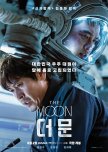
Filming standard à la Hollywood meets melodramatic narrative, emotionally firmly rooted in SK soil
“The Moon” could have easily been titled “The Dark Side of the Moon”. At least we as audience learn quite something about it... But it's actually about much more. The KMovie is delivering action within the high-tech world of space travel. On top of that it is touching, thought-provoking and thus gnawing at fundamental, existential and political questions, too. We get a remarkably balanced production between ´international´ filming standards à la Hollywood and a melodramatic narrative with its emotional roots firmly planted in South Korean soil. So eventually, this lunar expedition is neither/nor, as this KMovie offers something in between. For hard-core fans of Hollywood blockbusters it might be offering too much melodrama. For the hard-core KMovie fan it might not be enough. Well, I simply enjoyed it as the lunar expedition as it is.The focus is on the ambitious national program that South Korea has recently set up in terms of space research (you may check side note below). With its technological innovations, South Korea is starting to present itself as an increasingly self-confident G7 space power. That is where this story is coming from. And it is against this background that the particularly high level of filmmaking effort must be seen, by which the experience of space is brought almost hyper-real within the audience's grasp.
The special ambience is staged first-class thanks to the applied highly developed audiovisual filming technology and expertise. Seemingly, the production team has spared no effort or expense - with 3D rig camera recordings, premium HDR video technology, Dolby Cinema technology (for the first time in a KMovie), innovative spatial audio technology and sophisticated rendering processes for the finest color nuances. The demand was for high-end cinema quality. And it is surely impressive. Everything in this distant, highly technological, alien world, far way within the orbit of the moon, comes as close to the audience as it can get.
Despite the enormous spatial distance, dense emotional intensity is provided, even though the protagonists are located so far away from each other. This delicate emotional bridging, requiring high-end performance skills, has been the big challenge on the actors´ side. In addition to the proven, first-class veterans Sol Kyung-gu and Kim Hee-ae on the ground at the rather clinically clean setting with high-tech computers and screens of both Aerospace Centres Naro and NASA, especially Doh Kyung-soo (D.O.) offered magnificent top performance as an astronaut lost in space. Mainly those three create and maintain an impressively emotional density (in addition to the overall action).
The plot of "The Moon" revolves around South Korea´s international profile as capable space power, while the eyes of the world are set on their (fictive) second trial of a manned lunar mission. Whereas unfortunately it didn't work out the first time... It's also about politics and tons of money. And in the end, it's all about survival... or rather, whether a human's life in the face of groundbreaking missions for humankind is worth ignoring chains of command, nationalities and costs.
Breathless action on unusual terrain. Intense scenes in an isolated space capsule 380,000 km away from earth, surrounded by darkness and severe cold. Desperate helplessness. The struggle for the 'right' decision – what´s actually the measure of what is right? Maybe ultimately just what I can live with in the end?
----------------------------------------------------------------
SIDE NOTE: --- KSpace ---
Korean movie oder drama productions set in space have so far been few, and for good reason. The KMovie “The Moon” from 2023 as well as i.e. the KDramas “The Silent Sea” (from 2021) and “Ask the Stars” (planned for 2023) are, so to speak, a start. They reflect current (or better: hoped for further) developments regarding KSpace.
After rather unsuccessful endeavors at the beginning of the new millennium, South Korea as the 13th country to have its own space center by now, is increasingly well positioned in the KSpace segment. 2021 was marking the first attempt to launch their own test satellites into the orbit by their launch vehicle Nuri, which had been developed over the past ten years. Yet it failed. Nevertheless, in 2022 and 2023 it succeeded at last. Three more Nuri launch vehicles are already scheduled to be launched into orbit by 2027. According to the plans of the country and the Korea Aerospace Research Institut (KARI) at Naro space center, South Korean spacecraft will be collecting data on the moon in 2032 already. Additionally, the country has Mars scheduled for 2045.
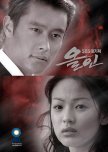
The actors put their heart&soul into it. Soundtrack + camera provide a unique ambience. A Classic.
"All In" is a timeless classic from the early days of KWave. Via main plot and various sidelines involved, you dive into the subculture and parallel world of back room and casino gamblers. In the course of the story, the glitter and glamor of the casino world increasingly take their place, all the way to Las Vegas.Besides the gaming milieu, the series provides insights into the life of simple, poor young people in the late 1990s, which were shaken by the Asian crisis, and offers interesting local color. The well-established KDrama leitmotif 'Orphanage' also has its place here again. Soundtrack and camera capture the action in an atmospheric and impressive manner.
The actors put their heart and soul into it. In the case of "All In" the milieu-specific ambience was supposed to appear as authentic as possible. Therefore, in advance of shooting Lee Byung-hun and Son Hye-gyo (as adults of the main protagonists) went through an intensive training program, including in a casino in Las Vegas: Lee Byung-hun concentrated on virtuosity Card shuffling techniques and the eye dramaturgy of professional players at the gaming table (he won the Grand Prize at the Baeksan Arts Awards that year, as did the drama itself). Song Hye-gyo, on the other hand, was trained as a croupier and not only convinces when she sorts the chips at a breakneck speed.
The opening scene with a helicopter over the Grand Canyon alone is reminiscent of the beginning of a blockbuster à la Tom Cruise or something similar. "All In" isn't just romance, it's also packed with plenty of action, including brawls and gunfights. It's also about friendship among men. As a milieu study of the gamer's world, it's ultimately about gangsters and mafia, too. (Perhaps it is no coincidence that "the godfather" has a guest appearance in the story: it is shown as a movie in the cinema that shaped the youth of the protagonists.) But of course it's also about great love - in the progress of the 24 episodes facing one obstacle after another - it´s makjang after all...
At the time (2003), this KDrama triggered a veritable All-In-Syndrome in South Korea. The filming locations on Jeju Island became a hotspot for fan tourism. The ratings on public television back then are legendary (at around 47 percent).
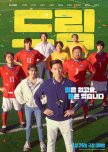
The KMovie is carefree, harmless and heartily. However, it is not trivial.
"Dream" is about team spirit as a positive force that allows a group to excel itself. The KMovie is carefree, harmless and heartily. However, it is not trivial, as it sides with those commonly referred to in society as the weak.You shouldn't expect too much, then everything works quite well. Obviously, IU and Park So-joon are the show's carthorses. But that doesn't do justice to the rest of the cast, who all contribute their unique esprit. “Dream” comes across as teamwork through and through.
Although it was filmed at original locations in Budapest, somehow, in my opinion, the casting (unfortunately) often enough doesn't work so well, when Korean productions are dependent on actors from different origin. For whatever reason. Even if it's only supporting roles or extras in this case, they seem to be rather amateurish. Hm.
All in all: “Dream” is a KMovie for high spirits and light fare. Not intrusive. With a few flaws here and there. However, also with some well-placed, wonderful and valuable messages in passing.
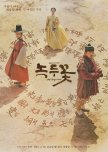
Fight for human rights. A story written with the blood of latest Joseon history. Highly valuable.
Definitely worthwile! "Nokdu Flower" offers a historically remarkable epic with a strong performance. The KDrama excels sort of. It almost seems as if the entire team was all too aware of the ambitious challenge to adequately capturing this short but crucial sequence of Korean history.In the second half of the 19th century, exploitation, famine, a corrupt, incompetent government and weak kings had eroded almost all belief in the existing system, in aristocracy and administration. Then there was the opening of the country to world politics and trades, for which the corrupt Joseon also proved to be profitable. In this historical KDrama it's not so much about the political intrigues around the palace, but about the landowners, administrative offices and Yangban in the provinces as well as the rebellion of the desperate rural people, who simply can't take it anymore.
The struggle for democracy in Korean history, like elsewhere in the world, has been quite bloody. That was last in May 1980 in Gwangju, when the democratic aspirations of the people were brutally crushed by the military. This was so during the student independence movement in 1929 in the fight against Japanese oppression. And that happened in connection with the Donghak movement, too, which had caused quite a stir throughout the country between 1860 and 1894. "Nokdu Flower" is deliberately very close to the front lines of those uprisings for democratic reforms, which then had been for the first time organized on this scale. This forms the perfect background for dramatically intertwined relationship dynamics of two half-brothers, (whose father is one of the particularly exploitative provincial officials who bleed the people dry), as well as the daughter of a merchant, who is used to deal with anybody, even the Japanese, for high profit.
The road to democracy on the Korean Peninsula is definitely rocky. To this day, the reactionary forces are still strong. "Nokdu Flower", however, represents a powerful, unforgettable symbol for the spirited struggle for freedom. The Donghak movement is often seen as the first patriotic Korean movement, since it was also about counteracting the increasing e. g. Japanese influence. But more than a patriotic struggle, initially the Donghak movement was actually about an idea that is bigger than family of origin or nation: It's about basic human rights. (An idea that, not too long before that, had also stirred up the European continent)
Matter follows spirit. And this spirit was shaken up in the rural population of Joseon by a new religious movement: Choe Je-u (1824–1864) created a new faith in 1860: Donghak, which roughly means "Eastern Wisdom". Drawing from Confucianism, Buddhism, Taoism and Shamanism, it sees the divine spirit at work in human beings - in ALL human beings, without distinguishing between class or gender. Additionally, it sees the world as moving in cycles - with a whole new world just waiting ahead.
Nevertheless, it is blood that paves the path to a new era. Eventually, the results of the first Donghak peasant rebellion included a treaty. The "Gabo Reform" recognized the new religion, and among other things, the lowest classes were freed, widows were granted the right to remarry, and penalties for corruption and abuse of office were introduced. Unfortunately, there followed a second peasant rebellion...
This is a story written with the blood of latest Joseon history, sort of.
Overall, a highly valuable production.
--------------- BY THE WAY... ----------------------
...the traditional Korean national dish BIBIMBAP is closely linked to Jeonju and to the Donghak uprising. The heart of the rebellion was in Jeolla province with Joenju being the provincial capital. Among farmers who did not have the time to prepare countless side dishes, it was common to simply mix whatever there was with rice and spices. This food proved its worth, especially when it came to feeding the rebels in their brave fight for new values and a more just future.
... the TITLE TRACK is actually a popular folk song that goes straight back to the peasant uprising. "Nokdu Flower" actually means 'blossom of the mung beans', but here it refers to the nickname of Jeon Bong-jun, leader of the peasant rebellion.
"Bird, bird, blue bird,
bird, bird, blue bird,
Don't sit in the mung bean fields.
When the blossom falls
the farmer goes to cry.
Bird, bird, blue bird,
Jeonju Gobu Nokdu bird,
why don't you fly away
The pines and bamboos are green.
We thought it was summer
yet it's bitterly cold and snowy."
The blue bird refers to the Japanese - they shouldn´t have any business in Joseon and should go away. Joenju and Gobu are legendary places of the uprising. Nokdu refers to Jeon Bong-jun´s nickname and the riot. However, Nokdu, the mung bean, also refers to an important agricultural product and food. Falling blossoms indicate a bad harvest. The 'summer' stands for the first uprising, the 'cold winter' for the second. The song was probably born during the execution of the leader Jeon Bong-jun and has since become a nationwide folk song in several different versions.
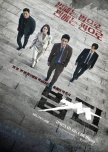
Compelling, complex vendetta, expressive play, impressive spirit & cunning plot development
KDrama Orbit starts into 2023 just as the year 2022 had been – full of productions with their fingers put right into the sore of wounds of society, savouring its imbalance with relish. "Payback: Money and Power", again, is one of those. It offers an exciting, astute, complex and clever story about revenge against those giants, who can hardly ever successfully be confronted by legal means. Money helps… those... who want to have things turn out the way that they prefer… who can afford to have things turn out the way that they prefer... who have a strong vision, too.The underlying premises are pretty sobering, yet well-known territory in KDrama land:
-The system (democracy and the rule of law) serves the money, not the people, because the people who fill the system with life can be bought.
-Power and money are inseparable.
-Hierarchical class thinking is far from overcome. The value of a person's wealth directly determines their value as a human being.
-Huge fortunes and legality rarely go hand in hand.
-The good news for the wealthy: money can buy you justice (and law).
-The bad news for the ordinary: Life is unfair.
-With legal means (alone) justice is not a given.
"Payback: Money and Power" bluntly takes all of these premises and blends them in a vendetta against Goliath revisited. Therefore, David first becomes a Goliath himself. In this case, David's real name is Eun Yong. He has risen from a penniless, simple young man to become the CEO of a private-equity fund who successfully speculates astronomical sums of money. Together with a team, that for him is family, too, he takes on a financial cartel in which politicians and especially the public prosecutor's office are also involved. Thus, it is not played fairly. On the contrary: it is actually life-threatening.
So, at first glance the plot doesn't seem to promise much that's new. Nevertheless, "Payback: Money and Power" offers a dense, strong story, with expressive play and impressive spirit. The presence of the mimes in front of a rough, gloomy background is haunting. To be honest, I paused for a moment - not sure whether I really want to know and see everything or rather drop. Eventually, I couldn't help it, couldn´t let go of it. I WANTED to know and see. The impression, the KDrama left with each episode, was just too powerful... And I'm thoroughly glad about it. A great story. With a considerably cunning plot development. Despite the underlying bitter seriousness an invigorating (for all the refreshing poetic freedom - e.g. not everyone is as talented, tactically adept, self-confident and yet grounded in a good balance of heart, mind and soul as Eun Yong) and encouragingly optimistic perspective.
Oh, actually, here's another premise I forgot to mention at first...
-But what a relief that the law still exists... and also those few, who stick to it, believe in its value and power, and thus keep fighting for it with wits and passion...
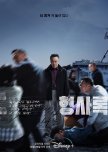
Solid crime drama! Gripping! About an aged, cynical cop struggling in a dark, grim man's world
"Shadow Detective" offers solid crime thriller quality at a high level - gripping, dense, with South Korean Look&Feel!As a Disney production, the series was produced explicitly for the international streaming audience. Accordingly, within compact 8 episodes the KDrama presents itself rather slim in terms of some characteristic dramaturgical, Korean-style storytelling elements. Nevertheless, a profound script, the committed cast and witty camera manage to create an enormous intensity and three-dimensionality.
"Shadow Detective" takes the audience firmly by the hand. The story does not have to come up with an excess of violence (as is so often the case with international, more masculine orientated streaming productions). I should mention, though, that it's primarily about older men in a man's world - and it's rather dark, grim, cynical.
Against the almost self-evident background of an almost unassailable, corrupt shadow world, the story focuses on the protagonist's inner struggle to do a reasonably good job as a detective despite the ailing system (... and to cope with aging).
Another season has already been announced.
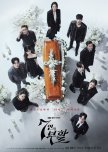
Where it is particularly dark, even a tiny little bit of light appears immensely bright...
I ended my review about the first seasons with the conclusion: "I only recommend "The Escape of the Seven" if the mood is right - one that demands unfathomable beastliness down to the blood. If we get involved in this KDrama, then we will uncompromisingly be catapulted into a world in which a search for the good guys could very well be in vain..."And obviously, things can always get even worse. At the same time, a wink of a conscience is actually making itself known here and there… very quietly, though. Regret and shame become concepts that are though stumbling trying to make themselves be heard. It's evidently not that easy, but maybe, who knows, it might not be impossible…
Still, the Seven can't easily get out of their skin. It´s way too serious what they had done and must be held accountable for. Even if they all go through their own processes and would perhaps like to choose a new path in some way (fortunately, people have the potential for healing and transformation), they can neither run away nor undo what has happened. In addition, they have made a pact with the devil... No matter which devil you get involved with, it rarely goes well...
The second season cleverly manages to build on the first one with fresh dynamics, while still giving the emotional rollercoaster ride a new direction. Sophisticated dramaturgical twists included. It's amazing to notice ourselves suddenly sympathizing with one or the other of the loathsome Seven...
In addition, the KDrama is vividly displaying the frighteningly diabolical (not too distant) future scenarios of our increasingly digitally depending information society, that in the worst case scenario, could become completely helpless in its interconnectedness...
Overall, I think “Escape of the Seven” is even winning with its second season. It offers a special KDrama experience that has it all - for all those who don't shy away from the abysm of the human species. And as is well known, where it is particularly dark, even a tiny little bit of light appears immensely bright...
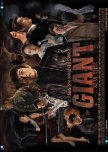
Giant is an epic about the life&love of 3 siblings during highspeed urban development of Gangam
"Giant" offers a dramatically stirring ride through 4 decades of recent South Korean history - 60 episodes tell a touching, upsetting, emotionally stirring and complex story set in the context of a turbo-fast urban development process in Seoul, south of the Han River: Gangnam.In passing, those episodes tell the story when Seoul and its people had to deal with a phenomenal population explosion: in 1953, 1 million people lived in Seoul. In 1960 it was 2.45 million and in 1970 it was already 6 million. Visions and plans were in demand, as were quick practical solutions and investments. Real estate speculation created a veritable gold rush atmosphere. "Giant" is about these 'gold diggers' in particular. (...and this hype about real estate speculation in Gangnam hasn't stopped until today...)
"Giant" is an epic. It is a monument and a memorial to the efforts and sacrifices of many people. The autocratic (and also often corrupt methods) of urban development become comprehensible if one considers them against the background of their time: the military dictatorship, which was inevitably characterized by the powerful influence of persons with military background in political and social decision-making processes (if you like see side note below). Instead of technical arguments and detailed examination, influence, money, bribery and position often had the say at the crucial interfaces.
If you pay a little more attention to the seemingly irrelevant details, "Giant" provides a crash course in recent South Korean history. (If you don't know or care about it, some things might be rather arbitrary or interchangeable.) In any case, the series has reached the South Koreans. In the course of its success, a further 10 episodes were added to the originally planned 50 episodes. For 40 percent of the viewers, "Giant" ranked first at the end of the 60th episode in 2010.
Ok, admittedly, there are 60 episodes. But when the time is right, you can confidently get involved. "Giant" is worth seeing. The story is told in a colorful way and played fantastically. It is emotionally gripping, touching, exciting. We accompany the protagonists over almost half a century: from their childhood in the 1970s to the year 2010. This means that actors can also show what they are made off by playing the protagonists as young. (Today they are stars of the 2020s: Yeo Jing-goo and Kim Soo-hyun). All in all, without exception, everyone delivered a strong performance. Last but not least, villain number 1, Jeong Bo-seok as Jo Pil-yeon, who holds his role brilliantly from the first to the last episode, is vividly remembered with his ice-cold laugh, which never got stuck in his throat - even in the most adverse headwinds.
The KDrama takes a sophisticated approach in telling the historical events and dynamic processes of the time through the eyes and hearts of three siblings. So, we tightly follow these stirring personal processes on the one hand, and several dubious machinations of the (fictitious) masterminds (who are quite close to the real events - see below) on the other. Against the historical background of those decades, in spectacular loopings the dramatically revolving wheel of fortune is allowed to turn to the fullest again and again, emotionally throwing the audience wildly around. KDrama shows it all.
"Giant" offers numerous stirring twists and upsetting turns in matters of love and rivalry, guilt and atonement, revenge and forgiveness. It won't be boring. All this surrounded by an indeed spectacular Gangnam urban development dynamic - at a dizzying high speed from no man's land to the hip trend district - which was not least favored by the autocratic control.
-------------------- SIDE NOTE: --- Gangnam highspeed development thanks to autocratic urban development during military dictatorship ----
There are details of everyday life during the PARK DICTATORSHIP: the influence of the military in all sorts of social issues, the secret service KCIA, which interfered unrestrainedly in domestic political issues and investigations and even used torture to interrogate people. Positions of power, like mayors, being appointed according to their military background and the level of their allegiances with Park. The backroom networks where the places, where the real decisions were made.
There are details of the subsequent DICTATORSHIP under CHUN DO-HWAN: the curfew during the state of emergency under martial law, for example. The brutally crushed democratic aspirations. The establishment of educational concentrations camps - "Giant" refers to the Samchung Camp in Yeoncheon, Gyeonggi, which was set up under the guise of fighting the threat posed by North Korean Communism. In this peculiar concentration camp, at least 60,000, probably even up to 100,000 innocent South Korean citizens were held captive in the former military prison under the most brutal conditions without an arrest warrant. There was talk of 'cleansing'. In fact, it was pure arbitrariness, verging on sadism.
And finally there is TRUE DEMOCRATIZATION of the system after the first free election for a long time - however, sadly, being faced with the same personnel (in autocratic tradition) in decisive ranks.
It has been proven that the military past in many political leadership positions during the Park dictatorship was not accidental but intentional. Among other things, of 6 Seoul mayors of that time (these were appointed, not elected), 3 had a military background. The other three were known for their expressed loyalty to the Park regime. Such people of Park's trust got the chance and used their past, their networks and opportunities as a robust standing, from where they set visionary course for the future of the capital with all means. Otherwise, rarely had the urbanization of Gangnam been as rapid as during those decades.
Gangnam beauty industry, the relevant corporate headquarters of the KPop industry, the suites and penthouses of the richest of the rich in the most exclusive apartment blocks of the country, temples of consumption of numerous luxury brands, hotspots for leisure and culture as well as some of the most prestigious schools contribute to Gangnam's dazzling image today. Gangnam with a population of over 1/2 Million recently is one of the economically most important urban districts of Seoul, in whose towers, which rise ever higher into the city sky, the very large companies of the country have their headquarters. A central transport hub has emerged and even the Ministry of Trade, Industry and Energy has taken political presence here.
It's hard to believe that 60 years ago this district south of the Han River (강 - Gang = river and 남 - Nam = south) stood for flood plains and agriculture - especially cabbage fields and plantations with the Korean Nashi pear. It was an unattractive no man's land, considering you want urban city life.
This had changed in the 1970s after Seoul faced a massive population explosion, the consequences of which the city could not cope with under the given circumstances. Previously, the city's political, economic and cultural heart had been on the north bank of the Han River in Gangbuk - in fact, since the dawn of the Joseon Dynasty. But between 1953 and 1960, in just 7 years, the population had more than doubled, practically 'overnight', from 1 million to 2.45 million. In 1970 it had already reached around 6 million! Nobody had been prepared for this. Chaos was the result. Infrastructure collapsed, slums literally sprouted out of the ground.
That's when the vision of a whole new district south of the river was born. In 1966 it was announced for the first time that the population should be redistributed in the future: 40 percent of the population should live in the northern area, 60 percent in new and densely built Gangnam. A dream in distant clouds, that's how it seemed back then, because there was nothing there at that time.
In the 1970s, the planning took on more concrete forms. Gangnam has been defined as one of Seoul's 3 central urban cores alongside the historical old town and the political center of Yeouido. In order for this to happen, construction of today's Hannam Bridge had already begun in 1966. In 1969 this important connection was completed and the first milestone was reached. Also, the Gyeongbu Expressway was opened in 1970. However, to speed up the development, Gangbuk was deliberately disadvantaged and Gangnam was privileged, for example with tax breaks. An express bus terminal was built, elite schools were relocated and comfortable new apartments were advertised. Stylish urbanity was marketed on one plot, yet rural wasteland was right next to it. The contrasts were enormous.
Yet, residential buildings started to grow at breakneck speed and people began to move to the new southern neighborhoods.
Strictly speaking, Gangnam and the education of an elite school district also marks the beginning of the now enormously profitable private education market and some social excesses, which to this day provide the KDrama market with plenty of material for the most bizarre stories. In addition, speculation in real estate became fashionable and became a new hobby for (more or less) rich wives. Eventually, Gangnam also earned its reputation as an entertainment district, with clubs staying open all night.
The story of Gangnam reads dazzling and spectacular. But the city itself initially had no money for all the investments that were necessary to develop the land. It relied on income from sale of the land set out for recompense from the land readjustment programs. All started slowly, because interested buyers withdrew, disappointed since there was hardly anything really urban in Gangnam in the early 1970s. In order to speed up the processes, a law was passed in 1972 that deliberately relaxed the existing tax regulations relating to property regulations. From then on, profits from real estate speculation were practically tax-free. Trade tax, property tax, etc. were also waived for the next 6 years. This temporary incentive for investors proved extremely successful, but also problematic. This brought speculators onto the scene, who didn't care at all about professional urban development as such.
Thus, remarkable performance comes with sad collateral damage. The catastrophes associated with sloppiness in construction and human fault in the wake of corruption pave the decades just as much as the milestones of urban development. The biggest accidents in this context were, for example, the collapse of the Wawoo residential complex and the Seongsu Bridge. (Others followed at regular intervals. Every decade has its own list...)
Autocratic regulations, the need for speed and the money involved also encouraged flourishing and unchecked corruption regarding insider trading with real estate speculation, building tenders and bidding. Bribery shaped the entire business world. This also promoted a climate in which - if someone was convicted of his illegal activities - he (usually a 'he') was easily released soon later on.
While the giants were able to pocket their gigantic profits without restraint, the population of Gangnam suffered (and still suffers) from housing costs that exceed every measure.
Finally, within this whole developmental process, the lending business has been a crucial and lucrative business since the very beginning until up to date, even if customers and their needs may have changed in the meantime...
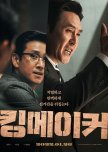
Political thriller, eloquently dealing with SK´s struggle for true democracy. Inspired. Profound.
Election campaign is a fight. But what rules should be applied? Do you inevitably have to hand in your ideals and ethics at the entrance as price for political success?Critical processing of South Korea's recent past - the democracy movement - is still in its infancy, because the dictatorship just finished a few decades ago and its proven structures within conservative circles are still resonating today. Increasingly, however, this topic is also taking up its media space. The political thriller "Kingmaker" sets a bold milestone by taking on a dazzling, comparatively upright, almost exemplary political personality, who for a long time seemed to have no chance in his sincere, ambitious fight for real democracy: Kim Dae-jung. He was the first opposition candidate to be elected President of the Republic. He is also the only South Korean to ever receive a Nobel Prize for his work on democracy and human rights. Some call him the Nelson Mandela of Asia...
In particular "Kingmaker" tells (in the plot prepared with some poetic freedom) about the early years of his political struggle and the arduous path that ultimately led him to the Blue House. The focus is less on his biography and more on what he still stands for in the eyes of most South Koreans today: real democracy. Or rather, against what he wanted to compete: the conservative, elitist, political cronies who stand in the way of progress and justice, if it is not in their own interest.
In the service of the electoral success, Kim (like so many politicians on this planet) was probably tried more than once to sanctify the 'good' purpose in the sights of many a morally questionable means. This difficult balancing act between an upright political attitude and one's own venality in a pact with a promising "devil" is illuminated and processed here in an impressive way. The temptation of a promising shortcut to success usually comes with a price that has to be paid sooner or later. (The internal struggle of 'for' versus 'against' shapes the decision-makers in South Korea with their well-established, conservative, shadowy networks to this day. This is actually writing daily history. And the TV and movie productions are full of it, too.)
The status quo - submission to the apparently influential 'more powerful' - is contrasted with a historically real personality. In order to convey the emotional dilemma in a dramaturgically clear way, Kim's campaign strategist of the first hours, Eom Chang-rok, was stylized as the main character and staged fictionally. In fact, little is known about him other than that he is said to have been brilliant and downright genius.
The story is about Eom Chang-rok's intelligent crisis interventions, solution approaches and election campaign strategies, some of which are in stark contrast to Kim's idealistic democratic values, that are always geared towards serving the people. The audience is confronted more than once with the question of whether the end might justify the means. Isn't the power of the people just a well-meant illusion after all? Wouldn't it be more efficient for the state leadership if a few (more or less) smart people decided for the many others in a short decision-making process? "Kingmaker" touches the foundations of political morality and ideology.
However, the KMovie also touches on very human weaknesses: the need for approval and the temptation to be seduced. These weaknesses are truly human and have to be dealt with by everybody - somehow, someday.
"Kingmaker" is a moving political thriller set in recent South Korean contemporary history about the stumbling blocks and challenges of true democracy. A democracy, that requires responsible, mature and accountable citizens. A democracy, that will always be challenged by the forces and networks operating in the shadows, whose goal is to incapacitate the citizens and instead rule for their own personal benefits.
An unpleasant subject, indeed. Yet the KMovie is eloquently dealing with this crucial issue for any democratic society.
A brilliant approach to this topic as well as to a younger chapter of South Korea´s history.
Inspired storytelling.
A profound production.
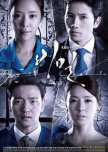
An inverse function... Consider the journey the reward. Truly captivating.
Two core components of KDrama characterize the recipe of "Secret": Firstly, the rich and powerful can obviously get away with anything. Secondly, a secret not only changes those who know about it, but eventually comes to light. Yet the brilliant mixture of this pastry makes the difference: the fatal initial constellation of the relationship dynamics is so cleverly shifted, twisted and tricky in several emotional loopings that the emotional world is completely turned upside down - an inverse function...For quite some time I avoided this KDrama, because (from the description) I thought I already knew how the story was going to go. ...Quite familiar, already seen many times... However, at some point I just wanted to have a glimpse (probably because of Ji Sung). What a surprise: it was truly captivating...
Moments of foreboding and predictability, yes, there are. But believe me, that doesn't stop you from wanting to see HOW things in their complicated entanglement can still turn out for the best. On the contrary, you CAN´T WAIT to experience that! The destination may be known, however, consider the journey the reward.
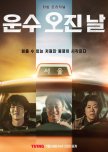
Absorbing & intense 500 minute road movie. A taxi ride to a soul´s nowhere. Brilliant from A-Z.
For me, “A Bloody Lucky Day” is one of the KDrama highlights of 2023.It is a psychological thriller. Without makeup. Set in a fairly grounded, solid, authentic everyday world, which gets challenged by a maniac´s incredible psychological logic. Stirring. Brilliant from A-Z.
However, everything revolves around the abysmal work of a psychopath. Accordingly, things get mercilessly brutal at times. The cumbersome police don't come off so well. Common sense, on the other hand, does... when it is in fact emotionally cornered to the extreme, so that it can no longer help but function at full speed, without distraction whatsoever.
One-pointed concentration, already having lost too much, getting your teeth into it and being ready to go to extremes – could that be the recipe to counteract the psychopathic 'monster'? Could... Maybe... Or not... Or is it?
“A Bloody Lucky Day” could be considered an absorbing ca. 500 minutes long road movie - a taxi ride to a soul´s nowhere. For the poor taxi driver a rather involuntary participant observation study on a psychopathic killer...
Emotionally highly explosive. Intense. Acting is first league. As a I mentioned earlier, a brilliant production from A to Z.
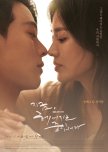
Jang Kiyong unconvincing as creative, Paris-based, free-spirited, rebellious, footloose photographer
"Now, We are Breaking Up" tries to tell a love story in reverse (e.g. it has been there already). This would be an interesting project in itself, yet...The plot is emotionally quite complex, the characters are in principle jucily interesting and ambivalent. If a KDrama can't take care of a multi-layered, complex mixture of feelings, then who can? Unfortunately, I have to say that (in my opinion) this project doesn't really work out so well with the casting.
Regarding her emotional intensity, Song Hye-kyeo is (as so often) a major factor for watching. As the heroine, here and there her reservedness, sobered by life, is perhaps a bit much. But in places this cracks open. It is this well dosed mixture and subtleness, that makes her role convincing - the experienced fashion designer in her late 30s has turned away from flirtation and rather concentrates on her work, into which she throws herself completely. Being the talented and experienced professional she is, hardly does she ever get upset by anything. ... until her encounter with the young photographer Yoon Jae-gook, that throws her (emotional) life (supposedly) upside down. Her reservedness so far operated as shelter and imprisonment at the same time. Circumstances don't really offer a chance to free herself from the corset of reason, which is protecting her deeply injured heart - never mind let herself fall and trust emotionally. This inner dynamic is not so nice to look at - or rather endure - for the viewers. But I don't think you can blame Song Hye-kyeo, as she handles this inner tension and the ambivalent moments of her complex role very well.
On the other hand (unfortunately) I don´t buy Jang Ki-yong in his role as a creative, Paris-based, free-spirited, a bit rebellious, footloose, and at the same time successful photographer. For me he behaves way too reserved, well adjusted, well-behaved - a sympathetic, dear, rich, successful boy. So unfortunately, HIS ambivalence doesn't convince me. Perhaps actor Jang Ki-yong lacks the life experience (on the rebellious side)? And since he can´t really fill this side with life, I am not convinced by the chemistry between the two leads. It doesn't get to me how the young man in his supposedly fiery manner, would be able to reignite on an EMOTIONAL level the fire of lust for life and joie de vivre (beyond work) that is still blazing somewhere deep down in Ha Yeong-eun... So the key to all further makjang doesn't really fit into the lock. Too bad. Thus the experiment of telling love in reverse didn't really work out that well.
The KDrama is not bad because of that (...though admittedly disappointing ...). On the pro side: There are freshening subplots, each with actors in good humour, who have actually won awards for their spirited performances. The setting in the creative industries is kind of charming, too. Finally, the Korean family values are (once again, but successfully as always) playing with fire on the drama front...


