





The Heir (2026)

家业 ‧ Drama ‧ 2026
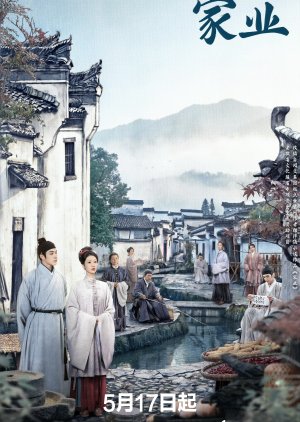
The Heir (2026) poster
7.8
Your Rating: 0/10
Ratings: 7.8/10 from 1,211 users
# of Watchers: 5,002
Reviews: 44 users
Ranked #3676
Popularity #4073
Watchers 1,211

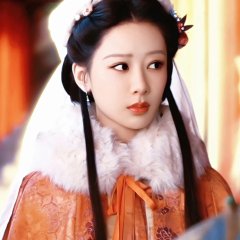
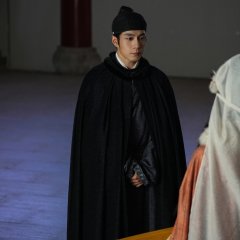
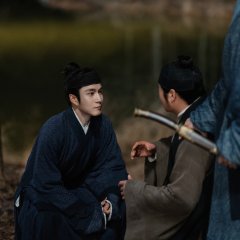
Set in the mid-Ming Dynasty, a tribute-ink scandal disrupts the long-standing Huizhou ink industry, causing the centuries-old Li family of ink makers to fall from grace. With the Li family’s reputation shattered, the Luo family rises to prominence, only to later face ruin due to political entanglements. As time passes, Li Zhen, the youngest daughter of the eighth branch of the Li clan, embarks on the path of ink making to support herself. Through talent and hard work, she became a dark horse in Huizhou’s ink industry. Luo Wen Qian, the second son of the Luo family, schemes to restore his family’s fortune and single-handedly shakes up the industry. Together, Li Zhen and Luo Wen Qian engage in a battle of wits with the rising Tian Mo family. (Source: iQiyi) ~~ Adapted from the novel "Jia Ye" (祯娘传) by Tang Ban Fan (糖拌饭). Edit Translation

  • English
  • 中文(简体)
  • Русский
  • हिन्दी
  • Country: China
  • Type: Drama
  • Episodes: 42
  • Aired: May 17, 2026 - Jun 3, 2026
  • Aired On: Monday, Tuesday, Wednesday, Thursday, Friday, Saturday, Sunday
  • Original Network: CCTV iQiyi
  • Duration: 45 min.
  • Score: 7.8 (scored by 1,211 users)
  • Ranked: #3676
  • Popularity: #4073
  • Content Rating: 13+ - Teens 13 or older

Where to Watch The Heir

iQIYI
Subscription (sub)

Cast & Credits

Reviews

Completed
Ifa
37 people found this review helpful
13 days ago
42 of 42 episodes seen
Completed 0
Overall 6.5
Story 6.0
Acting/Cast 8.0
Music 7.5
Rewatch Value 4.0

The Ink Was Richer Than the Story

Set against the turbulent backdrop of the mid Ming Dynasty, The Heir turns an ink-making empire into a battlefield of ambition, reputation, and survival. What begins with a tribute-ink scandal sends the once-revered Li family into decline and sets off a chain reaction that reshapes Huizhou's storied ink industry. From the ashes of a tarnished legacy rises Li Zhen, an underdog with talent to spare and grit to match, who rises from obscurity to become the industry's unexpected enfant terrible. Across the board stands Luo Wen Qian, a calculating heir determined to restore his family's fallen fortunes. As old rivalries simmer and new powers emerge, the two find themselves locked in a high-stakes game of strategy against the formidable Tian family. In a world where ink is power and reputation is currency, fortune favors not merely the bold, but the shrewd.

One thing viewers should know before starting The Heir: do not come here expecting a romance-driven story. The real star of the show is the Ming Dynasty ink industry itself. The drama dives surprisingly deep into ink production, ink classifications, business practices, cultural traditions, and historical terminology. It even provides textual explanations throughout the episodes, making the viewing experience feel educational without becoming overly academic. In fact, learning about the ink industry became my favorite aspect of the drama. For a series centered on something as specific as ink-making, it manages to make the subject fascinating and accessible.

The opening episodes immediately pulled me in. The tribute ink competition serves as an effective introduction to both the industry and the Li family. During the event, young Li Zhen impresses everyone by helping determine the rightful winner, showcasing her natural talent and intelligence. The celebratory family banquet that follows cleverly establishes the family dynamics and personalities. It did not take long to realize that Aunt Tian Jiang Yue would eventually become a source of trouble, while Li Zhen's relationship with her seventh-branch grandmother Wang Ru Jun provided some genuinely heartwarming moments.

The child actors deserve special praise. The young actress portraying Li Zhen delivered one of the strongest child performances I have seen in a Chinese drama. She perfectly balanced intelligence, confidence, and youthful charm, giving the character an incredibly strong foundation. Young Luo Wen Qian also left a positive impression. While the character already showed hints of becoming someone who might frustrate me later, the young actor's affectionate gaze toward Li Zhen felt sincere and natural. The casting team truly struck gold with the younger versions of the leads.

The drama's first major tragedy arrives during the tribute ink delivery. Due to circumstances that appear connected to Li Zhen's father, the eighth branch becomes the scapegoat for the family's downfall. Watching Li Jin Shui punish his own son before the entire branch is expelled from the family was heartbreaking. The emotional weight lands particularly well because we have already seen how much the elderly patriarch values the family name. Not long afterward, Li Zhen loses her father, leaving her to grow up alongside her mother, grandfather, and older brother. The subsequent time skip marks the beginning of her journey into adulthood.

Adult Li Zhen remains hardworking, kind, and remarkably resourceful. She becomes well-liked throughout her community and frequently offers practical business advice to those around her. At this point, she is engaged to Tian Ben Chang, who initially appears to be a sincere and diligent young man. Unfortunately, that image quickly crumbles. Driven by greed and family pressure, Ben Chang manipulates Li Zhen's brother into handing over the Li family's secret ink recipe. The consequences are devastating, leading to Li Jin Shui being forced to swear that he will never touch ink again. Watching Li Zhen immediately break off the engagement after discovering the truth was immensely satisfying. It was one of the moments where her strength felt empowering rather than performative.

Another standout character is Luo Wen Song. Initially, I misunderstood him due to his involvement in acquiring the Li recipe, but he quickly redeemed himself through genuine remorse, thoughtful advice, and unwavering support for Li Zhen. His passion for developing new inks made him one of the most entertaining characters in the entire drama. Eccentric, knowledgeable, and endlessly curious, Wen Song injected life into every scene he appeared in. Ironically, he became my favorite adult character despite having relatively limited screen time. His eventual departure from the story felt abrupt and disappointing because he left such a strong impression.

The downfall of the Luo family should have marked the beginning of an incredible revenge arc. Political turmoil destroys everything Wen Qian once had. His father sacrifices himself, Wen Song is relentlessly hunted, and Ben Chang's resentment toward the Luo family escalates into outright madness. The sequence involving the burning house is one of the drama's most infuriating moments. Watching Wen Song perish while Wen Qian stood outside witnessing the tragedy generated exactly the kind of rage that fuels great character development. Unfortunately, this is where my problems with the writing began.

Prior to his family's downfall, Wen Qian was immature, carefree, and more interested in having fun than shouldering responsibility. The tragedy, combined with his years under Marshal Qi's army, seemed like the perfect recipe for transformation. I expected him to return as a sharper, more disciplined, and more formidable strategist. Instead, very little changed. Despite spending years training under Marshal Qi, Wen Qian rarely demonstrates meaningful growth. His plans are often underwhelming, his strategic thinking leaves much to be desired, and his pursuit of justice moves at a glacial pace.

What frustrated me most was how little impact he had on his own storyline. He repeatedly claims that he wants the Tian family to climb higher so their eventual fall will hurt more, yet he spends much of the narrative making minimal progress toward that goal. His screen presence is surprisingly limited for a male lead, and there were times when I genuinely forgot he existed. Even when opportunities arise for him to take control of the narrative, he stumbles through poorly executed decisions and impulsive mistakes. The story constantly tells us that he is important, but rarely shows us why. And then comes the biggest issue: Li Zhen ends up resolving almost everything.

I have no problem with female-centered dramas. Some of my favorite dramas feature strong women at the forefront. However, The Heir becomes so determined to portray Li Zhen as universally capable that it begins to undermine the story itself. The narrative repeatedly follows the same formula: someone underestimates Li Zhen because she is a young woman, she delivers an inspiring speech, proves everyone wrong, and saves the day. Once or twice, this works. After numerous repetitions, it becomes exhausting.

The problem extends beyond her personal victories. Li Zhen becomes the solution to nearly every conflict in the drama. Family disputes, business crises, industry challenges, and even Wen Qian's revenge arc eventually circle back to her. The Li family repeatedly mistreats her and her branch, yet she continually returns to help them whenever they ask. The cycle becomes predictable and frustrating.

This issue reaches its peak in the second half. What initially felt like a shared story between Li Zhen and Wen Qian gradually transforms into Li Zhen carrying the entire narrative while Wen Qian fades into the background. The decision to have her essentially resolve the conflict with the Tian family felt especially baffling because this was supposed to be the culmination of Wen Qian's journey. At one point, he barely even appears while Li Zhen bends over backwards to deliver justice on behalf of his family. I was genuinely flabbergasted.

The villains themselves are not particularly impressive either. Oddly enough, they are not infuriating because they are clever or terrifying. They are infuriating because they are pathetic. Aunt Tian's motivations stem largely from resentment. The Tian family embodies ingratitude at its finest. Ben Chang evolves into a deeply unstable man driven by jealousy and grudges. Yet despite their pathetic nature, the family drama and constant scheming still managed to raise my blood pressure more than a few times.

To the drama's credit, the production values are excellent. The cinematography is gorgeous, and the visual presentation immediately draws you into the world. The earthy browns and muted grays complement the ink-making theme beautifully while reinforcing the historical atmosphere. Every workshop, residence, and street feels carefully crafted. If aesthetics alone determined ratings, The Heir would score significantly higher.

The ending ultimately left me feeling indifferent. By that point, I had already grown numb to many of the writing decisions. The revelation surrounding the original sabotage felt unnecessary, the prolonged separation felt equally unnecessary, and the open-ended conclusion failed to provide the sense of closure I was hoping for. A simple wedding scene would have been far more satisfying than a series of interpretive text cards.

In the end, The Heir is a drama of two very different halves. The first half is engaging, educational, and rich with fascinating insights into the Ming Dynasty ink industry. The second half struggles under repetitive character writing, questionable narrative choices, and an overwhelming need to position Li Zhen as the answer to every problem. If you're a fan of Yang Zi, interested in learning about historical Chinese craftsmanship, or simply looking for beautiful cinematography, there is certainly value here. But if you're hoping for a tightly written story with balanced character development and a rewarding payoff, you may find yourself running out of ink long before the final episode.

Read More

Was this review helpful to you?
Completed
Kaptan
9 people found this review helpful
13 days ago
42 of 42 episodes seen
Completed 0
Overall 7.5
Story 8.0
Acting/Cast 8.5
Music 7.0
Rewatch Value 7.0

The story of a woman who makes ink.

It was a good series for me. Another success story about a woman. I watched many such stories in Chinese dramas in 2025 and 2026. Success stories attract my attention and I enjoy watching them. This was one of those stories. It's a story about ink. I especially found Yang Zi very successful. The story was built around her. I can say the male lead was just a supporting character. But they were still compatible. I liked both of them. Apart from that, the excessive talking and advice, and many details about ink making, made the series stagnant and boring. It wasn't a series that progressed at a consistent level. Sometimes it rose, sometimes it fell. The quality wasn't maintained. The occasional competitions and fights added color to the series, but otherwise, stagnation prevailed. There was no real romance. There was no real drama either. Everything was left open, as if only the focus was on ink making. I think this bored the viewers. In the rest of the series, especially the family relationships, their loyalty, respect, love, customs and traditions were beautifully portrayed. The spirit of unity and togetherness was beautifully portrayed. There was also revenge and intrigue. The series could have been even better if these elements had been distributed more carefully.

I especially recommend it to those who enjoy stories about female success.

Read More

Was this review helpful to you?

Recommendations

Flourished Peony
Marvelous Women
In the Name of Blossom
Brocade Odyssey
A Dream of Splendor
The Sword and the Brocade

Details

  • Title: The Heir
  • Type: Drama
  • Format: Standard Series
  • Country: China
  • Episodes: 42
  • Aired: May 17, 2026 - Jun 3, 2026
  • Aired On: Monday, Tuesday, Wednesday, Thursday, Friday, Saturday, Sunday
  • Original Network: CCTV, iQiyi
  • Duration: 45 min.
  • Content Rating: 13+ - Teens 13 or older

Statistics

  • Score: 7.8 (scored by 1,211 users)
  • Ranked: #3676
  • Popularity: #4073
  • Watchers: 5,002

Top Contributors

177 edits
138 edits
95 edits
59 edits

News & Articles

Popular Lists

Related lists from users

Recently Watched By