1
1THE STORY EATS THE READER
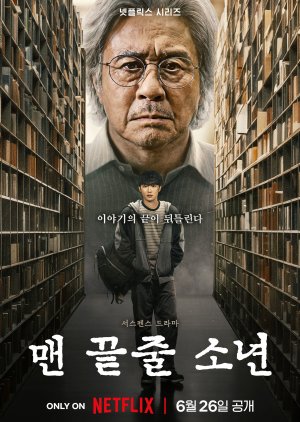
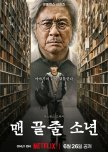
"Notes from the Last Row" is a mystery thriller built around the idea of what if a literature professor became the exact kind of person literature professors warn you about? What if a man spent his entire career teaching critical thinking only to completely lose his mind the moment he found a story he couldn't put down?The series follows Heo Mun-oh, a literature professor at a prestigious university who has never emotionally recovered from the failure of the one novel he published decades ago. Some people get dumped and move on. This man got a bad review and built an entire personality around it. Years later, he's still carrying that disappointment around like a beloved family heirloom, taking his frustrations out on students, his career, and his incredibly patient wife, Jo Hyeon-suk, who deserves hazard pay for putting up with him.
Everything changes when he meets Lee Kang, an engineering student who has the audacity to challenge him in class and then submits an essay so good it practically activates every dormant neuron in Mun-oh's brain. Suddenly, this bitter, washed-up professor sees what he believes is genuine literary talent and immediately latches onto it with the intensity of a man trying to relive his youth through somebody else's homework.
Kang's writing revolves around his growing involvement with a wealthy family after befriending one of his classmates. Naturally, because rich people in dramas are apparently incapable of having a normal Tuesday, the family turns out to be overflowing with secrets, tensions, betrayals, and emotional landmines. As Kang becomes more deeply embedded in their lives, he starts transforming their private conflicts into material for his story, and Mun-oh encourages him every step of the way because apparently nobody in this universe has heard of boundaries.
What begins as mentorship quickly mutates into obsession. Mun-oh becomes less interested in teaching Kang how to write and more interested in finding out what happens next. The funniest part is that the show understands exactly how pathetic this is. Here is a man with decades of literary education, and the second he gets hooked on a good story, all that intellectual distance evaporates. He stops behaving like a scholar and starts behaving like somebody refreshing AO3 at three in the morning waiting for the next chapter update.
That's where the drama is at its strongest. Beneath the mystery, it's really a show about storytelling itself and the weird power stories have over otherwise rational people. Kang presents his narrative as truth, but the deeper Mun-oh falls into it, the less he questions anything. The series keeps asking whether he's discovering reality or simply consuming a version of reality crafted by a talented writer who knows exactly how to keep an audience hooked. It's a clever exploration of authorship, unreliable narration, and the uncomfortable possibility that a compelling story matters more to us than the truth.
Mun-oh's insecurities are also woven into his rivalry with bestselling author Kim Su-hun, the literary equivalent of the guy who got everything you wanted. Years ago, Su-hun publicly criticized Mun-oh's novel, then went on to become successful, respected, and, just to make things extra painful, married Ahn Eun-joo, the woman Mun-oh never got over. At a certain point, you almost stop seeing Mun-oh as a professor and start seeing him as a collection of unresolved grudges wearing a tweed jacket.
Unfortunately, the series doesn't entirely trust its own ideas. Just when it's digging into fascinating questions about fiction, perception, and obsession, it starts throwing melodrama around like confetti. Revelations pile up. Twists multiply. Secrets emerge from other secrets. Every time the show gets close to saying something genuinely profound about storytelling, another soap-opera development bursts through the wall like the Kool-Aid Man.
The biggest casualty is Mun-oh himself. His obsession is supposed to be tragic, but some of his decisions become so spectacularly questionable that they feel less like character flaws and more like the writers dragging him from plot point to plot point. Instead of watching a brilliant man unravel, you're occasionally stuck wondering whether common sense simply left his body.
Still, Choi Min-sik does an enormous amount of heavy lifting. He turns Mun-oh into someone simultaneously fascinating, irritating, intelligent, pathetic, and oddly sympathetic. The deeper the character spirals, the more desperation leaks through the cracks, and even when the writing loses its footing, the performance keeps the emotional core intact.
In the end, "Notes from the Last Row" is most compelling when it's examining the dangerous relationship between fiction and reality. It's a show about how stories can seduce us, manipulate us, and convince us to ignore everything we should know better than to ignore. Ironically, it ends up falling for some of the same tricks itself. The series becomes so addicted to shocking twists and emotional chaos that it occasionally loses sight of the smarter, more nuanced story hiding underneath. But even with those flaws, there's something undeniably engaging about watching a man spend an entire career studying narrative only to be completely destroyed by one.
Full review coming soon. Stay tuned!
Was this review helpful to you?
It's not about what happens. It's about who gets to control the story.
----ReviewNotes from the Last Row isn't concerned with shocking plot twists or constant suspense. Instead, it asks a far more unsettling question: Who owns a story?? The person who writes it, the one who tells it, or the one who controls how it's remembered?
The drama follows Heo Mun-oh, a failed
novelist turned bitter literature professor who hasn't written anything meaningful in over twenty years. His stagnant life begins to crack when Lee Kang, a quiet engineering student who always sits in the last row, submits a piece of writing that's unnervingly good. What begins as mentorship slowly mutates into obsession, as Mun-oh becomes consumed by Kang's work and the boundaries between fiction and reality begin to dissolve.
Both male leads deliver razor sharp performances.
Mun-oh's psychological unraveling is portrayed with remarkable precision. You watch a man slowly lose his confidence, his identity, and eventually his grip on reality until he becomes almost unrecognizable. Kang serves as the perfect counterbalance quiet, unreadable, and seemingly always one move ahead. Every conversation between them feels like a chess match where only one player knows the rules, making even their quietest scenes incredibly tense.
What makes the drama exceptional is its refusal to rely on cheap twists or manufactured suspense. Instead, it explores the frightening lengths people will go in pursuit of literature and artistic greatness. Mun-oh doesn't simply admire Kang's writing he becomes possessed by it. He begins reshaping his own morals around it, allowing his imagination to consume him completely.
The questions the series keeps asking linger long after each episode ends:
What truly inspires great writers? Is it talent? Trauma? Jealousy? Or the irresistible desire to control someone else's narrative?
Without revealing spoilers, the final episodes completely reframe everything that came before. Every clue was there from the beginning, but like Mun-oh, you're too deeply caught inside Kang's narrative to recognize them. The twist doesn't exist to shock it exists to make you rethink everything you've been watching. The execution is meticulous, relying on subtle conversations, lingering silence, and the unsettling realization that you've been viewing the story from the wrong perspective all along.
Perhaps the drama's greatest strength is that it refuses to create heroes or villains. Mun-oh isn't merely a victim, and Kang isn't simply a genius. Their relationship constantly shifts between admiration, manipulation, dependence, rivalry, and mutual fascination. By the finale, you realize you've become just as trapped within Kang's narrative as Mun-oh himself. You're left questioning who deserves your sympathy and that's precisely the point.
Notes from the Last Row is less of a mystery than it is a mirror. It's a haunting exploration of obsession, authorship, artistic ambition, and the dangerous seduction of a truly compelling story. It's slow, bleak, intellectually demanding, and deliberately refuses the comfort of easy answers or tidy redemption.
The writing is exceptional. The performances are unforgettable.
Watch if: You enjoy psychological dramas that treat storytelling itself as a weapon.
Skip if: You're looking for a fast-paced thriller, a comforting watch, or a neatly wrapped ending.
Was this review helpful to you?
When guidance becomes possession and talent becomes a weapon
Notes from the Last Row is a slow-burn, character-first drama that makes its power in small, exacting moments rather than plot fireworks. At its centre is Heo Mun O (Choi Min-sik), a once-promising writer turned cynical professor whose life is reshaped when he notices Lee Gang (Choi Hyun-wook), a reticent student with an unsettlingly original voice. What begins as mentorship soon tilts into something darker: Mun O’s hunger to reclaim meaning and Lee Gang’s brutal, unguarded talent form a combustible dynamic that the series explores with clinical intensity.Choi Min-sik anchors the show with a layered performance — wounded, charismatic, and quietly menacing. He makes Mun O feel simultaneously sympathetic and unnerving; you understand his motives even as you recoil from his choices. Choi Hyun-wook matches him in a subtler register. As Lee Gang he conveys an eerie maturity and emotional restraint that make the character’s eruptions and manipulations land with real weight. Their scenes together are the show’s strongest currency: electric, unpredictable, and often painfully intimate.
Supporting players deepen the texture rather than divert attention. Huh Joon-ho’s Kim Su-hun and Kim Yoon-jin’s An Eun-ju provide moral counterpoints and human stakes that keep the central pair from becoming an isolated experiment. Jin Kyung as Cho Hyeon-suk offers quiet solidity; her presence adds needed shading to the story’s ethical questions.
The series excels at tone and atmosphere — muted cinematography, careful pacing, and a melancholic soundscape underline the themes of authorship, ownership, and the cost of ambition. It deliberately refuses tidy moralizing: characters are flawed in ways that make judgment complicated, and the show invites you to sit with that ambiguity.
Pacing will test some viewers. The narrative leans on conversation, implication, and psychological escalation rather than action, so those expecting a conventional thriller may find it slow. But if you appreciate character studies where tension is born from intimacy and moral compromise, Notes from the Last Row rewards patience.
Who it’s for
Fans of performance-driven dramas and psychological mentorship stories.
Viewers who like moral ambiguity, slow-burn tension, and strong lead work.
Not ideal for audiences wanting fast-moving plots or clear-cut heroes and villains.
Bottom line
A smart, unsettling study of influence and obsession carried by two extraordinary leads. It’s less about plot twists and more about the corrosive emotional logic between teacher and student — a painful, compelling watch for those who value acting and character over spectacle.
Was this review helpful to you?

This review may contain spoilers
The chess game of parasitic obsession and fragile egos.
'Notes from the Last Row' is a masterclass in psychological manipulation that left me completely torn between admiration and disappointment.Heo Mun Oh, a failed, greedy, wrecked writer and Korean literature professor, meets Lee Gang, a talented writer from the last row of his class. Upon the brilliance and intelligence of story narration of the younger, Mun Oh offers one-on-one classes to Lee Kang for improving the younger's knowledge and his own curiosity (to win something in life).
As the story unfolded, it was not just about teaching classes on literature to improve Lee Kang's writing skills but utilizing them to unveil someone's life in literal words, in several prescriptions, and in descriptions, without consent.
I see Heo Mun Oh as an unreliable narrator-character at the start when he bulldozed with Lee Kang's plan of cheating, helping him slip answers to examination questions, just to let Lee Kang continue his assignments, scratching away his own commitment to responsibilities.
Mun Oh's relation with people around him seemed distant and often appeared to be coated.
His bond with his wife, unstable and unlovely, lasted to the end. With his co-workers, he's off on various bases.
I couldn't quite understand how Mun Oh's wife, Cho Hyeon Suk, a psychologist herself, didn't perturb over her husband's distance despite the writer's block, given her own sufferings over many miscarriages and a long period of an unshaken, unconcerned husband.
(Although her emotional exhaustion, keeping up with Mun Oh, is an acceptable coping mechanism.)
I admit that the second episode had me hooked.
Kim Su Hun, a popular writer, had a history of friendship and dreadful moments with Mun Oh, who held the main lead in a long slump of captivity for years.
Nonetheless, it didn't seem like a tragic story to me. Instead, sadly, it looks like Mun Oh destroyed his own career for a friend's derogatory remarks. (I believe there could be more, many more events in his life that might have sparked his ink once again, but only if he allowed himself to sway that way, without lingering, crippling in sulking past.)
The later episodes quite annoyed me and almost tested my patience.
Mun Oh's obsession, thrill, vengeance, and deliberate invasion of Kim Su Hun's life show his desperation and dark yearning to achieve the youthful career he could have had, but the cerebral path he ventured on after the inferior remarks he received is on him. His constant gaslighting and erratic decisions to Lee Kang hindered his progress. Shaped his broken future.
Lee Kang's a menace; his actions, his steady moves, took a toll on the rest of the show. It was not discreet, as Lee Kang's intentions are somehow on the plate, right in front of the nose; one could try to expect his reasons on the whole story of Kim Su Hun, although it was displeasing and troubling at times for the exaggeration of a 20-year-old to keep on imposing himself without a warrant of decent regard, but it was a splendid surprise to realize everything was just his play, a backspace to the real characters we have known—Kim Su Hun, An Eun Ju, Kim Se Yun, and Seon Min Hui.
I had absolutely immersed myself when An Eun Ju got highlighted. It was thrilling to see the new perspective of each character and their little story in the whole play.
Mun Oh at one point blurred his own ethics, responsibilities, and humanity with his perpetual greed, envy, and jealousy.
It wasn't shocking when he asked Lee Kang to write the end of the story, even when they were still unaware of it.
Given how unstable he is from the start with Lee Kang at certain things, denying at the initial stage only to accept and give in to the venturing broken pride of his.
As if, and really as Lee Kang was waiting for the exact call, he used the moments to his own satisfaction, writing a special story and making Mun Oh taste the bittersweet of reality.
However, it didn't meet my expectations when I became aware that Lee Kang's whole doing was just for the mistreatment of Mun Ho 12 years ago. I would have loved to see much more depth and growing insight into the psychological behavior of adult Lee Kang.
I liked Choi Hyun Wook's dynamics with everyone in the drama; regardless of a huge age gap, his unwavering chemistry bonded the strength and quality.
Still, in disappointment with how Mun Oh wasted his years and career, along with his wife's, the ending with his wife satisfied me, but the to-be-continued felt unnecessary. But as of now, as pleasing as it is to see Hyun Wook in a thriller concept and not all stories need pure suspense, I still welcome it.
This story exposes the dark side of creative writing and mentorship.
Not every teacher-student bond is healthy; it can be toxic. It opens the truth of reality, how unresolved trauma and fragile egos play a huge role in lives.
As Mun Oh thinks he is using Lee Gang to live out his successful writing career, he never had, while Lee Kang acts as the ultimate manipulator, feeding Mun Oh's greed and desperation.
The psychological depth of this story is that when you let envy, jealousy, and past insults write your future, you end up destroying not only your own life but also the lives of everyone who loves you.
Kudos to the cast and the team for this amazing show!
Was this review helpful to you?

This review may contain spoilers
A Novel Way to Ruin a Life
I went into Notes from the Last Row completely blind. All I knew was that it revolved around a mentor and his protégé in the world of literature. That premise alone did not exactly grab me, and I even considered skipping it altogether. Thankfully, curiosity got the better of me. Before long, I found myself pulled into a story that thrives less on shocking twists and more on the unsettling feeling of knowing something is wrong without fully understanding why. Every episode left me eager to uncover the next page, even when I could already see where the story was heading.At its heart, Notes from the Last Row is less about writing and more about the price of genius. It follows Heo Mun Oh, a washed up novelist turned Korean literature professor, whose stagnant life is upended when he notices Lee Kang, the quiet student tucked away in the last row with a gift for storytelling that borders on the sublime. Seeing a spark he believes he can nurture, Mun Oh takes Lee Kang under his wing. But what begins as mentorship soon becomes a Faustian bargain, as admiration curdles into obsession and the pursuit of literary greatness blurs the line between creator and creation. In this psychological tug of war, ambition becomes both muse and monster, proving that some stories are powerful enough to rewrite the people who tell them.
The drama wastes little time setting this dynamic in motion. Mun Oh spends his days trapped in creative paralysis, unable to write his long awaited second novel and taking out his frustrations by harshly criticizing his students' work. Then comes Lee Kang, who quietly stands out by correcting Mun Oh during class and submitting a story assignment that immediately catches his attention. From that point onward, the mentor and protégé relationship begins. Yet it is obvious almost from the start that Lee Kang has motives beyond simply learning from Mun Oh. The more he subtly manipulates Mun Oh into helping him, the more the narrative shifts from asking what is happening to asking why.
That "why" is what kept me watching. The mystery itself is fairly predictable. It does not take long to distinguish reality from fiction or to understand the direction of the major twists. Instead, the real hook lies in how the story chooses to reveal those truths. It constantly teases the possibility that another twist might be hiding around the corner, making you second guess whether what seems obvious is actually the full picture. It is less about solving the puzzle and more about watching the dominoes fall.
As Lee Kang continues writing and Mun Oh eagerly reads, the story inside the story starts bleeding into reality. Characters like Mun Oh's longtime rival Kim Su Hun and his first love Ahn Eun Ju begin appearing in Lee Kang's narrative, each one carefully crafted to poke at Mun Oh's deepest regrets and insecurities. What starts as Lee Kang's fictional story gradually becomes Mun Oh's own imagination taking over. Mun Oh unknowingly begins directing where the story should go, while Lee Kang happily follows along, quietly steering him further into obsession. Watching Mun Oh slowly lose his grip on reality while Lee Kang calmly pulls the strings is where the drama is at its strongest. It almost feels like watching someone willingly walk into quicksand because they are too fascinated to notice themselves sinking.
By the end, the inevitable finally arrives. Reality and fiction completely blur for Mun Oh, while Lee Kang succeeds in dismantling his career, marriage, and sense of self through the very thing Mun Oh once loved most: stories. Even though I could predict most of the major developments, I still found myself constantly wondering if the drama had one more trick hidden up its sleeve.
My biggest issue, however, lies with Lee Kang's motivation. We eventually learn that twelve years earlier, when Lee Kang was an orphaned child, Mun Oh visited his orphanage. The two briefly bonded over storytelling, leaving young Lee Kang inspired and eager for more. Unfortunately, for Mun Oh, it was nothing more than a fleeting encounter he had no intention of continuing. That rejection left a lasting scar on Lee Kang, motivating him to spend the next twelve years orchestrating an elaborate plan to feed Mun Oh stories until they ultimately destroyed him.
I understand what the writers were aiming for. A single encounter can absolutely shape someone's future, especially a lonely child searching for connection. It is also clear that Lee Kang has psychological issues that amplify his obsession. Still, for a plan that took twelve years to execute, the emotional foundation felt surprisingly brief and underdeveloped. I wanted a stronger buildup that truly sold the weight of his resentment. As it stands, his backstory explains his actions, but it never fully convinces me that it justifies such an extreme level of planning. It is one of those moments where the ingredients are there, but the dish could have used a little more time in the oven.
Thankfully, the performances carry much of that emotional weight. Choi Min Sik is phenomenal as Heo Mun Oh. He perfectly captures a man who has long lost his creative spark, from his lifeless eyes to his sluggish posture. Then, as obsession slowly takes hold, every subtle shift in his expression and body language makes the transformation believable. It is the kind of performance that reminds you why he is considered one of Korea's finest actors.
Choi Hyun Wook is equally impressive as Lee Kang. What makes Lee Kang fascinating is not that he is outwardly dangerous, but that he is terrifyingly good at manipulating people while maintaining the image of an ordinary, talented student. Depending on whose perspective we are seeing, Lee Kang almost feels like two completely different people. Choi Hyun Wook navigates both sides effortlessly, making the psychological battle between mentor and protégé consistently engaging. Their chemistry is easily the drama's biggest strength.
The supporting cast also deserves plenty of praise. With so many seasoned actors and actresses involved, nearly every character feels convincing and grounded. My only complaint would be the younger versions of some characters. The child actors neither resembled their adult counterparts particularly well nor delivered performances that matched the rest of the cast. It is understandable, but noticeable enough to mention.
Visually, the drama does not rely on flashy cinematography. Nothing particularly stood out besides Mun Oh's distinctive bluish gray hair. Surprisingly, what stayed with me more was the soundtrack. The playful, Pink Panther-esque background music often lightened the atmosphere just enough to make the psychological tension feel oddly entertaining. It created an amusing contrast that somehow worked better than I expected.
Overall, Notes from the Last Row is a story that succeeds not because it constantly surprises you, but because it keeps making you question whether your predictions are complete. While I was disappointed by the underwhelming payoff behind Lee Kang's motivations, I was thoroughly entertained by the psychological tug of war between him and Mun Oh. It is an engaging, suspenseful, and easy binge that explores obsession, creativity, and the dangerous power stories can hold over both their readers and their writers. Sometimes, knowing the ending is not what matters. The fun comes from watching how the author chooses to write the final chapter.
Was this review helpful to you?
This review may contain spoilers
"what story?" -- pure epic
ONLY READ IF YOU HAVE WATCHED IT!!!I was waiting for this drama since 1st june since i had nothing else to watch. And being a writer myself I'm obessed with thrillers just the way professor was, tho i genuinely had NO idea how the plot will unfold.
First of all the plus point? ONLY SIX EPS i love short dramas and i know it's like a roller coaster ride. So i picked my seat in it.
The drama started off very smoothly showing us a student and his professor. Normal uni life, a professor with writer's block & complex martial life ( i don't like the way he treated his wife? excuse me? what even uncle ??? diva took the right decision at the end!) then the first episodes ends up with picking up the speedd. The first damn assignment!
And i cannot blame professor for wanting to read more after "to be continued"
just like him i kept clicking on next ep because at the end professor was representing us in that drama. and tbvh? i never believed lee kang at alll, and his first "attractiveness" with the lady WAS SO DISTURBING!? But i seated throughout the journey trying to understand why this dude likes older women sm? ( again jus like professor lol )
AND OH GOD, THE FIRST PLOT TWIST? My jaw was on the floor I never saw it coming?? I was so invested into the "imaginary mom dad of his friend and i thought yeah this dude just wants to be closer to his "bsf" mom. BUT THE TWIST??? wow! I got mad at first because man wth? why would you deceive me with IMAGINATION?
but then i realized, that is the whole point of "story"
Okay now first plot twist came, and after that the target of lee kang was def. not the women this time but now he got his step into the "murder mystery" and this is where I was like " bro wth? is this jus about a dumb ahh writer and his affairs??" i was so sure that's how the story will keep unfolding and i myself was so invested into finding the real culprit and digging through the evidence! And when in 5th ep, they show how the murder evidence is basically no more yet everyone knows writer did killed her? I was sad actually because i felt bad about the women who got killed and her sister's backstory.
UNTIL.
I WATCHED EP 6 at the start i was like okay this boy might just wanted the professor to overcome his block and THATS WHY I WAS LOWKEY SO DISAPPOINTED CZ WHAT?
but ohhhhhhhhhh myyyyyyyyyy daaaaaayyyyyyyyyyysssssssss
THE TWIST??? they didnt even let me breathe or swallow one twist before another one shows up? WOW
( i lowkey felt slapped too cz wdym i was fooled just like professor was)
and i was actually in denial. This is PEAK.
but the reason of his revenge was SO WEIRD? SO WEIRSD? wdym you got scholarship, befriended that guy and overheard the professor's story, and decided to write in assignment whilst making him beg for more snippets of fake stories? JUST TO TAKE REVENGE? and you even hooked up with his wife ( okay valid for wife lol what even is professor doing atp but DUDE ? )
AND THE AUDACITY TO SHOW AT THE END JUST FOR PROFESSOR TO ASK "what story?"
his character is 101% pure manipulative and i think even the professor knows he's getting played at his hands but i told you, just the way we ended up thinking " now wth he wants to say" professor uncle ended up doing the same.
This one is very complex. No one in this entire drama is a hero or a villain.
10/10
Was this review helpful to you?

This review may contain spoilers
The character of Lee Kang made me feel really uncomfortable, so much so that I'd skip some of the scenes where he's secretly watching. However. From the very first episode, it's clear that he's just pretending to spy and that he's making up a story. Once you realize that, it begins very, very hard to get interested in a series that tells you right off the bat that nothing is true. So just tell the truth right away or do something with it. Use it to tell something. Have you heard of Straight to Hell ?I kept watching because Choi Min-sik can't choose a bad script, no ? The end of Episode 2 gets intriguing... only because the characters tell us so. Not because it actually is. So I was watching, thinking only about why all of this was made up in the first place. And, unfortunately, we're only told at the very end, with no clues to figure it out beforehand. This story, when you think about it, wasn't all that exciting. All that for nothing. The problem with twist stories is that if you figure it out right from the start (as is the case here, since we're told right away and literally) it loses its appeal. And ending with a reference to Faust ? let's be a little humble, please.
I totally get that the show wants to question the narrator and our tendency to believe a story. It just needed to be less over-the-top. The kid and his just another sob story, nothing special... okay, great… I actually would've liked it if they'd explored that instead !
I failed to catch this K-drama. I'm annoyed with myself. But I'm reading some very enthusiastic and well-written reviews, so at least that's something.
Let's talk about the difference in acting. Choi Min-sik brings depth of intention and a certain way of looking at people ; he exudes resentment and dissatisfaction. He's an unfriendly man who still can't accept that a woman didn't choose him or that his career as a novelist never took off. An ordinary, selfish man. On the contrary, Choi Hyun-wook, elusive and expressionless, I'm not sure what to make of him by the end. He tries to come across as amoral as the protagonist of Dear X, but it never quite works for me.
Was this review helpful to you?
This review may contain spoilers
When Obsession Becomes Self-Destruction
Notes from the Last Row is much more than a psychological thriller. It is a story about envy, ambition, identity, and the terrifying consequences of becoming consumed by another person's talent.What makes the drama brilliant is that Lee Kang is never reduced to a simple victim or villain. His silence constantly forces both Heo Mun-oh and the audience to question what is real and what is manipulation. Even when he says very little, he completely dominates every room he enters.
The most fascinating part of the story is Heo Mun-oh's psychological collapse. He begins as a professor convinced he can control his student, but little by little he becomes obsessed with Lee Kang's writing. By the end, it is impossible to tell whether he is trying to destroy Lee Kang or become him. His envy slowly destroys his marriage, his career, and ultimately his own identity.
One of the most debated moments is the implication that Lee Kang slept with Mun-oh's wife. The drama never gives an explicit confession or undeniable proof. Instead, it deliberately leaves enough ambiguity that both Mun-oh and the audience remain trapped in uncertainty. That uncertainty hurts Mun-oh far more than a clear answer ever could, and it perfectly represents the show's central theme: imagination can be more destructive than reality.
The ending refuses to provide simple closure, which is exactly why it works. Instead of rewarding the audience with easy answers, it forces us to question whether the real tragedy was Lee Kang's manipulation—or Mun-oh's inability to escape his own insecurities. The final scenes suggest that the greatest prison was never another person, but Mun-oh's obsession itself.
Choi Min-sik delivers one of the finest performances of his career, portraying a man whose pride slowly transforms into paranoia and self-destruction. Choi Hyun-wook is equally impressive, creating a character who remains impossible to fully understand until the very end.
This is not a drama about solving a mystery. It's about watching someone lose themselves while desperately trying to understand another person. Every unanswered question serves that purpose.
Many viewers may be frustrated by the ambiguity, but I believe the uncertainty is exactly what elevates Notes from the Last Row above a typical psychological thriller. Some stories end by revealing the truth. This one ends by showing that the search for the truth can destroy a person.
Was this review helpful to you?

Good premises, uneven execution
I didn't expect this storyline at all, and I was genuinely surprised by how captivated I became. It was exciting to watch the story unfold and see the characters reveal their true colours. Some of the plot twists caught me off guard, while others were more predictable—but overall, it was still an enjoyable ride.I was so happy for his wife in the end. The acting was great across the board, and Hyun Wook did an excellent job portraying his character.
I loved the ending—it was a great way to wrap things up.
That said, even though it was only 6 episodes, I somehow found the drama feeling too long. The storyline was strong, but the execution didn't quite match its potential. There were moments of tension, but not enough real thrill or suspense to keep me fully engaged throughout. It's a shame, because with a different approach to direction, this could have been something truly great.
Verdict: An interesting premise with some good twists and solid performances, but let down by uneven execution. Worth a watch if you're curious, but don't expect a gripping thriller.
Was this review helpful to you?
This review may contain spoilers
More Confirmation Than Revelation
The biggest weakness for me was the central twist. It wasn’t particularly well concealed, so when the reveal finally came it felt more like confirmation than revelation. Unfortunately, the explanation that followed didn’t make it any more satisfying. The villain’s motivation felt far too thin to convincingly explain how they became the person we eventually see. I don’t need a villain to be sympathetic or redeemable, but I do need to believe the path that led them there, and Notes from the Last Row never quite sold me on it.Was this review helpful to you?

 1
1When you get engrossed in a story...
This drama is centred around the very particular relationship between Heo Mun O, literature university professor, and his student Kang Lee. The first one is acknowledging the writing talent of the second one, and decides to take him under his wing because of how captivated he is by his paperworks...From this premise, the drama unfold in a very gripping way, with a strong point of view, showcasing how reality and fiction can merge, and how engrossed one can be by the storytelling power of someone else. The thriller aspects of the story are quite intense, but it is the relationships dynamics and the psychological elements that are the most interesting to observe.
Acting was great, maybe the best part of the series. It was layered enough to sell the lies but also the truth, quite a feast for the viewer. A lot of the characters don't feel likeable at all, some are pitiful, some hateful: it is though to be rooting for them. However, the cast performance keeps the viewer glued to the screen, to see more of them.
I would recommend this to people that are looking for a psychological thriller. My recommendation would be to go blind and to be very mindful of spoilers because this series is full of reveals and will keep you on your toes. Part of what made it so interesting was to guess what was going to happen and I am quite happy with the outcome. It was what I expected and made a lot of sense.
Was this review helpful to you?

Short Thriller That Keeps You Guessing
This drama only has 6 episodes, but every single episode kept me hooked. The biggest thing I felt while watching was curiosity. The suspense was done so well that my mind kept trying to predict the ending… but none of my theories were right. The final twist was honestly shocking.
Another thing I kept thinking throughout the show: Professor Heo was a complete piece of sh*t. People who are still stuck on their exes honestly shouldn’t date or marry because they end up hurting their partners. I kept wishing his wife would leave him, so seeing that happen was satisfying.
And the way he talked about orphan kids so harshly? Yeah, that man was truly awful. after this Lee kang's revenge felt even sweeter.
The reveal about Min Hui being Lee Kang’s imagination was such a “wow” moment. The way he fooled him was honestly brilliant.
The only thing I felt was lacking was the writer’s family storyline. I know a lot of it was made up by Lee Kang, but the scene where the professor goes to their house and rambles about the fire felt too short. They could’ve explored that part a little more.
Overall, a short but very gripping thriller with great suspense.
Was this review helpful to you?