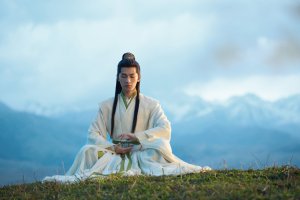

As per comments below, so many people enjoyed this drama, but rating only 7.8 ??Shouldn't it be above 8 at least??…
You know Yang Yang has lot of haters. Even in Douban, there are lot of 1 star rating even if it hasn't yet aired. There was an obvious rater commented that he gave only 1 star coz Justice Bao has only little screen time, Luh? How? Coz Justice Bao didn't even in the drama in the first place? See... Hahaha
-Another in-depth analysis from a long time fan of Zhan Zhao-
With the finale of "Rainy Night Bells," I had no time to pay attention to the various online comments, both positive and negative. While many were still reminiscing about the battle at Chongxiao Tower, I was completely absorbed in episode 36. I watched episode 36 three times, and each time I couldn't help but shed tears. For me, episode 36 is legendary. The reason this episode was so impactful lies in its stunning three-layered narrative "reversal," which further elevated the image of Zhan Zhao in the battle at Xiqiao Ferry in the original novel "Rainy Night Bells." Episode 36 completely lived up to my years of fondness for the character of Zhan Zhao on screen and my expectations for the drama "Rainy Night Bells. -The first reversal: a life-or-death gamble with "confession" as the bargaining chip- I think the battle between the "real and fake Yaksha" was far more exciting than the battle at Chongxiao Tower. The most exciting part wasn't the martial arts, but the battle of wits and humanity. Zhou Jiliang didn't present a fight, but a game of wits: protect Mingzhu'er, or protect the people of Wanshan County? He wanted to drag Zhan Zhao into a moral dead end, forcing him to choose between "who to sacrifice." Zhan Zhao's solution was ingenious—he refused to choose. Just like in the battle at Xiqiao Ferry, he still wanted to protect both, only this time more resolute. He even staked his "reputation" and "freedom" as a wager. In a desperate situation where no one was willing to send troops for him, he used Yaksha's confession as a bargaining chip, just to secure reinforcements to rescue the people. This was a desperate gamble, even at the cost of disgrace: he risked his lifelong reputation, his title as the Southern Hero, and even the possibility of imprisonment, all to ensure everyone's survival. At this moment, Zhan Zhao was no longer a simple knight-errant, but a "saint" willing to sacrifice himself, using a "divine move" to break the deadlock, sacrificing himself to protect the people. -The second twist: "Self-condemnation" behind the truth— This is the most poignant part. While watching the drama, the audience, along with Mingzhu'er, was led astray, struggling with the question of whether Mingzhu'er's family was killed by Zhou Jiliang or Zhan Zhao. When Zhan Zhao said, "It was an accident," everyone reluctantly accepted this so-called truth, unable to conceive of a third possibility. Only at the very last moment of the revelation, when all the logic closed, did we suddenly understand—Zhan Zhao's painstaking effort to conceal the truth, even at the cost of admitting "accidental killing," was crucial. He knew the truth would burden Mingzhu'er for life, and he wanted to protect the boy's innocence, so he once again chose to sacrifice himself, taking the blame upon himself. He wanted to use the lie of "being the murderer" to ensure Mingzhu'er's peace of mind for the rest of his life. This "self-condemnation" was more tender and warm than any act of self-sacrifice. At this moment, Zhan Zhao's character was elevated once more, radiating a divine brilliance. -The third twist: the "sublimation" of the meaning of Mingzhu'er's death- Mingzhu'er's ending was equally unconventional. Having seen the spoilers beforehand, I knew Mingzhu'er would die, but I kept wondering how his death could be made in a way that wouldn't leave the audience feeling regretful, heartbroken, or stifled. Seeing Mingzhu'er die brought me a profound sense of relief. He didn't die seeking revenge or taking a knife for Zhan Zhao; rather, after remembering the truth, on his journey to find his "pure and innocent, charming young man," he sacrificed himself for the greater good of his country in order to steal the documents from the Prince of Xiangyang regarding their communication with Xixia—a small man's path to redemption ultimately leading to loyalty and righteousness that transcends the individual. This way of dying transformed Mingzhu'er from a victim of tragedy into the author of his own destiny.
--- Therefore, the most moving part of episode 36 is that Zhan Zhao used his reputation, freedom, and even his life to build a gamble. He wasn't betting on victory or defeat, but on whether he could preserve the light within a child's heart while protecting everyone else. This choice of "sacrificing oneself for the sake of everyone" is the most dazzling brilliance of humanity. Finally, I must praise actor Yang Yang. His portrayal of Zhan Zhao is meticulous and moving. As a seasoned cat lover, I accept this Zhan Zhao.
Fun Fact: Ming Zu'er or his real name Xu Wai Lou was also played a role of Young Song Yang (Fireworks of my heart) and Young Prince Lanxi (Who Rules the world) where the two main roles were played by Yang Yang.
Wow! haters must be working overtime to rate this so low. Hahahaha There are lots of positive reviews that I have watched in Douyin and they explain the ending.
This drama gives me interesting nostalgia for other past and recent dramas. Every time I hear Linglong call Zhan…
Agree with the Samurai X vibes. Zhan Zhao also uses the back of his sword not to kill and Kenshin has this double edge sword to prevent him also to kill.
With the finale of "Rainy Night Bells," I had no time to pay attention to the various online comments, both positive and negative. While many were still reminiscing about the battle at Chongxiao Tower, I was completely absorbed in episode 36. I watched episode 36 three times, and each time I couldn't help but shed tears.
For me, episode 36 is legendary. The reason this episode was so impactful lies in its stunning three-layered narrative "reversal," which further elevated the image of Zhan Zhao in the battle at Xiqiao Ferry in the original novel "Rainy Night Bells." Episode 36 completely lived up to my years of fondness for the character of Zhan Zhao on screen and my expectations for the drama "Rainy Night Bells.
-The first reversal: a life-or-death gamble with "confession" as the bargaining chip-
I think the battle between the "real and fake Yaksha" was far more exciting than the battle at Chongxiao Tower. The most exciting part wasn't the martial arts, but the battle of wits and humanity. Zhou Jiliang didn't present a fight, but a game of wits: protect Mingzhu'er, or protect the people of Wanshan County? He wanted to drag Zhan Zhao into a moral dead end, forcing him to choose between "who to sacrifice."
Zhan Zhao's solution was ingenious—he refused to choose. Just like in the battle at Xiqiao Ferry, he still wanted to protect both, only this time more resolute. He even staked his "reputation" and "freedom" as a wager. In a desperate situation where no one was willing to send troops for him, he used Yaksha's confession as a bargaining chip, just to secure reinforcements to rescue the people. This was a desperate gamble, even at the cost of disgrace: he risked his lifelong reputation, his title as the Southern Hero, and even the possibility of imprisonment, all to ensure everyone's survival. At this moment, Zhan Zhao was no longer a simple knight-errant, but a "saint" willing to sacrifice himself, using a "divine move" to break the deadlock, sacrificing himself to protect the people.
-The second twist: "Self-condemnation" behind the truth—
This is the most poignant part. While watching the drama, the audience, along with Mingzhu'er, was led astray, struggling with the question of whether Mingzhu'er's family was killed by Zhou Jiliang or Zhan Zhao. When Zhan Zhao said, "It was an accident," everyone reluctantly accepted this so-called truth, unable to conceive of a third possibility. Only at the very last moment of the revelation, when all the logic closed, did we suddenly understand—Zhan Zhao's painstaking effort to conceal the truth, even at the cost of admitting "accidental killing," was crucial. He knew the truth would burden Mingzhu'er for life, and he wanted to protect the boy's innocence, so he once again chose to sacrifice himself, taking the blame upon himself. He wanted to use the lie of "being the murderer" to ensure Mingzhu'er's peace of mind for the rest of his life. This "self-condemnation" was more tender and warm than any act of self-sacrifice. At this moment, Zhan Zhao's character was elevated once more, radiating a divine brilliance.
-The third twist: the "sublimation" of the meaning of Mingzhu'er's death-
Mingzhu'er's ending was equally unconventional. Having seen the spoilers beforehand, I knew Mingzhu'er would die, but I kept wondering how his death could be made in a way that wouldn't leave the audience feeling regretful, heartbroken, or stifled. Seeing Mingzhu'er die brought me a profound sense of relief. He didn't die seeking revenge or taking a knife for Zhan Zhao; rather, after remembering the truth, on his journey to find his "pure and innocent, charming young man," he sacrificed himself for the greater good of his country in order to steal the documents from the Prince of Xiangyang regarding their communication with Xixia—a small man's path to redemption ultimately leading to loyalty and righteousness that transcends the individual. This way of dying transformed Mingzhu'er from a victim of tragedy into the author of his own destiny.
---
Therefore, the most moving part of episode 36 is that Zhan Zhao used his reputation, freedom, and even his life to build a gamble. He wasn't betting on victory or defeat, but on whether he could preserve the light within a child's heart while protecting everyone else. This choice of "sacrificing oneself for the sake of everyone" is the most dazzling brilliance of humanity.
Finally, I must praise actor Yang Yang. His portrayal of Zhan Zhao is meticulous and moving. As a seasoned cat lover, I accept this Zhan Zhao.