




1. The Cast and Chemistry
The series' greatest success was the casting of Riko Nagase (Marin Kitagawa) and Kota Nomura (Wakana Gojo).
Marin: She manages to deliver the "gyaru" energy without seeming forced. She balances the vibrant side well with the vulnerability of someone genuinely passionate about their hobby.
Gojo: The actor captures the character's reserved posture and seriousness well, although physically he looks a bit more "handsome" than the more robust Gojo from the manga.
2. Fidelity vs. Adaptation
The series closely follows the main arcs (such as the creation of Shizuku-tan's first cosplay). However, the live-action opts for a more grounded tone.
While the anime overuses exaggerated facial expressions and saturated colors, the drama focuses more on the glances and silence between the two.
The romantic "tension" is well-constructed, but the fan service tone is considerably reduced compared to the original material, making the work more accessible to a general audience.
3. The Art of Cosplay
One positive aspect is seeing the sewing process realistically. Seeing the fabric being cut, the wigs being styled, and the makeup being applied "for real" brings a layer of respect to the hobby that the live-action manages to convey very well.
4. Points that may divide opinions
Pacing: As is common in short dramas, some moments of personal development may seem rushed.
Budget: Although the main cosplays are beautiful, the scale of the conventions in the series seems a bit smaller than the vibrant "chaos" shown in the anime.
Verdict
Is it worth watching? Yes! Especially if you're looking for a sweet love story and want to see a more realistic perspective on the world of cosplay. It doesn't try to replace the anime, but serves as a loving "tribute" to the characters.
Was this review helpful to you?

🎥 Tzu-Hsuan Hung's Direction
Hung utilizes the confined space of the train with impressive technical mastery. His direction focuses on:
Close-Space Fight Choreography: The action scenes in the aisles and between the seats are choreographed to appear claustrophobic and brutal.
Real-Time Tension: The film uses time almost literally, increasing the viewer's anxiety as the clock ticks.
Visual Aesthetics: There is a clever use of emergency lights and shadows, giving the train a feeling of a moving "metal prison".
🎭 Plot and Characters
The film stars Lin Po-hung and Wang Po-chieh.
The dynamic between the protagonists is what anchors the film. One of them plays a police officer (or security guard) who must deal not only with the terrorists, but also with the growing panic of the civilian passengers.
Unlike a pure action film, Hung dedicates time to showing the moral dilemmas of those on board: Who should be saved first? How to maintain humanity under extreme pressure?
⚖️ Verdict
"The 96 Minute" is often compared to Train to Busan (for its train setting) and Speed. It's a technically flawless film that showcases the maturation of Taiwanese genre cinema. If you enjoy thrillers where the environment is as dangerous a character as the villain, this film is a must-see.
Note: The film was a landmark for using the largest studio-built train set in Taiwanese film history, guaranteeing a realism that CGI often fails to deliver.
Was this review helpful to you?

The story revolves around Mara (played by Karen Lopez), a sales agent who leads a seemingly stable life until she discovers that her fiancé, Marco, is cheating on her with a coworker, Regine (Allison Ross).
The unique aspect of Sulutan (which in Tagalog refers to the act of "stealing" someone's partner or interfering in a relationship) is how Mara reacts. Instead of just suffering, she finds solace and a dangerous connection with a new colleague, Lena (Astrid Lee). What begins as a friendship to overcome the pain transforms into an intense and forbidden romance that puts their careers and safety at risk, especially when a blackmailer enters the scene.
Strengths
Cast Dynamics: The chemistry between Karen Lopez and Astrid Lee is the highlight of the film, delivering a vulnerability that goes beyond the provocative scenes.
Pacing: The film works like an office thriller. The tension comes not only from the romance, but from the fear of being discovered by malicious colleagues. Aesthetics: Following Vivamax's visual style, the film features saturated, urban photography that matches the atmosphere of secrets.
What to Consider
Genre: As is common in Vivamax productions, the film contains scenes of nudity and explicit sex. If you're looking for a purely conventional or family drama, this isn't it.
Script: The blackmail plot (involving Mark Dionisio's character) is somewhat predictable for those who have already watched other "Vivamax Original" productions.
Is it worth watching?
If you enjoy revenge dramas with a touch of erotic suspense, Sulutan delivers on its promise. It's a story about how betrayal can push a person down unexpected and sometimes self-destructive paths.
Was this review helpful to you?

🌹 The Premise
The title, which roughly translates to "New Temptation," already sets the tone. The film follows a group of characters whose lives intertwine through secrets and infidelity.
The plot revolves around the idea that repressed fantasies, when given the right opportunity, can destroy stable relationships. It's a study of the boundary between loyalty and carnal curiosity, set in a well-crafted visual aesthetic, typical of recent Vivamax productions.
👥 The Cast (The "New Temptations")
The film is primarily sold on the charisma and beauty of its leading ladies, who are the channel's new bets:
Margaret Diaz
Apple Celso
Allison Ross
Heart Fox
⚡ What to expect from the film?
1. Aesthetics and Atmosphere
Unlike older, more raw erotic productions, Bagong Tukso relies on stylized lighting and art direction that attempts to elevate the material beyond a simple "adult film." There's a strong focus on psychological tension before reaching the explicit scenes.
2. The "Vivamax" Style
If you're already familiar with the platform's catalog (like Selina's Gold or Silip sa Apoy), you know what to expect: a mix of melodramatic drama, melancholic music, and choreographed sensual scenes. The film doesn't try to be an "Oscar," but rather delivers exactly what its loyal audience seeks: adult entertainment with a touch of Filipino drama.
3. Short Duration
At about 1 hour and 10 minutes, the film is straight to the point. It doesn't waste much time on complex subplots, focusing entirely on the dynamic of "temptation" between the protagonists.
⚖️ Verdict
Bagong Tukso is a niche film.
For those who like it: It's a treat for fans of Asian erotic dramas who appreciate the aesthetics and new actresses of Vivamax.
For those who don't like it: It may seem empty or excessively focused on visual appeal at the expense of a deeper script.
Note: As it is a Vivamax production, the content is strictly for viewers over 18 years of age, containing nudity and explicit sex scenes within the cinematic context.
Was this review helpful to you?

Directed by Wong Jing, the film is an unofficial (read: copyright-free) adaptation of Street Fighter, mixed with a plot that feels like a collective meltdown between Terminator and Doraemon.
🥊 The Plot (Or the lack thereof)
In the year 2043, a crime lord named Bison is about to be judged. His henchmen travel back in time to 1993 with the goal of eliminating the judge before he delivers the sentence. To stop them, a group of police officers from the future—the "Future Cops"—also travel back in time.
The problem? They end up in a high school, pretending to be students and staff to protect the young man who will become the judge.
🌟 The All-Star Cast
What makes this film a cult classic isn't the script, but the incredible cast. Seeing the "crème de la crème" of Hong Kong dressed up as video game characters is a unique experience:
Actor Character Based on...
Andy Lau Vega (Ti-Lung)
Jacky Cheung Guile (Broom Man)
Aaron Kwok Ryu
Dicky Cheung The protagonist (half Nobita, half hero)
Chingmy Yau Chun-Li
Simon Yam Dhalsim
🔥 Why watch it?
1. The "Mo Lei Tau" Humor
The film is steeped in Mo Lei Tau-style comedy (total nonsense). The jokes are fast-paced, physical, and often break the fourth wall. Expect bizarre transformations, low-budget special effects that have their charm, and completely absurd situations.
2. Pop Culture References
Besides Street Fighter, the film throws in references to Super Mario Bros. (there's even a sequence inspired by the game), Dragon Ball, and other anime from that era. It's a time capsule of early 90s Asian pop culture.
3. Fight Choreography
Despite the silliness, the fights are coordinated by Ching Siu-tung. Even with the ridiculous costumes and excessive wire-fu, the action is fun and creative, capturing the "arcade" spirit well.
⚡ The Verdict
Future Cops isn't a "good movie" by traditional filmmaking standards, but it's a must-see. It's vibrant, funny, visually crazy, and possesses a contagious energy that modern blockbusters often lose in their pursuit of technical perfection.
Reality Note: If you're expecting a faithful and serious adaptation of Street Fighter, stay away. But if you want to see Andy Lau with metal claws fighting a generic villain while someone dressed as Mario runs around in the background, this is your movie.
Was this review helpful to you?

Although the trailer and title suggest a conventional disaster film (in the style of 2012 or The Day After Tomorrow), the work is actually an existentialist science fiction thriller that uses a "time loop" to explore artificial intelligence.
1. Synopsis and the Big Twist
The plot begins with An-na (played by the excellent Kim Da-mi), an AI researcher, desperately trying to save her son Ja-in from an apartment building being submerged by an apocalyptic tsunami. She receives help from Hee-jo (Park Hae-soo, from Round 6), a security agent with mysterious motivations.
The Twist (Mild Spoiler): The film reveals that the disaster we are witnessing is not immediate physical reality, but rather a computer simulation repeated thousands of times. An-na's research aims to "teach" real human emotions to an AI so that humanity's consciousness can be preserved in synthetic bodies after Earth's extinction.
2. Strengths: The Visual and Technical Spectacle
Aquatic Realism: The work with practical effects and CGI is impressive. The feeling of claustrophobia inside the flooded building and the force of the water are palpable and distressing. Performances: Kim Da-mi carries the emotional weight of the film, delivering an exhausted yet resilient performance that keeps the audience engaged, even when the plot becomes confusing.
Genre Innovation: Director Kim Byung-woo defies expectations by transforming an action film into a philosophical meditation on what makes us human (the "emotional engine").
3. Criticism and Controversy
The film's reception was mixed due to its complexity:
"Bait and Switch": Many viewers felt misled by the marketing, expecting a linear survival film and receiving a dense plot about transhumanism and time loops.
Fragmented Narrative: The repetitive structure (the loop) can be tiring. The film demands total attention to detail to understand which "version" of the simulation we are in.
Scientism vs. Emotion: Critics point out that, in its effort to appear intellectually profound, the script sometimes loses the simple emotional connection that the disaster subgenre usually offers.
Expectation vs. Reality
What the trailer promises What the film delivers
Global disaster film Psychological thriller in a confined location
Fight against nature Fight against human obsolescence
Frenetic action Cerebral and repetitive science fiction
Final Verdict
"Daehongsu" is a film for those who enjoy complex science fiction like Interstellar or Dark. If you're only looking for adrenaline and collapsing buildings, you might be disappointed by the second half. It's a film about memory and the human capacity to love, even when the world (or the code) is crumbling.
Interesting Note: The film ends with a post-credits scene that suggests the fate of "New Humanity" in space, raising ethical debates about whether AI clones can truly replace the human race.
Was this review helpful to you?
Synopsis
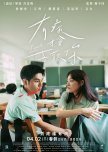
The plot follows Ye Zijie (played by Zhan Huai-Yun), a troubled and lazy teenager who, to escape classes and schoolwork, decides to fake a terminal illness. His deception, initially a way to gain sympathy and escape reality, becomes more complicated when he is placed under the watchful eye of Ye Zijie (played by Chiang Chi), the dedicated and serious class monitor, who coincidentally shares his name.
What begins as a game of cat and mouse, with the monitor trying to expose the boy's deception, evolves into an unexpected relationship. However, both their lives are turned upside down when he discovers a shocking truth: the girl he falls in love with actually suffers from a terminal illness. From then on, his lie becomes a burden, and the story, which had a light and comedic tone, delves into a bittersweet journey to complete the "bucket list" of a person who is truly running out of time.
Positive Points
Main Cast Chemistry: Zhan Huai-Yun and Chiang Chi's performances are the heart of the film. The chemistry between them is genuine, and the evolution of their relationship, from initial aversion to deep affection, is convincingly constructed. They subtly convey emotions, making the characters' journeys believable and moving.
Balance between Comedy and Drama: The film masterfully transitions between moments of light humor, caused by Zijie's ruse to maintain her charade, and the heavy drama that unfolds with the revelation of her illness. This balance prevents the plot from becoming overly melancholic, keeping the audience engaged.
Strong Emotional Message: Lovesick is more than a clichéd love story. It explores themes of vulnerability, honesty, and the value of every moment in life. The pretense of one character and the reality of the other serve as a powerful contrast, highlighting the importance of living fully and not wasting the opportunities life offers.
Verdict
Lovesick is a welcome addition to the Taiwanese romance genre. While it uses some familiar tropes, like "rebellious boy falls for good girl," it uses them to tell a moving and surprising story. Hsu Fu-Hsiang's sensitive direction, combined with the cast's captivating performances, makes this film an emotionally rewarding experience. It's a great choice for those looking for a romance that offers more than just a happy ending, but a sincere reflection on life, love, and what it truly means to be "lovesick."
Was this review helpful to you?
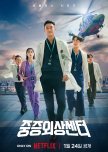
The plot follows Baek Kang-hyuk (played by Ju Ji-hoon), a trauma surgeon with a history of war zone experience, who takes over a neglected team at a Seoul university hospital. With his straightforward manner and down-to-earth experience, he transforms the department into an efficient emergency center, facing bureaucracy, budget cuts, and internal corruption.
The series is based on a webtoon or work called Trauma Center: Golden Hour, written by Han Sani, bringing more authenticity to the plot.
Tone and Rhythm
With only eight episodes, the narrative is dynamic and engaging, combining intense medical tension with well-articulated doses of humor. The direction balances emotional moments and action scenes with lightheartedness, making the series accessible yet impactful.
Characters and Themes
Dr. Baek represents confidence, competence, and empathy—a leader who motivates his team to go above and beyond, even under extreme pressure. The series highlights his humanity and emotional complexity. Supporting characters also shine. The dynamic with resident Yang Jae-won (nicknamed "Anus"), nurse Cheon Jang-mi (nicknamed "Gangster"), and anesthesiologist Park Gyeong-won brings personal layers and humor to the group. Other themes present include empathy, resilience, teamwork, medical ethics, and everyday heroism—defending the healthcare system and valuing life, even in the face of adversity.
Conclusion (Summary Review)
Heróis de Plantão is a short (8 episodes) yet impactful series that delves into the daily life of a university hospital in crisis. With a charismatic protagonist, medical realism, ethical and bureaucratic conflicts, and well-timed humor, the production offers a rich and captivating emotional experience. It's a compelling drama that combines action, sensitivity, and social commentary—and leaves viewers wanting more.
Was this review helpful to you?

The story begins with the Park family, owners of a small diner on the banks of the Han River in Seoul. Their lives are turned upside down when an amphibious creature, a giant mutant monster, emerges from the water and kidnaps their youngest daughter, Hyun-seo. The monster is the result of the irresponsible disposal of toxic chemicals into the river by American scientists at a military base.
The family, now in mourning, struggles to cope with the tragedy. However, the father, Gang-du, is led to believe that his daughter is still alive and trapped in the sewer. He, along with his family, embarks on a desperate and often comical journey to rescue the girl and confront the monster.
Bong Joon-ho uses the creature as a metaphor for social and political criticism, addressing themes such as government bureaucracy, corporate greed, and American military intervention in South Korea. The director masterfully balances different genres and tones, alternating between moments of tension and comic relief, without ever losing empathy for the characters. The film is a cinematic experience that will surprise, move, and make you think.
Was this review helpful to you?

Let's Go, JETS! From Small Town Girls to U.S. Champions?!
0 people found this review helpful
This review may contain spoilers
"Let's Go, Jets!" (original title: Chihayafuru: Chihayafuru Musubi), released in 2017, is a Japanese comedy-drama film that tells the inspiring, feel-good story of a high school cheerleading club in Fukui Prefecture. Based on a true story, the film follows a group of unlikely aspirants who, under the guidance of a tough-love coach, aim for an unprecedented goal: to win the National Cheerleading Championship in the United States. The narrative centers on Hikari Tomonaga (played by Suzu Hirose), a seemingly ordinary high school student who joins the cheerleading club, primarily to be close to a boy she likes. However, the arrival of their strict new advisor, Kaori Saotome (Yuki Amami), quickly shatters any illusions of an easygoing club activity. Saotome sets a daunting target: to reach the USA National Cheerleading Championship within a few years, demanding intense discipline, grueling practice, and complete dedication from the girls. What makes "Let's Go, Jets!" compelling is its classic underdog story executed with charm and genuine emotion. It's not just about the cheerleading routines; it's about the personal growth of each character, their struggles with self-doubt, inter-team conflicts, and the sacrifices they make. Hikari, initially unmotivated, transforms into a determined leader, pushing herself and her teammates beyond their perceived limits. The film effectively portrays the power of teamwork, perseverance, and the importance of having a dream, no matter how audacious it seems. The performances are a significant strength. Suzu Hirose delivers a charismatic and believable portrayal of Hikari, embodying her journey from reluctance to fierce determination. Yuki Amami is excellent as the stern but ultimately caring coach, providing both comedic relief and a grounding force. The entire ensemble cast contributes to the film's vibrant energy, making their collective struggles and triumphs feel authentic. Visually, the film is bright and energetic. The cheerleading sequences are well-choreographed and dynamic, showcasing the athleticism and synchronization required. While the plot follows a familiar trajectory for sports dramas, it's executed with enough sincerity and heartwarming moments to keep the audience engaged. There are moments of humor, but the film's core is its uplifting message about ambition and the bonds forged through shared adversity. In essence, "Let's Go, Jets!" is a delightful and motivational film. It might not break new ground in storytelling, but its earnest performances, engaging characters, and inspiring true-life basis make it a thoroughly enjoyable watch for anyone who appreciates a story about chasing dreams against all odds. It's a testament to the idea that with enough hard work and belief, even the most improbable goals can be achieved. Was this review helpful to you?

Was this review helpful to you?

For fans of action thrillers, Thai cinema and stories that expose the dark layers of a big city, this film is a good choice. Prepare yourself for an intense and relentless journey through an urban hell where danger is always lurking.
Was this review helpful to you?

Was this review helpful to you?

The Plot
The film tells the story of Shenba, a young woman from a small village in Tamil Nadu (India) who is obsessed with K-dramas. She finally manages to travel to Seoul with her boyfriend, but things go wrong and she ends up alone, penniless, and unable to understand the language. The film focuses on her journey of survival and self-discovery.
Positive Points
Priyanka Mohan's Performance: She delivers a sincere performance, avoiding the stereotype of the "crazy fan" and showing the real vulnerability of being lost abroad.
Cultural Connection: The film delicately explores the linguistic and cultural similarities between the Tamil and Korean people.
Visuals: Seoul is filmed in a cozy way, focusing on alleyways and local restaurants instead of just tourist spots.
Negative Points
Predictable Plot: The structure is very reminiscent of the Indian film Queen (2014). Some solutions to the protagonist's problems seem too easy.
Pacting: The second half of the film rushes a bit with the development of the Korean secondary characters.
Verdict: A feel-good, sweet, and visually beautiful film, but one that doesn't take many risks.
Was this review helpful to you?

Lao Jiu Men Fan Wai Zhi Heng He Sha Shu
1 people found this review helpful
Was this review helpful to you?


