




Was this review helpful to you?
Was this review helpful to you?

Was this review helpful to you?

Was this review helpful to you?

Was this review helpful to you?

Was this review helpful to you?

The Lead and Rural Life: The family's forced relocation from the big city to the chaos of the countryside (Yeonri-ri) brings hilarious moments. Watching a proud corporate expert try to grow the "perfect cabbage" carries the entire show.
Low-key Romance: The subtle romance between the supporting characters (like Ji-cheon and Bo-mi) never steals the spotlight, serving as a nice breather for the main plot.
Loose Ends: The script leaves a few corporate conflicts and minor subplots unresolved in the final stretch, without much explanation. While it doesn't reinvent the wheel, it delivers exactly what it promises: a cozy, pollution-free comedy that is genuinely fun to watch.
Was this review helpful to you?

Classic and Direct Premise: The "suicide mission behind enemy lines" dynamic is a formula that always generates some initial tension. The film doesn't waste much time with lengthy introductions and gets straight to the point.
Strived Performances: Despite the limited script, the cast does what it can. It's interesting to see William Moseley in a much more mature and raw role than in his teen fantasy films, and Gilles Marini delivers a worthy representation of the resistance.
Short Duration: At only 1 hour and 26 minutes long, the film doesn't drag on unnecessarily, preventing it from becoming completely drawn out.
Visibly Low Budget: Although the setting attempts to emulate the destruction of World War II, the production suffers from a lack of funding. The sets seem repetitive, the visual effects of explosions and gunfire lack realism, and the battles give the impression of a smaller-scale combat than the historical moment demanded.
Lack of Depth: The characters are walking stereotypes of the war genre: the tough soldier, the frightened rookie, the reluctant leader. You don't spend enough time with them to care when someone is in danger.
Expensive Candy goes beyond what's expected of a commercial erotic film. Although it uses sensuality as a draw, the film delivers an interesting character study about expectations, unrequited love, and the socioeconomic barriers in modern romance. It's not a conventional fairytale love story, and that's precisely why it works.
Was this review helpful to you?

Immersive Sound Design: As the title suggests, sound is a character in its own right. The "whisper" of the water is mixed in a way that makes it seem to come from behind the viewer, creating a constant feeling that someone is right there, invisible.
Atmospheric Horror: The director avoids cheap jump scares. The fear in Whispering Water comes from anticipation, the use of empty spaces, and the bluish, cold cinematography that conveys an almost palpable sense of dampness and mold.
Central Performance: The protagonist delivers a raw performance, especially in scenes where the line between reality and the delirium caused by exhaustion and guilt dissolves.Symbolism: The film is a brilliant metaphor for the subconscious. The drying reservoir represents the mind that can no longer contain repressed secrets. Aesthetics: The beauty of the drone footage over the submerged ruins contrasts terribly with the horror unfolding on land.
Slow pacing: The film is a slow burn. It takes time to build tension, focusing more on the psychological disintegration of the characters than on frenetic action. Ambiguous ending: Following the trend of new Korean horror, the ending doesn't give away all the answers, requiring the viewer to piece together the metaphorical puzzle.
Salmokji: Whispering Water (2026) is a masterpiece of modern horror. It proves that the genre still has room for innovation by blending ancient legends with contemporary anxieties about trauma and responsibility. It's a film that, like the waters of a reservoir, will linger in your mind long after the credits roll.
Was this review helpful to you?

The Plot: A Radioactive Domino Effect
The story begins at a recycling yard where a massive fire reveals a dangerous secret: the site served as a front for illegal e-waste smuggling containing Cesium-137, a highly radioactive isotope. The film splits into two battlefronts: The Political Front: Simon Fan (Andy Lau), a radiation expert and former minister, faces off against bureaucracy and the indecision of the Acting Chief Executive, Cecilia Wong (Karen Mok). The conflict here centers on transparency: evacuate the city and cause panic, or try to contain the leak in secret? The Frontline: A team of firefighters, led by Kit (Bai Yu), enters "ground zero" initially unaware of the invisible radiation threat. The personal drama is heightened by the fact that Kit blames Simon for a past family tragedy.
Strengths: Visuals and Effects: For a budget outside the Hollywood standard, the visual effects are impressive. The scenes of a post-apocalyptic Hong Kong (visions of what would happen if containment failed) are visually striking. The Return of Karen Mok: After years away from the big screen, Mok delivers a sharp performance as a pragmatic politician who serves as the perfect foil to Lau’s idealism. Social Commentary: The film isn't afraid to touch on real-world wounds, such as the issue of e-waste shipped from developed countries to Asia and corporate negligence in favor of profit.
Weaknesses: Excessive Melodrama: As is common in Hong Kong blockbusters, the tone sometimes leans too heavily into sentimentality, featuring epic soundtracks and sacrifices that verge on cliché. Uneven Pacing: The transition between tense political debates and frantic firefighting action may feel disjointed to some viewers.
Cesium Fallout is a "blockbuster with a brain." It delivers the visual spectacle expected from a disaster film but leaves a necessary, bitter aftertaste regarding how corruption and technological waste can be just as lethal as a nuclear bomb.
Was this review helpful to you?
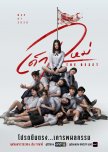
The Premise and the Character: Nanno is no ordinary vigilante; she functions more as an entity or a "mirror" of human depravity. In each school, she identifies individuals hiding dark secrets, hypocrisy, or cruel desires—whether they are abusive teachers, envious students, or corrupt school systems. The "Reset" occurs in the lives of both victims and aggressors: Nanno doesn't just punish; she exposes the internal rot of each person, forcing a traumatic restart where the masks fall off.
Season Highlights
Poetic Justice: The series shines by showing that the punishment always fits the crime. If someone seeks fame at the expense of others, Nanno ensures that fame becomes their undoing.
Social Critique: The script head-on attacks elitism, bullying, and the abuse of power within Thai educational institutions—themes that resonate globally.
Acting: Chicha Amatayakul delivers an iconic performance. Her maniacal laughter and icy stare make Nanno one of the most memorable anti-heroines of recent years.
Conclusion: Season 1 is an uncomfortable yet fascinating journey. It forces us to question our own morality while watching, with a guilty pleasure, as Nanno tears down toxic power structures. It is a must-watch for fans of Black Mirror and Death Note.
Was this review helpful to you?

Sōmai's Direction: He's famous for his long takes. The camera doesn't just observe; it floats through the flooded corridors, capturing the chaotic energy of the teenagers in a way that feels documentary-like, yet dreamy.
Raw Emotion: The film understands that adolescence is a liminal state of mind—between childhood and adulthood, between civilization and instinct. When they dance half-naked in the torrential rain singing pop songs, you feel the mixture of freedom and despair.
Symbolism: The typhoon acts as a catalyst. It cleanses their "old selves," but the price of this purification is high and, for some, tragic.
Contemplative Pace: If you're used to the frenetic pace of modern disaster movies (like Brutal Attack itself), Sōmai's long takes might seem slow at first.
Heavy Themes: The film doesn't shy away from uncomfortable subjects, including harassment and suicidal ideation, treating them with a rawness that might shock those expecting a standard teen movie.
Typhoon Club is essential. It's a film about that exact moment when you realize the world is huge, scary, and you have no control over anything—not the weather, not your own feelings.
Was this review helpful to you?

The Plot
The story focuses on Tristan (Ali Asistio), a talented but lonely painter who finds his ideal muse in a mysterious woman named Paraluman (Athena Red). She agrees to pose nude for his work, but imposes one strict rule: he must never touch her.
The film explores the escalating tension between the artist and the model as Tristan struggles to contain his sexual desires and fantasies, attempting to find satisfaction solely through observation and art.
Critical Points
The "Untouchable Muse": The script leans heavily into the concept of prohibition, which creates the central conflict. However, critical reception has been mixed, with some viewers feeling that the chemistry between Athena Red and Ali Asistio isn't always convincing.
Production Quality: As is common with many fast-tracked Vivamax productions, the film suffers from some continuity issues and acting that occasionally feels wooden or over-the-top.
The Erotic Element: The film doesn't hold back on sensual scenes but tries to give them a more "artistic" veneer through the painting sequences and set design, though some critics pointed out that the technical execution (such as certain practical effects or prosthetic work) left much to be desired.
Is it worth watching?
Yes: If you are a fan of Vivamax productions and enjoy dramas with romantic fantasy premises and a heavy focus on sexual tension.
No: If you are looking for real psychological depth regarding the world of fine arts or a refined technical narrative.
Verdict: This is another title focused on the platform's quick adult entertainment, using "art" as a backdrop for scenes of nudity and seduction.
Was this review helpful to you?

🤖 The Plot: Who is Baka?
The narrative revolves around Baka, a "low-caste" maintenance android in a hyper-industrialized futuristic metropolis. After a system error caused by an overload of discarded memory data, Baka begins to manifest something forbidden in his programming: individuality.
The film follows Baka's desperate escape through the city's lower levels as he tries to understand if the memory flashes he sees are his own or just "digital junk" from dead humans.
🎨 Aesthetics and Art Direction
Baka's Identity's greatest asset is its unique visual identity.
Neon-Gothic: The color palette makes extensive use of contrasts between the deep black of industrial areas and the vibrant neon of shopping malls.
Character Design: Baka isn't the elegant robot from films like I, Robot. He's clumsy, asymmetrical, and visibly worn, which generates immediate empathy in the viewer.
Fluidity: The animation mixes traditional 2D techniques with 3D (CGI) layers, creating a depth of field that makes the city seem infinite.
🧠 Central Themes
The short film addresses classic philosophical questions through a new lens:
Planned Obsolescence: Baka struggles with the fact that he was built to be discarded. It's a powerful metaphor for the modern working condition.
Memory vs. Identity: The film questions whether what defines us is what we live or what we remember (even if the memory is implanted).
Failure as Evolution: Baka's "failure" is, in fact, his consciousness. The film celebrates error as the starting point of life.
⚖️ Verdict
Baka's Identity is a "sensory experience." Although the script doesn't reinvent the wheel of the cyberpunk genre, the technical execution and the protagonist's quiet charisma elevate it to a must-see visual work of art for fans of adult animation. It's short, impactful, and leaves a bittersweet "I want more" feeling at the end.
Fun fact: The short film gained notoriety for its synthesized soundtrack, which uses real sounds of industrial machinery recorded in disused factories.
Was this review helpful to you?

Was this review helpful to you?


