


This review may contain spoilers
Far-fetched Love Story with no Story and no Love-making
To be clear: when one decides to watch a Xuanhuan romance, it is in search of escapism, not because one expects a realistic depiction of events, people and their relationships. Nonetheless, for the make-believe world to be engaging, it must have an inner logic of its own and at least some kind of plot allowing the characters to develop.Love Beyond the Grave has neither. For the first time since I started watching C-drama, I found myself fast-forwarding intimate moments between the leads. For a romance, this is a sign of utter failure.
I am reluctant to put the blame for it on the most obvious suspects, i.e. the cast. Dilraba Dilmurat is stunningly beautiful as usual and, as usual, she is reasonably convincing in portraying her character. Then again, at least she is given a character of some substance to work with: a 400 years old queen who governs the unruly world of spirits with an iron fist in order to preserve the legacy of law and order left by her loving but early departed parents. Her subjects, spirits, are by their nature volatile and obsessive. Thus, to be able to effectively control them, she herself is deprived of all sensual enjoyment susceptible to make her temperamental or biased.
How then is this woman, who can never know even the simplest and most innocent of sensual joys, supposed to fall in love with anyone? Not to worry. There is a rumor saying that she might be able to "borrow" human senses from an individual mystically chosen to become the owner of a magical sword. In comes a young, ambitious general with a gruesome backstory which makes him wise beyond his years. He fights fearlessly and plots strategically; he makes smart alliances, earns the loyalty of his subordinates and seems unstoppable in his ambition to reclaim lost lands for his nation and ensure good governance for people. His appearance is dashing, his aspirations noble and he has a magic sword. What's not to like?
This is the starting point of the plot. It is also the ending point of the plot, because there is simply no plot to speak of. The moment our young hero realizes, fairly early on, that the beautiful woman following him around with a suspicious interest in his magical sword is not a mortal, but a powerful otherworldly queen free of all human passions, he abruptly and inexplicably becomes determined to seduce her. In pursuit of this goal, and in order to give her the possibility of temporarily experiencing the mortal world through his sense, he progressively sacrifices his family, his friends, his allies, his subordinates, his martial skills and therefore his military ambitions - in short, his entire existence.
The premise of self-sacrificing, self-annihilating love could, of course, be the making of a great tragedy. However, the tragic love story never materializes because, implausibly, incredibly and even callously, our male lead engages in self-destruction casually, cheerfully, with all the charm, energy and easy forgetfulness of a playful young puppy. Whatever happens, whatever losses he suffers, he doesn't seem to take it very seriously. He may shed a few tears here and there, but as soon as he receives a tender hug from his lady love - who hugs him for unclear reasons seeing that she can feel neither the warmth nor the pressure of human touch - he regains his flirtatious smile and keeps happily trotting down the road of self-annihilation. All this in stark contrast with everything we have initially learnt about his tenacious, calculating, survive-at-all-costs personality.
It is a small surprise, then, if Arthur Chen constantly looks like he came to the studio to shoot a teen comedy, then mistakenly blundered into the wrong set and is now clueless as to what role he is supposed to be playing. To begin with, his look is that of a mischievous sweet 16, as opposed to Dilraba who presents exactly as she should, i.e. an immortal beauty. More disturbingly, not only does his character look like a pubescent boy but, as soon as he falls in love, he starts acting like a 6-year-old, blissfully oblivious to anything other than the object of his childish fascination. Watching a presumably grown man - an army general, no loss, responsible for thousands of lives - behave with such immaturity and recklessness is not romantic. It is awkward, mildly distasteful and, ultimately, boring.
Nor do I see how the asexual relationship between the leads could have ever been turned into an epic love story. The couple's asexuality is never openly discussed, or even suggested. Yet it is the inevitable implication of her crippled sensuality and his sacrifice of his own to make her momentarily happy. To put it bluntly, either he can't perform, or she can't enjoy it. A situation more conducive to marital counselling and couples' therapy than to a sweeping love story.
Certainly, it is possible to create a sizzling romance with no sexual content; C-drama in general excels at it. But you can't simply put two famous actors together, make them play characters who have absolutely nothing in common, have them go through the motions of a plot where they don't fully engage in each other's separate worlds or undergo any pivotal experiences together, and still have the viewers believe that they are somehow irresistibly attracted to each other even though, on top of everything else, there is no hope of their ever sharing any physical joy in each other.
Only a very innocent young heart, who lacks a hands-on understanding of human physiology and tends to confuse idolatry with physical chemistry, can be swept away by such sloppy far-fetched approach to star-crossed lovers trope.
The lazy storytelling would have probably been better served if the producers had opted for a modern romance, with the female lead an ice-cold CEO and the male lead a young enthusiastic intern. It might have been equally boring, but at least it could have made some kind of sense. Moreover, the outstanding work done by various crew members to create a visually sumptuous fantasy world would not have gone to waste. As it is, all the eye-candy trimmings of an enchanting fairytale only exacerbate the hollow absurdity of a love story with no story and no love-making.
To honor the efforts of the crew and of the supporting cast, some of whom offered notable performances, I will give this drama a generous overall rating of 7.5. As for the leads, their star power might have been better used had they insisted on a less incongruous and self-defeating script.
Was this review helpful to you?
Authentic, concise and compelling
I am relatively new to Chinese drama and completely new to Chinese film industry, so maybe that's the reason why I am surprised by the relatively low score of this movie.The story is authentic and interesting, with emotionally compelling characters convincingly portrayed by a strong cast. It is executed neatly, effectively and concisely.
There are only two somewhat weaker points I can think of. First, the self-congratulatory moral of the story; but this is typical for most dramas centered around the justice system everywhere in the world. Second, I would have liked to know more about what happens with the protagonists later on; but as the story is inspired by real facts, it was obviously impossible for the film-makers to improvise much further.
Overall, a good way to spend an evening, both educational and enjoyable.
Was this review helpful to you?
This review may contain spoilers
A Chinese Odysseus
At the time of my writing this review, The Odyssey by Cristopher Nolan is being mercilessly shoved down the throats of audiences around the world. There is so much hype in every type of media, old and new, that, short of living on a desert island, it is impossible to escape or ignore. Predictably, the film itself is a heavily Americanized affair, with little to offer other than pop psychology, high moral ground and some spectacular CGI. The nominal hero, in particular, is as about as different as he can be from the legendary Homer's hero. Instead of a silver-tongued master strategist, whose unparalleled wit and cunning indiscriminately won both battles and hearts, and whose unshakable sense of purpose could get temporarily sidetracked only by his own thirst for knowledge and unbeatable zest for life, Hollywood served us with yet another strong-and-silent type, a dour six-pack warrior riddled with moral pomposity and PDST.It is therefore with particular delight and surprised joy that I found some of the classical Greek hero's more compelling attributes in the character of Gu Pingyuan, the protagonist of the Legend of the Magnate. Not unlike the original Odysseus, Gu Pingyuan is something of a reluctant hero. Although his personal ambitions and desires are modest in scope, he keeps getting sidetracked and thrown in the midst of high-stakes conflicts of every kind mostly because his unique capacity to solve them is patently obvious both to him and to everyone around him. His adventures take him to many places in China, central and off the map, and lead him to interact with people from all walks of life. (Humans only, though; no witches, gods or giants, at least not of the literal kind.)
That being said, I don't wish to push the comparison with Odysseus too far. For all the similarities between the two heroes - resourcefulness, eloquence, resilience - Gu Pingyuan is pointedly and quintessentially Chinese. His story unfolds in a specific time (the late Qing dynasty), in specific places across China (magnificently filmed on location) and in a specific social context (the four-class system on its last legs). His adventures may be larger than life, but they remain firmly grounded in the historical realities of the 19th century China.
Moreover, Gu Pingyuan is a master strategist who makes deals, not war. In this, he is the very opposite of any aristocratic epic hero. With his plebeian down-to-earth common sense, he loathes armed conflict and its devastating consequences for common people, himself included. He couldn't care less about conquering and vanquishing; he never seeks to crush his opponents into dust for so long as they can be reasoned with. Much like any ordinary person, all he aims for is a life of peace and prosperity. This, however, is easier said than done in a society dominated by hard power, weak institutions and systemic inequality. Born as a tea farmer, trained as a scholar, framed into exile and converted into a merchant, Gu Pingyuan is officially disgraced and socially misplaced. He can rely only on his prodigious wit to make his surroundings more livable for himself and people around him.
His quest inevitably pits him against all those who stand to profit from the imperial regime on the decline. In the course of his adventures, he gets to confront small-time local bullies, incompetent, overbearing and/or corrupt public officials, aristocrats too engrossed in petty rivalries to care about massive real-life consequences of their squabbles, disillusioned army generals, trade guilds stuck in their ways, heavyweight merchants seeking to unscrupulously hoard wealth in order to compensate for their lowly social status or their self-perceived lack of personal worth. He responds to those challenges with stratagems ingeniously designed to strike a balance between healthy self-interest and other people's needs. Nobody's perfect and everybody has their own burden to bear; the trick is to discover a mutual interest in helping each other out. Gu Pingyuan operates by managing to find common ground even with the least likely and most unlikeable of people. His business acumen stems from his extraordinary capacity to grasp different points of view and quickly come up with a deal satisfactory for most.
This emphatic, balanced and seductive approach to human dealings in general, and to business activity in particular, is systematically contrasted with uncontrolled accumulation of wealth, brutally facilitated by unfair practices and pushed beyond reason by insatiable lust for power. The clash of worldviews is the primary driving force behind the Legend of the Magnate. Its implications become more overtly geo-political in the later part of the drama, when Gu Pingyuan is forced to try and make a stand against the infamous East India Company, the biggest predator operating in China post-Opium Wars. He marks a point: but no single individual, no matter how brilliant, ultimately stands a chance against a gargantuan corporation already monopolizing more than half of global trade and habitually backing up its business propositions with a fleet of war ships. (Especially not, it is suggested, without any support from the decadent imperial regime.) Thus, Gu Pingyuan ends his astonishing career the same way he started it - officially in disgrace - but, miraculously enough, alive and kicking, and seemingly content to keep working in line with his egalitarian values off the main stage and behind the scenes,
The Legend of the Magnate is, beyond any doubt, a high-quality drama. It is well-written, fast-paced, visually breathtaking and superbly acted by Chen Xiao in the main role and a strong ensemble cast. The show invites us to step into a meticulously conceived and vividly rendered fictional world which, for all its authenticity and rich historical detail, can feel eerily contemporary. Indeed, one could have hoped that, by 21st century, humanity would have known better than to allow its 1% hog more than half of world wealth. For anyone who feels disheartened by the current state of global affairs, Gu Pingyuan's electrifying adventures will provide much jubilant amusement without the indulgence of total escapism. The multifaceted story and its ingenious hero are bound to be thoroughly and scrumptiously enjoyed by anyone looking for intelligent entertainment.
That being said, the drama is not without its weaknesses. First and foremost, in its final episodes, the story sacrifices some of its momentum to make a didactic point: namely, that it is necessary to overcome petty internal strife and stand united against the predatory dominion of the few over the many in order to make it possible for individuals and nations to live freely, prosperously and with dignity. The lesson is delivered obliquely, with internal strife taking the form of family melodrama. The result is underwhelming. Unhinged reactions by some otherwise sensible characters are bizarrely at odds with the general no-nonsense tone of the drama. The main plot remains fascinating in terms of political economy but, with the distraction of interpersonal turmoil, the finale feels too rushed to absorb all the facts in their complexity and consequently we don't get a full sense of closure. I am always sympathetic to any egalitarian cause and, considering what China when through during the "century of humiliation", I am prepared to be more tolerant of the patriotic propaganda than usual. Nevertheless, spectators could have and should have been trusted to get the point on the need for national and human brotherhood without making it quite so obvious.
The second weak point of the drama is the romance. Thankfully, the Legend of the Magnate is not short on strong female characters, who are all intriguing and/or likeable in their own way. However, possibly due to censorship or self-censorship issues, Gu Pingyuan's interactions with his prospective romantic interests feel inorganic and counter-intuitive.
This is most obviously the case when it comes to Gu Pingyan's official love story with the main female lead, Chang Yu'er. The girl is earnest and valiant - skilled in riding, shooting and martial arts - but young and illiterate. Beyond looking after our hero's bodily needs, such as nursing him back to life and acting as his bodyguard, she has very little to contribute to the story. Her sporadically showing up right on time to save her man is not entirely fortuitous: from their very first meeting, she chases after Gu Pingyuan with a disarmingly childish directness, never missing an opportunity to throw herself in his way and declare her heartfelt admiration. For his part, while he is deeply moved by her unflinching devotion and does not find her physically unattractive, he is reluctant to commit and only succumbs to her relentless advances after being put under severe social pressure from his business partners and allies. Settling down into a reasonably happy marriage of convenience grounded in mutual trust, loyalty and long-standing debts of gratitude is a historically realistic choice consistent with Gu Pingyuan's values. It is the attempt to masquerade the couple's relationship as a full-blown romance, in line with modern sensibilities, that feels unconvincing and half-hearted.
Much more engaging, if equally counter-intuitive, is Gu Pingyuan's volatile relationship with the protagonist who is clearly his female counterpart. A high aristocrat bent on a family vendetta against the corrupt regime, Su Zixuan sees life as a game of chess where she plays the queen and everybody else her pawn. With her imperious methods and her anti-imperial agenda, she makes a formidable antagonist but also an invaluable ally, always one step ahead in political scheming thanks to her sweeping eagle's eye perspective and intricate web of connections. Her deadly tug-of-war with Gu Pingyuan eventually eases into constructive collaboration and sibling-like affection, in line with the general moral of the story. The fact remains that the two are so uniquely matched in astuteness and charisma that their every encounter resonates with visceral intensity even with no violins in the background.
Romance is not the main dramatic focus of the story, so my peeves about our hero's love life shouldn't be taken too seriously. A secondary romance - a tragic love story between Gu Pingyuan's childhood fiancée and a rebel army general - is effectively used to illustrate and reflect on the horrors of civil war during the finals years of the Taiping Heavenly Kingdom rebellion (1850-1871) and its complex political and economic background and implications.
In conclusion, the Legend of the Magnate is a tour de force which falls just a little short of being an absolute masterpiece. The drama had me riveted and left me with a deep long-lasting impression. In an era when sociopathic behavior seems to be on its way to becoming a new golden standard, and when money-mad moguls seem to be increasingly invading the global public sphere - not to mention the universe itself - I find it impossible not to feel dazzled by Gu Pingyuan's radically different focus and perspective. "A small man looks for profit, a big man seeks to enrich the world". Seventy percent scholar, thirty percent rogue, silver-tongued Gu Pingyuan is a dashing embodiment of a 'big businessman", which is actually the original title of the drama in Chinese. As far as I am concerned, if we can't have more men like him in real life then, by all means, let's at least have them in legends.
Was this review helpful to you?

This Is Not a Love Song: A Lesson in Cliché-free Drama
Because I am hoping to start learning Mandarin at some point in not-too-distant future, I am watching exclusively C-drama for the time being. It seems that I will therefore be the first person to review this remake based on its own merits without any reference to the South Korean original.Loving Strangers is a singular story about the unlikely affection developing between two people who have nothing in common other than being at the end of their rope. On one hand, we have a middle-aged married man who, being comfortably middle-class, is undergoing the inevitable midlife crises. On the other hand, we have an underprivileged young girl, a social pariah, who is fighting tooth and nail for bare survival. In the normal course of events, these two never should have met. But they do meet when the girl gets hired as a temporary administrative assistant in a mid-range pharmaceutical company where the man plays a mid-level management role...
... and their accidental workplace meeting leads to an opposites attract romance, with many obstacles for them to overcome before they can live together happily ever after, right?
Wrong.
To begin with, there is nothing accidental about their meeting or, for that matter, about anything that happens in this drama. Loving Strangers does not rely on sleight of hand coincidences and deus-ex-machina devices to make its premise work. Rather, it subverts our expectations and kidnaps our attention by roping us into a suspenseful cat-and-mouse game within the framework of cut-throat corporate workplace politics. The plot is so neatly woven and so well-crafted that what begins as a preposterously unbelievable premise progressively turns into a tight thriller and a realistic meditation on the life-saving gift of human bonding at any stage of life and social class level. A pleiad of supporting characters from different generations and backgrounds makes the leads and their relationship more grounded and emotionally layered, with some simultaneously bringing in much-needed comic relief.
Loving Strangers is essentially a story about love in its many shapes and forms. But it is not a love story as such, even though it is vaguely marketed as a romance. The producers probably felt that a platonic relationship between two desperate people miserably stuck in their underwhelming lives sounded too depressively boring to be bankable, so they pasted on an ambiguous title in order to amplify the drama's commercial appeal. In my view, this was a counter-productive move. Loving Strangers is not a stereotypical romance and will not appeal to viewers looking for fluff. That being said, the drama is anything but depressively boring. On the contrary, it will keep you at the edge of your seat wholeheartedly rooting for the leads to live up to their best selves and NOT fall in love with each other in spite of external machinations and their shared inner sense of isolation.
Obviously, such a feat of dramatic engineering could have never been pulled off without a very strong cast. Both leads shine in their roles. Zhang Zi Feng sweeps us off our feet with the irresistible force of a natural phenomenon: we never for a second doubt the reality of her fictional existence. Mark Chen offers a subtle, self-contained, deeply moving performance. Overall, the supporting cast is suitably convincing, with Zhang Xin Cheng offering a particularly charismatic portrayal of a young villain and Yang Yi Wei that of a hapless uncle, annoying and endearing in equal measure.
Visually, the drama is exactly what it should be. Cinematography, scenography, costume design and make-up keep the story well-grounded in reality as we follow the daily routine of people from all walks of life. However, I must voice my grievances with regard to some aspects of the direction and, especially, my deep resentment when it comes to the soundtrack.
Generally speaking, not being an expert in the field of film-making, I see no issue with the way in which this drama is directed. On the contrary, the pacing is uncommonly even and tight; there are no slow periods or unnecessary digressions. What I do object to is the overbearingly heavy-handed use of recapitulative sentimental flash-backs. While typical for C-drama in general, it simply has no place in such a singular drama. It trivializes it for no good reason.
Ditto for the cheesy pop songs accompanying the flash-back moments. Even though I have more or less made my peace with the distracting presence of obtrusive soundtracks in C-drama, Loving Strangers is such a quiet, nuanced, astute thing that the strident sentimentality of the music, with its gaudy lyrics, comes across as particularly jarring.
In spite of these imperfections, I enjoyed watching Loving Strangers well beyond my expectations. I would recommend it to anyone looking for a well-thought-out, well-executed, well-acted fresh storyline free of predictable clichés and tired tropes.
Was this review helpful to you?
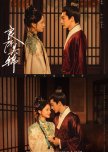
A Splendid Mess - an uneven but nonetheless surprisingly worthy watch
As I don't wish to spoil the story, my aim is not to add anything substantially new to the already existing reviews; rather, I seek to reinforce what has already been said by some other members of the community, most notably by @SceneStealer (no spoilers) and by @MrsGong (spoilers).Let me put it this way: if you have enjoyed some of the more ambitious recent historical dramas, such as the Dream of Splendor, the Flourished Peony, the Prisoner of Beauty or even the Story of Kunning Palace, then you are very likely to enjoy this drama as well. That being said, I don't expect the Splendid Match to be quite as successful as any of the dramas mentioned above. Not because it's any worse - I feel that it's actually more substantial than most - but because it's too unfocused and goes in too many different directions.
A Splendid Match is a coming-of-age story, and a reflection on feminine condition, and an analyses of family and state power dynamics, and an account of ups and downs in palace scheming with some unexpectedly good fighting scenes thrown in; and, the last but not the least, it is a truly splendid slow-burn romance with some reasonably convincing love triangles. And if that is not enough, there are probably even more aspects of the story that I'm simply forgetting to mention.
None of these aspects are handled poorly; on the contrary, taken individually, they hold up unexpectedly well, But what we end up with is a bit messy because keeping so many threads from vibrating loose is an ambition simply to high to live up to. It is as if this drama has an identity issue: It can't quite make up its mind on whether it wants to be a crowd-pleaser or a more serious take on the human condition from a historical perspective. So, in the end, if falls somewhere in the middle and just a little short of both.
Nonetheless, and in spite of this inherent flaw, A Splendid Match engages and enchants thanks to its multi-layered character portrayal and its rare depiction of what it means to be in a healthy loving relationship.
Many characters in this drama - not just the leads, but down to the smallest supporting ones - are fully fleshed out, consistent and convincing. Many feel like real people whom we progressively get to know and follow in their decisions, good and bad, which might sometimes appear too exaggerated for my taste, but never feel random and unmotivated. However, the same high standard is not equally applied to all, so the results turn out a little uneven.
On the other hand, watching the relationship between the leads grow, develop and transform is truly delightful. For once, we have an older male lead who is explicitly not a virgin and does not abruptly turn into a shy boy the moment he falls in love; rather - and much more logically - he uses his vast intelligence and the advantage of sexual and emotional experience to both intellectually convince and sensually seduce. For once, we have a male lead who truly respects his partner and does not try to control her; not because he is not occasionally tempted to - of course he is, considering his upbringing and status - but because they manage to air, discuss and work out any issues together as a couple. Thus, we are mercifully spared the patronizing trope of I-love-you-so-much-that-it-entitles-me-to-make-decisions-about-your-life-without-asking-your-opinion. For once, the romance doesn't peter out and lose all interest once that the leads get together. If anything, the sexual tension between them becomes even stronger after they consume their relationship, which is only natural for any couple with a fulfilling intimate life. In all this, A Splendid Match sets a new standard for a credible romantic relationship, hopefully to be emulated more often in future.
Most other relationship in the drama, romantic or otherwise, are equally plausible, if less compelling. I will not go into the details in order to avoid spoilers.
The drama is well served by an excellent cast, with brilliant leads and many outstanding supporting actors. I initially found the young female lead, Ren Min, somewhat irritating, only to be impressed later on by the way in which she grew with, and into, her character. The male lead, Ci Sha, is consistently convincing in his quiet intensity. Everybody does a great job, really; I was perhaps particularly delighted by supporting actors incarnating grey-scale female characters, such as the unscrupulous but staunch matriarch (Yang Kun) or the tragically silly, superficial and suggestible concubine (Li Fei Er).
Cinematography, scenography, costumes and make-up are refined and subtle. The choreography for fighting scenes is sharp and visceral. The soundtrack is generally unremarkable, with a couple of standard love songs. My only complaint is about a certain instrumental cue for the main couple which I found distractingly incongruous as, to my ears, it sounded like it landed straight from a 1980s comedy and had no place in a historical C-drama.
Overall, while this drama could have been better - more streamlined and more even in depth and tone - I genuinely enjoyed it much more than I expected.. Therefore, I will swipe its imperfections under the carpet and give it a generous score of 8.5.
Was this review helpful to you?
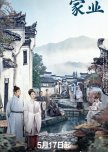
Elvis Doesn't Rock
Let me start with a disclaimer: I don't mean to specifically target the actor playing the male lead in this drama, Elvis Han. I just can't resist making a pun. The truth is, this drama is so flat, dull and stilted that I don't believe any kind of cast could have made it rock and roll.At first glance, there is nothing terribly and obviously wrong with the Heir. The drama is exquisitely shot with a delicate color palette strongly reminiscent of Chinese traditional ink paintings. It embodies, quite literally, the notion of "moving pictures", presenting us with a succession of meticulously curated visual compositions. The costumes are authentic, the settings carefully elaborate. Frame after elegant frame, we can but sit back and admire subtle images parading before our eyes.
The problem is, these pretty pictures may be moving, but they fail to move us. They can't engross or entertain because they feel like paper-thin illustrations. The characters lack substance and, well, character. They are nothing but cyphers, empty shells populating the arduous but triumphant journey travelled by the female lead on her way to recognition and prosperity.
I strongly suspect that the Heir was written by AI. Somebody typed in: "give me a story about an independent, high-spirited, career-oriented young woman practicing a complex heirloom craft" and what came out was Li Zhen, a girl who manages to impose herself against all odds as a leading figure in the highly competitive and heavily monopolized ink industry flourishing under the Ming dynasty.
In the abstract, a young woman of strong character making her own way in a world made by and for men sounds like an interesting and inspiring premise. In practice, our heroine is a quintessential poster girl with whom no living woman made of flesh and blood could ever hope to compare.
For example:
- Li Zhen is omniscient and preternaturally mature from her early childhood;
- Li Zhen is universally capable, never puts a foot wrong and has a ready solution for every kind of problem;
- Li Zhen is never intimidated when faced with an obstacle: she spontaneously improvises motivational speeches so stirring that she invariably sways stubborn patriarchs into submission and has them eating out of the palm of her hand;
- Li Zhen is never tired, moody, dispirited or anything short of breezily energetic;
- Li Zhen always looks exceedingly pretty in spite of her unshakeable devotion to duty and and endless working hours.
Et cetera ad infinitum.
Only a bot would believe that such a peerless paragon of perfection could ever seem relatable, interesting, inspiring or anything other than oppressive from the point of view of an ordinary human being.
In our imperfect and flawed human reality, the heroine's unimpeachable excellence is so out of reach that we can only observe her goings-on from a polite distance. The lofty standards she sets for women to live up to are so unrealistic that trying to get invested in her story feels like a laborious uphill battle against our own conscience. For the sake of sisterhood, we feel that we should be rooting for her, but we can't; so we keep pushing through in the hope that things will get better, but they don't.
The Heir is very clearly a vehicle for the actress Yang Ze, who has turned protofeminism into her niche specialty. The drama seeks to capitalize on the success of the Flourished Peony - and to rectify some of its weaknesses - but is so superficial and soulless in its approach to storytelling that it fails to convince in spite of its painstaking efforts.
Moreover, the protofeminism it preaches is counter-productive as it burdens young girls with impossible expectations. There is nothing wrong with creating an enjoyable story about a superwoman so long as it is made clear that it is pure fiction, which is not the case here. The Heir takes itself very seriously and expects us to do the same. If I had to describe this drama in one word, it would be sanctimonious: making an artificial show of upright values with the goal of generating profit by courting public approval.
In order to punish the producers for their exploitative approach to the issue of women's empowerment, I am sorely tempted to give this drama an overall score of 7. However, this would be profoundly unfair to the crew members involved in the cinematography and the art direction. Also, the fascinating history of ink-making under the Ming dynasty is meticulously researched and does have an educational value for anyone who, like me, is eager to learn more about Chinese culture.
In conclusion, it is a pity that the best elements of this drama were not used to make a gorgeously instructive documentary. Strange as it may sound, I can't help feeling that a non-fictional exploration of the historic ink-making craft would have been infinitely more thrilling and entertaining than the Heir in its present form - woefully undramatic, self-righteous and emotionally blunted.
Was this review helpful to you?
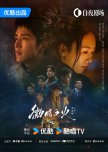
Words that Maketh Murder or the Price of Being a Flamingo
"Gossip is dangerous", warns ominously one of the characters in Tender Light, a teacher, as he attempts to discipline his rebellious teenage daughter. His parental admonishment is not unwarranted. In the small fictional town of Qingshui around the year 2000, everybody gossips about everybody else. But the most pervasive and prurient gossip has been ferociously circling one young woman, Nan Ya, for years without relenting.Nan Ya is conspicuously different from other womenfolk in town. She has a wicked step-mother, an abusive husband and a sick daughter; unlike most, she has no relatives to stand up for her, which makes her an easy target for malicious rumors. Moreover, unlike most, who quickly lose the flush of their youth worn down by the mundanity of daily making do, Nan Ya is a beauty - even at the ripe old age of 30. She looks beautiful as she walks about the streets with the fluid grace of a dancer. She creates beautiful clothes to make a living and beautiful toys to amuse her little girl. She privately reads beautiful poetry and listens to beautiful music. Every once in a while, she seeks out beautiful nature spots in the vicinity of the dreary little town. She does so, she says, to remind herself that she is alive.
On the Millennium Eve full of fireworks, food, song and laughter, Nan Ya reports herself to the police. She killed her abusive husband, she says, in legitimate self-defense. There is an eye-witness to the incident: a young man, more than ten years her junior, Zhou Lou. On the face of it, Zhou Lou seems like an ordinary teenager. The only thing making him stand our from the crowd is his uncommon talent for academic achievement. His top grades had already won him a place at a prestigious national-level university, which he had left under mysterious circumstances - a subject of much speculation in his home town. However, thanks to the support of his loving family, he has been given a second chance. After some extra study at the cram school back home, he will be able to reapply at another prestigious university and hopefully leave the dreary small town, with its lack of opportunities of any kind, far behind him.
The upcoming police investigation should be pretty straightforward. There is a confession by the killer; there is a matching account by an eye-witness. But the police detective in charge of the investigation - himself originally an academically successful local boy, now assigned to his backwater hometown as a stepping stone in his promising career - does not think so. Together with his local colleagues, he keeps investigating long after the sequence of events seems to have been established beyond reasonable doubt. He is doggedly determined to find out the truth, the whole truth and nothing but the truth.
The witnesses interrogated by the police are all, for their own various reasons, unreliable narrators. The police detective keeps telling the suspect, his colleagues, his girlfriend and himself that he simply seeks to do his duty by fully examining all the facts and circumstances of the case through an objective lens. Yet it soon becomes apparent that he is just like everybody else: we have increasingly strong reasons to believe that his motivations are mixed at best and highly dubious at worst. Thus, as the story of the main protagonists and their community is slowly peeled episode after episode, layer after layer, we remain kept in suspense not only as to what actually happened on the Millennium Eve, but also as to what is currently going on and who is pursuing which goals. Shady deals, family secrets, hopeful aspirations, fatal infatuations progressively emerge in bits and pieces through the prism of flashbacks and shifting perspectives, all against the backdrop of intergenerational poverty, institutional dysfunction and deeply ingrained prejudices.
Tender Light is a poignant psychological study and an acute social commentary presented in the form of a moody, gorgeously shot, unapologetically poetic thriller noir. I am strongly tempted to call it a masterpiece. Every aspect of the drama is carefully crafted to create a suspense mystery embedded in stark realism but tenderly infused with haunting melancholy. Direction, script, cinematography, acting, scenography, costumes and, the last but not the least, the score and the brilliantly curated lyricism, all conspire to create a work of art whose bitterness and sweetness you can still taste long after it's finished.
My only reservation concerns some excessively melodramatic moments. Practically very protagonist of Tender Light undergoes an emotional breakdown at some point or another. For most characters, it makes perfect sense; for a few, less so. This is not a minor detail as it impacts the story as a whole. Had at least one of those few characters remained steadily grounded in their usual benevolence and/or common sense, without crumbling down under pressure, they could have shifted the tide of the story and spared us the unsatisfying yet inevitable ending, abruptly presented in documentarist form.
As it is, once that the case is officially untangled and the facts are fully revealed, there is nothing to shield us from the unrelieved dark truth eternally plaguing close-knit communities around the world. Gossip is dangerous. Don't be a flamingo in a flock of pigeons. If you stick out from the average and refuse to compromise and conform, you will be brought down, over and over again, until you leave, die or fit in.
Incidentally, Tender Light seems to be a flamingo in a flock of pigeons in and of itself. It stands head and shoulders above the standard C-drama industry entertainment, yet I only happened to discover it by accident. Do not skip this unique drama just because you are afraid of facing a few unpalatable truths. If you fear sinking too deeply into doom and gloom and losing faith in humanity after watching Tender Light, just follow it up with Meet Yourself, a much more joyful, healing and heart-warming take on the merits and demerits of a small tight-knit community.
Many thanks to other reviewers of Tender Light for helping me discover this hidden gem.
Was this review helpful to you?


