

This review may contain spoilers
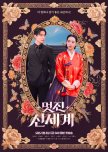
My Royal Nemesis ?
The story My Royal Nemesis started off really well. We have a protagonist who travels into the future and has to adapt to all the modern things. We’ve seen this kind of storyline before, but this time I found it especially enjoyable because the plot seemed really interesting.At the beginning, Shin So-ri was written very strongly: a fearless woman who didn’t even give in when someone tried to poison her. She also had a strong sixth sense for danger, able to anticipate and avoid threats. The way she struggled to adjust to the modern world at the start was pure comedy. However, as the story progressed, her entire character changed, and by the end there were so many unanswered questions that it becomes unclear what the actual goal of the story is. This brings us to the negative points.
Shin So-ri is known for being able to sense danger in her life as a queen, yet she gets hit by a car, is knocked unconscious by sedatives in water, and is constantly monitored by her coworker—without noticing any of it? So a queen who spent years sensing danger suddenly loses her ability after saving Cha Se-gye in the car incident? She also failed to foresee all the dangers targeting Cha Se-gye, such as the knife attack.
Furthermore, Shin So-ri became weaker with every episode. At the beginning, she could fight palace guards from the past and take down several thieves in the modern world, but the further the story progressed, the more she became tearful, weak, and barely able to protect herself. That was really disappointing. I didn’t mind her emotional side, but it was unfortunately overused.
In addition, Cha Se-gye’s family was basically irrelevant throughout the entire story. The aunts barely did anything beyond a few weak attempts at minor schemes. The grandfather never took down or punished Choi Mun-do, even though he knew how terrible he was.
And then there’s Choi Mun-do himself: what was his actual purpose? He wanted to earn enough money to be a good role model for his son and give him a good life—but as a CEO, he already earns more than an average person and is already extremely wealthy in society. He had a highly paid job and strong career prospects, so why become even greedier and try to take over the company? For his stated goal, it wasn’t necessary at all. It felt like he considered himself a poor beggar, even though he was already rich. He could have taken care of his son perfectly well with his existing income while still living comfortably.
Overall, the entire family was poorly written. The antagonists were also rather weak. Even the traitor on set who sedated Shin So-ri is completely characterless, and by the end we still don’t know why she did it or what her role actually was. Cha Se-gye’s storyline—like dealing with the construction workers trying to kill him or the AI video incident—also feels unfinished.
We also never really see how the fashion and beauty division of Cha Se-gye’s company develops. In general, all characters feel underdeveloped and underused.
That said, I really liked the relationship between the two main leads—their chemistry worked very well. I also really enjoyed the dorm where Shin So-ri lived, especially her roommates and the caretaker.
However, everything I mentioned above, and especially the ending, was very disappointing. The plot itself was the strongest part of the story. We learn that Shin So-ri had already switched bodies with Kang during the car accident, and there were many opportunities to expand this storyline and properly explore the past. But the prince’s storyline was given too little attention.
I also didn’t like that time was partially reversed at the end to “fix” things, which essentially erased the version where Kang was queen. The ending felt rushed, and Choi Mun-do’s downfall was far too easy.
Overall, the series was good and entertaining, but it couldn’t fully reach its potential. Especially the last two episodes were far too fast-paced and left me with more questions than answers. I think the show was probably intended to be 16 episodes but got cut down to 14, which made the ending feel unbalanced.
Nonetheless, I had a lot of fun with the series, and I hope you enjoyed my review ^^
Was this review helpful to you?
This review may contain spoilers
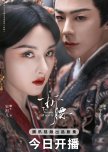
My Prisoners Beauty ?
Welcome to my review of Prisoners of Beauty.The story follows our protagonists, with Xiao Qiao (Man Man) being forced to marry the Lord of Wei in order to repair the betrayal of the past and reconcile the two families. The drama has many strengths and a few weaknesses, so I’ll start with the positives.
* Story:
The story is genuinely engaging. Every state is competing for water, resources, and territory. The State of Wei captures several cities, including the one it lost years ago because of the Qiao family. Afterwards, Wei Shao marries Man Man to secure Panyi and establish a reliable water supply for the entire state. At the same time, multiple factions plot against Wei because it has become too powerful both economically and militarily.
I really enjoyed the political premise. Wei Shao’s vision of sharing the water supply among all the states and building canals was a refreshing idea. It created a believable path toward temporary peace and gave the ending a satisfying sense of closure. The many conspiracies from different factions also made the world feel alive. Every kingdom had its own goals, ambitions, and memorable characters, making the setting feel large and believable.
* Acting:
The acting was absolutely phenomenal. In fact, I think this might be the best overall acting performance I’ve ever seen in a C-drama.
At first, I honestly didn’t find Man Man particularly beautiful, and I wondered whether she could truly portray the legendary beauty of the Qiao family. However, her acting completely changed my perception. She was so expressive and convincing that I eventually found her incredibly beautiful because of the way she brought the character to life. Her performance is easily one of the best I have ever watched.
The rest of the cast deserves just as much praise. The four Wei brothers had incredible chemistry, and their friendship felt genuine and deeply convincing. Every antagonist was portrayed brilliantly as well. Whether it was Lady Lou or the other villains, each one had understandable motivations that made them feel believable rather than simply evil.
The only performance that didn’t fully convince me was Man Man’s cousin. To be fair, I don’t think the actress is the problem. I think she did a decent job, but the character itself was simply poorly written and difficult to like.
* Comedy:
Even though this is mainly a historical romance, the comedy was surprisingly enjoyable. I laughed far more often than I expected.
My favorite comedic scene was when the uncle challenged Shao to a fight, only for Wei Qu to suddenly kill him from behind, almost as if he was saying, “Enough talking.” It caught me completely off guard and was hilarious.
The drama had many fun moments that helped balance the heavier emotional scenes.
* Visuals & Music:
There isn’t much to criticize here. The world was beautifully designed, and the soundtrack was very enjoyable. While neither the visuals nor the music reached the incredible level that Pursuit of Jade achieved for me, they were consistently good throughout the series.
* Warfare:
This is where my biggest criticism begins.
The battles early in the drama were fairly well executed, but unfortunately they became weaker as the story progressed. Near the end, characters constantly talked about armies of 50,000 to 150,000 soldiers, yet on screen we rarely saw more than fifty extras.
One example is the final attempt to capture Panyi. The attacking army is simply allowed into the city so the story can create an emotional one-on-one duel between Wei Shao and his brother-in-law. While it was clearly intended as a dramatic climax, it felt unrealistic and extremely careless from a military perspective.
The same issue appears in several battles. I was especially excited for the siege of Wei’s homeland, but almost the entire conflict was skipped. A siege involving 100,000 attackers against 60,000 defenders should have felt massive and unforgettable, yet we barely saw any of it. I expected something much larger and far more epic.
* Highlights:
Strangely enough, the drama lacked those unforgettable goosebump moments that stay with you long after you’ve finished watching.
The pacing was consistently good, and there were very few boring episodes, but I kept waiting for a scene that would completely blow me away.
My personal highlight was the moment in Panyi near the beginning when Man Man has to choose between her former fiancé and Wei Shao. When she runs toward Wei Shao and he immediately tries to protect her, that became the emotional peak of the entire series for me. Ironically, it remained the only moment that truly gave me chills.
* Politics:
Although the series included many political schemes, I still felt that the political world itself was underdeveloped.
Wei Shao never truly felt like the ruler of a major state. Normally, a lord would govern alongside numerous ministers, noble families, and senior officials. Instead, almost every meeting consisted only of the four generals and a handful of officials who rarely contributed anything meaningful. Court politics and the aristocracy were almost entirely absent.
Another thing that felt strange was the military structure. Where were the generals’ personal armies? Historically, each high-ranking general would normally control territory, own a large estate in the capital, have a substantial income, command thousands of soldiers, and be supported by numerous officers and family members.
Instead, the four Wei generals spent nearly the entire series traveling together without their own armies or officers. While this made their brotherhood easier to portray, it also made the military feel far less believable. Under normal circumstances, generals responsible for tens of thousands of soldiers wouldn’t simply travel together all the time—they would be defending borders and managing their own forces.
The same applies to their finances. It felt odd that Wei Liang had to save money just to buy a house. Someone of his rank should realistically own a large estate and enjoy considerable wealth. These details were clearly simplified so the drama could focus more on the characters, but they still stood out to me.
* Final Thoughts:
Overall, I had a fantastic time watching Prisoners of Beauty. Despite my criticisms, I believe this is one of the best C-dramas I have ever seen.
If you’ve watched the drama as well, I’d love to hear your thoughts. Feel free to leave a comment if you agree, disagree, or think I overlooked something.
Thank you to everyone who took the time to read my review, and I hope you all have a wonderful day! 🎆🌸
Was this review helpful to you?

This review may contain spoilers
My Pursuit of Jade ?
Pursuit of Jade Review:I took a few days before writing this review because I wanted to let the drama fully sink in. After finishing Pursuit of Jade, I had very mixed feelings about the series. There were many things I genuinely loved, but there were also several aspects that prevented me from considering it a masterpiece. Therefore, I want to start with the positive aspects before moving on to my criticism.
- Characters:
The strongest part of Pursuit of Jade for me was definitely the characters, especially our female lead, Changyu.
Changyu is a wonderful protagonist. She is hardworking, independent, and determined. She works to support herself and her younger sister while trying to overcome the difficulties of ordinary life. Throughout the story, she constantly faces people who look down on her, insult her, humiliate her, or try to take away what belongs to her. However, she never gives up. She has a strong personality, and I really enjoyed the way she handled conflicts.
What I liked most about Changyu is that she is not simply strong because she can fight. Her strength also comes from her intelligence, confidence, and the way she uses her words. She knows how to respond sharply to those who challenge her, but at the same time, she maintains her dignity and never loses herself. Her development throughout the story was very enjoyable to watch.
I especially liked the early parts of the drama, where Changyu was surrounded by the people from her village. The relationships she built there felt genuine, and seeing her later serve in the military alongside some of those characters made the journey more meaningful. The supporting characters from her hometown added a lot of warmth to the story and made the world feel more alive.
The male lead also did a good job. I think the actor portrayed the role well, and the character itself was enjoyable. However, compared to Changyu, I felt that the female lead was written with more depth and had a much stronger character arc. Changyu simply stood out more because her struggles, growth, and personal journey were more developed.
The supporting cast also deserves credit. Whether it was the villagers, military officers, political figures, or other side characters, most of them contributed positively to the world-building. Everyone felt like they had a purpose, and the actors did a good job bringing this world to life.
- Visuals and Production Quality:
My goodness, this drama is beautiful.
The visual quality of Pursuit of Jade was one of its biggest strengths. The cinematography, sets, costumes, and overall atmosphere were absolutely stunning. In my opinion, this drama reached a new level visually compared to many other historical C-dramas.
Usually, historical Chinese dramas have limitations when it comes to production design because creating large-scale sets is extremely expensive, requires a lot of time, and productions often only have a few months to complete everything. Because of that, I was genuinely impressed by what Pursuit of Jade achieved.
The amount of detail and effort put into the sets deserves a lot of appreciation. The drama did not rely on only a few locations. We had the village where Changyu started her journey, the city areas, different marketplaces, shops, and larger establishments. Later, the drama expanded into completely different environments, including forests, rivers, battlefields, palaces, noble residences, prisons, and hidden locations connected to the political conflicts.
What impressed me even more was the attention to detail. The sets were not just beautiful backgrounds; they changed depending on the story. The village had celebrations, decorations, and fireworks, but later we also saw the same place damaged after attacks and conflicts. The production team created a sense of history and progression through the environments.
The military locations, city walls, royal areas, and battlefields all had their own atmosphere. Even smaller details, such as decorations and the changing conditions of different locations, showed how much work went into the production.
A lot of people may not realize how much effort, time, and passion are required to create something like this. The crew behind Pursuit of Jade deserves a lot of respect because the visual presentation was truly one of the highlights of the drama.
The world they created felt large, detailed, and full of life. Even when the story had weaknesses, the visual experience always kept me invested.
- Story and Political Plot:
Now we come to the more critical parts of the drama.
The biggest weakness of Pursuit of Jade for me was the story. The plot was not bad, but it felt much simpler than I expected. The drama introduced many characters, factions, and conflicts, but at the same time, the political storyline often felt surprisingly empty.
One of the reasons I felt conflicted was that, technically, there were many opponents and different forces involved. We had the Wei family with the male lead’s uncle, the Li family with the former Chancellor, Changyu and the male lead’s faction, and the prince who rebelled against the emperor and wanted to take power. There was also the white-haired antagonist, although I would personally include him together with the Li faction because their goals were connected.
So overall, the drama had several powerful groups competing against each other. However, despite having so many factions, the actual political conflicts and schemes felt quite thin. I never reached the point where I thought the story was extremely complex or that I was watching an unforgettable political masterpiece.
The strongest part of the story was actually the beginning, especially Changyu’s life in the village and the conflict with the bandits. That part felt more personal, emotional, and engaging. The struggles of ordinary people and Changyu’s determination to protect the people around her were much more interesting to me than the later political conflicts.
The second half, which focused more on defeating the Wei and Li factions, unfortunately did not have the same impact. The story had many opportunities to create deeper political tension, but many conflicts were resolved too easily or did not receive enough development.
I also had problems with the emperor’s character. I understand that he was supposed to be a manipulated figure who lacked true power, but I still wished he had more personality and presence. There were many scenes with large groups of officials, but often it felt like only two people were actually having a conversation while everyone else was just standing there. This made the political environment feel less alive than it should have been.
In the end, I realized that my biggest interest was not actually the main plot itself, but Changyu’s personal journey. I wanted to see what she would do, how she would overcome challenges, and how she would grow as a person. The story surrounding her was much stronger than the overall political narrative.
- Wars and Action Scenes:
Another major disappointment for me was the military aspect.
The drama showed many battles and conflicts, but somehow it often felt like we never truly experienced a real war. This is difficult to explain, because there were many scenes involving armies, soldiers, and battles, but the scale and strategy that I expected were missing.
When Changyu became a general, I was waiting for the moment where we would see her fully step into that role. I wanted to see her with her armor, her two swords, her army, and her military leadership. A general should have authority over thousands of soldiers, and I was hoping for complex strategies, impressive battlefield decisions, and memorable combat scenes.
Unfortunately, the drama never fully reached that level.
The attack from the bandits in the early story was actually very well done. It had tension, emotion, and a clear sense of danger. That was one of the strongest action sequences in the drama.
The later war where Changyu went to the battlefield after drugging the male lead so that he could not stop her and taking his place in the conflict was also too short. Although this moment had the potential to become one of the most memorable military arcs of the drama, it was not explored deeply enough. Changyu’s decision to go to war in his place was meaningful, but the actual battle was quickly resolved. We mostly saw a few exchanges between fighters instead of a large-scale military confrontation with detailed strategies and intense battlefield moments.
However, many later battles felt underwhelming. The siege where Changyu had finally become a general had the potential to be one of the biggest highlights of the drama. We had a massive-scale battle with tens of thousands of enemy soldiers, multiple military officers on the battlefield, and a major confrontation at the city walls. This was the moment where Changyu was supposed to truly demonstrate her abilities as a general and lead her forces against a powerful enemy.
The prince and his father, who claimed the throne and attempted to take control, were presented as major threats, and Changyu eventually defeated them. However, despite the scale of the conflict, the battle itself was not explored deeply enough. Many important events felt like they happened off-screen, and instead of experiencing the strategy, tension, and chaos of a large-scale siege, we mostly received a shortened version of what could have been an epic military confrontation. Apart from Changyu defeating the prince in combat, we did not really feel the intensity or importance of this battle.
Even the final confrontation did not feel like a true war. The characters entered the palace, and the climax became more like a personal duel between the male lead and Wei. Changyu mostly watched instead of playing a major role, and the final antagonist, despite being presented as a major threat, never felt truly powerful.
This was probably my biggest criticism of the entire drama. The villains rarely felt dangerous because they never truly achieved meaningful victories. The opposing forces constantly lost, and I never had the feeling that Changyu and her allies were facing a truly powerful enemy.
A good war story needs both heroes and strong opponents. Without that balance, the victories become less satisfying because the challenges do not feel as difficult as they should.
- Music:
The soundtrack was another weaker point for me.
The music was not terrible, but it did not leave an impression. During battles, I wanted something more powerful and epic that could increase the excitement. During emotional scenes, I also felt that the drama was missing stronger musical support to enhance the feelings of those moments.
The visuals were incredible, but sometimes the music did not match the scale and emotion of what was happening on screen.
Final Thoughts:
Overall, I had a very enjoyable experience watching Pursuit of Jade.
Despite my criticisms, I genuinely liked this drama. The visual atmosphere, the production quality, and especially Changyu as a character were the main reasons I continued enjoying the journey. The drama has many strengths, and I think it deserves appreciation for what it achieved.
If someone watches this drama mainly for the romance, the characters, and the emotional journey of Changyu, I think they can have a very good experience. Those elements are where the drama shines the most.
However, when people call a drama a masterpiece, I believe the entire work needs to reach an exceptional level. A masterpiece should not only succeed in one or two areas; it should have a nearly perfect balance between story, characters, pacing, world-building, music, and execution.
For me, Pursuit of Jade is not a masterpiece, and it is far from perfect. The story and military aspects prevented it from reaching that level. But it is still a very good drama with many memorable qualities. The fact that it receives such a positive evaluation despite its weaknesses shows how much it did right.
I would still recommend people give it a chance because there is a lot to enjoy. The journey with Changyu, the beautiful visuals, and the overall atmosphere made this drama worth watching.
Thank you to everyone who read until the end. I would really appreciate hearing your thoughts, opinions, and your own experiences with Pursuit of Jade. Feel free to leave a comment and share your perspective.🌸🎆
Was this review helpful to you?
This review may contain spoilers
biggest Ragebait of 2026
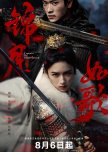
My Review of The Legendary Female GeneralI genuinely tried to write this review as objectively as possible and not let my emotions take over. However, after finishing this drama, I have to admit that this became extremely difficult because of some writing decisions that I struggled to understand.
Before getting into my criticism, I want to say that this drama had many things I genuinely enjoyed, especially during the first part of the story.
- Characters (Until Episode 34)
Until around Episode 34, I actually enjoyed many aspects of this drama.
He Feihong was one of the strongest parts. The actress did a great job portraying a woman who had to disguise herself as a man and survive in a military environment. Some viewers criticized that she occasionally behaved too much like a woman despite her disguise, but personally, I never saw that as a major issue. She is still a woman, and those softer moments made her feel more human.
Her fighting style was impressive, and her chemistry with the male lead was one of the highlights. Their relationship felt natural, and the male lead himself was a believable and well-portrayed character.
The young recruits were also enjoyable because their friendship, loyalty, and teamwork created a good military atmosphere.
I also liked Chu, He Rufei, and Grand Chancellor Xu during most of the story. Until Episode 34, the characters generally had understandable motivations and felt well-written.
- Story (Until Episode 34)
The story was also very interesting in the first part of the drama.
Grand Chancellor Xu was a fascinating antagonist because his ideology was not completely unreasonable. His belief that some generals pursue war for glory, wealth, and personal achievements instead of only protecting their country was actually understandable.
Military success could change someone’s entire social position, allowing people without noble backgrounds to gain status and influence. His idea that generals should exist mainly to protect the country during times of crisis instead of constantly seeking war was a strong concept.
Ordinary citizens are usually the ones who suffer the most from endless conflicts. Families lose their children, taxes increase, and injured soldiers often return without enough support.
His vision of replacing endless conflict with diplomacy, cooperation, and trade was one of the strongest political ideas in the drama.
The tragedy of his character was that his methods destroyed his own ideals. He wanted to save people, but he was willing to sacrifice those same people to achieve his goals. That contradiction made him an interesting antagonist.
He Rufei was also a good rival because his jealousy and desire to take Feihong’s achievements slowly consumed him.
- The Battles:
The battles were another enjoyable part of the drama.
Compared to many other C-dramas, the military conflicts included actual strategy. Using tactics like collecting enemy arrows with straw figures and destroying supplies created memorable moments.
However, some strategies still had logical problems. The enemy should have noticed much earlier what was happening, especially with the arrow collection plan. It was difficult to believe that thousands of arrows could disappear repeatedly without anyone questioning it.
I also appreciated that the drama addressed historical issues involving women who suffered violence and were unfairly treated by society afterward. Showing these women regaining their dignity was an important part of the story.
- The Love Triangle:
This is where my biggest frustration begins.
Why do C-dramas always feel the need to force unnecessary love triangles into stories that already work perfectly without them?
The main couple was already great. Feihong and the male lead had excellent chemistry, their relationship felt natural, and I genuinely enjoyed watching them together.
I can understand why Chu developed feelings for Feihong. She is a strong and admirable person, so his feelings were understandable.
But the problem is what happened afterward.
Why do writers always make characters lose all common sense in the final episodes and become completely obsessed with the female lead?
A character can be loyal, reasonable, and well-written for most of the story, but once romance becomes involved, they suddenly abandon their personality and become someone completely different.
I would have preferred if Chu simply accepted that Feihong already loved someone else, wished them happiness, and moved on.
Instead, the story treats the female lead as if she is the only woman who exists and every man must fall in love with her.
And once again, another female character suffers because of this unnecessary love triangle.
This time, it was Ying Xiang.
I genuinely liked her. She was intelligent, brave, loyal, and always supported Chu. She was not just a side character waiting to be replaced.
She was a strong character herself and honestly not inferior to Feihong.
But the story ignored her because it wanted more emotional drama.
And then they killed her.
I honestly do not understand how we are supposed to believe that a loyal spy and trained assassin dies because she gets stabbed directly by someone with almost no experience.
Ying Xiang deserved a meaningful ending, not a forced death just to create drama.
This is exactly why these love triangles are so frustrating. They do not improve the story; they destroy characters who deserved much better.
- The Mingshui Situation:
The moment where I completely lost track of the story was around Episode 35 with the Mingshui conflict.
I genuinely do not know if I misunderstood something, if the subtitles were inaccurate, or if the story simply became confusing.
From the beginning, I understood that the male lead wanted to reclaim Mingshui because his father lost the city and died there. Restoring his father’s honor was one of his main motivations.
But until the end of the drama, I never saw him actually reclaim the city.
Then suddenly, the story announces that Mingshui and another border city are under attack.
I was completely confused.
Wasn’t Mingshui the city he was supposed to take back?
When did that happen?
For such an important storyline, the explanation felt extremely unclear. Instead of feeling like an exciting military conflict, it felt like something was missing.
- Character Development:
The final episodes damaged several characters, especially Chu and the Emperor.
Chu’s downfall speaks for itself. A character who was once loyal and reasonable became someone completely different because the story needed more conflict.
The Emperor was another major disappointment.
The male and female leads protected him from political conspiracies, saved his position, exposed enemies, and prevented Grand Chancellor Xu from successfully taking control.
Without them, he would have lost everything.
Yet after everything they did for him, he suddenly stopped trusting them, interfered with their marriage, and treated his most loyal generals differently.
His decisions felt extremely frustrating and difficult to understand.
- Final Thoughts:
Overall, The Legendary Female General was a drama with a lot of potential. The characters, battles, and political ideas gave it many strong moments, especially during the first 34 episodes.
Unfortunately, the forced love triangle, inconsistent character development, and confusing final parts prevented it from reaching its full potential. My disappointment comes from the fact that the drama had many great elements, but the writing choices in the later episodes damaged much of what was built before.
I still appreciate the work of the actors and the enjoyable moments this drama provided.
Thank you for reading my review. I would love to hear your thoughts and whether your experience with this drama was similar or completely different from mine.
Was this review helpful to you?
This review may contain spoilers
Love in the Clouds ❤️
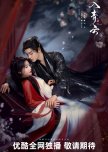
Welcome to my review of Love in the Clouds.Love in the Clouds follows Ming Yi, who is poisoned during a tournament and sets out to find a cure. Believing her enemy is responsible, she gets close to him, only to uncover a much deeper and more tragic story.
At first, I honestly didn’t enjoy the series. It took around nine episodes before it really found its rhythm, and if it hadn’t received such high ratings, I probably would have dropped it early on. One of my biggest struggles with Xianxia dramas is how difficult they are for newcomers to understand. The series throws viewers into a huge fantasy world without properly explaining its cultivation system, currency, power scaling, or even how the Six Realms actually work. Even halfway through the drama, I was still confused about what the Six Realms were because only two of them were ever explored in any meaningful way. While the world is visually beautiful, I constantly felt like I was missing important information that would have made the story much easier to follow.
Despite that, the series has many strengths.
The biggest highlight is undoubtedly the two main characters. Ming Yi and Ji Bozai have incredible chemistry, and their emotional scenes are some of the strongest I’ve seen in a C-drama. In my opinion, their relationship is the main reason why the series is so highly rated.
The story also became surprisingly engaging once everything started coming together. Ji Bozai’s tragic past, his desire for revenge after losing his master, and Ming Yi’s own struggle for survival create an emotional and compelling narrative. I especially enjoyed how the mystery surrounding the antidote was handled. The reveal that Ji Bozai had secretly given it to Ming Yi long before was a clever twist that I genuinely didn’t see coming.
The production is another strong point. The costumes are beautiful and detailed, while the soundtrack perfectly enhances the emotional moments throughout the series.
My favorite scene was Ming Yi’s betrayal, when she tries to steal the antidote. Both characters clearly love each other but are forced into opposing positions because of their own responsibilities and promises. The mixture of love, fear, anger, sacrifice, and tragedy—especially with the death of the cat—made this one of the most memorable scenes in the entire drama.
Unfortunately, the series also has several weaknesses.
Worldbuilding
My biggest criticism of Love in the Clouds is its worldbuilding. While the world itself is visually beautiful and clearly filled with history, it rarely explains its own rules. As someone who isn’t familiar with Xianxia, I found it extremely difficult to understand how this universe actually works.
The cultivation system, the currency, the power scaling, and even the structure of the world are barely explained. For example, I never fully understood what the stones used as currency actually were. Are they cultivation stones? Precious gems? Why do they have different colors? Does the color determine their value? The series never gives clear answers, leaving many aspects of the world feeling vague.
The power system is equally confusing. Characters become stronger through cultivation and knowledge rather than physical training, but the drama never properly explains how cultivation works or how large power jumps are possible. Different realms and levels are constantly mentioned, yet there is very little explanation of what separates them or how they relate to one another.
The biggest example is the Six Realms. For more than half of the series, I had no idea what everyone meant whenever they talked about them because only the Jinxing Abyss and the Mountain Clan received any real attention. It wasn’t until much later that it became clear there were actually four other realms, but by then they still felt underdeveloped. Instead of gradually introducing the world, the drama throws the viewer into a complex universe and expects them to figure everything out on their own.
Because of this, the world often felt much smaller than it should have. Although the lore suggests a massive fantasy universe, we only get to explore a tiny part of it. I constantly wanted to learn more about the other realms, their cultures, and how this world truly functions, but the series never fully delivers on that potential.
The limited number of filming locations also becomes noticeable over time. Many scenes reuse the same rooms and environments, making the world feel repetitive instead of vast and alive.
I also felt that Ling Situ and the fox girl deserved much better. Ling Situ was one of the few characters who genuinely helped Ming Yi without expecting anything in return, yet he was often treated coldly. Meanwhile, the fox girl became one of the most tragic characters in the series, and I believe she deserved a much happier ending.
The action scenes were probably my biggest disappointment. The fights often felt slow, lacked impact, and the CGI creatures failed to feel convincing. Compared to other fantasy productions, the combat simply wasn’t exciting enough.
Finally, I found the ending somewhat unsatisfying. Although everyone achieves peace and the Six Realms begin sharing the Blessed Rain, it felt like the series removed many of the world’s original conflicts too easily. Earlier sacrifices and tournaments lose much of their meaning when the solution turns out to be simple cooperation all along.
Final Rating
Despite my criticisms, I genuinely enjoyed Love in the Clouds. It offers a touching romance, memorable emotional moments, beautiful music, and excellent chemistry between its two leads. At the same time, I believe the worldbuilding, action, and overall use of its fascinating setting never fully reached their potential.
I would definitely recommend this drama to viewers who prioritize romance, emotional storytelling, and strong character relationships over perfectly explained fantasy lore and action.
Thank you for reading my review! I’d love to hear your thoughts and know whether you agree or disagree with my opinions.🪽🌸
Was this review helpful to you?


