

 24
24 44
44 10
10 3
3 1
1 1
1 1
1 4
4 1
1 5
5 2
2 4
4 1
1 3
3 1
1 5
5 1
1 2
2 2
2 7
7


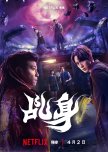
Underworld Bureaucracy & Neon Noir
If you came here for a sweeping romance or a slick, idol-style procedural, best turn around now. Agent from Above is Taoist Noir.It’s grimy, neon-soaked, and fundamentally cynical about the human condition while remaining deeply spiritual. It borrows the "burdened hero" trope, but replaces the guilt with the crushing weight of Karmic Retribution.
Agent from Above is an "anti-procedural." While it flirts with a ghost-of-the-week format, it quickly descends into a high-stakes, 6-hour countdown to a karmic apocalypse.
The side effects may include lotus-root-induced fever dreams.
It treats the supernatural—spirits, demons, and the bureaucratic mess of Diyu, as everyday reality. And it doesn't waste time explaining the rules.
The narrative pacing is relentless, maybe even draining. From "urban legends" to "full-blown apocalypse," the show aims at subverting expectations.
Apparently the most effective way to summon a Demon King is through layers of psychological trauma.
So, about Han Chieh. He isn't a hero; he's a man whose death status is "on-hold," an employee of the Third Crown Prince, paying off a debt with every supernatural exorcism, literally waiting for redemption. The show succeeds because it prioritizes his internal baggage over simple ghost-of-the-week mechanics.
His shirtless scenes aren't fanservice, they’re the medical documentation of the modern take on mythology.
Then there’s Yeh Tzu. I’ll be honest: she is an "annoyance sandwich." Her presence felt questionable at times, but the show manages to weave her into the found family of ghosts and neighbors.
The villains? They aren't just evil, they are master planners in a "hate triangle" that turns human trauma into demonic leverage.
Let’s be real about the CGI: it’s an acquired taste. Episode 1 is a mixed bag, but by the time we hit the later episodes, this turns into CGI central! Purple lightning, crushed bone sound effects, and hellish cityscapes are ambitious, and the show occasionally suffers from overkill.
While the camera work gets chaotic, usually in the later part of fight scenes, the aesthetics here are a visual feast!
Think neon-noir landscape with grimy urban realism, then add traditional shrines and incense smoke and more saturated glow of neon signs. And really sleek underworld vibes.
From lighting a cigarette with a divine weapon to the Golden Graffiti blessings at Dongfeng Market, the production design leans into a "Punk-Taoist" aesthetic that makes the world feel lived-in and dangerous.
And the score—specifically 'Royal Progress of the Gods'—is the glue holding the show’s intensity together. The use of the Suona mimics the aggressive energy of temple festivals, perfectly mirroring the internal chaos here.
Here is the drama’s secret recipe: 85% Dark, 9% Light and 6% OTT Comedy. It’s a nightmarish version of your favourite supernatural drama, it feels messy and authentic. It has pizzaz and a soul! Sure it’s also violent and there are human sacrifices, the progression into darkness is inevitable with this plot.
It balances horror (people eating burning coal in Diyu) with absurd humor (a horny ghost gets a redemption arc, and we get buddy-cop banter).
Sure it might give you tonal whiplash, but I think the comedy felt earned rather than forced.
Now, the most fascinating part: the Modernization of Myth.
In this world, the Underworld has smartphones, Ox-head looks like a bouncer, and the Third Crown Prince is a rebellious, leather-clad prick who reconstructs limbs with lotus roots. It is a uniquely Taiwanese exploration of how traditional temple culture and "Spirit Medium" traditions survive in a world of high-rises, arcades and millennials.
Watch it for the Third Crown Prince Wardrobe and Diva Aura. Watch it for the occult banter. Watch it if you like purple. Watch it if you read comics but can’t admit it to your friends. Watch this if you’re tired of Jacob Wang playing a moody doctor. You can also watch it for the meta-commentary on belief by the way.
Watch it for the Karmic Retribution arc that proves "magic cannot defeat spiritual power, spiritual power cannot defeat karma, and karma cannot defeat a wish."
Potential headlines that didn't make the cut:
- Not Your Mother’s Ghost Whisperer
- The Liver, The Bird, and The Wardrobe
- How to Cleanse a Demon with a Chupa Chup
- New Diyu, Who Dis?
Was this review helpful to you?
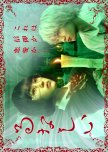
Mutually Assured Delusion
Disclaimer: Just because re-reading my notes had me wondering if somehow I was actively recruited by a cult—doesn’t mean you shouldn’t read this review.𝑾𝒆𝒍𝒄𝒐𝒎𝒆. Lunacy is the perfect title for this, there’s no debate to be had. This drama wears the skin of a high school rivalry/slice-of-life, but it quickly mutates into a full-blown, mind-game cult thriller, it’s a cute nightmare infused with corporate-fraud.
The essential "Truth" of Lunacy is that the drama functions exactly like the cult it portrays. It hooks the viewer with absurd, low-brow elements—and escalates the stakes so smoothly that by the time you reach the midpoint, the absurdity feels entirely logical.
You don’t blink. You just nod along. It gradually conditions the audience, into eagerly awaiting the descent into madness.
𝑯𝒐𝒘 𝒕𝒉𝒆𝒚 𝒈𝒆𝒕 𝒚𝒐𝒖. While you’re busy focusing entirely on the most entertaining chess match any Japanese high school has ever seen, Kensho and Runa are playing their own game.
One is a Pathetic Monster, simultaneously a brilliant, cold-blooded manipulator and gullible loser who probably peaked in high school: driven entirely by their lust for money.
The Other One is ‘The Vengeful Child of the Fire God,’ tracks as a complete teenage psycho, one chocolate-covered fruit meltdown away: harbors this deeply unsettling mystical aura of cuteness.
That leaves you like Subaru—trying to be the voice of reason—trying to make sense of what’s happening—trying to convince the bus driver to slow down—completely oblivious to the fact that the bus has no driver and is irreversibly heading for a cliff.
𝑯𝒐𝒘 𝒚𝒐𝒖 𝒌𝒏𝒐𝒘 𝒚𝒐𝒖’𝒓𝒆 𝒃𝒓𝒂𝒊𝒏𝒘𝒂𝒔𝒉𝒆𝒅. What sets Lunacy apart isn't just its bonkers narrative, but the execution that keeps it from falling apart. The story is anchored in a cold interrogation room, creating this lingering suspense, forcing the viewer to constantly audit the flashbacks and ask: What happened? Who got arrested? Is the Fire God a metaphorical entity?
Or are these cold breaks, just enough to break the immersion and remind you that the madness you’re seeing has already played out, your questions don’t matter, but still: Is the Fire God an actual character?
𝑻𝒉𝒆𝒓𝒆 𝒂𝒓𝒆 𝒎𝒐𝒓𝒆 𝒊𝒏𝒆𝒙𝒑𝒍𝒊𝒄𝒂𝒃𝒍𝒆 𝒕𝒉𝒊𝒏𝒈𝒔. This show achieves tonal balance? The acting feels intentionally unsubtle, yet the camera treats the wack material with deadpan, serious reverence. And this requires elite stylistic confidence.
𝑱𝒐𝒊𝒏 𝒖𝒔. Combined with an opening credit theme song that is an absolute, earworm banger, the technical direction perfectly primes your brain cells for the takeover.
𝑪𝒐𝒏𝒇𝒆𝒔𝒔. To be honest, Lunacy most likely belongs in the « Narrative Limbo » category. It relies entirely on a magnetic, unhinged vibe. It is a deeply immersive watch that sweeps you up in its flow, making the real world completely fade away until the credits roll—if you let it.
𝑺𝒖𝒓𝒓𝒆𝒏𝒅𝒆𝒓. However, the emotional whiplash is real. After spending weeks cheering for a ruthless, psycho-tactician, slowly turning you into a chaos-rooting-monster in the process, the plot trajectory might leave you stranded!
𝑹𝒆𝒂𝒍𝒊𝒕𝒚 𝒄𝒉𝒆𝒄𝒌. Beneath the glorious nonsense, Lunacy spits a harsh, acidic social commentary directly into the audience's face. By focusing heavily on the moxa-fire-god ring and financial scams, the script shines a glaring light on the dark mechanics of modern human dependency.
Whether it is a predatory religious sect, human greed, or even reward points at a local coffee shop, the drama displays how isolation makes people incredibly easy to exploit. It explores the crushing reality—life can feel like such an inescapable hell that people will willingly validate a ‘false god,’ simply because the ‘returns’ give them a temporary sense of security and belonging.
It’s a pretty great use of expired television tropes and visual absurdity, delivering a surprising critique of modern capitalistic isolation.
Headlines that weren’t approved by the Fire God:
- The Minefield of Teenage Emotions and Deceit
- One Banana and Eight Years Later
- Wack was that?
- Thank the Fire God, I'm no longer in High School
Was this review helpful to you?
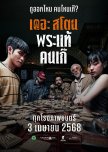
In Greed We Trust
Most thrillers follow a predictable path, but The Stone pulls off a brilliant bait-and-switch. What starts off as a standard quest, slowly reveals itself to be a heist movie where the protagonists don't even realize they’re in a heist.It's constantly flirting with the "urban legend" vibe, and it relies on the truth that in this world, religion isn't just faith—it’s a business, and everyone is a con artist.
The "truth" here is cynical: belief is just another commodity to be bought, sold, and stolen.
Instead of just tracking the plot, the movie focuses on the degradation of its characters. Ake’s journey is particularly brutal.
It’s pathetic, heart-wrenching, and entirely believable because the movie has done such a good job of isolating him.
On the other side, you have Sunthorn (The Amulet King) this mysterious and almost cartoonish figure, but also a terrifying parent. The psychology of this film is about how quickly "family legacy" can turn into a cage.
The director trusts his audience, which is always a treat. Dialogue is stripped back, the ambience and music do most of the heavy lifting. The sound design is phenomenal! There's that "sick-sick" harmonica/rock hybrid track that creates an almost train-like intensity at some point. It's amazing!
The cinematography is a trip. Visually, the film transitions from the vibrant, chaotic, colorful Pantip Ngamwongwan Market to a somber, high-contrast style as the trust dissolves.
One highlight? Probably this one action scene filmed from a top-down angle, its precision felt more like a piece of art than a standard action scene. The words masterfully slick come to mind.
This movie made me wince, gasp, and eventually, laugh out loud.
It’s visceral ; breaking fingers like breadsticks is not for the faint of heart. But there is a Machiavellian humor here that kept me from going insane. Like that glare Ake’s is giving the cop. That was perfect comedic timing.
The film is brutal, yes, but it’s the kind of trauma that comes from being truly engaged by a piece of art.
As a newcomer to Thai cinema, this film felt like a crash course in the "Amulet World." It’s fascinating how a small, portable object can become the center of gravity for an entire underground economy.
The film leans into the irony that these holy objects are surrounded by the most unholy people. It’s a powerful commentary on how religion acts as a tool. Some wield it for protection, others to manipulate, and some (like Ake) just get crushed in the middle. It’s a bold look at faith as a powerful, dangerous, and very real social construct.
Other appropriate headlines might include :
- Blessed, Conned, and Brutalized
- Faith, Fraud, and Fingers
- Amulet-World : From Market to Mayhem
- Who's Got the Biggest... Amulet?
Was this review helpful to you?


