



This review may contain spoilers
This is the first drama made from this case after the real serial killer of hwaseong seril murders was identified using DNA in 2019.Killer was already in jail for murder and rape of his 18 years old sister in law.
I had high hope for this drama. As a long time fan of crime thrillers of korean dramas i was excited to watch this. after watching several masterpiece of korean thrillers.
the drama witj gritty 1980s film grain, the muted village color grading, the haunting music reminds the memories of murder movie 2003 was amazing, and the stacked cast of Park Hae-soo, Lee Hee-joon, and Jung Moon-sung .
So we hoped well written crime thriller ." But if you peel back that beautiful wrapping paper, the script is a total mess.
The real-life Hwaseong investigation was a tragedy of corruption , systemic error, poice and government coverups, and massive technical limitations. but The police deployed over 2 million total officers across the years, walked thousands of miles, and did endless, exhausting double-work because they lacked modern databases.
The Scarecrow completely misrepresents this to make the plot convenient. Instead of showing an overworked, overwhelmed system drowned in bad data, the script narrows the scope so much that the detectives just look incompetent and lazy, "doing nothing but going around." By reducing a massive historical tragedy into a few uninspired characters pacing around a small set, the writer stripped away the true weight of the real-world frustration.
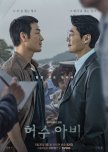
The show sets up Kang Tae-ju as an upright, brilliant, justice-driven ace detective. Yet, the writing immediately contradicts this by making him incredibly arrogant., acts completely conceited about his own correctness, and then—when it blows up in his face—the script desperately tries to gaslight the audience into thinking "but he tried his best! Specialy the wrongfully accused ones.
Even if the detective act arrogant in some dramas like beyond evil and signal , but the narrative punishes him for it, forcing him to grow. In The Scarecrow, Tae-ju’s glaring flaws are brushed under the rug by a script that wants him to be a tragic hero without earning it.When his reckless intuition results in wrongful arrest or interrogation torture (like what tragically happens to Lee Ki-beom), the script refuses to hold him accountable.
Instead of forcing him through a brutal arc of self-reckoning—the way Han Joo-won was completely shattered and rebuilt in Beyond Evil—the writer uses cheap emotional manipulation. We are shown slow-motion shots of him crying while the music swells, forcing us to pity him. It turns a detective story into an unearned melodrama. As you perfectly stated, he became a victim of his own narrative, not a protector of justice.
When he aggressively locks down a suspect and acts like he has infallible detective instincts, he isn’t being a "genius"—he is acting exactly like the corrupt, shortcut-taking cops he is supposed to be better than.The script then tries to force the audience to pity him by screaming, "But look how hard he’s trying!" It doesn't work.
The prison cell scenes between the older Tae-ju and the serial killer (Lee Gi-hwan) are completely flat.
Tae-ju’s dialogue lacks tactical intention; he isn't peeling back the layers of a psychopath's mind. It's just two actors sitting in a room delivering slow, melodramatic lines to make the show look intellectual, without any actual substance behind the words
As a example In Through the Darkness, the dialogue in the interrogation rooms is razor-sharp—based on real psychological profiling tactics used by Kwon Il-yong. Every question has a purpose, testing the killer's ego, looking for micro-expressions. Every line of dialogue was a psychological probe into behavioral patterns, cognitive distortions, and signature motivations. In The Scarecrow, the dialogue has no strategic intention. The writer didn't know how to write a real profiler, Tae-ju doesn't sound like a trained criminologist or profiler at all; he just sounds like a standard, generic drama character having a dramatic, slow-paced conversation to fill screen time.
gritty, true-crime-inspired story about institutional failure, the writer threw in cheap K-drama soap opera tropes
The Birth Secret: Making Cha Soon-young’s identity and family background a convoluted "birth secret" in the final episodes completely cheapened the show's gritty realism.
The Sudden Accident: Throwing in a sudden, unexplained car accident for his sister with zero narrative justification or logical buildup is just lazy writing to force an emotional climax.
Lee Choon-jae was actually caught and imprisoned in 1994 for the horrific rape and murder of his own sister-in-law (his wife's younger sister). He was serving a life sentence for that specific crime when his DNA finally matched the Hwaseong cases decades later.
By straying away from the cold, chilling logic of how these crimes and people actually functioned, and replacing them with secret children, sudden car crashes, and inconsistent character behavior, The Scarecrow stopped being a high-tier crime thriller. It became a melodrama dressed up in a dark Crime thriller drama coat.
Throwing in a sudden car accident for his sister with zero proper buildup or explanation, and then dropping a convoluted "birth secret" involving Soon-young in the final episodes
I had high hope for this drama. As a long time fan of crime thrillers of korean dramas i was excited to watch this. after watching several masterpiece of korean thrillers.
the drama witj gritty 1980s film grain, the muted village color grading, the haunting music reminds the memories of murder movie 2003 was amazing, and the stacked cast of Park Hae-soo, Lee Hee-joon, and Jung Moon-sung .
So we hoped well written crime thriller ." But if you peel back that beautiful wrapping paper, the script is a total mess.
The real-life Hwaseong investigation was a tragedy of corruption , systemic error, poice and government coverups, and massive technical limitations. but The police deployed over 2 million total officers across the years, walked thousands of miles, and did endless, exhausting double-work because they lacked modern databases.
The Scarecrow completely misrepresents this to make the plot convenient. Instead of showing an overworked, overwhelmed system drowned in bad data, the script narrows the scope so much that the detectives just look incompetent and lazy, "doing nothing but going around." By reducing a massive historical tragedy into a few uninspired characters pacing around a small set, the writer stripped away the true weight of the real-world frustration.
The show sets up Kang Tae-ju as an upright, brilliant, justice-driven ace detective. Yet, the writing immediately contradicts this by making him incredibly arrogant., acts completely conceited about his own correctness, and then—when it blows up in his face—the script desperately tries to gaslight the audience into thinking "but he tried his best! Specialy the wrongfully accused ones.
Even if the detective act arrogant in some dramas like beyond evil and signal , but the narrative punishes him for it, forcing him to grow. In The Scarecrow, Tae-ju’s glaring flaws are brushed under the rug by a script that wants him to be a tragic hero without earning it.When his reckless intuition results in wrongful arrest or interrogation torture (like what tragically happens to Lee Ki-beom), the script refuses to hold him accountable.
Instead of forcing him through a brutal arc of self-reckoning—the way Han Joo-won was completely shattered and rebuilt in Beyond Evil—the writer uses cheap emotional manipulation. We are shown slow-motion shots of him crying while the music swells, forcing us to pity him. It turns a detective story into an unearned melodrama. As you perfectly stated, he became a victim of his own narrative, not a protector of justice.
When he aggressively locks down a suspect and acts like he has infallible detective instincts, he isn’t being a "genius"—he is acting exactly like the corrupt, shortcut-taking cops he is supposed to be better than.The script then tries to force the audience to pity him by screaming, "But look how hard he’s trying!" It doesn't work.
The prison cell scenes between the older Tae-ju and the serial killer (Lee Gi-hwan) are completely flat.
Tae-ju’s dialogue lacks tactical intention; he isn't peeling back the layers of a psychopath's mind. It's just two actors sitting in a room delivering slow, melodramatic lines to make the show look intellectual, without any actual substance behind the words
As a example In Through the Darkness, the dialogue in the interrogation rooms is razor-sharp—based on real psychological profiling tactics used by Kwon Il-yong. Every question has a purpose, testing the killer's ego, looking for micro-expressions. Every line of dialogue was a psychological probe into behavioral patterns, cognitive distortions, and signature motivations. In The Scarecrow, the dialogue has no strategic intention. The writer didn't know how to write a real profiler, Tae-ju doesn't sound like a trained criminologist or profiler at all; he just sounds like a standard, generic drama character having a dramatic, slow-paced conversation to fill screen time.
gritty, true-crime-inspired story about institutional failure, the writer threw in cheap K-drama soap opera tropes
The Birth Secret: Making Cha Soon-young’s identity and family background a convoluted "birth secret" in the final episodes completely cheapened the show's gritty realism.
The Sudden Accident: Throwing in a sudden, unexplained car accident for his sister with zero narrative justification or logical buildup is just lazy writing to force an emotional climax.
Lee Choon-jae was actually caught and imprisoned in 1994 for the horrific rape and murder of his own sister-in-law (his wife's younger sister). He was serving a life sentence for that specific crime when his DNA finally matched the Hwaseong cases decades later.
By straying away from the cold, chilling logic of how these crimes and people actually functioned, and replacing them with secret children, sudden car crashes, and inconsistent character behavior, The Scarecrow stopped being a high-tier crime thriller. It became a melodrama dressed up in a dark Crime thriller drama coat.
Throwing in a sudden car accident for his sister with zero proper buildup or explanation, and then dropping a convoluted "birth secret" involving Soon-young in the final episodes
Was this review helpful to you?


