



This review may contain spoilers
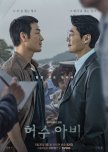
This is the first drama made from this case after the real serial killer of hwaseong seril murders was identified using DNA in 2019.Killer was already in jail for murder and rape of his 18 years old sister in law.I had high hope for this drama. As a long time fan of crime thrillers of korean dramas i was excited to watch this. after watching several masterpiece of korean thrillers.
the drama witj gritty 1980s film grain, the muted village color grading, the haunting music reminds the memories of murder movie 2003 was amazing, and the stacked cast of Park Hae-soo, Lee Hee-joon, and Jung Moon-sung .
So we hoped well written crime thriller ." But if you peel back that beautiful wrapping paper, the script is a total mess.
The real-life Hwaseong investigation was a tragedy of corruption , systemic error, poice and government coverups, and massive technical limitations. but The police deployed over 2 million total officers across the years, walked thousands of miles, and did endless, exhausting double-work because they lacked modern databases.
The Scarecrow completely misrepresents this to make the plot convenient. Instead of showing an overworked, overwhelmed system drowned in bad data, the script narrows the scope so much that the detectives just look incompetent and lazy, "doing nothing but going around." By reducing a massive historical tragedy into a few uninspired characters pacing around a small set, the writer stripped away the true weight of the real-world frustration.
The show sets up Kang Tae-ju as an upright, brilliant, justice-driven ace detective. Yet, the writing immediately contradicts this by making him incredibly arrogant., acts completely conceited about his own correctness, and then—when it blows up in his face—the script desperately tries to gaslight the audience into thinking "but he tried his best! Specialy the wrongfully accused ones.
Even if the detective act arrogant in some dramas like beyond evil and signal , but the narrative punishes him for it, forcing him to grow. In The Scarecrow, Tae-ju’s glaring flaws are brushed under the rug by a script that wants him to be a tragic hero without earning it.When his reckless intuition results in wrongful arrest or interrogation torture (like what tragically happens to Lee Ki-beom), the script refuses to hold him accountable.
Instead of forcing him through a brutal arc of self-reckoning—the way Han Joo-won was completely shattered and rebuilt in Beyond Evil—the writer uses cheap emotional manipulation. We are shown slow-motion shots of him crying while the music swells, forcing us to pity him. It turns a detective story into an unearned melodrama. As you perfectly stated, he became a victim of his own narrative, not a protector of justice.
When he aggressively locks down a suspect and acts like he has infallible detective instincts, he isn’t being a "genius"—he is acting exactly like the corrupt, shortcut-taking cops he is supposed to be better than.The script then tries to force the audience to pity him by screaming, "But look how hard he’s trying!" It doesn't work.
The prison cell scenes between the older Tae-ju and the serial killer (Lee Gi-hwan) are completely flat.
Tae-ju’s dialogue lacks tactical intention; he isn't peeling back the layers of a psychopath's mind. It's just two actors sitting in a room delivering slow, melodramatic lines to make the show look intellectual, without any actual substance behind the words
As a example In Through the Darkness, the dialogue in the interrogation rooms is razor-sharp—based on real psychological profiling tactics used by Kwon Il-yong. Every question has a purpose, testing the killer's ego, looking for micro-expressions. Every line of dialogue was a psychological probe into behavioral patterns, cognitive distortions, and signature motivations. In The Scarecrow, the dialogue has no strategic intention. The writer didn't know how to write a real profiler, Tae-ju doesn't sound like a trained criminologist or profiler at all; he just sounds like a standard, generic drama character having a dramatic, slow-paced conversation to fill screen time.
gritty, true-crime-inspired story about institutional failure, the writer threw in cheap K-drama soap opera tropes
The Birth Secret: Making Cha Soon-young’s identity and family background a convoluted "birth secret" in the final episodes completely cheapened the show's gritty realism.
The Sudden Accident: Throwing in a sudden, unexplained car accident for his sister with zero narrative justification or logical buildup is just lazy writing to force an emotional climax.
Lee Choon-jae was actually caught and imprisoned in 1994 for the horrific rape and murder of his own sister-in-law (his wife's younger sister). He was serving a life sentence for that specific crime when his DNA finally matched the Hwaseong cases decades later.
By straying away from the cold, chilling logic of how these crimes and people actually functioned, and replacing them with secret children, sudden car crashes, and inconsistent character behavior, The Scarecrow stopped being a high-tier crime thriller. It became a melodrama dressed up in a dark Crime thriller drama coat.
Throwing in a sudden car accident for his sister with zero proper buildup or explanation, and then dropping a convoluted "birth secret" involving Soon-young in the final episodes
Was this review helpful to you?
with a killer, high-concept premise And great cast but total dissapointment with predictable tropes
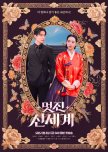
It is incredibly disappointing when a K-drama starts with a killer, high-concept premise , cinematography , Talented actress and then immediately waters it down into the same old tired, predictable tropes.You have a Joseon "villainess"—a woman who survived the brutal, cutthroat politics of the royal court using her wit, manipulation, and sheer force of personality. Dropping a powerhouse like that into the modern entertainment industry is absolute gold.There were so many challanges in modern workd she coukd have gone through, and with experiencing high stake political wars in palace she is not a naive character.
History is almost always written by the victors (and usually men), meaning powerful, ambitious women in the palace were instantly stamped as "evil villains."
The show had a massive opportunity to explore her trauma survive and defend her past actions—showing why she had to be branded as a vilan .
But what happened was after 6 episodes in and it’s just the male lead trailing her around while they check off the standard "arrogant rich guy, struggling woman. it was just Same trope Rich arrogant CEO with poor women. That is a massive waste of a dynamic character.
Until episode 3 it was fairly good with something new to watch. The potential here was endless. Instead, by Episode 6, the writers completely abandon their own high-concept premise to deliver a generic, utterly boring "rich chaebol meets poor, struggling woman" romance.
The female lead survived the brutal, cutthroat politics of the Joseon royal court. She shouldn't be a damsel in distress. The story should have been about her using her ruthless ambition, palace-honed acting skills, and sharp intelligence to conquer the modern entertainment industry.
The show completely misses the opportunity to explore the historical branding of women. It could have deeply examined how history paints ambitious palace women as "evil villains," drawing a parallel to how the modern media treats actresses.
Six episodes in, and nothing actually happens. The plot consists entirely of Cha Se-gye trailing Seo-ri around.
The casting choices are great, and both leads are genuinely good actors, but they are trapped in a script that wasn't good.
Was this review helpful to you?
More Than a Rom-Com with emotional realistic story telling
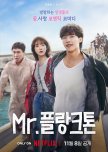
This drama made me very emotional, after a long time i have watched this kind of succcesful drama in that aspect. It is very funny and sad at the same time.With emotional depth and incredible acting from all the actors specialy woo do hwan Lee Yoo-mi s acting are praised by lot and made it very relatable.
I wonder why they named this drama as only romcom. It is mix with life aspect reminding me my mister drama.
It's not your typical rom-com, and it offers a more nuanced and complex look at love and relationships.
It's a drama that lingers in your thoughts long after you watched it.
It avoids cliched plot devices and predictable character arcs, providing a more authentic and engaging viewing experience.
As person who appreciate unconventional storytelling and complex characters i love this drama so much. offers a more grounded and realistic portrayal of human relationships, friendship ,love ,loss and family. The characters' interactions feel genuine and relatable, making it easy to connect with their stories.
While there were lot of popular dramas that got high ranking of charts and websites recently which often rely on exaggerated plots and melodramatic unrealistic and cringe story lines, Mr. Plankton offers a more grounded and realistic approach.
Even though it is was very sad ending 😢, this realistic Ending made the drama more quality work rather than a tidy and idealized resolution. This departure from conventional happy endings resonates with viewers who appreciate a more grounded approach to storytelling.
And also, cinematography in is stunning 😍.
It captures the beauty of the Korean countrysides and the city of Seoul.
If you're looking for a K-drama that will make you laugh, cry, and think, Mr. Plankton is definitely worth checking out.
This drama shines brighter than lot of dramas that were merely popular but lack quality.
Strong characters, realistic portrayal of relationships, and excellent acting make it a standout among recent Korean dramas.
🔴spoiler alert ⬇️
The scene in "Mr. Plankton"
"Hae-jo dreams about talking to his sister, telling her how the plankton in the sea, despite aimlessly floating at the bottom of the food chain, are actually cool because they sparkle in the ocean water and produce oxygen for all living beings."
moment that reflects the show's underlying themes of insignificance and the beauty of the overlooked. Hae-jo's admiration for the plankton, often dismissed as lowly creatures, highlights the idea that even the smallest and seemingly insignificant beings have a vital role to play in the ecosystem. The dream sequence serves as a stark contrast to Hae-jo's own life, where he feels marginalized and undervalued. It suggests that he yearns for a sense of purpose and connection, much like the plankton that contribute to the life-sustaining oxygen in the ocean.
It encourages empathy and appreciation for the contributions of all beings, regardless of their social status or perceived importance. question societal norms and biases that often lead to the neglect and dismissal of certain groups.
remind that everyone has value, and that even the smallest contributions can have a significant impact on the world around us. It encourages us to embrace diversity and to recognize the worth of all individuals, regardless of their social status or perceived importance.
This suggests that true fulfillment may lie not in societal status or material possessions, but in finding one's place in the larger ecosystem of life.
in this scence" While staying by Hae-jo’s side, Jae-mi recalls his wish to die while looking at the blue sky and tries to take him outside. This physically smaller women carry his lover to the bus stand. Alone. It isn't easy.
showcasing the immense strength that love can unlock within individuals. This scene serves as a reminder that women, often stereotyped as physically weaker, are capable of extraordinary feats when driven by love and compassion. It highlights the transformative power of human connection and the unwavering support that women offer to those they care about
Was this review helpful to you?


