
 Editorials
This review may contain spoilers
Great Art piece, terrible entertainment
Art is meant to invoke a deep emotional or intellectual response from the viewer while entertainment is meant to provide enjoyment and escapism. That distinction made it difficult for me to rate this series as I initially started watching it as entertainment. Under that guise, I was finding the series rather slow and somewhat boring. But once I started viewing it from an Art perspective, I found myself become more engaged with it and eager to see where it was going.
As Art, I would rate it a 9. It definitely hit me emotionally and is staying with me after I finished watching. But as entertainment, I rate it a 5 as I found long stretches to be rather boring and most of the emotions that it evokes are negative – primarily sadness and frustration and the miss/lacking communication trope (which I hate) is way overused. Overall, I would likely have given it an 8 as it did succeed as an Art piece for me but I settled on a 6 as I felt episodes 8-9 had provided an excellent opportunity to provide a satisfactory ending from both an art and an entertainment perspective and they instead chose to go with a pure Art ending that left me only feeling frustrated..
The Good:
The cinematography/editing is excellent. The way they used lighting, scene settings and superimposition were great in supporting the emotions for particular moments in the drama.
The sound track also did a great job conveying the emotions for the underlying scene.
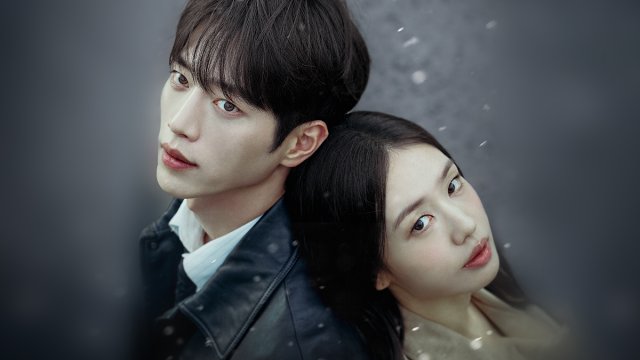
The acting is a bit mixed for me. For a majority of the series, Park Jin-young and Kim Min-ju are emotionless or sad...even when Tae-seo and Eun-a are together. Considering the art aspect of the series, I assume this was how they were directed to act. But in the pivotal scenes, they did an excellent job conveying the emotions of the scene. And how they portrayed their initial dating was perfect. They really brought out the awkwardness of a teen first love relationship. (Side note: I am constantly amazed at how Korean actors in their 30's can convincingly portray high school students – Park Jin-young did an excellent job)
The 'misunderstanding' scene in ep 8 is brilliant. Sequence of small, innocuous decisions adding up to a catastrophic consequence.
The series was full of nuance that is easy to miss and greatly adds to the art of the series. From how the name for Eun-a's contact info in Tae-seo's phone changed as the story progresses to how the seasons are used to set the tone to the field of flowers relating to the current status of their relationship. They also make great use of symmetry such as the bike path split that appears in the beginning and again at the end.
To put a positive spin on the long narrative stasis / interiority scenes, they are mostly easy to FF thru as they usually do not include a voice over (although a few do).
The Bad:
It overdoes the narrative stasis and interiority scenes. While making FF easy, it became a bit of a drag even from an Art perspective.
It overuses the miscommunication trope. All of their issues would have been solved by a couple of 2 minute conversations...instead, when there was an issue, it was “Let's break up” → “OK”. This is fine from an Art perspective but is very frustrating from an entertainment perspective.
The ending is terrible. The series had done a great job in ep 8/9 in setting up a plausible ending with A-sol. She was a much better fit for Tae-seo from an intellectual and personal values perspective but instead they end it with Eun-a leaving to live her life abroad and Tae-seo essentially saying 'I will go build the life we talked about and if you ever want to join me, I will be waiting”. Thus, other than finally having a bit of clear communication between them, neither really show any personal growth – he remains the duty-bound, self-sacrificing giver and she remains the emotionally avoidant taker. Perhaps appropriate as an Art piece but I feel going with an A-sol ending would not have hurt that aspect and would have provided closure from an entertainment perspective
Summary
If you enjoy emotional Art dramas, you may really enjoy this series. But if you want a drama that has fast pacing, shows character growth and provides a satisfying ending, you may want to skip this one.
As Art, I would rate it a 9. It definitely hit me emotionally and is staying with me after I finished watching. But as entertainment, I rate it a 5 as I found long stretches to be rather boring and most of the emotions that it evokes are negative – primarily sadness and frustration and the miss/lacking communication trope (which I hate) is way overused. Overall, I would likely have given it an 8 as it did succeed as an Art piece for me but I settled on a 6 as I felt episodes 8-9 had provided an excellent opportunity to provide a satisfactory ending from both an art and an entertainment perspective and they instead chose to go with a pure Art ending that left me only feeling frustrated..
The Good:
The cinematography/editing is excellent. The way they used lighting, scene settings and superimposition were great in supporting the emotions for particular moments in the drama.
The sound track also did a great job conveying the emotions for the underlying scene.
The acting is a bit mixed for me. For a majority of the series, Park Jin-young and Kim Min-ju are emotionless or sad...even when Tae-seo and Eun-a are together. Considering the art aspect of the series, I assume this was how they were directed to act. But in the pivotal scenes, they did an excellent job conveying the emotions of the scene. And how they portrayed their initial dating was perfect. They really brought out the awkwardness of a teen first love relationship. (Side note: I am constantly amazed at how Korean actors in their 30's can convincingly portray high school students – Park Jin-young did an excellent job)
The 'misunderstanding' scene in ep 8 is brilliant. Sequence of small, innocuous decisions adding up to a catastrophic consequence.
The series was full of nuance that is easy to miss and greatly adds to the art of the series. From how the name for Eun-a's contact info in Tae-seo's phone changed as the story progresses to how the seasons are used to set the tone to the field of flowers relating to the current status of their relationship. They also make great use of symmetry such as the bike path split that appears in the beginning and again at the end.
To put a positive spin on the long narrative stasis / interiority scenes, they are mostly easy to FF thru as they usually do not include a voice over (although a few do).
The Bad:
It overdoes the narrative stasis and interiority scenes. While making FF easy, it became a bit of a drag even from an Art perspective.
It overuses the miscommunication trope. All of their issues would have been solved by a couple of 2 minute conversations...instead, when there was an issue, it was “Let's break up” → “OK”. This is fine from an Art perspective but is very frustrating from an entertainment perspective.
The ending is terrible. The series had done a great job in ep 8/9 in setting up a plausible ending with A-sol. She was a much better fit for Tae-seo from an intellectual and personal values perspective but instead they end it with Eun-a leaving to live her life abroad and Tae-seo essentially saying 'I will go build the life we talked about and if you ever want to join me, I will be waiting”. Thus, other than finally having a bit of clear communication between them, neither really show any personal growth – he remains the duty-bound, self-sacrificing giver and she remains the emotionally avoidant taker. Perhaps appropriate as an Art piece but I feel going with an A-sol ending would not have hurt that aspect and would have provided closure from an entertainment perspective
Summary
If you enjoy emotional Art dramas, you may really enjoy this series. But if you want a drama that has fast pacing, shows character growth and provides a satisfying ending, you may want to skip this one.
Was this review helpful to you?


