
 Editorials
Excellent acting with over-sexualized production
This series was very mixed for me. I likely would have skipped it except I am a great fan of Son Ye Jin, Ji Chang Wook and Nana. They did a tremendous job. I loved how the drama flipped the usual roles by having Ji Chang Wook do the heavy lifting with the explicit emotional scenes while Son Ye Jin's character was the one with the stoic expression … yet still spoke volumes via her eyes, micro-expressions and tone of voice. Their scenes together made the entire series worth it for me.Because of their acting, the story became interesting. While it starts off rather slow, as the web of lies and deceit is spun, spreads, unravels and spun again became great to watch … in a somewhat horrific manner considering the underlying evil.
The actual production was somewhat of an issue for me … mainly because of the gratuitous explicit scenes that it contained. Some were completely gratuitous such as the feet to back pan of So Ok as she was being dressed or Chil Seung / Eun-sil sexual activity while those that could be justified by the story tended to be more explicit than necessary. As with lingerie, less revealing is often more appealing. Those scenes went for explicit shock rather than subtle art.
As for shock, at least the drama did not follow thru with the consummation of So Ok and Cho Won's interaction considering the underlying relationship that was, while never confirmed, subtlety hinted at.
The ending fit the entire series. While not how I'd have liked it to go, it really was the only way for it to go. Anything else would have been a disservice to everything that had come before. And it did provide probably my favorite scene as the only actual romance in the series – when Cho Won's servant comforts Hui Yeon with”... [Cho Won] would have me bring you a warm cup of tea.”.
Was this review helpful to you?
Well done series on a sensitive topic
If you are looking for a provocative, soft-porn series, this is not it. This series does a good job with several different sexual topics that are relevant today. While it has an overarching plotline concerning the romance thread and sexual trauma, much of it is episodic in nature. The main character is Ichito Shimotori (Kento Nakajima) who is a psychiatrist specializing in treating sexual mental health disorders. The first several episodes introduce the romantic thread but are primarily about Shimotori treating several different sexual mental health issues. The last few episodes delve into the relationship of Shimotori and Yumi Ichinose (Yuko Araki) – both in the perspective of their personal and professional lives.The series is very well done. The sub-stories are somewhat provocative but handled in a manner that is interesting without crossing the line. The romance thread is a bit light and can be confusing at times as there is a lot to unpack yet only 7 episodes in which to do it....and much of that is absorbed by the sub-stories. But KN & YA are excellent in their roles and provide a believable performance.
Overall, a series well worth watching.
Was this review helpful to you?
This review may contain spoilers
Contest for how many tropes can be used in 12 ep
This series was very mixed for me. If you’re someone who can ignore plot holes and not think too hard about the overarching story, there’s plenty to enjoy. But if sloppy writing bothers you, prepare to be bothered.Park Eun‑bin is one of my favorite actors, so I’ll watch anything she’s in. Unfortunately, this series didn’t live up to her abilities. It genuinely felt like the writer was competing in a contest to see how many drama tropes could be shoehorned into a single 12‑episode run. I made a list—and I’m sure I still missed a few:
Corrupt politician
Corrupt prosecutor
Corrupt chaebols
Family fight for corporate control
Love triangle
Fake engagement turning into real love
Opposites attract
Crime‑solving romance
“Only you understand me” emotional bond
Trauma‑driven powers
Heart transplant from former love
Miraculous recovery from near‑fatal accidents
Shamans
Prophecy
Break‑up‑to‑save‑them (removing partner’s agency)
Family‑pressured breakup
White Truck of Doom
Wrongly blamed for murder due to own stupidity
Omniscient/omnipotent villain
Lying to partner leading to danger
Using many tropes isn’t inherently a problem, but here most of them were half‑hearted and never fleshed out. They felt included simply for the sake of inclusion.
That said, I did enjoy the series overall. The acting was excellent, and Park Eun‑bin and Yang Se‑jong had great chemistry. Their romance was the strongest part of the show. How they met, became involved, and grew into a couple was plausible (supernatural elements aside) and well paced. Ma Gang‑uk was definitely a green‑flag suitor.
The ghost plotline started strong, supported the romance well, and gave the series a solid foundation—but it fizzled out midway through. Maybe the writers wanted to avoid comparisons to Phantom Lawyer, but they could have kept the ghosts more involved in the second half. Thankfully, the supernatural thread returned for the coma‑dream sequence, which was easily the best part of the finale.
Ong Seong‑wu made an excellent villain. His romantic‑rival storyline was weak and deeply flawed, but his transformation into a full antagonist was performed extremely well.
The fashion was fantastic. Park Eun‑bin’s wardrobe was gorgeous, and she looked beautiful throughout. Her hair color was also perfect for her.
The romance wrap‑up was fine—not great, but not the worst I’ve seen. The final scene was the standard “together with a hint of future family,” but the epilogue blooper reel was a delight.
Now for the negatives. Going through all the issues would turn this review into a novel, so here are just a few examples of the sloppy writing/production that irritated me:
Gang‑uk is a heart‑transplant recipient, yet when being treated after the car collision he is shown with a pristine chest. Open‑heart surgery leaves a very large scar.
Seung‑jae blackmails his politician father to get out of jail, but the next time he’s arrested, the lawyer claims his father has cut ties—even though all the blackmail material still exists and should still matter.
Most of Episode 11.
We start with the “break up to save them” trope due to family pressure, ignoring Gang‑uk’s feelings. My least favorite uses of one of my least favorite tropes.
Then the prosecution office politically targets Yeo‑ri with false accusations—despite her being heiress to the 5th‑largest corporation in Korea (making it a stupid move to antagonize her for no gain). They compound this by transferring her fiancé to a penalty posting for whistleblowing.
Yeo‑ri then goes alone, at night, to meet a murderer (Seung‑jae) in a secluded location. She finds him dead, picks up the obvious murder weapon, and is immediately discovered by police. She’s released that night despite being the prime suspect with solid evidence against her.
The finale of the episode crams in even more nonsense: Gang‑uk revisits the crime scene just as the real killer realizes he lost a cufflink. The killer somehow arranges for a thug to have a White Truck of Doom ready to run over whoever leaves the crime scene—despite not knowing whether the cufflink was actually found.
The massively powerful yet somehow extremely quiet truck accelerates from 0 to 50+ kph in 20 meters that separate them. Obviously, Gang‑uk doesn’t hear it because he’s must be deaf. Fortunately, Yeo‑ri arrives just in time to see the truck coming, hop out of her car, run 20 feet to push him out of the way with just enough time to stand upright with a deer-in-headlight look before getting hit herself. Too bad she didn't think to tackle him out of the way so both of them would have been safe.
The cherry on top: the police accept the driver’s excuse that he “fell asleep”—in late morning, in an industrial alley, after just starting the truck.
But aside from Episode 11, I did enjoy the series. It starred Park Eun‑bin, after all.
Was this review helpful to you?
Simply a comfort watch
I really enjoyed this series. It doesn't introduce anything new to the genre but it also doesn't go overboard with the standard romantic tropes...they are certainly there but moderated over what has become all to common in romantic dramas.I really enjoyed the acting by Seo In-guk and Park Ji-hyun. I felt they played their characters excellently. Park Ji-hyun did a great job playing someone that had given 7 years of her life to a one sided relationship that had not seen proper closure. While it was sometimes frustrating to watch her struggle to move on from her ex and with her jealousy over Si-woo's ex, the way she portrayed those emotions was just right – making her character understandable rather than irritating.
Seo In-guk's portrayal of Si-woo was equally good. Rather than the standard purely stoic ML, his subtle grins and caring glances added a lot of depth to his character. While Si-woo is an excellent example of a green flag courtship, I did think he was a bit too accommodating to some of Ji-yoon's insecurities. The seesaw metaphor that comes up in one of Ji-yun's discussions is an excellent example for a healthy relationship.
The workplace drama is your standard bad boss / conniving executive trope but fortunately the series doesn't spend an inordinate amount of time on it. It was frustrating for there not to have been any repercussions for the sabotage they committed as there was ample proof of their guilt and it was something that could have affected the entire company.
As with almost all romantic drama's I wish they'd spent more time with the secondary romance. Kang Mi-na and Won Gyu-bin did a great job with their characters and I'd have liked to see them fleshed out more (too bad the secondary romance is seen as obligatory to have yet rarely given the time it deserves)
The last episode was a bit weird. While the ending itself was satisfying, what they did with Si-woo's character was strange and somewhat out of left field.
So while the series did have some issues, I did enjoy it throughout. The minor irritations were far outweighed by the vicarious pleasure of watching Si-woo and Ji-yoon budding relationship.
NOTE: as others have mentioned, the English dubbing is horrible. While I always watch Asian dramas in their native language with English subtitles, for some reason, Prime video was set for the thumbnail trailer to blast out the version with the English dubbing...it was almost enough to make me not want to watch it.
Was this review helpful to you?
Provides some great social commentary
I really enjoyed this drama. The chemistry between the leads was very believable and the romantic thread was well paced. Perhaps it is a cultural thing but I wasn't thrilled with the seemingly standard trope they followed of allowing parental filial-piety to interfere with their lives for unreasonable reasons – especially considering their supposed ages and history but it did set up for an excellent ending scene for the pair.The story provides a great commentary on the fickleness/evil of social media comments – especially the blatant hypocrisy by the commenters who actually did bully someone that was merely alleged to have bullied an employee.
I do wish they'd done a little more on the romances for the other sisters (perhaps dropping the rather weak love triangle trope of the main romance thread). Both of those story-lines were interesting in their own right and I would have really liked to see them fleshed out. That is one criticism I have for many Kdramas, they seem to require having a secondary (and sometimes tertiary) romance thread that they then do little with.
Although I dislike the love triangle trope, I really did like the conversations between the two suitors and especially Yong Pil's attitude – ...'don't feel bad, you cannot control your feelings...' and to give his competition the advice to confess his feelings. Actual love for another means wanting what is best for them even if that means they chose someone else. The main thing I hate about the LT trope is it usually involves jealousy and this drama did not stoop to that.
Finally, the little girl actress (Kim Do Eun) was adorable.
Was this review helpful to you?

Fantastic green flag chemistry
This series easily has the best romantic chemistry between the leads of any drama I've seen so far. What starts as a high school crush slowly develops into a very believable romantic love between equals without any of the negative tropes that are too often injected into romance dramas. Yang Yang and Dilraba do an excellent job of conveying the love and respect that develops between their characters as their romance deepens. Their hugs and kisses look authentic – not the all too usual one-sided, loose grip hug and tight-lipped kiss. And their banter is fantastic - exactly what you'd expect between two people that truly enjoy being with each other. Finally, the way their faces light up when they call, text or see each other after a while apart perfectly conveyed the feelings their characters have for one another.I also really appreciated that this was a relationship between equals...each a star within their fields with the other respecting that and fully supporting their partner in their endeavors and accomplishments. This especially is demonstrated by how they deal with each other's extended absences. Rather than being a source of conflict, they find ways to stay connected while separate and make the most of their time together.
Probably the most surprising yet perfect aspect was how their friends and colleagues supported their relationship. In other dramas featuring an celebrity & non-celebrity romance, the celebrity's management team usually introduces unnecessary drama and roadblocks...here they are completely supportive. They realize the potential issues and work to help the couple rather than create problems themselves. The same is true for Yu Tu's friends and colleagues. When paparazzi's get caught photographing Yu Tu's restricted workplace, his bosses are supportive and deal with the situation rather than giving the couple a hard time.
If you are looking for a romance drama with a lot of negative tropes and energy, this won't be for you – it has none. What it does have is a depiction of two people that truly love, support and trust one another.
All that said, there are aspects of the series that some will certainly find slow, boring or otherwise not interesting. The first third of the series spends a lot of time with the Honor of Kings MOBA...it is the story line that bring Yu Tu and Jingjing together. The middle third (and last couple of episodes) does delve fairly deeply into Yu Tu's aerospace work and highlights China's accomplishments in aerospace technology. I enjoyed these aspects of the drama as I'm an avid online gamer as well as very interested in science and technology but if neither interest you, it is very easy to skip over these parts without missing any of the romance story. And what you'll be left with is an excellent positive story between two people whom you'll truly believe are deeply in love.
Was this review helpful to you?
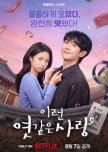
Well written, fun drama
I really enjoyed this series. It has a great mix of campy comedy, light comedy, romance and action.The story is cohesive and well written, with only a few minor plot holes that are easy to overlook. The pacing is great and I thought they did a good job with the flashbacks for providing timely context of what was going on and what was yet to come.
Jung Hae-in maintains the excellent work he's shown that he is capable of in his previous lead roles while Ha Young easily demonstrates why she deserves to be cast as a female lead.
Jung Hae-in (Tae-ha) and Ha Young (Eun-sae) have excellent, believable chemistry. I found the scenes after Eun-sae accepts that he is her 'longtime boyfriend' and wants him to come back to the main bedroom very amusing – Jung Hae-in does an excellent job portraying someone that nervously won't take advantage of someone he truly likes over the deception he has set up. I felt their chemistry was almost on par with that of Jung Hae-in & Son Ye-jin in Something in the Rain (which tops my list for chemistry).
Ha Young and the SES Ladies do a great job with the campy comedy...sometimes taking it a little too far for my taste but those moments are brief and overall, their scenes are a lot of fun.
I really liked how the story handled the development of 'trust' between Tae-ha, Eun-sae and the Doctor. It felt believable given the information Eun-sae and the Doctor had as the story progressed. And giving Eun-sae 2 names was a great way to get around her just doing a web search to find out who she really was.
The writing does a good job taking 1-off comments/events and wrapping them back into the dialog later.
Most of the fight scenes were very good....Tae-ha avoids most of the baseball bat swings (believable) rather than absorbing them (not believable). And Jung Hae-in did a great job with the choreography. I could believe he was a top boxer. I loved how he changed his expression when he transformed from 'boyfriend' to thug.
I really liked the development of the twist toward the end. I felt they provided very good foreshadowing in the earlier episodes and I did not feel manipulated in the slightest. And the brief montage showing the foreshadowing was a nice touch for those (like me) that had missed it.
And the ending was excellent. They actually allowed enough time to really wrap up the story and provide the characters with a great ending....refreshing after so many dramas doing the wrap up in 5 minutes.
While I thoroughly enjoyed the series, it wasn't without some issues. For instance, one element that strained believability was Eun-sae’s lifestyle. Her salary as a prosecutor wouldn’t realistically support a luxury apartment, sports car, and designer wardrobe, and the show never explains how she affords them....she was an orphan so no family money and her Prosecutor salary would be ~80-90K USD....not enough for those types of expenditures.
I'm not a big fan of the endless waves of disposable thugs for the fights nor with the omniscient villain that dynamically sets up an elaborate trap during the unexpected car chase scenes. Nor with the extremely quick recover from stab wounds.
They do have one major continuity mess up. His Mom tells his 'Grandma' that she is 23 years old yet the dates on her tombstone show she was only 22 when she died. Not integral to the story but it is sloppy.
Despite a few inconsistencies, Our Sticky Love delivers a charming blend of romance, comedy, and action with standout performances and a satisfying ending. It’s a drama that’s easy to recommend
Was this review helpful to you?
This review may contain spoilers
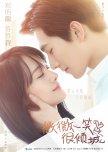
Great potential but becomes repetitive and paternalistic
As a preface, I did enjoy this series overall. It was mostly a fun watch if you ignore the extreme paternalism and the repetitive story line.I'm an avid online gamer and like romance dramas so I thought this would be the best of both worlds.... unfortunately, that did not turn out to be the case. While I did find the first 10 episodes interesting, it starts to trail off toward the end. Not that the tone of the story actually changes much, it just becomes much more obvious on how patriarchal the series really is.
Both of the leads, Wei Wei and Nai are supposed to be very intelligent compSci students, yet every episode merely emphasizes their claim to fame as being how beautiful/handsome they are...repeatedly. While later episodes do highlight Nai's intelligence, they barely give Wei Wei any credit other than being a pretty face. When she interns at Nai's company, they spend a couple minutes of screen time having her handle some testing and creating a proposal doc for a gaming subsystem, but for the vast majority of the time, she is relegated to bringing food to the team and other office manager tasks. And in a scene where Nai is working on solving a complex compSci problem, instead of having Wei Wei be interested in the problem, she just sits there and stares doe eyed at Nai.
Wei Wei is also supposedly very skilled within the online game....and she does crush her opponents when those opponents are other females. As soon as she is up against a male opponent, Nai needs to step in to save her.
Wei Wei's friend group is even worse. They mostly talk about boys or other girls. They often talk about studying yet they are never shown actually doing any programming. ErXi may be the worst...while her character is cute, she seems incapable of doing anything herself...despite supposedly being at a top tier university. She is also the target of the 'Mean' girls always berating her looks.... standard issue of a beautiful actress supposedly portraying a plain girl.
The romance part of the story is not much better. No basis is really given for why they like each other originally other than they are both 'beautiful people'. While they do show Nai watching Wei Wei play the game briefly, that isn't really a solid reason for falling in love with someone.
Once they start dating, things actually get a bit worse. While their relationship is generally a good one, it is extremely paternalistic. Wei Wei always defers to Nai and needs to be 'saved' by him. When they are together, many of Nai's gestures toward Wei Wei feel more like a parent to child than as a romantic partner. That is not to say that Nai takes away Wei Wei's agency or otherwise overtly tries to control her. It is more that he is completely confident in his own abilities and Wei Wei voluntarily submits and defers to him.
There is one Red Flag moment when Nai is consoling Wei Wei over her fight with ErXi. He discounts her relationship with Erxi saying “...she's only a small part of your life. I'm your everything.” He also claims they'll never fight and will always be happy. That she should never cry about anyone ever again and that he'll never make her cry.
Their kissing scenes also leave a lot to be desired. She is often wide eyed, unmoving, arms at the side while he actually is trying for a good romantic kiss. This isn't an issue where Nai is 'taking advantage' of Wei Wei – she is a willing partner that is, for some reason, standing like she's not.
Finally, the Mean Girl clique is rather overdone and becomes repetitive.
To end on a positive, the interactions of Nai's friend group (roommates) is fantastic. Their banter and pranks are exactly what a group of friends like that would do.
As I started, I did find the series overall an interesting watch. I am just very disappointed because it could have been so much better.
Was this review helpful to you?

Inspiring, positive story set in the eSport world
I came into The King's Avatar without having read the novel or watched the anime, evaluating the live-action series purely on its own merits. As an avid gamer, I was excited for the premise and was not disappointed.The technical execution is a standout feature. Integrating live-action drama with in-game gameplay using Unreal Engine 4 and motion capture worked remarkably well. Designing the in-game avatars to closely resemble the actors made it effortless to follow the action, even as the cast expanded. Complementing the visuals, the original soundtrack fits the tone of every scene perfectly, and the acting remains solid throughout.
Narratively, the series is a double-edged sword. On one hand, it shines through its uplifting themes of loyalty, mentorship, leadership, and personal growth. The depictions of sportsmanship are particularly refreshing: competitors fight fiercely on the field but remain supportive colleagues off the field, with Su Mucheng serving as the ultimate example of this dynamic.
On the other hand, the story struggles to fully flesh out its massive ensemble cast. Character backgrounds are frequently teased or left half-explored, leaving motivations somewhat hollow as players join the roster. Furthermore, the plot occasionally relies on artificial drama that contradicts the show's own worldbuilding:
The Fanbase Disconnect: During Team Happy's inaugural match, their fan section contains only a single spectator (and later, Ye Xiu’s father). This completely ignores the fact that Happy had already established a massive in-game guild. It makes little sense that none of these dedicated guild members would turn out to support the team live.
The Resource Grind: The plot treats gathering materials to upgrade Ye Xiu’s weapon as an insurmountable task for a small group, only for Chen Guo to "surprise" everyone with a massive guild effort. However, material farming is precisely what a guild exists to do; this should have been the baseline strategy, not a miraculous plot twist.
Despite these logical missteps, The King's Avatar remains a thoroughly enjoyable, visually engaging, and genuinely inspirational watch.
Was this review helpful to you?
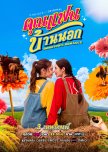
Fun, kooky lighthearted series
Not everything in the series makes sense – 'I'll extend the lease if she marries me' – but that is the heart of the show. Country girl meets city girl and all types of sparks fly.The acting is bit over-the-top and the supporting characters can get a bit zany but that all just adds to the enjoyment of the show. It is a lot of fun watching Si (Saranphat Pedersen), the spoiled, rich city girl experience country life under the guidance of Klao (Punyapat Wangpongsathaporn), the wealthy but down-to-earth country girl. The best part of the series is watching Si mature and grow as her relationship with Klao deepens.
This is the third pairing of these two actresses and you can see how well they work together. They have great chemistry and seem to really have a lot of fun with each other.
The story is fairly simple and doesn't really add anything surprising....and does have some fairly big holes....but that's fine. We all need a palate cleanser between weightier stories and this lighthearted series does a great job providing that.
The series does hit a major snag in ep 7 though. The episode starts very sad, moves to a joyous event and then falls off the cliff into stupidity that continues into the finale. While this sub-story does provide a couple of amusing zany scenes, the underlying stupidity upon which it is based detracts from an otherwise amusing series. Fortunately, they wrap it up and provide a decent ending for the series....if they'd just cut out those 30 minutes, the series would be much better.
Was this review helpful to you?
This review may contain spoilers
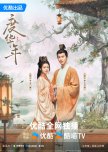
A Romance of Agency, Ambition, and Uneven Execution
The Princess Royal delivers a compelling blend of romance, political maneuvering, and wuxia action. Although I’m usually not a fan of the love‑triangle trope, this series handles it surprisingly well by contrasting two fundamentally different expressions of love: Paternalistic Love, which prioritizes protection and control, and Autonomous Love, which respects independence and agency.Both Wenxuan and Rongqing genuinely love Li Rong, but their approaches couldn’t be more different. Wenxuan consistently honors Li Rong’s autonomy. Even when he has his own strategies, they rarely conflict with hers, and throughout their second life he repeatedly commits himself to supporting her goals. Rongqing, on the other hand, spends much of the series undermining Li Rong’s plans under the guise of “protecting her from herself,” often becoming her primary obstacle.
Wenxuan and Li Rong’s relationship is one of the highlights of the drama. Their twenty‑year history gives their interactions a natural warmth, with plenty of playful bickering and banter. But their early second‑life dynamic is a bit odd — Wenxuan initially pushes her toward Rongqing before abruptly changing course — and the show doesn’t do a great job explaining his shift in perspective. Still, his jealousy is portrayed in a refreshingly positive way: instead of anger, he counters Rongqing through subtle, supportive actions that demonstrate why he is the better partner.
The political intrigue is engaging, though the constantly shifting factions can be difficult to track. The retellings of the first life that happens late in the series is excellent — First with Rongqing explaining events to Li Rong, and later with the dual telling of Rongqing recounting them to Ronghua intermixed with Wenxuan explaining to Li Rong — are particularly well executed.
Unfortunately, the final ten episodes struggle to maintain the drama’s earlier coherence. Character motivations become inconsistent, and several plot points contradict earlier emotional logic.
Li Rong’s shifting reactions to Rongqing and Li Chaun are particularly jarring. Early in the series, she forgives Rongqing and maintains him as a potential love interest despite believing he had killed her. Later, upon learning that Li Chaun had ordered the killing under false pretenses, she becomes vehemently opposed to his ascension. The emotional calculus doesn’t quite add up, and the writing seems to bend to plot convenience rather than character truth.
The handling of Rongqing’s treason is similarly perplexing. The idea that he might escape punishment—after committing a crime that directly threatens the stability of the empire—feels implausible within the political framework the show itself establishes.
The finale, while emotionally satisfying in parts, is marred by a noticeable oversight. The three‑year time jump is effective in showing Li Chaun appointing Li Rong as Regent Princess Royal, and Wenxuan’s proposal scene is genuinely touching. Yet the script appears to forget that Li Rong was pregnant three years earlier, meaning their daughter would have been born out of wedlock. It doesn’t ruin the ending, but it does highlight a lack of narrative continuity.
The Princess Royal is a drama of ambition—romantic, political, and thematic. Its exploration of love as a negotiation between autonomy and protection is compelling, and its central relationship is one of the genre’s more mature portrayals. The political intrigue adds depth, and several sequences are executed with real artistry.
The series falters in its final stretch, losing some of the clarity and emotional consistency that make its early episodes shine. But even with its flaws, The Princess Royal remains a rewarding one‑time watch: thoughtful, engaging, and anchored by characters whose relationships feel genuinely lived‑in.
Was this review helpful to you?
This review may contain spoilers
Watchable but temper your expectations
I was hoping the reviews for this special were being harsh but alas, they are fairly accurate. While the short episode was amusing, it would have been much better buried within the actual series (or better, just skipped as the poisoning plotline really makes no sense – if they'd just gone with the aphrodisac intention, it might have been OK). For an epilog short, I wanted to see some sort of 'happily ever after' story about their family. The children actors they had were adorable and I would have loved to actually see them more than in the few second scene they were given.Other than the opportunity to see a few more minutes of Zhao Jinmai and Zhang Linghe together on screen, this short is certainly skippable.
Was this review helpful to you?

Fun series with an ensemble cast
I found this to be a fun romantic comedy about a family of a mother and 5 daughters (plus 1 adoptive daughter) working to find husbands for all of the young women. The series spends 5 or so episodes centered on each of the daughters in turn and does a great job of giving them a different plot-line in finding their 'perfect match'.I found the first few episodes enjoyable but a bit hard to follow. Part of the issue is that there are a lot of main characters to introduce and considering half of them are the Li family and thus couldn't be rolled out over time, the first few episodes throw a lot at you. But then it settles into a good pace of finding a husband for each of the unmarried daughters.
The series does a great job of keeping the stories interesting as the match making for each daughter is different and presents its own set of challenges for the rotating set of protagonists to solve. It also does a good job of keeping the entire family relevant throughout the series. Even after a particular daughter finds her match, she continually returns into the story to assist the next in line in solving the challenges that arise.
Overall, a fun series that excels at mixing light comedy, suspense and action into an enjoyable watch.
Was this review helpful to you?
This review may contain spoilers
Great Art piece, terrible entertainment
Art is meant to invoke a deep emotional or intellectual response from the viewer while entertainment is meant to provide enjoyment and escapism. That distinction made it difficult for me to rate this series as I initially started watching it as entertainment. Under that guise, I was finding the series rather slow and somewhat boring. But once I started viewing it from an Art perspective, I found myself become more engaged with it and eager to see where it was going.As Art, I would rate it a 9. It definitely hit me emotionally and is staying with me after I finished watching. But as entertainment, I rate it a 5 as I found long stretches to be rather boring and most of the emotions that it evokes are negative – primarily sadness and frustration and the miss/lacking communication trope (which I hate) is way overused. Overall, I would likely have given it an 8 as it did succeed as an Art piece for me but I settled on a 6 as I felt episodes 8-9 had provided an excellent opportunity to provide a satisfactory ending from both an art and an entertainment perspective and they instead chose to go with a pure Art ending that left me only feeling frustrated..
The Good:
The cinematography/editing is excellent. The way they used lighting, scene settings and superimposition were great in supporting the emotions for particular moments in the drama.
The sound track also did a great job conveying the emotions for the underlying scene.
The acting is a bit mixed for me. For a majority of the series, Park Jin-young and Kim Min-ju are emotionless or sad...even when Tae-seo and Eun-a are together. Considering the art aspect of the series, I assume this was how they were directed to act. But in the pivotal scenes, they did an excellent job conveying the emotions of the scene. And how they portrayed their initial dating was perfect. They really brought out the awkwardness of a teen first love relationship. (Side note: I am constantly amazed at how Korean actors in their 30's can convincingly portray high school students – Park Jin-young did an excellent job)
The 'misunderstanding' scene in ep 8 is brilliant. Sequence of small, innocuous decisions adding up to a catastrophic consequence.
The series was full of nuance that is easy to miss and greatly adds to the art of the series. From how the name for Eun-a's contact info in Tae-seo's phone changed as the story progresses to how the seasons are used to set the tone to the field of flowers relating to the current status of their relationship. They also make great use of symmetry such as the bike path split that appears in the beginning and again at the end.
To put a positive spin on the long narrative stasis / interiority scenes, they are mostly easy to FF thru as they usually do not include a voice over (although a few do).
The Bad:
It overdoes the narrative stasis and interiority scenes. While making FF easy, it became a bit of a drag even from an Art perspective.
It overuses the miscommunication trope. All of their issues would have been solved by a couple of 2 minute conversations...instead, when there was an issue, it was “Let's break up” → “OK”. This is fine from an Art perspective but is very frustrating from an entertainment perspective.
The ending is terrible. The series had done a great job in ep 8/9 in setting up a plausible ending with A-sol. She was a much better fit for Tae-seo from an intellectual and personal values perspective but instead they end it with Eun-a leaving to live her life abroad and Tae-seo essentially saying 'I will go build the life we talked about and if you ever want to join me, I will be waiting”. Thus, other than finally having a bit of clear communication between them, neither really show any personal growth – he remains the duty-bound, self-sacrificing giver and she remains the emotionally avoidant taker. Perhaps appropriate as an Art piece but I feel going with an A-sol ending would not have hurt that aspect and would have provided closure from an entertainment perspective
Summary
If you enjoy emotional Art dramas, you may really enjoy this series. But if you want a drama that has fast pacing, shows character growth and provides a satisfying ending, you may want to skip this one.
Was this review helpful to you?
This review may contain spoilers
Enjoyable but with some late episode issues
While I enjoyed this series, it certainly was not without its issues—the primary one being pacing.The drama starts at a breakneck speed, with the first episode covering Chu Zhao’s "first life" and the second establishing her "second life." There are several brief scenes in episode one that build a critical foundation for her capabilities throughout the rest of the series. If you miss them, her adept handling of court intrigue later on feels somewhat contrived. The most vital of these moments lasts only a few seconds, as she narrates how Xiao Xun often discussed political matters with her and acted upon her advice. At the time, it feels almost like a throwaway line, yet it provides the essential evidence that she possesses deep political experience—explaining why she is so shrewd in her second life.
Episodes 1 through 17 are exceptionally well-paced, delivering a tight mix of court intrigue among the primary rivals—Chu Zhao, Deng Yi, Xiao Xun, and Xie Yanfang—with alliances constantly shifting. Interspersed with this chess match is Chu Zhao’s journey to the frontier to visit her father, which injects a welcome dose of adventure, romance, and dynamic new characters into the story.
However, the late middle stretch drags. The series bogs down in repetitive factional scheming, and the romance thread drops off entirely as Chu Zhao and Yanlai are separated.
The final episodes accelerate to a frenetic pace, but the climax relies heavily on narrative manipulation. Up to this point, viewers are given enough context to understand Chu Zhao's motivations. In the climax, however, the show deliberately keeps us in the dark to force a series of "big twists." This creates a frustrating viewing experience, as her actions seem entirely out of character—and even the Emperor’s behavior feels jarringly uncharacteristic. Although final-act flashbacks during her dialogue with Xie Yanfang eventually explain her strategy, the reveal comes too late to wash away the feeling of being artificially tricked.
Additionally, the show underdelivers on Yanlai’s campaign against the Northern King. We are given only a high-level overview of his plan before jumping straight to the outcome. I really wish the production had trimmed some of the redundant court intrigue in the latter half to fully flesh out Yanlai's military exploits.
Finally, despite being a political intrigue drama at its core, the series devoted significant narrative weight to its romance for the first two-thirds of the run. That investment deserved far more than a hurried four-minute wrap-up at the very end.
Pacing and narrative flaws aside, the acting across the board was excellent. Tang Xiaotian in particular delivered a standout performance, capturing Xie Yanfang’s persona as a master politician flawlessly—with his white feather fan serving as a brilliant, expertly used signature prop.
Overall, Ashes to Crown has its structural shortcomings, but its sharp performances and strong early-to-midgame intrigue still make it well worth a watch.
Was this review helpful to you?


