

 77
77 334
334 10
10 1
1 5
5 1
1 13
13 1
1 2
2 3
3 1
1 2
2 1
1 1
1 6
6 11
11 2
2 1
1 2
2 1
1 2
2 1
1 1
1 3
3 2
2 1
1 2
2 2
2 1
1 2
2 1
1 8
8


Heaven Is a Place on Earth
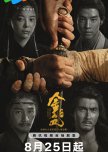
Remnants of Gold is a heavily reimagined adaptation of Da Di Fei Ying (大地飞鹰), one of Gu Long's later and lesser-known wuxias. Beyond the broad outline of a treasure hunt for 300,000 taels of mythical gold stashed somewhere in the middle of a desert, the drama bears limited resemblance to Gu Long's novel. Main characters have been rearranged into supporting roles around new characters, anchored by industry heavyweights Xin Zhilei (Zhang Luyao) and Chen Kun (Yu Hou). Despite the extensive changes, the scorchingly hot noir desert setting unerringly captures Gu Long's signature cold, cynical, and morally ambiguous world.
Perhaps director Xu Bing's most audacious innovation is that the protagonist, Zhang Luyao, is a woman. And what a woman! Only an actor of Xin Zhilei's caliber could bring this character to life so compellingly. Unlike Jin Yong, Gu Long never created any iconic female characters; his women were always merely plot devices for his men. So Zhang Luyao is the heroine Gu Long never dared to imagine, much less write. At first, it seems she is set to avenge her family, but later it seems as if she simply wants freedom. She doesn't have grand ambitions to save the world—just herself and one or two lost souls that are, or once were, righteous. Her quietly spoken truths and simple, pointed questions ring with the same clarity as her bell that has the ability to recall a lost soul. This kind of slow, profound, and deep soul-searching is ultimately fatalistic and nihilistic, and explains why Gu Long never enjoyed the same broad, popular appeal as Jin Yong did.
But it is Yu Hou—the Liangzhou Deputy Envoy with a penchant for fine Jiangnan silk pajamas—and Luyao's chance affinity and mutual understanding with him that moved me most. It is the quintessential Gu Long: profound connections formed during transitory encounters that can reshape a person's understanding of themselves and their destiny. Once again, Chen Kun delivers a memorable portrayal of a wretched character yielding to his worst instincts. The pitiless candor in his eyes when he unhesitatingly admits to Luyao—"I was always like this"—and the flash of surprised understanding and acceptance in Luyao's expression. I also liked the gentle giant Ban Cha; I feel this is Gao Weiguang's best role to date.
Neither Xiao Fang nor Pu Ying, who are the main protagonists in the original novel, made a lasting impression on me. In fact, I found Pu Ying to be an annoying version of Cervantes' Don Quixote. Xu Bing has a tendency to irritate the viewer with a super annoying lead character that is hard to root for. It is the main reason why I don't run around telling everyone to go watch Fearless Blood, which is otherwise a fantastic Republican-era wuxia.
For a wuxia, the action scenes here are good enough, but I have seen better. This is forgivable because it is more of a character-driven wuxia. I won't lie—I didn't like the penultimate episode, where the story largely ends. Luyao, who entered with such a quiet force, seems to fade away; even her intelligence seems to dim along with her reason for existence. The morally ambiguous characters and that overarching sense of impermanence and the meaninglessness and suddenness of fate make it difficult to care for anyone in this story. Long before George R.R. Martin, Gu Long was killing off characters suddenly and before their story arcs seemed complete. GOT just took it to another level of gore that Gu Long didn't indulge in. That actually makes the abruptness and finality of it even more stark. What saves the drama is the finale, which seems to unfold on another plane of existence. It wrapped with a sense of humor, and some tears of happiness and sadness. It can be taken literally or metaphorically, depending on whether you think Wusuhai—or heaven—is a place on earth.
This kind of profound, reflective and heavily fatalistic story will not appeal to everyone, but I really enjoyed it. I rate it 8.5/10 overall.
ENDING SPOILER COMMENTS
The final episode can be taken literally or metaphorically. The final battle unfolds next to Minghai (冥海/Nether Sea)—in Chinese fantasy, a nebulous realm between the living and the dead. Wusuhai, described by Ban Cha as close to heaven, lies across Minghai. Even Tang Zheng hesitated to cross Minghai, and after he dies, both he and the Qin Demoness don't get to cross over; they travel toward an opposite, possibly hotter destination. This leaves open the possibility that the Luyao who woke up to go on to Wusuhai has crossed over to another realm. After Pu Ying slides down the sand, we see the gold bars are a mirage, and all that lies ahead is the desert stretching on endlessly. The oasis that is Wusuhai disappears. It was all a mirage. This kind of ending—one that can be interpreted both ways—is very hard to do well. But Xu Bing pulled it off.
X
Perhaps director Xu Bing's most audacious innovation is that the protagonist, Zhang Luyao, is a woman. And what a woman! Only an actor of Xin Zhilei's caliber could bring this character to life so compellingly. Unlike Jin Yong, Gu Long never created any iconic female characters; his women were always merely plot devices for his men. So Zhang Luyao is the heroine Gu Long never dared to imagine, much less write. At first, it seems she is set to avenge her family, but later it seems as if she simply wants freedom. She doesn't have grand ambitions to save the world—just herself and one or two lost souls that are, or once were, righteous. Her quietly spoken truths and simple, pointed questions ring with the same clarity as her bell that has the ability to recall a lost soul. This kind of slow, profound, and deep soul-searching is ultimately fatalistic and nihilistic, and explains why Gu Long never enjoyed the same broad, popular appeal as Jin Yong did.
But it is Yu Hou—the Liangzhou Deputy Envoy with a penchant for fine Jiangnan silk pajamas—and Luyao's chance affinity and mutual understanding with him that moved me most. It is the quintessential Gu Long: profound connections formed during transitory encounters that can reshape a person's understanding of themselves and their destiny. Once again, Chen Kun delivers a memorable portrayal of a wretched character yielding to his worst instincts. The pitiless candor in his eyes when he unhesitatingly admits to Luyao—"I was always like this"—and the flash of surprised understanding and acceptance in Luyao's expression. I also liked the gentle giant Ban Cha; I feel this is Gao Weiguang's best role to date.
Neither Xiao Fang nor Pu Ying, who are the main protagonists in the original novel, made a lasting impression on me. In fact, I found Pu Ying to be an annoying version of Cervantes' Don Quixote. Xu Bing has a tendency to irritate the viewer with a super annoying lead character that is hard to root for. It is the main reason why I don't run around telling everyone to go watch Fearless Blood, which is otherwise a fantastic Republican-era wuxia.
For a wuxia, the action scenes here are good enough, but I have seen better. This is forgivable because it is more of a character-driven wuxia. I won't lie—I didn't like the penultimate episode, where the story largely ends. Luyao, who entered with such a quiet force, seems to fade away; even her intelligence seems to dim along with her reason for existence. The morally ambiguous characters and that overarching sense of impermanence and the meaninglessness and suddenness of fate make it difficult to care for anyone in this story. Long before George R.R. Martin, Gu Long was killing off characters suddenly and before their story arcs seemed complete. GOT just took it to another level of gore that Gu Long didn't indulge in. That actually makes the abruptness and finality of it even more stark. What saves the drama is the finale, which seems to unfold on another plane of existence. It wrapped with a sense of humor, and some tears of happiness and sadness. It can be taken literally or metaphorically, depending on whether you think Wusuhai—or heaven—is a place on earth.
This kind of profound, reflective and heavily fatalistic story will not appeal to everyone, but I really enjoyed it. I rate it 8.5/10 overall.
ENDING SPOILER COMMENTS
The final episode can be taken literally or metaphorically. The final battle unfolds next to Minghai (冥海/Nether Sea)—in Chinese fantasy, a nebulous realm between the living and the dead. Wusuhai, described by Ban Cha as close to heaven, lies across Minghai. Even Tang Zheng hesitated to cross Minghai, and after he dies, both he and the Qin Demoness don't get to cross over; they travel toward an opposite, possibly hotter destination. This leaves open the possibility that the Luyao who woke up to go on to Wusuhai has crossed over to another realm. After Pu Ying slides down the sand, we see the gold bars are a mirage, and all that lies ahead is the desert stretching on endlessly. The oasis that is Wusuhai disappears. It was all a mirage. This kind of ending—one that can be interpreted both ways—is very hard to do well. But Xu Bing pulled it off.
X
Was this review helpful to you?


