

 76
76 328
328 9
9 1
1 4
4 12
12 2
2 3
3 2
2 1
1 5
5 10
10 1
1 1
1 2
2 2
2 3
3 2
2 2
2 2
2 1
1 1
1 8
8


Murder He Wrote.
After an injury related leave of absence, veteran detective Jiang Guangming teams up with rookie Shi Luo to tie up a few perplexing loose ends in a murder case. Shi Luo is a crime fiction junkie and notices that the crime scene is disturbingly similar to one described in Gu Jiming's debut hit novel Black Rain. Is it a bizarre Murder He Wrote type of coincidence or is the author somehow complicit? The plot thickens when they discover Gu Jiming is not the only writer with links to the victim or the crime scene. The list of suspects grows as they delve deeper into the incestuous and cut throat literary world of aspiring and established writers and their messy personal lives.The murder mystery is riveting from the onset as the search for a missing dog becomes a hunt for a missing witness. As they hone in on the main antagonist, the narrative morphs into a police procedural and a terrifying, gut wrenching exploration of man's quest for relevance. For Zhenzhen and Guangming it is about being in control; for Jiming and Tang Xun it was about writing that memorable first and last novel. All too easily, they slip down the path of moral decay in their pursuit of what matters to them. Even though I was fascinated by this dark and cynical treatise on human nature and how toxic relationships can get, I didn't like or root for any of the characters in this story.
I always regarded Tong Dawei as an overrated actor but I was floored by his compelling portrayal of the pitiful, conflicted and ultimately selfish character that is Gu Jiming. I also was surprised by his dark chemistry with Su Zhenzhen and how they fed off each other. While I appreciate the attempt to flesh out Guangming's character and to somehow connect her marital problems to the case, I was bored by her relationship arc. Despite Ma Yili's fantastic acting, the great cop terrible wife plot-line is unoriginal and went on for too long; often disrupting the flow and pacing of the main narrative. The final two episodes are quite anti-climatic but its still overall an excellent suspense thriller. This could have been a much tighter and more engrossing watch had they cut it down to 10-12 episodes. I rate this an excellent 8.0/10.0.
Was this review helpful to you?
She's just not into you anymore.
The Luo family is in gentle decline as the second generation is unable to match their late patriarch's illustrious career in civil service. They look towards the complacent and entitled third generation to revive the family's fortunes with a growing sense of anxiety. It is to this backdrop that Luo Yining returns from the family's country villa to celebrate her ailing grandmother's birthday after falling out with Luo Chengzhang and concubine Qiao as a child. Chengzhang is a frustrated and resentful civil servant of middling talent with a very small heart that only has room for Qiao's children. Yining is appalled to find her "third brother" Shenyuan shunned and bullied by the family and as unfavored children and they become fast allies. They are both not who they appear to be and gradually they uncover and keep each other's secrets as together, they navigate treachery both within and outside the Luo household.This kind of saga that depicts the rise and decline of a family has been a popular genre since the 18th century classic vernacular novel 红楼梦 Hónglóumèng/Dream of the Red Chamber resonated deeply with its philosophical questions and social critique of feudal patriarchal society. While the narrative unfolds around the main protagonists it is not just about them; it explores broader social themes through related character stories and sub-plots told from their point of view. Every character has their own cross to bear. Chengzhang for example, is at surface a bad dad but he was also someone whose ambitions never materialised and who twice had to marry a woman not of his own choosing. Yining's return ruined the three people who meant the most to him. Maybe he gets off lightly or maybe fate was already unkind enough to him.
This drama gives the strong impression that it is a lighter, more accessible version of The Story of Minglan (SOML). The production quite cheekily acknowledges this by installing Yining in Haitang Pavilion and naming her mother Gu Minglan. Many of the main character blueprints of the Luo family down to the costumes and styling and the plot arcs around the inner harem rivalries and the mystery of Yining's mother's death smack of SOML. As someone who didn't enjoy SOML, I don't have a problem with it. Even though SOML is undeniably a more sophisticated and culturally impactful production, I found the pacing and the narrative approach suffocating. Even though it is less well written and not that original, The Rise of Ning is a more enjoyable watch overall. The biggest difference for me is Shenyuan is more interesting, better written, better portrayed and more empathetic than the male lead in SOML. Zhang Wanyi never disappoints in delivering yet another immersive and complex portrayal of this seemingly mild mannered and humble unfavored son with hidden depths. His strength is in being too casually overlooked and underestimated by his enemies. The story's biggest drawback is the romance is held back for so long that Zhang Wanyi and Ren Min's chemistry as a couple is under-explored.
Even though the narrative does incorporate a few interesting and new ideas, they are not fleshed out properly and are bogged down by lazy writing, shallow character designs and logic that does not hold up to close scrutiny. The main romance is weighed down by the fact that Yining and Shenyuan remain "siblings" for almost three quarters of the drama. I understand this was so she could remain in the Luo mansion but I think that the truth should have been revealed to both Shenyuan and Yining at the same time. They could keep it from everyone else while they try to solve the mystery of her mother's death and figure out who she really is. This would allow their romance to progress earlier on in the storyline and not leave the audience with such an entrenched impression of their chemistry as siblings. Another better approach could have been to skip the boring, tropey harem squabble arcs and move up the reveal because the characters in the Wei manor are more original and engaging. This would have also allowed a fuller development of Yining's relationship with Wei Ying, who is such a fantastic and memorable character who is both funny and moving at the same time. None of the women in this drama, nasty or nice, are prone to shrill, ear-piercing screeching, which was what I found most off-putting about SOML. In fact the smart, sassy and sarcastic Lin Hairu is one of my favorite characters and a huge upgrade from SOML.
Even though I enjoyed Ren Min's charming portrayal of Yining, her acting is still a work in progress. Her lines are too tentative and lack the depth of expression needed to capture the maturity, sensibility and intelligence of the character. Her voice is so distinctive that I also didn't for one moment buy it that Lu Jiaxue did not instantly recognise her as Meimei. I think she could have credibly dubbed herself as Meimei but when she grows up to become Yining, a more nuanced professional voice actor should have taken over. Her character is also not that consistently written. She indulged in a reckless and inappropriate dalliance with a much older man but showed enough good sense not to tell him who she really was. It is a relationship that mortifies and haunts her and when she encounters him again, she clearly fears and loathes him. What is not well conveyed is how he may have still occupied a space in her heart. This didn't come out until the end; which made me wonder why she never gave Lu Jiaxue a chance to clear up the misunderstanding or severe past ties with him neatly. The way she handled the situation was very immature and not like the Yining who faces her problems calmly and frankly. As a result, she never gave him or herself closure and in this, she was also not fair to Shenyuan.
As a villain, Ci Sha's portrayal of Lu Jiaxue deserves top marks. He was almost too powerful, seemed to answer to no one and was able to walk prisoners in and out of jail and cut down his enemies in plain sight. He was so intensely menacing and brutal that every time he showed up, my throat went dry and I felt a knot of fear in the pit of my stomach. But the character is too one dimensional and not well written. It is difficult to reconcile such a heavy handed portrayal of an irredeemably cruel and callous bad guy with someone even a pubescent Yining could have fallen for. It is equally disturbing and difficult to understand a grown man's obsession such a very young and very naive girl. The "she's not into you anymore" trope is one that should win audience sympathy because it is much easier to get over unrequited love than it is once-requited love. However, the portrayal of Lu Jiaxue as a love rival missed the mark and completely alienated me. It was nothing short of offensive to watch him paw Yining and manhandle her time after time. That is not the way to woo a girl, nor is openly trying to kill her favorite brother! These are not the actions of a character that is allegedly cunning, manipulative and smart. I would have liked to see a more multi-faceted, subtle and refined love rival, one that actually is a credible challenger instead of one that is so obviously beyond redemption. This tiresome obsession went on for too long and overshadowed the development of Yining's feelings for Shenyuan.
Even though the plot builds to a satisfying ending climax, I rolled my eyes at how how the final episodes descended into a Phantom of the Opera like theatrics. I didn't think Lu Jiaxue got his just deserts and found everyone's willingness to forgive baffling and out of character. But overall the storytelling and pacing was consistent and engaging throughout and the supporting cast really pulled their weight. I enjoyed the second couple and many characters beyond the leads. Overall a very solid and entertaining watch that I rate 8.0/10.0.
Was this review helpful to you?
How a leader of men becomes a follower of a woman.
Li Ni is too good to be true: a brave, patriotic, upstanding and brilliant young general who safeguards the border at the kingdom's farthest reaches with his Zhenxi army. He aspires to live a carefree, adventurous life at his beloved Laolan Pass with his found family of merry men, steering clear of his imperial roots. And no wonder; his royal father and two half-brothers are cowardly, venal, ambitious, duplicitous and so dumb they test the limits of the word. But destiny intervenes when a military governor Sun Jing seizes the capital, holds Li Ni's witless father hostage and the imperial grandson and rightful successor goes missing. As the kingdom descends into civil war, Li Ni leads the intrepid Zhenxi army to try to save the day. He encounters the bold and audacious A Ying, a lieutenant at the helm of the formidable Cui family army. At first glance, A'Ying is an awesome character; strong, independent, daring, ambitious and cunning. While they have different visions of the future, they are aligned in the immediate purpose of defeating Sun Jing. They join hands in an alliance that has each trying to out do the other in terms of being the one to seize victory. Sparks fly between them, suggesting a broader and more permanent union could be in the cards.The political plot is very loosely based on the history of the founding of the Tang dynasty. The writing reflects a shallow understanding of politics and historical reality and just plain laziness. The writer clearly didn't know what to do with the one interesting and smart villain and thus quickly kills them off. We are then bamboozled with a bunch of very tired one-note villain archetypes who are surprisingly difficult to kill dead despite their limited brain cells. They are so done before too many times villains that they are not worthy of mention. The only good thing about the battle for the throne arcs are the action scenes; they are exciting and bloody. Xu Kai always delivers incredibly agile and powerful fight scenes and with a good action director like this, he really shines. The drama peaks at an epic and consequential battle around episode 32 and that is probably the best place to stop. It took me a long time to get through the final 8 episodes that were unnecessary and as bland as tofu.
In terms of the romance, this drama is anchored by good chemistry and flawless portrayals by Xu Kai and Jing Tian. It errs on the side of being overly generous with the fan service sweet scenes, which I only mildly enjoyed. I may have been more convinced had I not just come off watchingJing Tian beam beatifically up at Feng Shaofeng (Legend of Zhuohua) with that exact same limpid, adoring expressions. The bigger issue is that A Ying as a character is incredibly difficult to like. She is strong willed, reckless and has a most unbecoming need to win all the time and especially when she is wrong. She doesn't even "win" with any great, glorious or brilliant schemes; her kisses are essentially Kryptonite as far as Li Ni is concerned. It is beyond infantile that he would cede an entire city for a kiss! Li Ni's wants are mallaeble as far as she is concerned and she takes it upon herself to meddle in high power politics to achieve the outcomes she wants. When she doesn't like the consequences of her schemes, it is inevitably Li Ni's fault. The "dealbreaker" conflict between them never gets solved; their relationship is bailed out by events, which is an anti-climatic writing cop out that left me convinced they will surely end up divorced. She does not communicate with Li Ni, overestimates her ability to handle problems on her own and is oblivious to the fact that a deranged lunatic is after her even though he captures her many times. To my dismay, each of her near death experiences are just near. We are told this is a smart and independent character but we are shown she is not smart and constantly needs rescuing from her own hubris. Their love story is an utterly soul destroying tale of how a leader of men becomes a follower of a woman. The only love story in this drama that actually moved me was that of Consort Xiao.
This is Xu Kai's best recent drama after a string of disappointments and he does a really good job here playing a character with massive hero complex. As for Jing Tian, I didn't love her character but I am sure a less charming actress would have frustrated me into dropping this. Despite the good acting, the many logic holes, pedestrian sub-plots and cardboard characters make for a smooth but bland cocktail. I can only rate it 7.0. Overall it is not a bad watch for the fantastic fight scenes and squeal-worthy flirty moments.
Was this review helpful to you?
Winning hearts and minds.
Amidst the economic hardship and political upheaval of 1930s Shanghai, War of Faith explores the financial underpinnings of the Communist Party of China's (CPC) eventual military victory over the Kuomintang. This story unfolds from the perspective of Wei Ruolai, a young financial prodigy who becomes entangled in the ideological struggle that defined that era. The narrative deftly avoids lengthy ideological discourse by framing the struggle as largely an economic one. It was a time of economic hardship for the common working class people from the cities to the countryside. While politically aware, most of them were were not conversant in the finer points of the political and ideological debate. Their needs were basic and winning hearts and minds came down to being responsible fiduciaries of their hard earned savings and livelihoods.Shen Tunan is a savvy central banker with grand plans to reform and strengthen the local banks and loosen the grip of foreign banks to unleash China's economic potential. A true believer in the Kuomintang's Three Principles of the People, he is nonetheless a pragmatist is willing to compromise and look the other way in order to achieve his objectives. The evolving mentee-mentor relationship between Shen Tunan and Wei Ruolai is compellingly articulated by Wang Yang and Wang Yibo and bolstered by good chemistry between the actors. Their mutual respect did not waver even as it became evident that their bottom lines diverge. Wang Yibo surprised and delighted me with his portrayal of a quietly clever young man's coming of age. His Wei Ruolai is idealistic but not naïve, can be ruthless but is not cruel and is loyal but not unquestioning.
All three main protagonists in this drama have a shared vision of the kind of future they want for their country but there are deep divisions between them on how to get there. Shen Tunan understands there is rot in the system but is willing to compromise and work within in; to try to fix it. Shen Jinzhen thinks it is not fixable and wants to tear it all down and start over. She is radical to the point of being almost fanatical and shockingly bold and ruthless in how she executes her vision. I have even greater respect for Li Qin, who also elevates her repertoire as an actor in this role. The relationship between the Shen siblings and their painful conflict is a highlight of this drama. They are both so strong willed and their conviction in their opposing beliefs is as strong as their love and respect for each other. The narrative does a fantastic job illustrating that the country is an extension of the family so when the rubber meets the road, they are first loyal to each other. As the newcomer without any particular ideology, Wei Ruolai is caught between them and ultimately in his choice, becomes the de factor arbiter of the better path forward.
The darkest, most complicated, ultimately despicable and yet oddly empathetic character in this drama is Lin Qiaosong, arrestingly portrayed by Zhang Tianyang. Even though he is not the smartest villain, he has great instincts and a healthy though grudging respect for his enemies He is brutal and incredibly hard to kill yet has a moving and tender side for his lover. I haven't enjoyed a villain so much in a long time. The other notable performance in this all round standout cast is newbie actor Lan Xiya's Niu Chunmiao. This smart, audacious and plucky character added some much needed levity to this story and saves the day a few times as well.
I enjoyed this drama quite a bit but I wouldn't really call it a spy drama. It is more of a business story with some ideology and some action mixed in. The writers do a terrific job making the rather dry financial aspects of banking and finance accessible and movingly relate it to how the lives of the common people are disproportionately impacted by malfeasance and corruption in the financial system. Overall a very interesting and somewhat educational slice of life from an era of profound change that I am happy rate 8/10.
Was this review helpful to you?
Hiding in plain sight.
A group of eight wicked villains converge on a gorgeous, dangerous snow capped mountain in a race to recover a long lost hidden treasure they have schemed and murdered for. The almost mythical hidden fox is said to guard the treasure. Young disciples Gui Yi and Qing Wen find danger and intrigue around every corner. In addition to this shadowy hidden nemesis, they find themselves pitted against their masters and even each other.I wouldn't call The Hidden Fox an adaptation of Jin Yong's "Fox Volant of the Snowy Mountain" (雪山飞狐). It is more like wickedly good fan fiction inspired by the original wuxia masterpiece. This has resulted in very polarising reactions to this movie. Critics lament the loss of the spirit of chivalry and that the complex conflict between the main opponents is dumbed down just another revenge story. I am a huge fan of the original work that is defined by the sheer perfection in the way the story ends at the absolute peak of emotions and suspense. To me, it is Jin Yong's most brilliant and unforgettable ending. At the same time, the after openly invites invites speculation and innovation. That is what the writer intended. This production takes up that challenge and while it falls short of exceeding the original masterpiece, the storytelling is still very, very good. It is very suspenseful, action packed and thrilling with a few dazzling twists that delivers an innovative and cohesive alternate take on original story. Is it ultimately hollow because it comes at the cost of the spirit of the original? Yes, perhaps. But it is still a very entertaining way to pass a few hours.
The other great thing about this is that it is a Lu Yang production. I am a huge fan of his gripping and stylish visual storytelling that is heavily laced with action oriented fight scenes. Naturally as a web movie, it is not at the same level (or budget) of his famed Brotherhood of Blades series. Nonetheless the well choreographed action sequences don't disappoint and are as gripping, brutal and violent as expected of a true blue martial arts movie. Each of the eight villains' hidden secret martial arts technique lends an extra layer of imminent danger and uncertainty in outcome to each deadly encounter. Yes there is some use of slow motion but such well designed and viscerally satisfying fight scenes are an increasingly rare treat these days.
This movie may enjoy a higher rating if they had changed the Chinese title from Jin Yong's original 雪山飞狐 although that may have risked accusations of plagiarism considering how easily recognizable the setting, characters and main plot points are. Even if you love the original, watch it with an open mind and allow yourself to embark on a thrilling hunt for treasure that is hiding in plain sight. 8/10.
Was this review helpful to you?
When karma slaps back.
Blossom (九重紫) stands out in a year where too many highly anticipated period costume dramas implode and self destruct pass the mid-point. This is short drama director Zheng Jingjie's debut long form drama where he once again compels with his brand of immersive storytelling. This drama avoids naming the dynasty as the narrative takes liberties with history and is quite critical of the emperor but it should be loosely set in mid-Ming dynasty, during the reign of the Chenghua emperor. The rebirth premise is straightforward and the business and palace conspiracy plot arcs while often done, are transformed by innovative takes on tired themes, a masterful build up in tension, suspense and relief and brisk pacing overall. There is nothing really that special about the plot or the acting, it is once again mostly about this director's captivating camera language and narrative panache that turned multiple low budget short dramas into memorable mini hits that punch above their production values. His foray into long form dramas should hopefully shake up the complacent and lazy storytelling characteristic of the well established long form directors.Dou Zhao is the capable, long suffering wife of Wei Tingyu, the profligate Marquis of Jining. She chooses the cold and snowy night that vengeful butcher general Song Mo helps Prince Qing depose the crown prince and seize the throne, to dump her husband's sloppy ass. As she flees the capital, she is rescued by an injured Song Mo and they take refuge at the temple of a mysterious monk Yuantong. Cornered and betrayed, they fall into an abyss through time and space, inextricably bound through Yuantong's cryptic book of divination. Dou Zhao wakes up as if from a dream, as a young girl again, clutching the prophetic book like a lifeline. She is immediately thrust into one of the turning points in her life, where she painfully learns that forewarned is not necessarily forearmed. Nonetheless, she determinedly sets out to get it right this time around; to make herself financially independent and to avoid her past disastrous marriage. One of the story's strengths is that when karma slaps back, jeopardy is at play and Dou Zhao's book of riddles is far from a roadmap of the future. As the ripple effects of the changes she makes snowball, her world increasingly deviates from the past and the path ahead is murky and no less treacherous.
As for Song Mo, he has the hero halo and is the total package as far as physical appearances go but that is about it. As it turns out, his impressive muscles extend all the way up between his ears. This is an all bravado, all heart, kind of character that allows his rage and impulses to dictate his actions. As Ji Yong mockingly points out over and over again, he is a mantis with little insight or awareness even of who is moving the chess pieces around him and is easily manipulated into being someone else's pawn. His reckless, selfish and misguided quest for justice for one person, puts the wrong person on the throne and upsets the order of the universe, resulting in injustice for many people. So much so that 閻王/Yanwang the King of Hell himself must have rejected him and sent him back for a reboot. He does not get smarter, he is simply Dou Zhao's pawn the second time around and not the chess player. She is the inner voice of caution he does not possess that saves him time and again from his worst instincts. Dou Zhao's mature styling gives her gravitas as a business woman but it also makes her look visibly older than Song Mo. Leaving a few grey streaks in his hair may have negated this impression somewhat. Needless to say, even though I enjoyed the plot, I am lukewarm about this kind of CP and was not bowled over by their romance or chemistry. In fact, I find Dou Zhao has better chemistry with Ji Yong, who is her intellectual equal and her soul mate and confidante. But yeah, I get it, I'd probably also pick the hot general over the chess grandmaster. Being shallow is so much more fun!
The cast in this drama are all up and coming actors whose acting skills are still works in progress. Nonetheless, this director is accustomed to working with C-grade actors and adroitly papers over all their flaws with his brilliant visual narrative style. The best decision this production made was to invest in good voice actors that were able to give definition to all the roles that mattered. This is a case study for how in some cases, it is better not to rely on original voice. While I always like the storytelling approach of making certain supporting roles main characters of their own arcs, this was hit or miss in terms of execution. I enjoyed Wei Tingyu and Dou Ming's sub-plot best, but both characters did not get an ending they deserved. This was so that a tropey villain like Wei Xingyue got her own super unoriginal and overly melodramatic arc. It was a race to the bottom with the completely ridiculous and boring Song Han and Miao Ansu arc, which highlights the two most atrociously bad actors in the cast. There are more interesting character stories played by more charismatic actors including Chen Jia and Zhao Zhangru, Gu Yu and Wu Shan that they could be better explored. I really enjoyed Gu Yu and hope to see more of this very humorous and charming young actor Fu Weilun. Unlike Dou Zhao who has Ji Yong, Song Mo doesn't have a really good sidekick and Gu Yu could have been better utilised in this capacity. While there is no shortage of petty and not so original villain archetypes, this story lacks a really good villain with a compelling motive. The only ones that had real mastermind potential got whitewashed in the finale to deliver one twist too many.
Despite a few arcs that could have been better, a few missed opportunities, some sloppy logic and messy edits, the story finishes strongly at the plot climax and ends in a satisfying way. It is a very solid production that made the best of its limited resources. It got noticed and won well deserved praises not only because it is truly quite good but because so many other dramas with superior resources ended up bombing out so badly in 2024. As someone who was long ago bored with the romance genre, I enjoyed this enough to rate it 8.5/10.0
Was this review helpful to you?
The Beauty Trap: She Came, He Saw, and She Conquered
Prisoner of Beauty is an enemies-to-lovers romance set in a fictional world loosely inspired by the Three Kingdoms period. Despite a misleadingly serious start, this is best enjoyed as a romantic comedy—and a playful parody of both the era and The Beauty Trap (Měirén Jì 美人计) from the Thirty-Six Stratagems.Yanzhou is in crisis. Fourteen years ago, to save themselves the Qiaos betrayed their alliance with the Weis with devastating losses for the Wei clan. Now the fierce young warlord Wei Shou has come of age —and he’s out for blood. Facing certain annihilation, the cunning (and cowardly) Qiaos do what anyone would do: they sacrificed a virgin. But not just any virgin—a jaw-droppingly beautiful one! Which couldn't work better when the male lead is Liu Yuning, who is a natural at jaw dropping. In short, she came, he saw and she conquered.
Jokes aside, romance fans will find plenty to gush about. Song Zu'er inhabits her character Manman; wrapping Wei Shao around her fingers while she quietly manipulates events in her clan's favor. Liu Yuning and Song Zu'er share a magnetic chemistry and their slow burn romance builds their tension into swoon-worthy passionate moments. Wei Shao is smitten at first sight and poses no real threat yet Manman treads carefully, speaking softly while wielding a hidden stick . Her presence divides his household: the women resent her and a close brother covets her. Wei Shao is quickly reduced to a love-struck fool.
Unfortunately, this is where the story stumbles. Wei Shao’s guard drops too fast, leaving him out of sync with Manman, who remains focused on her political mission. Their relationship is tested by petty domestic squabbles rather than high-stakes conflicts, and the political intrigue promised early on fizzles into comedic detours. The narrative meanders through farcical subplots—some amusing, some recycled (Deng Ke outright plagiarizes himself with a routine from My Heroic Husband)—before abruptly rushing toward a bloody, uneven finale.
Still, the drama shines in its character arcs. Manman and Daqiao are opposite characters in terms of world views. Their confrontation is one of the most thought-provoking scenes in the series. Wei Yan (Liu Duanduan’s best role to date) is a fascinating, tormented wildcard, impossible to predict. He compelled to me to root for him and I was repeatedly gripped with dread that he would do the wrong thing. While Liu Yuning delivers a charismatic performance, I wish like Wei Yan, Wei Shao had been written with more skepticism and depth especially with respect to the evolution of his feelings for Manman. The excellent supporting cast elevates the material, particularly Wu Haochen’s hilariously nuanced Wei Qu and Wei Zixin’s dryly witty Gongsun Yang.
The biggest flaw? There’s no real plot. After a strong start, the story devolves into comedy and one increasingly absurd sub-plot after another. There are powerful villains but none of them are cunning enough to pose a credible threat in this story (the best one dies by slow slicing in Episode 1). After that, all we get are repetitive scheming by uninteresting, cartoonish villains who seek power for the sake of being powerful. Our "brilliant" lead repeatedly allows the main antagonist, a vain and shallow creature to escape to force the completely unnecessary ending bloodbath. The ending, while packed with smoking hot romantic fan service, feels rushed and littered with plot holes.
Yet, thanks to its stellar cast and addictive romance, Prisoner of Beauty earns a 8.0/10. It’s a flawed but entertaining parody of Three Kingdoms tropes—perfect for viewers who enjoy romance and comedy over complex political plots. Just expect more Romance than Three Kingdoms with few stratagems beyond The Beauty Trap.
Was this review helpful to you?
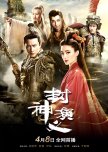
Even better than the real thing.
Investiture of the Gods is one of my less favorite Chinese classics because it is a lengthy, chaotic collection of Chinese myths and anecdotes involving gods and demons. It would not be easy to turn this tome into into a coherent and well-scripted drama with an engaging plot and proper character development. Impressively, this production pulls it off by making storyline a very, very loose adaption of the original novel. Most of the criticism highlights the plot changes and that it doesn't tell the whole story. That is absolutely fair but the end result is a vast improvement from other cheesy, incoherent and lengthy versions. As someone who is not attached to the original story-line, I am good with it.Although released in 2019, this drama was shot in 2015 and has struggled with censorship - yeah even ancient uprisings/regime change is not a popular topic with the Chinese censors. Update: Initially only 56 of the intended 65 episodes were aired but at this point, all 65 episodes have been released. It is a quality production and the for early viewers, it is well worth going back to watch the last 10 episodes in full. The all-star cast includes Luo Jin, (a very young) Deng Lun, Wang Likun, Yu He Wei and Zhang Bo. They were awesome together and it was quite evident from the rapport between the characters that they had big fun filming this. It is obvious from the CGI, sets and costumes (albeit beautiful) that this is from an older vintage than the more polished 2019 releases but it also doesn't suffer from the excessive filler disease that is plaguing the latter.
The story recounts the reign of the evil King Zhou of the Shang dynasty (an early Chinese dynasty); a time during which allegedly both gods and demons still walked among man. He was a tyrannical and decadent ruler who inflicted great suffering on his subjects under the undue influence of his favorite consort Daji. Daji is said to have distracted him from affairs of the state and exhorted him to acts of great cruelty. Even the heavens intervened and Jiang Ziya was actually an immortal tasked to raise an army of heroes to defeat this evil king. Many lives were lost in King Zhou's overthrow and these heroes were memorialized as gods in popular folklore. The novel likely emerged as a romanticized account of their epic struggle where gods and demons fought alongside mortals on both sides of the conflict. The drama very broadly sticks to this overarching plot but is creative and loose with the details around how they got there.
Yang Jian (Luo Jin) is a half immortal child born with the Third Eye predestined to cause the down fall of King Zhou. Lord Su conceals and raises him in his household as his foster son alongside his daughter Daji (Wang Likun). The young Yang Jiang and his foster sister Daji, who is renown for her beauty and kindness, are in love. This is one of the major departures from the novel, where Daji and Yang Jian barely intersect. In order to save the lives of her family and their people, Daji forsakes all to enter the palace as a concubine but they are all slaughtered anyway. Grief stricken and vengeful, she vows to make King Zhou and his empire suffer. She sells her soul to the evil thousand year old fox spirit (Deng Lun) in exchange for his aid. Wang Likun's Daji was masterful from her transformation from an innocent young girl to the ravishing, cruel and manipulative temptress that brought down an empire. I was stricken at the barely concealed loathing and sadness in her eyes when she seduces her worst enemy; I prayed she could suppress the hatred and the evil that was consuming her; I was repelled by her indiscriminate and breathless cruelty. Throughout she has sad and angry eyes and she clings to the memory of the person she once was. I was wowed by her acting. The young and yet undiscovered Deng Lun pulled off the role of the evil fox spirit who is Daji's only confidante with great relish and panache. They had remarkable onscreen chemistry - as she lost her soul he found his when her cause became his. Even though Luo Jin is technically the male lead his role of loving Daji unconditionally from afar didn't leave much scope for character development. So Deng Lun stole his thunder a bit on this one.
While Daji's scenes are mostly quite intense, the rest of the drama is somewhat irreverent and littered with comic relief. Yu He Wei's Jiang Ziya is the glue that pulls everything together this character absolutely rocked! He is kind hearted, a bit goofy, naive and unambitious immortal that is banished to the mortal realm as punishment and is tasked with investing or martyring the gods. His mortal identity is as a hapless noodle seller with a terrifying termagant of a wife and a lovely daughter. He takes Yang Jiang and Jifa as his first disciples and together they gather the rest of the immortals as they prepare for their fated mission to topple a despot. While falling safely short of slapstick , the camaraderie between Jiang Ziya and his family and disciples had me howling with laughter. Although some the comic moments dragged a little bit at the end, it was very bearable. It makes such a difference to watch something with such a confident, experienced and well-rounded cast. Even the villains were well cast and really captured the spirit of their characters, especially the evil fox spirit and King Zhou. This was truly a fun drama to watch - it has good vs evil, gods, demons, some romance, some bromance, love, hate, friendship, honor, loyalty - it made me laugh as hard as it made me cry. I enjoyed this so much I kept putting off watching the last episode because I didn't want it to end. I am not sure why this drama didn't get higher ratings but I suspect it was some combination of the plot changes, that it looks a bit dated and the fact that there was a long gap before the last ten episodes were finally released. Undoubtedly the humanization of Daji may have also been controversial - after all Daji was one of the most bloodthirsty villains in Chinese history and literature.
Was this review helpful to you?
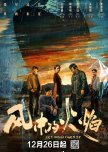
A half truth is a whole lie.
风中的火焰 or Flames in the Wind is a slow paced, Northeastern suspense thriller in a similar vein as 2023's hit The Long Season. It is set in a a desolate mining town in Ningxia where time moves slowly and the future looks bleak. After graduating from high school in 1994, three childhood friends are chomping at the bit to escape from their dead-end town. Both Liu Bai and his girl Mei Wei are university bound, if they can somehow find the funds to make it work. The less academically inclined Lei Fugui means to work his way up in the world. One night, they find themselves at the wrong place at the wrong time and become entangled in a secret that changes their lives and sends them down divergent paths.Ten years later, as the town is being relocated, fate draws the three friends back to the town they had tried so hard to leave behind. A burnt corpse is dumped outside the police station. It reminds veteran cop Chu Zhi Qiang of a cold case that shook the town a decade ago. He must convince Zhang Tao, his new captain to relook at the case with new eyes. Their investigation reopens old questions about what exactly happened that one night so long ago. Nobody really knows the full story; everyone's account is some combination of their own version of the truth and speculation. But a half truth is a whole lie and thus narrative skilfully builds a compelling case against each of the suspects based on their half-lies.
While the narrative builds tension masterfully, this is one of those suspense thrillers where there is no criminal mastermind or genius crime busting cop; it is just about bad luck, worse decisions and human tragedy. What makes it superb is the acting; it is so authentic and raw that I deeply empathised with the characters' struggles, motivations and imperfections. Jiang Qiming never disappoints and his portrayal of Liu Bai as an enigmatic, still waters run deep kind of character anchors the narrative. Underneath the surface lurks so many complex emotions; guilt, anger, duplicity, desperation, love-hate, regret; all conveyed with nuance and micro-expressions. I was surprised by Yang Caiyu's Mei Wei. I thought she was just a pretty face playing a pretty face and I disliked Mei Wei's selfishness and sense of self preservation from the get go. But as she reveals her vulnerabilities, I felt terribly sorry for this coal miner's daughter who was born in the wrong town and her thirst for a better life. I also could see why the equally mercenary Fugui preferred a much simpler woman to such a complicated one.
Where this drama stumbles is in the pacing, the overall plot logic and the ending. The storytelling is well paced and riveting until the final 4-6 episodes, where the final denouement is delayed to linger too long on Zhang Tao's boring marital and personal issues. Plot logic is an issue from the start as this drama is helmed by a Taiwanese director that is clearly unfamiliar with China's legal framework. Some of the issues Chinese netizens highlight is that in that kind of town, a security guard is effectively deputised as a policeman when it comes to enforcing the law on premises. The legal framework is also depicted as a very harsh one that doesn't take into account mitigating circumstances including self-defense and hands out inequitable sentences that don't distinguish between murder and manslaughter. After the fillers, the ending felt anti-climatic, incredibly sad and unnecessarily cruel. On some level it doesn't matter because this is really a character story that delivers in spades. On some other level, it left me feeling somewhat dissatisfied because there was no justice or closure, just a legal process. I do highly recommend it for the acting but I cannot rate this better than 8/10 because the plot is unworthy of this cast.
P.S. Leslie Cheung's iconic 1990s Cantopop hit The Wind Blows On 风继续吹 perfectly captures the ethos of this story.
Was this review helpful to you?
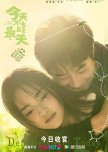
Death Proof.
This is a good but very dark comedy, one that I am pleasantly surprised to see in a Chinese production. Although with some modification, this is an obvious knock off of a fantastic but much darker Western production that many are likely to be familiar with. I don't have a huge problem with that and must applaud the effort to localise the story and tone it down for Chinese audiences. That said, it is an incredibly dark theme and at times the macabre gallows humor accentuates rather than distracts from the underlying despondency.Mi Chong is an introverted, anti-social young man who can just no longer be bothered to live. He meticulously winds up his affairs and plans his exit but is rudely interrupted by a drowning girl, Zhi Liao. Zhi Liao is his polar opposite, a bad-ass, extroverted and rebellious girl who is nothing but trouble. As he gets reluctantly drawn into her affairs, the hapless Mi Chong cannot seem to be able depart in peace; all of his efforts to do away with himself are comically disrupted. As he gets swept up in a whirlwind of danger and whacky mis-adventures that seem to plague Zhi Liao, he begins to wonder if he suddenly became death proof. While they go on the run together, this unlikely couple starts to recognise they are each other's mutual salvation. As their enemies encircle them, is the final irony that Mi Chong ends up fighting to save his life rather than end it?
Most of the time the whacky plot hits the right notes in terms of dark humor, irony and quirkiness. That said, there were also many times I found nothing funny about the depth of Mi Chong's despair and I am surprised something this dark got pass censorship. And I was not satisfied that Zhi Liao does not have the slightest inkling what Mi Chong was going through. It is a big flaw in the relationship design, the fact that she never comes to appreciate how disturbed he was. While the actress Vivienne Tien did a good job overall, she overacted notably in the ending arc and her rage and anger failed to move me. Although it became clear that they grew to trust and rely on each other, the chemistry between the couple didn't change enough to convince me that the dynamics turned romantic. The surrounding cast was unexceptional with some cringe performances, notably Zhi Liao's brother. This is clearly a modest production but overall a uniquely enjoyable, quirky short watch.
My rating for this is a 7.5 for a delightful attempt at dark comedy. It still has rough edges and the wit and humor in places veers too far off to the slapstick and does not match the wit, audacity and sheer magic of the drama it obviously drew its inspiration from. Where it does exceed it is that it closes with a very positive message about life, how it should be lived and how not to let the past define the future.
Was this review helpful to you?
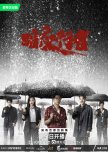
The Dark Path.
Day Breaker is a chilling undercover narcotics cop thriller that is part of iQiyi's 2022 Light On Series lineup. The drama is set in the fictional Hua City in a lawless Southeast Asian nation that bears an uncanny resemblance to Thailand. In this made-up world, the country is overrun by drug cartels and the police force is under resourced and susceptible to corruption. This drama has won high praise but it is one that must be watched with eyeballs glued to the screen due to the intense and elaborate plot with myriad twists and mind benders.Luo Xiang is an undercover narcotics cop pretending to be a mole in a local drug cartel. A planned takedown of a major drug deal goes horribly awry, apparently killing Luo Xiang. He re-emerges five years later as Chen Mo, a taxi driver who is tasked by Liao Yongjia to assume the identity Luo Xiang and reunite with the cartel. Li Yifeng really impresses in this role as someone juggling multiple identities while walking on the edge of discovery. His Luo Xiang has lived a lie as Chen Mo for so long that it is not clear he knows what his reality is, much less his former lover Su Qingzhu or his violent, jacked up cartel brother Longge. Luo Xiang's fascinating and oddly genuine bromance with Longge recalls Li Yifeng's iconic and manipulative performance as double agent Chen Shen in Sparrow. One of my biggest disappointments with Day Breaker is how this relationship was cheated of a satisfying denouement. While not a romance, the subtle longing and painful chemistry of the unspoken behind Luo Xiang's lies in his interactions with Su Qingzhu adds another layer to Li Yifeng's outstanding portrayal. Unfortunately this is another less than great role for Song Yi as Su Qingzhu is another character that is short changed at the end.
Both Feng Delun and Gong Haibin put in highly praiseworthy performances as Liao Yongjia and Yu Shenghai, Chen Mo's handlers in the undercover operation. In a cartel infested place like Hua City, everyone has a price and is forced to walk down the dark path, it is just a matter of to what degree. Thus as Chen Mo watches them wondering if either or both of them were moles that sold out Luo Xiang years ago, they are also testing Chen Mo to see if he is really Luo Xiang. The interplay between these three core characters as their stressors and motivators are revealed is the best, most intense part of the drama. While all three characters delivered riveting performances, it is Gong Haibin's Yu Shenghai that surprised and moved me the most and made me experience everything from rage to pity.
They are too many rival cartels in this drama and too many drug lords. Only two of them - Longge and Song Cai are multi-faceted and interesting. Longge is the ultimate outrageous fictional character, gruesomely and unnervingly violent and bizarrely comical at the same time. His wild affection for and trust in Luo Xiang clouds his survival instincts and innate shrewdness. There is an unpredictability in each of his outbursts that had my heart in my throat many times. Song Cai is also a complex cold blooded killer with his own code of conduct and many moments where his sentimentality and humanity pokes through. Both are too cursorily dealt with and sidelined in favour of less interesting villains.
While A-Xi is adorable and has some really funny scenes with Chen Mo, they were too few and far between. In general, humor is not well used to diffuse the tension in this overly convoluted plot. The drama could have ended at a climax at the end of Yu Shenghai's arc. Instead, the final two episodes rush through a contrived flash bang ending that relies on poorly fleshed out final villains, unnecessary twists and shocking but unworthy outcomes for good, smart characters. While it doesn't completely ruin the drama, this plot demands too much attention for it to sag like this at the end. Thus I must reduce my overall rating from 8.5 to 8.0 but I can still highly recommend it to fans of this genre.
Was this review helpful to you?
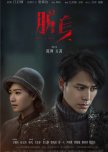
A kiss is just a kiss.
This drama is set in 1949 during the prelude to the Communist Party of China's descent upon Shanghai the most strategic city in China at the time; which the nationalist Kuomintang had vowed to defend. The loss of Shanghai paved the way for the CPC to sweep into power and the rest is history. Given this backdrop, it is no surprise that this drama is often mischaracterized as a spy thriller. And certainly while espionage is a prominent feature, it is not at all what this drama is really about. It is much more a slice of life drama that explores the social economic challenges and shifting political ideologies that affects friends, families and lovers at this great inflection point in modern Chinese history.I normally heartily dislike dramas set in tumultuous times like this because one cannot realistically expect happy outcomes. So I put this off for the longest time even though I am a huge fan of Chen Kun. But to my surprise, I enjoyed this drama almost from start to finish. The drama deftly avoids being melodramatic or maudlin by telling the story as a witty and intelligent dark comedy; effectively masking the sad, somewhat cynical undertone. I laughed my head off at the comical antics of the flighty widow who tries to turn back time with her first true love, a married man who is clumsily both tempted and terrified by her. It was only much later that it struck me what an ironic and cruel trick fate played on them and their families. Beyond Chen Kun, this drama is well cast with actors with excellent comedic timing.
The newly widowed Huang Liwen (Wan Chen) encounters Qiao Zhicai by chance as they both return to Shanghai. Having just lost her husband, a communist agent, Liwen tries to stay connected to him or perhaps give meaning to her loss by embracing his cause. Qiao Zhicai on the other hand is a a street savvy rogue and a bit of the black sheep of his family who ably navigates through the hyperinflation and shortages during those chaotic times. Their antagonistic initial interactions and misunderstandings blossom into a touching friendship and they become increasingly entangled into each other's lives. Together they try to protect the work of Qiao Lijie, Zicai's identical younger twin and a brilliant nuclear physicist. Their activities invite the scrutiny of the brutal secret police, putting them and their families in harm's way.
Where this drama shines is in its satirical portrayal how the main characters respond to provocation, conflict and deprivation. On the one hand, the drama mockingly lays bare the shallower, superficial and baser human traits of many of the characters and then redeems them by actions that also reveals their capacity for good. This darkly humorous depiction of familial bonds, sibling rivalry, love and betrayal as well as loyalty and friendship is vivid, hilarious and wistful. The overarching plot however will not satisfy true spy buffs although there are some thrilling, suspenseful moments and twists. It amounts to little more than a bunch of rather amateur spies pitted against a bunch of equally incompetent villains and making huge sacrifices for a mission that is ultimately of dubious historical significance.
I cannot praise Chen Kun's stellar performance in this drama enough. He pulled off both twins with such different personalities so convincingly I really believed there were two of them. Some of my favorite moments were when the brothers switch places - when Zhicai pretends to be Lijie he gives you the barest glimpse of Zhicai's concealed personality and vice versa. That is incredibly difficult to pull off and I don't believe I have ever seen it done better. I ended up loving both brothers and to me, Qiao Zhicai has become an all time favorite drama character. On the other hand, I found Wan Chen's Huang Liwen somewhat lacking. To be fair, it is a complex, messy role - a widow who is struggling to find meaning in her loss and existence. But she never convinces that her zeal for her cause is grander than love or friendship or even life itself. And she needs saving all the time. She only has three expressions - woebegone, helpless and cold. For her, a kiss is just a kiss; a means to an end with little true passion. I find her feelings for and attitude towards Zhicai unfathomable and frustrating. I don't think that is what the writers intended. Although she almost redeems herself at the end, I still find her unworthy of the sacrifices and risks Zhicai took for her.
For me this is an 8.5 that would have been a 9.0 if a better actress played Liwen. Nonetheless, I very much enjoyed the story and dark humor - it is very rare to see it done so well in c-drama. I can highly recommended watching this even though as a consequence, I suffered a major relapse and started cyber stalking Chen Kun again.
Was this review helpful to you?
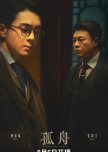
Strong on character but short on plot.
A Lonely Hero's Journey is about a young man's brave and lonely resistance to Japanese occupation. It is set in Suzhuo in 1941, just four years before Japanese forces withdrew from China. At the time, Suzhuo was administered by the Wang Puppet Regime; which was formed by a faction of the KMT that defected to the Japanese. The Wang Regime called themselves peace seekers and didn't have much authority but are regarded as traitors in history. While Suzhou was not the epicenter of resistance against the Japanese, it is a gorgeous and culturally significant historical city in China. This drama highlights the scenery, architecture and culture of Suzhou, including authentic famous Suzhou ballads. Its not your typical highly trained spy vs spy espionage story but rather about the defiance of ordinary people.Gu Yizhong is a Western educated architect and the young master of the prominent and patriotic Gu family in Suzhou. On a rescue operation went awry, he gets framed as a Japanese traitor and is isolated and condemned by friends and family. He infiltrates the Suzhuo Secret Service station run by Zhou Zhifei to find out who the real traitor Cell 8 is. Zhifei of course knows who the real Cell 8 is and doesn't trust him for one moment. Zhifei and Yizhong are parallel characters that at a high level, share a common hatred for the Japanese. As individuals they are pushed to make difficult choices at pivotal moments of their lives. To survive they both have to be flexible; sacrificing a father, or a a son and their first love. Somewhere along the way Zhifei lost himself and became corrupt whereas Yizhong manages to hold on to his beliefs. In Yizhong, Zhifei sees the better man that he could have been but is not. In the guise of a mentor, Zifei goes after him like he is exorcising a ghost; destroying all that Yizhong values to bring about his moral downfall. Zhang Songwen is compelling as this selfish, dark and diabolical character, who occasionally allows glimpses of his lost humanity to shine through in his dealings with the two women he loves, his son and his mentor Mr Li.
This drama is very well cast and in addition to Zhang Songwen, is anchored by impressive portrayals by veteran actors Zhang Fengyi and Zhang Yao. In fact I think Zhang Fengyi's Gu Xixing stole the show. The drama starts to go downhill when Xixing exits and completely falls apart after Ou Xinping exits. The younger cast also delivers credible performances against the older actors. At times, Zeng Shunxi's portrayal lacks intensity and could be nuanced with inner conflict when it comes to how he feels about Haimo and Ruotong. Instead, he gives us nothing there so the way they ended left me scratching my head.
One of the best features of this story is how strong all of the women are in their own ways. Ou Xinping is not just a survivor, she is a killer with immovable convictions. Zhang Haimo is cool headed and calm, someone who is motivated by personal connections and loyalty rather than ideology. Unfortunately Haimo's character is destroyed after her walk away is walked back almost as an after thought to try to salvage the shipwreck of a storyline. This is Chen Duling's best role to date and I must commend her effort in even matching the lip movements of the very hard to sing Suzhou ballads. At sharp contrast is the passionate Xiao Ruotong who is far more emotional and willing to sacrifice for her ideals. Wang Yuwen's acting feels very genuine, evoking a moving picture of a young girl somewhat overwhelmed by the tide of history.
Despite wholehearted performances from the cast, this drama is strong on character but short on plot. The plot arcs lack logic and don't hold up well against close scrutiny. It is debatable whether Yizhong needed to make such immense sacrifices to isolate himself as a lonely boat that infiltrates the Suzou Bureau. His codename 孤舟/Gū Zhōu or Lonely Boat is too close a homonym to his surname Gù/顾 he may as well advertise that he is the CPC spy. The identity of Cell 8 is too obvious, diminishing the sense of suspense and is uncovered without much help from him. I was ready to fling my wine at the TV when the enemy simply allows Yizhong to walk away with the only key piece of military intelligence he obtained because he shamed his country for occupying China! After Japan lost WW2, it was absurd that Zhifei still stuck around simply to try to frame Yizhong rather than fleeing like the rat he is. But I guess in these kinds of stories the bad guy doesn't get to sail off into the sunset with his ill gotten gains. This is one of those dramas that can only be enjoyed if you watch the character stories and completely turn off your brain when it comes to the plot.
Even though this starts well and the acting is good, it starts going downhill just before the halfway point. I can only recommend watching this if you are a fan of any of the main actors or if you are interested in Suzhou culture. If not, there are too many better Republican spy dramas out there with tight and suspenseful plots. My overall rating 6.5/10.0.
Was this review helpful to you?
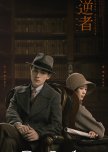
The Spy Who Loved Me.
This espionage thriller about the making of a communist spy begins in 1936, a pivotal year in modern Chinese history for both then ruling Kuomintang and the rising Communist Party of China (CPC). The look and feel of this Republican era spy drama from the muted palette to the understated characters to the way even action scenes are shot is markedly different from its flamboyant, glamorous and absurdly bullet proof peer, The Disguiser. What I like about The Rebel is the realistic portrayal of spies who are much more like George Smiley than James Bond. None of the main characters have deep political or ideological convictions beyond a burning desire to expel the occupying Japanese forces from China, thus their allegiances and motives are easy to understand and relate to. The dumbing down of the competing ideologies and political factions of the day however gives the overall impression of a lack of substance that is at odds with how seriously this drama takes itself. And that is my biggest gripe: yes, those were chaotic, stressful and dark times and spying is a serious business but does it have to be so completely and utterly lacking in wit and humor?The drama opens in a thrilling and suspenseful way with the arrest of a CPC operative by Chen Moqun, the head of the Shanghai district of the Fuxing Club, which is the Kuomintang's secret service. Together with his young protege Lin Nansheng, they use psychological warfare to turn him and use him to try to weed out the Mailman, a long hidden spy in their midst. Thus begins a chilling, suspenseful cat and mouse between two equally matched spymasters trying to out manoeuvre one another. This was by far the best arc of the drama, anchored by masterful performances by both Wang Yang (Chen Moqun) and Wang Zhiwen (Gu Shenyan). This is one of those rare dramas where the villains steal the show and on many levels they are more cunning, more ruthless and more capable than the protagonists. Chen Moqun is by far the, best most interesting character and the only one that is written with some humor - a complete sociopath, terrifyingly intelligent, flamboyant, suspicious, foolishly blinded by Lin Nansheng's competence, a surprisingly reluctant traitor and a wild party animal! Both lead actors are completely upstaged by the veteran actors for most of the drama.
I am a huge fan of Zhu Yilong and it is clear from how gaunt he looks and from the intensity of his acting that he really poured himself into this role. And he is a terrific actor so it is not to say that the role is not well acted, there are some really good moments. But overall Zhu Yilong delivers a cautious interpretation of the character and one that is not noticeably differentiated from his past roles. He has the most incredible, expressive eyes that together with the tiniest facial muscle movements, can convey an incredible range of emotions and in this case, way too many emotions. Zhu Yilong's interpretation of the character is more fitting for someone who accidentally and reluctantly becomes a spy but Lin Nansheng is a young man that voluntarily joins the spy academy and graduates practically at the top of his class - he should be more cold hearted and have a better poker face to begin with. As much as I appreciate seeing how events and relationships reshape his values and ideals over time into burning conviction, it is better to have to occasionally guess at his emotions rather than to see everything written all over his face. It is telling that later in the drama when he matures into a colder more inscrutable spy, they cover his eyes with tinted glasses to stop them from spewing his guts. His journey is portrayed as very lonely and intensely introspective; so much so that he doesn't seem to connect with most of the main characters. Thus when he mourns their loss, it doesn't always resonate.
Zhu Yizhen starts out as an archetypal character for this genre - a passionate young student CPC member that is perplexingly inspired by Leaves of Green, Walt Whitman's greatest, heavily democratic works. I don't mind the spy who loved me trope so I was really looking forward to watching her turn Lin Nansheng, recruit him and them work together as a kick ass spy team. But unfortunately it doesn't quite play out that way and she doesn't become the strong female lead character I was looking for. She remains pretty much a passionate, reckless amateur and damsel in distress that needs saving all the time. As much as I like that all of the CPC spies are written to be very fallible in the vein of John LeCarre's spies, she really takes the cake in terms of incompetence. What I find most unbelievable is she falls for the same grift twice! The only mission she manages to complete successfully is the final one. Tong Yao's portrayal of this character is textbook but bland and forgettable and her frequent blank stare with lips slightly parted gets really old very quickly. There is no spark between her and Lin Nansheng so I never bought into their rather pedestrian love story. Lin Nansheng's relationship with Lan Xinjie is deeper, far more complex, better developed from many dangerous missions and much more moving.
The first arc of this drama is everything you want a spy thriller to be. Each progressive arc is less good and they don't transition that well, leaving a feeling of anti-climax. The latter half becomes noticeably less tightly written and loses suspenseful intensity. Characters start popping up out of the blue from nowhere whenever someone needs to be rescued. Lin Nansheng's classmate has a particular knack for showing up at the right place at the right time. In order to advance the plot, many of the most important characters get dumbed down to be rather cursorily written off to make way for Lin Nansheng to step up. I didn't like how some of the best most interesting power dynamics between Chen Moqun, Gu Shenyan and Wang Shian fizzle out without coming to a climax, a moment of truth and closure. Thus when Lin Nansheng comes of age, he isn't even going up against truly worthy opponents and there is no psychological thrill. The last arc is the weakest, it is too long of a time jump, deviates into patriotic tropes, gratuitous sacrifices, leaves open threads and like most of the arcs, comes to an anti-climatic and very predictable end.
If I have to rate just the first arc of this drama, it is at least an 8.5 or a 9.0. Unfortunately the storytelling doesn't hold up and the second half is at best a 7.5-8.0. I really dislike dramas that fade at the back half so I rate this at 8.0-8.5. I would also note that I have read and watched a lot of amazing spy thrillers so I tend to be tougher on this genre.
Was this review helpful to you?
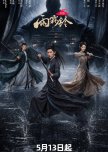
Purple Rain
Dusk settles with a tinge of red bleeding into the darkening blue skies, and purple rain weeps over the hilly, undulating landscape—foreshadowing bloodshed. On this rainy jiāng hú night, dangerous men seek libation and shelter from the storm at a remote inn, apparently at ease but with weapons close at hand. A harmless exchange rapidly escalates into violence—the loss-of-life-and-limb kind of violence—in the blink of an eye. Linglong, a young lady fleeing marriage and thirsty for adventure, bravely intervenes to rescue a mute boy and my dog. An inscrutable lone swordsman, his chiseled features half-hidden by a dǒulì (斗笠), watches impassively. When he enters the fray, he is at a disadvantage—injured and far from invincible. Yet the lithe, latent power and efficiency in his motions convey that he is still not to be underestimated. The stage is set, and the stakes are real. I was hooked—and not just because my dog opened the show.Zhan Zhao Adventures is a thrilling and atmospheric old-school mystery wuxia. The melancholic, rain-swept opening reflects the Chinese title 雨霖铃 / Yǔ Lín Líng (Rain Bells), a classic Song dynasty ci poem about Emperor Xuanzong's grief-stricken flight during the An Lushan Rebellion—of mournful carriage bells ringing in the rain, reminding him of his beloved consort Yang Guifei. In the context of the drama, it evokes the political intrigue and struggles Zhan Zhao faces as he weighs justice for his lost friend against duty, and the cost of being a hero in a flawed system. The drama is adapted from fanfic writer minifish's reimagining of the beloved classic Qing dynasty wuxia The Seven Heroes and Five Gallants (七侠五义, Qī Xiá Wǔ Yì), featuring the core heroic ensemble that helps Judge Bao fight corruption and solve cases. In minifish's alternate universe, Judge Bao remains firmly offscreen; the story hones in on Zhan Zhao and Bai Yutang's famous rivalry, sidelining and friend-zoning Ding Yuehua. The female lead, Huo Linglong, is a minifish creation.
This is an action-oriented, largely plot-driven story, and on those fronts, it delivers spectacularly. Zhan Zhao teams up with Linglong and Bai Yutang to unravel a deeply entrenched conspiracy that has spun a vast web of influence across jiāng hú's most influential sects and corrupted the nation's most important bureaucracies. Together, they must discover and disarm the Four Divine Lords, who each spearhead one leg of the conspiracy and operate semi-independently to avoid exposure. While this kind of court intrigue plot has been done before, and the final villain's motive lacks depth and gray morality, his power play is well structured to cover the crucial military, financial, civil, and martial aspects. Though not overly convoluted, some character digressions in the middle arcs distract from the overarching plot.
The action is the drama's strongest feature—old-school, classic martial arts choreography: grounded, fast-moving, fluid, and intense. Everything I expect of this genre and more. The sharp contrast between Bai Yutang's wildly aggressive, hard-hitting, and tricky combat tactics and Zhan Zhao's more restrained, composed, and defensive approach is immediately visible. Yang Yang's prowess and finesse at pulling off fantastic stunts himself in long, continuous fight sequences has won wide and well-deserved praise. I just want to highlight that Fang Yilun held his own in a way that also impressed me. Zhang Ruonan is the weak link, with her heavy use of body doubles and unconvincing, floppy, wobbly fight sequences. Less would have been more.
Where the narrative stumbles is in the character arcs—they are not that well written and weigh on the pacing of the plot. While I enjoyed the camaraderie and spirit of adventure among the trio, Linglong strikes me as a rather aimless character fleeing an unwanted marriage with no goals or motivations of her own. While romance shouldn't drive the plot in a wuxia, I wouldn't have minded if she tagged along simply because both her and Zhan Zhao's hearts were stirred. Bai Yutang is an opposite character to Zhan Zhao, whose core strength and fatal flaw is how he colors outside the lines. His is the more interesting role, and I would have liked to see more of his famous rivalry with Zhan Zhao before they fell into such an effortless bromance. Unfortunately, both his and Linglong's backstories are not that well told and are clumsily integrated into the middle plot arcs. The narrative fails to sell both Bai Yutang's connection to his brother and Linglong's to her aunt/gūgū. The supporting roles were mostly miscast—I could not connect the child actors with the adult actors' grief and devastation. The narrative digresses too long into their moping, Linglong and Yutang's conflict felt contrived, and the twists were overly convoluted in the Jin family/poison arc.
From the start, Zhan Zhao is already a fully realized character, so this is not about a hero's journey. The narrative heavily leans on the Chinese audience's deep familiarity with the character and only touches upon Zhan Zhao's origin story in the final arc, making his ethos difficult for international audiences to relate to. Yet the production's claim that only Yang Yang could have pulled off this role is no exaggeration. Beyond his ability to deliver technically flawless fight scenes, he simply looks the part of that solitary, chivalrous 大侠 (dàxiá)—the knight-errant who sticks to his ideals in the face of grief and extreme provocation. That said, while his acting continues to improve, Yang Yang doesn't quite convey the character's inner layers. This is partly a script issue, where too much lip service is paid to the ideal of legal justice as opposed to vigilante justice. It is all tell, not show. Judge Bao doesn't appear, so we never get to see Zhan Zhao's legal justice actually work onscreen. This leaves the false impression that justice was not served and the bad guys won. In this, the finale message left me even more confused—for it seemed to make the case for street justice instead.
All that said, I enjoyed the action-packed finale. Even though it wasn't the best fight scene, it was pretty damn good. There were some tears, some fears, its share of good and bad deaths, and a thought-provoking kind of justice. Most of all, it respects audience intelligence and is quite clear without quite spelling out everything.
Overall, this is one of the best classic mystery wuxias I have watched in years and deserves an 8.5/10 from me.
Was this review helpful to you?


