

 76
76 328
328 9
9 1
1 4
4 12
12 2
2 3
3 2
2 1
1 5
5 10
10 1
1 1
1 2
2 2
2 3
3 2
2 2
2 2
2 1
1 1
1 8
8


Turn back the clock.
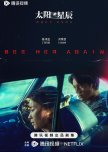
See Her Again or Sun and Stars/太阳星辰 is an riveting walk down memory lane. It is written in the vein of the old school Hong Kong cop genre that serves up a dash of time travel with a great deal of suspense and waves of nostalgia. The narrative unfolds across two timelines; first in 1993 pre-handover Hong Kong and then in 2018; over a decade after the end of British colonisation. The ethos of the story is a yearning for bygone times; contrasting the Hong Kong that was then with the Hong Kong that is now. What I like most about it is it doesn't suggest one is better or worse; in fact it depicts Hong Kong as different and yet somehow still the same. It is a drama that should only be watched in Cantonese because Cantonese colloquialisms are uniquely Cantonese in a way that simply won't translate into Mandarin even when the words are exactly the same.This is by far William Chan's best role to date. He is truly in his own skin in his native Cantonese as a hard-boiled Hong Kong cop Yeung Kwong Yiu; a dedicated officer who has no problem bending the rules to catch criminals and gangsters. After a devastating fire, the traumatised city is further terrorised by a series of brutal murders. As the hunt for the serial killer intensifies, Kwong Yiu struggles to find time for his wife and young daughter who also need him. In the midst of a high speed chase hot on the heels of the killer through the maze of 1990s Hong Kong's crowded, neon-lit streets and claustrophobic buildings, Kwong Yiu falls down a time tunnel. He finds himself flung twenty-five years into the future, to an unrecognisable Hong Kong. He is shattered when he discovers that life went on without him and not in the best of ways. The killer is still at large and may have resurfaced after many years. He must convince his old friends on the force to include him in their investigation in an inter temporal quest for justice and a desperate gamble to turn back the clock.
Despite the gritty noir flavour, the slick camerawork, the vivid Hong Kong images, a flawed antihero cop, morally complex characters, blurred lines between good and evil and the evocative soundtrack, there is something missing that I can't quite put my finger on. The camaraderie and banter between the cops just doesn't hit the right notes. The sarcasm, dark humour and cynicism that is belied by actions that makes their bonds feel lived-in is missing. Maybe the huge time leap made some of these interactions feel a bit forced and awkward. What worked quite well however was the chemistry between William Chan and Cya Liu and the moving way in which their relationship evolved. The mature, patient yet puppy dog-like hopefulness in William Chan's eyes as his Kwong Yiu tried to break through Hoi Ching's cold and disapproving facade made me want to laugh and cry at the same time. I really enjoyed how they made this dislocated and emotionally charged father-daughter connection progress over time. I rooted for Kwong Yiu over foster father Chan Tsz Tsun (Stephen Fung) all the way in terms of worming his way back into his daughter's heart.
The high-stakes suspense plot is tight and unfolds at a thrilling pace with a few good twists and an unexpected ending. The antagonist roles were superbly acted even though some of their motives were too extreme, overly melodramatic and too ruthless with high collateral damage for me to feel sorry for them. The fast paced ending left little room for regrets, recriminations and sentimental adieus, which is a relief. Overall a very enjoyable nostalgic watch even though the narrative doesn't quite capture the distinctive gritty, cynical and defiant quintessence of the Hong Kong cop culture. Coming from a Hong Kong director that started out at TVB, this is a little bit disappointing. The unfathomable decision to re-record Beyond's 1990s popular hit Lover 情人, replacing Wong Ka Kui's deep and textured vocals with that of an insipid female vocalist is a crime in and of itself and reflective of everything wrong with this drama: it tried but is nothing like the real thing. I enjoyed it but can only rate this knock-off wannabe Hong Kong police story a 7.5/10.0.
Was this review helpful to you?
Rules are made to be broken.
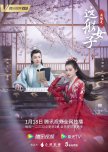
The bold and unconventional baroness Ban Hua is a one of a kind character. Her doting uncle is the emperor of Daye; her father the hedonist Marquis Jingting has more money than God; she inherited her grandfather General Ban's martial arts prowess and she has a wardrobe to die for. For her, rules are made to broken and her flamboyant devil-may-care attitude and daring exploits have the noblemen smitten and dazzled and the noblewomen choking with envy. If there is one stain on her charmed existence, it is that all her engagements go down in flames, to the amusement of the Daye elite.When the incomparable Ban Hua's path crosses with that of the elegant Rong Xia, Count Chengán, Daye's most talented and most eligible gentleman, their courtship becomes the talk of the town. The best thing about this drama is Ban Hua and Rong Xia's character design and their hilarious and sizzling interactions that light up the screen. The comedy is very well written and blithely presented by the lively cast. The Ban family is one of the most uproarious and delightful drama families I have seen in a long time. Ban Hua's biggest fan, her charming, spendthrift rogue of a younger brother Ban Heng is my favorite character. Both Guan Xiaotong and Hou Minghao hit all the right notes in their performances. Guan Xiaotong delivers a curious air of exquisite vulnerability that softens Ban Hua's imperiousness and arrogance. While Hou Minghao's Rong Xia is looks too handsome and unattainable and is so measured and powerful in a soft spoken way that he is the perfect foil for Ban Hua's impetuousness.
Unfortunately the plot does not at all do justice to the all-around strong performances by the cast. The history between Daye's aristocrat families and secret plotting that led to the Rong family's downfall is quite interesting and well conceived. I enjoyed watching Ban Hua and Rong Xia learn to trust each other and work together against their enemies. The drama would have been best served wrapping up after the take down of the villain of that early arc. After that, the plot feels very forced and succumbs to tropey, boring and contrived delusional love rival tropes. All of the progress the couple makes is undone to create unnecessary misunderstandings and ridiculous and unimaginative palace coups. I was left with the impression that the couple can't communicate or work together and is surely doomed to divorce. The second half is as boring and ridiculous as the first half is interesting and engaging. Rong Xia's character in particular is destroyed as he goes to inexcusable lengths to save his love. The character interactions are funny throughout and that is the only thing that kept me watching until the end. It is still overall a decent watch but nothing to write home about. This is overall a 7.5/10 but the first half feels closer to an 8.5.
Was this review helpful to you?
Who Am I?
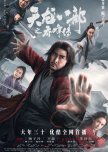
Sakra is an overly ambitious attempt to adapt Qiao Feng's arc from Demi-Gods and Semi-Devils (天龙八部), my favorite Jin Yong novel. This is a tall task and inevitably has resulted in an overly condensed adaptation that misses the spirit of the original works. It is carried by the fact that it is such a beloved story that most viewers can fill in the gaps.Qiao Feng, the magnetic chief of the Beggar Sect is accused of dastardly crimes and outed as being of Khitan descent at a time of conflict between Song and Liao (Khitan). He is evicted from his sect and the entire wulin (martial world) turns against him. As he seeks to clear his name, he encounters Ahzu, a minion in the powerful Murong household. He risks his life to save hers and discovers that like himself, she is also on a Who Am I? quest to figure out her origins. The narrative takes on too much between the rushed and unconvincing romance, solving murders and disentangling both their back stories. The ending is confusing with hurried character introductions to pave the way for a sequel that deals with the mastermind reveal and final arcs of Qiao Feng's story. This hurried rendition makes Qiao Feng little more than a one dimensional, lean mean fighting machine. It is a pity because Qiao Feng is Jin Yong's most powerful, complex and misunderstood male character.
Qiao Feng is the ultimate master of Jin Yong's epic 18 Dragons Subduing Palm martial arts technique, which employs inner energy and is used in most of Qiao Feng's fight scenes. The action scenes are almost ridiculously bombastic - Qiao Feng pulverising an entire horde of martial arts with his amazing energy blasts; gravity defying roof leaping and up close and lethal hand-to-hand combat or swordplay. Qiao Feng's showdown with the entire wulin is the most thrilling action sequence but it comes a bit too early in the movie. It is both incredulous and stupendous to see one man take on so many. I truly feared for Qiao Feng's life but what was more terrifying was the hypocrisy and cowardice of wulin. They basically cancelled a brother-in-arms who stared down death alongside them multiple times and ganged-up on him to try to kill him! I didn't enjoy the final fight scene as much - while splendidly choreographed and thrilling, it veered too far into the territory of wildly exaggerated almost superpower like flying leaps and from a distance qi energy strikes.
I watched the Cantonese dubbed version because to me, Qiao Feng will always be Kiu Fung and Jin Yong's famous lines always sound so diminished and lacking in vehemence and intensity in Mandarin. I think this is a great watch for the action scenes alone. I rate it 7/10.
Was this review helpful to you?
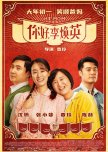
Good enough.
This is a comedy will make you cry as hard as it will make you laugh. It is a very personal, very moving tribute of comedian, actress, screenwriter and first time director Jia Ling to her mom, Li Huanying - factory worker, volleyball player and first person in Xiangyang to own a TV.I tried to watch this shortly after its release but dropped it within ten minutes because I was put off by the fact that Jia Ling chose to play herself, the then 18-year old Jia Xiaoling. In her late 30s at the time, she just doesn't look the part of a teenager so I abandoned it before I realised that nonetheless, she feels the part because she IS the part; every emotion is heartfelt down to the tiniest nuance. And of course she is who she is today because she is a funny lady, very, very funny with excellent comedic timing. Nonetheless, the criticism that the main role is possibly mis-cast is a valid one. There are some rough edges to the overall production that are very acceptable considering this is her directorial debut.
The main premise is simple, based on universally relatable mother daughter themes. Like many, I can vividly remember being 18, feeling awkward, unaccomplished, insecure and possibly a factory production run error of my lovely and vivacious mother. We have all been Jia Xiaoling, wanting to make our mom's proud, longing desperately to be worthy while dead set certain we are not. A freak of nature transports Xiaoling back to the past, where she meets and befriends her young mom and has a chance to be a part of all the most important events in her life. She hilariously and movingly tries to change her life for the better even if it means her mom ends up with someone else to hopefully have a more worthy daughter.. And in the process she movingly comes to the realisation that she was always already good enough. These are tried and true mother daughter themes that may seem to have been beaten to death but Hi Mom still manages to articulate a fresh, creative take and deliver a moving, heartfelt twist to this tale as old as time.
This is not perfect but I can happily give it a 9.0 and call it a masterpiece because it is an unforgettable movie that will make you call your mom or hug her if you are lucky enough to be next to her. After all, this humble, low budget production is only the highest-grossing movie of 2021, the second highest-grossing non-English film of all time, and the highest-grossing film by a solo female director. If like me, you haven't seen your mom for over a year due to covid, you may want to wait to watch this. But you must definitely watch it.
Was this review helpful to you?
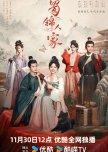
A rich tapestry that frays at the edges.
Set during Tang dynasty, Brocade Odyssey 蜀锦人家 follows Ji Yingying's journey to the top of the Yizhou silk industry as she seeks to clear her father's name and to reclaim her family's reputation as preeminent weavers of the prized Shu brocade. This drama paints a realistic picture of women's roles in feudal society and the intricacies and cut-throat competitiveness of the ancient silk trade. Her path to "having it all" is littered with obstacles, betrayals and setbacks; her triumphs come at great sacrifices; she loses her first love, a few true friends and supporters and for some time, even her freedom.This is not a light or fluffy romance drama. The main characters are dark and ambitious and some of their overlapping entanglements are messy and complex in a way that won't appal to viewers looking for more straightforward storylines. It is like a rich tapestry that frays at the edges in its over ambitious exploration of too many complicated themes. It is obvious from the start that both Yingying and Zhao Xiuyuan had ambitions that had the potential to get in the way of their relationship. While I didn't agree with Xiyuan's choice, I understood why he did it and I felt quite sad for him. While the digital face swap was surprisingly well done, I think Zhang Haowei would have better conveyed this role. What I didn't like was how when cornered, Yingying makes the exact same decision yet she had no insight from it and her attitude towards Xiyuan continued to be hard and unforgiving even though she had no real moral high ground. She just got super lucky with Yang Jinglan.
The cast is strong, and most of them are able to dub themselves and deliver commendable performances all around. It is difficult to find fault with Tan Songyun's empathetic portrayal of Ji Yingying's ambition, familial obligations and emotional conflicts. However, between her tomboyish girl-next-door look and simply dreadful styling, she does not convey the allure that draws multiple suitors, making the romantic subplots unconvincing. Zheng Yecheng really brings an exciting dynamic to the drama with his physicality and charisma. It is so rare to get such an excellent actor who is also properly trained in martial arts. The production took full advantage of this with many long, exciting, fast moving, muscular and flinch-inducing action sequences. It is a huge upgrade from all quick cuts the slo-mo posing and spinning that we normally have to make do with. I enjoyed their chemistry as a couple and how their relationship evolves organically from that of an alliance into a couple that complements each other in so many ways. Yet I wouldn't say that this is a CP that made a lasting impression on me.
Despite a solid start, this is yet another entertaining Chinese drama that self destructs in the completely unnecessary final Nanzhao arc. It was clearly meant to give Jing Chao, who is a fantastic actor, his own arc. Unfortunately, it is too late in the narrative to force the audience to reinvest in a whole new set of characters and political dynamics. I would also have preferred to see Cheng Fengze remain as a good frenemy, a business rival who valued Yingying for her talent and business acumen alone rather than turning him into yet another delusional suitor. Many of the conflicts that arise in this arc feel forced and all three main characters end up doing stupid things that are out of character. It took me twice as long to watch the final ten episodes as it did to watch the first thirty. There were also a few undeserved death that really made me want to flip tables. Even the terrific end fight scene could not make up for my dismay.
Overall, this is not a bad watch for the fight scenes alone and it is much better if you stop at about ep 30. It is thematically rich and explores female empowerment and the ties that bind in a complex and realistic way. I can rate the first 30 episodes an 8.0 but unfortunately the final 10 episodes are barely worth a 6.0 so my overall rating is 7.5/10.0.
Was this review helpful to you?
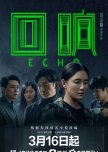
Everybody lies.
This psychological suspense thriller featuring a female hardcore detective starts out well. Ran Dongdong investigates the death of Xia Bingqing, a young woman with secrets. To figure out what happened to her, Dongdong has to piece together who Bingqing was and why someone wanted her dead. As the list of suspects in this complicated murder case grows, it is clear that everybody lies whether they are doing it consciously or not. The way Dongdong nails down inconsistencies in the various testimonies by unreliable narrators and incisively teases out the truth is riveting.Work and life collide for Dongdong when it is discovered that her husband Mu Dafu crossed paths with the victim and he had twice rented a hotel room at the likely scene of the crime. She explores the complexity of love, marriage, and fidelity in both the work and personal arena and the lines start to blur. She begins to interrogate him like a suspect. In fact, he gets the worst of it because there are no professional restraints at home. Not that he is a paragon of virtue, far from it!! He was always a bit of a narcissist humanities professor that openly indulges in deeply intimate, highly flirtatious but ostensibly intellectual discussions with professional peers and students. She was fine with it until inexplicably, she is not. Likely because they fell out of the idealistic love phase of their relationship or maybe because he stopped telling her about these women that fall for him.
I did not expect to see this suspense plot devolve so deeply into a dark exploration of marriage between a dislikable and messed-up toxic couple. Both Song Jia and Wang Yang deliver mesmeric performances as flawed, complex, egotistical, and ultimately selfish characters. I did not like either of them. In fact, there are no heroes in this story. Other than the poor kid, pretty much everyone is a terrible person. Even the victim is too much of an architect of their own fate and is not empathetic. Neither of the two parallel plotlines is satisfactorily resolved. The whodunit mystery ends up being a howdunit procedural with too many plotholes and a weak, trite, cop-out motive for the murderer. The way the relationship is resolved also leaves unanswered questions although there is closure in the sense that Ran Dongdong and Mu Dafu really deserve each other. May they live tortuously ever after.
I enjoyed this drama up until episode 10 after which it turns into something I had no interest in watching. I can see how it may hold some appeal to people who like difficult relationship stories. My rating of 6.5 is for the very mediocre suspense plot, which is what I came to watch.
Was this review helpful to you?
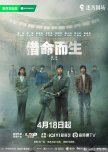
Prisoner's Dilemma
A Life Borrowed, Jie Ming Er Sheng (借命而生), an art-house drama adapted from Shi Yi Feng’s novel, marks director Lu Chuan’s bold debut in television. This 13-episode series is a moody, incisive exploration of human nature, fate, obsession, justice, and a flawed system that ensnares everyone.The story opens in a prison, its high walls and barbed wire shrouded in foggy mountains where time seems frozen. Beneath the deceptive calm lies a crushing oppression, a hallmark of Lu Chuan’s atmospheric storytelling. From the outset, the audience is immersed in a soul-destroying sense of irrelevance and extinguished hope. Subtle dark humor—rarely this well-executed in Chinese dramas—elicits reluctant chuckles at unexpected moments, weaving depth, irony, and emotional complexity into the narrative.
Du Xiangdong (Qin Hao), a top police academy graduate, is as much a prisoner in this isolated detention center as the inmates. He forms an uneasy bond with foster brothers Xu Wenguo and Yao Binbin, brilliant mechanics who insist they were wrongfully accused of a capital crime. Xiangdong’s instincts scream their innocence, and uncovering the true culprit could be his escape from this suffocating place. But an accident sparks the brothers’ escape, with Xiangdong in pursuit. Binbin sacrifices himself, allowing Wenguo to flee, while Xiangdong, blamed for the escape, embarks on a 20-year cat-and-mouse chase to redeem himself by capturing Wenguo. What unfolds is a relentless quest for vindication that consumes both men.
The drama shines in its immersive visual storytelling and stellar performances, but it falters in narrative focus. The suspense plot, meant to drive the story, is its weakest link. The true culprit is glaringly obvious, yet the convoluted unraveling of the crime and its revelation feels unnecessarily tangled. The narrative veers into a riveting exploration of the broader fallout from a miscarriage of justice—a mother’s grief, a brother’s guilt, a lover’s unwilling betrayal. Scenes like the mother’s collapse under the weight of an urn or her heartfelt blessing to Sun Yunhong to move on are devastating and unforgettable. Lin Boyang’s silent, bottomless grief, conveyed through her taut face and expressive eyes, left me in tears. Yet these poignant digressions into maudlin and melodramatic arcs derail the manhunt’s momentum. Wenguo’s journey—his escape and reintegration into society—feels like an afterthought, despite Han Geng’s surprisingly mature and nuanced portrayal.
A highlight is Shi Pengyuan’s reunion with Qin Hao (from The Bad Kids) as Yao Binbin, a young man brimming with promise. Though his screen time is brief, Binbin haunts every scene, his absence a stark presence. Qin Hao delivers another complex performance as Xiangdong, a good cop trapped by the system. His relentless pursuit of the brothers—choosing his own "escape" from the detention center over his instinct that they were wrongfully convicted — is textbook prisoner's dilemma. This turns him from a truth seeker into a blind tool of a flawed justice system; upholding the law but betraying his conscience and humanity. I felt torn between anger and pity for him, unable to forgive him though his obsession ultimately ruined his life. The shocking ending twist, while unexpected, feels like one digression too many, piling on unnecessary tragedy.
This drama dazzles with its avant-garde camera angles, dark humor, and sharp societal critiques. Its fatal flaw is overambition—too many threads dilute the whole. The non-linear storytelling and melodramatic detours sap the climax of impact. Yet, its breathtaking visuals and emotional depth make it hard to look away. I rate it 8.0/10.0, a beautiful but flawed gem.
Was this review helpful to you?
Frostbite.
The Frozen Surface is a dark and suspenseful northeastern revival mystery thriller. It is set in the desolate, melancholic northeastern suburbs of Harbin, Heilongjiang, a part of China known for its dastardly dry and freezing cold winters. The dialogue is mostly in Northeastern dialect, which I am not familiar with enough to comment on its authenticity. Despite its wild natural beauty, this area is among the slowest growing economic regions in China. The general lack of economic opportunity and the dominance of a largely industrial manufacturing base forms the general remote backdrop for this narrative. The timeline alternates between the 1990s which were very difficult times and 2005, when things are notably better but still a far cry from China's advanced coastal cities.The violent death of a crime boss and two others throws Lanhe County in disarray as various vested interests scramble to position for the fallout. There are almost too many suspects from a jilted lover, mob rivals, the nephew and heir apparent, the ex-wife and an ex-con; all with motive, means and opportunity. Police captain Guan Yu and his team investigates under time pressure to solve this high profile case. The waters are further muddied with an unexpected confession. Very much like 2023's hit The Long Season, the social commentary about the cruel times, hardships the main characters endure and the desperate, heartless and at times tragic choices they make eclipses the mystery itself.
This drama starts out very well but tries to do too many things. What anchors it is fantastic acting by Chen Jianbin (Guan Yu) and Hu Jin (Yang Si). I thoroughly enjoyed their cat and mouse and how a silent empathy developed between them. Even though some characters do bad things, I feel quite sorry for them. There are also a number of absolutely crazy, bloody and scarily violent maniacs in this drama that adds to the growing sense of dread as the plot builds to a climax. Unfortunately, the main villain's origin story isn't empathetic and they made too many bad decisions along the way to qualify as smart. Some plot points are too obvious or are revealed too early. The logic of many characters collapses into the final two episodes and the plot does not tie together tightly at the end. By then, both the director or scriptwriter's brain must have succumbed to frostbite because so many things just don't make sense or are not well explained.
This is a drama that starts slowly but builds up suspense quite well in the first half. The character stories are quite interesting but sad and they are well portrayed by veteran actors. Unfortunately the mystery part crashes at the end. As an avid mystery watcher, I can only rate this a 6.5/10.0. Viewers who are more interested in the setting and the character stories may rate it a bit higher.
Was this review helpful to you?
Gone Girl.
This is an incredibly dark suspense thriller about a family with secrets. At surface they seem like an everyday family; one whose struggles make them more devoted. Their son Wenzhou is simple and does not know his own strength when excited. His new nanny Xiao Xiu runs off for greener pastures. Convinced something bad happened to her, Chen Youxi escapes from the orphanage to seek her out. She discovers that twelve years ago, there was another gone girl from the Li household; their daughter Wenwen. She infiltrates the Li household as a miraculously returned Wenwen and pulls at threads that conceal old secrets.This drama starts strongly and moves at a transfixing pace throughout. The drama's strongest feature is that it keeps you guessing until the penultimate episode even though there are only three knowable suspects. While the story is gripping, the plot could be tighter from the mid-way point where small holes emerge. It suffers most in the whydidit behind Xiao Xiu's disappearance. The motive is not firmly established enough to be convincing. I rewatched the reveal a few times and suspect that something was cut out. I also did not like how Youxi tries to stage a confession trap again after the first one went so terribly and consequentially wrong. It is just lazy plot design although not inconsistent with the character's desperation to get answers. There are other small holes that add up to render this short of the masterpiece it had the potential to be.
What is exceptional is the characterisations and the mind-blowing acting. The entire cast delivers in spades. Mei Ting deserves an award for her ruthless, manipulative and multi-faceted Liao Suifang. The subtext behind her cat and mouse interactions with Youxi where they both knew they were on to each other is breathtaking and worth re-watching. Her conflicted feelings for Li Chengtian and Wang Chongjiang and how Wenzhou's ultimate welfare plays into it resonates. Her Suifang made me feel suspicious, angry, repulsed and curiously sympathetic. Similarly Wang Yanhui's Li Chengtian is also masterful - at face an affable, quiet, beaten man; a love consolation prize and a desperately seeking father... with an aura of hidden menace. The ties that bind this painful triangle together are so messy and yet almost inevitable. They keep secrets; deep dark secrets from one another and themselves. Between the three older characters, we see how relationships fracture over time and even the most normal people have dark sides but with different bottom lines.
Against incredibly layered veteran actors, the young cast can hold their own. I am not a fan of Dai Xu's brand of comedy but I really enjoy him in a serious role as Cheng Xu. After The Heart of Genius I had strong reservations over Zhang Zifeng but she convinces as this lost orphan hell bent on finding her only anchor in this world. But it is Du Yusen's Wenzhou - at times harmless and affectionate, full of simple childlike truths and at times scary as hell that steals the show. Guo Cheng also emerges here as a young actor to watch - his Cheng Wei is very charismatic and the way he lapses seamlessly into Guangzhou dialect adds dimension to his characterisation. The dynamics and chemistry between Youxi, Cheng Wei and Wenzhou is as light as the ones between the three older characters is dark. All the lost children in this story end up found in some way to end this sinister tale on a less dark note.
I have not enjoyed a Chinese suspense thriller this much since The Bad Kids. It is overall not quite at the same level but I can easily rate this a 8.5/10 with the acting worth that rare 10/10.
Was this review helpful to you?
When it rains, it pours.
At first glance, this is a tribute drama with low audience appeal. The topic of gaokao 高考 or national college entrance exams is already stress inducing. Throw in the pandemic and the average viewer would head for the hills. I snuck a peek because I like to keep an eye on Rong Zishan's growth as an actor. To my surprise, I was hooked from the first episode of this uplifting story about the resilience of youth in the face of great challenges.This drama is not about China's urban elite. It is set in Jinhe County, where most of the households are among the two thirds of Chinese households that are not part of the middle class. The pandemic disproportionately affected high school seniors from this class of Chinese society. Gaokao is a life changing rite of passage for them. All the hopes and dreams of their families are staked on their gaokao performance. With less resources and uneven access to the internet, online learning is less effective for many of them. The pandemic exacerbated the economic and social pressures these families were already experiencing. This drama offers some insight into why the Chinese leadership has clung to an extreme zero tolerance covid policy so different from the rest of the world.
The narrative focuses on five students of Jinhe County No 1 Middle School (Pan Xianxuan and Gao Mingyu) and Jinhe County No 4 Middle School (Zhou Bowen, Wu Jiajun and Tian Wenwen) and their principals Wang Benzhong and Shi Aihua. Because it is a small county, there are about three degrees of separation between the students, teachers, their families and the broader community. Bowen, Wenwen and Jiajun are fast friends at No 4 Middle School, where Bowen is the star pupil. He intensely disapproves of his deadbeat dad Zhao Meiren, who is charismatically portrayed by Wang Xiao. Wenwen is left to fend for herself after her grandmother passes away as her absentee parents run a business in Wuhan. And aspiring artist Jiajun suffers from the nightmare oversight of the ultimate tiger mom. They are part of an online student chat group with Pan Xianxuan and Gao Mingyu, students at the No 1 Middle School, which is a boarding school. My favorite character, Pan Xianxuan is a savvy and commercial doer who is not academic oriented. Despite his father's wealth, his is practically homeless as both his divorced parents have long moved on. And finally Gao Mingyu, the most impoverished and driven of them all whose only family is an ailing grandfather. They form a fast friendship and benefit from the care and affection of their principal Wang Benzhong, who is more like a surrogate parent to them both.
Every time I watch a drama with young actors matched up with veterans like Chen Baoguo, Wang Quanyuan and Wang Xiao,I am floored by the seamless and natural the performances all around. I feel fear for the current generation of popular actors whose flaws only become more obvious when they act across veterans because the next generation is growing up fast and there are lots of them. This cast made me invested in their stories from the get go and sharked me into enthusiastically watching a flag waving, sappy, inspirational story, the kind that I have a very small yearly quota for. The message of the story is very clear - often in life, when it rains, it pours but it is in times of hardship that we find our best selves.
While this story does carry some powerful and moving coming of age messages beyond surviving a pandemic, what I didn't like is it is a bit too good to be true. The pandemic turns every flawed character into a better version of themselves. The strong sense of community and the dedication and fighting spirit of parents and teachers can prevail over an amorphous enemy and natural disasters alike. Most of all, the pandemic didn't seem as isolating and as disruptive as it probably was and the government's pandemic control measures are portrayed as very mild. To be fair, this is not set in a densely populated community and it is during the first 200 days of 2020, during which China had effectively contained the outbreak to Wuhan. Nonetheless,, I feel there is a bit too much sugar coating and white washing in this drama that avoids the uglier, more realistic aspects of the pandemic and China's response to it. It also loses focus at times as a result of trying to acknowledge too many every day heroes from educators to health workers.
For a flag waving drama, this is a surprisingly good watch and the propaganda aspects are non intrusive. The youth aspects are well written and wonderfully portrayed. I am happy to rate this a very solid 7.5.
Was this review helpful to you?
Divide and conquer.
Qin Empire 2 or Qin Alliance on Netflix is about Ying Si or King Huiwen of Qin who reigned from 338-311 BC. More than a century later, Ying Zheng or Qin Shihuangdi succeeded in unifying the Warring States(221 BC). In an interesting parallel, Ying Si was the first of the Dukes of Qin to name himself 王/Wang or King. His more well known descendent subsequently declared himself 皇帝/Huangdi or Emperor. I watched this out of order after completing Qin Dynasty Epic, which is Ying Zheng's story and the final installation of this four part series that doesn't have to be watched in order. This review is going to be short as there is an excellent comprehensive review by @Skibbies. I will try to avoid repetition and focus on incremental observations, especially on how this differs from the final season.What is most striking is that Ying Si really had it hard. When he came into power at eighteen, his father's clan and advisors were not fully behind him. And the Qin state was not especially powerful and existed in imminent danger of being swallowed by one of the other Warring States. Survival, much less ascendency was by no means a foregone conclusion. But Ying Si was a true conqueror - cunning, shrewd and utterly ferocious. Fu Dalong's masterful performance captures the remarkable indomitable spirit of the character and the sheer enormity and necessity of the task in front of him. This makes Ying Zheng, though so much more renown in history, seem like a lesser conqueror by comparison. For by then, Qin was already a superpower where the outcome was already inevitable.
The best parts of this drama are about how with the aid of his advisor and lifelong friend Zhang Yi, Ying Si was able to prevent five states from forming an alliance against Qin. They did this by some brilliantly crafted divide and conquer strategies that involved trickery, diplomacy and outright brutal and bloody warfare. Even though I was moved by Ying Si's deep relationship with Zhang Yi, I detested all of the so called genius strategists in this show, including Zhang Yi. I just could not stand their arrogance and sense of intellectual snobbery and how vile and evil these turds of history were. Their loyalty is not to king and country but can be bought by whoever could give them the most chess pieces to play with with little respect for the sanctity of life. To them, war is just a giant chess board where they can showcase their talent to the world. In the end Ying Si prevailed over all of them not because Zhang Yi was smarter or more loyal but because for Ying Si it was a battle for survival won by blood and sacrifice. His army would have gone to the ends of the earth for him because even while he took them to victory and glory, he truly felt the loss of and grieved for his fallen soldiers.
Even though I am sure it is heavily romanticized, I loved the portrayal of Ying Si's passionate and tempestuous relationship with the wild and wanton Empress Mi. What a woman! She lived life large, loved and hated and was at the end the bravest most loyal custodian of Ying Si's legacy. The drama lost momentum for me after Ying Si's death but the final two episodes where Empress Mi was both ruthless and compassionate at the same time ends this on a strong note.
While this production looks dated and lacks the aesthetic and cinematic appeal compared to more recent historical dramas, the acting of the main characters is top notch. The telling of the story overall, especially in the art of war is well done, not overly complex or difficult to follow. I could have done without knowing so much about Zhang Yi's personal life but there were some decent moments. This an 8.5 for me largely because I cannot praise enough how Fu Dalong's Ying Si is unforgettable and everything a Qin conqueror should be.
Was this review helpful to you?
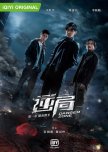
Hard core gore.
This review covers both Season 1 and Season 2 as it does not make sense to review them separately.This is a gripping and fast paced psychological crime thriller that explores the dark side of justice and how the road to perdition is paved with just intentions. In a desperate race against time with few promising leads, Captain Tan's investigative team are under intense pressure to put a stop to a bunch of brutal serial killings. Prison inmate and gifted former profiler and attorney Liang Yandong, is on trial for murder and is convinced that his case is linked to the serial killings. He persuades hungry young rookie cop Ren Fei to share information in the case with him in exchange for his assistance with profiling the serial murderer. The first season solves the first case only to reveal a larger conspiracy that intertwines with a devastating unsolved cold case.
I really enjoyed Vic Zhou's performance as the inscrutable Liang Yandong, especially in the beginning when he teases us with the question of whether his motives are benign. Among the big name cast, his performance pulls the production together as his rapport with each of the main characters seems the most natural. Sandrine Pinna also pleasantly surprised me in her ability to pull off a complex role although some of her scenes in the latter half could have been more nuanced and less forced. Although I like Christopher Lee, his Captain Tan did not really connect with me or with the other members of his investigative team. Part of the problem is that Zhu Tingdian's performance as Ren Fei is hit or miss and his character interacts the most with Captain Tan. His Ren Fei "clicks" with Liang Yandong and Teresa Daley's Ji Siqi but not so much with Captain Tan and the rest of his team. The broader investigative team's dynamics is also not convincing enough to inspire me to root hard for the "good guys" and feel pulled into their mission. To some extent, the cops in this show are dumbed down a little bit too much so that Liang Yandong can look really smart.
The plot overall is fairly tight and it fast paced, full of good twists including a hidden antagonist that reveals themselves a tad on the early side. There are some holes and some suspension of disbelief is needed but it moves so fast and is so action packed you won't have time to dwell too much on on them, which is fantastic. The ultimate villain is known fairly early on and their motives are not that convincing or well explained but there are enough other interesting characters. By pretty much the same team as the highly acclaimed and more memorable Victim's Game, I like this better as a pure suspense thriller for its better focus on a well explored big case that ties everything together and its lack of digression into social issues.
My main problem and reservation with this drama however is that it goes far beyond hard core gore. In general I am fine with dark themes and I don't get triggered that easily but what I found deeply disturbing about this drama is its heavily in your face misogyny. You will be repeatedly treated with gratuitous, extended gore images of women being tortured and mutilated. It is completely unnecessary to the plot or the exploration of the killers' psyches. To give the production the benefit of the doubt, I can tell from The Victim's Game that this team overly delights in showing off their technical prowess at detailed, realistic and almost pornographic gruesome scenes. However I cannot help but be offended and put off by the almost exclusive focus on abusing women and in such loving and repeated detail. So I am really struggling with this review and avoided writing it for quite some time. If they had toned things down (a lot), I would be tempted to give this an 8.0/8.5 but my anger at the extreme misogyny makes me think 6.0/6.5. I am just going to make life easy for myself and call this a 7.0 while acknowledging that is maybe a bit unfair. If you can get past the hard core gore, this is a very enjoyable thriller for fans of the genre.
Was this review helpful to you?
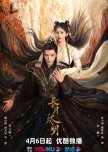
Did you ever dance with the devil in the pale moonlight?
Did you ever dance with the devil in the pale moonlight? What was it like? Did you leap into the abyss with wild abandon? Lose your heart, body and soul? Was it worth indulging in every lucious, forbidden moment? Find out all about it in Till the End of the Moon, a heart-stopping account of Li Susu and devil incarnate Tantai Jin's scorching entanglement of love, hate and misunderstanding that spans 500 years and multiple realms.In a desperate attempt to stave off the resurrection of the the devil god, a bunch of grey haired cultivators send an intrepid young cultivator Li Susu back 500 years in time to stop Tantai Jin from turning into the devil god. Yeah, you really have to hand it to these crusty old cultivators - when all else fails, they sacrifice a virgin and hope for the best! Susu assumes the identity of Ye Xiwu and is tasked to kill Tantai Jin after tempting him out of his... uhm... evil bone! I almost choked with laughter at the sheer audacity of such a naughty plot setup!
This angsty xianxia's unique premise is that the main protagonist Tantai Jin is a fiendishly compelling and tragically misunderstood character; literally a prince of darkness. Luo Yunxi is mesmerising in this role - his diabolical crooked smirk, the maleficent glare, the taunting cock of an eyebrow, the elegant devil-may-care gestures and the imperious snap of a finger. But it is his shatteringly wounded expression and how with a moment of stillness he screams silently with pain oozing from every pore that makes me root for the devil and to hell with the realms. My favorite part of this drama is how kindness and love gradually changes the dark, lonely and twisted Tantai Jin into a best yet still flawed version of himself. Bai Lu on the other hand could have delivered a more nuanced performance as Li Susu. Her Susu is so unwavering in her duty to the realms that I could not tell when she fell in love with Tantai Jin or if she ever really did. That said, there is an exceptional spark between the leads that results in both hilarious and smoking hot moments. I could see sparks fly in every direction during Ye Xiwu's seductive dance that tempts the devil in his liar. This drama's greatest hook is Luo Yunxi's portrayal that dimensions his character beyond the screenplay and his searing onscreen chemistry with Bai Lu.
There are four distinct arcs in this drama, the first of which is the strongest and most enthralling mortal arc. I loved everything about this arc and if this drama had held that level, I could have easily rated this over 9.0. By design, the second visually stunning dream arc also shines in many aspects but sags as a result of lazy writing and overuse of tired xianxia tropes. The third and fourth arcs recover somewhat but never quite hit the addictiveness of the first arc. Part of the problem is the second couple is poorly written, has no chemistry and is not empathetic. Their insipid story is overshadowed by that of foxy Pian Ran and unswerving Ye Qingyu's passionate and addictive love story, which ends way too soon. While all of the arcs have good moments, the plot is moved along almost solely by misunderstandings. This is the hallmark of indifferent screenwriting and it undermines the intelligence and agency of the main characters. With a little bit of effort, they could have gotten to the same place without undermining the characters and disengaging the audience.
In terms of production values, this is a big budget drama and it shows but not in the best ways. The make up was often over the top and not flattering. I am visually scarred by the excessive blood spitting that took it to the next level in terms of bloody teeth and the excessively bright contact lenses absolutely ruined many emotional moments for me. I did not at all enjoy the pantasmagorical CGI orgy game world that hijacked all of the clashes between good or evil including the beginning and ending scenes. The over-lit glare distracted from the emotion and the intensity of Tantai Jin and Li Susu's most pivotal scenes.
The way this drama ends is both fitting and inevitable in that both Tantai Jin and Li Susu fulfill their destiny. My problem is with how they get there. It could have been a lot more palatable if it were better written. But my biggest gripe with it is that the drama never convinces me that humanity or the realms are worth saving. Or that there is cosmic justice. After all, Tantai Jin was just jinxed from birth but he was hardly the worst, most evil character. What I resent most is that the hypocrisy of the moral sects is never exposed and that the truly evil characters get outcomes they don't deserve. The original works this drama was based on may have been very good but the adaptation is not. The screenwriters should all hide in shame and do all they can to try to erase their names from this adaptation. Nonetheless I rate this 8.5 because anything less would be an injustice to Luo Yunxi's devilish, simply irresistible and unforgettable portrayal of Tantai Jin.
Was this review helpful to you?
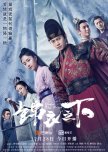
Shaken and stirred.
Under the Power is the best historical c-drama romantic comedy I have seen recently. The romance centers on how two hilariously different people fall for each other unexpectedly and deal with differences in their backgrounds and obstacles from past wrongs. The internal romance plot plays out within an external investigative storyline around a series of linked investigations by the formidable jinyiwei or imperial brocade-clad spies/secret police aimed at exposing years of corruption perpetrated by the powerful noble Yan family. While the basic premise of the over-arching plot is interesting, the story-writing falls short and loses momentum in the second half. This drama's success is mostly due to sizzling chemistry and side-splitting performances by both main leads.Lu Yi, a highborn jinyiwei, incenses fiery young constable Yuan Jinxia when he takes over one of her cases from the local yamen. To add insult to injury, he commandeers her trusty pistol and extorts her collaboration in a very high-handed way. I cannot lie - I initially did not like the obnoxious, noisy, and immature Jinxia and dropped this show. But desperation in times of coronavirus made me pick it up again and like Lu Yi, I inexplicably found myself falling like a ton of bricks for Tan Songyun's gauche, money-loving, gluttonous, mischievous, shamelessly obsequious, irrepressible and utterly adorable little minx of a Yuan Jinxia. This is the first time I have watched Tan Songyun and I am floored by how comical she is without at all coming across as slapstick.
Lu Yi is not a colorful character - he is rather aloof and wears a fierce, sour, still-faced expression; has no hobbies or evident vices or quirks... except for his x-rated eyes. Initially, he looks at Jinxia with ill-concealed disdain and annoyance at her crass, venal, and nosy antics. He is quite nasty to her. Ren Jialun's facial expressions were so spot on in terms of conveying how Lu Yi's feelings for Jinxia evolved over time that I was with him the whole way. As he comes to appreciate her intelligence, resourceful and unconventional methods as well as her innate loyalty and honor, there is both horrified revulsion and wry acceptance in his expression as it dawns upon him that he may be falling for her. This progresses into a very amorous, caressing gaze that is accompanied by a slow and sexy crooked smile that shouts out that under the embroidered robe, this imperial spy is both shaken and stirred. This is brilliantly written and portrayed OTP whose interactions move seamlessly between comic relief and searing, heart-stopping intimacy. This had me alternating between laughing so hard I was gasping for breath to fanning myself down frantically. Be warned that such moments can result in paranoid coronavirus self-diagnosis.
This drama is pretty much carried by the OTP - the rest of it is quite messy. There are just too many flamboyant side characters that make a grand entrance and then just fizzle out or worse, get dumbed down into a tedious unrequited love daisy chain. You would think they could have done so much with a Robin Hood of the high seas, a tough-as-nails female head gangster, a master poisoner, a trickster Taoist priest, a doctor that can almost rise the dead, a brave general's wife etc. Instead, all we got were boring couples trapped in cliche romantic tropes who were so much more interesting when they were still single.
The critical mistake that wrecked the latter half of the drama was the unnecessary angst in the romance - they threw the very tired "your family wiped out my family" obstacle at the OTP. Without serious suspension of disbelief, this is THE kiss of death - I have never seen any OTP survive this obstacle in a good and convincing way. They only barely made it work here by pretty much sacrificing the entire external plot. This is a pity because the most interesting character in the drama was actually our villain Yan Shifan, who is diabolical, despicable, vicious, humorous, and curiously likable. We know who he is from the beginning and most of the cases that Lu Yi and Jinxia expose are built toward eventually taking him down. He is in a position of strength and can afford to toy with them most wickedly (which he does) but ultimately it is a race to see who can bring the other down first. I was really looking forward to the final showdown. Which never happened. The internal (romantic) plot needed a grand gesture of atonement and reparation so no, none of his victims got the satisfaction of outmaneuvering him and taking him down in a final epic confrontation. His downfall had practically nothing to do with any of the main characters even though a well-loved character dies gratuitously for the cause! Worse, Lu Yi makes a really pointless and out-of-character sacrifice that subjects the final outcome for our lovers to the whim of a capricious emperor. The ending was so lame it should have the position of honor in the Lame Drama Ending Hall of Fame.
So is this worth watching? Absolutely, the OTP is a complete riot and their relationship is perfectly balanced between touching and uproarious moments. As for the rest of it, you just have to suspend disbelief and ignore a few plot holes and annoying characters. No one will judge you for fast-forwarding. To me, this should be an 8.0 but I gave it an 8.5 to recognize the main leads for making me laugh so hard.
Was this review helpful to you?
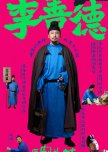
A kingdom for a concubine's smile.
Adapted from Ma Boyong's novel of the same name, The Litchi Road is a biting satire of a besotted old man's folly; an emperor who squanders a kingdom for a concubine's smile. Set during the twilight years of Xuanzong's reign, it is about Yang Guifei's well known love for lychees. To mark her birthday, he orders fresh lychees ferried 2,500 miles from Lingnan to Chang’an—a fool’s errand, as the delicate fruit spoils within days, dooming the 5,000 li journey.Enter Li Shande, a humble Shanglin Bureau official, gifted in mathematics, poetry, and botany but too scrupulous and apolitical to climb the ruthless Tang bureaucracy. He’s the perfect patsy, duped into the role of “Litchi Envoy” for this impossible mission. Written with dark humor and irony, Li’s stoic resolve—“I wish to live”—resonates with powerless commoners who rally to his cause, aiding his experiments in preservation and test runs. They are aided by merchants who see a profit opportunity in an ancient cold chain logistics network that transports this prized fruit inland to Chang'an and beyond. Yet bureaucratic hurdles and corrupt officials thwart them at every turn. The narrative sharply critiques imperial excess and elite callousness while quietly celebrating the “ants”—individually inconsequential people whose collective efforts achieve the unthinkable.
Zheng Ping’an’s parallel espionage arc, clearly not Ma Boyong’s creation, feels extraneous, though Yue Yunpeng’s comedic flair—obsequious groveling masking seething resentment—adds humor and depth to Li Shande and Xiu’er’s characters. His grudging aid, driven by his affection for Xiu’er, is touching, but a sharper writer might have made his plot arc more relevant and ended his and Gouér's journey in a more fitting way. Lei Jiayin shines as Li Shande, a relatable and at times frustrating anti-hero; a well-intentioned person who makes promises he can't keep and whose forbearance is ultimately exhausted by the iniquity around him.
Fans of Longest Day in Chang’an will spot familiar faces in new roles, with similar aesthetics and themes as this story unfolds over a dozen years later. The emperor, still smitten with Yang Guifei, balances power between the Left and Right Chancellors. The prose sparkles with wit, weaving classical phrases, puns, and Li Bai’s poetry for layered meaning. Lingnan’s sun-drenched palette and tropical costumes showcase the vastness and diversity of Great Tang. While Longest Day is a higher budget and more polished production, Litchi Road is a more fun watch. The sharp social commentary and heavy profound moments are balanced by levity and memorable hilarious scenes—like the uproarious, very 1990s cockfight (no animals harmed) that had me in stitches.
The ensemble, villains included, earns applause. He Youguang, the petty tyrant, and his scheming secretary Zhao Xinmin deliver comic gold, their fowl play both hilarious and menacing. The evolution of the ancient cold chain, aided by foreign merchants’ spice-transport methods, fascinates, while diverse characters add exotic richness. Amita’s strory ends abruptly, likely due to actor Nashi’s controversy, which taints the drama’s reception. However she landed the role or got where she is today, Nashi's acting is solid; far better than many popular leading actresses. Her look is so stunning and exotic it is hard to imagine anyone else pulling off Amita with that kind of boldness and flair.
The finale takes an odd turn, flirting with supernatural elements before winking at its own fictionality—an acceptable, if imperfect, close. The recurring “bad things happen to good people” theme feels realistic but heavy, with two gratuitous deaths and undeserved outcomes (good and bad) for many. Still, many bad guys fall, the good guys score a small but significant victory, and and fresh litchis are enjoyed by the story's true beauty in a poignant reunion. Despite a strong start, it misses a 9.0 but earns an enthusiastic 8.5/10.0.
Was this review helpful to you?


