
 Editorials
 3
3 3
3 3
3



This review may contain spoilers
My Name – An Epitaph Written in Blood and Betrayal
They sold me a revenge story.But My Name didn’t just give me vengeance—it gave me a Shakespearean tragedy wearing combat boots and a knife tucked behind its back.
On the surface, this is a drama that promises grit, blood, and emotional silence. You walk in expecting a daughter with a vendetta. A crime boss with secrets. A crooked world that will be cleaned up one bullet at a time. And it delivers that—but only as bait. Because once your guard is down, My Name reveals its true form: a story about love twisted into control, loyalty corrupted by lies, and the devastating cost of survival.
Let’s talk about the woman at the center of this storm.
Han So-hee as Yoon Ji-woo doesn’t just carry this drama—she embodies it. Broken on the inside, brittle on the outside, she walks like someone whose bones are holding in more pain than her eyes ever reveal. And that’s saying something, because her eyes do everything. It’s not just how she fights—though let’s not undersell it: Han So-hee did most of her own stunts with barely any stunt double involvement, and it shows. She’s fluid, vicious, and purposeful in every move. But where she truly devastates is in the stillness. A call with her father, one tear sliding down while her face remains unreadable—that’s not acting, that’s emotional precision warfare. She doesn’t need to scream to make you feel. She just has to look, and you’re shattered.
Opposite her is Park Hee-soon as Choi Moo-jin, the crime lord who isn't just a villain—you’re not even sure he qualifies as one. Moo-jin is many things: dangerous, calculating, protective, manipulative. But he’s also loyal, heartbreakingly sincere, and, in his own warped way, capable of love. Park Hee-soon plays him with this magnetic presence that makes you lean forward every time he’s on screen. You never quite know what he's thinking—and that's by design. The writing lures you into trusting him. Maybe he’s a monster. Maybe he’s a savior. Maybe he’s just a man who never learned how to stop losing people. When the final truth comes out, you're not just blindsided. You're gutted. Because the twist wasn't just clever—it was earned. It was inevitable.
Ahn Bo-hyun as Detective Jeon Pil-do may have had less screen time than the other two, but he left a crater in the story with what he brought. Pil-do wasn’t there to save Ji-woo. He wasn’t her fixer or love interest or redemption arc. He was simply... a moment of quiet hope. A man who saw through her mask, sat beside her without demanding explanations, and offered her something she’d forgotten existed: a future. He was the anchor to her humanity—and the second she reached for him, he was taken away. A casualty not of villainy, but of fate. And that hurts more, because that’s how My Name works. It gives you the light just long enough to see what you’ll lose.
The supporting cast also delivers in spades, each character sketched with care—even those with limited screentime are vivid enough to leave an impression. The dynamic within the police force, the enforcers in the gang, even the minor informants—they all felt like people, not just props.
One of the more underrated praises this drama deserves? Respecting the audience’s intelligence. In the final act, Ji-woo uses a six-shot revolver—and the drama choreographs every bullet like a precious, countable truth. No magic reloads. No infinite ammo action hero nonsense. It's a subtle detail, but it reinforces that My Name was never trying to wow you with spectacle. It wanted to root its violence in consequence.
Let’s not forget the OST, either. “My Name” by Hwang Sang-jun (feat. Swervy & JEMINN) isn’t just atmospheric—it’s emotionally weaponized. It lands like a soft dirge, full of broken rhythms and lyrical echoes of confusion and grief. One standout moment has Ji-woo unraveling the truth, spiraling into grief as the lyric hits: “What the hell is going on?” It’s not just a musical cue—it’s a full-body blow. Perfect timing, perfect sync. A dagger disguised as a beat drop.
At the heart of My Name lies a tragedy that slowly unfolds beneath the surface of its revenge-driven plot. While the story begins with the familiar setup of a daughter seeking justice for her father’s murder, what it ultimately delivers is far more complex and devastating. It’s a story about love that is never quite spoken, loyalty that becomes possession, and survival that costs more than anyone expects.
The emotional core of the series is the relationship between Yoon Ji-woo and Choi Moo-jin. Not quite father and daughter, not simply boss and subordinate—their bond defies clean categorization. Moo-jin takes Ji-woo in after her father’s death, trains her, protects her, and shapes her into something the world cannot easily break. On the surface, it appears he’s raising her as a weapon, but over time, it becomes clear that his attachment runs deeper. He sees Ji-woo as a second chance—both to restore what he lost with her father and perhaps, unconsciously, to create a kind of found family.
But Moo-jin’s love is not unconditional. It’s shaped by control, fear, and past betrayals. His way of showing affection is rooted in survivalism: by making Ji-woo strong, he believes he’s protecting her. He gives her a name, a purpose, a path forward—but never the full truth. That choice, while understandable within the logic of his character, becomes the very thing that sets their eventual collision course.
When Ji-woo discovers the truth, it breaks her—not only because of what happened to her father, but because it redefines her entire identity. The foundation of her life—the pain, the anger, the loyalty—shifts in a moment, and suddenly she’s forced to see Moo-jin not as the man who saved her, but as the one who took everything from her. But the betrayal runs both ways. For Moo-jin, Ji-woo turning against him isn’t just a tactical threat—it’s personal. She was the one person left in his life he believed would never abandon him. When she does, it confirms the one truth he’s always feared: that everyone he allows himself to care for will eventually leave.
That’s what makes My Name so effective. It doesn’t rely on melodrama or villains twirling their mustaches. There’s no clear good or evil, no black-and-white resolution. Instead, there are just people—deeply flawed, deeply human—trying to survive the only way they know how. Moo-jin isn’t a monster; he’s a man who loved the only way he was ever taught: through dominance, loyalty, and unwavering conviction. Ji-woo doesn’t become a hero; she simply chooses to live, to move forward despite the ruin left behind.
The final confrontation between them isn’t a classic showdown between a righteous protagonist and an unforgivable villain. It’s a culmination of grief, misunderstanding, and emotional dependency unraveling. Moo-jin’s downfall doesn’t come because he’s outsmarted, but because, in the end, his emotions override his logic. When Ji-woo raises her gun, he doesn’t run. Because he’s already lost. Not just his empire, but the only person left who still mattered.
The final scene, where Ji-woo visits the graves and reclaims her birth name, is quiet and unceremonious. There’s no grand speech, no sense of triumph. It’s not closure. It’s survival. Ji-woo doesn’t get justice, nor does she walk away free of scars. What she gets is the ability to keep moving. And that feels far more honest than any neat resolution ever could. The story doesn’t pretend she’ll be okay—it simply leaves her standing, which after everything, is its own form of victory.
In the end, My Name isn’t about revenge—it’s about the cost of it. It’s about how love can be warped by fear, how loyalty can mask manipulation, and how survival often means living with the weight of every person you’ve lost. It tells the story of two people who might have been each other’s salvation, had the truth not gotten in the way.
Verdict:
What makes My Name so remarkable is that it never once breaks the promise it makes at the start. It is gritty. It is a revenge story. It delivers the action, the undercover twists, the betrayals. But beneath all of that, it’s also something much more quietly devastating. The series doesn't undermine expectations—it uses them. It lulls you into believing you're watching something straightforward, only to slip the emotional knife in while your guard is down.
The heartbreak isn’t incidental. It’s deliberate. Every reveal, every silence, every choice is calibrated for emotional impact—not in a manipulative way, but in a way that feels earned. By the time you realize what story is actually being told, it’s already over. And it leaves you there—haunted, hollowed out, and strangely grateful for the ache.
This is the kind of drama that doesn’t leave politely. It camps out in your bones. And when people ask why we watch K-dramas?
The answer is: because of stories like this. Because sometimes we want to feel pain that’s not ours but still resonates. Because sometimes the best kind of storytelling isn’t the one that lets us escape, but the one that hands us the wreckage and says: “Here, this is what truth looks like when it bleeds.”
Score: 9.5/10
Was this review helpful to you?

Boyhood: The White Tiger, the Blue Dragon, and the Boy in Between
Some dramas come into your life like a punchline. Others slip in like a quiet poem, unfolding stanza by stanza until you realize your heart has been slowly, quietly rearranged. Boyhood is the latter—but it's also the kind of poem that occasionally punches you in the gut.Set against the nostalgic and often misunderstood 1980s rural Korea, Boyhood manages the incredible feat of being both laugh-out-loud funny and quietly devastating. It’s a high school drama, yes, but it wears its genre with an ironic smirk, upending your expectations at every turn. The story follows Jang Byeong-tae, a scrawny kid with a bowl cut and chronic victim status, who accidentally gets mistaken for the infamous street fighter "White Tiger." Rather than correct the misunderstanding, he rides the wave, and thus begins a bizarre, emotional rollercoaster through fists, friendships, and false identities.
Im Si-wan, a true chameleon in the world of K-drama acting, delivers a performance that borders on sorcery. His portrayal of Byeong-tae moves like water, shifting effortlessly between slapstick comedy, pitiful vulnerability, and fiery defiance. At times, you forget you’re watching the same character, because he gives you four different versions of Byeong-tae: the perpetual victim, the pretend predator, the broken-hearted boy, and finally, the young man who learns to stand his ground. His physical comedy is as sharp as his dramatic gravitas—one moment he’s contorting his face into a human emoji, the next he’s staring down a bully with tears and steel in his eyes. Im Si-wan acts with his whole body, and the result is nothing short of mesmerizing.
Standing beside him like a flame to his shadow is Lee Sun-bin as Park Ji-young. Fiery, no-nonsense, and a master of the side-eye, Ji-young is the kind of childhood friend who'd uppercut anyone hurting you and then scold you for getting hurt in the first place. Lee Sun-bin brings her usual comedic timing, but layers it with deep emotional nuance. There’s a scene where she watches Byeong-tae hit his lowest point—and she doesn’t cry, but you do, because her silence says everything. Together, Ji-young and Byeong-tae form the emotional axis of the show. Their chemistry is crackling, not in the typical romantic tension kind of way, but in the deeper, richer way that says, "I will always be in your corner."
As a coming-of-age tale, Boyhood manages to do something quite rare—it makes growing up look both beautiful and brutal. One moment you're giggling at absurd misunderstandings, and the next, you're reminded that high school can be a battleground, especially when the enemy wears the same uniform as you. The bullying isn’t sanitized here; it's raw, real, and relentless. But that only makes the victories—small as they are—feel like full-blown revolutions. When Byeong-tae begins to train, not just his fists but his sense of self-worth, it’s less about becoming the strongest and more about reclaiming a space where he can exist without fear.
The revenge arc that unfolds toward the end is particularly satisfying—not just because it's cool to watch the bullied fight back, but because it's earned. This isn’t about flashy fight choreography or hero tropes; it’s about quiet resilience turning loud. And in a post-The Glory landscape, it stands proudly as one of the most cathartic revenge arcs to come out in recent years.
The supporting cast also gets their moment to shine. Lee Si-woo as the real White Tiger, Jung Gyeong-tae, is a study in contrasts: effortlessly cool and quietly dangerous, with a good-looking face that masks deep-rooted rage. You’re never quite sure whether to root for him or duck when he shows up. Kang Hye-won as Kang Seon-hwa, Byeong-tae’s crush, plays her role well, though admittedly her character feels slightly undercooked when standing next to the more fleshed-out leads.
Then there’s the soundtrack—oh, the soundtrack. It slaps. And I don’t mean that in the casual, overused Gen Z way. I mean it genuinely lands like an open palm to the nostalgia centers of your brain. Norazo’s "Double of Nothing" sounds like it came from a martial arts arcade game set inside a karaoke bar, in the best possible way. Meanwhile, "When I Was Young" by Munan and "Take Me Home" sung by Im Si-wan himself, act as gentle balms for the heavier emotional wounds. These songs aren't just background noise—they’re emotional amplifiers.
The drama is also smartly paced. At just ten episodes, there’s no room for fluff. Every beat matters, and the story wraps itself up in a satisfying bow—mostly. I say mostly, because if you’re like me, you might feel a little greedy. After spending so many episodes watching Byeong-tae suffer, I wanted a longer epilogue. Just a little more time to bask in his hard-earned peace. But perhaps that was the point. Growing up doesn’t come with a credits roll. Sometimes, it just… continues.
Now, no drama is without its flaws, and Boyhood has its quirks. A big one is its deep entrenchment in 1980s Korean culture. There are scenes and dialogues that will leave international viewers scratching their heads. Why is Byeong-tae’s dad being arrested for a dance class? Why are schools single-gendered? Why is Yakult delivered like morning milk? If you don’t already have context—or a patient friend to explain it—these things can feel disorienting. The regional dialects also don’t always translate well, and some jokes lose their punch across the language barrier.
And while it’s billed as a comedy, let’s not sugarcoat it—there’s darkness here. Physical violence, emotional abuse, underage drinking, and extortion are all present and accounted for. They’re not the focus, but they’re not brushed aside either. This might be a dealbreaker for viewers seeking a lighter watch.
Still, if you’re willing to step into its world and let it teach you the rules as you go, Boyhood is one of those rare dramas that lingers. Not because of how it ends, but because of how it makes you feel along the way. It’s a show about what happens when someone finally gives you a place to belong. When your name—real or fake—starts to mean something. When you stop pretending to be the White Tiger, and finally roar as yourself.
Score: 8/10
Was this review helpful to you?

Newtopia: Comedy, Carnage, Chaos, and The Most Fun You’ll Have in an Apocalypse
The world of zombie dramas is a crowded one, filled with grungy aesthetics, desperate survivalists, and the same overplayed beats of impending doom. But Newtopia? Newtopia is a different beast entirely. It struts in, fully aware of the tropes it’s about to skewer, dressed in bright colors, blasting a euphoric soundtrack, and delivering a spectacle that swings between slapstick comedy and gut-wrenching tragedy with surgical precision. It’s a show that invites you to laugh at the absurdity of a teddy bear-clad soldier fighting off the undead, only to punch you squarely in the heart when you least expect it.At its core, Newtopia follows Lee Jae-Yoon (Park Jeong-Min), a soldier who joined the military later than his peers, plagued with anxieties about his future. His girlfriend, Kang Young-Joo (Kim Ji-Soo), is a brilliant engineer trying to survive her mundane job when an unknown virus suddenly sweeps through Seoul, turning the infected into ravenous zombies. What ensues is a frantic, hilariously chaotic, and surprisingly heartfelt attempt by Jae-Yoon and Young-Joo to reunite amidst the carnage.
The brilliance of Newtopia lies in its controlled chaos. Unlike traditional zombie dramas that drench their worlds in bleak grays and desaturated despair, Newtopia bathes its scenes in vibrant hues and cheerful soundtracks that make the carnage feel like a fever dream. Bright neon-lit streets play host to gruesome zombie battles, and rather than eerie, tension-building scores, the show opts for lively, almost comically upbeat tunes that create an intoxicating contrast. It’s a bold artistic choice that pays off—this isn’t a world that demands to be taken seriously, and yet, when it lands an emotional punch, it lands hard.
The comedic trio of Park Jeong-Min, Im Sung-Jae, and Kim Joon-Han is an absolute highlight. Jeong-Min balances comedy and heartfelt sincerity with ease, making his character someone you genuinely root for. Im Sung-Jae, as Jae-Yoon’s successor, provides a perfectly timed comedic relief that never feels out of place, even when facing off against flesh-eating monsters in absurdly impractical costumes. Meanwhile, Kim Joon-Han, playing the perpetually drunk hotel manager, rounds out this trio with a no-nonsense attitude that makes every interaction hilarious. These three deliver some of the most enjoyable character dynamics in recent memory.
Kim Ji-Soo, in her second leading drama role, is a mixed bag. When she’s slashing through zombie hordes or screaming while knee-deep in guts, she’s fantastic—her comedic timing and action sequences are surprisingly strong. However, when the script demands emotional depth, her performance falters. It’s an unfortunate weakness, but not one that derails the show entirely. Given her relative inexperience, there’s promise in her future roles, and Newtopia does well to highlight her strengths while minimizing her weaker moments.
What sets Newtopia apart from similar genre fare is its willingness to embrace deeper emotional storytelling without ever losing sight of its absurdity. It’s easy to dismiss a show that features teddy bear-wearing zombie killers as pure comedy, but Newtopia doesn’t shy away from the horror that comes with the territory. Sacrifice plays a central role in the narrative, and when characters go down, they go down in moments that are both visually stunning and emotionally resonant. The show understands that the best way to make an audience feel something is to lull them into a sense of security with laughter before pulling the rug out from under them.
The gore, when it comes, is satisfyingly over-the-top. Limbs fly, heads are crushed, and faces are mangled in a way that feels more cathartic than gratuitous. It’s all part of Newtopia’s perfect balancing act—never too grim, never too ridiculous, but always entertaining. The show knows exactly when to push the comedy and when to let the horror sink in, ensuring that neither element ever overstays its welcome.
Its short eight-episode run is both a blessing and a curse. On one hand, it keeps the story tight and prevents unnecessary filler. There are no meandering subplots, no out-of-place dramatic diversions—everything moves at a rapid, almost breathless pace. On the other hand, the pacing does feel off at times, with too much time spent on world-building in the earlier episodes rather than diving straight into the action. For a show that thrives on momentum, these early moments can feel sluggish in retrospect.
There are a few gripes beyond pacing and uneven acting. The lack of a dedicated OST is a disappointment—while Newtopia nails its background music choices, there’s no standout song that lingers after the credits roll. And then there’s the case of Kang Young-Seok’s character, a selfish survivor archetype who somehow manages to stick around far longer than he deserves. Thankfully, his eventual demise is satisfying enough to make up for the frustration of his continued presence.
Perhaps the most brilliant decision Newtopia makes is how it concludes. It manages to give a satisfying sense of closure while still leaving enough room for a potential sequel. Whether or not we get a second season, the show respects its audience enough not to leave them hanging in an unsatisfying cliffhanger, a rare feat in today’s drama landscape.
At the end of the day, Newtopia isn’t trying to reinvent the zombie genre, and it doesn’t have to. What it does, it does with confidence and flair. It’s an incredibly fun ride from start to finish, bolstered by a stellar comedic trio, fantastic use of color and music, and an emotional core that sneaks up on you just when you least expect it. It’s unfortunate that the drama stumbles in a few areas, but none of its shortcomings take away from its sheer entertainment value. If you’re looking for a Zombieland-esque K-drama with an unexpectedly emotional punch, Newtopia is well worth the watch.
Verdict: Newtopia is pure, controlled chaos at its finest. It doesn’t strive to be groundbreaking, but what it delivers is immensely entertaining. It’s a bold, colorful, blood-soaked rollercoaster that will have you laughing, cringing, and unexpectedly emotional in equal measure. While it’s held back by minor missteps, it still manages to be a standout addition to the zombie genre, proving that there’s always room for innovation—even in an undead apocalypse.
A solid 7.5/10
Was this review helpful to you?
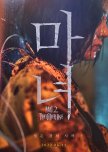
This review may contain spoilers
Shin Si-ah’s Breakout Carnage -The Witch: Part 2 is A Brutal Ballet of Power and Pain
When The Witch: Part 1 - The Subversion dropped, it was a sleeper hit that caught people off guard with its brutal action and intriguing premise. But The Witch: Part 2 - The Other One? This one cranks everything up to 11. Bigger budget, bigger action, bigger blood splatter—it's as if the filmmakers looked at the first movie and said, "Yeah, but what if we went absolutely feral with it?" And they did. But amid the carnage, there was an unexpectedly heartfelt core: a story about a girl learning what family means, only to have that warmth ripped away in the cruelest way possible.At the heart of this chaos is Shin Si-ah's Ark 1, an entirely different beast from Kim Da-mi's Ja-yoon in Part 1. While Ja-yoon was cunning and calculating, Ark 1 is a blank slate, a newborn in a grown woman's body. Shin Si-ah nails this duality, oscillating between wide-eyed innocence and horrifying destruction like it's second nature. There’s something oddly endearing about watching her experience the world for the first time, from discovering junk food at a supermarket to quietly bonding with Kyung-hee (Park Eun-bin) and her younger brother, Dae-gil (Sung Yoo-bin). But then, the switch flips, and suddenly, she's making people explode just by thinking about it. Her performance carries the film, and for a debut role, that's no small feat.
Speaking of family, Park Eun-bin’s Kyung-hee is the heart of this movie. If the first film was about Ja-yoon reclaiming her stolen life, Part 2 is about Ark 1 getting a taste of what life could have been—briefly, beautifully. Kyung-hee and Dae-gil become the emotional anchor that keeps Ark 1 tethered to humanity. Unlike Ja-yoon, who had years to mask herself among normal people, Ark 1 was thrust into the world with no memory, no knowledge, nothing but raw instinct. Kyung-hee stepping in as her adoptive sister and protector? That was the closest thing Ark 1 had to real love. And that’s what made everything that followed hit so much harder.
Because the moment that fragile happiness was shattered, Ark 1 didn’t just seek revenge—she grieved. And her grief manifested as pure, unfiltered annihilation. Where Ja-yoon’s rampage in Part 1 was a calculated act of vengeance, Ark 1’s was almost involuntary, like a force of nature reacting to a world that had wronged her one too many times. Her final act wasn’t revenge; it was mourning. And that difference is what makes her so compelling.
The action? Oh, it delivers. If you thought Part 1 had stylishly brutal fights, this sequel takes it to another level. The film leans heavily into wide shots and large-scale destruction to emphasize Ark 1’s godlike power. Ja-yoon could levitate small objects; Ark 1 casually manipulates matter at a molecular level, warping space and creating sandstorm vacuums that turn enemies into mist. Her power isn’t just stronger—it’s terrifyingly absolute. By the time she truly lets loose, it’s less "fight scene" and more "divine smiting." The escalation in power levels between her and Ja-yoon is undeniable, and the film makes sure you feel that gap with every clash.
But it’s not just about Ark 1. The movie is packed with super-powered factions, each with their own agendas, leading to an all-out brawl in the final act. While some of the superhuman fights rely on sped-up shots (which might make them a little hard to follow), the sheer spectacle makes up for it. Limbs fly, walls crumble, and bodies pile up. And yet, despite all the high-energy clashes, the film never lets you forget who the real monster in the room is. Because while others fight with skill and tactics, Ark 1 simply wills her enemies out of existence.
Now, onto the gripes.
First, the pacing. Much like its predecessor, Part 2 saves most of the action for the end, which means the first half leans heavily on setup. And while the family dynamic between Ark 1, Kyung-hee, and Dae-gil is strong, the focus on the gangster subplot feels like a distraction. I get that it was necessary to set up the inevitable tragedy, but man, I wish we had more quiet moments of Ark 1 just existing within that newfound family. Seeing her learn, grow, and attach herself to this small slice of normalcy was the emotional core of the film, and it deserved more breathing room.
Then there’s the sheer number of side characters. The first movie kept it relatively tight, but here, we’ve got multiple factions, foreign agents, and returning characters from Part 1 all vying for screen time. It’s easy to lose track of who’s who, and some plot threads feel rushed because there’s just too much going on. Like, why was Kyung-hee’s father even killed in the first place? Some things get glossed over in favor of keeping the momentum going, but it does leave a few holes.
The violence? Dialed up to an extreme. Now, personally, I love a good, bloody action film, but for those with a weak stomach, be warned—this one does not hold back. Bodies are torn apart, heads explode, and the sheer savagery of Ark 1’s wrath is something else. It’s brutal, but never gratuitous. Every blood splatter serves a purpose: to remind you that Ark 1 is not someone you can fight. She’s someone you survive—if you’re lucky.
And then there’s the ending. It’s clearly setting up for more sequels, leaving us with more questions than answers. We know Ja-yoon is still in play, and Ark 1’s journey is far from over. But if you’re looking for a self-contained story like the first film, you might find this one a bit frustrating. It’s more of a stepping stone to the next chapter rather than a fully wrapped-up arc.
Verdict: The Witch: Part 2 - The Other One takes everything great about the first film and supercharges it. It’s a visual spectacle of carnage and chaos, balanced by fleeting moments of warmth that make the inevitable heartbreak all the more painful. Shin Si-ah proves herself as a worthy successor to Kim Da-mi, and the escalation in power levels is both exhilarating and terrifying. While the pacing and sheer number of characters could have been tightened, the core story of a lost girl finding, and then losing, her family hits home in a way I wasn’t expecting. It’s not just about revenge; it’s about survival, grief, and the cost of power. And for that, I respect it.
Score: 8/10—slightly less than Part 1 due to some pacing issues, but still a fantastic watch for fans of stylish action and super-powered mayhem.
Was this review helpful to you?
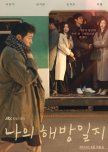
A Journey Through Quiet Lives
If you’ve seen and read my review on My Mister, this will feel familiar. My Liberation Notes is another masterpiece by Park Hae-young, the maestro who penned My Mister. Once again, she showcases the beauty of the mundane with her trademark slow and deliberate storytelling that still demands your full attention. It’s not a drama you merely watch; it’s one you experience, requiring your patience, focus, and willingness to find the extraordinary within the ordinary.This is a drama where the silence speaks louder than words, where the unspoken emotions carry the weight of the world, and where the slow unraveling of characters feels like peeling back layers of your own soul. It’s not just about the story of three siblings and a mysterious stranger; it’s about what it means to yearn, to struggle, and to find solace amidst the quiet chaos of life.
My Liberation Notes unfolds like a soft breeze on a quiet afternoon—unassuming yet deeply stirring. The drama thrives in its ability to make the mundane extraordinary. Every scene feels like a moment stolen from real life, with characters so authentic you forget they’re fictional. The setting of Sanpo Village, with its serene yet suffocating atmosphere, becomes more than a backdrop; it’s a living, breathing character that mirrors the emotional states of its inhabitants.
Park Hae-young’s writing excels in subtext, inviting viewers to piece together what’s not shown on screen. Dialogue becomes a treasure trove of hidden meanings, and every pause, glance, or sigh feels loaded with significance. It’s a narrative style that rewards attentiveness, pulling you deeper into the lives of its characters. For those who can appreciate this meticulous approach, the payoff is immeasurable.
Kim Ji-won’s portrayal of Yeom Mi-jeong is nothing short of revelatory. As the introverted youngest sibling, she embodies the quiet desperation of someone yearning for more yet unsure of how to achieve it. Mi-jeong’s journey from timidity to self-awareness is both heartbreaking and inspiring. Her realization that she’s battling depression and her tentative steps toward change serve as the emotional core of the drama.
Son Suk-ku’s performance as Mr. Gu is equally captivating. With his brooding presence and layers of mystery, he anchors the story without overshadowing it. Mr. Gu’s interactions with the Yeom siblings, especially Mi-jeong, are filled with unspoken tenderness and quiet revelations. His character’s slow unraveling mirrors the drama’s deliberate pace, making every moment of vulnerability feel earned.
The supporting cast shines just as brightly. Lee El and Lee Min-ki bring depth and nuance to the roles of the other Yeom siblings, each grappling with their own struggles and aspirations. Their performances ensure that every character’s story feels vital to the narrative’s tapestry. Among the side characters, Jeon Hye-jin’s Ji Hyun-ah stands out. Despite limited screen time, her portrayal of a bright yet heartbreakingly loyal friend leaves an indelible mark. Hyun-ah’s resilience and warmth are a testament to the drama’s ability to craft multidimensional characters.
The beauty of My Liberation Notes lies in its authenticity. Even at its most chaotic moments, the drama remains grounded and believable, thanks to its gentle storytelling and attention to detail. It’s a rare gem that trusts its audience to connect the dots and draw their own conclusions, making the viewing experience deeply personal.
However, this style may not be for everyone. The drama’s slow pacing and abundance of quiet moments might test the patience of viewers accustomed to more action-packed narratives. Additionally, the time skip in the latter half is addressed briefly and could confuse those who aren’t paying close attention. While I personally appreciated the open-ended conclusion, it may leave some viewers longing for closure. The OST, while fitting, lacks the memorability of My Mister and doesn’t evoke the same emotional resonance.
Despite these minor shortcomings, My Liberation Notes is a love letter to introverts and a celebration of life’s quiet moments. It’s a drama that asks you to sit with it, to reflect, and to find meaning in the spaces between words. For those willing to embrace its deliberate pace and introspective nature, it offers a narrative gem that lingers long after the final episode.
My Liberation Notes is a testament to the power of gentle storytelling and the beauty of quiet moments. While its slow pace and introspective nature may not suit everyone, those who embrace it will discover a deeply rewarding narrative. It’s a love letter to introverts and a poignant exploration of life’s complexities.
Was this review helpful to you?
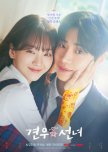
Waste of time.
Fun till about episode 7 or so, then it becomes so stupid with plot holes so big, it deserves to be studied.So congratulations to Head Over Heels for being the first ever Studio Dragon work that I dropped midway.
Also it's 2025, stop giving a romance story an unnecessary dumb triangle like this.
Was this review helpful to you?
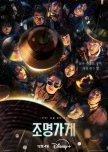
Light Shop – Horror, Heartbreak, and the Light That Never Dies
There are ghost stories, and then there are stories about ghosts—tales that don’t just try to scare you but burrow under your skin, whispering truths about grief, loss, and the things that refuse to let go. Light Shop belongs to the latter. It isn’t just a horror drama; it’s a quiet, haunting meditation on pain and redemption, where ghosts are not mere specters but wounds that refuse to heal. Wrapped in dreamlike cinematography, masterful performances, and a script that thrives on restraint, this eight-episode drama isn’t long, but every frame lingers. Like light bending through glass, it fractures and refracts, showing grief from all angles—beautiful, tragic, and inescapable.At the heart of Light Shop is Park Bo-young, who plays an ICU nurse with the ability to see ghosts. She is the flickering warmth in this story, a lone candle against the dark. If you’ve seen her in Daily Dose of Sunshine, you’ll recognize the same quiet tenderness, but here, it’s tempered with exhaustion—a woman who has seen too much, felt too much, yet still stands. Park Bo-young doesn’t just act; she breathes life into every weary glance, every hesitant step between fear and compassion. Her character isn’t fearless—she’s just tired of running from things only she can see.
And then there’s Seolhyun, playing a vengeful ghost who drifts between sorrow and wrath. A woman wronged, she moves like a shadow, her presence both ethereal and unsettling. Yet, much like Kim Tae-ri in Revenant, there’s something almost too luminous about her rage—too tragically beautiful to be terrifying. It’s as if her grief is so overwhelming, so consuming, that it strips her of the ability to be monstrous. Instead, she is a porcelain figure with fractures spreading across the surface, on the verge of shattering but never quite breaking. It’s haunting in its own way, not because she is terrifying, but because she is achingly human, even in death.
Shin Eun-soo, the young high school girl unknowingly entangled in supernatural forces, brings a layer of innocence and fragility to the story. Her performance is subtle but effective—she is the unwitting participant in a fate she never asked for, drawn into the Light Shop’s orbit without realizing its gravity. And then there’s Lee Jung-eun, playing her mother with a depth that only she can bring. There’s a moment—wordless, agonizing—where her grief is so thick it suffocates the air itself. She doesn’t need to speak. Her face carries the weight of a thousand unsaid things, and in that moment, time seems to stand still. That’s the power of an actress who doesn’t perform emotions but inhabits them.
Holding it all together is Ju Ji-hoon as the enigmatic owner of the Light Shop. He is both guide and prisoner, the keeper of secrets wrapped in the quiet melancholy of a man who has seen too much. His presence looms over the drama, not through action, but through the sheer weight of his silence. The Light Shop itself is more than a location—it’s a liminal space between life and death, a place where memories linger and unfinished business demands resolution. And when his past unfolds in the penultimate episode, it’s a revelation that lands like a whispered tragedy, quiet yet devastating.
Visually, Light Shop is a masterpiece in contrasts. Shadows stretch long, light flickers in the periphery, and every frame feels deliberately composed, like a painting where every brushstroke matters. One of the most unforgettable scenes is when Seolhyun’s character attempts to piece her lover’s body back together, her sorrow playing out against the flickering lines of an ECG monitor. It’s more than just imagery; it’s a desperate attempt to rewind time, to hold onto love even as death has already made its claim. This is what Light Shop does so well—it doesn’t just show grief, it makes you feel its weight in every detail.
But for all its brilliance, Light Shop is not without its drawbacks. Its brevity is both a strength and a limitation. At only eight episodes, it doesn’t waste time with filler, but it also doesn’t leave much room for deeper character backstories. Some relationships feel like fragments of a larger painting, glimpsed but not fully explored. There’s an almost frustrating beauty in its restraint, like being given a glimpse of something profound but never the full picture.
And yet, Light Shop knows exactly what it wants to be. It doesn’t overstay its welcome, nor does it dilute its themes with unnecessary detours. Every element serves a purpose, and what it lacks in extended storytelling, it makes up for in emotional impact. And that impact hits hardest in the final episodes. The plot twist isn’t just a surprise; it’s a shift in emotional weight, an unraveling that pulls everything into focus. The destination changes just when you think you understand where the story is leading, and the heartbreak it delivers is as unexpected as it is inevitable.
This isn’t just a ghost story. It’s a story about people haunted by the living, by the past, by the weight of things left unsaid. It’s about the love that lingers, the wounds that never quite close, and the flickering hope that, even in death, something remains. Light Shop may be short, but it leaves an imprint that lingers far beyond its final frame.
Final Score: 8.5/10
Not just a horror drama, but an elegy for the grieving. A hauntingly beautiful experience that reminds us that even in darkness, light persists.
Was this review helpful to you?

Breaking the Romcom Mold: The Emotional Majesty of My Dearest Nemesis
My Dearest Nemesis is the kind of drama that takes the well-worn romcom blueprint, scrawls its own emotional manifesto all over it, and then hands it back to you with a smirk and a promise to shatter your expectations. It’s a classic premise delivered with such gut-wrenching emotional intelligence that even its predictability becomes a strength rather than a flaw.The premise itself seems lighthearted enough. As a high school senior, Baek Su-jeong stumbled into an online friendship with another player nicknamed “Black Dragon.” What began as a simple, playful interaction gradually morphed into something deeper, an innocent and tentative crush that both characters hoped to see blossom in real life. But like a cruel joke delivered with a straight face, their meeting concluded not in joy, but in utter humiliation. Black Dragon, as it turned out, was not the charming older boy Su-jeong imagined, but an awkward middle schooler still growing into his own skin. Sixteen years later, Baek Su-jeong, now a skilled planner at Yongseong Department Store, finds herself colliding once again with her past. Ban-ju Yeon, the ambitious new head of strategic planning and heir to the company, is none other than Black Dragon himself.
What makes My Dearest Nemesis shine is not just the chemistry between its leads but the emotional authenticity they bring to their roles. Mun Ka-young is effortlessly captivating as Baek Su-Jeong. There’s a strength and vulnerability to her portrayal that feels grounded in real pain and real triumph. Su Jeong’s fierceness, her refusal to be looked down upon or underestimated, isn’t just a surface-level trait—it’s a survival mechanism, something she built brick by brick to fortify herself against a world that often demands more than it gives. Mun Ka-young delivers this layered performance with such precision that it’s impossible not to feel the full weight of her struggle. She is the kind of strong female lead that resonates on a deeper level because her strength is earned and her pain acknowledged.
Choi Hyun-wook, meanwhile, delivers a performance that feels like a revelation. At first glance, his baby-faced appearance seems almost at odds with the cold, calculating chaebol heir he’s supposed to embody. And yet, his portrayal of Ban Ju-yeon is so heartbreakingly sincere that all doubts are quickly erased. Ju-yeon is a character born into a world where affection is transactional, where love is a commodity to be leveraged or withheld for strategic advantage. His entire existence is shaped by the need to prove his worth, to craft a perfect exterior that conceals the fractured boy within.
Ju-yeon’s journey is a desperate scramble for validation, an endless attempt to be seen, loved, and acknowledged by a family that prizes success over sentiment. And the irony is that his most authentic self—the awkward, nerdy boy who found joy in an online game—has always been hidden away like a shameful secret. Watching Choi Hyun-wook peel back those layers is nothing short of mesmerizing. It’s a performance that demands empathy and rewards patience, and the chemistry between him and Mun Ka-young only serves to enhance it.
The supporting characters are also brilliantly portrayed. Im Se-mi as Seo Ha-jin and Kwak Si-yang as Kim Shin-won provide a more mature and grounded love story that perfectly complements the chaotic romance of our main couple. Their relationship feels like a testament to the idea that love, when nurtured and respected, can flourish even under the harshest conditions. They are not merely there to fill the screen with secondary conflicts or cheap drama; their love story is given the space and care it deserves, adding richness to the overall narrative.
Perhaps the most surprising element of My Dearest Nemesis is its emotional depth. While it embraces the expected tropes of the genre, it does so with a sincerity and complexity that elevates it above mere fluff. Episode 9, in particular, is an emotional nuke that leaves both the characters and the audience in tatters. The breakup between Su-jeong and Ju-yeon isn’t just about romance—it’s about identity, validation, and the destruction of carefully constructed facades. Ju-yeon isn’t merely losing a girlfriend; he’s losing his emotional lifelines, his secret joys, his sanctuary. It’s a brutal, surgical removal of everything that makes him feel alive.
The brilliance of My Dearest Nemesis lies in how it uses this heartbreak as a catalyst for growth rather than as a cheap plot device. It’s rare for a romcom to dive so deeply into the emotional psyche of its characters, but this drama does so unapologetically. And while the storyline may be predictable in its broad strokes, the emotional execution is anything but.
Visually, the drama is a feast for the eyes. Its use of bright colors, well-lit nighttime scenes, and perfectly timed slow-motion shots creates a romantic atmosphere that feels both enchanting and authentic. One of the most memorable scenes is the second kiss between Su-jeong and Ju-yeon, where the camera lingers on Mun Ka-young’s face as a single tear rolls down her cheek. It’s a beautiful, devastating moment that perfectly encapsulates the emotional stakes of their relationship.
The soundtrack is equally impressive. With Sondia’s melancholic “Whispers to the Night” providing the emotional core and LUCY and Riot Kidz injecting energy with their punk-rock beats, the music feels like an extension of the characters’ emotional journeys. It’s a soundtrack that knows when to swell and when to retreat, allowing the actors’ performances to shine.
While My Dearest Nemesis is not without its flaws—the excessive product placement being a glaring one—it more than compensates with its emotional resonance and tightly woven narrative. The fact that it manages to wrap everything up so satisfyingly in a 12-episode run is a testament to its storytelling prowess. The happy ending feels earned, not just for the main couple but for every supporting character whose journey intersects with theirs.
This drama made me laugh. It made me scream. It made me grieve. And in the end, it made me believe in something greater than romance—it made me believe in the power of being seen. That at its core, love is about freedom—the freedom to like what you like, to love what you love, and to devote yourself fully to something without shame or hesitation
Verdict:
Good romcoms aren’t just about the fluff and cute moments—they’re about characters, growth, and emotional stakes. My Dearest Nemesis achieves all of this with grace and confidence, delivering an experience that feels both fresh and timeless. It may not reinvent the wheel, but it polishes it to a dazzling shine. For me, it has dethroned King The Land as my top pure romcom, proving that emotional depth and satisfying storytelling are not mutually exclusive. My Dearest Nemesis has set a new standard, and I can’t wait to see what comes next.
Score: 9.5/10
Was this review helpful to you?
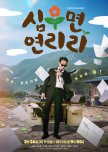
Kimchi Jjigae with Gummy Bears
Ok...Let me tell you about my latest kdrama heartbreak. It was supposed to be Cabbage Your Life, a cozy, countryside romp about a city family dumped in the middle of nowhere, learning to farm cabbage and, presumably, themselves. It had all the ingredients for a perfect comfort watch. A fish-out-of-water premise, a "dopamine detox" vibe, the promise of community healing. I was ready to be charmed. I was ready to fall in love with a grumpy village chief and a bumbling corporate dad.And then the romance happened. And I dropped it like a hot potato. Or should I say, a rotten cabbage.
Let me back up. The show sets up this wonderful, classic scenario: Sung Tae Hoon (Park Sung Woong), a big-shot corporate guy, gets forcibly relocated to the rural village of Yeonri-ri with his family. He knows nothing about farming. His wife, Jo Mi Ryeo (Lee Soo Kyung), is a "super mom" who raised their kids alone. Their kids are a mess: a med student who secretly dropped out, a troublemaker desperate to get back to Toronto, and a cute youngest son. The stage is set for Schitt's Creek in Korea. A wealthy, clueless family meets a quirky, tight-knit community. Hijinks ensue. Hearts are warmed. It's a formula that works. It's a formula that has worked, beautifully.
But here is where it all goes wrong. The show, in its infinite wisdom, decided that what this perfectly good family comedy really needed was a forced, tepid romance between the eldest son, Ji Cheon (Lee Jin Woo), and the village chief's daughter, Bo Mi (Choi Gyu Ri). And not just a little romance. A love triangle, because apparently, we cannot have a kdrama without a damn love triangle!
Let me be blunt: I have absolutely zero patience for this stuff. None. Zip. Nada. The moment the show started hinting at this narrative detour, my eyes glazed over. It was not just unnecessary; it was actively annoying. It is like being served a beautiful, steaming bowl of kimchi jjigae and then finding a handful of gummy bears floating in it. What are you doing? Why are you ruining a perfectly good thing?
And the worst part? The actors playing this couple have all the romantic chemistry of a wet paper towel. Watching them is like watching two mannequins being pushed together by an invisible hand. There is no spark, no heat, no anything. Every time they appeared on screen, I felt my soul leave my body. I would find myself suddenly fascinated by the texture of my ceiling, or counting the tiles on my floor, just to have something, anything, to look at other than their wooden, lifeless interactions. It was so close to being Schitt's Creek coded. So close! That show understood that the romance was a side dish, not the main course. The heart of that show was the family's ridiculous, beautiful, painful growth. Here, the romance felt like an anchor dragging the entire ship down.
And then there is the other thing. The thing that made me want to throw my remote at the TV.
The kids speak in broken English. Because they went to Canada.
Now, look. I get it. They are supposed to be from Toronto. But the execution is so painfully cringey, it is like listening to a bad high school play. It is not cute. It is not funny. It is just embarrassing. It feels like the writers went, "How do we show these kids are from abroad? I know! Let us have them randomly insert English words into every sentence, but make sure they sound like they are reading from a textbook from 1985." It pulled me right out of the story every single time. I'm Canadian, we don't talk like that!
All of this: the forced romance, the lack of chemistry, the broken English. It all adds up to one big, missed opportunity. This show could have been a Schitt's Creek. It could have leaned hard into the "fish out of water" theme. It could have given us a family of lovable, flawed weirdos slowly finding their place in a community that initially rejects them. Instead, it gave us this. A show that could not trust its own premise, that felt the need to shoehorn in tired tropes because it was too scared to just be a simple, good-hearted comedy about family and cabbage.
The reviews call it a "cozy, pollution-free comedy", a "dopamine detox", "masterful storytelling". And maybe, for some people, it is. Maybe they can look past the forced romance and the awkward English and see the heart of the show. But for me? It was a betrayal of everything it promised to be. It was so close to being great. So close. And that is what makes it so much more frustrating.
So I am moving on. There are too many good dramas out there to waste my time on one that does not respect its own potential. Cabbage Your Life had a chance to be something special. Instead, it chose to be mediocre. And I, for one, have no patience for mediocre.
Was this review helpful to you?
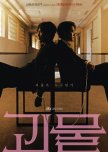
Trust, Secrets, and The Cost of Catching a Killer
I have watched a lot of crime thrillers over the years, and I have developed a certain resistance to them. I know the beats, the red herrings, the episode-six twist that recontextualizes everything, and the tearful finale where justice is served and everyone learns a valuable lesson about teamwork.So when I sat down to watch Beyond Evil, I was prepared for competence. I was not prepared for what I actually got, which was something far more unsettling, far more beautiful, and far more human than I ever expected. This is a drama that does not just ask who did it; it asks what it costs to find out, and whether the pursuit of justice can ever truly leave you intact. It is a slow-burn masterpiece that lingers in your bones long after the final credits roll, and I am still not entirely sure I have recovered from it.
The drama is set in the small, sleepy town of Manyang, a place that looks picturesque on the surface but carries the weight of a twenty-year-old unsolved serial murder case. At the center of it all is Lee Dong-sik, played by Shin Ha-kyun, a detective who was once the prime suspect in those very murders and who still carries the trauma of his missing twin sister like an open wound. His life is upended by the arrival of Han Joo-won, a young, elite detective from Seoul played by Yeo Jin-goo, who transfers to the Manyang police substation with a single objective: to solve the cold case and prove that Dong-sik is the killer.
What follows is a psychological chess match between two men who distrust each other completely, forced to work together as a new series of murders begins to mirror the old ones. The premise is familiar, I will admit, but the execution is anything but. This is a character-driven drama through and through, and it uses its crime thriller framework to explore something far more profound: the nature of evil, the fragility of human morality, and the devastating effects of grief and guilt on the human psyche.
Let's chat about the performances, because I genuinely do not know where to begin without sounding like I am exaggerating. Shin Ha-kyun, who won the Baeksang Best Actor award for this role, delivers what I can only describe as one of the most extraordinary performances I have ever seen in any medium. His Lee Dong-sik is a man of impossible contradictions: he smiles constantly, often at the most inappropriate moments, and there is something deeply unsettling about that smile. But then he cries, and you see the decades of pain and guilt pouring out of him, and you cannot help but want to believe him.
He runs on impulse, he does questionable things, and he keeps you guessing about his true nature until the very end. One moment he is the most sympathetic character in the room, and the next you are genuinely wondering if he is capable of something terrible. That is the whole engine of the show, honestly, and Shin Ha-kyun plays it with a kind of quirky brilliance that makes it impossible to look away.
For me, this was my first real introduction to Shin Ha-kyun's work, and I absolutely fell in love with his craft. Consider what his character is carrying: for twenty-one years, Lee Dong-sik has been walking around with an unresolved wound, surrounded by the same people, the same memories, and the same circumstances that are tangled up in his sister's disappearance. That is an impossibly heavy burden, and when the truth finally starts to come into focus, the emotion that spills out of him is not clean. It is not simply grief. It is not simply rage. It is not even relief. It is all of it arriving at once, a tidal wave that has been building for over two decades.
And Shin Ha-kyun does not tidy those emotions up for the audience. He does not give you a neat, conventional breakdown with pretty tears and a clear catharsis. He lets Dong-sik crash. That is the word I keep coming back to: crash. His breakdown hits harder than any melodramatic crying scene because Shin Ha-kyun has spent the entire drama teaching me to pay close attention to this man's face. Dong-sik rarely gives you the straightforward emotional response, and that is what makes the moments when he finally breaks so devastating. Shin Ha-kyun employs everything I value most in the actors I love: masterful facial muscle control, microshifts in expression that speak volumes, the powerful use of negative space in his performance, and so much information conveyed in the silences between his lines. He tells you everything without saying a word, and then when he finally does speak, every syllable carries the weight of years. It is a revelation, honestly.
With this single performance, Shin Ha-kyun has easily joined my SSS-tier of actors, a spot that has been held solo for quite some time by the incomparable Shin Hae-sun. They now share the throne at the very top of my personal ranking.
And then there is Yeo Jin-goo as Han Joo-won, who is the perfect foil to Dong-sik's chaos. He is buttoned-up, precise, and seemingly without flaw, but underneath that polished exterior is a man carrying his own secrets and his own deep-seated trauma. Yeo Jin-goo embodies this righteous restraint with absurd skill, and watching these two actors play off each other is genuinely one of the great pleasures of modern television. Their dynamic shifts from rivalry to reluctant partnership to something deeper and more complicated, and every confrontation and reconciliation between them feels hard-won and earned.
The final interactions between Lee Dong-sik and Han Joo-won are, quite simply, some of the most heartbreaking and heartwarming scenes I have ever seen in any kdrama. It is a feat that feels almost impossible to achieve, bringing together two characters who exist on completely opposite ends of the emotional spectrum, one chaotic and wounded, the other restrained and guarded. Yet Beyond Evil manages to knock it out of the park. When these two men finally reach a place of understanding, when all the suspicion and tension gives way to something resembling trust and even affection, it hits you like a freight train. You have watched them tear each other apart and slowly piece each other back together, and the payoff is so deeply earned that you cannot help but feel your heart swell. It is the kind of resolution that reminds you why you invest in characters in the first place, because when they finally find their way to each other, it feels like a victory for everyone who has been watching.
The plot of Beyond Evil is constructed with a terrifying precision. It is a complex, slow-burn psychological whodunit that unfolds over sixteen episodes without ever feeling like it is dragging or rushing. The killer is revealed fairly early in the drama, which might sound like a spoiler but is actually one of the show's greatest strengths. The real mystery is not who did it, but how the characters react when the killer is right in front of them. They are faced with impossible decisions, handed the power to kill or not to kill, and the drama forces them to confront the inherent good or evil within themselves. This is where the title comes into play, because evil, as the show suggests, cannot be controlled by humans; it is beyond human comprehension.
The Korean title, Monster, is equally fitting, because the drama explores the monstrous potential that exists within every character. Everyone is guilty to some degree, and everyone carries a shadow that brings them closer to what they condemn. The show abandons the traditional moral dualism of police dramas and instead plunges into ambiguity. It constantly asks who the real monster is, and leads to the realization that evil is rarely an external entity; it is a latent possibility within the human being. The themes explored here are rich and varied: grief, guilt, betrayal, forgiveness, redemption, and the devastating effects of selfishness and collective silence.
The drama also explores the loopholes and injustice of the legal system, and the way that one person's selfishness can have a knock-on effect that turns everyone into a monster. It is a story about what it means to be a family, and about the lengths people will go to protect the ones they love. And remarkably, despite all of this darkness, the drama manages to feel like a healing show at its core, one that explores what it takes to catch monsters without becoming one yourself.
So here is the thing about Beyond Evil. It is not a fast-paced, crazy chase to catch a killer; it does not rely on cheap twists or high-stakes action sequences. Instead, it respects its viewers by not laying out every answer plainly for us to see, challenging us to make the connections ourselves. It is a drama that requires patience and attention, and if you are not paying close enough attention, you will miss the little hints and details that make the whole thing click into place. But that is half the fun, honestly, and I cannot wait to rewatch it and pick up on everything I missed the first time.
This is a drama that makes you think a lot and gives you profound feelings, especially during a second watch. It is a remarkably well-rounded production that manages to feel amazingly intense while never resorting to cheap tricks or being too fast. Each element of the production helps build up the intensity and emotions, leaving you with a solid contender for best mystery, crime drama, and psychological thriller of the year. It is a rare masterpiece in the psychological thriller genre, one that breaks and constructs many layers of its central concepts while keeping the plot moving. And it does all of this while exploring themes of trust, family, and the thin line that separates justice from monstrosity.
I think this drama is something that defies easy categorization. I think it is a drama that will make you uncomfortable, challenge your assumptions, and leave you staring at the ceiling long after you have finished watching it. I think it is the kind of story that reminds you why you fell in love with Kdramas in the first place, not because of the romance or the action or the polished production values, but because of the depth of emotion and the sheer humanity that Korean storytellers are capable of bringing to the screen. This is not a drama that tells you what to think or how to feel. It trusts you to sit with the ambiguity and find your own answers.
So what is the verdict, then? After all of this analysis, after dissecting the performances, the plot, the cinematography, and the music, what do I actually think of Beyond Evil?
Go watch it.
I have spent years building a vocabulary for explaining why stories matter to me. I have used every part of that vocabulary on countless dramas, dissecting their writing, performances, themes, emotions, and everything in between. For this one, I have nothing more useful to tell you than to experience it yourself.
Even if you are not a fan of serial killer thrillers, Beyond Evil is more than its genre. It is something I genuinely believe every kdrama viewer owes themselves the chance to experience at least once.
That is it. That is the review.
Go watch it.
Extended review is available at byrei.ink
Was this review helpful to you?
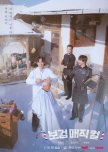
Unscripted Love and Temporary Community
After finishing Climax, which left me in that strange, breathless state where you just stare at the ceiling for twenty minutes, I knew I needed something lighter. Something that wouldn’t demand my usual dissection kit of narrative tropes and character arcs. I wanted to restore my faith in humanity, not dismantle it for parts. So I read the summary for The Village Barber. A reality drama. My first ever. Three celebrities open a tiny hair salon in a remote village. That’s it. I thought I was walking into something simple and heartwarming, the television equivalent of a warm blanket and a bowl of soupSo I walked in expecting something about finding family and community. What I didn’t expect was the gradual realization that unscripted sincerity bypasses every analytical defense I’ve built over two years of watching Kdramas. I wasn’t reviewing anymore. I was just… feeling. And that gradual realization, combined with the shocking emotional weight of this temporary little community, made The Village Barber one of the most emotionally resonant watches I have had this year. So far. And we’re already past the halfway mark.
Let me start with the trio, because you need to know who you’re falling in love with. This is a reality drama, so everyone is simply playing themselves. No characters, no scripts, no second takes on a feeling. First, Park Bo-gum. He obtained his barber license after finishing his military service, and he uses it here for real. This reality drama was my first ever exposure to him, and now I am a fan. He is so genuinely sweet on screen that I found myself smiling at my television. I am now eagerly looking forward to his other kdrama work, but I suspect nothing will top watching him nervously ask an elderly villager if the haircut is okay though.
Then there is Lee Sang-yi. He has always been my favorite actor in any romcom he graces, but here he surprised me completely. The man uses his nail technician license (that he earned because he wanted to spend more time with his elderly mother in between his projects). Yes, this big tall guy has a license for manicures and pedicures. Watching him crouch over a grandmother’s hands, completely focused and gentle, was one of the most unexpectedly tender sights I have seen all year. And finally, Kwak Dong-yeon, the youngest of the three. He acts as the primary provider because he is in charge of preparing all meals while the trio is in the village. I hadn’t seen Kwak Dong-yeon in a while outside of Gaus Electronics, so I was glad to find him here again, chopping vegetables and visibly choked up when one of the village elders complimented his cooking. That moment alone was worth the price of admission.
The guest appearances are worth a mention too. Rain shows up for a few episodes, and the comedic effect of watching these three grown men become absolutely starstruck in his presence was pure gold. It was funny because it was real. I have done that face before. So have you. Watching grown actors suddenly malfunction in front of their idol never stops being funny to me. Kim So-hyun’s appearance was another standout because she came across as incredibly endearing and natural. In fact, this reality drama weirdly accomplished something regular dramas sometimes fail to do for me. It made me want to seek out the actors’ work afterward because I became attached to the people first.
That is the secret weapon of this format, I think. Watching actors react and interact without any narrative constraints oddly made me connect with them even more. The humanization of these people, whom I usually see playing fictional roles, made me feel more affectionate toward them. Sang-yi being starstruck in front of his idol. Bo-gum showing his insecurity when he felt a haircut didn’t come out well. Dong-yeon trying not to cry over a compliment. They felt real. And real is dangerously effective.
And really, that is where The Village Barber truly shines. There is no traditional plot analysis for The Village Barber, so instead let me talk about my reaction as a first time reality drama viewer. The premise is beautifully simple. Park Bo-gum opens the only hair salon in a remote village with the help of his two closest friends. Each episode simply follows the days they spend there interacting with villagers, giving haircuts, preparing meals, laughing, working, and slowly becoming part of the community. The village never feels like a set piece. It is an actual living breathing ecosystem with its own rhythms, its own gossip, its own quiet struggles. The unscripted reactions of the villagers and the cast drive the core emotional engine of the drama, and it is hard not to be invested.
I need to be honest about something. The only reality content I’ve watched before this was nature documentaries like Planet Earth or March of the Penguins. You observe ecosystems, feel wonder about the natural world, maybe concern for species survival, but you’re not forming attachment to specific individuals whose futures you’ll wonder about. A penguin chick either survives the winter or doesn’t, the cameras document it, and you move on. The Village Barber is completely different. You’re watching real human connection form between the cast and community members. You see children make handmade bracelets as gifts. You witness elderly customers tear up seeing themselves in the mirror after their first proper haircut in months. These aren’t anonymous documentary subjects. They’re people I’ve come to know through observation, and their lives will continue completely outside my awareness once the show ends.
Why does it work so well? I think it is because the drama knows exactly what it is. A temporary ecosystem. Affection formed through repeated mundane coexistence. The unbearable tenderness of regular people. The unscripted reactions from both villagers and cast drive the show’s emotional engine, and it’s impossible not to get invested. For example, there’s a fifth-grader with the temperament of a sage. That’s not a fictional character trait written for narrative purpose. That’s just who she is. Her friend who’s been cooking since age eight, helping her grandmother in the kitchen, is endearing not because someone scripted it that way but because that’s her actual life.
This reality, this genuineness, weaponized my lateral empathy in ways scripted content never could. Every connection and affection shown in each episode compounds the emotional weight without making it explosive. These are genuine real people being documented by a film crew, and I’m experiencing everyone’s emotions from all angles simultaneously because my lateral empathy can’t create protective distance.
So when Park Bo-gum tried and failed to hold back tears in the final episode, it devastated me. When Lee Sang-yi admitted in a talking head that he usually keeps boundaries during filming projects like this because he knows departure hurts, but he thinks he crossed that line this time, it hit even harder. This is the entire difference between fictional attachment and real human presence. In scripted dramas, I know it’s performance even when brilliantly executed. Here, I’m watching emotionally guarded adults openly struggle with the reality of attachment. Because unlike scripted heartbreak, this sadness comes from genuine human presence. These are not fictional attachments contained neatly within a narrative. These are real people forming temporary bonds while fully understanding separation is inevitable from the very beginning. These are professional actors who know how to control their presentation. They went in knowing departure was built into the format. Sang-yi explicitly tried to maintain protective boundaries. And despite all that preparation, they couldn’t get through their talking heads without breaking down. That’s genuine overwhelm.
Each episode kept me glued to my screen despite running over ninety minutes. The mundane slice-of-life rhythm is my kryptonite, and reality television magnifies my empathy for it. I watched them cut hair, prepare meals for customers waiting in the shop, help elderly villagers move furniture or repair greenhouses. Nothing dramatic happens in the traditional narrative sense, yet I never felt bored. The satisfaction comes from watching competence and care in real time. Someone needs a haircut, the cast figures out what style suits them, they execute it, the customer leaves happy. That’s the whole loop, and it’s deeply pleasurable because completion is built into every interaction.
One sequence particularly proved the show’s authenticity. The fifth-grader gave all three guys handmade woven bracelets. Sang-yi was visibly moved by the gesture. Later, he accidentally lost his bracelet (it got caught in the disposable gloves he uses for nail services and thrown away). He panicked and spent the entire night searching for it, pulling the entire film crew with him even though they’d already worked a full day. When they finally found it, he kept apologizing and thanking the crew for helping, despite being the star of the production. That whole sequence could have been cut from the final edit and viewers would never know it happened. But they included it because it revealed something genuine about care and community. The crew didn’t just film his distress, they participated in solving it. One crew member even offered to review footage to trace when Sang-yi last wore the bracelet. That’s not extractive documentary filmmaking. That’s a collective group operating on shared values of mutual support.
This format also worked brilliantly for seeing my favorite actors in a completely different light. Watching them interact without narrative constraints made me connect with them even more and look forward to checking out their work. Kim So-hyun is the perfect example since I’d never seen anything she’d done before, but now I want to. Park Bo-gum falls into this category too. The humanization feels almost unfair in its effectiveness. Sang-yi being completely starstruck in front of his idol Rain, to the point of freezing up despite being the warm extrovert who connects with everyone. Bo-gum showing insecurity when a haircut didn’t turn out well. Dong-yeon visibly choking up when a village elder complimented his cooking. These moments made them feel genuinely human and endearing in ways polished promotional content never achieves.
The final episode was structured as one long goodbye. The guys handwrote personalized thank-you letters to every customer and villager who’d visited throughout all nine previous episodes, including photos taken after their haircuts. Episode ten became a relentless emotional assault, condensing everything built over the series with flashbacks and clients coming to pick up their letters. And when the cast themselves failed to hold back tears during their final interviews, I was undone. I was holding strong until that point, but watching their defenses fail in real time broke me completely.
By the end, I was genuinely grieving the separation. The realization that there would be no more tomorrows with these people hit hard in a way I wasn’t prepared for. And because these villagers are ordinary people, not celebrities I can continue following afterward, the separation somehow hurt even more. Their lives continue somewhere outside the frame while my access to them simply ends. That creates a strange bittersweet feeling I rarely experience with fictional characters I found myself thinking about the village girls the morning after, wondering how they’re doing now that school’s starting again, wishing them healthy and happy. That’s not parasocial attachment to characters, but a real care for real people whose lives continue somewhere I can’t see.
If I’m being thorough, there are minor flaws. Some episodes ended on manufactured cliffhangers that felt unnecessary. I understand editors probably thought a project about daily village life needed tension or escalation, but I’m a firm believer the show would work without it. The bracelet search worked as tension because it was genuine crisis, but some other moments felt overblown. I wish they’d trusted the setting and unscripted nature more. That said, this might just be standard reality television formatting, and I can’t really fault them for following genre conventions.
Out of all the healing reality dramas airing this year like Curtain Up, Class! or Fresh Off The Sea Season 3, I somehow gravitated toward this one. The one built entirely around temporary community and inevitable separation. And honestly? I am glad I did. Not only did The Village Barber expand my perspective on reality dramas, it also reinforced something I have written about before regarding my own lateral empathy. This series affected me in a way I genuinely did not expect. Enough that this becomes the first drama ever to receive my Perfect 10 badge without an accompanying massive long form dissection.
It’s also my first back-to-back Perfect 10 after Climax just earned the badge. Not because The Village Barber doesn’t deserve extensive analysis, but because after experiencing it myself, I firmly believe this is a story best experienced directly. Dissection would create distance between you and what makes it work. My Perfect 10 badge isn’t about word count or analytical depth. It’s about work that affects me profoundly days after finishing, and this show passed that test completely. The morning after watching the finale, emotion returned to baseline, I was still thinking about those villagers and wishing them well.
So treat this review less as a breakdown and more as an invitation. Because what The Village Barber accomplished cannot fully be translated into words, and this is all I had in me to explain why this drama quietly became one of the most meaningful experiences I had this year.
If you ever need to slow down for a little while, watch ordinary people slowly become dear to one another, and remember how beautiful simple human affection can be, The Village Barber is waiting.
Was this review helpful to you?
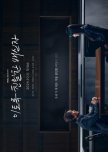
Doubt: Perfect Crime, Perfect Drama, and The Price of Not Fitting In.
Doubt may wear the coat of a crime drama, but at its core, it’s a love story. Not romantic love—familial love, complicated love, the kind of love that doesn’t always come with hugs or forgiveness, but endures anyway. And when the final scene fades to black, it leaves you not with answers, but with peace.Han Suk-kyu—seasoned, subtle, and impossibly magnetic—plays a man hollowed out by decades of unanswered guilt. His silences are louder than most actors’ monologues. There’s a stillness in him that feels earned, like every step he takes is weighed down by memories he can’t speak of. He doesn’t need dramatic speeches or cathartic breakdowns to deliver emotional impact—one glance, one sigh, one hand reaching across a table is enough to crack you wide open. It’s a performance that doesn’t beg to be understood, yet somehow understands you.
And then there’s Chae Won-bin—a revelation. If Han Suk-kyu is the immovable mountain, she’s the weather crashing against it: volatile, brilliant, and unpredictable in the most human of ways. She plays Ha-bin not as a tragic character, but as a person—flawed, impulsive, tender, angry. Someone who has armored herself with survival instincts but never lost the child inside who just wanted someone to choose her. Chae Won-bin delivers one of the most mesmerizing performances I’ve seen in years. As Jang Ha-bin, she plays an 18-year-old girl born into the role of “monster” long before she could form an identity of her own. Monotone, still, and emotionally distant, Ha-bin could have easily become a flat archetype. Instead, Won-bin crafts a deeply internal world through every micro-expression and unblinking stare. She makes us ache for her, with her, and because of her.
Ha-bin walks a razor’s edge, constantly being measured against other people’s fear of her, while holding onto something that looks dangerously like hope. There’s a fire in her—not destructive, but defiant. A refusal to be erased. A stubborn belief that she is still human, even when the world tells her she isn’t allowed to be. Every time she’s misunderstood or mishandled, the drama quietly asks us: what do we owe to the people we’ve failed to protect? What happens when someone has been hardened by abandonment and then punished for the shape they took to survive?
Doubt opens with the familiar silhouette of a murder mystery—an abandoned corpse, a daughter suspected of killing her brother, and a father caught in the crossfire between his instincts as a legendary criminal profiler and his obligations as a parent. On paper, it seems procedural. In reality, it’s a requiem for every word a parent never said, and every child who waited too long to hear it.
At its heart is the aching dynamic between Jang Tae-soo, a father who once believed that keeping his distance would protect his child, and Jang Ha-bin, the daughter who grew up believing she was unworthy of warmth. Their relationship is a wound long scabbed over, but never healed. Tae-soo tiptoes around her like a man afraid of setting off a landmine—yet the landmine is of his own making. Years of avoidance, neglect, and silent accusations have built an emotional terrain so treacherous that even when he tries to reach her, his hands tremble with guilt.
Meanwhile, Ha-bin has lived her life under the microscope, examined like a strange insect rather than embraced as a human being. She’s brilliant, yes. Self-contained. But those aren’t threats—they’re defenses, honed from years of being seen not as a daughter, but as a question no one wanted to answer. She grew up in a home that made her feel like she was always on trial, waiting for a verdict that never came. And when her mother dies and suspicion turns toward her, it’s less a shock and more a confirmation: of course they think she did it. They’ve always thought she could.
This drama doesn’t ask who committed the murder. It asks: what do you do when the people you love are the first to doubt you? What happens when the narrative of your life has been written in pencil by someone else’s fear, and you’re finally trying to rewrite it in ink?
The genius of Doubt lies in how it frames this all within the bones of a suspense thriller. The plot moves with perfect pacing—no wasted scenes, no meandering detours. But the deeper you sink in, the more you realize: the real tension isn’t about who killed whom. It’s about whether this father and daughter can find each other before it’s too late. Whether love, when it’s been buried under suspicion for decades, can still be exhumed and revived.
Halfway through Doubt, you’re no longer just watching. You’re participating. You either hold the line for Ha-bin’s innocence with white-knuckled conviction, or you quietly slide into the abyss of suspicion alongside her father. It’s not the plot twists that will break you—it’s what the story reveals about your own threshold for trust. Jang Ha-bin isn’t a character so much as she’s a mirror. You’ll either see a monster staring back at you, or a young girl gasping for air in a house built from suspicion. Watching Doubt is like playing chess in a burning room—every move matters, but the smoke is getting thicker, and you’re not sure if you’re trying to win… or just survive.
You know every move matters, but the heat keeps clouding your judgment—and maybe that’s the point. Once the smoke clears, Doubt doesn’t ask whether you got the ‘right answer.’ It asks whether your answer says more about the story or about you. Jang Ha-bin isn’t here to be understood. She’s here to reflect. The real question is: when you look at her, do you see a monster? Or do you see a young girl clawing for air beneath years of silence? Whatever answer you give says far more about you than it does about her.
This is the story of a father and daughter trying—desperately—to unfreeze a relationship buried under years of unresolved trauma. Of a girl deemed monstrous before she could define herself. Of a man who wants to protect his child but no longer knows how.
Let’s talk about the visuals—because Doubt isn’t just watched, it’s felt in the bones, in the silences, in the empty corners of the frame. This drama is a masterclass in visual storytelling, particularly in how it weaponizes negative space, light and shadow, and compositional distance to amplify emotional and psychological weight. It doesn’t just show you conflict—it frames it, isolates it, stretches it across a wide, echoing void.
Take, for instance, the scenes between Ha-bin and her father, Tae-soo. From the very beginning, they are rarely framed in close proximity. Instead, the director opts for wide-angle shots—those cavernous, spatially exaggerated compositions that make even a simple dinner feel like an interrogation. Often they sit across from each other at a long dining table, the kind of shot that turns familial warmth into emotional warfare. It’s not just dinner. It’s a standoff. And the food between them may as well be evidence in a case neither of them wants to prosecute.
Even when they’re not physically together, their separation is visualized through clever use of light and dual shadows. One early scene shows them in entirely different locations—Tae-soo on a lonely street, Ha-bin in a dim hallway—yet both are framed with double shadows cast behind them, thanks to streetlights and passing cars. You might miss it if you’re not paying attention, but those twin silhouettes speak volumes. These are two people fractured within themselves, doubting not only each other but their own instincts. The shadows are metaphors for their inner splits—the versions of themselves they’re trying to protect, and the versions they’re afraid they’ve become.
The drama is deliberate—almost surgical—in its use of negative space. It isn’t afraid to leave the frame empty. In fact, some of the most unsettling moments happen when the subject is barely there at all. Characters are placed at the extreme edges of the screen, swallowed by cold, blank living room. Or worse—entirely out of focus, their presence only visible through a reflection in a mirror, or the slight shift of a curtain. It’s not just aesthetic; it’s thematic. Doubt uses visual distance to reinforce emotional distance, and by the time you notice it, you’ve already started to feel it in your gut.
In Doubt, silence is loud, shadows are characters, and empty space is never truly empty. It’s filled with everything the characters can’t say, every unspoken accusation, every withheld apology. The camera doesn’t just record—it judges, questions, and sometimes even condemns. You don’t just watch Doubt. You navigate it—frame by frame, breath by breath, hoping that in all that stillness, you’ll find something true.
If the visuals in Doubt draw you into its emotional geometry, the sound design is what keeps you there—trapped, breath held, heart in your throat. Doubt doesn’t rely on sweeping musical scores or melodic ballads to cue your emotions. Instead, it leans into silence, minimalism, and raw audio textures to weaponize the mundane.
In previous reviews, I usually scored music based on the presence and quality of a full vocal OST. But Doubt completely redefined how I evaluate sound in K-dramas. Its impeccable use of silence and ambient detail creates a kind of psychological pressure that transcends conventional scoring. I’ve since adjusted my rubric to recognize this level of auditory storytelling, because what Doubt achieves isn’t just sound—it’s narrative subtext.
What Doubt understands better than most thrillers is that noise isn’t the opposite of silence—tension is. And silence, when handled right, is far more terrifying than any dramatic swell. The absence of music isn’t a void; it’s a spotlight. It forces you to confront the weight of the moment. It makes every word, every breath, every glance hit harder.
The sound team didn’t just enhance the atmosphere—they became co-conspirators in the story. They lured us in with quiet, deceptively soft sonic cues, only to pull them away at the exact moment tension peaked. Silence in Doubt is not absence—it’s precision. It’s control. It’s dread served cold.
This isn’t an OST. This is a soundscape designed to play you like a fiddle. And it deserves a 10 —because it didn’t support the story, it became it
One of the most remarkable sleights of hand in Doubt is that even its supporting characters feel like central threads in the tapestry—never afterthoughts, never filler. Roh Jae-won and Han Ye-ri, as profiler rookies Gu Dae-hong and Lee Eon-jin, become more than just assistants in the investigation. They are narrative instruments—deliberately positioned to mirror the internal conflict of Tae-soo himself.
Dae-hong and Eon-jin represent two diverging worldviews operating within the same system. Eon-jin is clinical, data-driven, emotionally cautious. She sees Ha-bin through the lens of probability and pattern recognition. Dae-hong, on the other hand, is intuitive and heart-forward. He listens not just to what people say, but how they sit in their own discomfort. The tension between the two isn’t loud, but it’s deeply felt.
In many ways, they are the personified yin and yang of Tae-soo’s psyche. Eon-jin reflects his relentless pursuit of facts, logic, and procedural correctness. Dae-hong, meanwhile, channels the side of him that dares to see people not as puzzles to solve, but as fractured humans reaching out in pain. They become living metaphors for Tae-soo’s own battle: to see Ha-bin as either a monster in a mirror or a young lady screaming for someone to believe her.
Gu Dae-hong, especially, becomes an unexpected anchor in this psychological storm. His quiet line—“Police officers are human too”—isn’t tossed in for flavor. It’s the thesis statement of the drama’s entire moral argument. In a world obsessed with being right, Dae-hong reminds us that being human matters more. It’s not weakness. It’s the very thing that grants us the power to break cycles of violence, cruelty, and suspicion.
What makes him stand out isn’t grand speeches or heroic acts—it’s his refusal to join the mob of suspicion. While others in the unit jostle for confirmation bias, looking for ways to close the case and move on, Dae-hong lingers. He listens. He doubts—but not in the corrosive way the title suggests. His doubt is a gentle thing, a protective instinct that shields the humanity of others rather than strip it bare. He is, quite literally, the pause in the room full of noise.
In a drama that often feels like everyone’s wearing a mask—posturing, guessing, interrogating—Dae-hong’s presence is like walking into a room with an open window. It doesn’t mean the outside world is safe, but it means someone remembered to let the air in. Every time the narrative winds too tightly around suspicion and procedural coldness, Dae-hong releases some of that pressure. He makes it possible for empathy to breathe.
To be clear, Eon-jin isn’t the villain in this forked road—far from it. She’s methodical because she has to be. In a profession that demands clarity in chaos, her precision is her armor. Eon-jin carries her own kind of burden: the weight of knowing that even a momentary lapse in judgment can cost lives. Her suspicion of Ha-bin isn’t born from cruelty—it’s caution sharpened by experience. Beneath her cold exterior, there’s a flicker of something quieter and far more painful: doubt not about the facts, but about what those facts might miss. She sees that Ha-bin doesn’t fit, and that contradiction unsettles her. There’s almost a desperation in her logic—not to be right, but to make sense of something that refuses to obey the rules she lives by. If Dae-hong offers grace, Eon-jin offers restraint. And both are necessary. Without her, the story would lose its shape. Without him, it would lose its soul.
At the end of this quietly breathtaking journey, Doubt leaves behind more than a resolved case file—it leaves a bruise on your conscience. This isn’t just a murder mystery with a profiler dad and a daughter caught in a spiral of suspicion. It’s a drama about what happens when the people who are supposed to protect you start looking at you like you’re the problem. It’s about the damage done when trust erodes—not all at once, but little by little, like rust under paint.
In another writer’s hands, this could’ve been a sensationalist thriller, all red herrings and plot twists. But Doubt never stoops to theatrics. It’s quiet, unnerving, and deeply intimate. It weaponizes silence. It lets tension breathe. It asks you to sit with discomfort instead of rushing toward easy absolution. And in doing so, it becomes something more powerful than just a drama—it becomes a slow-burning dissection of generational trauma, institutional failure, and the terrible ache of wanting to believe in someone again.
But the real tragedy Doubt exposes isn’t just the trail of corpses left behind in the case files. It’s the slow, quiet execution of someone’s character over the years—someone who might be innocent, who might just be different. A child mislabeled as a threat, a girl raised under the weight of suspicion, a life corroded by sideways glances and whispered what-ifs. The horror isn’t just in what happened—but in how ready the world was to believe she could do it. Not because of evidence. But because of who she was. Because of how she wasn’t like the others.
That’s what Doubt understands so well: justice isn’t just about solving crimes. It’s about seeing people clearly, even when it’s hard. Especially when it’s hard.
Because sometimes, the cruelest thing isn’t being found guilty. It’s never being seen as innocent in the first place.
Full review: https://byrei.ink/2025/07/27/doubt-2024-review-a-masterclass-in-suspicion-silence-and-second-chances/
Was this review helpful to you?
This is such a waste.
I give up.Bloody Flower, you're an 8 episode kdrama. You don't have the time and pacing luxury of still not grabbing me by episode 2 on top of some of the worst acting I've seen in recent time.🤨
How do you even managed to make a story about saint or sinner serial killer so ungodly boring???
No critics on my guy Ryeoun though, he tried his hardest to make the kdrama works, and he did at least showed his range as a serial killer.
But everything else around this one just goes against him, I kinda feel bad for him. Hopefully his next project will be better.
Was this review helpful to you?
When Chaos Feels Like Home
I still remember the exact moment I finally decided to watch Vincenzo. It had been sitting in my playlist for a while, patiently waiting, and I kept finding reasons to put it off. Twenty episodes, each one running close to an hour and a half. That is a lot of commitment, and I will be honest, the length intimidated me. I was worried it would drag, that I would lose momentum halfway through, or that it simply would not live up to the hype. A Korean-Italian mafia consigliere returning to Seoul to recover hidden gold bars while battling a corrupt pharmaceutical empire? It sounded absurd, and honestly, it was. But it was also one of the most delightful, surprising, and genuinely moving viewing experiences I have ever had.Little did I know that when I finally pressed play, what a journey it would take me on. Instead of feeling the weight of that runtime, I found myself rationing episodes toward the end, not wanting the story to be over. Vincenzo is the kind of drama that sneaks up on you, wraps you in its chaotic warmth, and leaves you changed in ways you did not expect. It is a story about justice, yes, but it is also about found family, about the strange and beautiful ways people come together, and about how a man who spent his entire life running from connection finally finds a place to call home. I laughed until my stomach hurt. I gasped at twist after twist. And yes, I cried more than once. If you have been searching for a drama that feels like a warm hug delivered by someone wearing a very expensive Italian suit, let me tell you why Vincenzo might just be the perfect watch.
Let’s chat about the cast first, because this is where my obsession truly began. Vincenzo was my very first exposure to both Song Joong-ki and Jeon Yeo-been, and by the time the credits rolled on the final episode, I had already added half a dozen of their other works to my watchlist. Song Joong-ki plays Vincenzo Cassano, a Korean-born Italian lawyer who was adopted into a mafia family as a child and grew up as a consigliere. What struck me most about his performance was the sheer range he displayed. He could deliver a deadpan punchline that made me laugh out loud in one scene, then turn around and radiate such cold, terrifying fury in the next that I genuinely felt a chill run down my spine. There is a particular scene toward the end of the drama where Vincenzo confronts the group who has wronged him deeply, and the way Song Joong-ki transitions from calm to absolutely chilling is a masterclass in controlled intensity. I remember pausing the episode, turning to my screen, and whispering, “Did he just do that?” It was the kind of performance that makes you sit up straighter and pay closer attention, because you realize you are watching something special. The character’s dark edge never feels gratuitous; instead, it is tempered by moments of unexpected tenderness, especially in his interactions with the residents of Geumga Plaza and, of course, with Hong Cha-young.
Speaking of Hong Cha-young, Jeon Yeo-been is an absolute delight in this role. Her character oscillates between comedic, melancholy, and chaotic with a seamlessness that left me in awe. One moment she is throwing herself into a ridiculous scheme with the energy of a cartoon character, and the next she is sitting quietly, her eyes brimming with a sadness that feels deeply real. Jeon Yeo-been hits every single note perfectly, and it is impossible not to fall in love with her. What I appreciated most is that her character is never reduced to a love interest or a sidekick; she is a full, messy, complicated person with her own goals and her own pain. The chemistry between Song Joong-ki and Jeon Yeo-been is also absolutely delicious. It is the kind of chemistry that simmers quietly under the surface, never devolving into a sappy, overwrought romance. The show trusts its audience enough to let the relationship develop naturally, through shared glances, inside jokes, and a deep, unspoken understanding. As Jeon Yeo-been herself noted in an interview, the qualities that Cha-young lacks can be found in Vincenzo, and vice versa, and as the two gradually influence one another, their chemistry shines through even more. That is exactly how it felt to me as a viewer: two people who start as reluctant allies and slowly, inevitably, become something much more.
But Vincenzo would not be the masterpiece it is without its incredible ensemble of supporting characters. The residents of Geumga Plaza are the heart and soul of this drama, and each of them brings something irreplaceable to the table. They are a rich tapestry of personalities, and the show takes its time to let us get to know them, to laugh with them, and to care about them. Without these characters, the drama would lose much of its warmth and its humor. What I love most is how the show slowly reveals that these quirky, seemingly ordinary people are anything but. The Cassano family, as they come to be known, is a collection of hidden talents and unexpected pasts, and watching them rally around Vincenzo and Cha-young is one of the purest joys of the entire series.
Let me start with the pawnshop duo, because they are an absolute delight. Lee Cheol-wook, played by Yang Kyung-won, is a self-proclaimed martial arts master who is all talk and very little action, at least at first. His wife, Jang Yeon-jin, played by Seo Ye-hwa, is the real powerhouse of the pair. She may look sweet and unassuming, but she is a former national weightlifting champion with a fearless streak a mile wide. Their dynamic is endlessly entertaining, and the moment they truly prove their loyalty to Vincenzo, fighting off robbers in his apartment without a second thought, is when I knew this found family was going to be something special. Jang Yeon-jin even gives Vincenzo two packs of ramen afterward, a gesture so simple and yet so warm that it perfectly encapsulates the show’s ability to find tenderness in the most unexpected places.
Then there is Tak Hong-shik, played by Choi Deok-moon, who runs the dry cleaners. He is meticulous, strict, and initially quite cold toward Vincenzo. But beneath that gruff exterior is a man who cares deeply, and his sweet gestures, like offering free service to Vincenzo and Cha-young before their first trial, are quietly moving. He also turns out to be a former member of the Chung Ju Owl Gang known as “Lightning Scissors,” and the moment he reveals his skills is one of the show’s most satisfying surprises. The snack bar owner, Kwak Hee-soo, played by Lee Hang-na, is another standout. She is a former flyweight boxing champion who can knock out anyone who threatens her people, but she also makes the best tteokbokki in the plaza, and Vincenzo’s fondness for it becomes a recurring thread that quietly underscores his longing for a place to belong.
The Bye Bye Balloon duo, Park Seok-do and Jeon Soo-nam, played by Kim Young-woong and Lee Dal, initially appear as former loan sharks looking out for themselves. But they too undergo a change of heart, and Seok-do’s revelation that he is actually a surgical nurse, the “White Angel” of Geumga-dong, is a beautiful twist that underscores the show’s theme of hidden depths. Jeon Soo-nam is revealed to be Geumga-dong’s spiraea, a flower that symbolizes victory, and his loyalty to the family is cemented when he fights alongside the tenants to protect Vincenzo. The two monks at the Buddhist temple, Monk Chae-sin and Monk Jeok-ha, played by Kwon Seung-woo and Ri Woo-jin, are the calmest of the group, but they are more than ready to fight and protect the Jipuragi team when the moment calls for it.
Larry Kang, played by Kim Seol-jin, is the dance instructor who hides a past as a street fighter. His unique fighting style, which blends dance and combat, saves Vincenzo in episode nineteen, and it is a perfect example of how the show celebrates the unexpected skills of its characters. Seo Mi-ri, played by Kim Yoon-hye, is the piano instructor who is secretly a hacker and the main programmer of the plaza’s vault system. Her quiet intelligence and her subtle crush on Vincenzo add another comedic and narrative layer to the group dynamic. And then there is Ahn Gi-seok, played by Im Chul-soo, a National Intelligence Service agent who goes undercover as Chef Toto’s apprentice. His comical bromance with Vincenzo and his enthusiastic devotion, culminating in him starting a fan club called “Oh My Consigliere,” is pure joy. Each of these characters, no matter how small their screen time, contributes to the rich tapestry of the plaza, and it is impossible to imagine the show without them.
The villains are equally memorable, and they provide the perfect contrast to the warmth of the plaza family. Ok Taec-yeon as Jang Joon-woo is absolutely terrifying, especially once his true nature is revealed. He switches from a bumbling, fluffy-haired intern to a genuinely chilling antagonist with such ease that I found myself genuinely unsettled. There is a scene where he makes an entrance with fire raging behind him, and I remember thinking, “Well, that is a very extra way to announce yourself.” Kwak Dong-yeon as Jang Han-seo is another standout, bringing a complex mix of ambition, vulnerability, and menace to his role. And of course, Kim Yeo-jin as the ruthless prosecutor Choi Myung-hee is a delight to watch, a villain who is both formidable and strangely magnetic.
The plot of Vincenzo is a glorious, chaotic mess in the best possible way. At its core, it is a story about a man who returns to a country he barely remembers to retrieve a fortune in gold bars hidden beneath a crumbling plaza, only to find himself entangled in a battle against a corrupt pharmaceutical corporation called Babel Group. But that simple premise quickly spirals into something far more complex and far more absurd. The show swings wildly between genres, from tense thriller to slapstick comedy to genuinely heartwarming drama, and somehow it all works.
It is an amazing testament to the writing team that a twenty-episode drama with eighty-to-ninety-minute episodes never once felt dragging or bloated. The pacing is tight, the twists are genuinely shocking, and the emotional beats land with real weight. I found myself constantly surprised by where the story was going, and that is a rare and precious thing in television. The show also does a brilliant job of balancing its darker themes of corruption and revenge with moments of genuine levity. There is a running gag involving Vincenzo and Inzaghi, a pigeon, that never failed to make me smile, and the absurdity of some of the schemes the characters cook up is part of the charm. But beneath all the chaos, there is a sincere and heartfelt message about justice, about the power of community, and about what it means to fight for what is right even when the odds are stacked against you.
Visually and audibly, Vincenzo is a feast. The director uses mafia cinematic visual language to great effect: slow-motion shots, grand entrances, dramatic lighting, and a general sense of style that makes every scene feel like it belongs on a big screen. There are moments that feel lifted straight out of The Godfather, and the show wears those influences proudly on its sleeve. But what truly elevates the audio-visual experience is the music. The show makes brilliant use of Italian symphonies, particularly Lacrimosa and Nessun Dorma, which are deployed at key moments to create a sense of grandeur and emotional resonance.
Lacrimosa, performed by LA POEM, is used to stunning effect in several scenes, its haunting melody adding a layer of tragedy and beauty to the proceedings. Nessun Dorma, the famous aria from Puccini’s Turandot, is used in a way that feels both epic and deeply personal. And then there is the original soundtrack, which is just as memorable. Solar’s “Adrenaline” is an absolute banger that I still listen to regularly; it perfectly captures the chaotic, energetic spirit of the show. John Park’s “I’m Always by Your Side” is a beautiful, tender ballad that made me tear up more than once, and Aalia’s “Is This Love” is another standout that adds emotional depth to the romantic moments. The instrumental tracks, like “Night of Sicily” and “Mafia,” are also fantastic, and they do so much to establish the show’s unique tone, blending the sleek, dangerous vibe of a mafia film with the warmth and quirkiness of a kdrama.
So here is my verdict: Vincenzo is genuinely a fun, entertaining watch from start to finish. It has strong, unforgettable characters, amazing chemistry between its leads, a brilliant and unpredictable storyline, and tight pacing despite its twenty-episode length. It is, without exaggeration, one of the best examples of the peak of Korean storytelling that I have ever encountered. It is a drama that made me laugh, cry, gasp, and think, often all within the same episode.
What I did not expect was how rewarding the ending would feel. Some shows build and build and then fumble the landing, leaving you with a vague sense of disappointment and a lot of unanswered questions. Not this one. Vincenzo gave me exactly what I wanted from it: a big, coherent, ridiculous, emotionally satisfying finale that honored every thread the show had been weaving since episode one. The Dance of Fire and the Spear of Atonement were just the two cherries on top of an already decadent sundae. I sat there watching the final minutes with my heart in my throat, and when the credits rolled, I felt something I rarely feel after finishing a long drama: complete and utter satisfaction.
And here is the part that still makes me smile. I slept really well after the final episode. That might sound like a small thing, but it is not. So many intense dramas leave me wired, overstimulated, my brain buzzing with unresolved tension long after the screen goes dark. Vincenzo did not do that to me. My system apparently went through the full emotional equivalent of a roller coaster, sat down for fifteen minutes staring into the void to let the adrenaline settle, and then went to sleep like, “Excellent. That was good for us.” There is something deeply comforting about a story that takes you to the edge and then gently walks you back home.
I think Vincenzo lingers because it delighted me. That is the word I keep coming back to. It did not just entertain me or impress me; it delighted me. I got the joy of watching a character I adore become increasingly himself, shedding the careful masks he had worn for survival and stepping fully into who he was always meant to be. I got the ridiculous schemes that should not have worked but absolutely did. The opera. The black suit transformation. The consigliere coming back out. Cha-young’s chaos. Vincenzo’s deadpan reactions to that chaos. And then, after all that buildup, that enormous emotional release in the final stretch that made every single episode worth it. It is a rare thing to finish a show and feel like you got everything you came for and then some.
And now, if you will excuse me, I need to go check out other works by Jeon Yeo-been and Song Joong-ki, because I am ridiculously smitten with both of them and I am not even pretending otherwise.
Check out the full review and my other reviews on ByRei.ink
Was this review helpful to you?
Venom in a Crystal Glass - The Bloody Brilliance of Hyper Knife
There are dramas that leave scars. Hyper Knife doesn’t just leave one - it opens you up, rearranges your insides, and sews you shut with silk thread and trembling awe.At its core, Hyper Knife is a slow descent into obsession disguised as a medical thriller. A tale of scalpels and sins, of the brain and what breaks it. It follows Dr. Jung Se-ok (Park Eun-bin), once hailed as a prodigious neurosurgeon, now disgraced and operating in the shadows. After losing her license, Se-ok begins cutting more than just gray matter - she carves a new reality, a self-made kingdom where she rules with latex gloves and absolute control. Her kingdom isn’t sterile, though. It’s soaked in arterial red.
Enter Dr. Choi Deok-hee (Sul Kyung-gu), her former mentor, a man equally haunted and equally hungry. Their reunion is less a rekindling and more a chemical reaction - volatile, electric, impossible to look away from. It’s surgical gaslighting meets emotional grooming meets soul-mirroring. Two twisted minds locking horns, not in the chaos of a battlefield, but in the terrifying quiet of an operating room.
Let’s not mince words: Park Eun-bin doesn’t play Jung Se-ok - she becomes her. She peels back every layer of Se-ok’s psychopathy with surgical precision. Each microexpression is a scalpel stroke; each smirk a little incision into our moral compass. Watching her work - both as a character and as an actor - feels like being front row to a high-stakes symphony, where the conductor just might kill you before the crescendo. She doesn’t just act. She devours the screen. She’s terrifying. And mesmerizing. A paradox in scrubs. Her genius in saving lives is matched only by her cold willingness to take them. And the most unsettling part? She makes it look… beautiful.
If Park Eun-bin is the scalpel, then Sul Kyung-gu is the suturing thread that keeps the show stitched together. His portrayal of Dr. Choi Deok-hee, a man simultaneously proud and repulsed by the monster he helped create, is complex and hypnotic. Their relationship transcends categorization. Mentor and student. Creator and creation. Adversaries. Mirrors. There’s twisted love here, the kind that thrives in moral rot. Dr. Choi doesn’t want to destroy Se-ok - he wants to elevate her brilliance, maybe even surpassing his. And maybe that’s why he can’t stop provoking her, even as she spirals into madness.
Their dynamic is a push and pull of surgical strikes and emotional sabotage, of protecting and poisoning in equal measure. One moment they’re trying to outwit each other, the next they’re shielding one another from external threats. You don’t know if they want to save each other - or kill each other. And perhaps neither do they. But that uncertainty? That emotional whiplash? It’s what makes Hyper Knife so addictively watchable.
And yet, beneath the emotional carnage, the drama remembers its supporting cast. Park Byung-eun as Dr. Han Hyun-ho provides the cold, clinical anchor to Choi’s chaos. And Yoon Chan-young as Young-joo, Se-ok’s loyal assistant, offers a fragile thread of humanity in her otherwise blood-streaked world. Around Young-joo, Se-ok isn’t gentle, per se - but she’s less lethal. He isn’t a conscience, but he is a tether. There’s something devastatingly tender about their connection, as if he’s the last remnant of a world where she was just a surgeon, not a shadow.
Visually, Hyper Knife goes for the jugular. Literally. The surgeries are unflinching, the kills operatic. Blood doesn’t just splatter - it dances. And Se-ok? She’s often drenched in it, smiling like she’s just walked off a runway rather than a crime scene. These moments are paired with orchestral music so dramatic it makes murder feel like ballet. The most haunting? Her “baptism by Bach and blood” - symphony swelling as scalpels fly, as morality dies one incision at a time.
The soundtrack is an art piece of its own. “Man of Honour” and “Brain Rhapsody” layer strings over chaos, elevating each cut, each collapse. And the French-titled, slow-dance-ready Dis-Moi, Je T’Aime by U.BAR.E plays like a love song to destruction itself - an ode to the dark intimacy between Se-ok and Deok-hee that neither of them could ever call love, but both desperately clung to like lifelines.
If there’s anything to critique, it’s that eight episodes are simply not enough for something this layered. The second half speeds toward its conclusion, and while nothing feels outright broken, there’s a distinct ache of wanting more. More surgeries. More murders. More of Se-ok unraveling and re-stitching herself with increasingly frayed thread. The pacing rushes what could have been a slow-burn masterpiece, and the tonal shifts - especially as the rivalry mutates into something akin to an affection - can feel jarring.
Also, and this might be the pettiest scalpel in the drawer, but I must say it: if you’re going to sell me a show about a brilliant, perfectionist surgeon, don’t let unsanitized randos waltz into her operating room mid-surgery like it’s a Starbucks. That’s not drama, that’s immersion-shattering malpractice. Se-ok would’ve cut them and their WiFi privileges. Keep your emotional trauma outside of the sterile field!
But let’s not get lost in technicalities. The real draw of Hyper Knife isn’t just its plot or its surgeries - it’s the psychological ballet. The way it asks what happens when genius forgets to look in the mirror. When the person you want to surpass is also the only one who understands you. It’s about obsession, and legacy, and how love can sometimes look like a scalpel pressed just beneath the skin.
The brilliance of Hyper Knife lies not just in its story, but in its audacity to dress brutality in couture. This isn’t just a descent into madness - it’s a waltz into the abyss, choreographed with elegance. Every act of violence, every betrayal, every slice of moral ambiguity is presented with such composure and beauty, you almost forget you're watching something horrific... until the blood pools again. It’s venom in a crystal glass—elegant, poisonous, unforgettable. The kind of drama that seduces you with polish and then guts you with precision. It doesn’t scream. It whispers. And when it cuts, you’ll thank it.
Verdict:
I thought I was prepared for Hyper Knife. I wasn’t.
Park Eun-bin delivers a performance so precise it leaves surgical scars. Her ability to emote from behind a mask is a masterclass—an entire emotional arc delivered through nothing but her eyes and brow, as if her very gaze is a scalpel. Cold. Clean. Unforgiving. Even when the pacing rushes, or the logic falters in the OR, you stay seated - because Se-ok’s world is too hypnotic to leave. It’s rare for a drama to leave you breathless with tension and awe, but Hyper Knife pulls it off with surgical finesse.
A must-watch for those who like their thrillers sharp, their characters morally feral, and their elegance laced with cyanide.
Final Score: 9/10
Was this review helpful to you?


