
 Editorials
 3
3 3
3 3
3


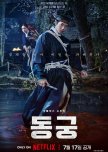
Generational Sin, Hidden Tragedy, and a Palace Full of Wounds
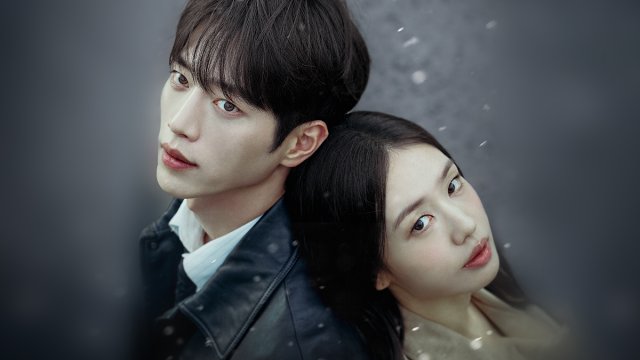
I finished The East Palace last week, and after the screen went dark, my mind kept circling back to one stubborn thought: that cursed palace felt more like a living, breathing monster than any royal residence I had ever seen.The Korean title simply calls it Donggung, the traditional residence of the crown prince during the Joseon dynasty. But the Chinese translation adds two extra characters that mean "ghost" and "mystery," and honestly, they nailed it. Because in this drama, the East Palace is not some hopeful cradle for a future king. It is a nest of vengeful spirits and a breeding ground for a curse that has festered for decades. Successive crown princes have died in bizarre ways, and the palace whispers that a vengeful spirit in the pond has sworn to wipe out the royal bloodline. The king secretly summons a ghost hunter named Gu Cheon, a man who can cross between the living and the dead, and assigns him a court lady named Saeng-gang, who can hear the voices of ghosts, to keep watch. The two distrust each other from the start, but they are forced to work together, peeling back layer after layer of a thirty-year-old court conspiracy.
To be perfectly honest, that premise alone had me hooked. Historical drama, ghosts, and sageuk court intrigue, three elements I cannot resist, all tossed into one bowl like a ramyun with double toppings. As someone who always enjoys layered storytelling and cerebral chess narratives, sageuk is my kryptonite. The East Palace promised a puzzle box wrapped in period clothing, with supernatural chills as the seasoning on top. I knew before I even pressed play that I was in for a treat.
Let us talk about the cast first. Nam Joo-hyuk returns in his first post-military role, playing Gu Cheon, an exorcist who can freely move between the human world and the spirit realm. The Nam Joo-hyuk I knew was Baek Yi-jin from Twenty-Five Twenty-One, sunny and bright, the kind of smile that could light up an entire screen. But here, he has packed away all that radiance and replaced it with a face that says, "I have seen too much life and death, and I do not have the energy to explain myself to this world." I could not help but notice how naturally Nam Joo-hyuk wears loneliness like a second skin. He is exceptionally good at hiding his pain behind that quiet, solitary exterior, letting just enough of the ache flicker through his eyes without ever spilling it outright. There is a difference between performing sadness and embodying it, and Nam Joo-hyuk clearly belongs to the latter camp.
Then there is Roh Yoon-seo as court lady Saeng-gang, and she is another revelation. To be honest, she was one of the core reasons I picked up The East Palace in the first place. I first encountered her in Our Blues, where her masterful acting gave me one of the most compelling teen pregnancy stories I had seen in a while. Then I saw her again in Crash Course in Romance, and once more, I fell in love with her acting as a student handling senior high-school pressure. There is something about Roh Yoon-seo that feels remarkably grounded; she never overacts, never reaches for cheap tears or dramatic flourishes. Instead, she lets her characters breathe.
In The East Palace, she sheds her good-girl high school image completely. Saeng-gang is no sweet, helpless heroine waiting to be rescued. She is a woman with her own schemes, her own stubborn obsession with uncovering the truth about her mother's death, and her own quiet determination to navigate a world that has never been kind to her. Born with the ability to hear the voices of the dead, she carries that curse not with melodrama but with a weary acceptance that feels deeply lived-in. The king plants her beside Gu Cheon as a spy, but she has her own agenda. Roh Yoon-seo brings a layered performance that balances vulnerability with steel; you can see the grief simmering beneath her composed surface, but you also see the sharp intelligence calculating every move. She is not just a love interest or a sidekick; she is a fully realized character.
The relationship between Gu Cheon and Saeng-gang starts with mutual suspicion, then slowly builds into trust and shared purpose, but it never rushes toward romance. Their connection is built through actions, a shared glance, a fight fought back-to-back, a sentence left unfinished. Their bond is subtle, emotional, and unspoken. And I really appreciate that The East Palace never reduces Saeng-gang to a mere sidekick female lead. There are moments where she takes point on the investigations, piecing together clues while Gu Cheon follows her lead. She is not there to simply support his journey; she has her own arc, her own ghosts to face, and her own battles to win.
And I cannot skip over Cho Seung-woo. I first encountered him in Stranger, where he played the emotionless but brilliantly perceptive prosecutor Hwang Si-mok. There is something about Cho Seung-woo that I have always found magnetic; he brings this effortless raw magnetism to every role, a kind of quiet intensity that makes it impossible to look away. That same quality is on full display in The East Palace. He plays the king, and his character carries the densest emotional weight in the entire show. His screen time is not the longest, but every scene he is in crackles with authority. This king swings between mercy and ruthlessness so deftly that you can never tell whether he is a victim or a perpetrator. Cho does not need to raise his voice to terrify you; he sits perfectly still, and a single look from him offers ten different possible interpretations. By the end, you realize that this king is both the maker and the sufferer of the curse. A character this morally complex could easily become a caricature, but Cho handles it with just the right touch.
Now, let us dive into the plot itself. The East Palace opens with a classic sageuk mystery: crown princes have been dying, one after another, over the last thirty years. What follows is a truly fascinating web of lies, tragedies, deceptions, betrayals, and redemptions that only a well-crafted sageuk can achieve. The show weaves together multiple timelines, hidden identities, and long-buried grudges with intricate care. Every character has a secret, every kind gesture hides a knife, and every whispered conversation feels like it could tip the entire kingdom off balance. I found myself constantly second-guessing my own theories, only to have the drama neatly upend them with a new revelation. It is the kind of storytelling that trusts its audience to keep up.
The conspiracy at the heart of the show stretches back generations, tying together the fates of court officials, royal concubines, and even the lowliest servants. Gu Cheon and Saeng-gang are not merely solving a supernatural mystery; they are untangling a knot of human wrongdoing so tightly wound that it has taken on a life of its own in the form of vengeful spirits. The drama balances its human drama with its ghostly elements beautifully, never letting one overshadow the other. The ghosts are always a consequence of human sin, never the cause of it.
On the audio-visual craft, is where The East Palace truly elevates itself. Director Choi Jeong-gyu makes a bold visual choice: the real world is rendered in cold, blue tones, while the spirit realm blazes in a barren red. One is cold, the other hot; one is life, the other death. The colour palette alone tells half the story. The blue of the real world feels suffocating, full of rules and pretense. The red of the ghost world is chaotic, primal, and free from the need to maintain dignity. The red, in particular, is used to denote the realm of gwi, the spirits, and it creates an unsettling contrast that makes every transition between worlds feel jarring and dangerous.
And the production team clearly did not cheapen out on the effects. The CGI is surprisingly robust, bringing the various ghostly entities to life with impressive detail. But beyond the visual effects, the sword fight choreography deserves special mention. The action sequences are truly breathtaking; they are fast, visceral, and beautifully staged, with none of that shaky-cam nonsense. Every clash of blades feels weighty and consequential. It is rare to find a drama that balances supernatural chills with such grounded, physical action, and The East Palace manages that balancing act with surprising grace.
But what truly moved me about The East Palace was not the flashy special effects. It was the core theme hidden beneath the ghost story. On the surface, this drama is about catching spirits, but underneath, it is about the human heart. The very name "East Palace" becomes a grand irony: it should be a place that nurtures a future monarch, but instead it is occupied by curses and vengeful souls. The real corruption never comes from ghosts; it comes from people. The real contamination is in the entire system of power. The most vicious characters in this show are never the snarling spectres; they are the living. The ghosts may haunt the halls, but their fury is always a reflection of something far more human. The real question the drama keeps asking is not who the ghosts are, but who made them that way.
This idea, that a curse is merely an extension of human wickedness, is not entirely new, but The East Palace wraps it in a court-mystery package and executes it with satisfying coherence. The whole story is about karma and retribution, about the sins of one generation being paid for by the next. And when the drama finally offers its resolution, it does so not with a grand exorcism, but with something far more unexpected: the king finally embracing humility, acknowledging his own humanity. That ending made me pause and think. I realised that true exorcism does not require a sword; it requires confession. Some curses persist only because no one is willing to admit they did something wrong.
Of course, the drama is not flawless. With only eight episodes, some plot points feel rushed. A few rules of the ghost world are not explained clearly enough, and I occasionally found myself confused about the logic of certain supernatural mechanics. Also, the heavy use of dark, shadowy scenes does get a bit tiring on the eyes after a while. Beyond that, The East Palace relies heavily on concepts from Korean shamanism, Buddhism, and Taoism that might not be familiar to Western audiences. The concept of Samsara is mentioned but never explained, and terms like Ak-gwi, Gwi-mae, and Won-gwi are used without translation. For those familiar with this lore, these are excellent Easter eggs; for others, it can be confusing. If you want to dig deeper, I posted a brief educational thread on my BlueSky account that you can use as a cheat sheet.
But these issues never overshadow the show's strengths. The East Palace is a work I would gladly recommend; its greatest assets are the performances, the story, and the atmospheric tension.
Lying in bed after that final episode, I thought: if the East Palace were a real place, it would not be a beautiful royal building. It would be a massive, silent wound. Those ghosts were not there for revenge, not really; they were there to remind us that every person who steps into the heart of power is walking on bricks that may be soaked in someone else's blood. Gu Cheon and Saeng-gang were just two people who wandered into that wound and tried to help it heal.
So, would I recommend The East Palace? Strongly yes, but with an asterisk. It boasts some of the best cinematography and fight scenes I have seen this year. For anyone missing a good sageuk, this is absolutely worth your time. That said, it suffers from the same tight runtime that pulled down The Art of Sarah from greatness, and unlike that show, this was clearly designed with multiple seasons in mind. That may frustrate viewers who prefer neatly wrapped endings. But even with those frustrations, I do not regret a single minute. The journey was thrilling, the characters stayed with me, and the themes of guilt and redemption resonated far deeper than I expected. If you go in knowing that not every mystery will be solved, I think you will have a wonderful time. It is not perfect, but it is ambitious, visually stunning, and emotionally rich.
And that, I think, is enough.
Was this review helpful to you?
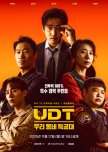
It Takes a Village to Stop a Terrorist Threat
There is a specific kind of drama I reach for when I need to decompress between the heavy ones. Not something I want to deeply dissect at 2am, but something warm and propulsive, the kind of show going down easy while still leaving you smiling at the credits. Heroes Next Door was exactly this for me. My second ensemble kdrama after Seoul Busters, I picked it up as a ten-episode palate cleanser before diving into something with more emotional weight. Ten episodes, roughly sixty to seventy minutes each, and Yoon Kye-sang in the lead. At that point, the decision practically made itself.This is my third Yoon Kye-sang drama, and watching him play Choi Kang, a former JDD special forces operative turned insurance investigator quietly embedded inside an ordinary neighborhood, I kept thinking about how much range this man carries with such apparent effortlessness. His Chocolate character was a doctor who had walled off his emotions so thoroughly you almost forgot he had any. His character in The Winning Try was a tragic jester, a man who weaponized his laughter to keep everyone from seeing how broken he was inside. Choi Kang sits somewhere between both of those men, and watching Kye-sang navigate the balance within a single scene, from cracking up at his daughter’s kindergarten recital to flipping a switch and becoming the kind of man who neutralizes threats with terrifying quiet precision, is genuinely something to behold. Director Jo Woong reportedly cast him specifically because of his ability to hold coldness behind a warm smile, and as the drama unfolds, you see exactly what he meant. It is not something you teach an actor. Either you have it or you do not, and Yoon Kye-sang absolutely has it.
Jin Sun-kyu as Kwak Byeong-nam, the hardware store owner and former HID counter-terrorism operative who has also somehow been the neighborhood youth association president for thirteen consecutive years, brings an energy to this drama I did not see coming. I had not encountered his work before, but the bromance chemistry between him and Kye-sang is the beating heart of the whole show. Their dynamic carries equal weight in the action sequences and the comedy, and pulling both off simultaneously is a genuinely rare thing. My personal favorite among the leads, though, was Kim Ji-hyun as Jung Nam-yeon. Unfamiliar with her prior work, I was not prepared for how much she would hold my attention. She plays the Mammoth Mart owner and former youngest drill sergeant of Korea’s elite 707th Special Mission Battalion with a calm, measured precision I found completely addictive. Nam-yeon never raises her voice when she does not have to, and Ji-hyun understands exactly how much authority lives in stillness. Lee Jung-ha rounds out the core squad as Park Jeong-hwan, the engineering student and tech brain of the group. Fans of Moving will recognize him immediately, and his character here follows a similar trajectory of the earnest, capable young man with a genuinely good heart. He does it well, but I hope his post-military return brings roles with more complexity, so we get to see everything else he holds. Ko Kyu-pil as Lee Yong-hee, the cyber ops specialist and neighborhood martial arts director, completes the five with ease, functioning as the comedic engine alongside Jung-hwan while landing quieter emotional moments with unexpected grace. I will not list everyone in the Changri-dong neighborhood because we would be here all afternoon, but every single one of them earns their place in this story, and the ensemble feels genuinely lived-in rather than assembled by committee.
What surprised me most about Heroes Next Door was how seriously it treated its action sequences despite being, at its core, a comedy. The CQC choreography sits among the best I have seen in kdrama, and I say this as someone who has watched every single Ip Man film. The production clearly brought in professionals, and the result is action feeling grounded and viscerally satisfying rather than theatrical. The ten-episode structure keeps the pacing tight, with almost no wasted runtime, and the central conflict, Sullivan’s entire war against a system that failed his daughter, works because it roots its biggest threat in the simplest human grief. A father who lost everything.
But what I adore most about this drama is what happens between the action beats. The community garden squabbles, the parent-teacher conference chaos, Nam-yeon screaming at Byeong-nam because his EMP knocked out the neighborhood electronics and her freezer full of meat paid the price, Kang and Byeong-nam locked in a full debate over recycling bins. These moments made me wish, sincerely, for a quiet neighborhood slice-of-life spinoff with this exact cast. I would watch every single episode of it without hesitation. The ending also deserves its own moment of appreciation. Most kdramas reach for the moral high ground by letting the villain walk away with some form of forgiveness attached. Heroes Next Door does not take the easy road, and the closure it delivers respects both the villain’s internal logic and the story’s own code. One of the most satisfying endings I have witnessed in recent memory.
The production budget does not stay invisible throughout. The action choreography earns every compliment, but the explosion sequences are a different story. The CGI physics go rogue in several moments, noticeable enough to briefly pull you out of the scene, though none of it derails the overall experience. The audio works within its means far more elegantly. Two standout OSTs carry the heroic set pieces: Higher by Ha Hyun-woo and UDT by Lee Hyuk, both high-octane tracks syncing with the action beats almost perfectly, the kind of songs getting your adrenaline moving before you even register what is happening. The emotional scenes lean on piano soundscapes instead, and the choice works beautifully because this cast carries those moments entirely on their own. The sound production team clearly knew when to step back and trust their actors.
The flaws are real but minor in the grand scheme. Ten episodes is a condensed run, and some side plots feel glossed over as a result, with certain characters not receiving the development they deserve. Sullivan’s arc also wobbles in the later episodes, temporarily shifting him toward Bond villain territory before the finale pulls him back into something more human. The correction lands, but the detour registers. The biggest practical hurdle for international viewers, though, is the streaming situation. Heroes Next Door is an ENA and Coupang Play exclusive with no confirmed global release, meaning anyone outside South Korea has to work a little harder to find it. I find myself genuinely torn about flagging this as a flaw. The drama wears a distinctly Korean neighborhood texture throughout, the kind of cultural specificity global streaming demands sometimes sand down, and there is something I appreciate about it existing untouched. The recycling bin argument hits differently when you recognize exactly which Korean communal anxiety it is pulling from. But it also deserves a wider audience, and right now, fans outside Korea still have to hunt for it on their own.
If you have any way to track Heroes Next Door down, it is worth every bit of effort. It is warm, tight, funny, and quietly touching in all the right places. A neighborhood story with action movie bones and a community garden heart. And Yoon Kye-sang? He maintains his perfect record with me, a hundred percent satisfaction rate across every drama of his I have watched. Whatever he picks next, I will be there, front row, no questions asked.
Was this review helpful to you?
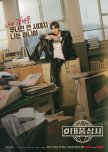
Typhoon Family Hurts in All the Right Places
Typhoon Family blindsided me.I went in thinking this would be a lighter, slightly nostalgic “IMF-era but make it comedic” kind of watch. You know the type, scrappy underdogs, a few financial mishaps, lots of shouting over contracts, maybe some inspirational background music swelling at the right moments. I even half-jokingly thought it might be a toned-down Wolf of Wall Street, except with fewer drugs and more fabric.
What I got instead was a drama that looks cheerful on the surface but quietly dismantles you piece by piece, like a house that seems intact until you realize the foundation has been cracking the entire time.
At the heart of it all is Kang Tae-poong, portrayed with emotional precision by Lee Jun-ho, a character who smiles like someone trying very hard not to sink. His father’s sudden death throws him into the deep end of the trading world during the IMF crisis, and from that point on, the drama becomes less about business mechanics and more about endurance. Not the flashy kind. The quiet, grinding kind. The kind where you don’t collapse because there are too many people depending on you to allow that luxury.
What struck me early wasn’t just the financial stakes, but the emotional ones. Tae-pong doesn’t mourn loudly. He doesn’t get a dramatic breakdown or a cinematic cry in the rain. Instead, grief lodges itself somewhere behind his eyes while he takes on the role of head of the family, provider, decision-maker, emotional firewall. When a friend asks him why he hasn’t cried yet, his answer: “I don’t know if I’m sad or angry”, feels painfully real. Anyone who’s ever had to stay functional while breaking internally will recognize that emotional limbo immediately.
The drama excels when it focuses on this kind of emotional subtext, the things characters don’t say, but live with.
The workplace dynamics are another area where Typhoon Family quietly shines. Watching Tae-pong’s employees show up in the middle of a rainstorm to protect rolls of Italian fabric felt foreign and oddly moving at the same time. In a world where work-life boundaries are (rightfully) guarded, this level of devotion can feel uncomfortable to witness. But the drama doesn’t romanticize it blindly. The line “This is our livelihood too” grounds the moment in shared survival rather than blind loyalty. It’s not corporate propaganda; it’s collective desperation during a national crisis.
And that’s the key word here: grounded.
When the drama sticks to realism, failed deals, unpaid deposits, warehouses that leak, partners who collapse under IMF pressure, it’s devastating in the best way. Tae-pong keeps doing the right things, and life keeps knocking him sideways anyway. There’s a particular cruelty in watching someone be earnest, hardworking, and careful… and still lose. That’s where Typhoon Family hurts the most, because it refuses to reward virtue immediately.
But this isn’t a drama about wall-to-wall tragedy. What makes Typhoon Family genuinely compelling is how every emotional beat is anchored in lived-in human rhythms. Tae-poong’s mother, Jung Jeong-mi, played with weathered warmth by Kim Ji-young, becomes his emotional anchor in a world that constantly demands him be strong. Her unconditional support, even when she struggles to accept how their lives have changed, offers the first real emotional release for Tae-poong, and eventually for us.
The moment where Tae-pong finally admits to his mother, “I’m having a hard time,” after losing money on a deal that fell apart? That’s five episodes of silent pressure finally releasing. It’s not melodramatic. It’s not loud. It’s just devastating. And yes, I wept.
Then there’s Oh Mi-seon, brought to life by Kim Min-ha, whose presence in Typhoon Family is quietly magnetic. As the diligent bookkeeper who keeps the company afloat more often than Tae-poong does, she’s hardworking, earnest, and deeply human. The show uses her rooted realism to ground its more sweeping emotional arcs.
Now… we need to talk about the romance. Because this is where Typhoon Family stumbles, not catastrophically, but noticeably.
The main romance never worked for me. Not because it was offensive or toxic, but because it felt unnecessary and oddly misplaced. Tae-pong and Min-ho function beautifully as platonic partners, emotionally, narratively, and tonally. Their shared resilience, mutual respect, and alignment in goals were already compelling. Adding romance didn’t deepen that bond; it diluted it.
Worse, the attempts to make their relationship “cute” often veered into cringeworthy territory. Episode 14’s beach scenes, in particular, had me fast-forwarding, not out of impatience, but because they actively pulled me out of a drama I otherwise cared deeply about. That’s rare for me. I don’t fast-forward lightly.
What makes this flaw more frustrating is that the drama knows how to write romance. The secondary romance between Wang Nam-mo and Oh Mi-ho is proof of that. It’s layered, earned, and deeply human. Nam-mo’s growth from a carefree rich kid into a responsible adult, especially after his mother’s financial collapse, is one of the most satisfying arcs in the show. Their relationship unfolds naturally, without hijacking the narrative or undermining character integrity. Which is why the main romance feels like a miscalculation rather than a lack of skill.
Ironically, this flaw also highlights one of Typhoon Family’s greatest strengths: it almost achieved something rare, a story where the male and female leads could have remained best friends, united by shared purpose rather than romantic obligation. That choice would have been refreshing, even radical, in a genre that often defaults to romance as narrative glue. The fact that the drama comes so close to that kind of perfection makes the stumble more noticeable… and more painful.
Still, despite this misstep, I stayed. I stayed because the world felt lived-in. Because the characters felt resilient without being invincible. Because the pain was earned and never weaponized for shock value. Because even when I knew things would eventually be okay, this isn’t torture porn, the journey still hurt in ways that mattered.
Typhoon Family is not a perfect drama. But it’s an honest one. It’s about people who keep going when the math doesn’t work, when the contracts fall through, when grief doesn’t give them time to process itself. It’s about families, biological and chosen, holding together with threadbare hope and stubborn warmth. And sometimes, that’s enough.
This drama didn’t just entertain me. It sat with me. Quietly. Relentlessly. Like a storm you don’t notice until you’re soaked through.
And honestly? I wouldn’t have it any other way.
Was this review helpful to you?

This KDrama Is Bullshit; Yet Another One with Potential being Destroyed by Disney Plus.
I wanted to love this drama. And for the first few episodes, I did. The Murky Stream starts strong — hellishly strong. The world-building, the morally complex characters, and the interweaving of three separate but connected storylines immediately pull you in. Si-yool’s tragic fall from a promising scholar to a fugitive forced into moral compromise is gripping. Choi Eun’s principled defiance against corruption makes her a heroine you root for instantly. And Jung Cheon’s idealistic struggle to reform a rotten system from within adds a sense of urgency and moral weight. Together, they form what I now call the “triptych of justice” — three perspectives on morality and survival, each compelling in its own right.Rowoon’s performance as Si-yool is phenomenal — restrained rage that threatens to boil over, his every glance and movement telling volumes. The acting is as tight as the writing in those early episodes, and for a moment, it felt like we were watching a masterclass in character-driven historical drama.
And then… the final episode. Or, more accurately, the non-final episode. The story is left hanging, incomplete, clearly set up for the next season — a season that is not promised, only dangled as bait. Let me be clear: this is not a stylistic choice, this is corporate greed masquerading as storytelling. I watch K-dramas because the stories are complete. They are self-contained, satisfying, and deliberate. You can invest in them fully, knowing the narrative arc will reach its conclusion. That’s the whole point. The Murky Stream tears that away in a single, infuriating stroke.
What could have been a tight, nine-episode gem becomes a frustrating, unsatisfying mess in the last few minutes. The “triptych of justice” — Si-yool’s compromise, Choi Eun’s defiance, Jung Cheon’s repair — never reaches closure. The moral and emotional arcs that had been meticulously crafted are left dangling, unresolved, for a future season that may never do them justice.
I have no interest in continuing with Disney+ or any of their forced multi-season “Westernized” treatments of K-drama. They’ve taken a story with precision, depth, and thematic weight, and reduced it to a subscription trap. This is not the K-drama I fell in love with — it’s a hollow, incomplete shadow of what could have been.
Started with immense promise, character-driven brilliance, and thematic depth, only to collapse under a cliffhanger that serves corporate greed rather than storytelling. Avoid if you expect a complete, satisfying narrative — exactly what K-dramas should be.
Was this review helpful to you?
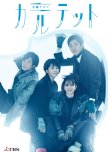
A Sonata of Flaws, Forgiveness, and Found Family
Some stories announce themselves loudly from the very first note. Quartet is not that kind of story.It opens like a hesitant pluck of string on a barely tuned violin—shy, awkward, slow. For the first episode or two, you might find yourself wondering whether you’ve wandered into an avant-garde meditation on adult disappointment. But then, like all the best compositions, Quartet finds its tempo. And when it does, it plays a symphony that is bittersweet, whimsical, aching, and profoundly human.
Set against the frosted silence of a Karuizawa winter, Quartet introduces us to four individuals who each carry a secret like a cello case on their back—heavy, awkward, impossible to ignore. They meet by fate, or perhaps by narrative trickery, and decide to form a string quartet named, of all things, “Doughnut Hole.” The reason? “Because only people with holes in their hearts can create music like this.” That absurdly poignant metaphor is the beating heart of the entire show.
Let’s get this out of the way: Quartet boasts one of the finest ensemble casts I’ve seen in a J-drama. And it’s not just about individual performances—it’s about how they breathe in sync, like musicians sharing one breath across four instruments.
Mitsushima Hikari as Suzume is absolutely mesmerizing. If emotion had a stealth mode, she’s cracked it. Her portrayal of the free-spirited, sleepy, yet emotionally wounded cellist is so layered it’s like peeling an onion while blindfolded—every revelation stings a little, and yet you can’t stop. She brings to life a woman who smiles while her heart crumbles, and somehow, it never feels contrived. Just devastatingly real. Suzume, the sleepy-eyed cellist with a murky past and the soul of a wounded animal, is one of the most layered characters I've seen in a long time. Her ability to mask sadness with whimsy, to cry while smiling, to offer joy while breaking inside—Hikari performs every emotional beat with a terrifying precision that’s impossible to look away from.
Takako Matsu as Maki Maki (yes, really) is equally brilliant in her restraint. Maki is a character wrapped in silk and secrets, a woman who speaks in polite half-truths and musical metaphors, and Matsu delivers her story with the grace of a tightrope walker—careful, deliberate, breathtaking when she finally leaps. The drama wisely waits to unpack Maki’s backstory until the perfect moment, and when it lands, it does so with a narrative weight that hits like a dropped bow on a silent stage. Giving us a character who seems composed on the outside but harbors storms inside. Her backstory unfolds like a tightly sealed letter, opened only when the drama is good and ready—and when it lands, it lands hard.
Issei Takahashi and Ryuhei Matsuda round out the quartet as Beppu and Iemori, each bringing a distinct texture to the ensemble. Beppu is the closest thing this drama has to a romantic lead, though he is so emotionally flammable that romance feels less like a spark and more like a fire hazard. Iemori, on the other hand, is the oddball viola player who speaks in riddles and seems to orbit reality at his own tilt. His interactions with Suzume—chaotic, tender, sometimes absurd—are some of the most charming moments in the show.
What truly elevates Quartet isn’t just the acting—it’s the writing. This is one of those rare dramas where the banter is a highlight. From seemingly pointless debates about whether to squeeze lemon on karaage, to metaphysical musings on love, truth, and identity, every conversation feels like a carefully composed jazz riff: casual on the surface, precise underneath. The humor is deadpan and odd, the emotional reveals are sudden but earned, and the story dances constantly between past and present without warning. It asks for your full attention, but it rewards you for listening.
The dialogue leans heavily on Japanese wordplay and cultural references, which might fly over the heads of non-Japanese speakers. But if you’re fluent or even semi-fluent, it’s a treasure trove of clever puns and emotionally resonant lines that walk the tightrope between comedy and tragedy.
The soundtrack, too, deserves special mention. Not only do the cast members perform the quartet pieces themselves (with some studio magic and a lot of practice), but the original theme song—sung by the actors—is an addictive, jazzy bossa nova earworm that manages to be upbeat and melancholy. Kind of like the show itself.
At a glance, Quartet might seem like your average slice-of-life story. Four strangers. One villa. A musical dream. But under the cozy kotatsu of that premise lies a surprisingly twisty web of deception, longing, and past regrets. But Quartet isn’t really about music. It’s about the people who make it. It’s about what happens when four flawed, lonely, misfit adults accidentally find each other and, without fixing their broken pieces, learn how to play together anyway. The love angles are messy—beautifully so. Suzume loves Beppu, who only sees her as a sister. Beppu pines for Maki, who is still unraveling from a marriage that almost destroyed her. Iemori, ever the pragmatic oddball, quietly protects Suzume from emotional pain, knowing he’ll never be the one she looks at that way. And despite all this emotional entanglement, the show never devolves into melodrama. It just lets the awkwardness, the longing, the unspoken words simmer quietly, as they do in real life.
It’s hard to talk about the plot without spoiling the little moments that make it special. Let’s just say this: every character is hiding something, but this isn’t a mystery show in the traditional sense. The secrets unravel slowly, organically, sometimes out of order, and often without warning. Flashbacks are slipped in with no announcement. Conversations hint at timelines that aren’t immediately clear. You’ll need to listen—not just to the music, but to what’s being said between the silences.
Yes, some resolutions feel rushed. And yes, the plot can get convoluted. But if you surrender to the rhythm, the emotional payoff is worth the patience. There are flaws, of course. The show starts slow—some might abandon it before it finds its rhythm. The plot sometimes spirals into convoluted timelines and subtle cues that could confuse an inattentive viewer. And certain resolutions to conflicts might feel too brisk or unresolved. But the emotional payoff is rich. Quartet is not about tying everything neatly—it's about learning to live with the knots.
If I had to pick one reason to recommend Quartet, it’s Suzume. Her arc is the emotional backbone of the series. She’s the trickster, the wildcard, the dreamer with the saddest eyes. Watching her struggle with unrequited love, personal guilt, and the fear of being abandoned again is like watching someone play a concerto on broken strings—and somehow still create beauty.
Another favorite thread was the quiet understanding between Iemori and Suzume. Their friendship, full of strange conversations and unspoken affection, is the kind of dynamic you rarely see onscreen. And while they don’t end up together, the mutual respect and care in their interactions was deeply touching. The show ends not with grand resolutions but with acceptance. The quartet performs to a full audience not because they’ve fixed their lives, but because they’ve decided to keep playing anyway
Verdict:
Quartet is a rare gem that doesn’t shout for your attention—it whispers, and if you’re willing to lean in close enough, it will sing to you about longing, forgiveness, and the quiet, imperfect beauty of being known. A slow start, yes, and sometimes too subtle for its own good, but what a profoundly satisfying little sonata it turned out to be.
Quartet asks: what happens when broken people come together not to fix each other, but simply to listen? What kind of music can be made from lives with gaping holes at their center?
The answer: something unexpectedly beautiful.
Yes, the pacing stumbles early on. Yes, it demands attention and cultural fluency. But once the pieces fall into place, Quartet becomes a delicate, emotional masterpiece—a found-family tale that lingers long after the final bow.
This is not a drama about solving mysteries or winning love. It’s a story about acceptance. About knowing someone might never heal completely, and choosing to stay anyway. In a world obsessed with perfection, Quartet dares to say: you don’t need to be whole to make harmony. Sometimes, all you need is someone to play alongside you.
Score: 8/10
Was this review helpful to you?
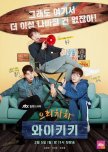
An Octopus Costume and a Gut Punch: Waikiki’s Surprising Emotional Curveball
Some dramas sneak up on you like a soft breeze. Others slam through your emotional walls like a marching band in clown wigs—and Welcome to Waikiki belongs gloriously to the latter. It’s wild. It’s absurd. It involves being trapped in a giant octopus suit, enduring rogue hair removal cream incidents, and navigating baby poop disasters. But beneath all that beautifully deranged exterior lies a drama that understands the quiet war of adulting: the slow, unglamorous hustle toward your dreams, the ache of self-doubt, and the healing magic of being surrounded by people who never stop rooting for you—even when you're wearing a lion costume in the middle of a film audition.At its core, Waikiki is about three friends—Kang Dong-gu (Kim Jung-hyun), Lee Joon-ki (Lee Yi-kyung), and Bong Doo-sik (Son Seung-won)—who are clinging to their creative dreams while managing a failing guesthouse in Itaewon. The place is falling apart. Their bank account is allergic to commas. And then one day, a baby and her single mom, Han Yoon-ah (Jung In-sun), arrive out of nowhere and change everything. What begins as a simple comedic setup turns into something much richer: a story about makeshift families, the resilience of young adults trying to find their place, and the deep emotional rewards of not giving up—even when everything tells you to.
Let’s start with what made Waikiki not just a comedy but a statement piece wrapped in laughter: its women.
For a drama that aired in 2018, Welcome to Waikiki was decades ahead in how it portrayed its female leads. These weren’t just love interests or side dishes to male-centric narratives—these women moved the story. Han Yoon-ah, the single mother, is a masterclass in softness being mistaken for fragility. She never once raises her voice, but her boundaries are iron-clad. She doesn’t let trauma define her, nor does she perform resilience for applause. She simply lives—delicately, powerfully, and on her own terms. When she tells Dong-gu, “Go to Dubai. I’ll be here when you return,” it isn’t just an indirect proposal. It’s a mic drop moment in emotional maturity.
Then there’s Kang Seo-jin (Go Won-hee), Dong-gu’s sister, and perhaps the most emotionally intelligent person in the entire guesthouse. She’s a dreamer, yes, but never desperate. She slaps a harasser mid-job interview and walks away from her “dream job” with her dignity intact. And Min Soo-ah (Lee Joo-woo)—once a fashion model, now broke and living in the same guesthouse as her ex—isn’t reduced to comic relief. She’s given the space to crumble, rebuild, and confess her feelings under anesthesia (as one does). All three women make the first move in their respective relationships. They initiate the first kiss. They speak their truths. They are never accessories—they are architects of their own arcs.
This dynamic, where female characters drive their own narratives without overshadowing or being overshadowed, is nothing short of revolutionary for its time. And the men? They’re beautifully messy. Dong-gu is neurotic and temperamental, but he’s never controlling. Joon-ki is flamboyant and goofy, but his pain is real, especially when faced with the slow death of his acting dreams. And Doo-sik, the quietest of the trio, is a soft soul hiding under layers of hesitation. The three of them may start the show as comedic clichés, but by the end, they are fully-realized, heartbreakingly human.
What Waikiki does best is balance. It takes the most ridiculous moments—Joon-ki ended up stalking his own fans because he never had one before, or Dong-gu and Yoon-ah somehow stuck planning their wedding that was paid by their landlord just because they lied to avoid paying rent—and pairs them with scenes so emotionally raw they catch you off guard. The image of Seo-jin, alone on her birthday, staring at two uneaten steaks while waiting for Joon-ki, is one of the most quietly devastating moments in the show. It’s a comedy that’s not afraid to pause, take a deep breath, and ask you to feel something real.
And let’s not forget the soundtrack. “Waikiki Wonderland” by Ulala Session and “Would You Come In” by MIND U provide the energetic, slightly unhinged tempo that mirrors the daily disasters of guesthouse life. But it’s the softer tracks like “Grown Up” by Cho Eunae and “Cheer Up” by Choi Sangyeop that land the emotional gut punches. When Yoon-ah stands alone in the hallway questioning her worth, and that guitar starts strumming? That’s not just a scene—that’s an emotional mugging. And we thank it for that.
Is it perfect? No. Some of the tropes are familiar, some jokes a bit too slapstick, and the parade of side characters might be overwhelming if you’re trying to keep track of names like it’s a K-pop lineup. The 20-episode length may also seem daunting to those used to breezier rom-coms. But Waikiki earns every one of those minutes. You stay not because you’re binging, but because this wild house of misfits starts to feel like home.
The final episode ties everything with a bow—not a neat, sterile ribbon, but one that’s frayed at the edges and lovingly patched together. Joon-ki almost throws away his career for love, only to be hilariously saved by a bigger scandal breaking just before his press conference. Doo-sik, passive for most of the show, is finally nudged forward when Soo-ah confesses under anesthesia. And Dong-gu? He gets rejected mid-proposal, only for Yoon-ah to gift him something even better: trust. Faith. And finally—acceptance, as her daughter calls him “Appa” in a tearjerker of a goodbye scene.
Verdict:
Welcome to Waikiki may have been marketed as a slapstick young-adult comedy, but what it delivered was a soul-soothing story of found family, emotional growth, and the kind of love that doesn’t always shout but shows up anyway. It’s about failing spectacularly, crying about it, then putting on a silly costume and trying again the next day. In an industry flooded with love triangles and chaebol clichés, Waikiki carved its own little corner of heartfelt chaos—and it will stay with you long after the final credits roll.
So if you’re looking for something that will make you laugh so hard you snort and cry so suddenly you check if onions are nearby, Welcome to Waikiki is your next stop
Final score: 9/10
Was this review helpful to you?
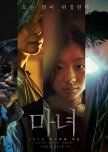
This review may contain spoilers
Kim Da-mi’s Breakout Carnage - The Witch’s Subversion: A Masterclass in Controlled Chaos
Some movies throw you straight into the action, but The Witch: Part 1. The Subversion does something different—it lulls you into a sense of normalcy before yanking the rug out from under you. At first, it feels like a touching story of an amnesiac girl, Ja-yoon, raised by kind farmers after a traumatic childhood incident. But then it flips the switch, transforming into an absolute bloodbath of a superpowered showdown. If you walked in expecting a slow-burn thriller, you’re in for a ride—because once this film kicks into high gear, it does not let up.What makes The Witch so compelling is how it carefully builds Ja-yoon’s world before shattering it. There’s a quiet charm in watching her navigate normal life—worrying about money, caring for her ailing mother, and even auditioning for a talent show. But then there’s that creeping feeling that something’s off. When she casually levitates a microphone on live television, it’s a moment that shifts everything. And that’s what makes this story brilliant—it plays its cards slowly, keeping the audience in suspense about what Ja-yoon is truly capable of.
Then we get to the action—oh man, the action. If the first half of the movie was a ticking time bomb, the second half is the explosion. Kim Da-mi goes from soft-spoken farm girl to cold-blooded killing machine in a way that’s both terrifying and exhilarating. The moment she reveals she never lost her memory and was in control the entire time? Absolute chills. Her transformation is flawless—one second, she’s meek and frightened, the next, she’s delivering death stares that could freeze hell over. And when she finally unleashes her full abilities, it’s one of the most beautifully choreographed action sequences I’ve seen in a long time. The stop-motion filming technique during the fight with Nobleman was mind-blowing—something I didn’t expect but absolutely loved.
Kim Da-mi carries this film on her back, effortlessly selling both sides of Ja-yoon. The naive girl playing along in the first half and the ruthless warrior in the second half feel like two different people, yet it all fits seamlessly. Her performance is nothing short of mesmerizing, and the moment that switch flips, you realize she was never the prey—she was the apex predator all along. And that final grin? Haunting.
Visually, The Witch is a feast. The cinematography is sleek, the action sequences are intense without feeling chaotic, and the use of practical effects mixed with CGI is top-tier. There’s no shyness when it comes to gore—broken bones, flying body parts, and heads literally exploding. It’s brutal, but it fits the film’s tone perfectly. This isn’t some sanitized action flick; it’s raw, visceral, and unrelenting. The final battle in the lab is easily one of the most satisfying action climaxes I’ve seen in years.
That being said, the film isn’t perfect. Even with a two-hour runtime, some plot points feel rushed. The secret organization behind Ja-yoon’s creation is barely fleshed out, and we never really understand why the project was abandoned. A little more backstory would’ve helped anchor the stakes better. And while the final act delivers in spectacle, it does feel a bit backloaded. Spreading out some of the action sequences across the film could have made for a more balanced pacing. But honestly, these are minor nitpicks in an otherwise stellar film.
Gore-sensitive viewers might find some scenes a bit too much, but for those who love hard-hitting, well-executed action, this is pure cinematic bliss. And beyond all the fights and bloodshed, there’s something surprisingly touching about Ja-yoon’s story. Despite being engineered as a living weapon, she found humanity in her adoptive parents—a warmth that kept her from becoming just another monster. It’s almost like Superman being raised by the Kents, except instead of saving cats from trees, she’s tearing through armed soldiers like paper dolls.
The Witch: Part 1 is an absolute must-watch—not just for Korean movie lovers, but for anyone who appreciates an adrenaline-fueled, well-acted, visually stunning action thriller. Park Hoon-jung took a familiar premise and turned it into something uniquely gripping, and Kim Da-mi delivered one of the most unforgettable performances in modern action cinema. And with that ending? Yeah, I’m already strapping in for Part 2.
Score: 8.5/10 - Great, Worth Watching 🔥
Strong performances, engaging storytelling, and solid execution. Maybe a few flaws here and there, but overall, a drama that delivers and is worth the time.
Was this review helpful to you?
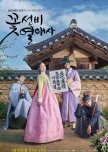
The Secret Romantic Guesthouse: A Beautifully Flawed Banquet
K-Dramas, much like a well-prepared Joseon banquet, are best served in three courses: the appetizer, the main dish, and the dessert. The Secret Romantic Guesthouse follows this structure almost too perfectly—only the main course got tragically overcooked before miraculously saving itself at the last bite. With strong character dynamics, an engaging mystery, and an aesthetic that sets it apart from its sageuk peers, this drama had all the right ingredients. But does it deliver a satisfying feast or leave an odd aftertaste? Let’s break it down in three acts.Act 1: A Delicious Setup (Episodes 1-10)
If there’s one thing The Secret Romantic Guesthouse absolutely nailed, it’s the beginning. The drama wastes no time establishing Yoon Dan-oh (Shin Ye-eun) as a strong, independent innkeeper struggling to keep her inherited Ihwawon Inn afloat. The three scholars—Kang San (Ryeo Un), Kim Shi-yeol (Kang Hoon), and Jung Yoo-ha (Jung Gun-joo)—aren’t just lodgers; they become her makeshift family, creating a warm found-family dynamic that is refreshingly different from the usual court-politics-heavy sageuks.
The chemistry between these four is an absolute delight, whether it’s in their lighthearted banter, their moments of quiet support, or their united front against the weight of their personal burdens. The mystery of Lee Seol, the missing prince, is introduced with intrigue, threading suspense throughout the first ten episodes without feeling forced. Shin Ye-eun, in particular, shines in this arc. Her expressive eyes do half the acting, carrying the weight of Dan-oh’s struggles while maintaining her bright and compassionate nature. It’s this balance between humor, emotional depth, and political stakes that makes the first third of the drama feel effortlessly engaging.
Visually, the drama also sets itself apart. The use of bright, colorful settings makes The Secret Romantic Guesthouse stand out in a genre often filled with muted, dark palettes. From stunning flower fields to beautifully lit night scenes, even the romance is visually enhanced, making every glance and touch feel heightened. And let’s not forget the sword choreography—some of the best I’ve seen in a drama that wasn’t initially marketed for action. The fight scenes are fluid, intense, and beautifully shot, making every duel feel like a well-rehearsed dance rather than a simple brawl.
Act 2: The Overcooked Middle (Episodes 11-16)
Then came the great collapse. If the first ten episodes were a promising meal, the next six were the equivalent of the kitchen catching fire. The pacing nosedives, and suddenly, the once-tight writing unravels like a scroll left out in the rain. The plot becomes riddled with inconsistencies, characters start making decisions that feel completely out of line with their established personalities, and worst of all—dream sequences.
Dream sequences should come with a government warning in historical dramas. They are the equivalent of a chef throwing salt on a ruined dish, thinking it will somehow fix it. The use of fake-out moments meant to stir emotions only to reveal they didn’t actually happen is infuriating. It’s a cheap trick, a narrative crutch that artificially prolongs tension without adding real stakes. The central romance between Dan-oh and Kang San also falters here. While both actors deliver solid performances, their love story lacks the organic intensity of the secondary romance between Kim Shi-yeol and Yoon Hong-joo (Jo Hye-joo). Shi-yeol and Hong-joo’s relationship evolves naturally, steeped in heartbreak and genuine longing, while the main couple feels more like a scripted inevitability than a love story earned through real trials.
The villain, King Lee Chang (Hyun Woo), doesn’t help matters. While the stakes should feel high as the political tension reaches its peak, his performance leans into overacting, making him come across more like a mustache-twirling caricature than a formidable antagonist. His exaggerated expressions and dramatic pauses make it hard to take him seriously, diluting the impact of his villainy.
By this point, the drama is hanging by a thread. It’s the kind of mess that makes you consider dropping it entirely—but then something unexpected happens.
Act 3: The Redemption Arc (Episodes 17-18)
Just when all hope seemed lost, The Secret Romantic Guesthouse remembered it had a story to finish. The final two episodes pull off something truly rare in K-dramas: a genuine comeback. Everything that had felt disconnected or forced suddenly finds its rhythm again. The political stakes feel real, the character arcs start paying off, and the finale delivers one of the most satisfying endings I’ve seen in a sageuk.
Jung Yoo-ha’s storyline, which had quietly been one of the most tragic throughout the series, reaches its emotional climax. Born as the son of a deposed king and a concubine, forced to live in hiding, and ultimately asked to relinquish his claim to the throne, Yoo-ha’s journey is one of perpetual loss. His final confrontation with fate is heartbreaking, and Jung Gun-joo’s performance is so raw that it single-handedly pulls me back into caring. Similarly, Kim Shi-yeol and Yoon Hong-joo’s story reaches a poignant resolution, proving that even in a drama where the leads are fated, it’s the secondary couple that holds the real emotional weight.
The finale doesn’t just tie things up—it ties them up beautifully. Every villain gets their due punishment, every hero finds their rightful place, and most importantly, the story doesn’t leave any frustrating loose ends. The final shot isn’t just an ending—it’s a warm farewell, a reminder that sometimes, enduring a messy journey is worth it when the destination is this rewarding.
Final Verdict: A Tale of Two Dramas
If The Secret Romantic Guesthouse had maintained the quality of its first ten episodes, it would have been an easy 9/10. If it had continued the chaotic mess of episodes 11-16, it would have barely scraped a 5. But because it managed to claw its way back with a strong ending, it lands at a solid 7/10.
It’s a drama with an identity crisis—half masterfully crafted intrigue, half baffling narrative choices. But for those who can push through the turbulence, it rewards patience with a conclusion that feels both earned and deeply satisfying. It might not be the best sageuk out there, but it’s certainly one that leaves an impression.
Final Score: 7/10. A drama that tested my patience, but ultimately, I’m glad I stayed for the final act.
Was this review helpful to you?
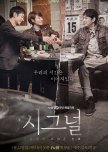
Signal: A Brilliant Transmission with a Broken Ending
In the intricate web of Korean dramas, Signal stands out as a tale both hauntingly resonant and frustratingly incomplete. Built on the foundation of cold cases inspired by real-life events, it weaves a story of connections that transcend time. However, much like the mysterious walkie-talkie that bridges its past and present, the drama itself oscillates between brilliance and bafflement, leaving viewers grappling with a sense of unease as the final credits roll.At its core, Signal is a fascinating blend of crime procedural and supernatural thriller. The narrative kicks off in 2015 when criminal profiler Park Hae-young (Lee Je-hoon) stumbles upon a discarded walkie-talkie that inexplicably connects him to Detective Lee Jae-han (Cho Jin-woong) in the 1990s. Their collaboration across time sparks the resolution of a 15-year-old kidnapping and murder case, setting the stage for a cold case team led by Detective Cha Soo-hyun (Kim Hye-soo), whose personal stakes in the mystery add layers of depth to the story. As past and present collide, the ripple effects of their actions unravel a gripping tale of justice, loss, and unintended consequences.
The drama’s initial strength lies in its narrative, which draws heavily from real-life cases such as the Hwaseong Serial Murders and the 2004 Miryang students’ gang-rape case. This grounding in reality gives Signal a chilling authenticity. Each case is a microcosm of societal failures, illuminating the devastating human toll of unresolved crimes. It’s not just the victims who suffer but also the investigators, whose lives become intertwined with the pursuit of justice.
Cho Jin-woong’s portrayal of Lee Jae-han anchors the series with his portrayal of an unyielding detective who refuses to compromise his principles despite overwhelming odds. His performance is both raw and heartfelt, making him the emotional cornerstone of the narrative. Meanwhile, Kim Hye-soo’s transformation from a naive rookie to a hardened detective showcases her remarkable range, and Lee Je-hoon’s portrayal of the hot-headed yet perceptive profiler adds a dynamic edge. The interplay between these three characters forms the heart of the drama, with each actor bringing a unique energy that complements the others. Their individual arcs are intricately woven together, creating a narrative tapestry where no thread feels extraneous.
One of Signal’s greatest strengths is its ability to deliver plot twists that genuinely surprise without feeling contrived. The writers masterfully subvert expectations, leading viewers down one path only to veer sharply in another direction, all while maintaining a logical coherence. The stakes are consistently high, and the consequences of meddling with time are explored with a level of nuance that is both thought-provoking and emotionally resonant.
Yet, for all its brilliance, Signal stumbles at the finish line. The 16th episode, a 90-minute attempt to tie up loose ends, feels like a betrayal of the meticulous storytelling that preceded it. Instead of delivering a satisfying resolution, the finale rehashes earlier scenes with minor revelations, as if circling back to the starting point without ever moving forward. The narrative comes full circle, yes, but in a way that feels more like a loop than a conclusion. The open-ended ending, clearly designed to set up a second season, is an affront to viewers who invested 15 episodes worth of emotions, only to be left dangling with no closure. Nearly a decade later, with no updates on a sequel, this decision feels all the more frustrating.
Adding to the dissatisfaction is the lack of explanation surrounding the mystical time-traveling walkie-talkie. While Signal thrives on its emotional and procedural realism, the fantastical element remains a gaping hole in the story. Hae-young’s brief theorizing about how the time magic works is brushed aside as if even the writers had no interest in delving deeper into the mechanics of their own premise. The inconsistencies in how the past and present influence each other, including the frequent “resurrections” of characters thought to be dead, undermine the emotional stakes. Why mourn a character when their death might be undone in the next episode?
Despite these flaws, Signal remains a poignant exploration of humanity and resilience. It captures the relentless determination of those who seek justice, often at great personal cost, and the ripple effects of their actions on the lives of others. The show’s portrayal of police work is unflinching in its honesty, highlighting not just the victories but also the toll it takes on those in the trenches. Some of its most powerful moments come not from the resolution of cases but from the quiet devastation of lives forever altered by violence and loss.
In the end, Signal is a tale of two halves. Up until episode 15, it is a masterclass in storytelling, character development, and emotional engagement. But its inability to stick the landing tarnishes what could have been an unequivocal masterpiece. Watching Signal is like gazing at a stunning painting, only to realize the artist left the final strokes unfinished, leaving you to imagine what might have been.
Likes:
Signal begins with a narrative punch, drawing on real-life cases to craft compelling stories that delve into the human cost of crime. The three leads—Lee Je-hoon, Kim Hye-soo, and Cho Jin-woong—deliver standout performances, creating characters who feel authentic and deeply layered. The intertwining of their arcs is seamless, with each character’s journey adding depth to the others. Unexpected plot twists keep the audience on edge, while the show’s focus on the emotional toll of its cases elevates it beyond the typical procedural drama.
Dislikes:
The final episode falters, spending too much time revisiting earlier scenes and failing to provide a satisfying resolution. The open-ended conclusion feels like a ploy for a second season, leaving viewers frustrated nearly a decade later. The mystical element of the time-traveling walkie-talkie remains underexplored, and the frequent reversals of character deaths dilute the emotional impact.
Verdict:
Signal is a gripping drama that excels in exploring the humanity behind crime and justice. Its strong performances, intricate storytelling, and emotional resonance make it a standout—up to a point. Unfortunately, the lackluster finale undermines the experience, leaving viewers yearning for closure that never comes. It’s a testament to the show’s strengths that it remains memorable despite its flaws, but one can’t help but wish it had finished as strongly as it began
Was this review helpful to you?
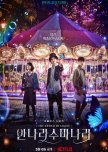
The Sound of Magic – A Story That Believes in Wonder, But Not Itself
There are dramas that make you think, dramas that make you feel, and then there are dramas that ask you to believe. The Sound of Magic falls into the latter category, a visually stunning, musically enchanting tale that wants you to embrace wonder—but somewhere along the way, it forgets to fully believe in itself. Featuring a star-studded cast with Ji Chang-wook, Choi Sung-eun, and Hwang In-youp, this six-episode Netflix series is an ambitious blend of fantasy, music, and coming-of-age struggles, wrapped in a world where magic feels just within reach. But while it dazzles in moments, its story sometimes feels as fleeting as a disappearing act, leaving you mesmerized but wanting more.At its heart, The Sound of Magic follows Yoon Ah-yi (Choi Sung-eun), a struggling high school girl burdened with responsibilities far beyond her years. Living in financial hardship, abandoned by her parents, and shouldering the weight of survival, Ah-yi longs for an escape—something, anything, to lift her out of her suffocating reality. Enter Lee Eul (Ji Chang-wook), a mysterious magician who lives in an abandoned amusement park. He appears as a whisper of the impossible, asking a simple yet profound question: Do you believe in magic?
This premise alone sets up a drama filled with wonder, heartache, and existential dilemmas, and Choi Sung-eun carries it beautifully. Her performance is nothing short of mesmerizing—fragile yet resilient, lost yet yearning. She brings depth to Ah-yi, making her struggles feel raw and immediate. Hwang In-youp, playing Na Il-deung, a top student suffocating under the pressure of expectations, serves as an excellent counterbalance. While his role isn’t as fleshed out as it could have been, his portrayal of a boy learning to break free from the rigid world he knows is compelling.
Then, of course, there’s Ji Chang-wook, the heart of the fantasy, the embodiment of wonder itself. His portrayal of Lee Eul is magnetic, whimsical yet profoundly sad, as though he himself is caught between believing in magic and fearing that it might not be real. Every time he appears on screen, the drama lights up with an ethereal glow. His musical performances, particularly his duets with Choi Sung-eun, are some of the series’ most enchanting moments. There is a childlike sincerity to his portrayal—he isn’t just performing magic; he wants desperately to be believed in.
Visually, The Sound of Magic is a feast for the senses. The cinematography is breathtaking, filled with soft glows, dreamlike sequences, and intricate set designs that blur the line between reality and fantasy. The abandoned amusement park feels like a character in itself, an echo of lost dreams and forgotten wonders. Every frame is crafted with the precision of a fairy tale painting, pulling the viewer into a world that exists just slightly outside of reality.
But for all its beauty, The Sound of Magic stumbles where it matters most: its narrative. With only six episodes, the drama feels rushed and underdeveloped, as though it’s trying to weave a grand story without enough time to let its threads fully form. Important emotional beats don’t land as deeply as they should, and character arcs feel glossed over rather than deeply explored. Ah-yi and Il-deung’s struggles are set up brilliantly, but their resolutions feel abrupt, as if the story is cutting itself short just as it’s about to soar.
And then there’s the issue of the magic itself. The drama constantly asks its audience, Do you believe? But it never seems entirely sure of its own answer. Is Lee Eul truly magical, or is he just a man clinging to illusions? The ambiguity is intriguing at first but ultimately frustrating, as it leaves key questions unresolved. Instead of fully committing to its theme, the drama wavers between fantasy and reality in a way that feels more like hesitation than deliberate storytelling.
Despite these flaws, The Sound of Magic still holds undeniable moments of brilliance. The musical numbers, while not overly abundant, are beautifully integrated, offering glimpses into the characters’ souls. The emotional weight of Ah-yi’s struggles is palpable, and the drama does an excellent job of portraying the quiet desperation of youth caught between dreams and survival. Even when the storytelling falters, the performances and visuals carry the experience, making it worth watching for those willing to overlook its flaws.
Verdict: In the end, The Sound of Magic is a drama that shines brightest in moments but struggles to maintain its glow. It is a beautiful illusion, a trick of light and emotion, but one that leaves you wishing for a little more substance behind the spectacle. For those willing to embrace the fleeting nature of magic, it’s still a journey worth taking—just don’t expect all your questions to be answered when the final curtain falls.
Final Score: 7/10
A visually enchanting, emotionally touching drama that dazzles in moments but fades too soon.
Was this review helpful to you?
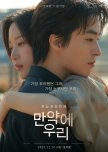
The Architecture of Goodbye
I need to confess something upfront: I’m a devoted Makoto Shinkai fan. I’ve watched everything he’s created, and while each film has carved out its own space in my heart, 5 Centimeters Per Second holds a particularly potent place, not because it gives me closure, but because it reframes separation as something that can still hold meaning, even beauty. It taught me early on that an ending doesn’t need to look “happy” to feel right. It understands that sometimes love transforms you into your best self precisely because it ends, not in spite of it. So when I stumbled upon Once We Were Us, a Korean remake of the 2018 Chinese film Us and Them, starring Mun Ka-young and Koo Kyo-hwan, I knew exactly what kind of emotional devastation I was walking into. I wasn’t here for a fairy tale. I was here for something quieter, something that would sit with me long after the credits rolled.It also didn’t hurt that I was already completely sold on Mun Ka-young. After My Dearest Nemesis, I’ve been keeping a close eye on her work, and this drama felt like another opportunity to see just how far she could stretch. At the same time, Once We Were Us served as my first real introduction to Koo Kyo-hwan, especially with We Are All Trying Here sitting on my watchlist like a ticking clock of anticipation. So in a way, this drama felt like a crossroads for me as a viewer, familiar comfort on one side, curious discovery on the other.
Let me start with the leads, because chemistry this electric deserves immediate recognition. Koo Kyo-hwan plays Lee Eun-ho, and this was my first exposure to his work. I walked in with zero expectations and walked out convinced I’d just witnessed someone become inseparable from their character. Koo Kyo-hwan steps into the role of Lee Eun-ho with a kind of quiet sincerity that sneaks up on you. Eun-ho is the kind of character who spends his entire life swimming against the current, not in a dramatic, heroic way, but in that painfully ordinary way where life keeps asking for compromises he doesn’t want to make. His dream of building his own game feels like a fragile anchor, something he clings to while everything else shifts around him. When his father falls ill and derails every carefully laid plan, Kyo-hwan plays the devastation with such understated sincerity that it feels less like acting and more like witnessing. The scene where older Eun-ho slowly unravels while listing all the “what-if scenarios” for their relationship? I wasn’t ready. Nobody is ready for that kind of quiet destruction.
And then there’s Mun Ka-young as Han Jeong-won, who, quite frankly, doesn’t just act here, she devours the role whole. I’m just going to say this plainly, she is absolutely unleashed here. I’ve loved her work before, but this role lets her operate at a different altitude entirely. Jeong-won is an orphan who never felt belonging anywhere, which crystallizes into a dream of becoming an architect so she can literally build the home she never had. It’s such a beautifully empowering motivation, this idea that she’ll create belonging through her own hands rather than waiting for it to be given. Ka-young devours this character with micro-expressions that do more emotional work than entire monologues in lesser dramas. There are entire scenes where the emotional weight rests solely on her control of her micro-expressions, the slight tightening of her jaw, the way her eyes hesitate before settling on something painful. One scene in particular still lives rent-free in my head, the fight near the end where chaos unfolds in the background while the camera refuses to leave her face. No swelling music, no dramatic cuts, just the raw, unfiltered processing of emotion with her facial muscles and expressions alone that carried the entire weight of that moment. It’s a masterclass in restraint and trust. And that pier kiss scene, where she finally communicates her fear of the relationship before they kiss? One of my favorite kiss scenes this year for sheer emotional honesty and visual beauty. Both actors are perfectly cast, and their chemistry does the heavy lifting that makes it effortless to care about their relationship even when they’re just friends sharing their dreams with each other.
I also want to shout out Shin Jung-geun as Eun-ho’s father. His relationship with Jeong-won becomes one of the film’s most affecting side stories. He warms to her immediately and becomes the father figure she never had, which makes the letter he writes her after the main relationship collapses hit like a second emotional nuke. Jung-geun brings genuine gravitas to the role, and that scene between them illustrates something the film understands deeply: the real human cost of a relationship ending extends far beyond the couple themselves. When love reshapes lives, its absence leaves craters in unexpected places.
The plot itself walks familiar ground. Right person, wrong time. Two people meet by chance, fall in love against the backdrop of youth and ambition, then watch life throw curveballs that slowly pull them apart. But here’s the thing about familiar themes: they’re not cliche when they’re executed with this much care. The film explores how dreams and reality collide, how love alone isn’t always enough when circumstance and growth pull you in different directions, and how sometimes the most loving thing you can do is let someone go so you both can become who you’re meant to be. It doesn’t mean you stopped loving each other. It just means that chapter closed so new ones could begin.
What makes this story devastate so effectively is the slow erosion rather than explosive conflict. Yes, there’s one major fight where voices finally rise and words cut deep. But the real heartbreak accumulates in the margins, in details that unfold in the background while life continues in the foreground. A miniature model house discarded when they move to a smaller apartment. An armchair they bought together that no longer fits in their downsized space, left outside to weather the seasons. Sunshine symbolism that becomes a spoiler if I say too much. These micro-moments pile up silently, and by the time the final separation arrives (on a subway platform, because this film knows exactly what it’s doing with its train imagery), you’ve seen it coming from a mile away, you know it’s inevitable, and it still hits like a freight train.
The cinematography is gorgeous and deliberate. The film uses a color-grading choice that matters narratively: colourless black and white for the present timeline when they’re dissecting why their relationship failed, full vibrant color when we slip into the past. This isn’t just aesthetic flair, it’s woven into the story’s emotional architecture in ways I won’t spoil. The back-and-forth structure between present and past gives every scene additional context and weight. You’re always watching the love story with the knowledge of its ending hanging overhead, which makes every joyful moment ache just a little bit more.
But the film’s greatest strength is its masterful use of negative space and silence. So many scenes unfold without any musical assist, trusting the actors and the moment to carry the emotional load. When the music does appear, it enhances rather than manipulates. My personal favorite is After Time by HANA, used early in the film, which serves as subtle foreshadowing if you’re paying attention. This restraint in scoring is what separates earned devastation from manufactured sentimentality. The film doesn’t tell you when to cry. It just creates the space for tears to arrive on their own. The rest of soundtrack deserves praise as well. Tracks like My Gift by O.WHEN and Closer by Jungkook bring lighter moments to life, while By Your Side by Jukjae and Once We Were Us by Kim Jang Woo and Kim Tae Min carry the emotional weight when needed
If there’s anything to note as a potential drawback, it’s not so much a flaw as it is a matter of expectation. This is, at its heart, a melodrama. And the ending reflects that. The idea of a “happy ending” here doesn’t align with traditional definitions. For me, it worked beautifully. It felt honest. But if you’re expecting reconciliation or a clean break that leaves no lingering ache, this might not land the way you hope.
I’ll be honest: after watching Once We Were Us, I couldn’t resist checking out the original Chinese film Us and Them for the complete comparative experience. Personally, I connected far more deeply with the Korean remake. While both films share the same bones (similar plot beats, symbolic imagery, structural choices), the Korean adaptation resonated with me on a level the original didn’t. It stays faithful to the source material while carving out its own identity within the kdrama space. The emotional beats hit harder for me here, perhaps because of how well the performances and visual language align with my own sensibilities. I wouldn’t say one replaces the other. They feel more like parallel experiences, each offering a different shade of the same story. If you’re curious about Us and Them, it offers a completely different emotional texture, but don’t expect the same impact. They’re telling the same story with fundamentally different values.
Ultimately, Once We Were Us understands something crucial about separation narratives: writing an ending where love dies but life flourishes requires absolute mastery of both characters. The audience needs to see both people’s dreams, struggles, and growth as equally legitimate and compelling. If one character gets blamed for the relationship’s failure, the whole structure collapses into resentment instead of acceptance. This film achieves that difficult balance. When Eun-ho and Jeong-won part ways, you’re not angry at either of them. You’re celebrating who they became because of each other, even as you mourn what they lost. That simultaneous smile-and-cry response? That’s the proof the film earned every tear.
This is an easy recommendation from me, but with a gentle warning attached. This isn’t a drama you watch casually. It asks for your emotional investment, and it will take something in return, especially if you appreciate stories that trust their emotional complexity and respect their characters enough to let them grow apart with dignity. Just come prepared with tissues, because happy endings come in many forms, and this one will absolutely wreck you in the best possible way.
Was this review helpful to you?

Fists, Friendship, and Finals: How Study Group Delivers a Knockout
If there were ever a drama that perfectly captured the duality of a golden retriever who turns into a direwolf when provoked, Study Group would be it. On the surface, Yun Ga-min (Hwang Min-hyun) looks like the last person you'd expect to be a fighter. With his round glasses, studious demeanor, and innocent smile, he could easily be mistaken for the quiet kid in class who always returns library books on time. But when push comes to shove—literally—he transforms into a whirlwind of fists and fury, an unstoppable force who throws down with the best of them.Study Group is a drama that blends schoolyard brawls with heartfelt aspirations, proving that even the worst high school in Korea can't crush the spirit of someone determined to rise above their circumstances. Ga-min, who desperately wants to excel in academics but is cursed with an unfortunate talent for fighting, forms a study group in a place where books are often used as weapons rather than for reading. When his friends face relentless bullying, Ga-min does what any self-respecting protagonist in an action drama would do—he throws his glasses aside, tightens his fists, and delivers one of the most exhilarating beatdowns seen in K-drama history.
What makes Study Group so enjoyable is that it never loses sight of its heart, even as it leans into its exaggerated fight sequences. Yes, we get students flying through walls, concrete floors cracking under the force of a well-placed kick, and an absurd yet beautifully choreographed display of combat. But underneath all of that is a story about resilience, friendship, and refusing to let your circumstances dictate your future. Ga-min isn’t just fighting for the sake of violence—he’s fighting for his dreams, his friends, and a future where he can finally sit in a classroom without having to dodge a punch.
One of the drama’s strongest aspects is how tightly packed it is. With each episode clocking in at around 45 minutes, there isn’t a single wasted moment. The pacing is sharp, the fight scenes are meticulously crafted, and there’s no unnecessary fluff to distract from the core story. Every battle serves a purpose, whether it’s reinforcing Ga-min’s growth or deepening the bonds between his ragtag group of misfits. There are no pointless subplots, no illogical twists—just straight-up, well-executed storytelling with a clear direction.
Hwang Min-hyun is a revelation in this role. His portrayal of Ga-min perfectly balances wide-eyed innocence with ruthless determination. He’s the kind of character you instinctively want to protect, even though he clearly doesn’t need it. His unwavering optimism and genuine desire to study, despite his dismal grades, make him all the more endearing. He’s not a traditional action hero—he’s an awkward, good-natured boy who just happens to have the ability to knock out anyone who stands in his way. It’s a contrast that works exceptionally well, making every scene with him an absolute delight.
The supporting cast also shines. Lee Han-gyeong (Han Ji-eun), the teacher who once tutored Ga-min, returns to his life as a faculty member at his school, bringing her own layers of complexity to the story. The study group members—each with their own distinct strengths and weaknesses—form a compelling ensemble that makes their bond feel genuine. From Kim Se-hyun (Lee Jong-hyun), the school’s top-ranking student who has no physical prowess, to Lee Ji-woo (Shin Soo-hyun), the judoka with a sharp tongue, everyone adds something valuable to the mix. Their camaraderie and dynamic relationships help elevate the drama beyond just its action-packed sequences.
And let’s talk about the OST—specifically, Backpacker by Seok Matthew & Park Gunwook. This high-energy rap track, with its pounding bass lines and techno influences, is unlike the usual melancholic K-drama OSTs. It’s bold, it’s aggressive, and it perfectly encapsulates the relentless energy of Study Group. The intro sequence featuring this track sets the tone brilliantly, making it impossible not to feel hyped every time it plays.
If there’s one gripe to be had, it’s that the episodes feel too short. While the tight pacing works in its favor, some plot points could have been explored in more depth. Episode 10, in particular, features one of the best fight scenes I’ve ever seen, but I couldn’t help wishing it lasted just a bit longer. However, this minor flaw is hardly enough to detract from the overall brilliance of the drama.
The best part? Study Group understands the importance of a satisfying season structure. While it leaves the door open for a sequel (which seems inevitable given the popularity of the webtoon source material), it still wraps up its first season in a way that feels complete. No frustrating cliffhangers, no unresolved storylines—just a promise of more to come, should the showrunners decide to continue Ga-min’s journey.
At the end of the day, Study Group isn’t just about throwing punches. It’s about perseverance, loyalty, and the unshakable belief that even the underdogs can carve out a future for themselves. It’s an absolute blast from start to finish, packed with heart, humor, and some of the most jaw-dropping fight scenes ever put to screen.
Honestly, any criticism I have feels like nitpicking because Study Group was simply that good. This is the most fun I’ve had with a drama since I started watching K-dramas last year. It knew exactly what kind of story it wanted to tell and delivered it with remarkable confidence and precision. Every episode was packed with tightly woven storytelling, exhilarating action, and characters that felt alive with chemistry and heart. The fight scenes—the very foundation of the drama—were masterfully choreographed, balancing raw intensity with stylish execution, making every clash feel thrilling and memorable.
Yet, what truly sets Study Group apart isn’t just the action, but its ability to infuse a surprising amount of depth and emotional weight into such a fast-paced format. The drama respected its audience, wrapping up its first season in a satisfying way while still leaving the door open for more. Hwang Min-hyun’s portrayal of Yun Ga-min was an absolute standout, making him one of the most lovable yet lethal protagonists in recent K-drama history.
Verdict:
With its perfect blend of action, humor, camaraderie, and an underdog story that hits all the right notes, Study Group has rightfully earned its spot as my Best Drama of February 2025. There’s really no need to read any more reviews—just go watch it. Absolutely, wholeheartedly recommended.
9.5/10 (and that 0.5 deduction is only because I wanted more).
Was this review helpful to you?
History Rewritten: How Lady Ok Redefines the Joseon-Era Heroine
The Tale of Lady Ok is a drama that defied all my expectations. When I started watching, I wasn’t sure what to expect—there wasn’t much from the trailers that gave me an idea of its depth, but from the very first episode, I was hooked. What followed was an emotionally powerful, beautifully crafted story about resilience, redemption, mercy, and unwavering integrity. This drama didn’t just tell a story; it lived through its characters, bringing them to life in a way that left a profound impact.Set during the Joseon period, the drama follows Ok Tae-young, a brilliant legal advocate whose intelligence, work ethic, and courage make her beloved by the people of Cheonsu County. But she carries a dangerous secret—she was born a slave named Goo Deok, escaped her shackles, and took on the identity of a noblewoman. Her life is a precarious balancing act; one slip, and her entire existence could crumble. What makes her story so compelling isn’t just the sheer weight of the secret she carries but how she remains true to herself despite it all.
Lady Ok’s journey is nothing short of remarkable. She navigates a society that is deeply unjust, especially toward women and the lower class, and yet, she never lets bitterness consume her. Even in the face of immense cruelty, she continues to fight for justice—not just for herself, but for everyone who needs her. And that is what makes her special. Her power doesn’t come from vengeance; it comes from mercy.
One of the most moving aspects of her character is how she wins over even her enemies. Throughout the series, we watch people who once despised her, who plotted against her, slowly come to respect and even love her. This isn’t because she seeks their approval—it’s because of the unwavering integrity she embodies. Lady Ok isn’t perfect, but she never compromises on what she believes is right. That sincerity breaks down the walls of even the most hardened hearts.
A standout moment for me was how she handled the noble village chief, a man who could have easily been another tyrant to be defeated. Instead of seeking revenge, she extended mercy in a way that changed him. However, it was his wife, Lady Kim, who became one of Lady Ok’s strongest allies and defenders. As the leader of the village’s Mother’s Sanctuary, Lady Kim’s support was instrumental in Lady Ok’s journey. She not only stood by her but played a crucial role in resolving Lady Ok’s final conflict in the later episodes. Her unwavering loyalty and influence within the village ensured that Lady Ok’s fight for justice was not a solitary one, making her an indispensable part of the narrative.
The emotional depth of this drama is staggering. The final episodes were an emotional roller coaster, culminating in an ending so beautifully satisfying that I was left reflecting on it long after the credits rolled. Watching the entire community stand by her, seeing how her choices and kindness had come full circle—it was overwhelming in the best possible way.
Lim Ji-yeon’s performance as Ok Tae-young was nothing short of phenomenal. I’ll admit, I wasn’t a fan of her bully character in The Glory, but this drama has completely changed my opinion of her. She embodied Lady Ok with such grace, strength, and vulnerability that I can’t imagine anyone else playing this role. The way she switched between her personas—between Goo Deok and the noblewoman she had to become—was masterful. Every expression, every shift in tone, every moment of hesitation or resolve was delivered flawlessly.
Choo Yeong-woo, in his dual role as both Cheon Seung-hwi and Sung Yoon-gyum, was equally outstanding. The stark contrast between these two characters was brilliantly portrayed, showcasing his versatility as an actor. For someone who wasn’t widely recognized before, I have no doubt we’ll be seeing much more of him in the coming years.
The supporting cast also shone brightly. Yeon Woo’s portrayal of Cha Mi-ryeong was one of the best redemption arcs I’ve seen in a long time. Her transformation from someone blinded by vengeance to a genuinely admirable character was handled with so much care. Even the actual Lady Ok, played by Son Na-eun, left a lasting impression despite her limited screen time. Every character felt purposeful and fully realized, making their individual arcs all the more compelling.
Beyond its characters, The Tale of Lady Ok also stands out in how it breaks away from the usual palace-centered politics of traditional saeguk dramas. While there’s still plenty of scheming and maneuvering, it all takes place in the heart of the village rather than the grandeur of the royal court. This shift in setting makes everything feel more intimate and grounded. The story unfolds in a way that feels connected to real people rather than just high-ranking nobles playing power games.
Another highlight is how well-paced the drama is despite its long episodes. Each arc—Lady Ok’s arrival in Cheonsu County, her marriage into the Magister’s family, and the seven-year time skip—was fully fleshed out, giving every development the time it needed to breathe. At no point did it feel like scenes were dragged out unnecessarily.
Visually, the drama is a masterpiece. The cinematography is breathtaking, with every frame carefully composed to enhance the story. Romantic moments were especially stunning, with fireflies and moonlight creating some of the most beautifully shot love scenes I’ve seen in a K-drama. The OSTs, particularly Ailee’s DANSIMGA, added even more emotional weight to already powerful scenes. The music selection was perfect, elevating the storytelling without ever feeling overbearing.
Of course, no drama is without flaws. If I had to nitpick, I would have loved to see more courtroom scenes showcasing Lady Ok’s brilliance as a legal advocate. There was one standout full-trial scene, but I wish we had more moments like that. Additionally, Cha Mi-ryeong’s journey toward becoming a legal advocate could have been explored more. These, however, are minor criticisms in what was otherwise an exceptional drama.
Overall, The Tale of Lady Ok is an unforgettable experience. It’s not just about legal battles or revenge; it’s about hope, resilience, and the power of staying true to oneself. It shows that even in a world as cruel as Joseon, there is space for kindness, redemption, and love. Lady Ok’s story is one that will stay with me for a long, long time. This is, without a doubt, my best drama of January 2025.
Was this review helpful to you?
A Riveting Blend of Justice and Supernatural Forces
The Judge From Hell is an enthralling Korean drama that redefines the supernatural legal genre, delivering a spellbinding mix of courtroom drama, eerie suspense, and moral introspection. At its center is Park Shin-Hye, who shines in her transformative role as a demon judge seeking justice beyond human comprehension.Set as if it's a mockery of the current Korean justice system, Park Shin-Hye’s character, an enigmatic judge with demonic powers, emerges as a relentless force balancing the scales of justice. Her duality—a merciless arbiter of punishment and a vulnerable soul burdened by her past—creates a compelling narrative anchor. The drama explores themes of redemption, vengeance, and the blurred line between good and evil.
Park Shin-Hye delivers a career-defining performance, embodying the judge’s inner turmoil and steely resolve with magnetic intensity. Her transformation scenes, where her demonic powers manifest, are breathtaking and highlight her versatility as an actress. The supporting cast complements her well, particularly her demonic teams and the lead detective who pursues her, who add layers of moral complexity and emotional depth to the story.
Visually, the drama is a masterpiece. Dark, brooding cinematography and meticulous production design transport viewers to a hauntingly beautiful world. The special effects, especially during her own trial confrontations, are both chilling and visually stunning. The soundtrack further elevates the atmosphere, blending haunting melodies with pulse-pounding beats.
However, the series does have minor flaws. Some subplots involving secondary characters feel rushed or underdeveloped, and a few episodes in the middle stretch could have been tighter in pacing. Nonetheless, the climactic episodes more than make up for these shortcomings, delivering a thrilling and emotionally satisfying conclusion.
The Judge From Hell is a bold and imaginative drama that captivates from start to finish. Park Shin-Hye’s mesmerizing performance and the show’s unique premise make it a must-watch for fans of supernatural and legal dramas alike. It’s a haunting reminder that justice doesn’t always come from above—it can rise from the depths of hell itself.
Was this review helpful to you?
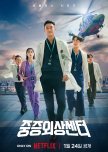
"Blood, Guts, and Heart: What Makes Trauma Code Unmissable"
Trauma Code is an adrenaline-fueled plunge into the high-stakes world of trauma surgery, balancing unflinching realism in its medical procedures with deeply human emotional storytelling. For its eight episodes, the series manages to showcase both the awe-inspiring heroism and the personal toll that come with working in a hospital’s severe trauma team. The show’s depiction of raw surgical procedures is as striking as the connections formed between the characters, crafting a unique viewing experience that is both gripping and heartfelt.At the center of this intense drama is Baek Kang-Hyuk, portrayed by the charismatic Ju Ji-hoon. Kang-Hyuk is a genius trauma surgeon with a bulldozer-like determination to save lives, even at great personal and professional cost. Ju Ji-hoon’s performance is a masterclass in balancing strength and vulnerability. Kang-Hyuk’s overwhelming confidence in his skills is tempered by his deep-seated compassion, creating a layered character who feels authentic. Ju’s nuanced portrayal of Kang-Hyuk’s struggles—such as his internalized guilt over losing patients—is both heartwarming and heartbreaking, with subtle microexpressions and gestures capturing the weight of a surgeon’s responsibilities.
The supporting cast also delivers stellar performances, each contributing to the drama’s emotional depth and dynamic storytelling. Choo Yeong-woo as Yang Jae-Won, a colorectal surgeon reluctantly pulled into the severe trauma team, delivers one of the most compelling character arcs in recent K-Drama history. Initially hesitant and reserved, Jae-Won’s transformation into a confident and capable trauma surgeon is inspiring and beautifully paced. His mentor-protégé dynamic with Kang-Hyuk is a highlight of the series, offering moments of tension, growth, and mutual respect.
Ha-young’s portrayal of Nurse Cheon Jang-Mi, a no-nonsense ICU trauma nurse, adds another layer of complexity to the team’s dynamics. Her sharp wit and unwavering focus make her an indispensable anchor during high-pressure situations. The banter between Jang-Mi and Kang-Hyuk provides much-needed comedic relief amidst the show’s intensity, while her ability to comfort younger team members, like Jae-Won, highlights her empathy and leadership. One of her standout lines, “We don’t do this for recognition or awards; we do this because who else would?” encapsulates the spirit of the trauma team and serves as a poignant reminder of their sacrifices.
Yoon Kyung-ho’s Dr. Han Yu-Rim also deserves mention for his unexpected character growth. Initially a vocal critic of the trauma team due to its financial burden on the hospital, Dr. Han’s perspective shifts over time, and he becomes one of the team’s staunchest supporters. His evolving relationship with Kang-Hyuk is both humorous and touching, adding another layer of camaraderie to the ensemble.
Trauma Code excels in portraying the physical and emotional toll of trauma surgery. Scenes like Dr. Yang washing off blood in a shower, the red water pooling at his feet, or Kang-Hyuk adjusting his stance after hours of surgery amid blood-soaked gauze on the floor, are visceral reminders of the team’s grueling reality. The series does not shy away from the exhaustion, pressure, and heartbreak that come with life-and-death situations, making its moments of triumph all the more impactful.
However, the drama is not without its flaws. The subplot involving hospital administrators undermining the trauma team—through funding cuts, grounded helicopters, and malpractice accusations—feels underdeveloped and somewhat formulaic. While these elements are integral to the plot, they lack the nuance and emotional weight of the main storyline. Similarly, the relationship between Kang-Hyuk and Dr. Park Gyeong-Won, the team’s anesthesiologist, is underexplored. While Kang-Hyuk’s respect for Dr. Park’s skills is evident, their dynamic lacks the depth of his relationships with other team members. These shortcomings, however, are minor and do not significantly detract from the overall impact of the drama.
One notable aspect of Trauma Code is its unapologetic depiction of medical procedures and trauma cases. From close-up shots of beating hearts and dissected lungs to graphic portrayals of open fractures and impalement injuries, the show pulls no punches. While this realism adds to the drama’s authenticity, it may be overwhelming for viewers unaccustomed to such graphic content.
Despite these minor criticisms, Trauma Code is a standout drama that delivers both high-octane action and heartfelt storytelling. The series’ ability to balance its intense medical scenes with genuine human connection is a testament to its excellent writing, direction, and performances. The story concludes in a satisfying way while leaving the door open for a potential second season, a rare feat that speaks to its thoughtful execution. For fans of medical dramas or those seeking a thrilling yet emotionally resonant series, Trauma Code is a must-watch.
Trigger Warnings:
The show contains extremely graphic and realistic depictions of surgery and trauma cases, including close-up procedures, impalement injuries, open fractures, broken bones, and large amounts of blood. These scenes are intense and may not be suitable for all viewers.
Likes:
The cast delivers exceptional performances, particularly Ju Ji-hoon as Baek Kang-Hyuk. The drama masterfully balances intense medical scenes with emotional depth, showcasing the personal and professional growth of its characters. The relationships within the trauma team are compelling and add richness to the story.
Dislikes:
Administrative subplots lack depth and feel formulaic. The dynamic between Kang-Hyuk and Dr. Park Gyeong-Won is underdeveloped. The graphic medical content may be overwhelming for some viewers, and untranslated technical terms could pose challenges for non-Korean speakers.
Verdict:
If you can handle its graphic realism, Trauma Code is an engaging and emotionally resonant drama. The series captures the relentless pace and human cost of trauma surgery, anchored by an exceptional cast and compelling storytelling. Its short eight-episode run packs an emotional punch, leaving viewers eager for more.
Was this review helpful to you?


