
 Editorials
 3
3 3
3 3
3



Shopaholic Louis: “Just Love, No Games” — A Drama That Almost Redefined Romance
“Shopaholic Louis” is the romcom equivalent of finding a golden retriever in a silk robe sitting in your living room, cheerfully offering you tea. It’s warm, it’s unexpected, and it might ruin you for all other dramas that rely on push-pull, love triangle melodrama, and third-act breakups that make you scream into your pillow. For the first ten episodes, this drama doesn’t just win your heart—it gently burrows into it, builds a blanket fort, and plants flowers.But alas, even the softest romcoms can go rogue.
Seo In-guk plays Kang Ji-sung / Louis, a chaebol heir with the personality of a golden retriever raised by marshmallows. It’s not just that he’s good at being sweet—it’s how naturally he radiates a kind of emotional sunlight that most K-dramas would reserve for grand finales. Louis is utterly useless in daily life (read: boiling water is a hazard), but you can’t help but root for him. Seo In-guk brings a physicality and charm that makes even the most slapstick moments feel endearing rather than irritating. It’s a role that seems sculpted specifically for him.
Nam Ji-hyun as Go Bok-sil is nothing short of magnificent. She is the drama’s emotional backbone—gentle yet formidable. Bok-sil is the type of heroine who isn’t scripted to be strong; she just is. Nam Ji-hyun, with that subtle gift of microexpression, can break your heart with a single blink. Her grief, her joy, her confusion—it all flows out with terrifying authenticity. In one pivotal scene, she moved from blissful hope to absolute heartbreak in less than a second, and I followed her like a marionette. If Shin Hye-sun is my gold standard for emotional sync, Nam Ji-hyun is the first to come shockingly close.
What sets Shopaholic Louis apart is its central love story: there are no games. No “who will confess first” tropes. No artificial tension via misunderstandings. It’s just two people slowly growing into each other, gently, awkwardly, beautifully.
Louis and Bok-sil don’t fall in love—they arrive at it. Like vines around the same trellis, they find their footing by accident, twining slowly until one day, you realize they’re inseparable. Their love isn’t declared; it’s demonstrated. It lives in the quiet rituals of their everyday life: texts that say “I miss you” at the same time, boiled eggs split in half, a single coin kept safe because it once bought him rice and made her smile.
There’s a scene that carved itself into me—Louis, having just regained pieces of his old life, finds himself unable to sleep during a storm. Why? Because he remembers Bok-sil always gets sick when it rains. So he does what only someone completely, irreversibly in love would do: he dashes out into the night, across the city, breath ragged and steps unsteady, just to make sure she’s okay. Not because it’s grand. But because it matters. Because her well-being is instinctively more important to him than his own.
This isn’t swoon by fireworks. It’s swoon by soft lamplight.
It’s a love story so gentle, it rewrote my internal framework for what a romance drama should be. In a genre so often ruled by angst, miscommunication, and egos masquerading as chemistry, Shopaholic Louis dared to ask: what if love just… was? No power struggles. No cliffhangers. No tragic misunderstandings drawn out for drama’s sake. Just the simple joy of waking up and knowing that someone thinks of you first thing in the morning.
Their connection isn’t a climax—it’s a continuum. Like watching dawn slowly break across the horizon, barely perceptible until you realize the whole room is glowing. And that’s what made it revolutionary. It’s not that we haven’t seen two people fall in love before—it’s that we’ve rarely seen it handled with this much tenderness and mutual care. It’s love that’s earned not through declarations, but through consistency. Through presence. Through choosing each other every day in small, mundane ways.
To some viewers, this kind of romance might seem uneventful, even boring. But to me? It felt like coming home.
Let’s talk about Director Cha, the third point of what could have been a disastrous love triangle. Except… it wasn’t. Because he wasn’t written as a wedge—he was written as a person. Director Cha was never there to stir conflict for conflict’s sake. He never confessed at the wrong time. He never tried to steal Bok-sil away or undermine Louis. He didn’t pine in bitterness or weaponize his feelings. Instead, he did the rarest thing in all of K-dramaland: he loved someone without expecting her to love him back.
He loved her the way real adults do—quietly, respectfully, from a place of admiration and care. He saw her joy and heartbreak, and stood beside her when she needed support, not as a means to an end, but simply because he cared. His love wasn’t a tactic. It wasn’t a detour. It was a straight line that just didn’t lead to romance, and the narrative honored that.
What makes this even more extraordinary is that the drama allowed him to grow on his own. He didn’t exist in the story solely to pine or to make Louis jealous. He had his own arc, his own dignity, his own lessons to learn. And in that, he wasn’t the “other man”—he was just another human being navigating love and loss, standing tall with his own grace.
In doing so, it taught me something: I don’t hate love triangles. I hate lazy ones. The ones where one character is doomed to be pathetic. The ones where jealousy is mistaken for depth. The ones that hinge on artificial confusion or cruel twists.
But this triangle? This one was crafted with care. It was realistic, respectful, and beautifully bittersweet. It reminded me that in the best stories, even unrequited love has value—when it’s written with empathy and not just utility.
This was how it’s supposed to be done.
The musical score in Shopaholic Louis doesn’t just complement the story—it inhabits it. It’s not background noise; it’s the wind that gently pushes every emotion across the screen, whether it’s laughter, longing, or loss. The entire soundtrack was wielded like an emotional scalpel—precise, deliberate, and often lethal.
“Navigation” by Kim So-hee is the sunlight track. It lifts scenes like a breeze lifting laundry on a warm day—casual, comforting, full of hope. It plays during those slice-of-life moments where love is blooming unnoticed in shared breakfasts, short walks, or sleepy conversations. It’s the sound of domestic bliss, of two people unconsciously building something real.
“The Way” by Umji is quieter, softer. It slows everything down, like a gentle inhale before tears start falling. It’s often used in the more introspective, heavy scenes—when grief sits like a stone in your chest, or when love is felt most in its absence. It doesn’t tell you to cry. It simply opens the door and sits with you.
But the true MVP? “Tiger Moth” by MONSTA X. If this drama were a battlefield, this track would be its sword. It’s used with unnerving precision—cutting into moments of both romantic catharsis and emotional ruin. Somehow, it scores Louis and Bok-sil’s first kiss with the same urgency and emotional weight as a tragic flashback, and both times, it lands like a meteor. It’s bold, a little chaotic, but perfectly tuned to the drama’s chaotic good energy. When this track comes on, your pulse spikes. Whether you’re about to sob or swoon, the answer is yes.
Each song wasn’t just placed—they were timed. The OST was edited with the kind of loving care usually reserved for surgical procedures or first dates. The musical team understood that this story wasn’t about plot twists—it was about feeling, and they dressed those feelings in sound so perfectly, you could almost hear Bok-sil’s heart breaking, or Louis’ joy bubbling over.
Some dramas use OSTs like garnish. Shopaholic Louis used it like seasoning. Essential. Integral. And unforgettable.
Everything was golden—until it was grotesque. Shopaholic Louis didn’t stumble into bad writing. It swan-dived. No warning. No pacing. No attempt to respect the tender emotional ecosystem it had so lovingly built across ten near-perfect episodes. Instead, it lit a match and set fire to its own soul.
Right after reaching an emotional crescendo—a heartbreaking but earned turning point in Episode 10—the show unraveled. Not in quiet ways, not in forgivable hiccups, but in giant, flaming narrative leaps that felt like the writer’s room was possessed by panicked interns on a sugar high. Suddenly, we weren’t watching a gentle romance anymore. We were watching narrative cowardice unfold in real time.
After ten episodes of near-flawless storytelling, Shopaholic Louis didn’t just lose its footing—it sprinted straight off a narrative cliff. With barely a warning, the gentle, emotionally grounded romance gave way to chaotic pivots and overcooked dramatics that felt like the writers handed the script to twelve sugar-high monkeys armed with a typewriter and a deadline. What had been a quiet masterpiece of character-driven sincerity turned abruptly into something loud, rushed, and jarringly out of sync with its own identity.
The tonal shift is what stings the most. The first half of the drama was confident—wholesome, warm, and so assured in its simplicity. It didn’t need dramatic flourishes or manipulative twists because it trusted its characters. Trusted its audience. And then, as if panicking that its gentleness wasn’t enough, the drama decided to shout over its own soft music. The pacing spiraled. Plot logic was sacrificed for shock value. Emotional arcs that once felt earned began to unravel into convenience and contrivance.
But what hurts deeper than the twists themselves is the emotional betrayal they represent. The first half asked for your trust—invited you into a world of sincerity, where love bloomed quietly and pain was given room to breathe. And then it undercut that trust. Scenes that would have previously turned me into a puddle—a ring, a forehead kiss, a tender callback—now just bounced off my emotional firewall. I wasn’t immersed anymore. I was observing. Disconnected. Watching with one eye squinted and my soul fully braced.
The most devastating thing isn’t that it got silly. K-dramas get silly. We sign up for a certain level of melodrama. But this wasn’t silliness. This was betrayal. A betrayal of tone. A betrayal of character logic. A betrayal of trust. It took the deeply rooted emotional narrative it had earned—where love was built through kindness, grief was respected, and characters grew through soft perseverance—and replaced it with narrative duct tape and glitter glue. And then, just to rub salt in the wound, it doubled down on sentimentality. It flooded the post-betrayal episodes with soft lighting, warm filters, rings, kisses, forehead touches, callbacks—thinking, perhaps, that it could re-capture the emotional magic of the first ten. But once the veil is lifted and you see the lazy mechanics behind it, the spell breaks.
And for me? It never returned.
I watched those scenes the way you stare at a painting you once loved after learning it was forged. Detached. Disillusioned. Squinting with one eye like it might stop hurting if you just don’t look straight at it. I was no longer in the story—I was observing myself watching the story. And I couldn’t re-enter it, no matter how sweetly they pleaded.
What hurts the most is that Shopaholic Louis wasn’t just a good drama—it was almost a legendary one. For ten episodes, it gently reinvented romance. It sidestepped every cliché and gave us something warmer, something truer. It made me believe that a drama could be soft and simple and still extraordinary. And then, in a single episode, it panicked. It doubted its own quiet power. And in that moment of insecurity, it chose chaos. It chose the loud, messy, trope-riddled chaos it had so gracefully avoided.
It’s not that Shopaholic Louis became bad. It’s that it became something else entirely. Something more ordinary. More trope-ridden. More desperate. And after reaching a summit so rare in romance dramas, watching it abandon its view for the valley below? That’s the real tragedy.
So no, I didn’t finish it. I stepped off at episode 14—not with rage, but with resignation. The show that I had fallen in love with was already gone by then. And sometimes, the kindest thing you can do for a story is to let it stay perfect in your memory… where it last made sense.
Final Verdict:
Shopaholic Louis is a tragedy of potential. It came so, so close to becoming my new all-time favorite romance drama. For ten glorious episodes, it gently peeled back everything I thought I knew about love on screen. It dared to be tender where others chose tension, to be sincere where others opted for spectacle. It didn’t just tell a love story—it held one, cradled it like something precious and unafraid of softness. In doing so, it cracked open a new subgenre in my romcom taxonomy: carecore.
It was a drama that felt safe to love. One that rewarded vulnerability. One where I didn’t have to prepare for heartbreak at every narrative turn.
But then the plot lost faith in itself. It panicked. It forgot what made it special. Somewhere in the writer’s room, someone decided that gentle wasn’t enough, that heartfelt needed a twist, that sincerity must make way for spectacle. The pen was handed to chaos—clumsy, unearned chaos—and the story stumbled in a way it couldn’t recover from.
And that’s where the grief settles in. Because I didn’t just dislike the final arc—I mourned it. I watched as something I adored began to dim. I sat there, emotionally detached, staring blankly at scenes that once would’ve wrecked me. And when it finally asked me to care again, I realized I no longer could.
So now Shopaholic Louis lives in a strange, sorrowful limbo: a drama I loved more deeply than most—and ultimately had to walk away from. Not because it wasn’t worthy. But because it forgot how worthy it already was.
And that, truly, is the heartbreak.
Find this and my other review at byrei.ink
Was this review helpful to you?
Brutally Beautiful and Surprisingly Gentle
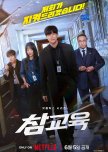
There is a particular kind of fantasy that almost everyone has entertained at least once. Not the fantasy of becoming rich. Not the fantasy of saving the world. The fantasy of watching someone who has spent years making other people’s lives miserable finally meet someone who simply refuses to tolerate it anymore.Teach You a Lesson understands that fantasy almost immediately. It knows exactly why audiences are showing up. It knows why teachers are talking about it in staff rooms. It knows why parents are arguing about it over dinner. It knows why it exploded onto Netflix the moment it arrived. This is a drama built around catharsis, the kind that makes you grin, pump your fist, and then quietly wonder whether enjoying it says something uncomfortable about yourself.
And that is exactly why I could not stop watching.
But here is the thing about a show this popular, this gloriously violent, and this unapologetically provocative: it is never just about the punches. Beneath the bone-crunching action and the vigilante fantasy sits a mirror held up to a very real, very uncomfortable crisis in modern education. So grab a cup of tea and settle in, because this drama has me, and probably half the planet, completely hooked.
Let us start with the people who make this chaotic world worth watching, because Teach You a Lesson has an ensemble that feels less like a cast and more like a squad you would genuinely want on your side in a fight. At the center is Kim Mu‑yeol as Na Hwa‑jin, a former special forces captain turned field inspector for the fictional Educational Rights Protection Bureau. This is my first proper exposure to Kim Mu‑yeol’s work, and I have to say, I am utterly captivated by his acting (it helps that he has such a great smile too). He shifts effortlessly between drama, comedy, action, and tragedy within a single scene, and that versatility is exactly what makes his Na Hwa‑jin so magnetic. Here, he is all coiled intensity and quiet menace, a man who speaks with his fists because words have failed the system entirely. He is not a hero in the traditional sense, and that is precisely what makes him so attractive.
Then there is Lee Sung-min as Minister of Education Choi Gang-seok, the weary architect of this unconventional bureau, bringing a gravitas that makes you believe a man could lose his daughter to school violence and decide to burn the whole broken system down in response. He and Kim Mu-yeol apparently previously worked together on Juvenile Justice under the same director, and that reunion feels less like casting and more like fate.
The real scene-stealers, though, are Jin Ki-joo as Im Han-rim, a fellow inspector whose fighting skills could make action heroes weep with envy, and Pyo Ji-hoon as Bong Geun-dae, the KAIST genius who handles intelligence and tech support. Jin Ki-joo’s Han-rim is a perfect storm of ferocity and vulnerability; she gets one of the most terrific introduction scenes I have seen in recent memory. Pyo Ji-hoon, who many might know as P.O from Block B, brings an endearing geekiness that balances out all the testosterone and rage. Fans have lovingly dubbed this quartet the “Anti-Bully Avengers,” and I cannot think of a better description. They are flawed, messy, and often operating in moral grey areas, but by the end of the first episode I was completely invested in their mission.
Now, let’s chat about the story itself, because Teach You a Lesson is not your typical high school drama. There are no love triangles here, no agonizing over college entrance exams, no sweet friendship montages set to acoustic ballads. This is a show that opens with a student leaping from a school roof because the bullying has become unbearable. It is grim, and it is meant to be. The show is adapted from the popular Naver webtoon Get Schooled, which has generated over 2.3 billion won in revenue since its 2020 debut.
But director Hong Jong-chan, who also directed Juvenile Justice, made a conscious decision to approach the source material “through a more refined lens” and create something meaningful rather than just reproducing the webtoon’s more controversial elements. The result is a 10-episode procedural that feels like a superhero origin story set in the bleakest possible world. Each episode tackles a different school, a different case: a kindergarten teacher harassed by overbearing parents, an aspiring engineer caught between rival gangs, a social media influencer whose false accusations drive an innocent teacher to suicide. The format keeps things fresh, but the underlying message remains consistent, the system is broken, and someone has to fix it, even if that means breaking a few rules, and a few faces, along the way.
What I find most entertaining about Teach You a Lesson is how it refuses to offer easy answers. On one hand, it is pure catharsis. Watching Na Hwa-jin dismantle a bully’s entire world, exposing the corruption of a powerful politician father, and forcing the son to experience the same social ostracization he once inflicted on others, feels like justice served hot. It is the kind of revenge fantasy that makes you cheer out loud and immediately feel a little guilty for doing so. But the show is smarter than that. It constantly asks uncomfortable questions: Is this really justice, or just revenge dressed up in a nicer suit? When you fight violence with violence, do you become the very thing you are trying to destroy?
These are not new questions, but the show presents them with such visceral intensity that you cannot ignore them. The bullying scenes are in-your-face, deliberately uncomfortable, designed to make you squirm. And the show’s refusal to divide people into simple heroes and villains is one of its most refreshing qualities. Some teachers genuinely care, others are exhausted and defeated. Some students are irredeemable monsters, others are victims who have been pushed too far. It is messy, because real life is messy.
And speaking of messiness, what truly astounds me about Teach You a Lesson is how it threads the needles of action-comedy and tragedy with surgical precision, never letting one lane bleed into the other in ways that feel jarring or disrespectful. This is a show that will have you laughing at the ERPB team’s bickering antics one moment, particularly when Hwa-jin repeatedly reminds Han-rim to “please not kill anyone” during their field ops, as if she is a hyperactive child who needs constant supervision. Then, in the very next scene, you are confronted with the unbearable weight of a teacher who saw no way out other than ending their life, or a student who believed the world would be better off without them.
The tonal shifts are sharp, but never clumsy. It reminds me so much of Seoul Busters, another drama that excelled at maintaining separate, disciplined lanes for its comedy and tragedy. In both shows, the humor is never used to undercut the pain, and the pain is never so heavy that it smothers the moments of levity. They exist side by side, like two rivers flowing in parallel, sometimes close enough to touch but never contaminating each other. That discipline is a testament to the writing and directing. It takes a confident creative team to trust that audiences can handle the whiplash, and an even more confident one to pull it off without either tone feeling forced or out of place.
Visually and aurally, Teach You a Lesson is a masterclass in controlled chaos. Director Hong Jong-chan, working with cinematographers Yoon Joo-hwan and Lee Choon-hwi, creates this dystopian atmosphere that feels both heightened and painfully familiar. The schools are sterile, oppressive spaces, all fluorescent lighting and cold hallways, but the violence that erupts within them is raw and kinetic. The fight choreography is brutal and balletic; you can tell Kim Mu-yeol brings authentic action skills to the table, he is a real-life recipient of the honorary title “West Sea Guardian” from the Defense Ministry after all.
But the show is not just about fists and feet. There is a quiet, almost tender moment when the camera lingers on a quote from Albert Camus inscribed on a school wall: “Nothing is more despicable than respect based on fear”. It is a fleeting image, but it says everything. And then there is episode nine, which completely broke me. Na Hwa-jin and Choi Gang-seok are processing their grief separately, each in a different room, yet the show refuses to let them be truly alone. Gang-seok is drunk, laid down in Hwa-jin’s private quarters, while Hwa-jin sits in the living room, bent over a couch with his eyes fixed on the floor, lost in his own sorrow.
The director could have easily used a back-to-back shot, cutting between the two actors to emphasize their isolation. Instead, they chose a wide shot that captures both men in the same frame, separated only by the thin wall between their rooms. In that single, devastating composition, I saw two people carrying the weight of the entire broken system on their shoulders, unable to comfort each other even when they are just inches apart. It is powerfully sad, the kind of visual storytelling that does not need dialogue to break your heart. Oh yeah, that was some of several moments that I truly wept.
The music, composed by Kim Tae-seong, knows exactly when to swell with heroic triumph and when to pull back into mournful silence. The show understands that the most powerful moments are not always the loudest ones.
And yet, for all its polish and punch, Teach You a Lesson has not been without its controversies. The show has sparked fierce debates, particularly around an episode involving a female student who falsely accuses a male teacher of sexual harassment. Critics have argued that the show leans into a troubling male perspective, suggesting that such narratives are harmful in a world where real cases of harassment are often dismissed. Others have pointed out that the show’s reliance on “might makes right” is ultimately an escapist fantasy that offers no real solutions for the systemic issues it highlights.
Even Korean teachers have been split. Some have found the show deeply cathartic, a validation of their daily frustrations with unruly students and overbearing parents. Others have found it horrifying, worrying that viewers might come away believing that violence against students is somehow a necessary part of education. The Korean Federation of Teachers’ Associations issued a statement acknowledging that the show lays bare the harsh realities of modern classrooms, but stressed that “what this drama misses at its core is that what teachers need is not a fist, but legal protections”. It is a fair point, and one that the show itself does not fully address.
So, do I recommend Teach You a Lesson? Absolutely, with one caveat: this is not a show for everyone. If you want something light and fluffy, look elsewhere. This will make you angry, sad, and gleeful within the same episode, then make you question why you were cheering at all. It is one of the smartest, most addictive feel-good dramas of the year, and I say “feel-good” with every bit of irony that implies. It understands the pull of fantasy while never losing sight of how dangerous it is to indulge that fantasy too far.
And here is the thing I keep coming back to: I truly enjoyed every single minute of this drama, and I do not say that lightly. Teach You a Lesson has this rare, almost magical ability to close its stories in the most cathartic way possible. Every single plot point, every thread the writers carefully laid out, gets tied up with such satisfying precision that I found myself smiling, genuinely smiling, at the end of every episode. I cannot remember the last time a kdrama made me feel that way so consistently.
There is a rhythm to the storytelling that feels almost musical; each episode builds its own complete arc, delivers its emotional punch, and then resolves with a sense of closure that is both earned and deeply comforting. The karma always arrives, sometimes with a fist, sometimes with a quiet revelation, but it always arrives. And that consistency, that refusal to leave any character’s fate dangling in uncertainty, is what makes the binge-watching experience so addictive.
In fact, I so rarely wish for sequels. I’m usually content to let a good story stand on its own. But for Teach You a Lesson, I will make an exception. The procedural format is perfectly suited for more seasons, new schools, new cases, new bullies who desperately need a lesson, and new victims who deserve their moment of justice. The cast is strong enough to carry it, the premise is flexible enough to sustain it, and the world they have built feels like it has so much more to say. So yes, I am putting it out into the universe: I really do hope we get a season two.
The show knows that sometimes teaching a lesson means throwing a punch, and it also knows a punch is never the final answer. In the end, Teach You a Lesson is not really about teaching bullies a lesson at all. It is about holding a mirror up to a society that failed its most vulnerable, and asking, with all the subtlety of a fist to the face, what we plan to do about it.
That question, I think, is worth sitting with, even when the answer is not pretty.
Was this review helpful to you?
Smart, Swoony, and Utterly Unforgettable
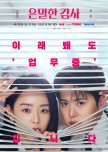
When the promotional teasers for Filing for Love dropped roughly ten months ago, I felt that familiar tingle of anticipation. The casting list alone was enough to set my heart racing: Shin Hae-sun, my SSS-tier actor, opposite Gong Myung, with Kim Jae-wook in support, produced by Studio Dragon. Everything about it screamed quality.The only thing that gave me pause was the writer. Yeo Eun-ho had co-written Crash Course in Romance, a drama I adored for its grounded love story but was slightly repelled by the jarring serial killer arc in its later half. I worried her solo outing might suffer from similar tonal whiplash. I am glad I pressed play anyway, because what followed across twelve episodes was nothing short of spectacular.
The setup is gloriously simple. Noh Ki-jun, played by the ever-charismatic Gong Myung, is the ace of Haemu Group's internal audit team, handling a big corruption case and waiting for a promotion. Then Joo In-ah, played by Shin Hye-sun in full ice-queen mode, arrives as the new Director of the Audit Office, the youngest female executive in the company's history. Her first decision? Demote Ki-jun to the team that handles infidelity and misconduct. Furious and humiliated, Ki-jun receives an anonymous tip alleging that his cold-hearted new boss is secretly involved in a workplace affair.
He launches an investigation to expose her and reclaim his elite status. Naturally, as he digs deeper, he uncovers her hidden vulnerabilities instead, transforming bitter rivalry into an unexpected alliance, and eventually, a passionate office romance. What follows is a masterclass in romantic comedy writing with perfect pacing, a remarkably tight narrative, and iron-clad character logic.
The casting is absolutely flawless. Shin Hae-sun plays Joo In-ah as someone whose imperviousness isn't coldness but armour. She is a perfectionist who never allows compromise when it comes to work. In a lesser actor's hands, this character could easily come across as arrogant and high-strung. But She delivers an absolute masterclass, anchoring absurd comedic timing, devastating emotional vulnerability, and razor-sharp authority all within the same episode without ever breaking character integrity. Her mastery of microexpressions, a slight twitch in her brow, a faint tension in her cheek, makes every emotion land with precision.
Opposite her, Gong Myung proves he belongs in the pantheon of male leads who can hold their own opposite Shin Hae-sun. His golden retriever charm makes every tender scene absolutely believable, never once feeling like he is simply reciting lines. Their chemistry is electric, even before they enter a relationship.
Kim Jae-wook delivers as Jeon Jae-yeol, a third-generation chaebol heir who hides a sense of emptiness behind his perfect exterior. And Hong Hwa-yeon as Park Ah-jeong, Jae-yeol's secretary, absolutely stands her ground amongst these veterans. The supporting cast, particularly Audit Team 3, brings the corporate environment to life with wonderful group chemistry.
This is the first romcom I have encountered since Business Proposal that manages to give equal spotlight to each of its four leads. What Yeo Eun-ho attempts here is something far more ambitious than the typical primary and secondary couple structure. She creates what I call the 4x4 Narrative Framework: four fully interconnected leads whose relationships have to stay consistent not just internally, but against five other relationships simultaneously. Every character's choices ripple outward and constrain what every other character can plausibly do next. One weak link would have destabilised the whole structure, yet nothing ever buckled.
The reverse power dynamic is executed perfectly, with In-ah remaining firmly in control while Ki-jun grows more willing to accept her for exactly who she is. The dialogue is rich with metaphor and analogy, the confession of wanting to be "a constant from someone else's variable" captures the entire thesis of the drama in a single, perfectly constructed sentence. The love triangle is written without sacrificing any edge; no one is reduced to a disposable obstacle.
Against my romcom rubric stress test, this drama flies with flying colours: no murder plot, no pointless side trauma, tight and clean love triangle, extremely believable carecore, and all leads are likeable both together and while solo.
Lee Soo-hyun's directing is masterful, using wide lens shots to display separation, close-up zooms to show intimacy, and well-timed slow-motion to elevate narrative impact. The OST is perfectly curated, with standout tracks including Alexander Stewart's "Home" and Sondia's "The Moments Live On." The opening credits use animated shorts illustrating the leads' emotional state for each episode, a clever touch I absolutely love. I spent all twelve episodes actively trying to break this drama, scrutinising every twist, every revelation, every character decision. I found nothing.
Filing for Love is a reminder that sometimes the most extraordinary love stories are the ones that unfold not in grand gestures but in quiet compromises, shared silences, and the courage to let someone see you at your most vulnerable. It understands that love is not about losing yourself in someone else, but about finding someone who makes you want to become more of who you already are.
The greatest strength of Filing for Love isn’t originality. It’s execution so disciplined that familiar tropes feel fresh again. In a genre built upon stories we’ve all seen before, Yeo Eun-ho somehow reminded me why I fell in love with romantic comedies in the first place.
And I can’t think of a higher compliment than that.
For the full extended review with deep dives into the 4x4 Narrative Framework, character analysis, and much more, visit Byrei.ink.
Was this review helpful to you?

What a damn mess...Park Bo‑young Deserved So Much Better
I finished Gold Land tonight. And I mean that in the most reluctant way possible. You know that feeling when you're too far into a book to quit, but every page makes you sigh a little louder? That was me, episode after episode, right up to the finale.If you are a Park Bo‑young fan, which I absolutely am, let me start with the good news. She is remarkable here. Genuinely, remarkably good. Watching her sink her teeth into a darker, morally complicated character is such a treat that I almost feel grateful for this drama's existence. Almost. She gives us a performance that is layered, tense, and deeply human, and if you watch Gold Land for no other reason, watch it for her. You will be well fed.
For everyone else? I gently, lovingly, but firmly suggest you save your sanity, preserve your self‑respect, and go watch something else. Anything else. Because this show is a mess. A beautiful, expensive, star‑studded mess.
Let me back up for a moment. Gold Land comes from the minds of writer Hwang Jae‑yoon and director Kim Sung‑hoon, and it boasts an ensemble cast that any production would envy: Park Bo‑young, Kim Sung‑cheol, Lee Hyun‑wook, Kim Hee‑won, Moon Jung‑hee, and Lee Kwang‑soo. The premise is deliciously pulpy. Our heroine Kim Hee‑joo works as an airport security agent, and her boyfriend talks her into letting a suspicious coffin slide through inspection. Inside that coffin? About 150 billion won worth of gold bars. Suddenly she is caught between betrayal, greed, and survival, and she makes the fateful choice to keep the treasure for herself. On paper, that sounds like a taut, gritty crime thriller, doesn't it?
But somewhere between the promising premise and the final credits, the wheels fall off. And I don't mean in a small way. I mean in a way that made me stare at my screen, tilt my head, and ask out loud, "Wait, did I miss something?"
The biggest issue, by a landslide, is the severe continuity problem. And I am not talking about characters making questionable decisions. Honestly, that part is fine. These are ordinary people blinded by greed, and their choices feel believable enough. What I am talking about is something far more basic. The drama doesn't operate on any recognizable logic, not even the logic of its own world. We are dealing with physics, cause and effect, and the human body's basic limitations, and Gold Land seems to think these are optional.
Let me give you concrete examples, because I kept a mental list out of sheer disbelief. In one episode, a character gets his knees bashed in with brutal force. We are talking about the kind of injury that would require surgery and months of rehabilitation. In the very next episode, with no time jump and no explanation, he is walking around as if he just had a mild bruise. Everything in this show happens over a very short period, because everyone is frantically chasing the gold, so there is no room for recovery. But somehow, miraculously, he is fine.
In another scene, a character is hit by a speeding car. They fly through the air, crash onto the pavement, and then, I kid you not, they stand up and walk away with barely a scratch after a few days in a hospital. A scratch. I rewound that scene a couple of times just to make sure my eyes weren't deceiving me. When a thriller that relies on tension and stakes cannot even respect the basic rule of gravity, what are we even doing here? These are supposed to be regular human beings, not superheroes. Maybe the writers assumed nobody would pay attention to those details. But I did, and it drove me up the wall. When characters survive fatal car accidents and crippling assaults without consequences, all the suspense evaporates. Why should I hold my breath during a chase if I know they have plot armor thicker than a gold bar? It made everything feel weak and cheap.
And it is not just the physical logic. The show's treatment of the gold itself is surprisingly lazy for a drama named after it. For a series built entirely on the premise of finding and exchanging this treasure, the writers didn't seem to bother with the practicalities of how anyone would actually liquidate that much illicit gold. The mechanics are handled so haphazardly that it yanks you right out of the story. It is a small thing, but it adds to the growing sense that the production just didn't care about the details.
Through all of this chaos, Park Bo‑young stands like a lighthouse in a storm. She carries this entire show on her shoulders, and she does it with such grace and intensity that I honestly felt a little protective of her. It is wonderful to see her step into a darker, more conflicted role, shedding her usual sweetheart image for a woman who is terrified, desperate, and driven to the edge. She plays a cornered animal so convincingly that her performance is worth the price of admission alone. I stuck with Gold Land partly because I wanted to see how it ended, but mostly out of sheer respect for her. She gave it her all.
But when the world around her refuses to obey even the simplest rules of storytelling, even a performance this good can only do so much. It is like watching a brilliant actor perform Shakespeare on a sinking ship. You admire the performance, but you cannot ignore that the ship is going down.
The message I got from Gold Land was loud and clear: we don't think you are paying close attention. And as someone who was very much paying attention, I felt a little insulted. All those chases, all those life‑or‑death moments, all that tension, they lost their weight because I never knew whether anyone was actually in danger.
So here is my honest, warm, coffee‑chat conclusion. If you are a die‑hard Park Bo‑young fan, by all means, watch it for her. She is phenomenal, and you will not be disappointed in her. But if you are not, or if you value internal consistency and a story that respects its own rules, please save yourself. Go watch something that treats its audience with more care. Your time, your sanity, and your self‑respect are worth far more than this frustrating, beautifully acted, but deeply broken drama.
Was this review helpful to you?

Four Episodes Away of Perfection
I have been watching Park Hae-young’s work for two years now, and honestly, I still do not know how to correctly review it. My Mister humbled me. My Liberation Notes finished the job. And then We Are All Trying Here arrived and did something neither of those managed to do, it made me question whether I had the language for this at all, not just in any of the five languages, but in the one I built specifically for this space. How do you put into words something that was always going to be better experienced than explained? I am genuinely not sure you can. But Park Hae-young did not write this drama for critics. She wrote it for the person sitting alone at midnight, heart still racing twenty minutes after the credits rolled, wondering why they cannot stop thinking about people they have never met. So consider this less a review, and more a letter from someone who got found.Park Hae-young sits in an SSS tier (mirroring Kiseki’s Bracer’s Guild ranking) of her own making in my book, a designation I do not hand out lightly and have never had reason to revisit. My Mister and My Liberation Notes remain two of the finest dramas I have ever watched, and both earned their place through the same terrifying gift: her ability to create a spectacle out of the mundane, to weaponise silence and negative space until the absence of sound becomes louder than anything a score offers, and to write human beings with a precision making you feel personally targeted. When We Are All Trying Here was announced, my expectations were already set at an altitude most writers never reach. What followed was something I did not anticipate even then: a writer I thought I understood, showing me she had been holding something back all along. Park Hae-young did not repeat her previous language here; she pushed it into new territory. The result is a drama that feels like a step forward in ambition, even if it is slightly constrained by its shorter twelve-episode structure compared to her usual sixteen.
It is not a comfortable watch. It is not an easy watch. It is, however, unmistakably a Park Hae-young work operating at near-peak intent, even when the format occasionally tightens around it.
I need to confess something: the character who almost made me quit this drama is also the reason I ended up loving it. Koo Kyo-hwan plays Hwang Dong-man, our male lead and, in a first for any Park Hae-young drama I have watched, a character who actively repulsed me in the opening episodes. Dong-man is an aspiring film director who has spent nearly two decades failing to debut while his entire social circle, a prestigious industry film club called “The Eight,” has long since surpassed him. He talks too much, he picks fights at dinner tables, and he radiates that desperate, sweaty energy of a man who is trying too hard to prove he still matters. His brother works odd jobs to keep them both afloat, the people around him walk on eggshells to manage his emotions, and he repays all of it with contempt aimed outward. It is much harder to feel compassion for someone cushioned by other people’s love who still chooses to be cruel, and for three episodes I was ready to file a formal complaint with Park Hae-young herself.
But here is the trick Park Hae‑young pulls. She wrote him as repulsive on purpose. Because once you sit with that discomfort, once you stop flinching and start looking, you see the layers underneath. What she did with him afterward belongs in the section below, but here I want to give Koo Kyo-hwan his full due: he plays Dong-man with a raw, almost frightening vulnerability that never feels like acting. There is no visible effort, no actorly plea for sympathy, no performance asking you to notice it. A man in a body that has been at war with itself for twenty years, and Koo Kyo-hwan makes every scene feel like something happening rather than something being performed. He fakes an injury just to have a moment of rest. He climbs a hill and screams his own name into the void so he can feel like he still exists.
Opposite him is Go Youn-jung as Byeon Eun-ah, in a role that finally made me sit up and seriously notice her. Eun-ah is a producer known in the industry as “The Axe” for the precision of her screenplay critiques, and she is the perfect emotional foil and counterbalance to Dong-man. Where he externalises everything, she keeps it all locked inside, speaking in short quiet bursts while carrying her own deep trauma of abandonment. The role demands enormous subtlety, minimal facial expression, and the ability to deliver devastating emotional weight through the smallest possible physical gesture. Go Youn-jung devoured every scene. There is a two-minute sequence in episode two, almost entirely silent, where she does more with a hesitation and a forced smile than most actors manage across an entire series. After this drama, she climbed straight into the same category in my mind as Shin Hae-sun, and I will be watching everything she does next with considerable attention. Byeon Eun-ah was definitely the quintessential Park Hae-young’s experience that I’m familiar with and she dragged me back in, kicking and screaming.
Of course, a Park Hae‑young drama is never just about the two leads. There is a whole ecosystem of side characters, and while I will not list all of them, a few supporting performances absolutely stole the show for me. Oh Jung‑se is, as always, reliably excellent as Park Gyeong‑se, a successful director who is secretly just as insecure as Dong‑man but hides it by lashing out at him. Then there is Kang Mal‑geum as Ko Hye‑jin, who became one of my favorite supporting characters in the entire drama. Hye‑jin owns a small production company with a bar underneath, and that bar serves as the main hub where all the characters gather and where most of the plots evolve. Kang Mal‑geum delivers a standout moment when her character finally snaps and tells Dong‑man the brutal truth about how his behavior affects others. It is the kind of scene that makes you hold your breath.
Another supporting character who charmed me completely was Jung Min‑ah as Park Jeong‑min. She is effortlessly funny and warm, and her character functions as one of the primary pressure release valves of the narrative as Park Gyeong‑se’s co‑writer. Her ability to flip back and forth between comedy and the more melodramatic moments as the plot evolves made me put her firmly on my radar for future works. And finally, I have to include Han Sun‑hwa as Jang Mi‑ran. I first noticed her in Welcome to Samdal‑ri, then accidentally stumbled upon her in Work Later, Drink Now. From romcom to straight comedy to now a dark comedic melodrama, I have started to see her range, and I genuinely look forward to whatever she does next.
We Are All Trying Here marks something of a departure for Park Hae-young in one specific way: it is her first drama to lean meaningfully into comedy, and the tonal balance she maintains between the genuinely funny and the quietly devastating is one of its quieter achievements. The first three episodes tested my trust in her more than anything she has written before. Hwang Dong-man was hard to love. He was, to put it plainly, bleeding other people to fund his own dysfunction, and the empathy contract Park Hae-young has always maintained with her audience felt deliberately fractured. Where her previous leads carried their wounds inward, Dong-man wore his outward and aimed them at the people who loved him most. However, as the narrative progresses, that perception breaks down. Dong-man is revealed as someone constantly drowning in unspoken anxiety. His noise is survival. His cruelty is deflection. His chaos is regulation. I felt guilty for briefly feeling relieved when his friends finally set their boundaries. This guilt, I later understood, was the drama working exactly as intended.
Because what Park Hae-young was building underneath the irritation was this: Dong-man and Eun-ah are distorted mirrors of the same wound. He externalises, she internalises. He creates noise, she creates silence. He fills every room he enters, she empties herself to make space for others. But underneath all of it, both are trying to say the same impossible sentence, help me, and the tragedy is that neither of them has ever learned how. Dong-man talks endlessly because silence feels like drowning. Eun-ah stayed quiet through things that would break most people, including a mother who crossed her off at nine years old and an ex-partner who erased her name from work she co-wrote, because asking for help was never something the people around her made available. Their relationship is not a Kdrama rescue mission. It offers something far more radical: the idea that comfort does not come from someone telling you everything will be fine, but from someone saying “I know why you are like that,” and meaning it without condition. This is a story about people finally willing to ask for help, and discovering it does not diminish their worth.
The OST deserves a mention, because this is a Park Hae-young drama and the music always pulls its weight. Starlight by Lucy anchors the lighter comedic register with exactly the right amount of warmth, and Pieces by TAEYEON is a standout in holding the emotional weight of the heavier sequences. I will admit I was surprised Sondia did not appear on this OST given her near-permanent presence in Park Hae-young’s previous works, but every selection here earns its place with the same quiet precision the writing demands.
Visually, the drama understands negative spaces in a way few others do. Those long silences, the shots of Dong‑man walking alone at night, Eun‑ah sitting in a room full of people and saying nothing. Park Hae‑young has always been a writer who weaponizes what is not said, and here the camera follows her lead.
Here is where my heart genuinely hurts. The real flaw of We Are All Trying Here is the narrative estate. Twelve episodes are simply not enough for Park Hae‑young to tell her story, and that constraint becomes painfully obvious in the final episode. She tried, she really did, and almost every plot point does get closed. But an 80‑minute finale is brutally tight pacing for a writer who usually luxuriates in 16 episodes. Something had to give. And what gives is Eun‑ah’s story with the script. Her conclusion is nowhere near as clean or as satisfying as the rest of the drama, especially when I compare it to Park Hae‑young’s other works. I do not say this lightly, but it left me feeling slightly dirty, like she became the sacrificial lamb because Dong‑man’s story needed more room to land. There is a strange and uncomfortable irony in a drama about a woman who spent her life being made invisible choosing to leave her resolution the least visible of all. I would have understood more if they had sidelined Hwang Ji‑man’s plot line instead, but they did not. And so here I am, sitting with the knowledge that this drama was four episodes away from my third Perfect 10 of the year. I am genuinely grieving those four episodes we should have had. This imbalance does not break the drama, but it does reveal its boundaries. The final stretch feels less like failure and more like a visible ceiling placed on an otherwise expanding emotional architecture.
As is typical of Park Hae-young’s writing, this is a drama you have to experience yourself. Behind the mundane and deceptively ordinary surface of people simply being people, layers fold into layers, and no summary does them adequate justice. She remains the only writer who has ever made me cry purely from dialogues. No swelling score, no camera tricks, no close-up held a beat too long to cue the emotion. Two people in a room, talking, and somehow I was undone.
For a drama that began with me wanting to remove Hwang Dong-man from the premises entirely, Park Hae-young got me to the point where the two leads’ unconscious cry for help shattered me completely. It is terrifying how thoroughly she dismantled every resistance I brought to this drama: an obnoxious lead, a gimmicky device I dismissed in episode two, a tonal register I did not recognise as hers at first. Because it is one thing to write within a viewer’s established preferences. It is another thing entirely to identify exactly what makes a viewer resistant and then dismantle that resistance so carefully and so precisely that by episode eight I was sitting there thinking she probably could have made me love a love triangle. That is not just good writing. That is a writer operating with complete command of her audience’s emotional interior.
It is, ultimately, a reminder of what Park Hae-young does best, and what she might achieve with even more narrative space. It really is unfortunate that the drama is four episodes short of what it needed. She needs the narrative estate. She deserves it. Give Park Hae-young all the narrative estate she needs, damnit. Hell, give her 20 episodes like Mr. Sunshine. She’d knock that out of the park too.
Was this review helpful to you?
Caffeine Jelly, Hurt Feelings, and the Cost of Being a Hero
There is a beautiful pattern I have noticed with superhuman kdrama narratives recently, and I keep turning it over in my head the more titles I add to the list. The pattern is this: Korean drama writers are exceptionally good at asking one question regardless of how wild the premise gets. What is the human angle here? I call it the Nolan Effect, borrowing from Christopher Nolan’s approach to the superhero genre. Not because every superhero story suddenly needs to become dark, gritty, and emotionally traumatizing like The Dark Knight trilogy. No, the real Nolan Effect, at least to me, is the understanding that the humanity behind the power matters more than the power itself. Superhuman abilities are not merely spectacle. They are emotional amplifiers. They expose grief, loneliness, sacrifice, fear, love, and identity in ways normal dramas sometimes cannot. The powers are the fireworks, but the human beneath the “mask” is the actual story.Moving built its entire emotional architecture on generational trauma and parental sacrifice as the true cost of extraordinary ability. Cashero, which I reviewed on this site, took the beautifully absurd premise of a man whose strength scales with how much cash he carries and turned it into a portrait of a reluctant hero burning his own future one rescue at a time. Both reviews are waiting for you here if you want the full picture.
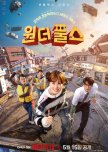
And now enter The Wonderfools, an eight-episode Netflix original set in 1999, where a terminally ill woman accidentally falls into experimental chemical waste, gains the power to teleport via caffeine-spiked heart rate, and somehow ends up responsible for saving an entire city from apocalyptic ruin. Yes, I walked into this one on the strength of my barely-concealed bias for Park Eun-bin. I am not apologising for it. but The Wonderfools once again proved that Korean drama narrative has mastered the Nolan Effect and injected its own brand of warm, chaotic, deeply human storytelling into it.
So let’s chat about The Wonderfools, the latest superhuman Kdrama that reminded me there is always a human heart beating underneath the spectacle.
Let’s start with the obvious elephant in the room and the sole reason I pressed play in the first place: Park Eun-bin. She plays Eun Chae-ni, a woman born with congestive heart failure who never expected to live past thirty. Somehow, despite her tiny frame and constant goblin energy, Chae-ni becomes the chaos nucleus of the entire drama. Her friends literally dub her “The Trainwreck of Haeseong,” and honestly? Accurate.
One of the things I admire most about Park Eun-bin as an actor is how completely she erases the fingerprints of her previous characters. Chae-ni does not resemble Woo Young-woo, Seo Mok-ha, or Jung Se-ok even remotely. She feels like a completely different creature. One second she is making me slightly emotional with quiet vulnerability, the next second she is stuffing caffeine jelly into her mouth preparing for battle like a sleep deprived raccoon who accidentally became an Avenger. I am ridiculously impressed by how easily she shifts between moments of tragedy and moments of pure laughter as if both are a second skin. If you watch this drama even just for Park Eun-bin’s acting sorcery, that’s a completely valid excuse, and you will be well-fed.
Opposite her is Cha Eun-woo as Lee Un-jeong. Full honesty here, I had never watched a Cha Eun-woo drama before this. He is good here. He plays one of the surviving experimented children from Project Wunderkind, carrying decades of trauma behind his polite face. I have no complaints about his performance at all. His emotional scenes work, his chemistry with the cast is solid, and his character being an aggressively honest straight shooter becomes the perfect comedic contrast against the rest of the chaotic goblins surrounding him.
That said, I never fully vibed with him the way I did with the rest of the cast. Through no fault of his own, I genuinely think he might be too pretty sometimes to the point of distraction. It is like placing a flawless sculpture inside a room full of exhausted raccoons fighting over emotional support ramen. Still, he anchors the ensemble well enough, and the drama would not function without his calm presence balancing everyone else’s nonsense.
The real comedic gold, however, comes from Choi Dae-hoon and Im Sung-jae as Son Gyeong-hun and Kang Ro-bin respectively. These two complete the trio and round out Chae-ni’s closest friends. I am actually laughing while writing this part right now as I imagine the scenes these two are in. Im Sung-jae plays Kang Ro-bin, Chae-ni’s friend since high school who now works in her grandmother’s restaurant. His super strength only activates when his feelings are hurt, which drives the entire comedic engine of the drama. The rest of the characters purposefully make fun of him just to trigger his power. Im Sung-jae is so great at physical comedy that any drama he’s in guarantees actual laugh-out-loud moments from me, not just the nose-exhale kind.
Choi Dae-hoon, oh Choi Dae-hoon. I already loved him from Seoul Busters, and here he plays a similar character archetype. Son Gyeong-hun is a husband and father who constantly struggles to get respect from his family. What surprised me most is that I recently watched him play a ruthless, cold character in Climax, and now he’s back to the warm, bumbling archetype I recognize. He rounds up the trio’s chaotic energy perfectly, and their group interactions are genuinely some of the best laugh-out-loud comedy I have seen this year.
Meanwhile, Choi Yoon-ji as Seok Ho-ran brought the exact emotional balance needed for the villain side of the story. I am not familiar with her work at all before this, but Ho-ran plays a perfect tragic villain whose character starts to waver toward the end. Together, both sisters inject humanity into characters who could have easily become cartoon antagonists. By the end, I genuinely wanted happiness for them more than revenge, which honestly says everything. Both names are now on my watchlist without hesitation. Love, Take Two just shoots up in my watch list.
Plot wise, The Wonderfools is not trying to reinvent the superhero genre. Experimental children. Secret projects. Immortality powers. A morally compromised scientist. Former allies turning against each other. None of this is new territory. But the drama succeeds because it understands something many superhero stories forget. Familiarity does not matter if the emotional execution works. The drama wears its genre influences without embarrassment and does not concern itself with subverting expectations. What it concerns itself with, relentlessly, is the human angle. The wunderkinds pay a visible cost for every use of their abilities, because that is what this brand of Korean superhero storytelling insists on examining. One character’s body hardens slowly into stone with each use. Seok Ju-ran’s hair whitens episode by episode, her skin pales, she begins coughing blood. The powers are not free, and watching that toll accumulate across eight episodes gives the final confrontation its genuine weight.
For most of its runtime, The Wonderfools is a full-throated comedy. I watched seven episodes without triggering a single analytical instinct, carried entirely by momentum, laughter, and the occasional human moment that landed like a quiet punch. One of those moments: Chae-ni strapped to an operating table, told by the lead antagonist that she is “nothing,” then getting back up after her rescue, loading herself with caffeine jelly, and declaring with shaking fury, “I’m not nothing, I’m my grandmother’s whole world. I just haven’t done anything yet.” Clichéd? Perhaps a little. Did I love it unreservedly? Absolutely. That is the secret sauce of The Wonderfools. The drama never tries to sound smarter than it is. It simply delivers emotional sincerity inside absurd superhero chaos.
And honestly, I think this is where South Korean superhero storytelling currently shines the brightest. Moving, Cashero, and The Wonderfools all exist on completely different tonal spectrum. Moving occupies the darker, heavier end. Cashero sits in the grounded, bittersweet middle. The Wonderfools plants its flag at the lighter, more absurd end. All three prove the same thesis: the Nolan Effect is not tied to tone or narrative weight. It is tied to the insistence on asking “what is the human angle here?” and refusing to let go of the answer. Balancing that humanity with full comedic identity is a harder achievement than it looks, because Moving had the luxury of darkness as its foundation. The Wonderfools had to hold comedy and genuine emotional stakes in the same hand without one killing the other. That it succeeds is mastery, not accident.
The OST leans into 90s rock throughout, fitting the era without demanding attention. Nothing was particularly memorable to me, though every track served its scene well. My favourite use was a single continuous shot near the finale: Park Eun-bin on a gurney, still groggy from a kidnapping, the chaos of the trio’s battle blurred and unfocused in the background, the music carrying the full weight of the scene. The kind of shot that made me laugh and feel something simultaneously. The final episode delivers genuinely impressive cinematography during the climactic battle, near Avengers-level in its scale and kineticism, while never losing sight of the fact that these are regular people improvising their way through heroism.
The drama also knows, crucially, when to stop being funny. The final thirty minutes shed the comedy cleanly, and the emotional stakes land because the characters have earned them. A post-credit scene hinting at a possible second season also made me laugh with genuine delight and I loved every second of it. The one notable flaw is the romance between the leads, which feels grafted on rather than organically grown. The story does not need it, and it occasionally pulls focus from more interesting dynamics at play. It is not obnoxious enough to damage the experience, but it earns the mention. The clearest proof that the Nolan Effect is fully operational in a superhero story is when you find yourself wishing for a happy ending for the people standing against the protagonist. I sat with The Wonderfools hoping, fully and helplessly, that Seok Ju-ran and Seok Ho-ran would make it through. They are not villains. They are victims of the same experiment that made them extraordinary, now paying for it with their lives. That grief is completely legible, and I felt every bit of it.
The Wonderfools is not trying to become the next emotionally devastating masterpiece. It is not a drama begging for symbolic dissection or philosophical essays. Instead, it understands the value of warmth, chaos, friendship, absurd comedy, and small emotional truths hidden underneath giant superhuman battles. Before I realized it, I was already on the final episode. That alone says a lot.
This is not a drama I will dissect. It is not asking me to. It is asking me to laugh, to care, and to notice how quickly eight episodes disappear when a show is doing its job well. It is asking me to confirm, once again, that Park Eun-bin is without argument one of the finest actors working in Korean drama today. Her range here, from chaos goblin to quiet heartbreak and back again within the same episode, is precisely why she holds SSS tier on my list next to Shin Hae-sun. It is asking me to add Jung Yi-seo to my watchlist immediately, because anyone who delivers restrained fury at that level deserves every leading role she gets next.
Most of all, The Wonderfools is asking me to recognise that Moving, Cashero, and this drama now occupy three distinct and deliberate points on the same tonal spectrum, from devastating to grounded to gleefully absurd, all three proving an identical thesis. South Korean superhero storytelling levels up by proving you do not need darkness to have depth. The Nolan Effect is not a formula reserved for serious dramas. It is a commitment to the human angle at any volume, in any tone, with any premise, caffeinated teleportation triggers and feelings-powered super strength very much included. The Wonderfools understood that from its first frame and never let go, and for that, and for Park Eun-bin, I am genuinely glad my bias dragged me through the door.
Kdrama superhero storytelling has mastered The Nolan Effect, and The Wonderfools might be the clearest proof yet. If you want a superhero story that doesn’t take itself seriously but still respects its own humanity, curl up with The Wonderfools. It won’t change your life, but it will make your weekend better. And sometimes, that is the truest superpower of all.
Was this review helpful to you?
The Smartest Political Thriller You’ll See This Year
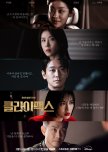
Let’s get this out of the way, I chased this drama the moment the promo trailer dropped.Ju Ji-hoon had already earned my complete trust after watching him command the screen in both Trauma Code and Kingdom, and Ha Ji-won remains one of my favorite actresses after Chocolate became my second Perfect 10 of last year, right behind Doubt. So when I learned these two would be leading Climax, a political thriller penned and directed by Lee Ji-won of Miss Baek fame, this became an immediate must-watch for me.
I am so glad I followed that instinct. What followed was ten episodes of some of the best and smartest political thriller storytelling I’ve experienced in years. I came into this expecting something closer to The West Wing, a sharp political drama with ideological clashes and backroom maneuvering. What I got instead was something far more dangerous, House of Cards injected with pure concentrated chaos and stitched together with what I can only describe as “quantum storytelling.”
In quantum mechanics, particles exist in superposition, occupying contradictory states simultaneously until observed. This drama does the exact same thing with character motivations, plot points, and moral positions. Bang Tae-seop genuinely cares about people he helps AND strategically cultivates them as assets. Both states are true. Simultaneously. Chu Sang-ah carries real trauma from exploitation AND weaponizes that trauma strategically. Every character exists in multiple emotional and moral states at once. Everyone lies, manipulates, protects, betrays, loves, and destroys simultaneously, yet somehow the narrative never collapses under the weight of its own complexity. The show never forces you to choose which interpretation is real. It holds all contradictions as equally valid, and two viewers can watch the same scene, come away with opposite readings, and both be correct.
Ju Ji-hoon plays Bang Tae-seop, a prosecutor who clawed from poverty to political power, carrying his father's unjust death as both wound and fuel. Ji-hoon delivers a masterclass in controlled intensity, balancing calculated calm with explosive strategic brutality. You cannot read him. Is he compassionate or calculating? Protective or manipulative? The answer is yes, to all of it, at once. His crashout rage scene in episode nine is one of the best emotional beats I've seen from a male lead this year. Opposite him, Ha Ji-won as Chu Sang-ah occupies victim and strategist simultaneously without ever letting one side collapse the other. Her transformation in episode ten, fully embracing her monster side to secure her ambition, was genuinely breathtaking character evolution. Their chemistry is electric despite this not being a romance, and they were perfectly cast to hold quantum states without breaking.
The supporting cast matches this energy completely. Cha Joo-young as Lee Yang-mi deserves special mention because Yang-mi is positioned as the antagonist, though that word needs the biggest asterisk ever. She wields chaebol power with zero restraint, and her strategic plays are surgical strikes designed to obliterate. Cha Joo-young makes her simultaneously the most detestable and most brilliant character on screen. You loathe her. You respect her ruthlessness. Both feelings coexist without resolution. Nana as Hwang Jeong-won and Oh Jung-se as the WR Group heir twins round out a supporting cast where everyone devours their roles without overstaying their welcome.
The plot itself is familiar political thriller territory. Morally grey people doing morally grey things to climb over corpses toward power. Think House of Cards with strategic precision dialed up and safety rails completely removed. What elevates Climax is how it maintains contradictory motivations as simultaneous truth rather than competing interpretations. Every route to power contains structural contradictions that sabotage other power bases. You cannot grab a narrative thread and follow it to clean conclusions because the web doesn't have a correct reading. Most dramas eventually collapse the wave function, telling you actually he genuinely cared or actually it was all manipulation. Climax refuses. It maintains superposition for all ten episodes through airtight structural integrity.
Director Lee Ji-won kept every character's internal logic intact, every universe rule consistent, across constant escalation without breathing room. I've chastised dramas for far less. The fact that Climax never betrayed its own architecture while maintaining relentless pacing is genuinely impressive. The drama is absolutely dramatic, but it stays grounded the way a tightrope walker stays grounded, technically still touching the wire even while performing impossible feats. It never devolves into makjang where logic gets sacrificed for shock value. Every explosion has a fuse you can trace back to someone's deliberate strategy.
The visual craft serves this narrative perfectly. Wide lens shots emphasize separation, close-ups create intimacy, and the color palette darkens as moral corruption peaks. The parallel sequence in the finale showing Tae-seop ascending political stairs while Sang-ah walks the film festival red carpet is genius cinematography. The OST selection is consistently on point too, with Rise by Lim Ji-soo and Black Star by Nana as standouts that tell their own story within the drama.
The ending maintains this superposition all the way through. I walked away completely satisfied while simultaneously ready for potential season two. Both states exist because the open-endedness is thematic rather than mechanical. The thesis is complete: power is absolute, it cannot be defeated, it only reorients itself. The show doesn't give clean happy resolution because that would betray everything it demonstrated. Instead, it shows you unchecked power and trusts you to handle the discomfort.
I have to be honest about limitations though. Is Climax perfect? To me, absolutely, because quantum storytelling hits every frequency my analytical brain craves. But I'm aware this is extremely niche. The narrative web will genuinely challenge viewers who need straightforward plotting. Some plot threads receive resolution but not deep exploration, which might feel insufficient to viewers wanting more time spent on heavy elements like the sex trafficking backstory. The ending won't satisfy viewers wanting redemption arcs or happy conclusions. Mature content warnings apply throughout with suicide, sexual assault, blackmail, and drugging handled unflinchingly. If you need clear moral lines or heroes to root for without ethical compromise, this will frustrate you to the point of abandonment.
But if you can handle that, what Climax offers is extraordinary. This is what happens when writers trust their story enough to refuse easy answers, when directors trust audiences to sit with ambiguity, and when actors trust material enough to occupy contradictions without apologizing. This is cerebral chess between morally bankrupt brilliant strategists, executed with surgical narrative precision. It's controlled chaos that never collapses into incoherence. I started with restrained one-episode-per-night pacing. By the end, I couldn't stop. I deployed my sleep-on-it failsafe to objectively reevaluate after emotions stabilized. Climax maintained its hold. The assessment didn't waver.
If you love House of Cards, can handle zero redemption, and want quantum storytelling executed flawlessly, this is a cerebral feast. If you need traditional satisfaction, skip immediately. But if controlled chaos sounds like exactly what your brain craves, welcome to hell.
Extended review: https://byrei.ink/2026/05/10/climax-2026-review-strategic-warfare-moral-ambiguity-and-narrative-perfection/
Was this review helpful to you?
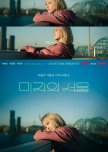
Our Unwritten Seoul: Tears, Triumphs, and Everything in Between
Let me be honest here: my primary reason to watch Our Unwritten Seoul was Park Bo-young. Her dual performance as twin sisters Yu Mi-rae and Yu Mi-ji wasn’t acting, it was borderline sorcery.Her portrayal of Yu Mi-rae and Yu Mi-ji was nothing short of spellbinding. Park Bo-young didn’t simply “differentiate” the sisters, she inhabited them so completely that I often forgot it was the same actress pulling a double duty. It wasn’t just about different hairstyles or wardrobes. It was in the bones of the performance: body language, pacing of speech, vocal pitch, rhythm of breathing. Even her eyes supported the distinction, Mi-ji’s gaze would lock onto you with unwavering boldness, her pupils contracting as if she could pin you to the wall with confidence alone. Meanwhile, Mi-rae’s softer presence lived in subtler shifts of eye contact, in those small, almost imperceptible glances that spoke of someone cautious yet endlessly tender.
It’s rare that you can watch a drama and believe, even for a split second, that an actor has conjured another version of themselves into existence. But Park Bo-young did that to me here. The illusion was seamless not because of clever camera trickery, but because she responded to her “other self” with such organic timing and emotional reciprocity that it felt like both sisters were alive in the same frame. She wasn’t just hitting marks on a green screen, she was listening, reacting, breathing with her own double.
And here’s the thing: my favorite moments in the entire drama weren’t the big melodramatic crescendos or the jaw-dropping reveals. They were the quiet ones, the scenes where Mi-rae and Mi-ji sat across from each other, twin to twin, sister to sister, and just… talked. That’s where the spell truly took hold. Those conversations didn’t just look technically seamless (though they absolutely were); they carried a raw, unfiltered intimacy that made the drama pulse with life. You could feel every ounce of unspoken pain, shared memory, and stubborn love crystallize in those exchanges. It wasn’t Park Bo-young against a green screen anymore. It was two sisters, fully present, breathing the same air.
What makes this sorcery so mesmerizing is that Park Bo-young wasn’t only flipping between characters. She was actively building chemistry with herself. Every tilt of the head, every softened gaze, every flicker of body language was not only in character but also in response to her other performance. She didn’t just double herself; she gave each twin the ability to react, clash, and love in ways that felt utterly real. It’s the kind of alchemy that turns acting into something higher: not performance, but presence. She conjured a sisterhood bond out of thin air and then convinced us it had been there all along.
And while Park Bo-young rightfully commands the spotlight, I’d be doing a disservice if I didn’t tip my metaphorical hat to Lee Jae-in, who played the twins in their teenage years. At just twenty-one, she’s already building a respectable filmography, and you can see every ounce of that experience at work here. Playing one character convincingly is already a high bar, but switching seamlessly between two, and making sure they align with Bo-young’s adult versions, is the sort of acting tightrope that could break a drama if mishandled.
If Park Bo-young was the magician casting spells, Park Jin-young was the grounding force that made every illusion believable. He stepped into Lee Ho-su with his signature calm melancholy, the same quiet intensity many might remember from The Witch. But here, that stillness became something more layered: a man who has been quietly fighting himself since high school, carrying an invisible weight he can’t seem to set down.
What made Jin-young’s performance even more mesmerizing was how much it depended on who Park Bo-young was being in the moment. He had to recalibrate constantly: his Ho-su was tender and supportive, and vulnerable around Mi-ji, but guarded, direct, and restrained around Mi-rae. Watching him adjust his energy depending on which “sister” he thought he was speaking to was an acting masterclass in itself. Their chemistry didn’t just flicker on like a switch; it bent and reshaped itself depending on identity, tone, and circumstance. That’s rare in Kdrama land, where we’ve all seen leads struggle just to make one dynamic believable. Jin-young and Bo-young made two entirely distinct relationships feel alive and breathing.
Here comes my favourite part, plot analysis. The central narrative was a rich exploration of siblinghood, identity, and emotional survival. Mi-ji, bubbly yet insecure, constantly craved recognition beyond being “Mi-rae’s sister.” Her depression arc was heart-wrenching but believable, her forced brightness a shield against relapse. Mi-rae, frail but driven, lived shackled by the weight of self-imposed responsibility – her strongest skill, as she admitted, was “enduring hardship.” The dichotomy of their coping mechanisms was fascinating and devastating to watch.
Mi-ji, the brighter twin, radiates warmth and humor, but it’s a carefully chosen brightness. She isn’t naïve, her cheerfulness is a shield she wields against relapse into the depression she once fought. Every joke, every smile feels like an act of resistance, a refusal to sink again. She survives by creating light, even if it burns her at times.
There’s something quietly heroic about the way Mi-ji navigates life. She is laughter in a room that threatens to collapse under its own silence. She is the friend who cracks a joke when tears are about to spill, not because she can’t handle pain, but because she knows too well what it feels like to drown in it. Her brightness is not denial. it’s defiance. Park Bo-young plays her with that razor-thin balance of someone who is both deeply wounded and fiercely protective of her own healing. Watching her feels like watching sunlight that refuses to dim, even when clouds roll in.
If Mi-ji’s light is born of resistance, Mi-rae’s quiet is born of endurance. With her frail health, Mi-rae learned early on that conserving energy, physically and emotionally, was her safest path. To outsiders, her cold detachment looks like aloofness, but the truth, which everyone around her quietly knows, is that she’s simply hiding her vulnerability behind silence. She carries her emotions inward, pressing them so deep that only Mi-ji, her twin, has ever been allowed to see the unfiltered version of her.
It’s heartbreaking, because her strength is also her cage. Endurance keeps her alive, but it also isolates her, creating a quiet fortress where no one is allowed in. She is always seen but rarely understood, always present but rarely known, except by Mi-ji, who has been both her witness and her refuge. Mi-rae’s stillness becomes a shield, a way to keep pain from spilling out, but it also robs her of the ability to fully live. And yet, Mi-ji isn’t free either, her weapon of choice is forced cheer, the constant laughter and lightness she uses to keep despair from seeping back in. Together, they embody two sides of the same coin: one who refuses to feel in order to survive, and one who overflows with feeling to prove she’s still surviving. It’s a duality that reveals not just their love as sisters, but the ways we all invent fragile methods to keep our own shadows at bay.
As brilliant as the twins were at carrying the emotional heart of Our Unwritten Seoul, it would be a crime to ignore the role the supporting cast played in making this world breathe. A good drama can live off the strength of its leads, sure, but a great drama wraps those leads in a community of characters who feel lived-in, messy, flawed, and deeply human. This drama does exactly that.
Let’s start with Kim Sun-young, because, really, where else could I begin? She plays Yeom Beon-hong, Ho-su’s mother, with such devastating precision that you almost forget you’re watching an actor. There’s a reason she’s been dubbed one of the “S-tier mothers of Kdramaland”, she has this uncanny ability to pull a thread of familial pain and make it unravel right in front of you. Her confrontation scene with Ho-su in episode 11 was nothing short of lethal. No screaming dramatics, no manipulative background swell, just raw, grounded truth between a mother and son who no longer know how to stand on the same side of the line. Kim Sun-young doesn’t just act; she inhabits. Every sigh, every flicker of pain across her face, every pause before she speaks lands with a gravity that forces you to sit in that uncomfortable, heartbreaking space. It’s the kind of scene that doesn’t just move the story forward, it rearranges you emotionally as a viewer.
Jang Young-nam as Kim Ok-hee, the twins’ mother, was another standout, not because she was warm or nurturing, but because she embodied a kind of broken honesty that most dramas shy away from. One of the most gutting scenes comes when she finally admits, with the gentle push of Ho-su’s mother, that she never felt worthy of love from her own mother (the twin’s grandmother), and because of that, she’s never known how to be a mother herself. It was a revelation that cut deep, especially when she confessed that she couldn’t even tell her own twins apart when they were young. Watching her break under the weight of that inadequacy was painful, but what made it truly unforgettable was the way Ho-su’s mother quietly reminded her that perhaps the first step to being loved is learning how to love. It wasn’t some grand, melodramatic revelation, it was two old high school friends, both mothers, sitting in their raw truth about how impossibly hard it can be to raise children while carrying your own scars. That scene didn’t just add depth to her character; it reframed the whole intergenerational trauma of the drama in one intimate, heartbreaking exchange.
Cha Mi-kyung as Kang Wol-soon, the twins’ grandmother, provides the counterbalance to all that generational fracture while hiding her own trauma. She’s the anchor, the tether that kept Mi-ji from fully breaking apart during her darkest moments. In lesser hands, the grandmother role might’ve been just the “wise elder with warm soup and tired proverbs.” But Cha Mi-kyung imbues her with such resilience and grounded strength that she feels less like a stock figure and more like the last bastion of love in a family scarred by absence. She’s flawed, yes, but her presence is steady, and you can feel how desperately Mi-ji clings to that steadiness. The way Cha Mi-kyung delivers even the simplest lines, softly but firmly, wraps around the viewer like a blanket stitched out of both tenderness and grief.
If Our Unwritten Seoul has one glaring flaw, it’s how it mishandled episode 11. Up until that point, the drama had been a masterclass in pacing its emotional blows – every scene landed like a surgical strike, clean, precise, and devastating when it needed to be. But then came the decision to escalate Ho-su’s trauma with his mother so close to the end. And that, for me, was where the whole thing buckled.
Here’s my problem with dropping fresh trauma at episode 11 of a 12-episode run: I’m already spent. The earlier episodes had been so good at threading quiet devastation and tenderness that by the time this “new big emotional reveal” came along, I wasn’t shocked or gutted, I was numb. Not because I didn’t care about Ho-su. Not because the acting was lacking (it was excellent). But because the drama had already overdrawn my emotional account so early in the story. That moment was like the writer handing me one more glass of whiskey after I’d already blacked out at the table. I couldn’t register it. My system had shut down.
It’s not that the subject matter wasn’t moving, it’s that the drama didn’t leave space for it to land. A truly healing drama like this needed its final act to feel like a decrescendo, not another crescendo. The earlier episodes had already wrung us dry with cathartic sadness, grief, and flashes of warmth. By episode 11, what I needed was a gentle descent, a slow unwinding of threads, a soft reminder that even after pain, people find ways to live. Instead, I got a sharp spike, a wrenching escalation that broke the rhythm.
The result? The finale felt uneven. Instead of holding me in its arms all the way to the last note, the show left me watching from behind an emotional glass wall, unmoved where I should have been undone. And that’s the tragedy, because Our Unwritten Seoul was strong enough that it didn’t need that extra push. It could have let me go with warmth, not exhaustion.
The second flaw? Han Se-jin. Was he really necessary?
The problem wasn’t the character design. On paper, Han Se-jin’s goofy, soft-edged charm is exactly the kind of energy that could’ve thawed Mi-rae’s ice. The issue was Ryu Kyung-soo’s casting. He simply couldn’t inhabit that playfulness convincingly within Unwritten Seoul’s carefully muted register. His performance felt forced, like he was reaching for “quirky and lovable” but landing on “awkwardly out of place.” It’s the kind of tonal dissonance that pulls you out of the story rather than weaving you deeper into it. Imagine casting Jet Li to play Mulan, not because Jet Li isn’t immensely talented, but because no matter how hard he tries, the role just doesn’t sit in his wheelhouse. That’s how Se-jin’s scenes felt: mismatched, misaligned, and tonally disruptive. Next to Jin-young’s Ho-su, who delivered restrained nuance at every turn, Se-jin felt like an intrusion.
This left me asking the bigger question: did Mi-rae even need a love interest at all? My answer, bluntly, is no. Her arc wasn’t one that required romance to feel complete. Mi-rae’s journey was about survival, healing, and slowly re-learning how to open her heart to family and to life itself. By forcing a half-baked romance subplot, the writers not only wasted precious screen time, they also cheapened her growth. What could have been a story of a woman reclaiming herself and her agencies became cluttered by an unnecessary distraction.
In the end, Se-jin didn’t balance Mi-rae. He blurred her, he diluted her. And that, more than anything, felt like a betrayal of what Mi-rae deserved.
At its best, Our Unwritten Seoul was a devastatingly beautiful exploration of love, family, identity, and the quiet wars we wage with ourselves. For the first 10 episodes, it soared, driven by Park Bo-young’s once-in-a-generation performance and supported by stellar writing, OST, and side characters. It could’ve been my third ever Perfect 10 drama. Instead, a late-game stumble knocked it down a peg.
But twelve episodes is a tight canvas, and the last-minute stumble -miscasting, tonal misalignment, and pacing that faltered just when it needed discipline – dragged the finish line out of reach. Instead of perfection, we got brilliance with an asterisk.
Still, don’t let that stop you. This is a must-watch. Not just because Park Bo-young performs like a woman possessed, but because beneath the fumble lies one of the most poignant explorations of love, family, and identity I’ve seen in years. It’s an emotional gauntlet, yes, but also a rewarding story about endurance, healing, and the complicated bonds of family
Was this review helpful to you?
365: Repeat The Year — The Time Loop That Could Have Been Timeless
Some dramas are like finely tuned clocks, where every narrative cog clicks into place with satisfying precision. Others are more like IKEA furniture built without instructions—there’s potential, there’s effort, but somewhere around hour six you’re screaming into the void, holding a drawer handle that doesn’t fit.365: Repeat The Year is both.
This time travel thriller, based on a Japanese novel, opens with a premise that’s crackling with intrigue: ten individuals are offered the chance to reset their lives by one year. They accept. But soon after, they begin to die—one by one.
At first, it feels like we’re stepping into a tightly-wound mystery where cause and effect are more important than whodunnit. And honestly? I was hooked. But somewhere in the middle, the drama itself hits reset… into chaos. Let’s break this down.
365: Repeat The Year starts with a premise sharp enough to cut through my “I’ve seen this before” skepticism. Ten people are given the chance to reset their lives by going back exactly one year, memories intact. Sounds simple, right? Wrong. With each reset comes a ripple—a butterfly effect that begins to unravel reality itself. And in the middle of this chaos, two unlikely partners emerge: Shin Ga-hyun, a brooding webtoon artist played by Nam Ji-hyun, and Ji Hyung-joo, an easy-going detective portrayed by Lee Jun-hyuk.
As someone who thrives on a well-crafted time travel narrative, I was instantly drawn in. At least, for the first 10 episodes or so.
Watching Nam Ji-hyun evolve from the literal sunshine of Shopping King Louis to the tenacious and emotionally scarred Ga-hyun was a revelation. Her micro-expressions hit like emotional nukes, and her ability to embody such a starkly different role proves she’s a powerhouse in any genre.
Nam Ji-hyun plays Shin Ga-hyun, a disabled webtoon artist whose life has been defined by trauma, solitude, and an eerie perceptiveness that borders on psychic. If you’re coming straight from Shopping King Louis, you’re in for a shock. Gone is the chirpy mountain girl energy—in its place is a brooding, hyper-aware woman whose emotional range is stunningly restrained but razor-sharp.
Watching her in this role is like watching a volcano pretend to be a mountain. She simmers constantly, and when she finally erupts, it’s devastating. Her quiet moments hit harder than most screaming matches in other dramas.
Then there’s Lee Jun-hyuk, who plays detective Ji Hyung-joo—initially a carefree cop with an uncanny sense of justice. He enters the reset with a personal mission, but slowly and painfully morphs into a man haunted by reality bending out of shape around him. If Ga-hyun is the cold logic of this drama, Hyung-joo is its unraveling heart.
And when I say unravel, I mean it.
By the time episode 20 hits, his psyche is fraying at the edges in a way that’s almost poetic. Lee Jun-hyuk plays it with such nuance that I found myself more invested in watching him fall apart than solving the murder mystery at hand. The pain of remembering a timeline no one else does is rendered with subtle, aching precision.
Together, Ji-hyun and Jun-hyuk share a chemistry that feels organic and unforced. It’s refreshing to see a male-female partnership where romantic tension simmers just beneath the surface without ever boiling over unnecessarily. I would happily watch them lead a buddy-cop romcom spinoff—preferably one where no one resets time and ruins everything.
At first, 365 feels like it understands the delicate art of time travel storytelling. It sets up its rules carefully, like a watchmaker assembling intricate gears, and it teases out consequences in a way that makes you lean in closer. The butterfly effect here isn’t just a gimmick; it feels ominous, inevitable—like a ripple turning into a tsunami.
But then… somewhere around the halfway mark, the butterfly doesn’t just flap its wings. It gets run over by a dump truck.
Instead of exploring the consequences of tiny changes with nuance, the drama starts lobbing random chaos into the timeline like a toddler throwing blocks. Cause-and-effect stops being thoughtful and starts feeling like a plot lottery: “What if this happens? No? Okay, how about this? Still not exciting enough? Quick—somebody reset the writer’s brain!”
It’s like watching a chef start a meal with the precision of a Michelin star contender, only to panic halfway and dump ketchup and marshmallows into the stew because they think it’ll keep you on your toes. The resulting “flavor” is more confusing than thrilling.
At its best, 365 hints at the terrifying weight of choices and how even well-meaning actions can spiral into tragedy. But during the middle stretch, it loses faith in that subtle power and trades it for shock tactics. Instead of logical ripples, we get narrative tsunamis with no clear cause—and by then, even the characters seem exhausted trying to keep up with their own reality.
What makes it so frustrating is that you can see the potential. The bones of an elegant, mind-bending thriller are there. But they’re buried under layers of narrative overreach, last-minute twists, and a desperation to keep viewers guessing. Instead of letting its butterfly effect bloom naturally, 365 smashes its wings flat, tapes them to a firecracker, and lights the fuse.
The middle arc of 365 isn’t just bad—it’s an active crime scene. It’s as if the writers had their own personal reset button and used it liberally, hoping we wouldn’t notice their narrative whiplash as they scrambled to “keep things fresh.” Spoiler: we noticed.
What started as a lean, intelligent time-travel thriller suddenly swerved into a Madlib horror story, where logic was sacrificed on the altar of cheap tension. The once-tight writing began tossing out developments that felt less like plot twists and more like random words pulled from a hat:
“Okay guys… this week let’s make Professor Lee Shin secretly evil! And next week… how about she’s redeemable again? No continuity? Eh, the audience won’t care.”
But I do care.
It’s not that I demand realism from a show about time resets—but I do demand narrative integrity. If a drama establishes its own rules, the bare minimum is to follow them. Instead, 365 seemed to repeatedly break the very systems it had spent episodes painstakingly constructing.
By episode 12, my suspension of disbelief was on life support.
And then there’s Professor Lee Shin. Initially, she was written as this enigmatic figure—a possible mastermind operating in the shadows, someone whose true intentions kept me guessing. But in a wild pivot worthy of Saturday morning cartoons, she suddenly became a scenery-chewing villainess. She started spouting monologues that felt ripped straight out of the Batman rogues gallery, and just as abruptly, the writers tried to redeem her in the finale.
You can’t just yo-yo a character’s morality like this and expect me to still be emotionally invested. By the time her redemption arc rolled around, I felt nothing but irritation.
In any story—especially one as intricate as time travel—narrative integrity isn’t just important. It’s oxygen. Narrative integrity means this: once a writer sets up the rules of their universe, they honor those rules consistently, no matter how wild or fantastical the premise is. It’s the invisible contract between storyteller and audience. I, the viewer, agree to suspend my disbelief—to believe in your unicorns, time resets, or alien body swaps—as long as you play fair with the logic of your world.
Here’s the thing: you can absolutely tell me the female lead rides a magical unicorn to work every morning. I’ll nod, smile, and follow along. But you have to show me how she got it. Maybe she rescued it from a shady back-alley stable. Maybe she conjured it during a blood moon ritual. Fine, I’m with you.
But don’t wait until episode 15 to suddenly reveal that this sweet, mystical unicorn can fire tank shells from its mouth and single-handedly win a war. That isn’t a plot twist. That’s narrative betrayal. And that’s the flavor of whiplash 365 serves up during its wobbly middle arc.
The writers set up their own house rules for time travel early on—clear, promising, and grounded enough to keep me hooked. But midway through, it’s as if they tossed those carefully laid rules into a shredder. Cause and effect? Shattered. Character logic? Gone. Basic realism in the way police or hospitals operate? Tossed out like expired milk.
The result is maddening. For a story built on temporal cause-and-effect, watching the writers reset their own narrative consistency feels like trying to solve a puzzle where half the pieces are swapped for random Lego bricks.
This isn’t about nitpicking realism in a sci-fi premise—it’s about respecting the world you created as a storyteller. If you don’t, why should I invest? By the midpoint of 365, I found myself less immersed in the mystery and more distracted by glaring inconsistencies, my brain spinning in the background like a Windows error screen.
A great time travel drama feels like a Möbius strip—smooth, seamless, and endlessly fascinating when you trace its loops. 365, at its worst, feels more like a frayed rope you’re clinging to as the strands snap one by one.
365: Repeat The Year is frustrating because it’s so blatantly obvious how brilliant this could have been. The strong start and emotionally charged final act are sandwiched between a messy middle that nearly sinks the entire ship. It’s the narrative equivalent of eating a gourmet meal, suffering food poisoning halfway, and then ending with a surprisingly good dessert—but still wondering if it was worth it.
365: Repeat The Year is like a beautifully plated dessert with a soggy middle. The concept is rich, the performances stellar, and the ending packs an emotional punch most dramas dream of. But to get there, you’ll need to survive a dozen episodes of narrative confusion, character betrayal, and logic gaps wide enough to fall into.
I don’t regret watching it. But I do wish I could reset and skip the parts that made me question whether anyone in this universe has ever heard of backup, gloves, or common sense.
Still, that last time loop? That one was worth it.
If you’re patient enough to survive the mind-rotting middle, there’s a lot to enjoy here. But don’t expect narrative consistency or logical character development. Bring your suspension of disbelief and maybe some coffee-flavored Kopiko candies (because you’re going to need them).
Find the full review of this drama and other titles on byrei.ink
Was this review helpful to you?
Way Back Love: The Art of Moving Forward Without Letting Go
There’s a kind of magic in stories that don’t waste a single second of your time, and Way Back Love is that rare little comet — burning brightly, flying fast, and leaving a lingering glow in the soul long after it's gone from sight. At just six episodes, this drama pulls off a narrative feat many 16-episode series can only dream of: it makes you laugh, ache, breathe deeply with its characters, and gently nudges you toward healing. It feels less like a television show and more like a precious letter you find tucked away in a drawer, written during a time when you needed it most.At the heart of Way Back Love are two stunning performances by Gong Myung and Kim Min-ha, who somehow manage to make every moment between them feel lived-in, like a favorite song you didn’t realize you remembered all the lyrics to. Kim Min-ha's Jung Hee-wan carries her depression with a weariness that doesn’t scream for attention but wraps around her like an old, heavy coat she forgot how to take off. Gong Myung’s Kim Ram-woo, her childhood friend turned gentle grim reaper, is the embodiment of what it feels like to miss someone so deeply that even in death, your soul keeps reaching out to them. Together, they balance the narrative tightrope between bittersweet joy and inevitable sorrow with such grace, it’s as if they were born to be in this story — whether sharing a bucket list moment under the soft morning sun or confronting the unbearable reality of goodbye.
But Way Back Love doesn’t just rest its laurels on its stellar leads. Its supporting cast is nothing short of magnificent. Ko Chang-seok, as Hee-wan’s father, brings a quiet, grieving dignity that threatens to break your heart with every small, careful gesture. Seo Young-hee, playing Ram-woo’s mother, delivers an emotional gut punch that leaves you gasping, and Jung Gun-joo, as Ram-woo’s best friend, gives a performance so tender it feels almost invasive to watch. Despite the tight six-episode format, every character is given enough breath and weight that they don't feel like supporting actors — they feel like essential constellations in this aching sky of a story.
The narrative structure of Way Back Love is refreshingly confident. It respects the audience’s time and intelligence, moving forward without filler, without needless side plots, and without coddling. The drama has a rhythm to it — a deliberate heartbeat — that lulls you into smiles in the first 40 minutes, then punches through your chest with sorrow in the final stretch. It’s a perfect dance of comedy and tragedy, never letting you get too comfortable, always reminding you that love and loss are two sides of the same coin.
One of the most beautiful and clever aspects of the story is how it turns something as simple as a name — a prank between friends — into the anchor of the entire narrative. In a world where a name can tether a soul, where calling someone by their true name can either set them free or bind them tighter to this earth, Way Back Love uses this device not just as a plot twist, but as a meditation on identity, memory, and the invisible threads that tie us to the people we love.
Visually and sonically, Way Back Love is a masterclass in storytelling. The drama knows exactly when to dazzle with bright colors and warm lighting to make you feel safe, and exactly when to strip the world down into grey, muted tones to expose the raw wound of grief. It’s a silent shift you don’t notice at first — until you realize the world has dimmed right alongside the characters’ hearts. The OST is a character of its own here, weaving through scenes with perfect precision. Loco and Jae Yeon’s Best Luck feels like the sound of a heart still daring to hope, while Salad Days by Eazy and If You by Kim Tae Rae crash into your chest like a tide when words aren't enough anymore. There are moments when the music and dialogue hit the same emotional note — literally — syncing together so perfectly that it feels like fate’s invisible hand guiding the story forward. I cannot overstate how rare and powerful that is. Whoever managed the audio for this drama deserves a standing ovation.
Of course, no drama is perfect. Some viewers might find the sudden jumps between past and present a bit disorienting — Way Back Love demands your full attention, like a friend telling you a deeply personal story they can only bear to say once. And those coming in expecting a standard fluffy romance may find themselves a little unmoored; while love is a key ingredient, this is a story much more about grief, survival guilt, and the desperate, clumsy attempts we make to hold onto life after it has already changed us forever. There’s a tenderness to its sadness that could be triggering for anyone freshly carrying their own heavy losses — tread carefully if you must.
Verdict:
Still, in the end, Way Back Love offers something rare and vital. It’s not here to make death seem noble or to pretend grief has clean edges. It reminds us that the people we love don't leave us — not really. They fold themselves quietly into the marrow of our bones, into the pulse of our blood, into the names we carry forward. And just because time moves on doesn’t mean we ever have to let them go. The real triumph of Way Back Love is that it teaches grief without bitterness, hope without cheap promises. It teaches that even in loss, we can choose to live. To really, stubbornly, beautifully live.
Way Back Love isn't just a drama. It's a memory you'll carry. A small, gentle hand on your back on the days when you can't quite stand. A story that softly reminds you that survival is an act of love — for yourself and for everyone who ever loved you.
Score: 8.5/10
Was this review helpful to you?
Eight Episodes Were Not Enough
I finished The Art of Sarah with two feelings living side by side. One was frustration. The other was gratitude. Frustration because this story clearly wanted more room to breathe than Netflix allowed it. Gratitude because even inside those constraints, I was given one of the most astonishing acting performances I have seen in years.I wanted to do my usual dissections for this kdrama, but instead I opted for a mini-review. Not because the drama lacks ambition, but because the writing itself does not sustain that kind of structural scrutiny. What it does sustain, and what it commands attention for almost the entire runtime, is a performance so commanding that it recalibrates how I experienced the show minute by minute.
Let’s get this out of the way early. This drama lives and dies on Shin Hae-sun. If you are here for airtight plotting, ensemble balance, or narrative elegance all the way to the finish line, you will feel the cracks by the end. If you are here to watch an actor bend time, identity, and emotional gravity around herself, you will be glued to the screen.
And I was.
She plays Sarah Kim, our titular character, while also inhabiting Kim Eun-jae across different points of her life, and at times slipping seamlessly into Mok Ga-hui. On paper, this already sounds demanding. On screen, it becomes something far more unsettling and immersive because of how she approaches it. She does not rely on loud transformations or obvious markers to distinguish these identities. Instead, she works in micro shifts. A change in breathing before a sentence. A slight adjustment in posture. The way her voice settles lower or softens at the edges. Even the way she occupies silence feels different depending on who she is in that moment.
What impressed me most is how completely she erased her own acting fingerprints. Most actors, even excellent ones, carry signatures that resurface under pressure. You recognize the cadence, the emotional posture, the familiar rhythm when scenes demand intensity. Shin Hae-sun does not do that. Each character feels built from a different internal logic, and because that internal engine changes, everything else follows naturally. By the time the drama reached its final stretch, I genuinely found myself unsure who the real Sarah Kim even was anymore. That confusion did not feel like a flaw. It felt intentional, almost inevitable, as if the illusion had grown strong enough to take on a life of its own.
I do not say this lightly. This might be her strongest performance yet. Not because it chases spectacle, but because it remains emotionally coherent even when the writing around it begins to compress and strain. When the story rushes, she steadies it. When structure tightens too quickly, she absorbs the impact. She does not fix the script. She makes it survivable, and there is a meaningful difference there.
Opposite her is Lee Joon-hyuk as Park Mu-gyeong, the detective trying to unravel Sarah Kim. This casting matters more than it might seem at first glance.
Here is the hill I will always kill-on, Shin Hae sun is a supernova level talent. More often than not, I barely notice her co leads because she redefines the gravitational field. Everything around her is pulled inward. Co leads who cannot rise to her level simply disappear in comparison. There are very few male actors who can stand next to her without being devoured. Ji Chang-wook managed it in Welcome to Samdalri. Kim Jung-hyun did it memorably in Mr. Queen. Lee Joon-hyuk now earns his place in that quiet pantheon with his work here.
His Park Mu gyeong is calm, controlled, observant. A sharp contrast to his work in Stranger, and proof of his range when given room. He does not try to overpower her scenes. He listens. He reacts. He lets tension sit in silence.
The last two episodes make the smartest decision this drama ever makes. They narrow their focus. They put these two in a room and let them trade dialogue, breath, and micro expressions. Those interrogation scenes are some of the strongest acting exchanges I have seen in a long time. No music cues screaming at you. No camera gimmicks doing the emotional labor. Just two actors holding eye contact and daring the other to blink first. There is no romance here, yet the chemistry is electric. Not attraction, but friction. Curiosity. Mutual recognition. Lee Joon-hyuk matches her beat for beat, and that is no small achievement. Perfect co lead casting.
From a production standpoint, the audio and OST are functional and unremarkable. They do not distract, but they do not linger either. The visuals, however, do far more heavy lifting. The drama makes effective use of negative space, framing characters against empty rooms, glass walls, and long corridors. Luxury is often captured in slow motion, not to glorify it, but to emphasize its artificial stillness. These visual choices align well with the story’s fixation on surfaces, wealth, and constructed identity, and they trust the actors to carry the emotional weight within the frame.
The camera often pulls back when you expect it to push in, letting silence stretch. It trusts the actors to fill the frame. When you have Shin Hae-sun and Lee Joon-hyuk, that trust is well placed.
Narratively, The Art of Sarah begins with confidence. The present day murder of Sarah Kim anchors the story, while the past unfolds through Park Mu-gyeong’s interviews and investigations. The structure invites you to piece things together. It withholds answers. It respects your attention. For a while, the mystery holds. And then the format starts to bite.
Eight episodes. Thirty to forty five minutes each. That is not enough time for what this story wants to do. As the final acts approach, the plot tightens correctly on paper, but emotionally it feels rushed. Revelations arrive before they have time to land. Key moments appear as snippets and flashbacks rather than fully embodied scenes. This is a drama that deserved a full sixteen episode, one hour treatment. I wanted to see those final turns actually acted by all the players, not summarized through edits. The ending reaches closure, but the road there feels compressed, and that compression introduces inconsistencies. They are not catastrophic. But they are noticeable. And yes, they bothered me.
There is another irony here. The two leads are so strong together that they eclipse everyone else.
This is not a knock on the supporting cast. Names like Bae Jong-ok, Kim Jong-tae, Lee Yi-dam, and Park Bo-kyung are more than capable. They serve their roles well. They do what the script asks of them.
The problem is scale. Next to Shin Hae-sun and Lee Joon-hyuk, their stories fade. Not because they are weak, but because the drama itself pulls focus so aggressively toward its center. If you asked me now to recount specific supporting arcs, I would struggle. Ask me about the interrogation room scenes, and I can replay them shot for shot.
That imbalance is another casualty of the short format. With more time, those characters could have breathed. Here, they exist largely to reflect light back onto Sarah Kim.
I am famously intolerant of inconsistencies, whether in narrative logic, character behavior, or plot twists that confuse chaos with cleverness. I have eviscerated dramas for far less. So why did this one still work for me. Because when the structure wavered, the emotional anchor never did. Shin Hae sun remained constant throughout. She felt like a lighthouse in rough waters, steady and unflinching, guiding me through the storm even when the sea grew messy.
Verdict: Compared to my other hyped 2026 watches, Dear X and Can This Love Be Translated, The Art of Sarah is the first drama this year that truly lived up to its anticipation for me. Not because it was perfect, but because it delivered honesty in its ambition and excellence in its craft. It should have been bigger. Longer. More patient. The narrative needed that space, the two leads deserved it, and I, as the audience, wanted to stay in that world far longer than the format allowed.
What we got instead was still a deeply satisfying watch, carried squarely by a tour de force performance from Shin Hae-sun and scaffolded beautifully by Lee Joon-hyuk. Their presence together is so magnetic, so precisely calibrated, that I found myself already hoping for their next project the moment the screen faded to black. They are, quite frankly, terrifyingly perfect together.
Recommended, with asterisks.
Was this review helpful to you?
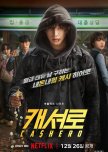
The Cost of Being Good
I went into Cashero thinking I was signing up for a quirky superhero comedy.The premise alone sounded playful: a man whose superpower scales with how much money he has on hand. It felt like one of those clever, high-concept ideas meant to generate laughs and light action. What I absolutely did not expect was to be emotionally dismantled within the first two episodes. Cashero is not interested in spectacle. It’s interested in cost. And once that clicks, every so-called “heroic moment” stops being thrilling and starts hurting in a very specific, adult way.
At the center of the story is Kang Sang-woong, played by Lee Jun-ho, and this might be one of his most quietly devastating roles. Sang-woong is not ambitious, not grand, not chasing greatness. He’s a regular man who did everything right. He saved diligently. He planned a future with his girlfriend. He wanted a home, stability, a small and decent happiness. Then he inherits a power that doesn’t elevate his life but interrupts it. His strength isn’t infinite, rechargeable, or symbolic. Every time he uses it, real money evaporates. Not metaphorical money. Not “energy.” Actual savings. Numbers you can calculate. A bus full of people costs him tens of millions. Saving the woman he loves drains the entire account he’d been building for years. Watching this happen feels less like witnessing heroism and more like watching someone set fire to their future in real time.
What makes this unbearable in the best way is the inner monologue. Kdramas almost never let us live inside a character’s head this explicitly, and Cashero weaponizes that choice. We hear every hesitation, every rationalization, every ugly, honest thought Sang-woong isn’t proud of. When he thinks, “If I had more money, I’d be a good person,” it lands like a punch to the chest because it’s not noble. It’s true. The drama doesn’t romanticize sacrifice; it itemizes it. Sirens don’t signal excitement. They signal loss. Another withdrawal. Another dream delayed or erased.
The generational aspect only deepens the tragedy. This power isn’t a random blessing. It’s inherited, passed down from grandfather to father to son like a debt that can’t be refused. A late revelation reframes Sang-woong’s father entirely. He wasn’t bad with money. He wasn’t irresponsible. In a letter, he admits that every time he tried to give his family more, the universe demanded more from him in return. That line alone encapsulates the soul of this drama. The better you try to live, the higher the bill becomes. Decency is not rewarded; it’s exploited. The power doesn’t punish greed. It punishes hope.
And yet, Sang-woong keeps choosing to act. Not because it’s right in some abstract moral sense, but because walking away would require him to become someone he cannot live with. That’s what makes him a hero. Not the rescues themselves, but the fact that he keeps stepping forward when stepping back would be easier, more logical, and more humane to himself. His heroism is reluctant, finite, and painfully rational, which makes it far more affecting than any cape-and-glory narrative.
A huge emotional anchor in this story is Kim Min-suk, played by Kim Hye-jun, and this was my first time watching her work. I genuinely fell in love with her here. Min-suk could have easily been written as the “worried girlfriend” archetype, but instead she becomes one of the drama’s emotional pillars. She is practical, intelligent, and emotionally generous. As the couple’s literal financial manager, she understands the cost of Sang-woong’s power more clearly than anyone, and yet she never reduces him to a ledger. Watching her grow from supportive girlfriend into wife is quietly heartwarming. She doesn’t just stand beside him; she chooses the life he’s forced into with open eyes. Her love isn’t blind optimism. It’s informed, deliberate commitment, and that makes it feel earned in a way K-drama relationships often struggle to achieve.
The supporting cast adds texture without diluting the core theme, but Cashero never loses sight of what it’s really about: real people, real limits, and sacrifice you can measure. This is a superhero story where the fantasy element only exists to make the reality sharper. When Sang-woong saves people, the triumph is immediately undercut by the aftermath. You don’t cheer. You grieve. And over time, you realize that’s the point. The show wants you to feel uncomfortable about how casually we celebrate self-sacrifice without asking who pays for it.
There is a late-stage narrative choice involving time travel that functions as a deus ex machina, and yes, this is the one place where the drama slightly overreaches. It’s a neat solution, and in another story it might feel cheap. Here, it doesn’t quite dilute the central theme, but you can feel the writer’s hand nudging the scales back toward balance. That said, this is nitpicking more than a true flaw. The emotional groundwork is so strong that the resolution still lands. The story never pretends that heroism becomes free or painless. Even at its most fantastical, the heart of Cashero remains intact.
By the end, what stayed with me wasn’t a single action sequence or dramatic reveal. It was the quiet, devastating idea at the core of the show: he’s out there using his own money to save the world. Not government funding. Not corporate backing. Not divine grace. Just one man, draining his personal future so strangers can keep theirs. That framing turns heroism into something fragile and deeply human, and it lingers long after the credits roll.
On a personal note, this also marked my third Lee Jun-ho drama and my second one back-to-back right after Typhoon Family, and watching him inhabit two deeply human yet fundamentally different characters in such close succession was an absolute treat. Where Typhoon Family asked him to navigate ambition, responsibility, and emotional restraint within a family and corporate framework, Cashero strips him down to something even more vulnerable: a man quietly negotiating with his conscience every time he opens his wallet. There’s no overlap, no comfort zone repetition, just range, control, and an instinctive understanding of ordinary people placed in extraordinary moral pressure. My respect for him as an actor has only deepened, and as of now, his Kdrama satisfaction rate for me remains a clean, undefeated 100%.
Cashero isn’t a power fantasy. It’s a ledger. And Sang-woong is always in the red. Yet somehow, despite everything, he keeps choosing to be good. Not because it’s rewarded, but because it’s who he is. That’s not flashy heroism. That’s the kind that hurts to watch, and the kind that’s hardest to forget.
Was this review helpful to you?

A Sweet Treat With One Very Suspicious Cocoa Bean
Romantic Anonymous is one of those quiet little dramas that initially feels like a warm cup of hot chocolate, gentle, comforting, and a little sweeter than you expect. The early episodes charmed me instantly with their soft pacing and the emotionally grounded premise of two people who struggle to exist in the world. Lee Ha-na, played with a delicate, jittery sincerity by Han Hyo-joo, has scopophobia, the fear of being looked at. For her, eye contact feels like stepping under a spotlight she never asked for. Fujirawa Sousuke played by Oguri Shun, her boss, is mistaken for a germaphobe, but his real wound runs deeper: he’s convinced he is the contamination, shaped by a childhood trauma that he’s carried into adulthood like a hidden scar. Watching these two slowly inch toward each other, awkwardly, cautiously, and sometimes hilariously, was the heart of why I fell for the drama. Their scenes together aren’t sizzling so much as they are quietly tender, shaped by tiny gestures and shy glances that never overplay themselves. Even their attempt to “practice” touch and eye contact comes with a playful self-awareness, the drama jokingly acknowledging how absurd it sounds while still giving the moment emotional weight.The romance, if you can even call it that for most of the show, isn’t the dramatic sweeping kind. It’s more about two people learning to breathe near each other without panicking. Two turtles slowly poking their heads out of their shells. It’s soft. It’s understated. It’s care-driven rather than chemistry-driven. And honestly, that worked for me. This was always a healing story more than a love story, where chocolate becomes a language, connection becomes courage, and every small step counts.
But then episode 7 happened, and the tonal shift was so abrupt it felt like someone swapped the script with the outline of a completely different show. Suddenly we were in Bali looking for “rare cacao beans,” and in the most spectacularly convenient twist imaginable, the first random restaurant the characters entered just happened to be owned by the exact farmer they needed. I sat there blinking at the screen like my brain had blue-screened. This kind of deus ex machina shortcut is my personal storytelling kryptonite, and it broke my immersion instantly. One drop of that plot convenience landed in my emotional milk and dyed the whole thing grey. I hit the eject button so fast I thought that was the end of it. And normally, for me, it would be. Once I emotionally disconnect from a drama, that’s usually permanent.
But strangely, and I still don’t fully understand why, I came back the next day and picked up the final episode. Maybe it was lingering fondness for the characters, maybe it was curiosity, maybe it was the emotional momentum from the early episodes that hadn’t fully faded. Whatever the reason, I found myself giving the show one last chance. And to my surprise, the finale didn’t just pull itself together, it actually returned to the emotional spine that made the drama charming in the first place. The chaos of Bali slipped into the background, and the story refocused on what truly mattered: Hana finding the courage to step into the world a little more boldly, and Sousuke deciding to protect the chocolate shop not for business or legacy, but because he finally understood what it meant to bring happiness to others. Their personal arcs came full circle in a way that felt sincere and grounded, like the drama remembered exactly what it promised at the beginning and honored it.
The ending isn’t extraordinary, but it is emotionally honest. It’s quiet, thoughtful, and thematically consistent with the gentleness of the early episodes. No fireworks, no grand romantic declarations, just the inevitability of two people who are a little braver, a little healthier, and finally able to look at each other without flinching. That kind of closure, for this kind of story, is enough.
In the end, Romantic Anonymous isn’t a masterpiece and it’s not aiming to be one. It’s a warm, cozy little drama that stumbles hard in one episode but still finds its footing in the finale. If you enjoy soft emotional storytelling, awkward healing arcs, and characters who feel genuinely human in their frailty, it’s well worth watching. Just be prepared for one detour that may test your patience. For me, the journey, even with its flaws, ended on a satisfying note.
I know I don't usually do numerical scores anymore, but I’d give it a solid, warm high 7 out of 10.
Was this review helpful to you?

Comfort Food for the Soul
Okay, so Little Forest had been sitting in my watchlist for over a year, and last night I finally pressed play because I missed Kim Tae-ri’s “girl next door” vibe. Best decision ever. It’s basically 115 minutes of Tae-ri cooking, eating, wandering around her village, and quietly narrating her thoughts — and somehow, that was exactly what I needed.The plot is super simple: Hye-won comes back to her rural hometown after getting tired of city life. That’s it. No big twists, no villains, no tragic breakup — just one woman rediscovering herself through food and nature. And it’s so peaceful. Every season flows into the next as she learns, heals, and occasionally deep-fries things you didn’t even know were edible (acacia blossoms? who knew!).
The pacing is slow, but intentionally so. It gives you space to breathe — like you’re living alongside her rather than watching from afar. The way the film is divided by the seasons makes it feel like a warm year spent in quiet reflection.
Kim Tae-ri carries the whole thing effortlessly. She’s so natural that it doesn’t even feel like acting. One minute she’s smiling softly at her freshly baked bread, and the next she’s just sitting in silence — but somehow you feel everything. That subtle shift between contentment and melancholy is pure magic.
The cinematography is gorgeous. Every shot could be a Pinterest board for “Korean countryside aesthetic.” There’s something almost meditative about watching her cook — the sizzling, the chopping, the way sunlight hits a bowl of rice. You can almost smell the food through the screen.
And Kim Tae-ri… what can I even say? She’s so naturally expressive. She doesn’t need dramatic crying scenes to make you feel something; a quiet smile or a small sigh does the job. You can tell she gets this character — someone who’s tired but still gentle with herself.
What surprised me most is how healing the movie felt. I expected a slow, maybe even boring story — but instead, it wrapped me up like a warm blanket. There’s something so grounding about watching someone find joy in the simplest things. It makes you want to plant something, cook something, and maybe just take a day to breathe.
By the time it ended, I realized I’d been smiling for most of the movie. It’s rare to find a film that doesn’t need high stakes or grand emotions to move you. Little Forest does it quietly, through food, nature, and self-reflection.
If you’re burnt out, stressed, or just need a reminder that peace can come from small, ordinary moments — this is your movie
Was this review helpful to you?

The Winning Try: Rugby, Romance, and the Weight of Dreams
The Winning Try is one of those rare kdramas that makes you fall in love with the journey even if you already know the ending. Sports and romcom dramas share a certain comforting DNA, and this series embodies that perfectly. Both genres have predictable beats—you know the underdog will rise, that love will bloom, that triumphs and heartbreaks will land exactly where they’re supposed to—but what makes them truly magical is how those beats are orchestrated. There’s a rhythm to it, an emotional pulse that carries you along whether you’re cheering on a winning try or swooning over a quiet, tender moment between two people who have been through the storms of life together. I find these dramas to be my ultimate comfort watch because they provide that perfect mix of tension, heart, and payoff without needing an artificial twist to hijack my emotions. And The Winning Try manages this with masterful ease.At the heart of the series is Yoon Kye-sang as Ju Ga-ram, a former rugby star turned coach whose life has been marked by both tragedy and scandal. Kye-sang balances comedy and pathos with such seamless grace that one moment has you laughing at his quirks, and the next has you quietly weeping for the burdens he carries. He is the tragic clown in the truest sense—someone whose light makes everyone else shine a little brighter, even while the weight of his own world threatens to crush him. Beside him, Im Se-mi plays Bae I-ji, Ga-ram’s ex-girlfriend and the assistant coach who is both fiercely competent and heartbreakingly tender. Their reunion is never forced; the romance grows naturally out of shared stakes and history, a gentle blooming amidst the chaos of training, tournaments, and the high pressures of youth. One of the quietest yet most powerful moments is when I-ji comforts Ga-ram with a simple, “I got you,” stroking his back with care that is at once intimate and steadfast. Beyond romance, I-ji’s story of sacrifice—from star athlete to mentor—adds depth to her character and grounds her care in lived experience, making her more than just a love interest.
Supporting characters elevate this drama from excellent to extraordinary. Kim Yo-han as Yoon Seong-jun, the rugby team captain, carries a narrative weight that rivals Ga-ram’s. Seong-jun is perpetually under the shadow of his twin brother, a celebrated football player in Spain, and struggles with the constant need to prove himself, not just to his parents but to the world. The drama carefully unpacks his pressures, showing how his leadership, his insecurities, and his vulnerabilities all collide as he navigates the final season with his team. Kim Yo-han embodies this duality with subtlety and intensity, making Seong-jun’s victories—and small personal triumphs—feel hard-won and deeply resonant.
On the other end of the spectrum is Mun Ung, portrayed by Kim Dan, a rugby prodigy whose brilliance is as fragile as it is dazzling. This being only Kim Dan’s second drama, his performance is startling in its raw emotionality. Ung contends with a father who forbade him from playing rugby, fearing the cycle of disappointment that once shaped his own life. He also carries a deep trauma that prevents him from tackling other players. The drama’s depiction of his internal struggle, particularly in the tense scenes confronting Ga-ram, is both heart-wrenching and electrifying. Watching him slowly reclaim his courage is a masterclass in storytelling through character, and you forget for a moment that this is a fresh actor finding his footing in the industry.
The drama’s layered storytelling extends to Seo U-jin, the shooting team’s prodigy, played by Park Jung-yeong. U-jin seems cold and unapproachable at first, but as the episodes unfold, we see the crushing expectations imposed by her mother, her relentless drive, and the personal cost of being at the top. Her friendship and eventual romance with Seong-jun feels both inevitable and incredibly earned, offering a counterpoint to Ga-ram and I-ji’s mature, patient love. Both couples navigate pressures in their respective arenas—one team and one sport—but their struggles intersect in universal ways: the weight of expectations, the loneliness of high achievement, and the quiet, tender moments of connection that remind them—and us—that no one should endure these trials alone. I noticed, quietly, how lonely it can be for both of these people while standing at the top, at the end of their respective games.
The narrative unfolds beautifully across twelve episodes, and while the story is predictably satisfying in its beats, it’s in the journey where the drama truly excels. Ga-ram’s secret illness, the underdog rugby team, the pressures on U-jin and the shooting team—all these threads are interwoven with grounded logic, never straying into contrived plot twists. Every setback, every triumph, feels earned, and the drama’s focus on resilience is unwavering. By the final match, when the rugby team executes their winning try, or when U-jin finds her footing both in sport and life, the payoff hits with an emotional resonance that feels both immediate and lasting. And yes, the villains get their comeuppance, which is satisfying in a way that many kdramas neglect, rounding out the story with a sense of karmic justice.
Visually, the drama serves its story well without being showy. Rugby matches are captured clearly and effectively, close-ups during moments of personal struggle hit the right notes, and while it’s not a feast of cinematography, the visuals always support the emotion and action at hand. It’s in the audio that the series truly flexes its muscles—the OST selection is a triumph. Slow ballads like Hold Me Tight, If, and When I See You underscore moments of intimacy and desperation, while upbeat tracks like Touchdown, SURF, and Rise Up electrify the tournament scenes. One particular rap track moved me to tears—a first for me—and the team’s rendition of the main theme, Try, adds a layer of charm and authenticity that completes the immersive experience.
If there is a flaw, it is only that the rugby matches could have been shown a bit more, and that I long for a season two to explore the universe that this drama so meticulously built. But these are minor notes; they exist only because the world of The Winning Try is so inviting, so emotionally complete, that you ache for just a little more.
In the end, The Winning Try is a healing watch. It reminds me why sports and romcom dramas are my ultimate comfort zones: both thrive on heartbeats, on laughter and tears, on victories both large and small. Watching it, I felt joy, relief, and the quiet thrill of witnessing characters earn their moments in ways that feel simultaneously inevitable and breathtakingly real.
If you need a drama that balances emotional depth, grounded storytelling, and the intoxicating pull of both competition and human connection, The Winning Try will welcome you in like a warm cup of tea on a chilly autumn day—and leave you wishing you never have to leave its world.
Was this review helpful to you?


