
 Editorials
 1
1


? My Review of "Out of Reach" ?
I just finished watching Out of Reach, and my heart is still tangled in the delicate threads this drama wove. This isn’t your typical light, predictable series — it dares to walk into rooms most folks in China would rather keep locked tight. It gently yet unflinchingly shines a lantern on subjects too often swept under the rug, making it not just entertainment, but a quiet revolution of empathy.The performances?
WANG NANA and YUAN YU HAN absolutely breathed life into their characters. They weren’t simply acting — they were living, aching, hoping, breaking. Watching them was like peeking into a diary you have no right to read yet can’t tear your eyes away from. Their chemistry wasn’t loud or showy; it simmered under the surface, subtle and real.
The story itself is a tender, bruised peach. It explores human frailty and the loneliness of carrying burdens no one else can see. It made me stop and wonder how many people I pass each day who keep such silent battles locked behind polite smiles.
In short:
If you’re looking for something shallow, keep moving. But if you want a drama that peels back the layers of the human spirit — that has the courage to speak where others remain hushed — Out of Reach is worth every tear and every warm pang in your chest.
Bravo to the entire team, and a standing ovation to WANG NANA and YUAN YU HAN for portraying their roles with such haunting brilliance.
Was this review helpful to you?

Dragon Deity and Wu
Veil of Shadows was introduced as a story centered around the Tenth Dragon Son, but in my opinion, the true heart of the drama belonged to the Dragon Deity Ji Ling and the nine-tailed fox Lu Wuyi. From beginning to end, their storyline carried the deepest emotion, the greatest sacrifice, and the most unforgettable heartbreak.Ji Ling’s character was, without question, the most touching and tragic part of the entire drama. His journey as the Dragon Deity—caught between duty, fate, love, and endless sacrifice—was beautifully written. Every layer of his identity, from Ji Ling to the Dragon Deity himself, revealed more pain and loneliness, making his story incredibly powerful. His love for Lu Wuyi was not loud or simple; it was quiet, heavy, and filled with the kind of sorrow that stays with you long after the final episode ends.
Lu Wuyi, as the youngest nine-tailed fox, brought both strength and softness to the story. Her connection with Ji Ling felt fated, yet cursed by circumstances neither of them could escape. Their relationship was not just romance—it was longing, protection, memory, and loss. Every scene between them felt meaningful, and their chemistry made the emotional moments hit even harder.
The drama itself was captivating and extremely well written. The script gave depth to every major character, but especially Ji Ling. The director handled every scene with precision and emotion, never wasting a moment. From episode 1 to episode 29, there was never a dull point or a moment where you did not want more. Each episode revealed something important, and the pacing kept the audience fully invested.
The cinematography, costumes, and fantasy elements added even more beauty to the storytelling. The world felt rich and immersive, and the emotional scenes were made even stronger by the visuals and music. Nothing felt rushed or empty—the drama gave romance, pain, betrayal, sacrifice, and destiny all in one complete story.
While many may focus on the Tenth Dragon Son’s plotline, for me, Veil of Shadows will always belong to Ji Ling and Lu Wuyi. Their story was the soul of the drama. It was beautiful, painful, and unforgettable. Ji Ling’s ending especially leaves a deep ache—one of those rare characters whose sadness feels real even after the drama is over.
Out of all the storylines, theirs was the most moving and the saddest. Veil of Shadows is not just a fantasy romance drama—it is a story about love that survives through suffering, and that is what made it truly special.
Was this review helpful to you?
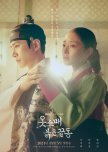
Fate, Sacrifice, and Unspoken Love
The Red Sleeve is one of those rare dramas that truly tears at your heartstrings and lingers with you long after the final episode. At its core, it’s a story about love, sacrifice, and the heavy price of duty.The male lead, the crown prince who later becomes king, falls deeply in love with a court maid. What made his love so powerful wasn’t just her beauty, but her passion, kindness, and unshakable spirit. She cared deeply for everyone around her, carrying herself like a diamond hidden among stones — quiet yet radiant.
The female lead loved him in return, but her heart longed for freedom over status. She couldn’t bear the thought of becoming one of the king’s many concubines, bound by palace politics and stripped of choice. Instead, she chose a life where she could remain true to herself, even though it meant constantly being at odds with the man she loved.
What makes her character unforgettable is her deep loyalty — to her friends, to her values, and to her own heart. Growing up within the palace walls, she faced endless challenges, heartbreaks, and impossible decisions. Yet, through it all, she remained strong, graceful, and resilient.
For me, this drama beautifully shows how, sometimes, love isn’t about holding on — it’s about letting go. It reminds us that love can demand sacrifice, and sometimes, the greatest act of devotion is choosing a path that hurts both hearts.
The final episode tied everything together with answers, closure, and emotional weight. It left me both heartbroken and satisfied — sad for the sacrifices made, but grateful for the beautiful, fleeting love the characters shared.
Was this review helpful to you?

? One Contract, Two Liars, and a Love Neither of Them Planned
The Contract of Love and Deception takes the familiar contract-lover storyline and makes it entertaining by giving us two people who enter the relationship believing they understand the rules—only for emotions to completely destroy those rules.Meng Rao agrees to become the fake lover of the wealthy and intimidating CEO Shen Si Lin because she desperately needs money to help her seriously ill best friend, A Zhao. Her job is simple: help Shen Si Lin ruin the marriage arrangement his family has planned for him, collect her money, and leave.
At least, that was the plan.
I really liked Meng Rao as the FL because she isn't simply waiting for a powerful man to rescue her. She begins the story vulnerable because of her circumstances, but there is strength underneath that vulnerability. Once she discovers that someone she trusted has actually been using her, we see another side of her personality emerge. Instead of continuing to allow herself to be manipulated, she fights back.
Then we have Shen Si Lin.
Here comes our cold CEO who apparently forgot that a fake relationship is supposed to remain FAKE. 😂
Shen Si Lin begins as controlled, powerful, and emotionally distant. Meng Rao is supposed to be part of a contract, nothing more. Yet somewhere along the way, his behavior stops looking like acting. His attention becomes genuine, his protectiveness increases, and the emotional distance he normally keeps between himself and others begins disappearing.
What makes their relationship enjoyable is that Meng Rao keeps trying to convince herself that none of it means anything.
"It's just the contract."
Sure, Meng Rao. Keep telling yourself that. 😂
But Shen Si Lin's transformation is even more entertaining. Watching this icy CEO slowly lose his composure over one woman is exactly the kind of character development I enjoy in these short dramas. The man who originally hired Meng Rao to pretend to love him eventually becomes the one desperately trying to turn their pretend relationship into something real.
I also liked the irony behind their romance. Meng Rao entered Shen Si Lin's world because she was being deceived by someone she trusted. Shen Si Lin entered her life through a contract built around deception. Yet somehow, the relationship that began as the biggest lie becomes one of the few genuine things in her life.
Their chemistry works because both characters change. Meng Rao becomes stronger and learns not to blindly sacrifice herself for others, while Shen Si Lin discovers that love cannot be controlled like a business agreement.
And once that cold CEO falls?
He falls HARD. ❤️😂
For me, *The Contract of Love and Deception* is ultimately about two people who agreed to pretend to be lovers and then discovered the one thing neither of them included in the contract:
Was this review helpful to you?

The Man Who Forgot How to Feel
Xie Jun Lin’s life cracked early—he discovered his father’s affair as a child, and that betrayal carved something deep into him. What grew in its place wasn’t just resentment, but a cold detachment from emotion… and even from desire itself. He became distant, controlled—almost inhuman.But fate, as it loves to do, threw him into a game he couldn’t ignore.
His grandfather laid down a ruthless rule: whichever branch of the family produced an heir first would inherit the entire company. That meant a race—not of ambition, but of bloodline—between Jun Lin and his uncle.
Refusing to let everything fall into his uncle’s hands, Jun Lin turns to an unusual solution: stimulation therapy, suggested by his doctor. Clinical. Calculated. No emotions involved… or so he thought.
Then comes Tao Tao.
A bright, warm-hearted nurse working in the hospital’s men’s department, she’s everything he isn’t—genuine, lively, and completely unprepared for the storm that is Xie Jun Lin. But in a twist neither of them expects, she becomes the only person who sparks a real, natural response from him.
And just like that, the man who felt nothing decides he wants everything… from her.
What follows is a whirlwind pursuit—equal parts awkward, intense, and downright ridiculous—as Jun Lin barrels forward with all the subtlety of a storm, while Tao Tao struggles to keep up (or escape 😄). Between misunderstandings, unexpected tenderness, and moments that swing from absurd to heartfelt, their story becomes anything but ordinary.
Was this review helpful to you?

Love in the Wake of Weakness
The storyline was excellent — heartfelt, deep, and full of quiet lessons. It’s about a young man who works at a host club and a teacher who slowly learn not only to love each other but also to love themselves.The male lead’s character really stood out to me. He struggles with dyslexia, yet hides it behind charm, humor, and smooth talk — especially around the women who visit the club. There’s something both sad and admirable about that mask he wears.
The female lead, on the other hand, comes across as a bit too innocent at times, which did frustrate me here and there. But then I reminded myself — this is Japanese culture, and her quiet restraint reflects that. She’s not weak, just shaped by her world.
Now, the father — what a piece of work. Overbearing, controlling, and completely self-absorbed. Everything he claims to do for his daughter is really just to make himself feel good. The mother seems fragile at first, but when she finally reaches her breaking point, she becomes stronger than anyone expected. Her journey was one of my favorite parts — she doesn’t just ask for a divorce; she reclaims her voice.
The second male and female lead also add layers to the story, giving it more heart and balance. And I wish the screenwriter had explored more of the backstory between the male lead’s mother and the host club owner — their past love had real potential to deepen the story even further.
Overall, Learning to Love is a beautiful drama about growth born from weakness — how even in brokenness, people can find the courage to change and love again.
Was this review helpful to you?

Simply an enemies-to-lovers story
This drama frustrated me, but in a good way, because so much of Shang Yiran and Xu Mubai's five-year marriage is built around one thing: **misunderstanding**.From the beginning, the FL is brought into the family not because anyone truly cares about what she wants, but mainly because the marriage benefits the two families and their businesses. She becomes a piece in someone else's plan, while she and Xu Mubai are left dealing with the emotional consequences.
For five years, they live like enemies. Xu Mubai is cold, arrogant, and convinced he understands the woman he married, while Shang Yiran is strong and stubborn because she has learned to protect herself. Every argument adds another wall between them. The frustrating part is realizing that underneath all that anger are feelings neither one properly understands.
What kept me watching was slowly discovering how much of their hatred was created by things they believed rather than the complete truth. Had these two actually communicated instead of allowing family expectations, assumptions, and pride to control them, their marriage could have been completely different.
I especially felt for Shang Yiran because she was placed into this situation for the sake of business and then had to carry much of the emotional burden that followed.
This isn't simply an enemies-to-lovers story. It's about two married people discovering how badly misunderstanding can distort love.
Sometimes the person sleeping beside you isn't your enemy—you've simply never been given the chance to truly know them. ❤️
Was this review helpful to you?

Regret is bittersweet
This drama proves that sometimes divorce isn't the end of a woman's story—it's where her real story begins.For more than ten years, Ji Shu devoted herself to Chen Jing Bai, their daughter, and their home. She was loved and pampered, but when Chen Jing Bai cheated, he destroyed something that couldn't simply be repaired with regret. Ji Shu doesn't beg him to choose her or remain trapped in a broken marriage. She walks away.
What I loved most was watching Chen Jing Bai slowly realize exactly what he had lost. He took for granted the woman who had spent years beside him, never imagining she could build an incredible life without him. His regret only grows as Ji Shu becomes successful, wealthy, confident, and admired by millions. Suddenly, the wife he betrayed is the woman countless other men would gladly cherish.
And then there's Fu Zheng Yu. ❤️ While Chen Jing Bai is looking backward wishing he could undo his mistakes, Fu Zheng Yu is looking forward, determined to give Ji Shu the love and attention she deserves.
Ji Shu's greatest revenge isn't another man or her success. It's discovering that losing Chen Jing Bai didn't destroy her—it allowed her to discover herself.
Sometimes a man doesn't realize what he had until another man shows him how she should have been loved all along.
Was this review helpful to you?
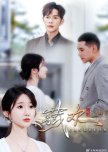
Betrayal, healing, and finally being loved
*Cang Huan* was emotional because the FL experiences love at its cruelest and then slowly discovers what genuine love actually looks like.After a private video is spread, she becomes the target of humiliation and judgment. What makes it even more devastating is discovering that her own boyfriend was responsible. The man she trusted never truly loved her—he entered her life seeking revenge because of her sister.
That betrayal completely destroys her confidence.
Then circumstances lead her to marry in her sister's place, bringing her into the life of the ML. What she doesn't realize is that this man has already loved her deeply for a long time.
For me, the ML was the heart of this drama. ❤️
He doesn't demand that she immediately trust or love him. He sees a woman who has been emotionally broken and patiently gives her the security and care she desperately needs. His love isn't shown only through words but through his actions, protection, patience, and willingness to stand beside her when everyone else is judging her.
I especially loved watching the FL slowly change because of this. She begins the relationship carrying shame that never belonged to her, but through the ML's gentle love, she starts rebuilding her confidence and realizing that what happened to her does not determine her worth.
The contrast between the two men was powerful. One used her feelings as a weapon to destroy her; the other used his love to help her heal.
Their relationship isn't simply about the FL finding another man.
**It is about discovering the difference between someone who says he loves you and someone whose actions make you feel safe enough to love yourself again.** ❤️
Was this review helpful to you?
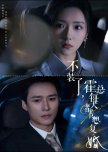
No More Pretense: Mr. Huo's Daily Desire for Reconciliation
1 people found this review helpful
Beginning Misunderstanding to mending it.
What made *No More Pretense: Mr. Huo's Daily Desire for Reconciliation* stand out to me was the **ML's character development** and how badly misunderstanding the FL affected their five-year marriage.For years, the ML believes the worst about his wife. He misunderstands her reasons for staying beside him and allows those assumptions to turn into resentment and hatred. What makes it painful is that the FL truly does love him, yet she quietly accepts his coldness and misunderstandings because she also carries a deep sense of gratitude toward his family for saving her. She believes staying with him and enduring everything is partly her way of repaying that debt.
But five years is a long time to love someone while constantly being misunderstood.
The turning point comes when the ML finally discovers the truth. Suddenly, he is forced to look back at their marriage differently. The woman he thought he understood had actually been loving him all along, silently taking his anger, accusations, and hatred without defending herself the way she could have.
That's when his feelings become impossible for him to ignore.
Once he realizes the truth, **he doesn't want to let her go**. He knows she loved him, and now that he's finally understood what he had right in front of him for five years, he desperately wants the chance to repair what he destroyed.
But discovering the truth doesn't erase five years of hurt.
That's what I appreciated about this drama. His regret doesn't magically make everything okay. He has to face the consequences of how he treated her and understand that loving someone after hurting them doesn't automatically mean they owe you another chance.
The ending was especially well written. Instead of leaving their relationship feeling unfinished or rushing through the emotional consequences, it gives the viewers the closure their story needed.
This was ultimately a story about **misunderstanding, regret, forgiveness, and realizing someone's value only when you're about to lose them**.
And for me, watching Mr. Huo go from misunderstanding and hurting his wife to being the one desperately wanting reconciliation was the most satisfying part of the drama. ❤️
Was this review helpful to you?

Rose by any other name
I really enjoyed *Summer Rose*. What stood out the most for me were the characters and the way they brought the story to life. The leads had good chemistry, and their interactions made me want to keep watching to see how their relationship would develop.I especially liked that the characters had enough personality to make you care about what happened to them. There were sweet and emotional moments throughout the drama that made the romance enjoyable without feeling completely empty.
Like many Chinese short dramas, there were a few moments where you just have to accept the drama logic and keep watching 😂, but overall, this was a very enjoyable watch.
Sweet, entertaining, and definitely worth watching if you enjoy character-driven romance. 🌹❤️
Was this review helpful to you?

A Revenge Drama That Actually Got the Ending Right
This was one of those short dramas that surprised me from beginning to end. The title makes you think it's just another revenge melodrama, but it delivers far more emotional weight than I expected. It takes viewers on a painful journey through betrayal, sacrifice, forgiveness, and ultimately justice.The female lead (FL) is undoubtedly the heart of this story. She isn't written as a weak woman who simply cries while life falls apart around her. Instead, she's incredibly resilient. After sacrificing so much—including her own future and dreams—she continues to show compassion and strength even when she's surrounded by lies and betrayal. Watching her raise a child with genuine love, despite the heartbreaking truth behind that child, made her character feel mature and selfless rather than naive. Her emotional scenes felt sincere, and it was easy to root for her from the very first episode.
The male lead (ML) was written with much more depth than I expected. At first, it's easy to dislike him because of the choices he makes and the pain he causes. However, as the story unfolds, you begin to see the weight of his mistakes and the consequences they have on everyone around him. His journey isn't about becoming a perfect hero overnight—it's about finally facing the truth, accepting responsibility, and trying to make amends. That character growth made him far more believable than many male leads in similar revenge dramas.
One of the biggest strengths of this drama is its pacing. Since it's a short drama, every episode moves the story forward without unnecessary filler. Secrets are revealed at the right moments, the emotional confrontations have impact, and the tension continues to build until the finale.
The ending was exceptionally well done. Too many short dramas either rush the conclusion or leave viewers feeling unsatisfied. This one took the time to resolve the major conflicts in a meaningful way. The truth finally came to light, the characters were forced to face the consequences of their actions, and the emotional payoff felt earned rather than rushed. Instead of relying on shock value, the ending focused on healing, accountability, and giving viewers a genuine sense of closure. It was satisfying without feeling overly perfect, which made it even more memorable.
Overall, I Raised His Mistress's Daughter is an emotional roller coaster that mixes heartbreak, family drama, betrayal, and redemption into a surprisingly compelling story. If you're a fan of revenge dramas with strong character development and an ending that actually respects the audience's investment, this one is definitely worth watching.
Would I recommend it? Absolutely. It's one of the better short dramas released in 2026, thanks to its emotionally strong female lead, the male lead's believable character development, and a finale that delivers the satisfying conclusion many dramas fail to achieve.
Was this review helpful to you?

Guai Guai Ru Ju, He Shao Fang Si Jiao Chong
1 people found this review helpful
Revenge, Romance, and Unshakable Loyalty
Chinese vertical dramas that proves a two-minute episode can still deliver a compelling story. Combining revenge, romance, suspense, and emotional healing, the drama keeps viewers invested from beginning to end. While the revenge plot is gripping, it is the relationship between the two leads that truly carries the series. The story follows Jiang Yu, who spends years pretending to be mentally unstable while secretly waiting for the perfect opportunity to expose those who destroyed her family. When she crosses paths with the powerful He Lian, an unexpected alliance begins that slowly grows into trust and love.The **female lead, Jiang Yu**, is exceptional. She is intelligent, patient, and emotionally resilient. Rather than relying on others to save her, she carefully plans every move, enduring years of hardship to achieve justice. Her ability to switch between appearing vulnerable and revealing her true intelligence makes her one of the more memorable heroines in the short-drama genre. The actress delivers an impressive performance, particularly in scenes where her expressions subtly reveal the pain and determination hidden beneath her carefully crafted disguise.
The **male lead, He Lian**, is equally impressive. At first glance he appears to be another powerful, intimidating man with wealth and influence, but his character quickly develops beyond that stereotype. He is observant enough to recognize that Jiang Yu is far more capable than she lets others believe. Instead of controlling her, he becomes her strongest supporter, protecting her when necessary while respecting her independence. His calm confidence, unwavering loyalty, and willingness to stand beside her through every obstacle make him a refreshing romantic lead.
What makes this drama particularly enjoyable is the chemistry between Jiang Yu and He Lian. Their relationship is built on mutual respect, trust, and understanding rather than endless misunderstandings. Every interaction feels purposeful, and their emotional connection grows naturally as they learn to rely on one another. The romance balances tenderness with tension, creating many memorable moments without overshadowing the central revenge storyline.
The supporting cast does an excellent job portraying the cruelty and manipulation surrounding Jiang Yu's life, making it easy for viewers to root for her success. Each victory feels earned, and watching justice slowly unfold is incredibly satisfying.
Visually, the production is polished for a vertical drama, with attractive costumes, elegant cinematography, and strong performances from the main cast. The pacing remains fast throughout, with very few unnecessary scenes, making it easy to binge-watch in one sitting.
**Pros:**
* Intelligent and resilient female lead.
* Protective yet respectful male lead.
* Outstanding chemistry between the main couple.
* Strong revenge storyline with satisfying emotional payoff.
* Beautiful production quality for a short-form drama.
* Excellent pacing that keeps every episode engaging.
**Cons:**
* Some supporting characters could have benefited from additional development.
* Certain plot twists may feel familiar to experienced viewers of revenge romances.
Overall, *Guai Guai Ru Ju, He Shao Fang Si Jiao Chong* is an outstanding vertical drama that successfully combines revenge, romance, and emotional healing. Thanks to two charismatic leads, strong performances, and a satisfying storyline, it rises above many other short dramas in the genre and is well worth watching for fans of intelligent heroines and devoted heroes.
Was this review helpful to you?

It's ok, could've been better
A Korean Odyssey* is a unique fantasy romance that reimagines the classic Chinese novel *Journey to the West* in a modern setting. From the very beginning, the drama draws viewers into a world where gods, demons, ghosts, and humans coexist, often unseen by ordinary people.The story begins with Jin Seon-mi as a lonely young girl who possesses the rare ability to see spirits. This gift isolates her from others and makes her vulnerable to supernatural forces. During her childhood, she encounters the mischievous and powerful Son Oh-gong, the Monkey King, whose selfish actions unknowingly shape the course of her life. Their first meeting creates a bond that will continue to influence both of them years later.
As adults, Seon-mi and Oh-gong are brought together again through fate. What starts as a relationship built on magical obligation gradually develops into genuine love. Throughout the drama, both characters are forced to confront their fears, selfish desires, and the sacrifices required to protect those they care about. Seon-mi evolves from a lonely woman burdened by her abilities into someone who accepts her destiny with courage. Meanwhile, Oh-gong's journey is one of redemption, as he slowly learns compassion, loyalty, and selfless love.
The supporting characters add depth and humor to the story, each representing different aspects of mythology while dealing with their own struggles and desires. Their interactions help balance the darker themes of destiny, sacrifice, and mortality.
The ending is bittersweet and deeply symbolic. Rather than offering a simple fairy-tale conclusion, the drama focuses on the idea that true love requires sacrifice. The final episodes highlight how much the characters have grown from the people they were at the beginning of the story. While the ending leaves some questions unanswered, it emphasizes hope, faith, and the belief that love can endure even when separated by fate and time.
Overall, *A Korean Odyssey* is a captivating blend of fantasy, romance, comedy, and tragedy. Its memorable characters, emotional storytelling, and unique interpretation of mythology make it a drama that stays with viewers long after it ends. The journey from Seon-mi's lonely childhood to the drama's emotional conclusion is both heartbreaking and beautiful, making it one of the most distinctive Korean fantasy dramas ever made.
Was this review helpful to you?
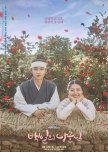
Stupid Prince
100 Days My Prince was such a charming and emotional drama that balanced romance, comedy, mystery, and political tension beautifully. What made this drama stand out was how naturally it moved between lighthearted moments and heartbreaking emotional scenes without feeling forced.The story of Crown Prince Lee Yul losing his memory and living as an ordinary man was both funny and touching. Watching someone who was once cold, strict, and distant struggle with everyday village life created so many hilarious moments. But beneath the comedy was also a lonely man carrying years of pain, pressure, and emotional scars from palace life.
The relationship between Lee Yul and Hong Shim was one of the strongest parts of the drama. Their chemistry felt natural, warm, and comforting. Hong Shim was not a weak female lead waiting to be rescued. She was intelligent, independent, outspoken, and emotionally strong, which made her relationship with Lee Yul feel balanced. Together, they slowly healed each other without even realizing it.
D.O.’s performance was honestly one of the highlights of the drama. He perfectly balanced the prince’s cold personality with the awkward innocence of someone trying to survive village life without his memories. Nam Ji Hyun also brought warmth and emotion to Hong Shim, making her easy to love and sympathize with.
The drama also handled palace politics surprisingly well. Behind the romance and humor was a darker story about corruption, betrayal, survival, and the burden of power. Several characters carried hidden pain and difficult choices, which gave the story more emotional depth than expected.
Visually, the drama was beautiful. The cinematography, traditional clothing, village scenery, and soundtrack all created a peaceful and emotional atmosphere that fit the story perfectly.
What made 100 Days My Prince memorable was how comforting it felt. Even during sad or tense moments, the drama never lost its warmth and heart. It’s a story about love, identity, healing, and finding happiness in the simplest moments with the people who truly care for you.
By the end, it leaves you smiling, emotional, and missing the characters long after the final episode ends.
Was this review helpful to you?


