



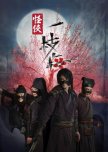
A Wuxia Gem That Holds Up
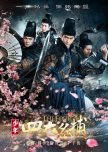
The Vigilantes in Masks (also known as Strange Hero Yi Zhi Mei) aired in 2010–2011. For a wuxia drama that that revolves around solving mysteries and upholding justice, 30 episodes is considered lean. But it's packed and never drags, while also managing to pull at your emotions. It holds a strong 8.5 on Douban (from over 83,000 users) and has earned a reputation as a cult classic. I have watched it twice, and want to explain why it deserves a 9.5/10 from me.Li Ge Xiao was once a brilliant captain of the Imperial Secret Guard. After being framed by the corrupt Grand Secretary Yan Song, his wife was killed and his entire squad massacred. Broken with guilt, he became a wandering drunkard.
He is pulled back into action to recover stolen disaster relief gold. To pull off the heist, Li Ge Xiao assembles a team of three outcasts: Yan San Niang, a quick-fingered thief who trusts no one; Chai Hu, a hot-tempered brawler; and He Xiao Mei, a refined opera singer skilled in disguise and medicine. After they succeed, they are betrayed and framed. Clearing their names, the four decide to stay together, becoming a Robin Hood-style vigilante group known as "One Plum Blossom."
The drama is structured as episodic "cases" (each lasting 2–4 episodes), ranging from a plague village to family curse, all while building toward the final confrontation with his archenemies: Yan Song and Gexiao’s jealous former colleague, Ying Wu Qiu.
Character Analysis: The Four Protagonists – A True Ensemble
One of the drama's greatest strengths is that no one feels like a sidekick. Each of the four leads gets dedicated backstory episodes, distinct fighting styles, and meaningful character arcs.
Li Ge Xiao (Wallace Huo) is the broken strategist. Once a celebrated captain, he blames himself entirely for his wife Jing Ru's death. His genius never leaves him, but his emotional arc is about learning to trust again and accepting that he could not have saved everyone. Wallace Huo delivers a restrained, internal performance where pain is carried in silences.
Yan San Niang (Liu Shishi) is a breath of fresh air. Introduced as a loner thief, she is competent, emotionally guarded, and fiercely independent. Crucially, she is never reduced to a love interest. She forms a deep, platonic bond with Li Ge Xiao based on mutual respect. Liu Shishi's dance background brings grace to her acrobatic fighting style.
He Xiao Mei (Ma Tianyu) is the team's most refined member. An opera singer by training, he is a master of disguise, hidden weapons, and medicine. Beneath his calm exterior lies a tragic past. Ma Tianyu brings genuine vulnerability to the character.
Chai Hu (Shi Yan Neng) is the comic relief but also the heart. A food-loving, fist-first brawler, his loyalty is absolute. Shi Yan Neng, a former Shaolin monk and professional martial artist, brings authentic physicality to the role.
Together, they form a "found family" that grows from reluctant allies to genuine comrades. The drama resists forcing romance between Li Ge Xiao and Yan San Niang, which feels refreshingly restrained for the genre.
The Villains
Yan Song (the Prime Minister) is a real historical figure, portrayed as the embodiment of systemic corruption – calm, methodical, and unreachable.
Ying Wu Qiu is the drama's most complex and heartbreaking character. He was Li Ge Xiao's colleague, always living in his shadow. But his resentment was personal. He is not evil for power's sake – he is a man destroyed by unrequited love and helplessness. His tragic arc elevates the drama beyond simple good-versus-evil storytelling.
Visual & Production Style
For a drama produced on a modest budget, The Vigilantes in Masks made bold stylistic choices that still feel distinctive. The comic-book-style panels during action sequences – complete with on-screen text like "SWISH" and "TOO SLOW" – turn budgetary limitations into signature flair. (Despite common assumptions, the drama is not adapted from a manhua; these panels were original artwork commissioned for the production.)
The fight choreography is both character-specific – Li Ge Xiao fights with strategy, Yan San Niang with acrobatic grace, He Xiao Mei with operatic deception, and Chai Hu with brute force – and remarkably authentic. Unlike many modern wuxia dramas that rely on rapid editing and tight close-ups, The Vigilantes in Masks favors long, mid-range shots where you can actually see the actors' full bodies performing complete long move sequences, which is very rare in the current wuxia dramas.
Themes
Beneath its action-adventure surface, the drama presents mature themes. At its core, it is a study in grief and survivor's guilt. Li Ge Xiao's arc is about learning that he could not have saved his wife – and that accepting this is not failure, but survival. His final voiceover reframes grief beautifully.
This is complemented by the theme of found family: four broken individuals who become a family through shared danger. The drama also draws a line between justice and revenge. The vigilantes operate outside a corrupt law but follow rules: they save innocents rather than pursue grudges. Ying Wu Qiu serves as the dark mirror – his path of revenge aligns him with corruption.
The closing message is not about defeating evil, but about continuing to live. This wisdom elevates the drama above typical wuxia fare.
The One Flaw
If there is one technical flaw, it is the plum blossom grove scenes. Whenever the squad gathers under the tree, the backdrop is painfully artificial–the blossoms bloom with impossible perfection, the lighting never matches, and the falling petals are clearly animated. Thematically, these scenes are essential (the plum blossom symbolizes resilience). But technically, they are the drama's weakest link. Fortunately, this is the only significant flaw.
Final Verdict
The Vigilantes in Masks is not perfect. The plum blossom grove scenes are distractingly fake, and the final arc feels slightly rushed. But what it gets right – character writing, ensemble chemistry, authentic fight choreography, a tragically human villain, and a mature emotional core – outweighs its flaws by a wide margin.
I have watched it twice. I will probably watch it again, though I will cringe at the fake petals :). But I know I will immediately forget them when I see the gang's dynamic and their resilience to uphold justice and survive.
Score: 9.5/10
A small-scale, character-driven wuxia classic that proves less can be more.
Was this review helpful to you?
The theme song is really memorable
I think I watched this adaptation of Smiling Proud Wanderer in the 80's. I was still in elementary school.I don't remember of this drama much except for the theme song. I suppose this version failed to shine due the miscast and the awful CGI. Chow Yun Fat is a great actor but maybe he was still learning the ropes at that time? His rendition of Linghu Chong is not good I'm afraid.
The only thing that I remember is the theme song. It's really good. Memorable and really suits the theme. I hope they use this theme song again in other wuxia dramas.
Was this review helpful to you?
Yang Liping's Mei Chaofeng is the best to date
I've got to be honest that this is the version of LOCH that I like the least for many reasons. I have watched 5 versions and this one is my least favorite.Let's start with what I like.
It manages to deliver the epic storytelling of the sage. The Mongolian steppes as well as the people. Hustle and bustle of city life in the south. Pretty authentic.
The music really suits the theme of the drama. It brings out the sense of chivalry and patriotism, which is what it's all about. I especially love the music that accompanies the presence of Mei Chaofeng. It's beautiful and haunting at the same time.
The kung fu's choreographed really well. Really badass. Love it!
But what I love the most is the rendition of Mei Chaofeng by Yang Liping. It's the best! I was mesmerized. I was always looking forward to her appearance when I was watching the drama. Her Nine Yin White Bone Claw is terrifying but so beautifully choreographed. Her expression is cold without excessive make-up. There's a sense of terror, eeriness, and deep melancholy whenever she appears. It may be an unpopular opinion but one of my favorite characters in LOCH is Mei Chaofeng. Despite her ghost-like or witchlike appearance I sincerely sympathize with her. At the moment I'm reading the second book "A Bond Undone" where I get to explore her backstory and I become more and more sympathetic towards her and her tragic story. I hope they will make another adaptation which is longer so that her story can be included. Although LOCH 2003 has the best Mei Chaofeng of all the adaptations, but it still depicts her as a mere evil martial artist. The story of this badass female martial artist deserves a segment in the coming adaptation if there is.
Other than Yang Liping, I also like the actress who play Huang Rong and Mu Nianci. They did well too. Both Zhou Xun and Jiang Angel did justice to the character they played.
Now what I don't like.
In my opinion, some of the actors who played the main male characters were miscast. Li Yapeng for example. He looked to old to play Guo Jing. Guo Jing is said to be about 18 year old when he begins his adventure in jianghu. And Li Yapeng didn't suit to play the part as he looked too mature for the role. He did really well as Linghu Chong but I don't thing he did as Guo Jing. The actors who played Huang Yaoshi and Yang Kang, I don't think they're suitable for the part. Huang Yaoshi is my favorite characters in LOCH along with Mei Chaofeng and Hong Qigong. But the actor who played Huang Yaoshi here didn't have what it takes to be Huang Yaoshi.
And the costume, I just hate it. It's as if they were too lazy to think of what to put on the actors, picking up random costumes out of nowhere. The hairdo on Guo Jing and Yang Kang makes them look much older that they're supposed to be.
The makers of the drama seemed to want to aim a more gritty storytelling, but I don't think it worked. I read that the producer was the same person who had made "Laughing In the Wind". I love Laughing In The Wind. It's probably my top tier wuxia drama. Sombre tone works well with Laughing In The Wind. The story itself is just dark. Heavy conspiracy. Almost no funny moment there. But LOCH has more comedic moments. Gritty tone doesn't go well with LOCH.
In short, I wouldn't watch this version again for a very long time. And if I do, I would do it for Yang Liping's Mei Chaofeng. She's the best Mei Chaofeng hands down.
Was this review helpful to you?
I was introduced to wuxia world in the early 80's. I was in primary school when my dad bought a VHS player. It was considered a luxury item back then since not many people could afford even a color television let alone a VHS player. My dad began renting a lot of wuxia series from our local video rental store (we referred to it as kung fu series or kung fu dramas. I didn't know the genre was actually called wuxia). We are not Chinese but Chinese movies and TV series (mainly wuxia) were already quite popular in my country. Long story short, one thing for sure, I was hooked! I watched so many that I can't remember most of them. Then I lost touch with this genre when I was in middle school until about 4 or 5 years ago due to studies, work, etc. Yup, it was such a long gap, over 30 years. Suddenly I had a hankering to watch wuxia series again about 5 years ago., what with YouTube, and other streaming services, And the series that came to my mind was Legend of the Condor Heroes 1983. It's probably one of the few wuxia series that stuck in my mind. I had watched it more than once.
When I watched it for the first time in early 80's. It was on VHS and was dubbed in English with subtitle in my language. When I re-watched 5 years ago, I got to hear the actors' real voices and language. It was marvelous! So let's talk about this version of LOCH. What more can I say, this series is a gem! It has managed to stick in my mind for so long . It's iconic,; the actors, the story, the music are nearly irreplaceable. So let's start with what I love (which is plenty!) and end what I don't (which is almost none).
What I love:
CASTING: I think the actors who played main roles and supporting roles did an amazing job. And Barbara Yung's interpretation of Huang Rong is impeccable. It's important to note that I haven't read the book since it's in Chinese so my idea of what Huang Rong should be like is just from LOCH 83. She brought so much joy to the role. As the only daughter of Eastern Heretic, she certainly inherits her father's eccentricity. Barbara's Huang Rong displays a wide range of characteristics and emotions. She can be ruthless, fearsome, and behaves like a spoiled brat (she's an only child after all), throwing tantrum. But on other occasions she can be such a sweetheart and generous I can't help but loving her Huang Rong. Watching her is such a joy. Whenever she pulls a trick on someone, be it her enemy or her own teacher, Hong Qigong, Barbara's Huang Rong never stops to amaze me. Such a mesmerizing performance. In my opinion, no one has pulled off the role of Huang Rong as brilliantly as Barbara. I can't help comparing other actresses who played Huang Rong in the later adaptations with hers.
Felix Wong's Guo Jing is also still my favorite until now. His Guo Jing was innocent and naive. But he can be funny too sometimes. I love his interactions with his teacher Hong Qigong and Zhou Botong. So hilarious! He and Barbara are some of the reasons why I keep coming back and watch this series. And let's not forget Michael Miu and Sharon Yeung. The scene where Mu Nianci comes to see Yang Kang when he's badly poisoned. I always cry watching this scene. What powerful performance by both actors.
Of course Guo Jing and Huang Rong are some of my favorite characters in the story as well as in wuxia genre in general. But my numero uno is Hong Qigong. He's just like Gandalf. Someone who is (in my opinion) the wisest, the calmest, peaceful, and has a great sense of humor. His humor and wit never stop to spark even when he nearly loses his life. Just the best character. And I'm really happy that the actor (Lau Dan) who played Hong Qigong did a great job. His Hong Qigong is still my favorite to this date.
KUNG FU choreography: It was amazing. Beautiful and powerful. I know those actors were not real martial artists. But I bet they had trained very hard to execute awesome movements. Love it!! I believed that they were actual martial artists. Of course later on I knew that they were not. But boy, they really did a great job doing the martial arts!
STORY: From what I have read, this version of LOCH doesn't follow exactly the story line in the novel. But I think the subplots don't affect the main plot. Instead, they make the story more enjoyable and entertaining, not boring and muddled. Also I get to observe each important character and their tribulations.
MUSIC: The music is amazing. It's able to convey different nuances, be it patriotic as well as melancholic. In short, the music is iconic. It's an earworm. Even after 30 years of not having watched it, I still remembered it vividly.
COSTUME: The costume was great! For movies or TV series in the 80's I thought that the costume worn by each character speak about the personalities of each character. For example, Huang Rong wears clothes that looked more costly than Mu Nianci. After all, Huang Rong is the daughter of one of the Five Greats, upper class. Surely she has the wealth. Mu Nianci wears modest and simple. She's an adopted daughter. It shows that great consideration was put into making these outfits.
What bothers me (little):
The setting and location. When I was a child, I certainly couldn't tell where they had shot the scenes. Now I can see that these scenes were most likely shot in a studio. But I can forgive this aspect. I mean, it's in the 80's. Technology wise for example, it wasn't like today with CGI and stuff. Plus the budget and resources were probably limited.
All in all, LOCH 83 has always been my standard of what a great wuxia series should be or must be. Great story line, amazing performance by the actors, great kung fu choreography, and memorable music. This is my number 1 wuxia series to date.
Was this review helpful to you?
Horrible version
I watched the 2008 version and I liked it. I just thought it could have been longer. So when I came across this version I was pretty hopeful that this would bring some kind of improvement to the 2008 one. But I was completely wrong. really wanted to give this series a chance and was prepared to ignore the ostentatious special effects. Especially since this version has a unit where the members are female constables. Instead, I fast forwarded after episode 20.The fantasy element makes this version like a Disney version. Flashy with no substantial plot. I hated the colorful visual effects which looked gaudy. The effects masked the poor fighting choreography. The plot is all over the place. I was looking forward to see a few or at least one badass female warrior, instead, these female constables were busy plotting plans for something trivial such as bullying a girl who was seen as a threat to their superior's chance to get the love of her life. And this superior wasn't even a mature, brilliant, and badass female constable. She's mentally weak. She turned evil when her love was unrequited. So stereotypical. Why do they always make a heroine whose love is unrequited a bitter, evil, cold-blooded female warrior? Why couldn't they make a stronger female character who is capable to adversity and comes out as a successful female warrior despite failed romance?
The characters, Heartless, Cold Blood, Chaser, and Iron Fist have no personality whatsoever. And I was continuously felt annoyed with the portrayal of Heartless. He looks weak and melancholic. Not at all intelligent and cool like the 2008 version. The story quickly turned into a cheesy and corny love story rather than a story of 4 heroes trying to solve a conspiracy.
The only thing I like about this drama is the costume. The constables' costume look really amazing. Other than that, this is a very disappointing drama.
DISCLAIMER: I haven't read the novel so I don't know which version is close to the novel, the 2008 version or this.
Was this review helpful to you?
So let's just talk about what I like and I don't.
What I like about this version.
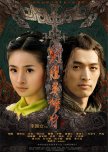
LOCATION: The location is definitely a huge change from that of LOCH 83. Having vast geographical areas must have allowed China production to shoot the scenes in beautiful places with charming old structures such as temples, creating a more realistic ambiance. The series looks much more epic than the LOCH 83. I've got to admit it.
CASTING: I think Hu Ge and Ariel Lin did pretty good job with their respective roles. Ariel's Huang Rong is close to my favorite, Barbara's. Full of wit, charm, and with the right amount of sassiness. I just didn't like her voice. I doubt it's Ariel's real voice. I can't understand why they made her sound like an anime character. Why couldn't they just use her real voice? Anyway, Hu Ge's Guo Jing is likeable. But he sometimes looks too gullible. I know Guo Jing is naive (after all he lived in the dessert for much of his teenage life) but he's not that credulous. I think all the remaining cast did decently. No one stood out in particular except for Ariel Lin as far as my opinion concerned.
KUNG FU CHOREOGRAPHY: Love it. Hand-to-hand combat is beautifully choreographed. I particularly like Huang Rong's Dog Beating Staf technique. It's really good!
COSTUME: Wonderful. I like the costume. Definitely a great improvement. Each character wears the costume that fits their personalities.
What I don't like:
STORY: I admire the creativity and the courage within a production team. I generally wouldn't mind if an adaptation deviates a litte from the original source so long as they stay faithful to the main plot and if it makes the storytelling better than the original source. I mean LOCH 83 did the same. Unfortunately it doesn't always work. It worked well with LOCH 83, but it didn't with this one. I don't like it all. Why didn't they add a backstory Mei Chaofeng instead of creating unnecessary conflicts with other charachters?
FX: I hate the visual effect. They used too much of it that it ruined the kung fu choreography. The lights and stuff. They should have kept the FX to minimum during some fight scenes.
MUSIC: The music is OK. I don't really remember much. I've got to watch it again just to remember how it sounds.
All in all a pretty decent adaptation. They could have done better with all the resources at their disposal. I would watch it just to enjoy some fight scenes. Other than these, no.
Was this review helpful to you?
Strange Tales of Tang Dynasty II To the West
0 people found this review helpful
A Drama Where History, Mystery, and Humanity Converge
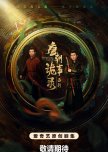
In an era when historical C-dramas often opt for romance, fantasy, or visual excess rather than substance, Strange Tales of Tang Dynasty: To The West stands as a quiet masterpiece of restraint, intelligence, and emotional honesty. Unlike most dramas where sequels are less impressive, Strange Tales is different: its second season actually refines the first. A deepening. A journey not only westward across the Tang frontier but inward, into the moral complexities of justice, memory, and human frailty.A World Built on Respect for History
This drama clearly knows its world. Scriptwriter Wei Fenghua—a noted Tang historian weaves historical references into the fabric of the story. We see real artifacts: the Golden Bowl with Mandarin Ducks and Lotus Petals (a genuine Tang treasure now housed in museums), silver incense sachets (xiangnang) with intricate chainwork, Dunhuang cave murals, and even Dugu Xin's seal. Even the food is meticulously recreated: Shushan, one of the earliest forms of ice cream, served in lotus bowls; lamb-filled pancakes; Bo Tuo noodle soup—all documented in Tang texts.
But what truly stunned me were the forensic methods. The red oil-paper umbrella held over a corpse to reveal hidden bruises through light refraction. The sticky rice dough pressed onto skin to detect concealed injuries. The sealed rice ball test for poison. While China's first forensic manual (Xi Yuan Ji Lu) wasn't compiled until the Song Dynasty, these techniques reflect plausible proto-forensic practices that likely circulated orally long before. Their inclusion is a testament to the show's commitment to grounding even its strangest tales in tangible reality.
Mysteries That Honor the Audience's Intelligence
Season 2 follows Lu Lingfeng as he's appointed sheriff of Yunding, a frontier town on the western edge of the empire—hence the title "To The West". Accompanied by Su Wuming, Pei Xijun, Master Fei, and Ying Tao, their journey mirrors Journey to the West in structure but replaces celestial demons with human ones: grief, corruption, betrayal, and forgotten oaths.
Each case is a self-contained novella, and the drama cleverly shifts between mystery subgenres. Most episodes are classic whodunits, inviting us to discover the killer alongside the team. This is the demanding, high-cognitive-load style—the kind that keeps your brain spinning with suspect matrices, hidden clues, and unresolved patterns. For me, that meant binge-watching three to five episodes a day, because each resolution only made me hungry for the next puzzle. A few episodes are inverted detective stories, revealing the culprit early and letting us savor the tension of how justice will catch up. And the remaining are hybrids, playing with our expectations and shifting the hidden truth mid-stream. This variety keeps the storytelling fresh and respects the audience's intelligence at every turn. Unlike the calming, sleep-friendly inverted style of shows like Justice Bao, Strange Tales of Tang Dynasty To The West thrives on intrusive suspense—and I loved every demanding moment of it. If you like high dopamine with quick reward, this is the drama for you.
"The Death of the Coroner" left me breathless—not for its twist, but for its devastating emotional truth. "Letter from Shangxian Hall" channels Agatha Christie's elegance, with a solution so fair and inevitable it feels like poetry. "Snowstorm at Mojiadian" uses isolation and silence to build unbearable tension, while "Mara's Defeat" explores faith, manipulation, and redemption with remarkable nuance. And in the season's poignant finale, "The Provider" unravels a child's death tied to a cruel tradition—and reveals how greed, not love, can hide behind the mask of sacrifice.
Crucially, the drama never treats viewers as a passive audience. It invites us to observe, deduce, and question. There are no *deus ex machina* reveals. Every conclusion is earned through logic, empathy, and attention to detail.
Characters Who Grow Without Breaking
Yang Xuwen returns as Lu Lingfeng with even greater depth. The brash young general of Season 1 is gone. He's now more patient, measured without losing his resolution. Less arrogant and more humble. Yang Zhigang's Su Wuming remains the soulful anchor, the ultimate source of wisdom and deductive brilliance for their team.
The ensemble chemistry is flawless. Pei Xijun's intelligence, Master Fei's loyalty, Ying Tao's quiet strength—they all serve the story,. And refreshingly, the focus stays on their collective mission, not manufactured romantic tension.
One Small Imperfection
I give this 9.5/10—not 10—only because of the faint romantic threads in the drama: Lu Lingfeng with Pei Xijun, and Su Wuming with Yingtao. Neither pairing seems built to serve the plot. Rather, they feel like an additional topping on an ice cream that is already good on its own—pleasant enough, but ultimately unnecessary. Without the romance, the group dynamics would still work perfectly. It's hard not to suspect that the creators added these threads mainly to attract a certain demographic of viewers. The romance is minimal, tasteful, and far less intrusive than in most C-dramas, but I believe the story would have been even more powerful with purely platonic bonds. In a drama so committed to realism and intellectual partnership, even a whisper of romance feels slightly out of key. That said, it never overshadows the core narrative—and I understand its roots in Season 1.
Final Thoughts
Strange Tales of Tang Dynasty: To The West is a rare gift: a historical drama that respects its audience's mind and heart equally. It doesn't dazzle with spectacle. You can feel the creators' sincerity—they just wanted to tell a good story. Every frame, every line of dialogue, every action is placed with care and passion.
Was this review helpful to you?
This review may contain spoilers
Strange Tales of Tang Dynasty – A Gong’an Gem with Minor Flaws
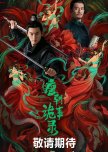
Don’t let its quiet release fool you—Strange Tales of Tang Dynasty is a sleeper hit that respects its audience’s intelligence. Set during the reign of Emperor Ruizong (son of Empress Wu Zetian), this drama follows two mismatched investigators—Lu Lingfeng, a hot-headed young general from an elite clan, and Su Wuming, the calm, wise disciple of legendary detective Di Renjie—as they unravel eight supernatural-tinged mysteries across Tang-era China.What begins as a simple death investigation in Chang’an evolves into a richly layered journey through folklore (zhiguai), political intrigue, and personal redemption. It's like The X-Files meets classical Chinese literature—with cool fight choreography!
What Works Brilliantly
- Tight, Filler-Free Storytelling
In an era where even 30-episode dramas drown in pointless fillers, STOTD’s 36 episodes feel remarkably lean. Every case advances the plot, deepens character arcs, or expands the world. No episode is wasted—a rare feat worth celebrating.
- Strong Core Trio & Character Growth
Yang Xuwen delivers a great performance as Lu Lingfeng, evolving convincingly from arrogant prodigy to grounded detective. Yang Zhigang’s Su Wuming is the perfect foil: serene, perceptive, and emotionally intelligent. Chen Chuang steals scenes as Fei Jishi (“Master Chicken”), whose wine-loving, chicken-eating charm provides just enough humor without breaking tension.
- Atmospheric Production
Despite a modest budget, the show nails its gritty, mysterious Tang Dynasty aesthetic. The lighting, costumes, score, and set design immerse you in 8th-century Chang’an. Fight scenes are clean, purposeful, and refreshingly coherent compared to recent C-drama standards.
- Smart, Logical Cases (Mostly!)
Cases like “The Stone Bridge Painting,” “The Killing of Huangmei,” “The Hall of All Beings,” and “Gantang Post” are standouts—blending historical plausibility with eerie folklore. Deductions rely on observation and evidence, not coincidence.
Where It Stumbles
- Forced Romance Subplots
Pei Xijun and Chu Yingtao feel shoehorned in primarily as love interests. While both characters improve slightly over time, their romantic arcs with Lu Lingfeng and Su Wuming respectively distract more than enrich. In a genre that thrives on focus, these threads seem aimed at broadening appeal rather than serving the story.
- Weaker Final Arcs
The last three cases (“The Alligator God,” “The Human-Faced Flower,” “The Towering Tower”) lean too heavily on fantastical gimmicks and “magic trick” resolutions, losing the grounded mystery that made earlier episodes shine.
Final Thoughts
Strange Tales of Tang Dynasty is a rare example of craft-first storytelling in today’s C-drama landscape. It prioritizes narrative cohesion, historical texture, and character logic over star power or viral moments. While the romance and final arcs hold it back from true perfection, its strengths far outweigh its flaws.
Was this review helpful to you?
This review may contain spoilers
The most gorgeous looking version of LOCH
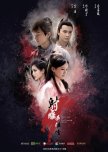
At the moment I'm reading the novel. Finally. After having watched 5 versions of LOCH, I get to read its source material since the novel has been officially translated into English. LOCH is my number 1 wuxia story so I don't mind that it gets remade many times. I find it interesting that each production has tried a different approach. The 1983 version is undoubtedly my most favorite version and is followed by the 2017.The 2017 is the 4th version that I've watched. The production is really really good. I can tell that they put a lot of effort into the costumes, locations, visual effects, and so on. This is probably the most gorgeous looking LOCH to date. The costumes and make-up are not over the top but not sloppy, either. Except for costumes worn by Huang Rong, Guo Jing and Mei Chaofeng.. But I'm being nit-picky here. The locales are stunningly beautiful. The cinematography is simply breathtaking. This version is certainly a feast for the eyes! And the music goes well with the visuals. Love it.
I haven't finished reading the novel but I can say that the story line follows pretty closely to the book, which is very nice. It's good that the creative team didn't try to make the story deviate grossly from the book.
The acting is overall decent. Not as brilliant as the cast of 1983 version but it's OK. I personally think that the one that stands out is Michael Miu as Huang Yaoshi, Huang Yaoshi is one of my favorite characters in wuxia stories. In the beginning I was a bit worried that he wouldn't do as good as Kenneth Tsang in 1983 version. But I was wrong. Michael exceeded my expectation. He did so well that now as I'm reading the book, it describes Huang Yaoshi and I immediately imagine Michael Miu's Huang Yaoshi. His presence is awe-inspiring and daunting. When I was watching the series, his appearance was the one I was always looking forward to!
After all the praise for the production I mentioned above, I still can't bring myself to give this version 9.0 for some reasons that I think significant. First of all, LOCH is after all a wuxia story which means the combat choreography must be the priority. The combat scenes are not bad, but not great, either. I think it's a shame. They seemed to have focused too much on making the visuals beautiful including the fighting scenes making them look artificial and weird. To much slo-mo makes the combat less visually appealing. Like I'm always curious how each maker interpret 18 Dragon Subduing Palms. I wish they had created something more phenomenal. They should have made the fighting scenes slightly raw. Guo Jing is the main character here but as far as I'm concerned his combat scenes are just OK. Ironically Huang Yaoshi has much better fighting scenes.
A note about the actors who played the main characters. Guo Jing is said to be burly or heavily built in the book. The actor looked thin and more like a pop star rather than a hero. They put on so many layers of costume on him to make him look a bit bulky but the costume makes me think, "How on earth a hero could fight in so many layers of clothes? Wouldn't he trip over at some point?" His acting is OK. I still think Felix Wong is the best Guo Jing. Huang Rong here is also too sweet. She doesn't have enough sassiness and ruthlessness that Barbara Yung's has. Another disappointment is the actor who played Hong Qigong. Hong Qigong is like my number 1 character in all wuxia stories. He looks too young. His make-up wasn't able to make him look older. Lau Dan is still the best Hong Qigong to me. Mei Chaofeng here is not bad actually. I like her portrayal. I wish her kung fu were slightly more badass and her appearance should have been kind of disarray. I think she's the most fashionable Mei Chaofeng of all versions that I've seen, which it's kind of silly. Mei spends most of her life in hiding, how could she afford hair jewelry? Liu Ying looks insanely spotlessly beautiful that her face looks like wax statue! Again I suppose in an attempt to make the drama look gorgeous, the makers focused too much on the visuals.
And one last thing, I feel that 52 episodes is a tad too short. They should have added 2 more episodes. They seemed to rush the last 2 or 3 episodes. I like when Huang Rong played hard to get when she's hiding in Mongolia. They made this part slightly longer in 1983. Here it seems within just a short time Guo Jing managed to figure out who has been helping him in the war. I have read that the makers had to make do with tight budget and time constraints that they had to reduce the use of special effects and hire less well-known actors and actresses. That's quite understandable. It's too bad though. I feel it could have been better. So yeah, to me this version gets a 8.5.
Was this review helpful to you?
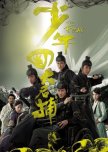
The plot is actually interesting but they seemed to rush it and compressed it into just 25 episodes. It's a shame though. It could have been better if they stretched it out a bit adding backstory. For example, Song Chi Yin. I find her very interesting but almost no backstory as to how she became a spy. Slowing the pace and making things complicated and hard to be solved would have made the story more interesting, too. The production is mediocre. Although the theme is political conspiracy involving the king, minister, etc however the setting is of nothing grand. It should have been more epic considering the scope of the conspiracy. The costume is ok. The guys wear better costume but the ladies wear mediocre costume in my opinion. The choreography isn't bad but it's not special, either. I guess all of these may have had something to do with limited budget, which is too bad because I think the drama had the potential to be really good.
But I really like that they gave each of the main character a personality that suits their name. You know what Heartless, Iron Fist, Cold Blood, and Chaser are like. Heartless is kind of arrogant, distant, and sarcastic in nature. Cold Blood is detached and unfeeling. Iron Fist is kind of idealistic, warm, and friendly. And Chaser is somewhat happy-go-lucky and slightly devious. Each has their own personal tribulation but in the end they come together, hand-in-hand solving the mystery and revealing the conspiracy. I also like the idea of a disabled martial art hero. If the choreography were better, Heartless' kung fu would have been something special to be seen over and over again.
The fact that romance occupies a small part in this drama is something I really appreciate. Personally I feel that a large portion of a wuxia themed drama should focus on the affliction or ordeal around martial art, be it related to politics with the monarchy or politics or conspiracy among the martial artists themselves. I don't disapprove romance in a wuxia but it should take up a small portion in the whole story. So I was happy that this series doesn't dwell on complicated love matter. The romance is just the right amount.
Was this review helpful to you?


