


 3
3 4
4 1
1


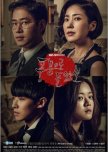
“No-one can make you feel inferior unless you give them permission.” (Eleanor Roosevelt)
If you are someone who can see through the facade to the merciless pen underneath, then you will love this drama. The writer, Jung Sung Joo, shares Jane Austen’s ability to allow characters to damn themselves through the words that emerge from their own mouths, and she reveals a feast of dangerous stupidity and ignorance, stuffed full of self importance, pompous delusion and total helplessness.The art of good satire is to clearly reveal the self interest and evil hidden behind the veil (such an apt anagram!) which the powerful draw over it. This show does that in spades. Hysterically funny at the start as it draws the lines of battle. Then it inches down the road to seriousness until, twisting the knife, the cost in suffering of the abuse of power is laid bare. However funny it is, this drama is a deeply serious comment on the use and abuse of power in a society in transition to the modern, and the underlying ruthless, self-interested principles that guide it.
The skill of the writer is so much more subtle than simply mocking and attacking. The script, in the wonderful hands of director Ahn Pan Seok, simultaneously unfolds multiple perspectives on a situation. Laughter and anger share the same space. One second judgemental, the next sympathetic towards the same character. The music (by Lee Nam Yeon) is a masterpiece of counterpoint and a character in itself, as is the suffocating environment of the house.
This biting satire on class and privilege may not make a great deal of sense to people from more notionally egalitarian societies without a history of aristocracy. The true aristocracy are not people who have wealth and power because they have made it on their own merit, or through business dealings or corruption, like the chaebol (who also feature in the story). Their wealth, power and status is totally unearned by them individually. They view it as their inalienable/natural birthright and that they are the custodians that must hand their power and values on, intact, to the next generation. Hence, Han Jung Ho’s bizarre insistence that the “children” study Machiavelli’s “The Prince” in scenes that made me cry with both laughter and despair.
Part of the humour and satire stems from the fact that the Han family is not truly aristocratic (the father is third generation nouveau riche) but they ape the values of the aristocracy. They do it with the clumsy, narrow-minded misunderstanding and thoroughness that only the aspiring can have, and in the process wreak devastating havoc on everyone else. The corrupted worship of tradition and ceremony may be ridiculous, but make no mistake, the power is real and dangerous.
The script plays on the blindness at the heart of the Han parents to the privilege that feeds their all consuming self interest. Having never known anything else they cannot think outside the box. In a wonderful moment in Ep 6, the father (Han Jung Ho) claims a spurious egalitarian credibility for himself by smugly announcing that everyone, whatever their status, shares the same style of office space in his law firm and adds, “what does being aristocratic count for these days, we’re all civilians now”. Their ignorance and ego offers much opportunity for manipulative, servile flattery which in writer Jung Sung Joo’s hands becomes a crowning work of art. Especially in the sycophantic performance of a lifetime by Kil Hae Yeon as Secretary Yang. My favourite line of hers being (in the context of imagined alopecia) “Don’t worry, Caesar didn’t have much hair either.” To which Han Jung Ho’s reply is, “Truly, you’re the only one who reads my mind.”
But behind the savagery of the satire lies a humanity that reveals how trapped the Han parents are in the vice-like grip of the world that they have created from their delusion of superiority and the personal price they are condemned to pay for continuing to uphold it.
As with the ending of Secret Love Affair, another exceptional offering by this writer and director combination, the ending is perfect. There is no trite papering over cracks, although I could have wanted the lead up to it to be better. Whoever ordered the cutting of the number of episodes late in the day is a philistine worthy of being employed at Hansong! Having said that, my only criticism is that overall the script could have done with an editor’s pencil. It is expansive in the extreme, and although it mostly holds the attention, it would have been tighter and sharper commissioned for 24 episodes, rather than the 30 it ended up being. The cast and direction are legendary and walk as close as humanly possible to the edge of the cliff without falling over.
As a piece of satire this is 20/10, but as a drama, it has a few pacing faults. I cannot recommend it enough if you are someone who likes to be challenged to think when watching. It is a superb piece of drama.
What my rating means: 9+ A drama I totally fell in love with and is endlessly re-watchable. It ticked all the boxes and had some serious wow factor. It would go on my personally recommended list.
Was this review helpful to you?

Straight out of the mould and badly dressed.
Another Chinese romance from the mould. It’s a style that reminds me of a lazy summer holiday, where nothing much happens, the sun shines, there’s a couple of rainy days and occasionally you go see some sights, but mainly hang out on the beach under an umbrella listening to the sounds of waves lapping the shore. In true Chinese fashion, the goodies get the prizes, the baddies get punished and the occasional grey character reaches self improving realisations and regrets their transgressions. All nice and clean, warm and cosy.It’s a pleasurable enough state and let’s face it, we all want that unchallenging moral certainty. Especially in the current global crisis, it’s a place to hide in and recuperate.
However, I must admit that my comfy satisfaction was constantly under threat of disintegration because of wardrobe malfunctions. Poor Chen Xing Xu. I can’t believe that he has ever been so badly turned out in his life. Imagine turning up to work in something cool, and then having to change into a suit disaster in turd brown, so big it looks like an 80s power jacket with the shoulder pads removed, cut so badly that the sleeves pucker and wrinkle at the top and pants that made his bum look saggy. All whipped up in a shoddy material made from recycled plastic bags and bubble wrap. Not be outdone however, Lu Yu Xiao was all dumbed down in a similar shit brown potato sack at one point, and was forced into shoes that looked like steel toe caps on a night out. The only character who looked the part was Dai Xu, maybe he had a clause in his contract…
To be honest, this one didn’t shine above the average for me. The chemistry was a bit lacking, more on his side than hers I think. The scripted murder mystery theme provided a great start but wasn’t really woven into the story very well later on and promised more than was delivered.
Was this review helpful to you?
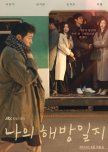
The reality of hope. A deeply compassionate drama.
Both writer (Park Hae Young) and director (Kim Seok Yoon) know how to create sensitive dramas built around pathos, but with a cutting edge. Kim directed “The Light in Your Eyes” and Park penned the class act that is “My Mister”. You can imagine what you will be getting, and they deliver on it—in spades.At the start there is little to attract in the main characters. They are all struggling to find any sort of meaning in soul-destroying lives that are dominated by a long and exhausting commute to the city from their countryside home. But this writer has a beautiful knack of taking that ordinary exterior and peeling away the layers to reach the vulnerability and struggling humanity within. And by the end of episode 2 you are totally captivated by these self-scored 20/100 characters. Add to that a director and cinematographer who know how to capture the smallest twitch of a muscle in a face and make it speak volumes. And actors like Kim Ji Won and particularly Son Seok Koo, who can work with them to reveal the interior life of a character without words.
As with “My Mister” the raw material at the heart of this drama is family and the unfathomable glue that holds it together despite difference, ambivalence and natural preferences. Essentially they are characters weighed down with who they are, wishing they were something else, ignorant of how to change but trying to work out how to make things different. They are trapped and struggling to emerge, like butterflies, from chrysalises of painfully low self-esteem, guilt and negative thinking. If this doesn’t sound like an attractive proposition, it is the skill and wonder of the whole production to make it compulsive viewing. Each of the characters draws you to themselves and touches your compassion as they struggle towards the elusive future that beckons them.
The plot meanders through their realisations and lurches along with them. In the main it works but occasionally loses its way, particularly later on when time hopping causes inevitable fragmentation. I was not convinced that this disordering of time to create tension was strictly necessary as the depth of the characterisations are sufficient to carry you through. However, imo, it would be counter-productive to enforce a regular development on a drama that is essentially exploring the vagaries of the human psyche with all its winding roads, u-turns and blind alleys. The unevenness of it creates the overall mood and ambience of the drama and reflects the stop-go nature of real life.
The drama features the standard three leads and their relationships; but this is not a standard romance drama. Relationship itself is the focal point, not the falling in love. Essentially it examines how we can approach and be with each other whilst still retaining ourselves. And suggests that the only way we can live with both ourselves and with others is by being honest and taking the hit for doing so, as we work towards self-acceptance and self-understanding. Ultimately it is upbeat, but open ended.
There are no generic characters here. Each one, even the minor players, has been carefully created and presented with depth and there are some wonderful observational details and cameo performances.
Lee Min Ki does such a great job with the character arc of the irrepressible, oblivious and impulsive Chang Hee. His confusion and lumbering realisations are beautifully portrayed and provide a flicker of humour darting through the shadows. How can you not fall in love with him? Especially over the car!
I have an affinity with Yeon Mi Jung and the things she prayed about as a child. The character is played elusively by Kim Ji Won who manages to capture the enigmatic exterior that hides the depth and singularity of her character’s thinking and perceptions. You are always waiting expectantly for what left-field thing will emerge from her mouth. Occasionally the script can feel a little pretentious and self-conscious, but it is mainly because the writer is wanting to explore non-intuitive ideas and trains of thought. If there is a reason to rewatch the series, then I think Mi Jung is it. A second time round, understanding the character arc, would illuminate much of her early actions and responses.
Perhaps the most vulnerable of the three is Yeon Ki Jung, portrayed with empathy by Lee El, who manages to undermine herself at every turn and perhaps elicits the broadest spectrum of responses from both the viewer and the other characters, from exasperation to total compassion.
The interloper into the family is played convincingly by Son Seok Koo who manages to capture the multi-facets of Gu Ja Gyeong from brooding to awkward to nasty to vulnerable. The character and his background provide a disturbing contrast to the rest of the drama and sometimes jarred for me. If there is any flaw in the credibility it comes with the ending for this character. But his time on screen is compulsive viewing and many of the scenes between him and Kim Ji Won are very special, full of nuanced, silent communication and unspoken feelings from both of them.
The cinematography and editing has more the feel of a film to it, as though the camera is just a neutral observer hanging around and we see the action though those non-judgemental eyes. It lingers on contemplative faces and reveals hidden depths. In many ways the whole drama doesn’t criticise or condemn, but tries to simply observe. And in that observation there is the balance and compassion that colours the whole production. Nothing is too polished or self conscious. It draws you in and places you firmly in the action as a participant in this slice of life. Beautifully done.
There is also a very restrained use of a soundtrack, so that often it is the silence that holds you in the moment with the character. There is a lot of simple piano music, ethereal voices and soulful songs, which have been carefully chosen to highlight the mood. Did I catch “So Tender” by Say Sue Me from “Nevertheless” in Ep 11 at 47’, playing in the cafe scene between Yeon Ki Jung and Jo Tae Hoon. I think I heard it earlier with regard to this couple as well.
This was a special drama for me and goes straight onto my personally recommended list.
What my rating means: 9+ A drama I totally fell in love with and is endlessly re-watchable. It ticked all the boxes and had some serious wow factor. It would go on my personally recommended list.
Was this review helpful to you?
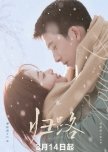
Stuck in traffic on a very long winded Road Home
My education in Chinese dramas continues apace with this romantic offering. This is 100% about relationship; every sigh, every tear, every regret, every breath, every tender touch, every long lingering look (and there are a glut of them to the point of nausea) is lovingly laid out for you. So if you’re a romance junkie, this one’s totally for you. And the leads make a very creditable job of the chemistry even though the script circumnavigated the globe rather than let them get skin on skin.Quite how they managed to act this well amidst the shambling, third rate budget production going on around them is to their credit, because once it strays into any other territory it’s like sailing through lumpy porridge. I recommend just scooting through and only watching the scenes between the leads in the first half, then skip to the end. You won’t miss anything and then the drama might seem quite good and you’ll be less likely to fall asleep at the wheel.
The ML works as a bomb disposal expert (for once the job matched the personality) however, there’s a laughable lack of procedure around it. Although, it does do a good job of highlighting the stress to the family of people involved in such dangerous work. The FL is cast in the stay-cheerful-be-long-suffering-self-sacrifice-to-the-end part: “I am willing to donate half my husband for the country”. ’Nuff said. But at least she has a professional job and a life of her own. As with most Chinese stuff, it’s got an education emphasis, complete with nifty tips and tricks. This one centres on how to be grown ups and have a long-distance relationship.
The plot has the feel of the writer gets up in the morning and thinks, as they chomp their toast and gulp their coffee, okay I need to go shopping, get the kids to basketball, ring my mother, renew the car insurance, organise a Creatively Exhausted Writers support group meeting and, oh, script the next episode. Hmmm, not got a lot of time to be imaginative today so they can just chat aimlessly for half an hour, then I’ll use that idea I had lying around from the last drama I wrote.
The problem being, they think that every morning so there’s not a lot of forward planning going on with the result that there is very little flow or cohesion, just a random sequence of scenes. Some of the playing out of crises is — well—embarrassing. Obviously where research and experience are absent, fantasy has a ball. Actually there’s very little plot at all and it could all be over and done with in six episodes including plumbing some depth. The whole thing is a perfect definition for “filler episodes”.
Okay you have to have a little bit of sympathy when they obviously had the brief to talk up some barren desert and sell it like it’s prime Manhattan real estate. Not sure what Mandarin word they actually used, but “pretty” is not what springs to mind. Don’t get me wrong here, I genuinely love the outback, but my descriptive words and feelings might sound more like awe inspiring, powerful, unlimited and silent. And I wouldn’t go out there in a skirt and high heels.
As for the dialogue; banal and directionless come to mind with occasional sparks of insight between the leads, as though someone on the writing team had some time to think creatively that day. And the pacing? It’s a very, very long road home and expect to crawl along like you’re stuck in traffic.
There’s not a great deal of understanding about how to build tension using cinematography, editing and soundtrack. Oh, just do normal tracking shots with some random music over the top, then a couple of close-ups—that’ll work. Or continuing to film in an urban location where the wind was so hard into the microphone it almost drowned out the dialogue. At times the editing is really bad, with lots of scenes rammed together like shish kebab on a skewer. Even on HD streaming some of it looked out of focus and badly lit.
On a more serious note, there’s a storyline about a kid being educated away from home, who gets shunted around like a pass the parcel. Even when he was at home, he spent long periods on his own whilst his father worked away. Then we find out that his new main carer has 200 days of business trips a year. I found it profoundly sad and not least because the writing team thought that was a situation they didn’t really need to investigate much.
What my rating means: 4+ I forced myself to go through to the end of it, but only because I was committed to writing the review. It annoyed the hell out of me. Actively avoid.
Was this review helpful to you?
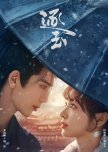
You can cast the boy out of a cinnamon role, but you can’t cast the cinnamon roll out of the boy.
The first twenty of so episodes of this drama are very good. It totally fulfils the “fit for purpose” specifications of a historical action romance. There’s a whack of very good chemistry, sweet romantic interactions, some deliciously dastardly baddies, a couple of kick arse women, lots of good supporting roles and a plot that meanders along with enough in it to keep you on your toes.Admittedly there’s the obligatory total suspension of disbelief required in some areas, not least of which concerns our reputedly ruthless hero, Xie Zheng played by Zhang Ling He. Sorry, but however much he frowns and barks: looks like a cinnamon roll, is a cinnamon roll. I’m probably going to be pickled in brine and strung up to cure for this remark, but then again, I’m known for saying it like it is, so —I genuinely think he was miscast. He simply doesn’t have the hard edge of suppressed emotions to pull off tsundere, which is what this role required. But I have to admit he makes a perfect, sweet, romantic lead.
You know when someone has been working too hard with not enough sleep, because the plot gets infected by fevered dreams and all types of ridiculousness follows. Look, I’ve watched a lot of dramas and I’m prepared to accept a heap of wince-making unbelievable situations before I totally give up on something that I decided to review. But starting about half way through, the shenanigans around false identity and military procedure got way beyond the rolling eyes and LOL stage and had me banging on the pause button and going off to do anything other than endure any more of it. I did my best not to give up and it was an excruciatingly close call. Episode 26 was the low point and I did think if anything else happens, I’m out. If you’ve got a strong enough stomach to survive that episode on top of what comes before it, then the rest is plain sailing, if a little predictable.
Until the last couple of episodes that is, which were badly edited and try to solve too many plot lines at once in a disjointed hash of scenes that don’t have enough time to really impact properly. Some of the plot lines needed more support earlier to be tied in properly. The unfolding of mystery should be a procession of tempting tasting dishes that lead you to the finale and is not best served by starving everyone then slopping everything on a plate at the end in an as-much-as-you-can-eat buffet, followed by pie in the sky to finish it off.
The prize for the most romantic line, sweetly delivered in a love scene goes to Xie Zheng for “Every morning I woke up to the sound of you slaughtering pigs.” And the prize for the sexiest psychotic villain that I’ve seen in a long while goes to Deng Kai for his portrayal of Sui Yuan Hai. Irresistible…
So it’s a very compromised rating, the start is an 8, the middle is a 5 and the end is a 7 which I’ve balanced out to a 7 overall.
Edited to add: Oh, I've just discovered, to my great amusement, that I align with the official Chinese government line on Zhang Ling He's portrayal of Xie Zheng! There's always a first time...LOL.
Was this review helpful to you?
More Alice in Wonderland than Little Women
Loosely based on Little Women is the sort of loose that happens when the elastic in your trackies gives way and they drop to your ankles in a wrinkled heap. Yes they are still trackies, but not obviously so. I spent the first episode distracted by trying to unsuccessfully work out how this drama maps to the book. But I was looking in the wrong place, because, although there are parallels to be found, the map is really in the theme: the significance of money.This is fundamentally a story about money and its sidekick—power (the perennial obsessions of K-dramas, well maybe most dramas actually…). How and why it shapes lives, morals, choices and character. How poverty shapes your mentality and expectations. What you are willing to let it buy and what that does to your integrity. What risks you are willing to take to acquire and keep it. Under what conditions you will let it go. The price that your decisions exact from both you and those around you.
It puts the protectors, helpers, underminers and benefactors of the wealthy centre stage and examines their motives and desires. This is a rare perspective and I can only remember it being the centre of a drama in one other totally brilliant case, “Secret Love Affair” (if you are interested in this aspect, watch SLA, it will not disappoint, although it’s not a thriller).
As you can guess by now, it is not the plot that makes this drama special, (more about that later) although you can simply watch it as a thriller. It’s the examination and unfolding of motive behind the fight for freedom and opportunity in a world that values money over the individual. A society that insists we fight for limited resources to fulfil not only our dreams but our basic survival as well.
It’s almost impossible for us to imagine a society not based on money. But money itself is not of course concretely real, it is simply a universally accepted system of sharing resources that becomes meaningless if we lose trust in it. It is the illusion around which our reality and dreams are built. And if you are going to be fanciful, you could watch this drama as a commentary on the system’s strengths and weaknesses and the approach people take to best work it. Given that it is compulsory to engage in this system, the question as to what is morally acceptable and what is personally justified is core to the unfolding of the narrative.
Having said all that, there are problems in my opinion with how the drama is written and presented. There’s a vibe of the sisters being ordinary people (a reference to Little Women perhaps) who are unwittingly and sometimes unwillingly mixed up in something big.
However, through most of the drama, the sisters don’t display enough realistic, long-term emotional reactions to support their ordinariness in the extraordinary and violent situations that surround them. In a normal thriller we suspend disbelief because the whole thing is not related to any recognisable reality in the first place. Here, particularly in the middle section, I am being made aware of the gap between quasi normality and the world of the story with the result that I am also very aware of suspending my disbelief. And at times I found the approach is not subtle enough to make it work.
Because the women are presented as relative amateurs, there are moments that stretched my credulity to breaking point. For instance, without any preparation and seemingly without backup, they are willing to confront people they think are probably murderers. There are scenes where professionals who would never disclose information to anyone let alone the naive woman in front of them, disclose it. Etc, etc.
There’s an odd mix of the ordinary, the extraordinary and the completely surreal. The more surreal it gets the less the ordinary women at the heart of it are credible. It turns into conspiracy theory central with hallucinogens thrown in for good measure. Whether this was intended as a reflection of the madness that money creates in people is debatable.
The plot gets increasingly bizarre and takes off in strange directions and at times loses impetus. This has a fragmenting effect which leaks tension and can be frustrating. But at other times the sense of confusion and powerlessness is very effective in putting you into the shoes of the protagonists.
Overall, this is an ambitious drama and when it works it really works, and when it doesn’t, it really doesn’t. I’m someone who is prepared to put up with stuff not always working well if an attempt is being made to experiment with something new and different. I think this drama tries to do that, so I was happy to give it the benefit of the doubt, but even my goodwill was tested beyond its limits by the end.
What my rating means: 7+ A watchable drama, but nothing exceptional. Good enough to qualify for the race, but finished with the pack. The sort of thing that promises more than it delivers.
Was this review helpful to you?
This review may contain spoilers
Raw, challenging and courageous
The writer, Song Hye Jin’s previous drama “The Smile Has Left Your Eyes” stayed with me for the intensity of the emotions and its stark bleakness, and this one is no different. That was not without fault and neither is this. But it will be another unforgettable drama that haunts rather than lingers. Unlike “The Smile…”, this appears to be an original story, so is doubly impressive. I am not surprised that she only produces work every few years. This level of emotional intensity takes a toll. The effort and depth of understanding needed to create an emotional arc this complex and compelling, and live with it whilst writing is truly astounding and I stand in awe.My current take on this story having just finished it (and it’s the sort of thing that changes with reflection over time) is that it outlines a co-dependent relationship where however cruel it is, the individuals go back for more to justify to themselves that their self image is true to who they think they are. They both need to fight to keep it intact, whatever the cost.
Although there is a tendency to see Sang Yeon as the villain of the piece, whilst Eun Jung is the victim, this is to ignore the fact that Eun Jung could not walk away from her necessity to think of herself as a good person and accept her limits. As the story progresses Eun Jung is forced to confront the shallowness and fragility of her understanding of what that actually means. She accepts Sang Yeon back every time because she needs to feel that she is big enough and strong enough to cope. That her self respect will not let her down. She accepts the test each time. But the irony is that with each encounter the hate grows bigger inside her, and eats away at the unlimited, balanced personality and open generosity she needs to think she has.
For Sang Yeon, there is an ever present existential threat created by the suicide of her brother and her perceived rejection by her mother, who also ultimately abandons her in death. What is so bad that you would prefer to die rather than live? That you would consider the love and trust of the people around you not enough reason to live. She is constantly testing Eun Jung, trying to push her towards the edge, testing whether her limit will result in an ending and another abandonment. Sang Yeon cannot abandon Eun Jung and returns to her for the connection that will never give up on her. She finally realises that death is a necessary and unavoidable abandonment, but that it does not necessarily imply rejection.
The responsibility for this fractured relationship is in fact equally balanced and it is not until they both realise that fact that they could finally come together.
The performances by Kim Go Eun and Park Ji Hyun were exceptional. To be offered a script of this quality must have seemed like a dream come true. Both of them excelled and created compelling characters although personally I was more convinced by Park Ji Hyun than Kim Go Eun. However, I was not immediately drawn to them and it took about 5 or 6 episodes for me to work my way into their characters. (More about that when I come to talk about the cinematography and editing.) But over the course of the drama as a whole, they both convinced, especially in the emotional impacts at the end of each of the four “acts”.
This is essentially a story about two women, the male lead has a fairly inconsequential character arc and is really there to act as a foil between the them. To be honest, I found his character bland and lacking depth and it felt as though Kim Gun Woo accepted that lack in his playing of the part. I was not convinced of the pivotal role he had in the lives of the women, whose characters were strong and fully realised. This is perhaps a necessary compromise in the writing. To have made the character of Sang Hak richer and stronger would have added competition on a field already filled to bursting with it and taken away from the interaction between the women.
I was so glad that at the end of the drama they did not resort to euphemism but had the courage to follow through on the emotional impact. The drama was unafraid to be raw and direct. Not just in the storyline, but in the behaviour of the characters who spoke their truth brutally and used it as a weapon to both intimidate and manipulate.
The faults that I mentioned earlier (and FFS perfection is a ridiculous imposition to put on such a good drama) are mainly to do with the cinematography and editing, although there is a small niggle with the story arc.
Let’s address that first. By the time we reached the 2013 section of the drama I was a little tired of adjusting to new situations and characters and found that much of it felt like a repeat of 2003 in a different setting with slightly different stakes. Although I admit if I rewatch this drama I may see that differently. The other niggle is about how the early part of the story is partly narrated in voice overs by Eun Jung as part of her autobiographical writing of their relationship. This led to awkward storytelling, where scenes Eun Jung was not present in were necessary for the narrative flow. I think that was unnecessary and the story could simply have been told straight.
Now for my main peeve - the cinematography and the editing. Ironic in a story where one of the characters is a cinematographer. I thought a lot about why I was not engaging with the characters for the first third of the drama and came to the conclusion that it was a lot to do with how the story was visually presented. The editing style was to chop and change constantly, with mainly close-ups being used in significant emotional scenes. It was like being at a tennis match. When facing one person you can’t tell what’s happening to the other one so you turn back and bounce between them. What you want to see is the combined picture where they are both in frame so that you can watch the subtle changes in body language and sink into the tension between them. Then, make an impact by showing close ups. They were so busy with capturing the details that they forgot to open up the big picture. The result was that I had to put a lot of work into reading the room. I recently finished “Sounds of Winter” where the superb cinematography was a major part of the emotional impact and this production could well have learned something from it.
There was another choice which drew my attention away from the characters at critical moments, and that was the decision to use hand held camerawork in the climactic scenes in episodes 7 and 13 when everything fell apart. The unavoidable camera shake pulled me away from the intensity unfolding in front of me. It was so noticeable because it had not been used in any other context and was obviously a deliberate decision. Perhaps with the intention of illustrating how their world was shaking. As far as I was concerned it was Um Song Tak’s (the cinematographer) “look at me” moment.
Having said all that, this drama deserves its 9 rating. It didn’t capture my heart, but rather confronted and challenged me and had the courage to deliver on its promises.
Was this review helpful to you?
Just a little too bland to be thought provoking.
This slice of life film explores the nature of social connections and the difference between aloneness and loneliness. The protagonist, Chihiro, understands how to make attachments and bring people together, but ultimately shies away from the community she enables. Everyone is trying to escape from something and is brought into connection through her, but what else connects them is questionable. Even in the midst of people, Chihiro experiences her separateness and alienation.It is well observed but not beautifully observed. I didn’t find the insight I was looking for here. Perhaps it was the sanitised personalities of the characters, many of whom had lived difficult lives but didn’t seem to have the resultant rough edges. They didn’t come across as affected or moulded by their experiences, just as mild people unable to find an acceptable social place. We are all moulded by our experiences and this film felt afraid to show that just in case the characters might turn unsympathetic. Chihiro has experienced tough times as a child and young woman, but how or whether that has contributed to her emotional distance, or is perhaps just her personality is never fully explored.
It is the sort of film that asks questions, but doesn’t offer too many answers, which is fine as long as the questions reveal some new perspective or path to travel. For me, that wasn’t really the case.
Was this review helpful to you?
Scored well until it started kicking own goals.
As the famous football quote says: this is a game of two halves and it’s not over until it’s over.This perennially loved theme has always found an audience, from “Shirley Valentine” onwards; the dutiful, middle-aged woman waking up from the self-imposed drudgery and finding she has no-one to blame but herself, then kicking over the traces and fighting back.
In the first half, it takes some standard comedy tropes and situations and gives them a refreshing twist. It’s not outstanding in any way, there’s no spectacular cinematography, or deep, complex characterisations, or an innovative script or striking editing, yet the first half ticks every box as a great, enjoyable watch. It’s funny without being obvious, observant without being self-conscious, clever without being pretentious. It’s a great all-round show that slides seamlessly from comedy to drama to melo and back again, maintaining exactly the right degree to remain balanced and credible.
Then after half time, the team comes back and who knows what happened in the locker rooms in those fifteen minutes? Because things start to go pear shaped during the obligatory away-from-home scenes in episodes 9 & 10 after which they pretty well fall apart in episode 11 and continue on kicking own goals from there.
The plot really got pushed way beyond its limits. It went hunting for bottomless pits to fall into and whenever it couldn’t find one wheeled in an excavator and dug it out until, by the end, the pitch looked like a opal mine site at Coober Pedy. The overblown comedy and melo burrowed deeper and deeper until the whole thing pretty much collapsed into a sink hole.
The team managed to scramble up to the surface again for the last twenty minutes, but by that time, it really was all over.
There was absolutely no real need to keep upping the ante, there was already plenty to work with in the relationships laid down at the start. But everyone was literally dragged through the operating room for emergency surgery that singularly failed to revive a show gasping for air.
Having said that, in amongst all the manufactured chaos were some nice performances.
Although Uhm Jung Hwa gives a convincing performance as the unconfident and self-doubting Dr Cha, I feel she was somewhat overshadowed by Kim Byung Chul as her scheming husband, who has fantastic comic timing and plays in to all the “total bastard husband” expectations that you may have. Another actor who stood out for me was Song Ji Ho who beautifully captured the conflicted son.
What my rating means: 7+ A watchable drama, but nothing exceptional. Good enough to qualify for the race, but finished with the pack. The sort of thing that promises more than it delivers.
Was this review helpful to you?
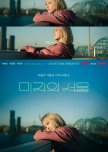
The only arrow that wounds you is the one you shoot yourself.
This drama has more to it than I expected and explores the themes of self-perception, connection and communication.It brought to mind Hwasa’s (화사) video for her song LMM. (https://youtu.be/pkjEpDeDLOg?si=YAVEQARXTsiYHT70) The only arrow that actually wounds Hwasa, is the one that she shoots herself and this drama explores the misconceptions and perceptions that we have of who we are, and the necessary results that follow these so-called truths which often blight the world in which we live and trap us there with seemingly no way out.
The story follows a number of characters for whom change of self perception is the first step to connection with others and the help they must take to reach a better, more fulfilling life. The way others see us is often very different from how we think, and here these differences are explored to the full. We are shown everyone’s history and join them on their journey of self-enlightenment. In fact it’s almost an overload as everyone has a backstory to tell and resolve. In the end I felt this skewed the balance of focus somewhat, for instance, virtually the whole of Ep 10 was dedicated to one secondary character.
The swapping bodies trope is given a slightly different twist here, in that it is identical twins who swap lives. This is really just a mechanism for the sisters to reflect on themselves and the relationships around them. It brings with it some incredulous scenarios that one has to swallow whole, such as surviving in a job for which you have no skills. But if you focus on the theme rather than the mechanism to deliver it, then there is plenty of insight to be had.
The script explores the changes and personal realities in an obvious, up-front way. Sometimes the lines feel a little like you are in a session with a psychologist who is giving life skills advice. But the advantage of this style is that the message is very clear for the viewer, who can easily follow the internal workings of the character. With so many characters on the road to Damascus, this is helpful.
I enjoyed the directing in this drama. Often the melo is just too full on for me, but here I felt it struck a good balance of revealing distress without too much hand-wringing and wailing. There is plenty of time to focus on reaction shots and all the cast members step up to the plate and deliver a satisfying performance. Park Bo Young successfully manages to show the different characters of the twins, such that even without reference to the haircuts, it is obvious who is who. Kim Sun Young plays my favourite character with conviction, especially in the scene with her son in Ep 11. Only Ryu Kung Su as Han Se Jin fails to convince. I feel he was a little too vague and soft to have the necessary ruthlessness for his former profession.
There are some beautiful songs in the soundtrack, Elaine Kim singing 나의 시간 어딘가 in particular caught my ear with her husky vulnerability.
Overall this optimistic and ultimately upbeat drama is very enjoyable. It is well presented and structured with thought provoking characters, some of whom triggered some self reflection on my own part. My favourite line is “The promise of a tomorrow is not born from hope, but from resolve.” This one I totally understand.
Was this review helpful to you?

Cosy comfortable with a shot of blood
Once you get through the obligatory starter course of processed cheese, the first four or five episodes turn into a gentle, warm, carefully observed drama-romance with credible characters. Then the romance stretches like melted mozzarella for a number of episodes before just about righting itself; the cottage cheese style comedy tries to spice itself up with some hot chilli crime and the plot turns into gruyere, with holes so big you could run a mouse through them. Unfortunately, I could see where it was headed like I had a grandstand view down a wormhole.Okay, let’s put some spoiler-free depth to those claims.
First the romance. This is a noona romance and visibly so. I have no problem with the age of the FL, or the fact that the characters are played by actors with at least 10 years between them. But at times I found myself wincing because in the script the FL acts more like the ML’s mother than anything else and at one point the ML behaves like a teenager, and those things I did have a problem with. However, once the romance got going things settled down a bit, but there is precious little chemistry going on. It’s all very cosy and comfortable, so be prepared for that.
It seems that the writer wants to give the drama a bit of weight and chose to do it in two ways. One of which definitely added something—educational child abuse in pursuit of excellence. Because of the setting in a tutoring academy it was fully explored and provided some real depth by documenting the impact on the students. This part of the drama was good and was credible alongside the romance. But the other theme—heavy-duty-crime—really didn’t mesh well and was totally unnecessary imo. Also the execution of that whole plot thread was obvious and clumsy.
There’s a fashion at the moment to try mixed genres, but it rarely succeeds. Okay I admit, it could be that I just need to change, get with the program and embrace something new, but … I think that there are genres for a reason. And that’s because any drama is an exaggeration of life in a certain direction. The imaginary world created by a romance is fundamentally different to that of a crime thriller because it is designed to evoke different emotions and responses. Things that are credible in one world aren’t in the other. When you mix the genres it’s like being emotionally and psychologically pulled in opposite directions so that you twang like a rubber band from one to the other. In the time it takes to cut to the next scene the viewer has to heave out one universe and drag in another. Jeez, it wears me out…
A bunch of corrupt mothers were required to fulfil both the comedy and the serious commentary on educational abuse. But neither the writing, nor the acting/directing was subtle or clever enough to exploit this killer opportunity for black humour. Satire is an art-form, and anyone who wants to check it out at its absolute best should watch “Heard it through the Grapevine”. Here it was mostly a clumsy mish-mash.
Hwang Bo Ra was delicious again as the mercurial but minor character, Lee Mi Ok. She could have made a much better job of the self proclaimed leader of the mother’s group than Kim Sun Young and brought out the dark humour. She is such an underrated actor imo. Lee Chae Min as the student Lee Seon Jae and Jang Young Nam as his mother were notable, and the scenes between them were little gems. He’s a Song Kang lookalike but with acting ability… In general the performances were really good and that is what kept this drama afloat for me.
To quote Skitc’s excellent review for “Stranger’s Again”— beware the trebuchet!!!! Another traffic accident. Really!!!
Okay if you are a writer in need of ideas of how to injure someone in an urban environment that doesn’t involve a car, here are some pointers (feel free to add more in the comments below)
• bitten by a zombie escapee from “Happiness”;
• pushed down a manhole into the sewer;
• Dorothy’d into the sky by a tornado;
• half encased in setting concrete;
• an eye gouged out by a drone;
• garrotted by a kite string;
• savaged by a flurry of rabid hamsters.
F**king anything pleeeeeease except being hit by a car.
What my rating means: 7+ A watchable drama, but nothing exceptional. Good enough to qualify for the race, but finished with the pack. The sort of thing that promises more than it delivers.
Was this review helpful to you?
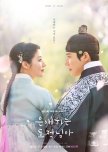
Charmed me into undeserved generosity.
I’ve had this hanging around my watch-list for a while and finally thought I’d give it a go. I must admit that despite things that usually piss me off mightily, it managed to seduce me. I loathe and don’t usually watch body swap dramas, then they totally mess with historical accuracy to an absurd degree, whilst also living on another planet in terms of crime and punishment, etc, etc. All of which criticisms can be found in the numerous and comprehensive reviews already available. So why did I feel compelled to write this review? Well, I had to justify to someone (myself probably) the rating of 8.5 I’ve succumbed to giving it. It totally charmed the pants off me. With some deliciously sweet performances, consistently good pacing and plot design. I’ll probably come to my senses in a few days. But til then...Was this review helpful to you?
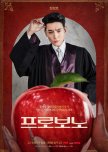
Well written with a social agenda.
This is a drama with an agenda. Like many law dramas the world over, it seeks out underdog stories and features the winning of impossible court cases so that there can be a sense that injustice doesn’t always prevail and sometimes, against the odds, justice is served. The audience, me included, experiences a sense of release and satisfaction at getting our own back against a nebulous, all powerful world that is designed to crush all resistance. In the real world, these triumphs are few and far between, just a small handful in a generation.And the irony strikes me that the powerful and corrupt are happy for these dramas to be there. Why? Because they allow for the release of some of the dissatisfaction and frustration by giving us all a sense that we can effect change, whilst in fact we are sitting in our armchairs staring at a screen and doing nothing. Otherwise that pent up anger and frustration might get released in more effective and threatening ways. And by heavens, in the current global environment we really need to feel change is possible and work out how to do it. But this is a review of a drama, not a piece of sociopolitical comment, so I will stop there.
As a drama did it work? If you are prepared to wholeheartedly take up the narrative it will carry you along very nicely. I have noted that some people found it too much. Some of the stories are very specific to Korean society and how the law currently stands on a variety of social issues. Other cases highlight minorities and show them in a positive light. This is a way of deliberately encouraging attitudes to change and pressure public opinion. Like I said, it has an agenda.
For me, the jarring note was less the choice of stories/cases and more the standard overly sentimental approach. It relies on a lighthearted tone for most of the time and quickly flips you back up if the storyline dips into too much tragedy. My preference is for something a little less sugar-coated and a little more real. However there were plenty of moments where it packed a punch. This was, in the main, down to an excellent performance by Jung Kyung Ho.
Ever since I saw him in “Cruel City” I’ve rated him as an actor. His character has some depth written into it which he is more than capable of doing justice to. The best episode by far imo, is Ep 10, where his character is called upon to account for himself and JKH steps up to the plate. He is someone who can carry off serious drama and I would love to see him do more of it. Unfortunately, there are not many being written and produced these days. The rest of the cast provided good support and were varied enough to add to the interest.
Was this review helpful to you?
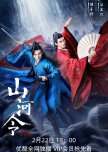
This review may contain spoilers
How to torture your lover
Look I’m very conflicted about this drama because there were so many great things in it, but the plot and the ending were diabolical.Okay the good things are pretty well covered in the top reviews. The acting, some of the dialogue, the flirting, the character delineation, the costumes, the fight choreography etc. All totally excellent, and they will carry you through the abomination that is the plot. If you are fond of repeated gotcha moments then this is a supreme example. If you are charitable you can call them plot twists, but tbh, there’s nothing sophisticated about them. People die, oh no they don’t… repeatedly. Multiple times characters are at death’s door and bounce back in no time. Our heroes loose their qi but somehow still manage to fight spectacularly well. Minor bit part characters in the first 20 episodes, suddenly become key characters for 4 episodes then disappear again, leaving you thinking, who tf was that. Totally unheard of characters, suddenly appear out of nowhere and claim to be old, inseparable bosom buddies of our protagonist. The convenience factor is 24/7 availability and for me it just sucked.
Spoilers follow: -
Two days later, I’m still furious about the ending. What sort of person, who supposedly loves their soulmate would put them through the sort of torture which they were too generous to impose on their enemies. So you get to live at the expense of the one you cannot live without. And you’re stuck in this god forsaken place all winter, totally alone with their dead body. Please someone, tell me I’ve got this wrong. The more I think about it, the worse it gets. The armoury was such a nothing ending. What the heck was wrong with them both dying at the end of episode 35?
Ok rant over, now I’ve got decide how to rate this. Should it be 6.5, because it’s flawed, or should I be generous with an 8, because there was some really excellent stuff? Ok, compromise at 7.5…
Was this review helpful to you?
Fortunately its charm outweighs its clumsiness.
Any writer can only bow their heads in the face of a good plot. Even when that plot is a contortionist that twists itself up in knots so convoluted that it frequently farts in its own face. Look, it’s not that the plot isn’t riddled with holes, like a machine gun just ploughed through it. It’s rather that the resilience, ingenuity and convenient co-incidences just keep on coming—relentlessly. The stakes gradually climb higher and higher and the twists keep pace. Until the last few episodes that is. It needed a better run to the finish line, but I’ll forgive it that, it had provided much along the way. The outlandish is at such a delicious level that it is impossible to look away. Your mouth simply drops open to consume the next morsel. Expect the ridiculous and you won’t ever be disappointed.If the overall plot was good, the structure and flow of it was lacking. The story really comprises two parts. Set in different places with different characters and could easily have been split into two series. Whilst the connection between them was tied up by the end it was not the most satisfying experience and the set up was in anticipation of a continuing story. A viewers interest in a character is directly proportional to the screen time it gets, and when they are not seen for long stretches they begin to seem increasingly irrelevant. Some characters were on very long leashes and I was left wondering where the hell they were and what were they doing in the gaps. There was an annoying sense of convenience at times.
The drama comes complete with a wonderful set of unlikely characters . A hero whose life everyone (friend and foe alike) ends up saving at some point. He jolts along like a rumbling coach magically acquiring fighting skills/powers and poisons, all whilst keeping his clothes pristine. Swoon-worthy side kicks abound, of particular note is Uncle Wu Zhu (Tong Meng Chi) and The Second Prince (Liu Duan Dan) and there are plenty of older examples for the more mature amongst us. Caught up in the abundance of flying, floating, fighting men/women (like half the population), there’s a sibling to Darth Vader who can take on a thousand and win, and who was so incognito he didn’t even appear in the cast list. Plus a wheelchair that surely should have been made of light, comfortable, flexible bamboo, not solid oak. Really, the props department let us down there. And I am thinking Wu Gang must have had bruised buttock bones for most of the shoot.
Sadly, however, I can’t say that the female characters were much to write home about, aside that is from the delightful Haitang Duo Duo (Xin Zhi Lei). Be prepared for a female lead that can compete with a wet weekend and come out top, a sister who is very determined and totally ineffectual and an evil princess whose only redeeming feature was her headdresses.
To be honest the connection to the “otherworld” didn’t really work for me. I found it unnecessary and so infrequently referenced that when it did become important it stuck out like a business suit at a hanbok party.
Is it the most sophisticated, clever drama that I have ever seen? Well, no… Is it rollicking good fun, a hearty meal and a laugh with friends? You betcha!
Was this review helpful to you?


