
 Editorials
 2
2 5
5 1
1 1
1 2
2 1
1 2
2


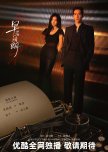
This review may contain spoilers
You Don't Have to Be Perfect to Be Worthy of Love
The Early Spring was one of those dramas I had been anticipating for a long time. I discovered Jing Boran this year through Sunset Secret Regret, and after that I started following every teaser, update, and bit of discussion surrounding this drama. I even watched the chaos unfold in the comments while it was airing. I am very much a binge watcher, though, so I waited until it finished before joining the watch party. By then, I had already seen friends either drop it or absolutely love it, so I honestly had no idea which side I would end up on. I only knew one thing: I was definitely going to watch it.
Originally, I didn't even plan to write a full review because I thought I could probably describe my feelings about it in four lines. But while watching, I kept questioning myself because my interpretation of the characters was so different from a lot of what I had read, including discussions around the characters and even some of the cast's own interpretations. I can completely understand what frustrated people about this drama, and I can see why certain things annoyed viewers. The funny thing is, many of those exact things were what I enjoyed most.
At its core, The Early Spring is about one simple idea: you don't have to be perfect to be worthy of love. And I think that is exactly what the drama is trying to show through Luke and Flora. This isn't a story about two perfect people finding each other and building a perfect relationship. It is about two deeply imperfect people with their own insecurities, baggage, personalities, expectations, and emotional limitations who somehow fall in love and spend six years trying to figure out how to make that love work.
And yes, they make A LOT of mistakes along the way.
Luke is introduced as a brilliant, successful, arrogant, sharp-tongued creative director who has extremely high standards. He is proud of his abilities and has very little patience for people he considers incompetent. Flora, meanwhile, is a newly graduated young woman who moves to Beijing with a clear idea of what she wants from her career. She gets rejected by Luke during her interview, only to somehow land the job anyway and end up working under him.
Their first interactions are not exactly warm. Luke doesn't think she meets his standards, while Flora is determined to prove him wrong. But I really enjoyed watching them slowly learn from each other. Luke begins to respect her consistency and willingness to learn, while Flora gradually realizes that beneath his cruel delivery, many of his professional lessons are actually valuable. His words can be unnecessarily harsh, but his standards and advice about surviving the corporate world often contain truths she needs to hear.
This was probably my favourite part of the drama: the workplace itself.
The corporate environment felt surprisingly realistic to me. The office politics, competition, professional expectations, workplace conflicts, power dynamics, mistakes, difficult clients, career pressure, and the constant need to prove yourself all felt believable. I could relate to so many of those situations, which made the business side much more interesting to me than it might be for someone who is mainly watching for the romance.
And unlike many dramas where the business storyline exists mainly to give the leads somewhere to meet, here I actually found the professional and romantic stories equally compelling. I could watch Luke and Flora dealing with a workplace problem and be just as invested as I was when they were dealing with their relationship. For me, that balance is one of the biggest reasons this drama worked so well.
Their relationship develops gradually. They meet, challenge each other, admire each other, become attracted to each other, and eventually cross a line neither of them expected. After their one-night stand, Flora decides she wants to stop because she is worried about what a relationship with her boss could do to her career. Luke, however, wants to continue and proposes a secret relationship. They agree on their own terms, including keeping it hidden even from their closest friends and family.
I found the whole argument about who suggested the secret relationship first surprisingly funny because, to me, it was obvious. Flora was the one trying to end things, while Luke was the one asking her to stay and suggesting a secret relationship, and she agreed with her own conditions. So the idea of turning it into some major question of who suggested the relationship never really mattered to me. They both made the choice.
I also appreciated that Flora was an adult who understood what she was doing. She wasn't completely powerless in the relationship. She had her own boundaries, made her own choices, and knew that being with Luke could affect her career. At the same time, I absolutely recognize the uncomfortable power dynamic. Luke was her boss, and some of the ways he treated her were genuinely cruel. Calling it a consensual choice doesn't erase the fact that the professional hierarchy made the relationship inappropriate and complicated.
What kept me invested in Luke, though, was that the drama didn't simply present him as a perfect green-flag hero. He is possessive, jealous, impulsive, emotionally immature, and has a terrible temper. His sharp tongue can hurt Flora badly. But I also loved how self-aware he could be after those moments. He constantly questions himself, recognizes when he has gone too far, apologizes, and tries to understand her. His growth happens through all those arguments and mistakes rather than through one magical transformation.
For me, Luke was actually much easier to understand than Flora.
His feelings are usually visible through his actions. He protects her, helps her, worries about her, makes himself available to her, introduces her to his friends, and repeatedly tries to understand what is happening between them. Even when he is angry, his attachment to her is never particularly difficult to see. He also doesn't play games with other women, and when there is a female friend who could potentially create jealousy, he makes his boundaries clear.
He is far from perfect, but I found him incredibly watchable. Jing Boran also deserves a huge amount of credit here. He manages to make Luke arrogant, sexy, frustrating, vulnerable, childish, jealous, funny, and genuinely affectionate without making the character feel completely one-dimensional.
And yes, I enjoyed his jealous and possessive moments. Not because I think possessiveness is healthy, but because they reveal so much about him. Luke is someone who struggles to process his emotions properly, so when he feels threatened or insecure, his first reaction is often anger. But you can also see him slowly learning to handle those emotions differently.
Flora was more difficult for me to understand.
I liked her independence, determination, professional ambition, and internal strength, but I struggled with how little she communicated her feelings. Her insecurities about their relationship make sense in the beginning, especially because they are hiding it and because Luke is her boss. But after several years together, I kept asking myself why she still didn't let him into the most important parts of her life.
The agency incident, the sexual assault situation, her housing problems, and especially the death of her friend were all things I found incredibly difficult to understand her hiding from him. He was not just her boss anymore. He had been her boyfriend for years. Yet she repeatedly handled major problems alone instead of allowing him to be there for her.
And that is where I think the drama becomes much more interesting than simply asking who was right and who was wrong.
Neither of them is completely right.
They are both victims of their circumstances, but they are also responsible for the choices they make. Flora's inability to communicate makes Luke feel excluded from her life, while Luke's controlling nature and sharp words make Flora feel unsafe about opening up to him. They keep triggering each other's worst qualities, and instead of fixing the underlying problem, they repeatedly patch things up and continue.
That cycle can absolutely become frustrating, and I understand why some viewers felt exhausted by it. But I actually think that repetition is part of what the drama is trying to show. Their relationship isn't difficult because one person is secretly evil. It is difficult because two people can love each other deeply and still be terrible at loving each other properly.
The marriage storyline was one of those moments where I really wanted to shake Flora. She suddenly starts thinking about marriage because her friend is getting married, even though she and Luke are already going through a serious emotional crisis. And Luke's reaction made sense to me because he was already questioning whether he actually had a place in her life.
He had introduced her to his friends. She had never really done the same with him. Her roommates were clearly part of her emotional family, but Luke remained strangely confined to those four walls of their secret relationship. That distinction matters.
I don't think Flora didn't love him. I think she loved him in her own way, but she never fully made room for him.
And that is why I found Luke's frustration before the final breakup understandable. When he asks whether she even considers him her boyfriend, that isn't simply jealousy. It is the realization that after six years, he still doesn't know where he stands in the rest of her life.
The drama also does a good job of showing why Luke became the way he is. His childhood, his relationship with his father, and the lack of emotional warmth he received explain a lot of his emotional immaturity. They don't excuse his behaviour, but they help us understand it. I particularly liked the contrast between Luke's professional competence and his complete lack of emotional competence.
Thankfully, he isn't left there.
One of my favourite parts of the drama is watching Luke slowly recognize his own behaviour and change. He learns that being successful, intelligent, attractive, and capable doesn't automatically make him a good partner. He has to learn empathy, communication, restraint, and how to let another person have their own choices.
The chef, Luke's close friend, was also such a valuable character. I loved his conversations with Luke because he often acted almost like Luke's emotional translator. He could look at Luke's behaviour and immediately understand what was actually going on underneath it. His advice helped us understand where Luke and Flora were emotionally at different points in the relationship, and I really appreciated having someone who could challenge Luke without simply judging him.
And then there is the chemistry.
Honestly, this is where The Early Spring completely won me over.
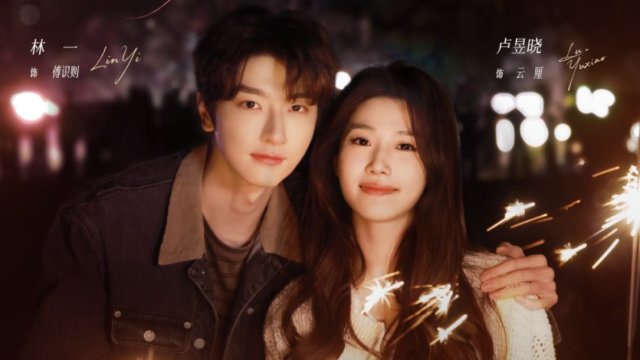
Jing Boran and Sun Qian have fire chemistry. Their scenes together have a natural intimacy that made me believe these two people had been deeply attracted to each other for years. Their physical scenes are surprisingly intimate for a C-drama, but they never felt gratuitous to me. The attraction is an important part of their relationship, and the drama isn't afraid to acknowledge that these are adults who genuinely desire each other. Their chemistry also exists outside those scenes, through looks, silences, teasing, jealousy, arguments, and the small moments between them.
The acting from both leads worked particularly well for me because neither character is easy. Luke can be incredibly frustrating, while Flora can be difficult to read. Jing Boran gives Luke so many tiny emotional changes that you can often understand what he is feeling before he says anything. Sun Qian similarly captures Flora's insecurity and gradual professional growth, even when I personally struggled to understand some of her emotional choices.
I also loved that the story doesn't reduce Flora to Luke's girlfriend. Her career matters. Her professional growth matters. Her friendships matter. Her ambitions matter. Watching her enter the corporate world as an inexperienced graduate and slowly become someone confident and capable was genuinely satisfying.
And this is another reason I loved the business side so much. The drama understands that these two people have lives outside their relationship. They aren't just waiting around for the next romantic scene. They have careers, colleagues, friendships, family problems, professional ambitions, and personal failures.
Even Luke's relationship with his friends added something important. I especially liked seeing him have people around him who could call him out and help him understand himself.
I also have to mention Luke the dog. I don't care how serious the drama gets, give me a cute dog and I'm automatically more invested.
The biggest weakness for me was the ending.
After spending so much time building a six-year relationship and showing us exactly how complicated these two people are, the final stretch felt rushed. Their reconciliation needed more time. Luke's personal growth deserved more exploration, Flora's decision to let him back into her life could have been developed more carefully, and I wanted to see them actually work through the things that had broken them apart instead of having everything move so quickly toward the conclusion.
But somehow, I still didn't care as much as I probably should have.
Because by that point, I was already completely invested in them.
I didn't need them to suddenly become perfect. In fact, I think that would have gone against the entire point of the story. What mattered to me was seeing two flawed people finally understand that loving someone doesn't mean they will always behave perfectly, and being worthy of love doesn't require becoming a perfect person first.
You don't have to be perfect to be worthy of love.
That is what I ultimately took away from The Early Spring.
It is messy. It is frustrating. It is sometimes uncomfortable. There are choices I absolutely would not defend in real life, especially considering the workplace power imbalance. But it is also one of the most compelling relationship dramas I've watched this year because the characters feel like actual imperfect people rather than carefully constructed romantic ideals.
And for me, that made it incredibly watchable.
I came for Jing Boran after discovering him in Sunset Secret Regret. I stayed for Luke, Flora, the workplace story, the complicated relationship, the chemistry, and the endless arguments that somehow kept making me want to understand these two people a little more.
The Early Spring may not give you a perfect love story. It gives you something much messier: two imperfect people who love each other, hurt each other, grow, fail, try again, and eventually find their way back to each other.
And honestly, I loved that.
Originally, I didn't even plan to write a full review because I thought I could probably describe my feelings about it in four lines. But while watching, I kept questioning myself because my interpretation of the characters was so different from a lot of what I had read, including discussions around the characters and even some of the cast's own interpretations. I can completely understand what frustrated people about this drama, and I can see why certain things annoyed viewers. The funny thing is, many of those exact things were what I enjoyed most.
At its core, The Early Spring is about one simple idea: you don't have to be perfect to be worthy of love. And I think that is exactly what the drama is trying to show through Luke and Flora. This isn't a story about two perfect people finding each other and building a perfect relationship. It is about two deeply imperfect people with their own insecurities, baggage, personalities, expectations, and emotional limitations who somehow fall in love and spend six years trying to figure out how to make that love work.
And yes, they make A LOT of mistakes along the way.
Luke is introduced as a brilliant, successful, arrogant, sharp-tongued creative director who has extremely high standards. He is proud of his abilities and has very little patience for people he considers incompetent. Flora, meanwhile, is a newly graduated young woman who moves to Beijing with a clear idea of what she wants from her career. She gets rejected by Luke during her interview, only to somehow land the job anyway and end up working under him.
Their first interactions are not exactly warm. Luke doesn't think she meets his standards, while Flora is determined to prove him wrong. But I really enjoyed watching them slowly learn from each other. Luke begins to respect her consistency and willingness to learn, while Flora gradually realizes that beneath his cruel delivery, many of his professional lessons are actually valuable. His words can be unnecessarily harsh, but his standards and advice about surviving the corporate world often contain truths she needs to hear.
This was probably my favourite part of the drama: the workplace itself.
The corporate environment felt surprisingly realistic to me. The office politics, competition, professional expectations, workplace conflicts, power dynamics, mistakes, difficult clients, career pressure, and the constant need to prove yourself all felt believable. I could relate to so many of those situations, which made the business side much more interesting to me than it might be for someone who is mainly watching for the romance.
And unlike many dramas where the business storyline exists mainly to give the leads somewhere to meet, here I actually found the professional and romantic stories equally compelling. I could watch Luke and Flora dealing with a workplace problem and be just as invested as I was when they were dealing with their relationship. For me, that balance is one of the biggest reasons this drama worked so well.
Their relationship develops gradually. They meet, challenge each other, admire each other, become attracted to each other, and eventually cross a line neither of them expected. After their one-night stand, Flora decides she wants to stop because she is worried about what a relationship with her boss could do to her career. Luke, however, wants to continue and proposes a secret relationship. They agree on their own terms, including keeping it hidden even from their closest friends and family.
I found the whole argument about who suggested the secret relationship first surprisingly funny because, to me, it was obvious. Flora was the one trying to end things, while Luke was the one asking her to stay and suggesting a secret relationship, and she agreed with her own conditions. So the idea of turning it into some major question of who suggested the relationship never really mattered to me. They both made the choice.
I also appreciated that Flora was an adult who understood what she was doing. She wasn't completely powerless in the relationship. She had her own boundaries, made her own choices, and knew that being with Luke could affect her career. At the same time, I absolutely recognize the uncomfortable power dynamic. Luke was her boss, and some of the ways he treated her were genuinely cruel. Calling it a consensual choice doesn't erase the fact that the professional hierarchy made the relationship inappropriate and complicated.
What kept me invested in Luke, though, was that the drama didn't simply present him as a perfect green-flag hero. He is possessive, jealous, impulsive, emotionally immature, and has a terrible temper. His sharp tongue can hurt Flora badly. But I also loved how self-aware he could be after those moments. He constantly questions himself, recognizes when he has gone too far, apologizes, and tries to understand her. His growth happens through all those arguments and mistakes rather than through one magical transformation.
For me, Luke was actually much easier to understand than Flora.
His feelings are usually visible through his actions. He protects her, helps her, worries about her, makes himself available to her, introduces her to his friends, and repeatedly tries to understand what is happening between them. Even when he is angry, his attachment to her is never particularly difficult to see. He also doesn't play games with other women, and when there is a female friend who could potentially create jealousy, he makes his boundaries clear.
He is far from perfect, but I found him incredibly watchable. Jing Boran also deserves a huge amount of credit here. He manages to make Luke arrogant, sexy, frustrating, vulnerable, childish, jealous, funny, and genuinely affectionate without making the character feel completely one-dimensional.
And yes, I enjoyed his jealous and possessive moments. Not because I think possessiveness is healthy, but because they reveal so much about him. Luke is someone who struggles to process his emotions properly, so when he feels threatened or insecure, his first reaction is often anger. But you can also see him slowly learning to handle those emotions differently.
Flora was more difficult for me to understand.
I liked her independence, determination, professional ambition, and internal strength, but I struggled with how little she communicated her feelings. Her insecurities about their relationship make sense in the beginning, especially because they are hiding it and because Luke is her boss. But after several years together, I kept asking myself why she still didn't let him into the most important parts of her life.
The agency incident, the sexual assault situation, her housing problems, and especially the death of her friend were all things I found incredibly difficult to understand her hiding from him. He was not just her boss anymore. He had been her boyfriend for years. Yet she repeatedly handled major problems alone instead of allowing him to be there for her.
And that is where I think the drama becomes much more interesting than simply asking who was right and who was wrong.
Neither of them is completely right.
They are both victims of their circumstances, but they are also responsible for the choices they make. Flora's inability to communicate makes Luke feel excluded from her life, while Luke's controlling nature and sharp words make Flora feel unsafe about opening up to him. They keep triggering each other's worst qualities, and instead of fixing the underlying problem, they repeatedly patch things up and continue.
That cycle can absolutely become frustrating, and I understand why some viewers felt exhausted by it. But I actually think that repetition is part of what the drama is trying to show. Their relationship isn't difficult because one person is secretly evil. It is difficult because two people can love each other deeply and still be terrible at loving each other properly.
The marriage storyline was one of those moments where I really wanted to shake Flora. She suddenly starts thinking about marriage because her friend is getting married, even though she and Luke are already going through a serious emotional crisis. And Luke's reaction made sense to me because he was already questioning whether he actually had a place in her life.
He had introduced her to his friends. She had never really done the same with him. Her roommates were clearly part of her emotional family, but Luke remained strangely confined to those four walls of their secret relationship. That distinction matters.
I don't think Flora didn't love him. I think she loved him in her own way, but she never fully made room for him.
And that is why I found Luke's frustration before the final breakup understandable. When he asks whether she even considers him her boyfriend, that isn't simply jealousy. It is the realization that after six years, he still doesn't know where he stands in the rest of her life.
The drama also does a good job of showing why Luke became the way he is. His childhood, his relationship with his father, and the lack of emotional warmth he received explain a lot of his emotional immaturity. They don't excuse his behaviour, but they help us understand it. I particularly liked the contrast between Luke's professional competence and his complete lack of emotional competence.
Thankfully, he isn't left there.
One of my favourite parts of the drama is watching Luke slowly recognize his own behaviour and change. He learns that being successful, intelligent, attractive, and capable doesn't automatically make him a good partner. He has to learn empathy, communication, restraint, and how to let another person have their own choices.
The chef, Luke's close friend, was also such a valuable character. I loved his conversations with Luke because he often acted almost like Luke's emotional translator. He could look at Luke's behaviour and immediately understand what was actually going on underneath it. His advice helped us understand where Luke and Flora were emotionally at different points in the relationship, and I really appreciated having someone who could challenge Luke without simply judging him.
And then there is the chemistry.
Honestly, this is where The Early Spring completely won me over.
Jing Boran and Sun Qian have fire chemistry. Their scenes together have a natural intimacy that made me believe these two people had been deeply attracted to each other for years. Their physical scenes are surprisingly intimate for a C-drama, but they never felt gratuitous to me. The attraction is an important part of their relationship, and the drama isn't afraid to acknowledge that these are adults who genuinely desire each other. Their chemistry also exists outside those scenes, through looks, silences, teasing, jealousy, arguments, and the small moments between them.
The acting from both leads worked particularly well for me because neither character is easy. Luke can be incredibly frustrating, while Flora can be difficult to read. Jing Boran gives Luke so many tiny emotional changes that you can often understand what he is feeling before he says anything. Sun Qian similarly captures Flora's insecurity and gradual professional growth, even when I personally struggled to understand some of her emotional choices.
I also loved that the story doesn't reduce Flora to Luke's girlfriend. Her career matters. Her professional growth matters. Her friendships matter. Her ambitions matter. Watching her enter the corporate world as an inexperienced graduate and slowly become someone confident and capable was genuinely satisfying.
And this is another reason I loved the business side so much. The drama understands that these two people have lives outside their relationship. They aren't just waiting around for the next romantic scene. They have careers, colleagues, friendships, family problems, professional ambitions, and personal failures.
Even Luke's relationship with his friends added something important. I especially liked seeing him have people around him who could call him out and help him understand himself.
I also have to mention Luke the dog. I don't care how serious the drama gets, give me a cute dog and I'm automatically more invested.
The biggest weakness for me was the ending.
After spending so much time building a six-year relationship and showing us exactly how complicated these two people are, the final stretch felt rushed. Their reconciliation needed more time. Luke's personal growth deserved more exploration, Flora's decision to let him back into her life could have been developed more carefully, and I wanted to see them actually work through the things that had broken them apart instead of having everything move so quickly toward the conclusion.
But somehow, I still didn't care as much as I probably should have.
Because by that point, I was already completely invested in them.
I didn't need them to suddenly become perfect. In fact, I think that would have gone against the entire point of the story. What mattered to me was seeing two flawed people finally understand that loving someone doesn't mean they will always behave perfectly, and being worthy of love doesn't require becoming a perfect person first.
You don't have to be perfect to be worthy of love.
That is what I ultimately took away from The Early Spring.
It is messy. It is frustrating. It is sometimes uncomfortable. There are choices I absolutely would not defend in real life, especially considering the workplace power imbalance. But it is also one of the most compelling relationship dramas I've watched this year because the characters feel like actual imperfect people rather than carefully constructed romantic ideals.
And for me, that made it incredibly watchable.
I came for Jing Boran after discovering him in Sunset Secret Regret. I stayed for Luke, Flora, the workplace story, the complicated relationship, the chemistry, and the endless arguments that somehow kept making me want to understand these two people a little more.
The Early Spring may not give you a perfect love story. It gives you something much messier: two imperfect people who love each other, hurt each other, grow, fail, try again, and eventually find their way back to each other.
And honestly, I loved that.
Was this review helpful to you?


